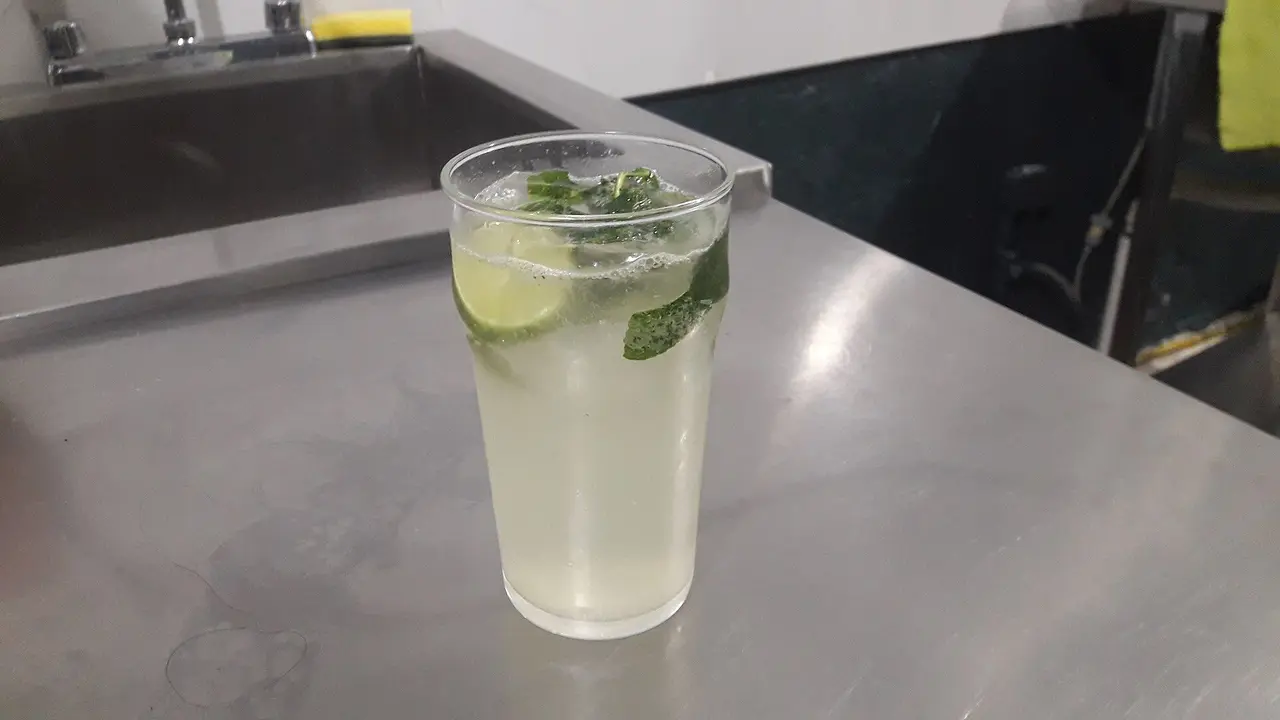
The standard way to make a mojito is to put mint, sugar syrup and fresh lime juice into a highball glass, muddle gently so the leaves release their oils without shredding, add 45 ml of white rum, fill with crushed ice, churn from the bottom up, then top with soda and garnish with a mint sprig. The bar recipe is 45 ml white rum, 20 ml lime juice, 20 ml 1:1 sugar syrup, 8–10 mint leaves and about 80 ml soda, 165 ml of liquid before the ice melts. Mojitos in many bars taste bitter, flat or harsh because the mint was pulverised, the pour was eyeballed, or large cubes were used instead of crushed ice. This lesson is written the way a head bartender coaches a trainee: the recipe in ml, muddling technique, an alcohol-free version, a Vietnamese passion fruit twist and the cost of each glass.
By the end of this lesson, you will be able to:
- Make a mojito to the standard recipe in ml, within 5 ml of target for every ingredient.
- Use a muddler with the right pressure so the mint smells fresh without turning bitter.
- Make a balanced virgin mojito and a Vietnamese-style passion fruit mojito.
- Work out total volume, alcohol content and cost per glass, matched to the selling price.
- Apply responsible alcohol service rules when selling mojitos.
Learning to bartend properly? The mojito belongs to step 4, "20 classic cocktails you must know", after responsible alcohol service, bar tools and the shake, stir, build and muddle techniques. See the 8-step bartender and cocktail roadmap to learn in the right order.
What is a mojito, and why must every bartender know it?
The mojito is a Cuban cocktail of white rum, lime, sugar, mint and soda. The target taste is a balanced sweet-sour, cool mint, light rum on the finish and just enough fizz. It is one of the most ordered drinks at beach bars, rooftops and hotel restaurants in Vietnam, so almost every bartending trial shift asks you to make one (see Figure 1).
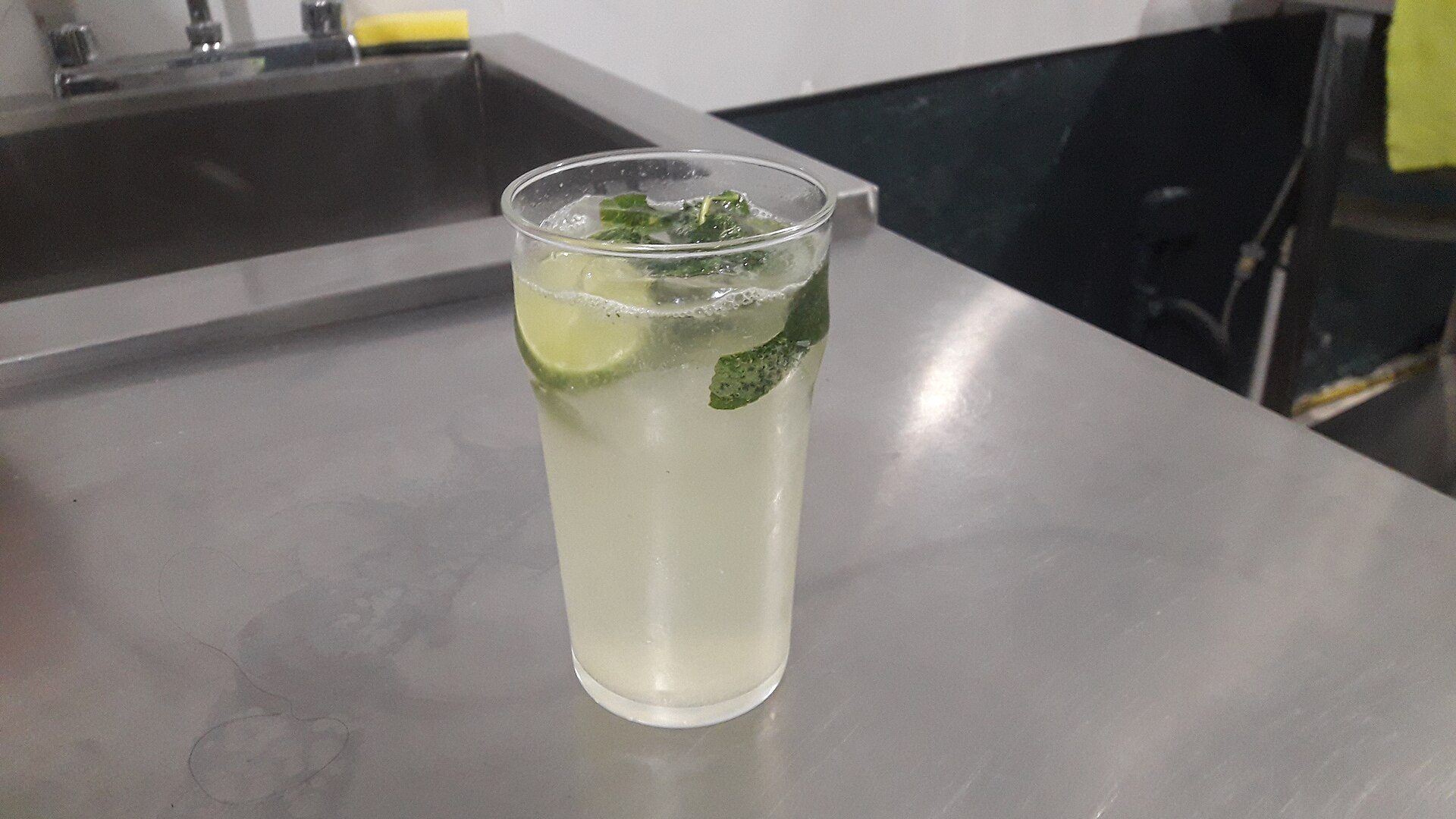
Photo: El Nuevo Doge / Wikimedia Commons, CC0

Key techniques: build and muddle
A mojito is built directly in the glass, with an extra muddling step. No shaker is needed. So the decisive skills are muddling with the right pressure, measuring accurately and controlling the ice. A proper mojito in 60–90 seconds is the pace a busy bar needs.
White rum and the role of each ingredient
- White rum (about 37.5–40% alcohol): the spirit base, light in flavour so it does not overpower the mint.
- Lime juice: the sourness; squeeze it fresh each shift, never use bottled juice kept overnight.
- Sugar: 1:1 syrup dissolves instantly; traditional white sugar needs longer muddling to dissolve.
- Mint: spearmint or a large-leaf local mint, fresh leaves, not bruised or wilted.
- Soda: adds fizz and lightens the drink; pour it last to keep the bubbles.
The standard mojito recipe in ml
This is the bar-standard recipe based on the popular classic, converted to ml for measuring with a jigger (Figure 2). Each bar may adjust to taste, but a trainee must master the standard version first.
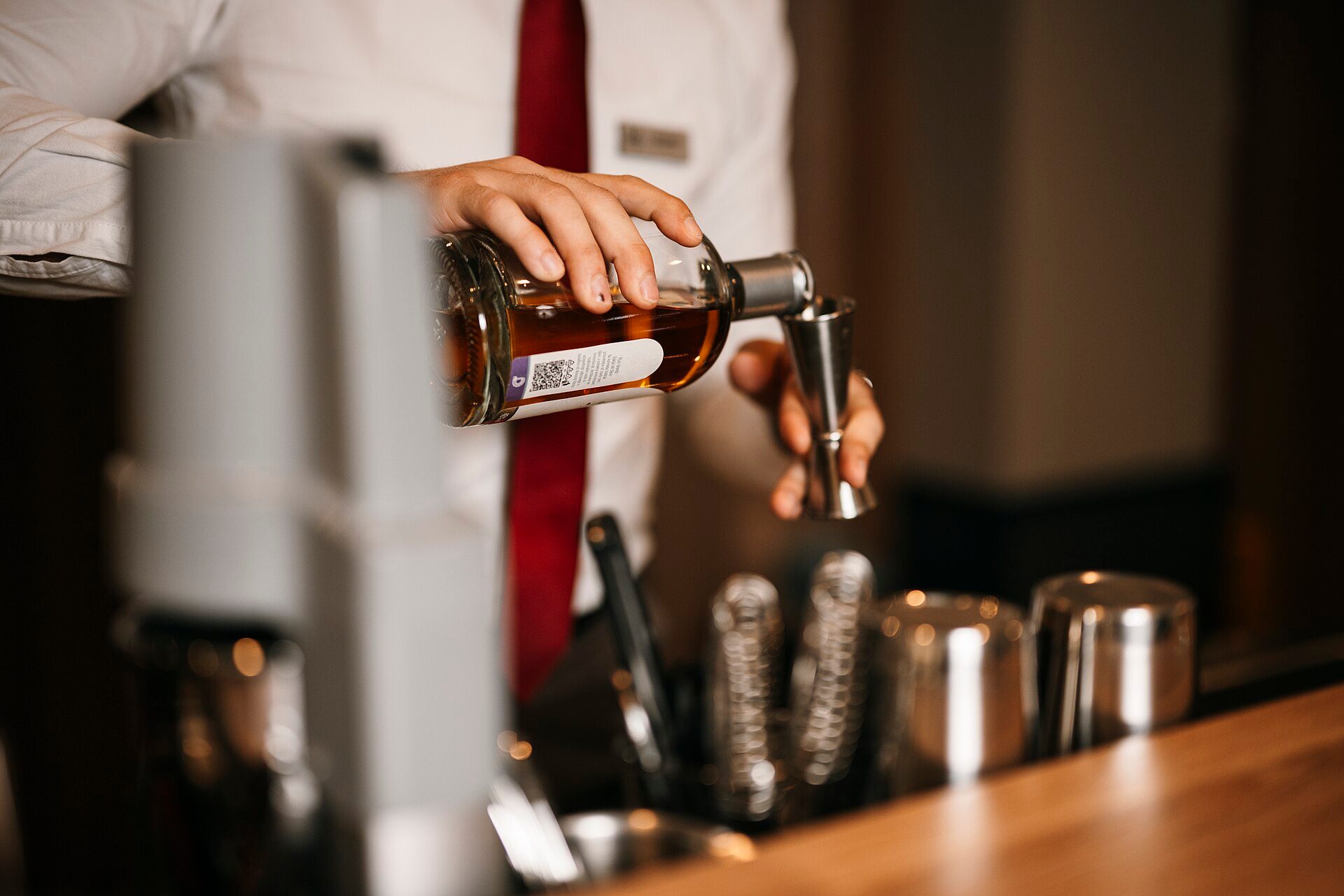
Photo: Shixart1985 / Wikimedia Commons, CC BY 2.0

| Ingredient | Amount | Note |
|---|---|---|
| White rum | 45 ml | About 40% alcohol |
| Fresh lime juice | 20 ml | Squeezed each shift, seeds strained |
| 1:1 sugar syrup | 20 ml | 1 part sugar : 1 part water by weight |
| Mint leaves | 8–10 leaves + 1 sprig to garnish | About 3 g |
| Soda | 80 ml | Cold, freshly opened |
| Total liquid | 165 ml | 45 + 20 + 20 + 80, before ice melt |
Glass and ice
Use a highball of about 330–360 ml. Crushed or cracked ice chills fast and gives the signature frosty feel; large cubes work but the drink is less cold and needs longer stirring. As the ice melts, the glass usually gains about 20–30 ml of water and the taste softens.
Working out the alcohol in one glass
45 ml of 40% rum contains 45 × 0.4 = 18 ml of pure alcohol. Divided by 165 ml of liquid, the drink is about 18 ÷ 165 ≈ 10.9% alcohol before the ice melts. 18 ml of alcohol weighs about 18 × 0.789 ≈ 14.2 g, roughly 1.4 standard drinks (1 standard drink = 10 g of alcohol). These figures help you explain to guests why 2–3 "light, refreshing" mojitos still add up to a significant amount of alcohol.
Drink responsibly: never sell or serve alcoholic drinks to anyone under 18; if in doubt about age, ask for ID and politely refuse if none is shown. Anyone who has been drinking must not drive: ask guests how they are getting home, suggest a taxi or ride-hailing app, or offer a mocktail. Do not keep serving a guest who is already showing signs of intoxication. Knives and broken glass: cut limes with a sharp knife on a non-slip board, discard chipped glasses immediately, and if a glass breaks over the ice well, empty all the ice in that well.
How to make a mojito step by step at the bar
Prep before service: squeeze limes, make syrup, wash and drain mint, chill the soda, crush or crack the ice. When an order comes in, just follow the steps below.
The steps
- Put 8–10 mint leaves in the bottom of a highball, add 20 ml syrup and 20 ml lime juice.
- Muddle gently 4–6 times, pressing and twisting lightly so the leaves are just bruised and release their aroma (see Figure 3).
- Add 45 ml white rum with a jigger.
- Fill about 3/4 of the glass with crushed ice.
- Churn (swizzle) with a bar spoon from the bottom up for about 10 seconds so the mint is spread and the glass chills.
- Pour 80 ml soda, then top up with ice.
- Garnish with a mint sprig (clap it gently between your palms to wake up the aroma) and a lime wedge, with the straw next to the mint.
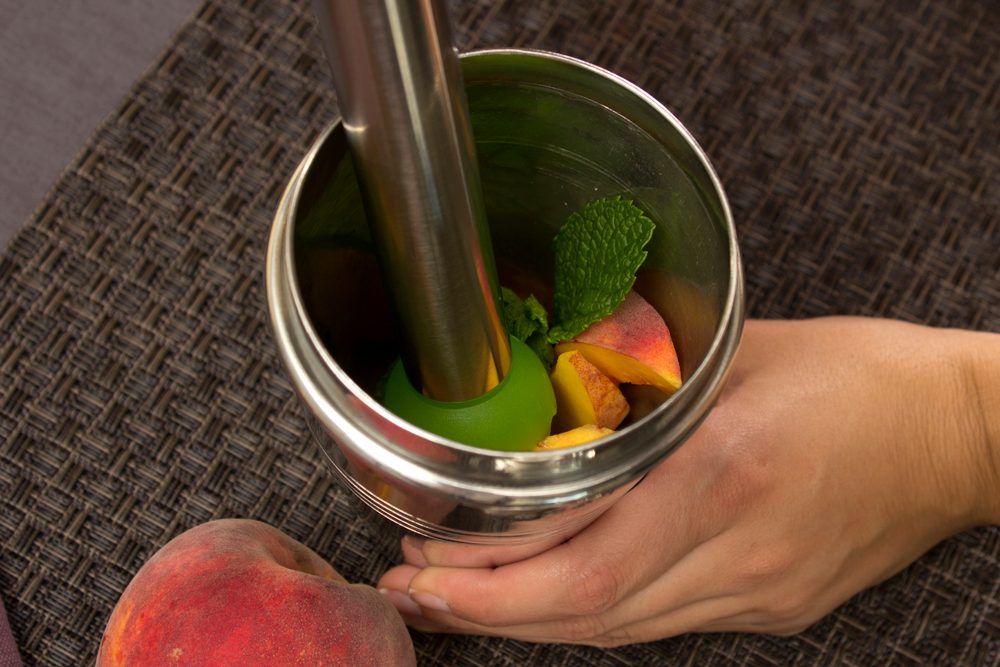
Photo: Dinner Series / Wikimedia Commons, CC BY 2.0

Muddling with the right pressure: tool and feel
A muddler should have a flat or low-toothed head, made of unvarnished wood, food-grade plastic or steel with a plastic head. The leaf veins hold chlorophyll and bitter compounds; pulverising them gives a grassy bitterness and leaves bits stuck in guests' teeth. The right feel: you smell the mint rise straight away, and the leaves keep their shape with only bruise marks.
Check before serving
Taste a little with a clean straw (discard it after tasting): balanced sweet-sour, cool, not bitter. The glass is frosted outside, ice to the rim, mint on top. If it is too sour, cut lime by 5 ml next time; too sweet, cut syrup by 5 ml. Never fix the taste by adding more spirit.
Virgin mojito and the Vietnamese passion fruit mojito
These two variations let the bar serve guests who do not drink alcohol and guests who like tropical fruit. Both still use the muddle and build technique of the standard recipe.
Virgin mojito (alcohol-free)
Leave out the rum and increase the soda to keep the volume. Recipe: 20 ml lime juice, 20 ml syrup, 8–10 mint leaves, 125 ml soda. Total liquid 20 + 20 + 125 = 165 ml, the same as the alcoholic version. You can replace 30 ml of soda with apple juice or coconut water for a fuller taste, still keeping the total at 165 ml. It is the drink to offer guests who are driving, pregnant guests and anyone who does not drink.
Passion fruit mojito
Passion fruit (Figure 4) is tart, fragrant and crunchy with seeds, perfect for a hot climate. Recipe: 45 ml white rum, 30 ml passion fruit pulp (about 1 fruit), 10 ml lime juice, 15 ml syrup, 8 mint leaves, 70 ml soda. Total liquid 45 + 30 + 10 + 15 + 70 = 170 ml. Because passion fruit is already sour, lime drops to 10 ml; if the batch is very tart, raise syrup to 20 ml and cut soda to 65 ml to keep the total at 170 ml.
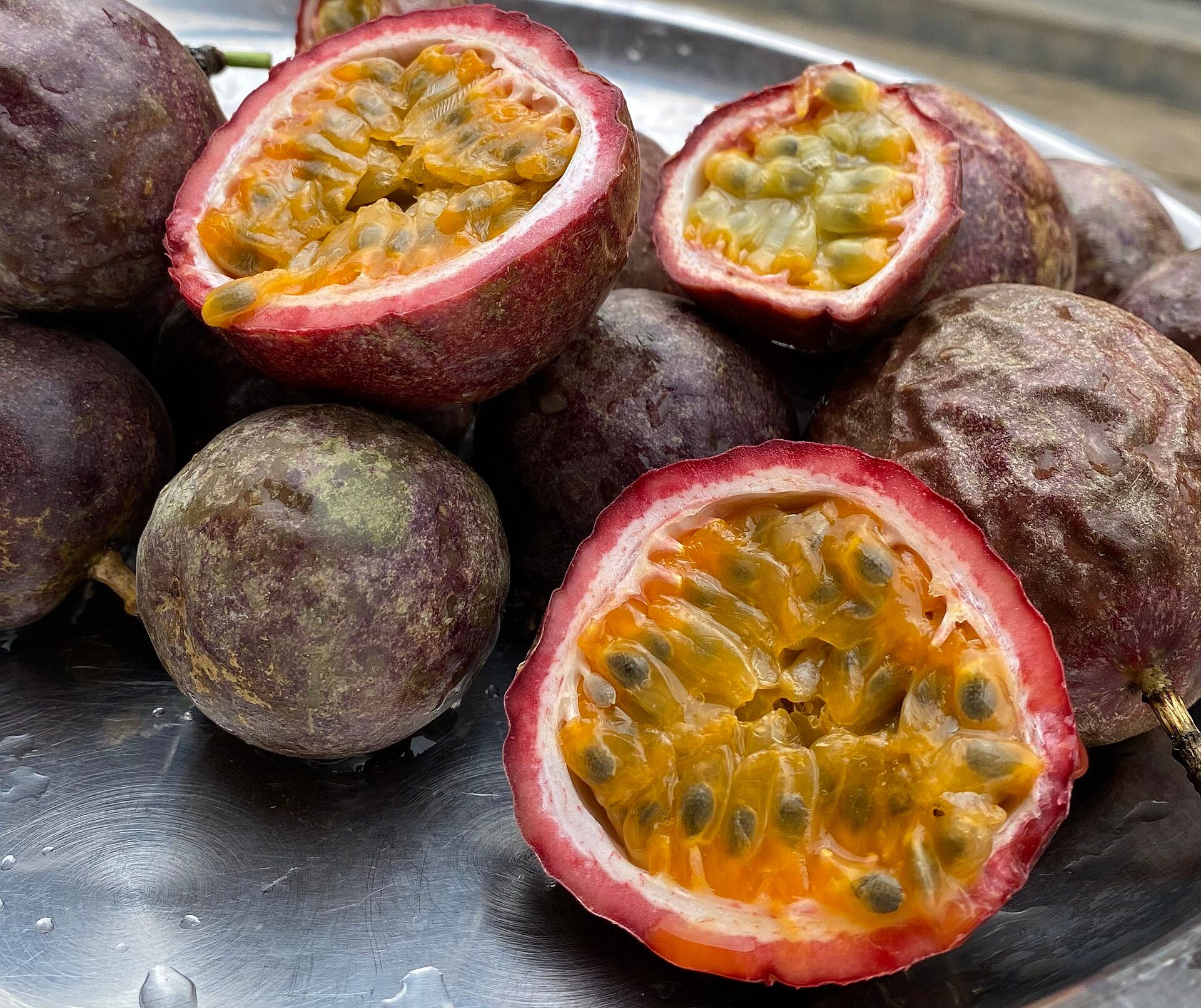
Photo: Nana Pearls / Wikimedia Commons, CC0

Other Vietnamese ingredient twists
- Lemongrass: muddle with a 5 cm piece of bruised lemongrass, recipe otherwise unchanged.
- Calamansi (quat): replace the 20 ml lime juice with 20 ml calamansi juice and garnish with 2 calamansi slices.
- Thai basil: replace half the mint with basil; it pairs well with passion fruit.
Deeper work with Vietnamese ingredients is the subject of step 5 of the roadmap; at this step, keep the balance of spirit, sour, sweet and total volume right.
Worked example: cost per mojito
A rooftop bar in Da Nang, ingredient prices as 2026 references, varying by area and supplier. White rum costs 350,000 VND (~USD 13) per 700 ml bottle, so 500 VND/ml. Soda costs 8,250 VND per 330 ml can, so 25 VND/ml. Mint costs 15,000 VND per 100 g, so 150 VND/g. House syrup costs about 20 VND/ml.
| Ingredient | Standard mojito | Virgin mojito | Passion fruit mojito |
|---|---|---|---|
| White rum (500 VND/ml) | 45 ml = 22,500 VND | 0 VND | 45 ml = 22,500 VND |
| Lime (juice + garnish) | 4,000 VND | 4,000 VND | 2,000 VND |
| Passion fruit | 0 VND | 0 VND | 1 fruit = 3,000 VND |
| Syrup (20 VND/ml) | 20 ml = 400 VND | 20 ml = 400 VND | 15 ml = 300 VND |
| Mint (150 VND/g) | 3 g = 450 VND | 3 g = 450 VND | 3 g = 450 VND |
| Soda (25 VND/ml) | 80 ml = 2,000 VND | 125 ml = 3,125 VND | 70 ml = 1,750 VND |
| Crushed ice | 1,500 VND | 1,500 VND | 1,500 VND |
| Straw, napkin | 500 VND | 500 VND | 500 VND |
| Cost | 31,350 VND | 9,975 VND | 32,000 VND |
| Selling price | 120,000 VND | 60,000 VND | 130,000 VND |
| Cost ratio | ≈ 26.1% | ≈ 16.6% | ≈ 24.6% |
Checking the maths
- Standard mojito: 22,500 + 4,000 + 400 + 450 + 2,000 + 1,500 + 500 = 31,350 VND; 31,350 ÷ 120,000 ≈ 26.1%.
- Virgin mojito: 4,000 + 400 + 450 + 3,125 + 1,500 + 500 = 9,975 VND; 9,975 ÷ 60,000 ≈ 16.6%.
- Passion fruit mojito: 22,500 + 2,000 + 3,000 + 300 + 450 + 1,750 + 1,500 + 500 = 32,000 VND; 32,000 ÷ 130,000 ≈ 24.6%.
Lessons from the table
Rum makes up about 72% of the standard drink's cost (22,500 ÷ 31,350), so a 10 ml over-pour costs 5,000 VND per glass. Selling 80 glasses a night with 10 ml extra in each loses 400,000 VND, more than a whole bottle of rum. That is why professional bars always use a jigger.
Common mojito mistakes and how to fix them
Bitter mojito
Sign: grassy bitterness, lots of green leaf bits in the glass. Cause: muddling too hard, muddling stems, using a sharp-toothed muddler. Fix: muddle leaves only, 4–6 gentle presses, with a flat-headed muddler.
Flat mojito with little mint aroma
Sign: it tastes like fizzy lemonade. Cause: wilted mint, too few leaves, no churning from the bottom, too much soda. Fix: fresh mint each shift, a full 8–10 leaves, exactly 80 ml soda.
Harshly sour or cloyingly sweet
Sign: the guest grimaces or leaves half the glass. Cause: pouring by eye, limes varying in sourness from batch to batch. Fix: always use a jigger, taste the first lime batch of the shift, adjust 5 ml at a time.
Flat and warm
Sign: no bubbles, no frost on the glass. Cause: soda poured before churning, soda opened long ago, too little ice. Fix: soda last, a freshly opened can, glass full of ice.
Frequently asked questions
What is the standard mojito recipe?
45 ml white rum, 20 ml lime juice, 20 ml 1:1 sugar syrup, 8–10 mint leaves, about 80 ml soda and crushed ice, built directly in a highball glass.
What is a virgin mojito?
An alcohol-free mojito: leave out the rum and raise the soda to about 125 ml to keep the volume. It is the drink to suggest to guests who are driving or do not drink.
What can I use if I don't have a muddler?
The flat end of a bar spoon or a clean, unvarnished wooden pestle. A professional bar should have its own muddlers, washed after each shift.
Should I cut the lime in a passion fruit mojito?
Yes. Passion fruit is already sour, so about 10 ml of lime juice is enough; taste and adjust the syrup to the tartness of each batch.
Can I use granulated sugar instead of syrup?
Yes, about 2 teaspoons of white sugar, but muddle it with the lime until it dissolves before adding the rum. Syrup makes service faster and the taste more consistent on busy nights.
Practice exercises and self-assessment
- Make 5 standard mojitos in a row, time each one, taste and note comments.
- Make 1 virgin mojito and 1 passion fruit mojito, and measure the total liquid in a measuring jug before adding ice to check 165 ml and 170 ml.
- Work out the cost of a standard mojito with the rum price at the bar where you work or train, using the table above as a template.
Self-assessment criteria
- Pass: each drink is out in 90 seconds, every ingredient within 5 ml of target.
- Pass: mint leaves intact, no bitterness; glass full of ice, frosted, still fizzy.
- Pass: total volume and cost calculations add up, cost ratio correct.
- Not yet: pouring by eye, shredding the mint, or serving alcohol without paying attention to the guest's age and condition.
Once you know the mojito and the other classics, move on to the next step of the roadmap: Mocktails and cocktails with Vietnamese ingredients, where you develop the virgin and passion fruit mojitos into a whole drinks section for the bar.
Keep learning bartending: after the classics come mocktails and Vietnamese ingredients, bar operations and costing, and designing a menu of 6 signature cocktails. See the 8-step bartender and cocktail roadmap.