Planting a garden lawn properly means choosing a grass that suits the sun and foot traffic of the site, preparing a base that is free of weeds, loose, level and sloped for drainage, then laying turf tightly edge to edge or planting plugs, firming it and watering evenly for the first two weeks while it roots. Most patchy, yellowing lawns that flood after rain fail because the base was rushed and the watering was wrong, not because the grass was poor. This lesson is written the way a landscaper coaches an apprentice, with a comparison table of the grasses commonly used in Vietnam and a 50 m² budget where every line adds up.
By the end of this lesson, you will be able to:
- Choose carpet grass, Korean velvet grass, Bermuda grass or pinto peanut ground cover based on the sun, shade and foot traffic of each site.
- Prepare the soil: clear weeds, dig, add a layer of sand or topsoil, and level it with a drainage fall of about 1–2%.
- Lay turf in a staggered pattern with tight joints, firm it and fill the gaps with sand, or plant plugs at the right spacing.
- Set a watering schedule for new turf, the first mow and feeding in the first month.
- Draw up a materials and labour budget for a 50 m² lawn and quote per m².
Learning gardening and landscaping properly? Laying lawns, planting shrubs and shade trees is step 4 of the roadmap, after machine safety, plant identification and soils and substrates. See the 8-step gardener and landscaper roadmap to learn in the right order.
Choosing the right grass for a garden
There is no "best" grass, only the grass that suits the site. Answer three questions before you quote: how many hours of sun does the area get each day, will people and children run on it often, and how much care is the owner willing to give.
Comparison of grasses commonly used in Vietnam
| Grass | Leaf | Sun – shade | Wear tolerance | Care | Grass price, reference (VND/m²) |
|---|---|---|---|---|---|
| Carpet grass, "co la gung" (Axonopus compressus) | Broad, soft, bright green | Sun to part shade | Medium | Easy, slow-growing, little mowing | 15,000–30,000 |
| Korean velvet grass, "co nhung Nhat" (Zoysia tenuifolia) | Very fine, thread-like, dense, soft | Needs plenty of sun, poor in shade | Good | Slow to fill in; becomes lumpy and wavy if not mown | 25,000–50,000 |
| Bermuda grass (Cynodon dactylon) | Fine, fast, creeping | Full sun | Very good | Frequent mowing, heavy feeding | 20,000–45,000 |
| Pinto peanut, "co dau phong" (Arachis pintoi) | Rounded compound leaves, small yellow flowers | Sun to light shade | Poor, not for walking | Almost no mowing, decorative ground cover | 15,000–30,000 |
These are prices for the grass itself, 2026 reference in Vietnam, varying by region, nursery and quantity; soil, sand, fertiliser and labour are extra.
Carpet grass: easy-going and shade tolerant
Carpet grass (Figure 1, right side of the photo) is the safe choice for lawns under shade trees, the back yard of a narrow town house that gets half a day of sun, or owners with little time for care. Its broad leaves look less fine than velvet grass, but it has fewer disease problems and costs less.
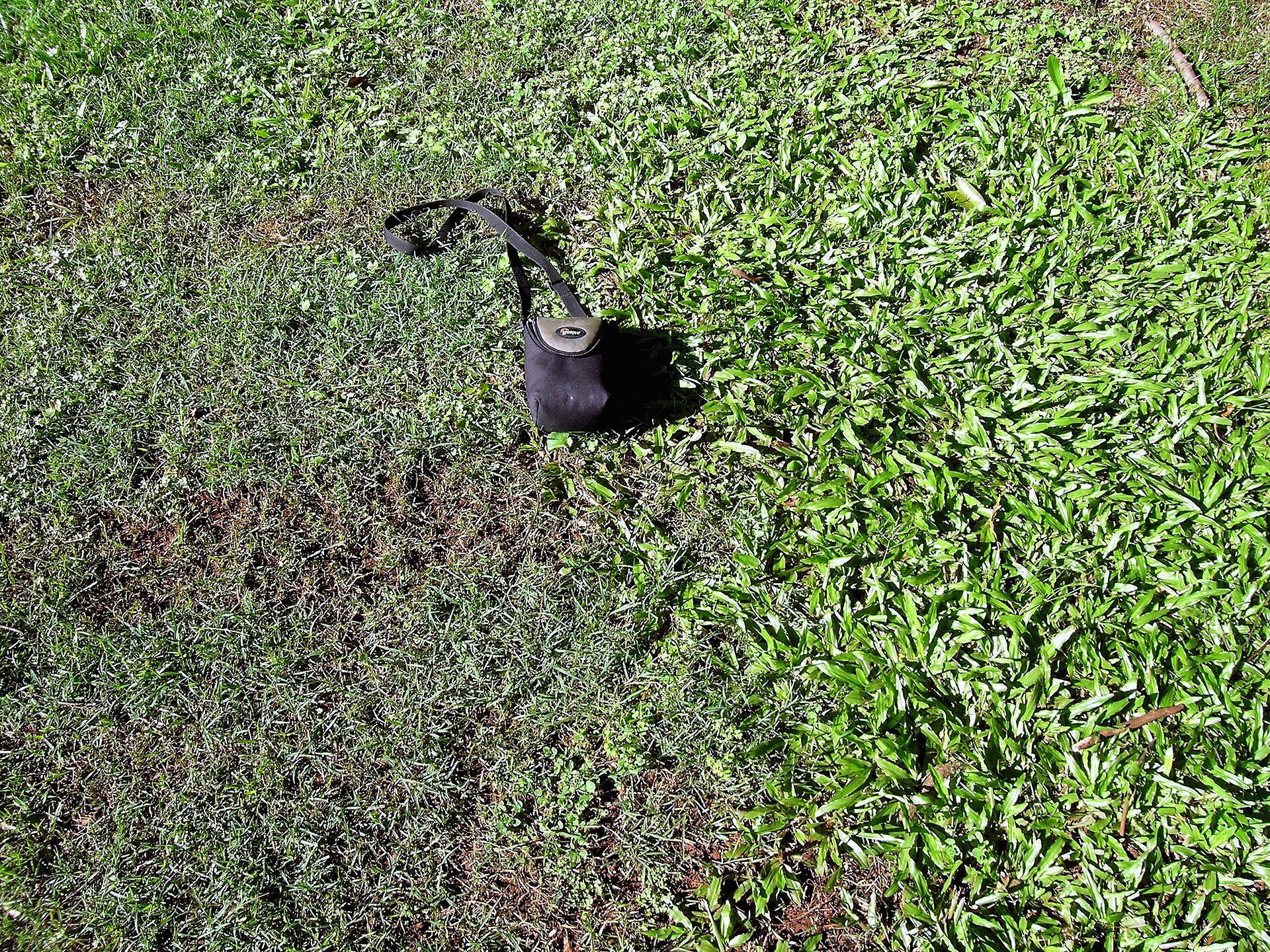
Photo: Harry Rose from South West Rocks, Australia / Wikimedia Commons, CC BY 2.0

Korean velvet grass: beautiful, needs sun and regular mowing
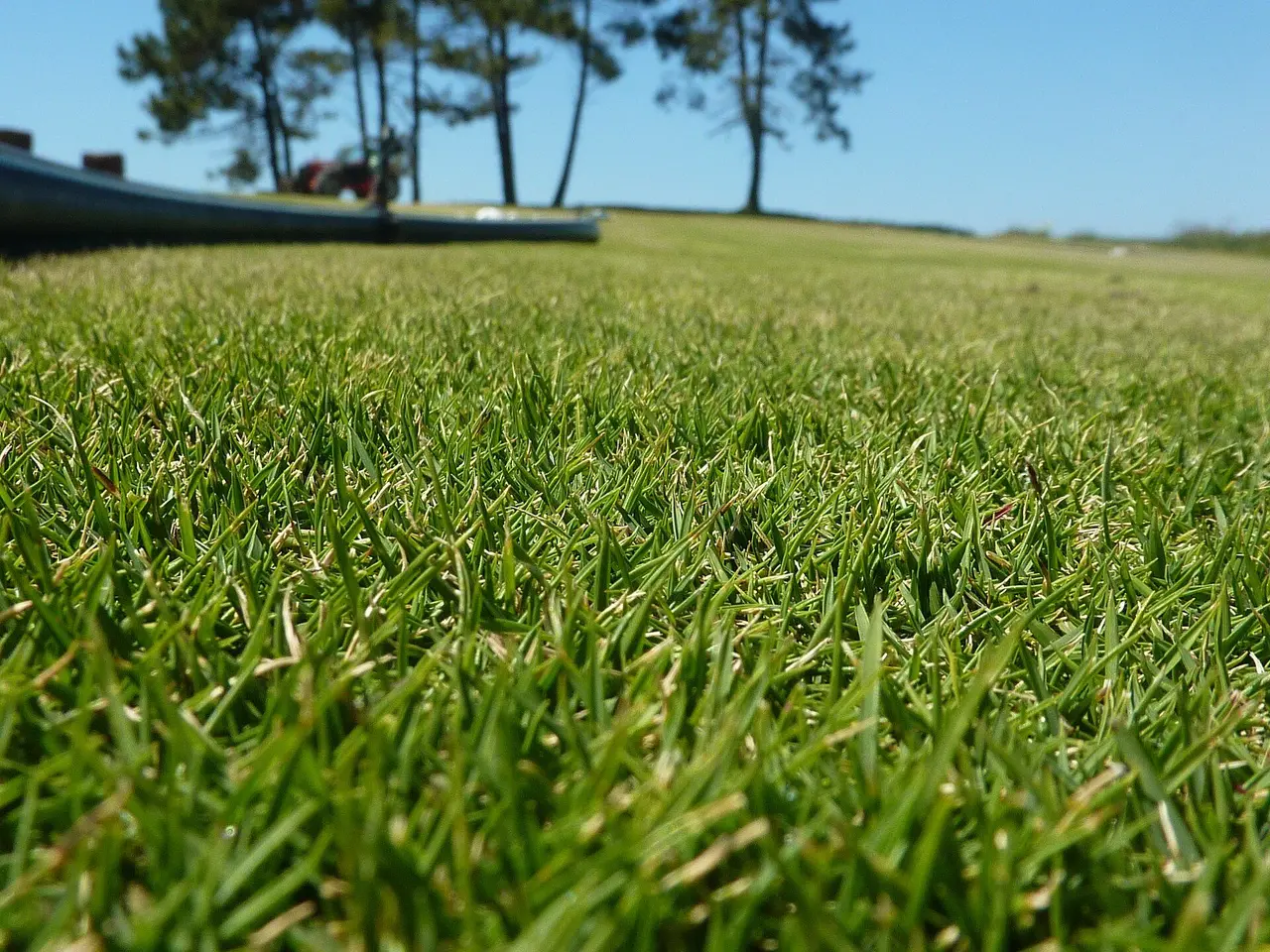
Korean velvet grass (Figure 2) gives a fine, dense, soft surface and is very popular for villas and front gardens. It needs about 6 hours of sun a day or more. Under trees it thins out and gives way to moss and weeds.
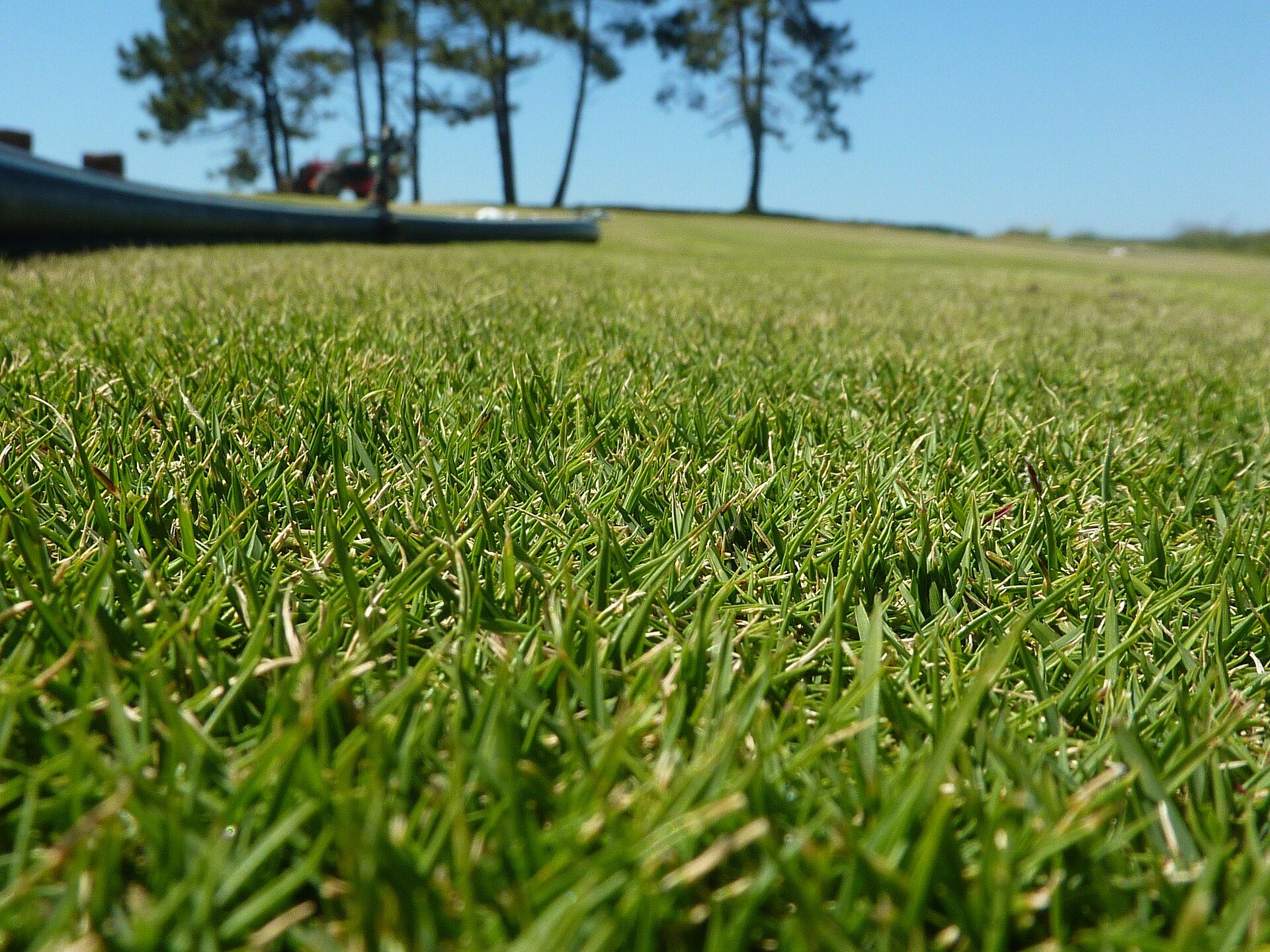
Photo: David-Pierre Mangiapan / Wikimedia Commons, CC BY-SA 3.0

Turf or plugs
- Turf (sod, rolls or slabs): green straight away, few weeds, costs more. Best where the lawn must look good at once and on slopes prone to erosion.
- Plugs: tear turf into small clumps and plant them about 10–15 cm apart; uses roughly a third to a half of the grass and fills in after about 1–3 months depending on species. Cheaper, but needs much more weeding while it fills in.
- Seed: rarely used for the garden grasses common in Vietnam; seeded lawns take longer to look good and are less even than turf (see Figure 4).
Preparing the soil: 70% of the result
Lawn grass has shallow roots, mostly in the top 10–20 cm. If that layer is compacted, full of building rubble, waterlogged or packed with weed roots, even the most expensive grass will fail.
Clear the site and remove weeds
- Remove rubble, stones, broken bricks and old roots. Gardens around newly built houses often have buried rubble, so dig and check.
- Pull or hoe out all weeds with their roots, especially cogon grass and nutsedge, because they push up through new turf.
- If weeds are dense, water the area for about 1–2 weeks so weed seeds sprout, then weed again before building the base.
Dig, improve and add sand
Dig about 15–20 cm deep and break up the soil. Mix in well-rotted organic fertiliser (about 1 kg/m² is a common rate). Heavy clay that holds water needs extra sand or carbonised rice husk. Spread about 5 cm of levelling sand or topsoil on top so the surface is level, drains well and the roots take hold easily.
Level and set a drainage fall
The surface needs a gentle fall of about 1–2% (1–2 cm per metre) towards a drain or catch pit and away from the house foundations. Use string lines, a long straightedge and a spirit level, and rake out high and low spots. Then wet the base and firm it with a roller or by treading evenly, so it settles before the turf goes down and does not sink into puddles later.
Check the base is ready
- Walking on it leaves footprints about 1 cm deep, no deeper.
- A bucket of water poured on it runs towards the drain without pooling.
- The base sits about 2–3 cm below kerbs and paths, so the laid turf finishes flush with them.
Planting step by step: laying turf and planting plugs
Turf is living grass cut from the ground; every hour it sits on the truck, it loses water. Plan so you lay it as it arrives, ideally the same day.
Receive and check the turf
Turf usually arrives stacked or rolled, as in Figure 3. Check that the leaves are green, not yellow, the soil layer is even and thick, and there are no weeds mixed in. Lay it straight away; if you cannot, keep it in shade, mist it to keep it moist and do not leave it more than about a day.
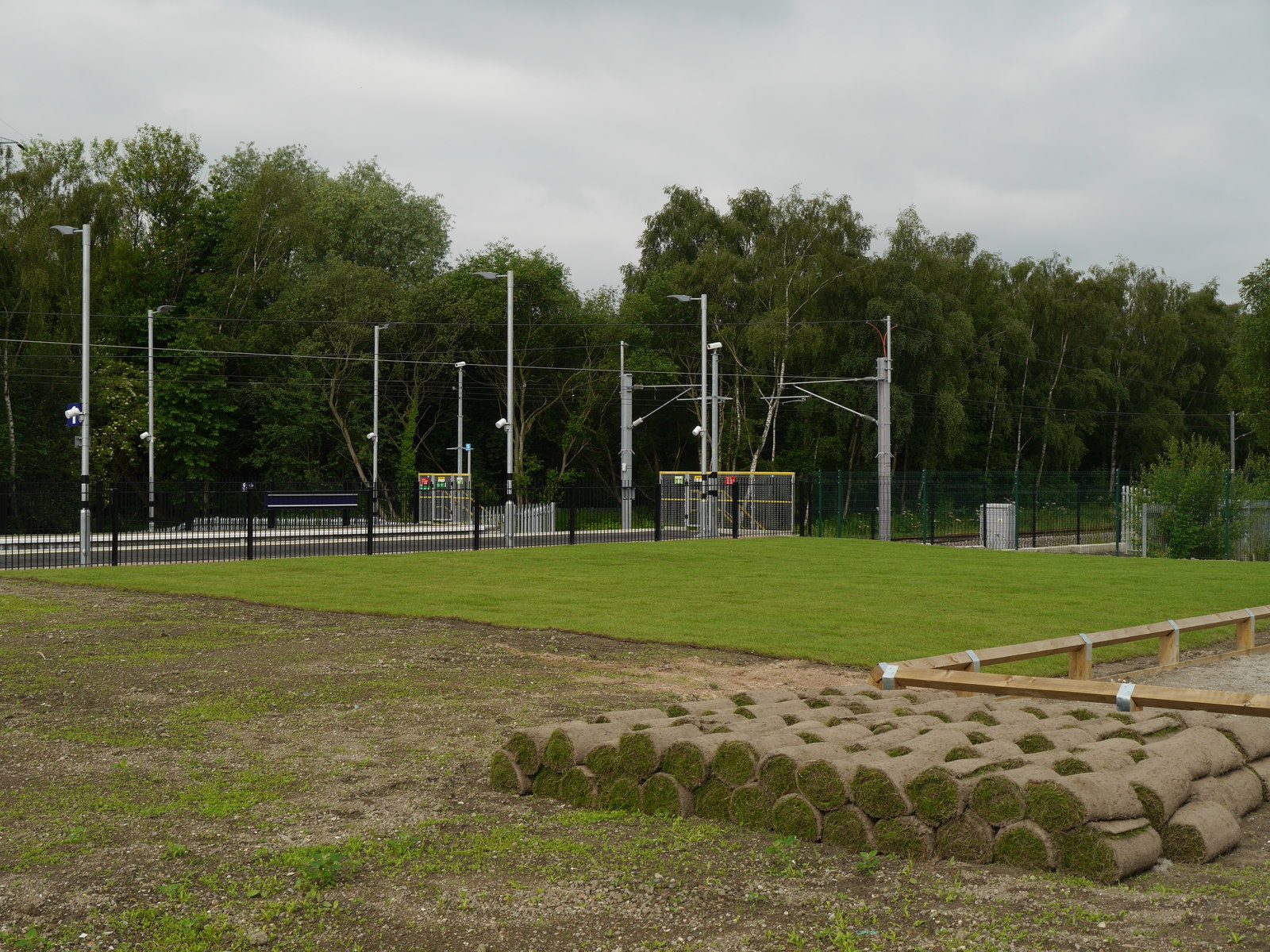
Photo: Rich Tea / Wikimedia Commons, CC BY-SA 2.0

Laying turf
- Lightly moisten the base before laying (damp, not muddy).
- Start from the straightest edge (a path or kerb) and lay the first row straight along a string line.
- Stagger the next rows like brickwork, pushing edges tight together, with no overlaps and no gaps.
- Kneel or stand on a board placed on turf already laid, so you do not tread hollows into the unlaid base.
- Cut turf with a sharp knife or spade around curves and tree bases; put small pieces in the middle, never at the edges.
- Roll or tamp the whole surface so the roots touch the soil, brush fine sand into the joints, then water thoroughly.
Planting plugs
- Tear turf into clumps of about 5 × 5 cm, keeping the soil on the roots.
- Plant in rows with clumps about 10–15 cm apart, staggering the rows in a diamond pattern, and press each one in firmly.
- Water thoroughly at once and keep moist until the grass has spread to cover.
Figure 4 shows the difference between newly laid turf (right) and newly seeded grass (left) on the same lawn: the turf covers evenly while the seeded part is still thin with bare soil showing.
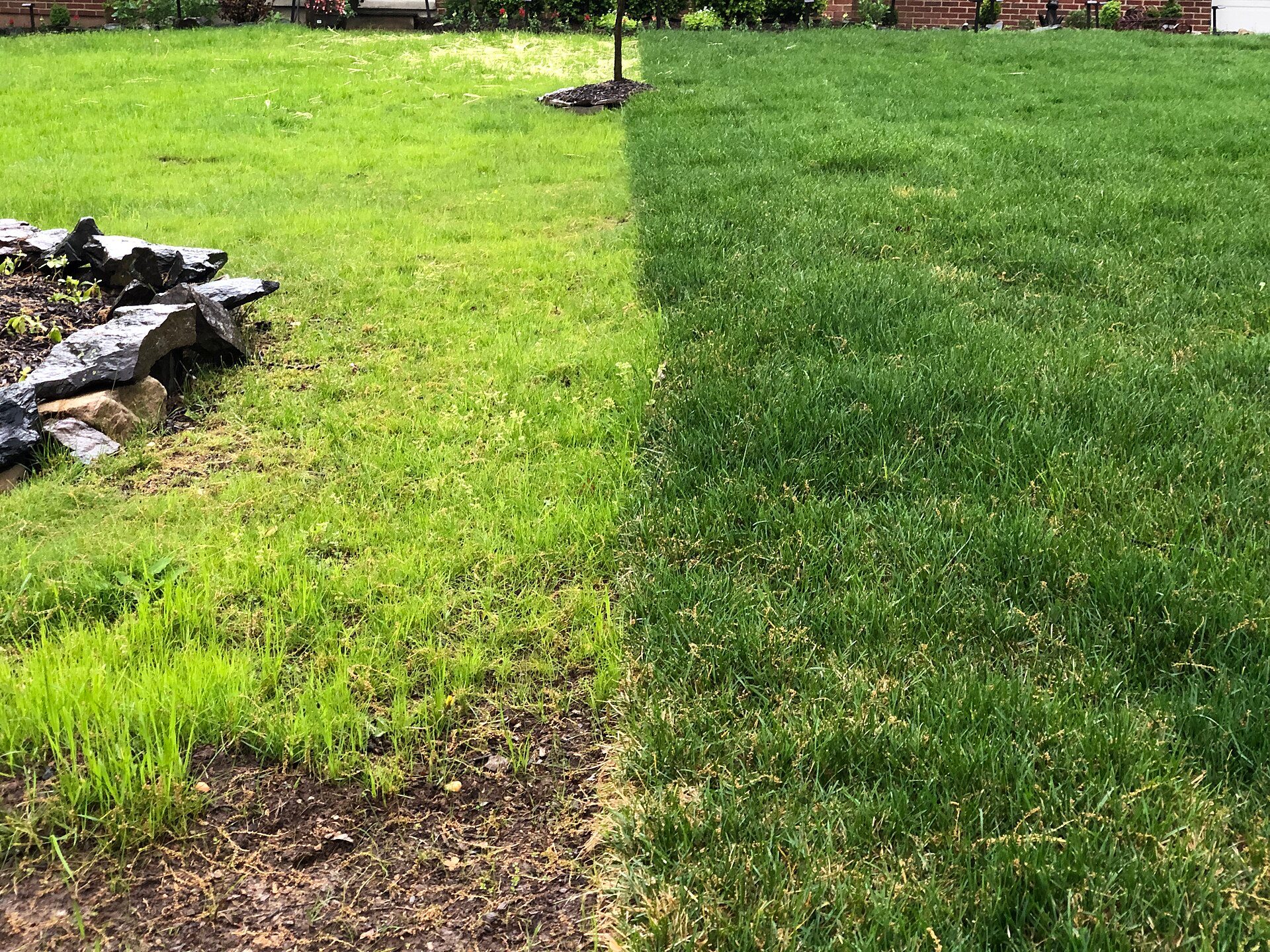
Photo: Famartin / Wikimedia Commons, CC BY-SA 4.0

Watering new turf and first-month care
The first two weeks are when turf most often dies: the roots have not reached the base yet, and the thin soil layer of the turf dries out fast in the sun.
Reference watering schedule
| Stage | How often | Water, reference | Check |
|---|---|---|---|
| Planting day | Soak right after laying | Wet into the base about 5–10 cm | Lift a corner: the soil underneath is moist |
| Weeks 1–2 | Twice a day, early morning and late afternoon | About 5 litres/m²/day, more in harsh sun | Edges do not shrink, leaves do not curl |
| Weeks 3–4 | Once a day | Deeper, less often | A gentle tug does not lift the turf: it has rooted |
| After 1 month | Every 2–3 days, depending on weather | Water when leaves start to wilt slightly | In the rainy season you may stop watering |
Avoid watering late in the evening day after day: leaves wet overnight invite fungus. Do not let water pool, as standing water rots the roots. These amounts are a reference; sandy soil drains fast and needs more, loam holds moisture and needs less.
Keep traffic off
Keep people off new turf for about the first 2–3 weeks; run a string line and tell the owner and any helpers. Keep pets off the area too.
First mow and feeding
Mow for the first time once the turf has rooted (usually after about 3–4 weeks), with a sharp blade, removing only about a third of the leaf height each time. Feed after about 2–3 weeks with organic fertiliser or a light dose of NPK as the label says, spread evenly and water in at once so it does not scorch the leaves.
Safety with mowers and herbicides
The two big hazards in lawn work are mower blades and weedkillers, plus heat stress from working outdoors all day.
Safety warning: Mower blades spin very fast and can throw stones, gravel and bits of metal. Wear safety glasses, ear protection, closed shoes with toe protection and long trousers; clear stones, sticks and wire from the lawn before mowing; never mow with children or pets nearby. Always switch off, wait for the blade to stop completely and pull the spark plug lead (petrol) or unplug (electric) before clearing clogged grass or adjusting the cutting height. Refuel only when the engine is cool, and never smoke. Electric mowers must be plugged into an outlet protected by a residual-current breaker, with an undamaged cable; never mow wet grass or in the rain with them. Herbicides are poisonous chemicals: read the label carefully, use the correct dose and the waiting period before planting, wear gloves, a mask, goggles and long clothes; do not mix or spray near wells, ponds or fish tanks or in windy weather; store them away from children. If it gets on skin, wash immediately with plenty of water; if swallowed or if breathing becomes difficult, call 115 (Vietnam's emergency number) or go to the nearest clinic, taking the product container with you.
Prefer hand weeding to spraying
For small home lawns, pulling weeds by hand before building the base is both safe and clean enough. Use a herbicide only when weeds are very dense, choose a product licensed for sale, follow its label, and do so only with the owner's agreement.
Using a mower correctly
Push the mower forwards; never pull it back towards your feet (Figure 5). On slopes, mow across the slope with a push mower, not up and down. Check the blade and blade bolt before every session.
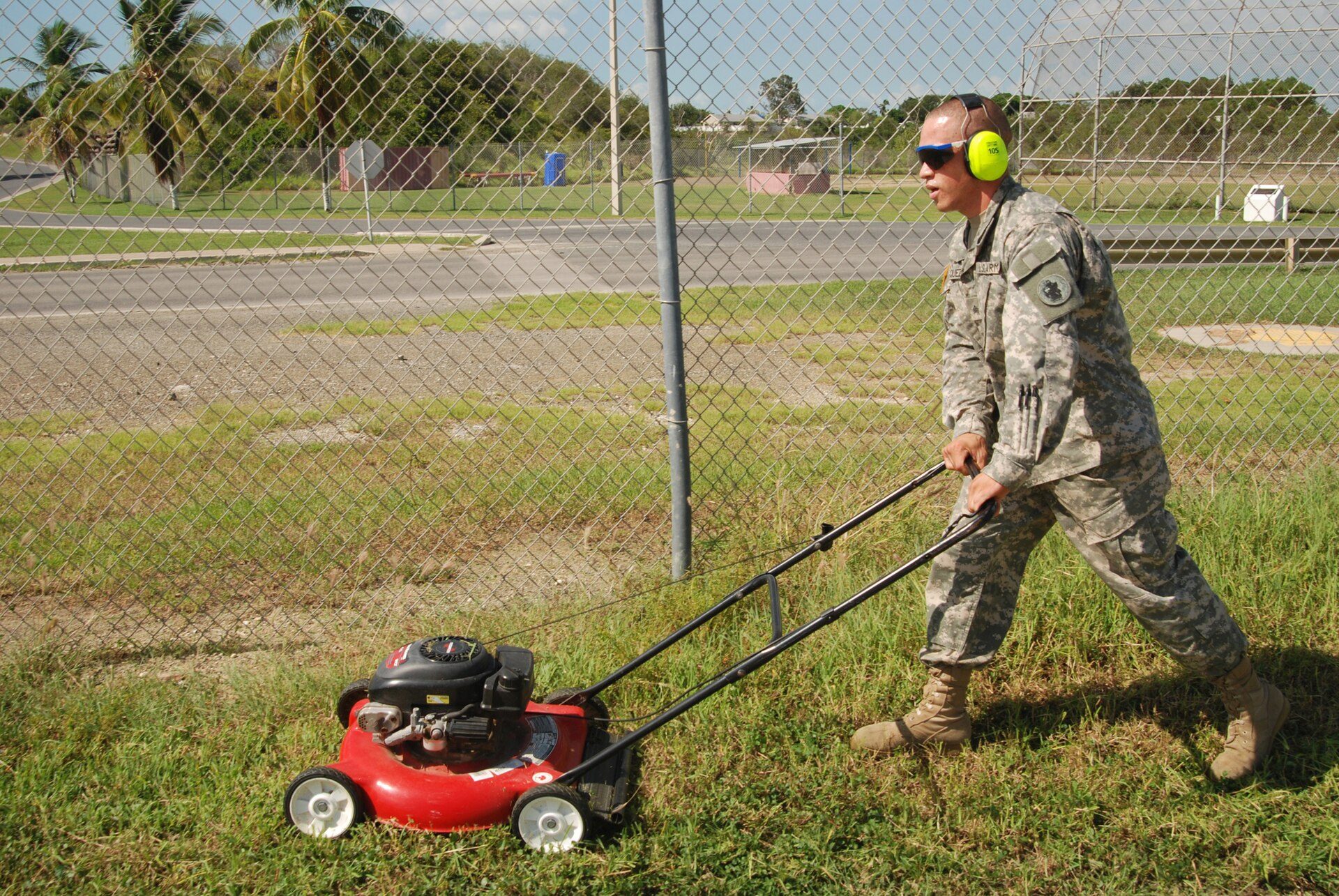
Photo: Staff Sgt. Brian Jopek / Wikimedia Commons, Public domain

Working in the sun
Laying turf is heavy work in the sun. Wear a hat and long sleeves, drink water often, take breaks in the shade and avoid heavy work between about 11 a.m. and 2 p.m.
Worked example: budgeting 50 m² of Korean velvet grass
The front garden of a town villa measures 10 × 5 m, gets sun almost all day, and the base is loam mixed with building rubble left from construction. The owner wants Korean velvet grass laid as turf for an instant lawn. Prices are 2026 references and vary by region.
Quantities
- Area: 10 × 5 = 50 m².
- Turf with about 5% for edge cutting: 50 × 1.05 = 52.5 m², order 53 m².
- Levelling sand 5 cm thick: 50 × 0.05 = 2.5 m³.
- Organic fertiliser at 1 kg/m²: 50 kg, that is 2 bags of 25 kg.
- Water in the first two weeks: about 5 litres/m²/day × 50 m² = 250 litres a day.
Budget table
| Item | Quantity × unit price | Amount |
|---|---|---|
| Korean velvet grass turf | 53 m² × 35,000 VND | 1,855,000 VND |
| Levelling sand | 2.5 m³ × 300,000 VND | 750,000 VND |
| Well-rotted organic fertiliser, 25 kg bag | 2 bags × 100,000 VND | 200,000 VND |
| Labour: clearing, digging, levelling, laying | 50 m² × 20,000 VND | 1,000,000 VND |
| Total | 3,805,000 VND | |
Check: 1,855,000 + 750,000 + 200,000 + 1,000,000 = 3,805,000 VND (about USD 145), or 3,805,000 ÷ 50 = 76,100 VND/m² all-in. Switching to carpet grass at 20,000 VND/m²: 53 × 20,000 = 1,060,000 VND, total 1,060,000 + 750,000 + 200,000 + 1,000,000 = 3,010,000 VND, or 60,200 VND/m². If a lot of rubble has to be dug out and hauled away, quote it as a separate item rather than folding it into the per-m² price.
Schedule
Two workers: day 1, clear rubble, dig and mix in fertiliser; day 2, spread sand, set the fall, firm the base and lay turf in the cooler afternoon. Hand over with a 4-week watering schedule and book a return visit for the first mow after about 3–4 weeks.
Common lawn planting mistakes and fixes
Yellow patches after a week
Sign: turf edges shrink, leaves curl and yellow. Cause: too little water, turf not in contact with the base (not rolled), or turf left too long before laying. Fix: water twice a day, firm the surface again and replace dead pieces.
Water pools after rain
Sign: puddles sit for a long time, the grass there rots and moss grows. Cause: no fall on the base, heavy clay, or an unfirmed base that settled unevenly. Fix: lift the turf in the low spot, add sand, set a fall to the drain and relay; larger lawns need drains, covered in the irrigation and drainage step.
Weeds pushing through the lawn
Sign: after a few weeks cogon grass and nutsedge come up through the turf. Cause: weed roots not cleared during base preparation, or bought topsoil full of weed seed. Fix: pull weeds early, roots and all, while they are small, and check the soil source before buying.
Velvet grass thinning under trees
Sign: thin grass under the canopy with moss creeping in. Cause: not enough sun. Fix: thin the tree canopy, or switch that area to carpet grass or a shade-tolerant ground cover.
Frequently asked questions
Should I plant carpet grass or Korean velvet grass?
For a sunny lawn that must look fine and smooth, choose Korean velvet grass. For a lawn with tree shade or half-day sun, or an owner with little time for care, carpet grass survives more easily and costs less.
How much does garden lawn grass cost per square metre?
As a 2026 reference in Vietnam, turf costs about 15,000–30,000 VND/m² for carpet grass and 25,000–50,000 VND/m² for Korean velvet grass, depending on region and quantity. An all-in job with base preparation, sand, fertiliser and labour costs much more, about 60,000–76,000 VND/m² in the example above.
How much soil preparation is enough?
Remove rubble and weed roots, dig about 15–20 cm deep, mix in organic fertiliser, add about 5 cm of sand or topsoil, level with a 1–2% fall and firm the base before laying.
How often should I water newly laid turf?
For the first two weeks, water twice a day in the early morning and late afternoon, enough to moisten the base without pooling. Then reduce to once a day, and later every 2–3 days.
What is the best season to plant a lawn?
The start of the rainy season is easiest because it saves watering. You can still plant in the dry season if water is available. In northern Vietnam, avoid cold spells, when grass almost stops growing.
Practice and self-assessment
- Survey a real garden: measure it, count the hours of sun, note the foot traffic, choose a grass and explain why.
- Prepare and turf a trial patch of about 4 m², recording the laying date and watering schedule.
- Draw up a budget for an 8 × 6 m carpet grass lawn using the table above as a template.
Self-assessment criteria
- Pass: a bucket of water poured on the base runs to the drain without pooling.
- Pass: turf joints are tight and staggered, and after 3 weeks a gentle tug does not lift it.
- Pass: the 48 m² budget shows 50.4 m² of turf (order 51 m²), 2.4 m³ of sand and a total that adds up.
- Not yet: laying turf over weed roots, mowing without glasses and ear protection, or spraying herbicide without reading the label.
Once the lawn has rooted, move on to the next roadmap step: Automatic irrigation & garden drainage, where you learn to lay pipe, fit sprinkler heads, set irrigation timers and build drains so the garden does not flood after heavy rain.
Keep learning gardening and landscaping: after lawns and shrubs come automatic irrigation, topiary pruning, building a small garden feature and winning maintenance contracts. See the 8-step gardener and landscaper roadmap.