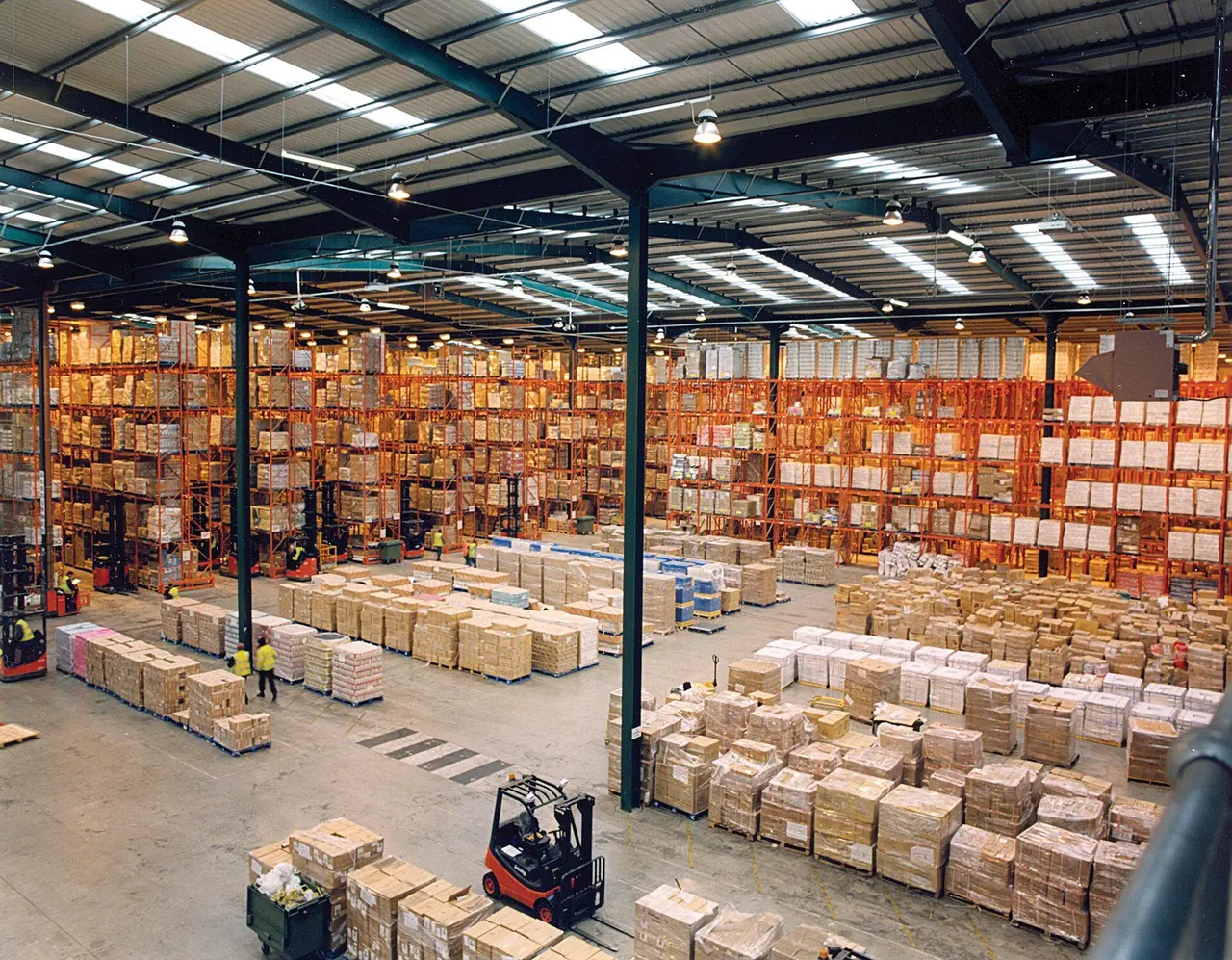
FIFO (First In, First Out) means the batch that arrived in the warehouse first is shipped first. FEFO (First Expired, First Out) means the batch with the nearest expiry date is shipped first, no matter when it arrived. For goods without an expiry date (screws, clothing, components), warehouses usually run FIFO; for goods with an expiry date (food, milk, cosmetics, medicines), FEFO is the main rule. This lesson explains both rules, when LIFO is acceptable, and how to set up location codes and slot the racks so the rule is followed every day, with a worked batch-and-expiry picking example whose numbers add up from start to finish.
By the end of this lesson, you will be able to:
- Explain FIFO, FEFO and LIFO and choose the right issuing rule for each kind of product.
- Read and assign warehouse location codes using a zone, aisle, bay, level and slot structure.
- Slot goods on racks and on the floor so pickers naturally take the oldest or shortest-dated batch.
- Build a FEFO pick list for a multi-batch order, check remaining shelf life and reconcile stock after picking.
- Spot the mistakes that break FIFO/FEFO and work safely around forklifts and high racking.
Thinking of starting out in warehouse work? Location codes and FIFO/FEFO are step 3 of the roadmap, after warehouse safety and receiving. See the 8-step warehouse operative roadmap to learn in the right order.
What are FIFO, FEFO and LIFO?
All three abbreviations answer one question: when several batches of the same item (SKU) are in stock, which batch leaves first? Pick the wrong batch and old stock stays behind, expires, fades or goes out of date, and the warehouse has to scrap it or sell it at a discount.
FIFO: first in, first out
Each incoming batch is recorded with its receiving date. When issuing, you take the batch with the earliest receiving date. FIFO suits goods with no expiry date that still "age": packaging fades, designs change, rubber perishes, electronic parts go through revisions. It is easy to run: all you need is the receiving date on the stock card or in the software.
FEFO: first expired, first out
Each batch is recorded with its expiry date. When issuing, you take the batch with the nearest expiry first. The reason: a supplier can deliver a later batch that has a shorter life than the previous one (made earlier, or held in a transit warehouse for a long time). Run FIFO blindly and that short-dated batch gets stuck and expires in the warehouse. Food, drinks, milk, cosmetics, pharmaceuticals and chemicals with a shelf life almost always run FEFO.
LIFO: last in, first out
LIFO means the newest batch leaves first. In real warehouse operations, LIFO is usually a side effect of how goods are stored rather than a choice: piles of sand, stone, coiled steel or stacked bricks only give access to the top layer; in a single-entry drive-in rack, the last pallet in sits at the front and comes out first. LIFO is only acceptable for goods with no expiry date that do not deteriorate over time. Note too that "LIFO" in accounting (a way of valuing the cost of goods issued) is a separate matter from physical picking; the current Vietnamese corporate accounting rules no longer use that method for valuing stock issues, and that decision belongs to the accountant under the regulations in force.
How FIFO and FEFO differ, and when to use which
The core difference: FIFO looks at the receiving date, FEFO looks at the expiry date. When the batch received first is also the one that expires first (the usual case), both rules give the same answer. They only differ when a later batch has a shorter expiry, and that is exactly where new staff get it wrong.
Quick comparison table
| Criterion | FIFO | FEFO | LIFO |
|---|---|---|---|
| Basis for choosing a batch | Earliest receiving date | Nearest expiry date | Latest receiving date |
| Data needed | Receiving date per batch | Batch number + expiry per batch | Receiving date per batch |
| Suitable goods | No expiry but dates or wears: clothing, spare parts, electronics | Has a shelf life: food, milk, cosmetics, medicines, chemicals | Bulk goods that do not deteriorate: sand, stone, steel |
| Supporting rack type | Flow racks, drive-through, selective racking | Selective racking + WMS suggesting the batch | Drive-in, block stacking |
| Risk when done wrong | Old stock lingers, fades, becomes obsolete | Expired stock scrapped, customer returns | Bottom layer never leaves |
Rules for choosing in practice
- Goods with an expiry date printed on the pack: always FEFO. If two batches share the same expiry, the one received first goes first (FIFO as the tie-breaker).
- Goods without an expiry date: FIFO by receiving date or production date.
- Customers with a minimum remaining shelf life: first exclude batches that fail the requirement, then apply FEFO to the rest. Many supermarkets and retail chains set a minimum remaining life on receipt in their contracts (for example more than two thirds of total shelf life, or at least a set number of days); the exact figure depends on each customer's contract.
- Blocked stock (awaiting inspection, damaged, returns not yet sorted): never issued, even if it has the nearest expiry.
Why FEFO needs batch tracking
FEFO only works when every pallet and carton is recorded with its batch number and expiry at receiving (the step "Receiving, counting & document checks"). If receiving only counts cartons without recording batches, you will not know which cartons are short-dated when it is time to ship. That is why food warehouses usually print a pallet label with the SKU, batch number, expiry date and quantity, stuck on two faces of the pallet so it can be read from the aisle.
Location codes: an address for every slot
To issue the right batch, you have to find it fast. A location code is the "street address" of every storage slot in the warehouse, like a house number and street name. With location codes, the software knows which slot batch L02 is in, and the picker walks straight there instead of searching aisle by aisle (Figure 1).
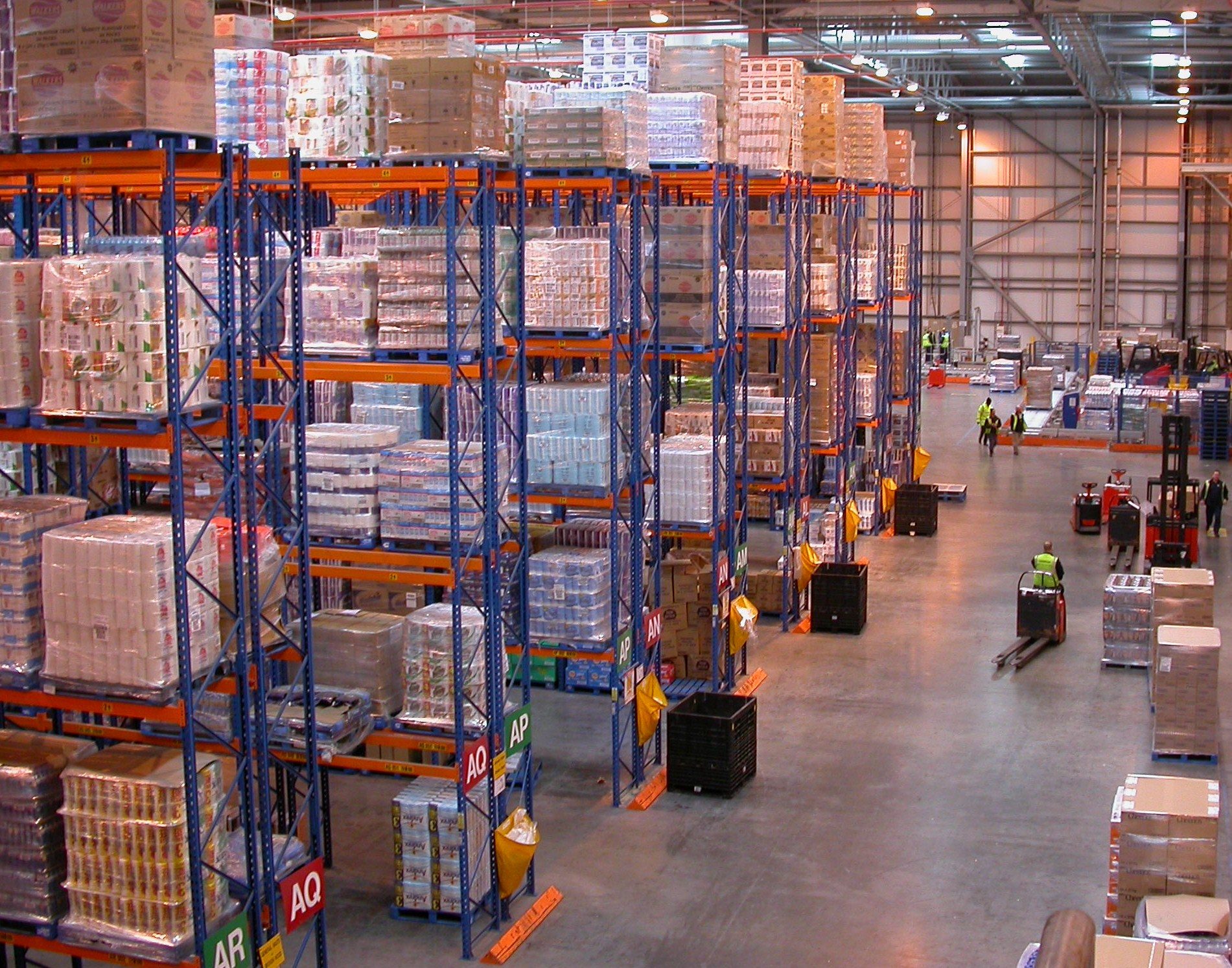
Photo: Nick Saltmarsh / Wikimedia Commons, CC BY 2.0

A common code structure
A typical location code looks like A-03-05-2, read as zone A, aisle 03, bay 05, level 2. Large warehouses add a slot within the level, for example A-03-05-2-1. Common conventions:
- Zone: a letter by product group or storage condition (A ambient, C chilled, F frozen, Q quarantine).
- Aisle: numbered from the receiving door inwards; odd numbers on one side of the walkway and even on the other keep walking routes short.
- Bay: numbered in the picker's direction of travel.
- Level: level 1 is at floor height, numbering upwards. Level 1 is usually the pick face, higher levels are reserve storage.
Rules for codes people can actually use
- Each code points to exactly one slot, with no duplicates and no gaps in the numbering.
- Keep each part a fixed length (03, not 3) so sorting in Excel and the software does not scramble the order.
- Stick location labels on the rack beam at scanning height, with a barcode or QR code and an arrow pointing to the slot above or below (Figure 2).
- When the layout changes, update codes in the system at the same time as the physical labels, so the codes and the goods never drift apart.
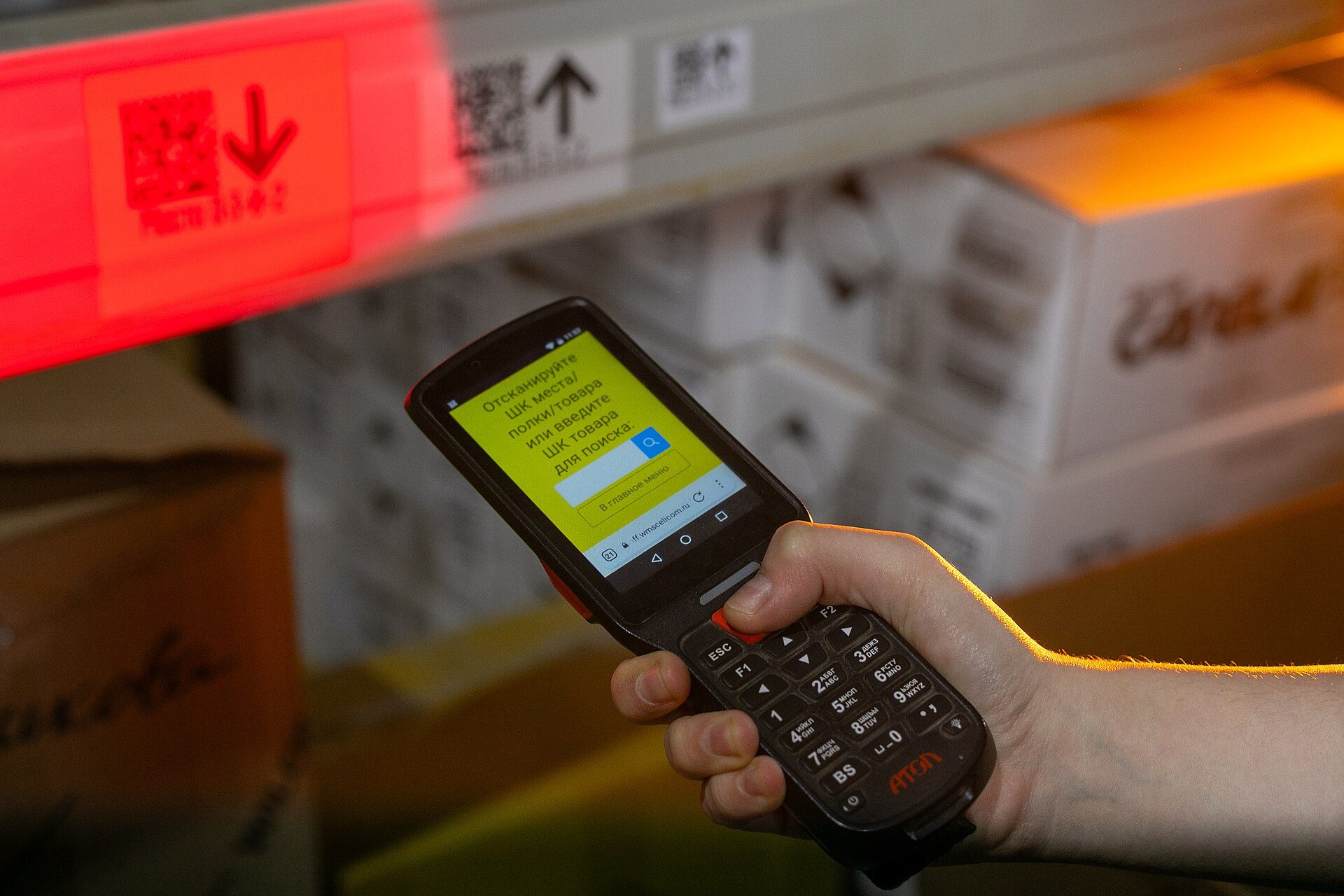
Photo: ОператороФФ (operatoroff.ru) / Wikimedia Commons, CC BY 4.0

Fixed and dynamic locations
Fixed locations: each SKU has its own slot; easy to remember, good for small warehouses with few SKUs. Dynamic locations: incoming goods go into any empty slot and the software records it; this saves space and suits large warehouses, but scanning the location at every put-away and pick is mandatory. With FEFO, dynamic locations usually go together with a WMS (warehouse management system) that suggests which batch to pick first.
Slotting for FIFO/FEFO: make it hard to pick the wrong batch
A good process is one where a new, rushed picker still takes the right batch. How you place the goods decides that more than any reminder does.
Load from the back, pick from the front
On pick-face shelves, new stock goes at the back or underneath, and old (or short-dated) stock is pushed to the front. A carton flow rack (inclined roller shelf) does this automatically: you load from the rear and cartons roll forward to the pick face. For pallets, drive-through racking (load at one end, pick at the other) gives FIFO; drive-in racking (single entry) gives LIFO, so use it only for single-batch or non-perishable goods.
One slot, one batch
Avoid mixing two batches with different expiries in the same pick slot whenever you can. If you must consolidate, put the shorter-dated batch in front and record both batches in the system. Reserve pallets on high levels hold one batch per pallet, with the batch label facing the aisle.
Replenishing pick faces
When a level-1 pick slot runs low, a forklift brings a reserve pallet down from a high level to refill it. The replenishment task must choose the reserve pallet by FEFO, not the nearest one for convenience. Any cartons left from the old batch are pulled to the front, and the new batch goes behind.
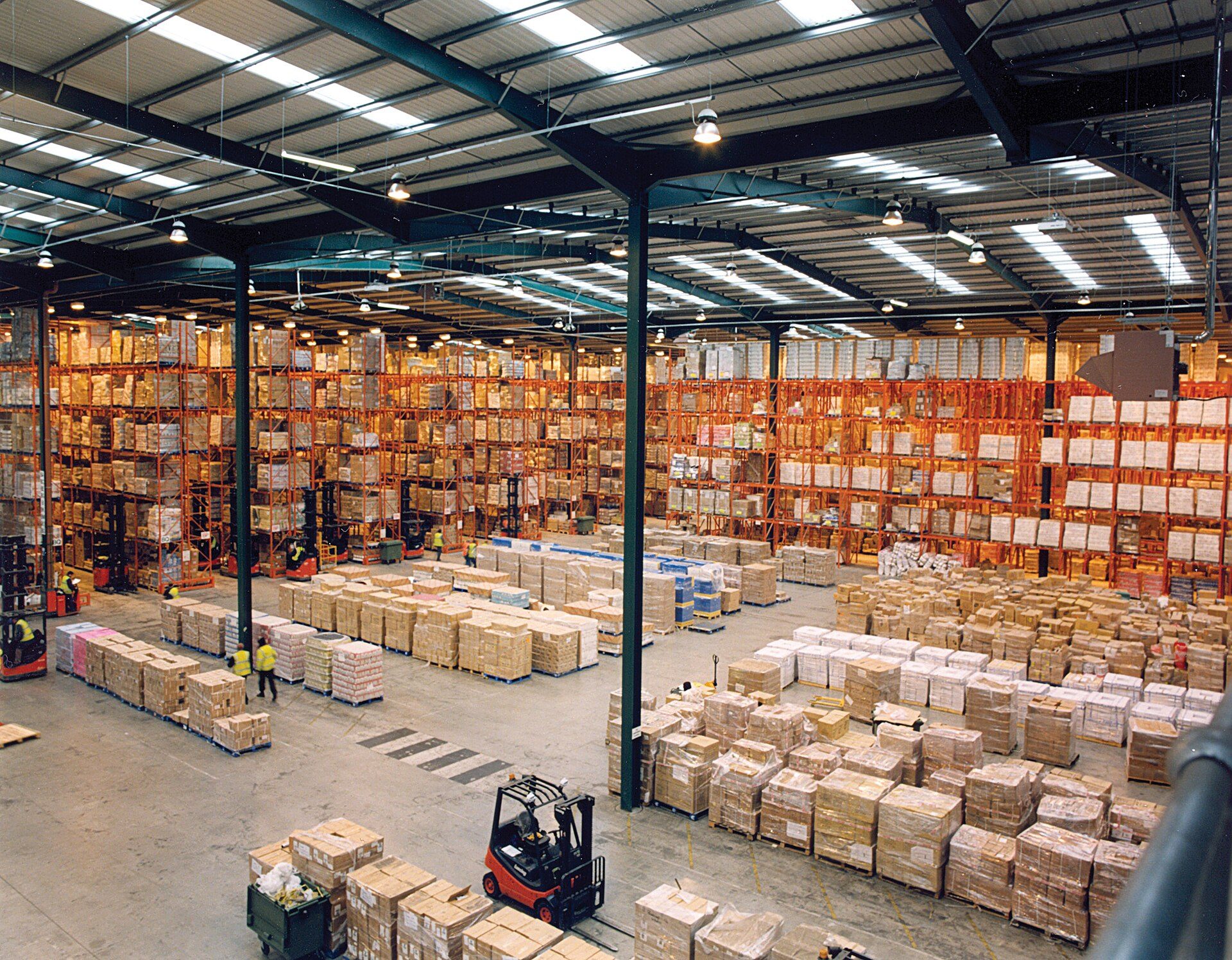
Photo: Axisadman / Wikimedia Commons, CC BY-SA 3.0

Make expiry dates easy to see
Besides the pallet label, many warehouses use coloured stickers by expiry month (one colour per month) or write the expiry in large marker on two sides of each carton. Pickers can see from the colour which batch goes first, without bending down to read tiny print on every box.
Worked example: picking 150 cartons of milk by FEFO
A distribution warehouse in Binh Duong receives an order on 24/11/2026: deliver 150 cartons of UHT milk in 180 ml packs (48 packs per carton) to a shop on 25/11/2026. The contract says goods must have at least 30 days of shelf life left on the delivery date. The warehouse holds 3 batches of the same SKU:
| Batch | Received | Expiry | Stock (cartons) | Location |
|---|---|---|---|---|
| L01 | 05/09/2026 | 20/02/2027 | 120 | A-02-03-1 |
| L02 | 20/09/2026 | 10/01/2027 | 80 | A-02-04-1 |
| L03 | 10/10/2026 | 15/04/2027 | 200 | A-05-01-2 |
| Total stock | 400 | |||
Step 1: check remaining shelf life on the delivery date
- L02: from 25/11/2026 to 10/01/2027 = 5 days (rest of November) + 31 days (December) + 10 days = 46 days, which is at least 30, so it passes.
- L01: 5 + 31 + 31 (January) + 20 = 87 days, passes.
- L03: about 4.5 months left, passes.
Step 2: sort by expiry and pick the full quantity
Under FEFO the order is L02 (10/01/2027), then L01 (20/02/2027), then L03 (15/04/2027). Taking all of L02 gives 80 cartons, leaving 150 − 80 = 70 cartons, which come from L01. L03 is not touched.
| Pick order | Location | Batch | Expiry | Qty picked | Batch stock after |
|---|---|---|---|---|---|
| 1 | A-02-04-1 | L02 | 10/01/2027 | 80 | 0 |
| 2 | A-02-03-1 | L01 | 20/02/2027 | 70 | 50 |
| Total picked | 150 | ||||
Step 3: reconcile stock after picking
Stock after picking: L01 has 120 − 70 = 50, L02 has 0, L03 has 200. The total is 50 + 0 + 200 = 250 cartons, matching 400 − 150 = 250. Packs shipped: 150 × 48 = 7,200 packs. The delivery note shows two batch lines, L02 for 80 cartons and L01 for 70 cartons, so the shop and the accountant can check them.
What if you ran FIFO blindly?
FIFO would take all 120 cartons of L01 (received first), then 30 more from L02. That leaves 50 cartons of L02 expiring on 10/01/2027, only about six weeks away, which will probably fail the next order's shelf-life requirement and end up discounted or scrapped. And if the customer required at least 60 days of remaining life, L02 (46 days) would be excluded in step 1; you would then take 120 cartons of L01 and 30 of L03, and tell the warehouse lead so L02 can be moved through another channel quickly.
Safety when putting away and picking from high racks
Running FIFO/FEFO means you often rotate pallets, bring goods down from high levels and reach into old slots to get the earlier batch. This is when warehouse accidents are most likely.
Warehouse safety warning: Only trained and authorised staff may operate a forklift; people on foot never stand or walk under raised forks or a raised pallet, and keep clear of reversing trucks. Never climb racks to reach a carton or stand on a raised pallet; use a ladder with handrails or have the forklift bring the whole pallet down. Never exceed the load shown on the rack sign, never use broken pallets and never let goods overhang the beams; if a rack is bent or an upright has been hit by a truck, report it immediately and cordon it off, and stop loading it. When lifting heavy cartons by hand, bend your knees, keep your back straight, hold the load close and do not twist while lifting; if it is too heavy, use a trolley, a pallet jack or a second person. Always wear a helmet, steel-toe safety shoes and a high-visibility vest in areas with forklifts.
Rotating batches safely
When you need a batch at the back, do not drag cartons out through a narrow gap on a high level. Ask the forklift to bring the front pallet down to the floor, take the batch behind, then put everything back in FEFO order. Mark off the rotation area with tape or warning posts.
Forklifts and aisles
Aisles between racks must stay clear; no "just five minutes" pallets. Goods waiting for put-away belong in a painted staging area. At the dispatch dock, the forklift carries pallets into the container or truck, and helpers stay outside the truck's turning circle (Figure 4).
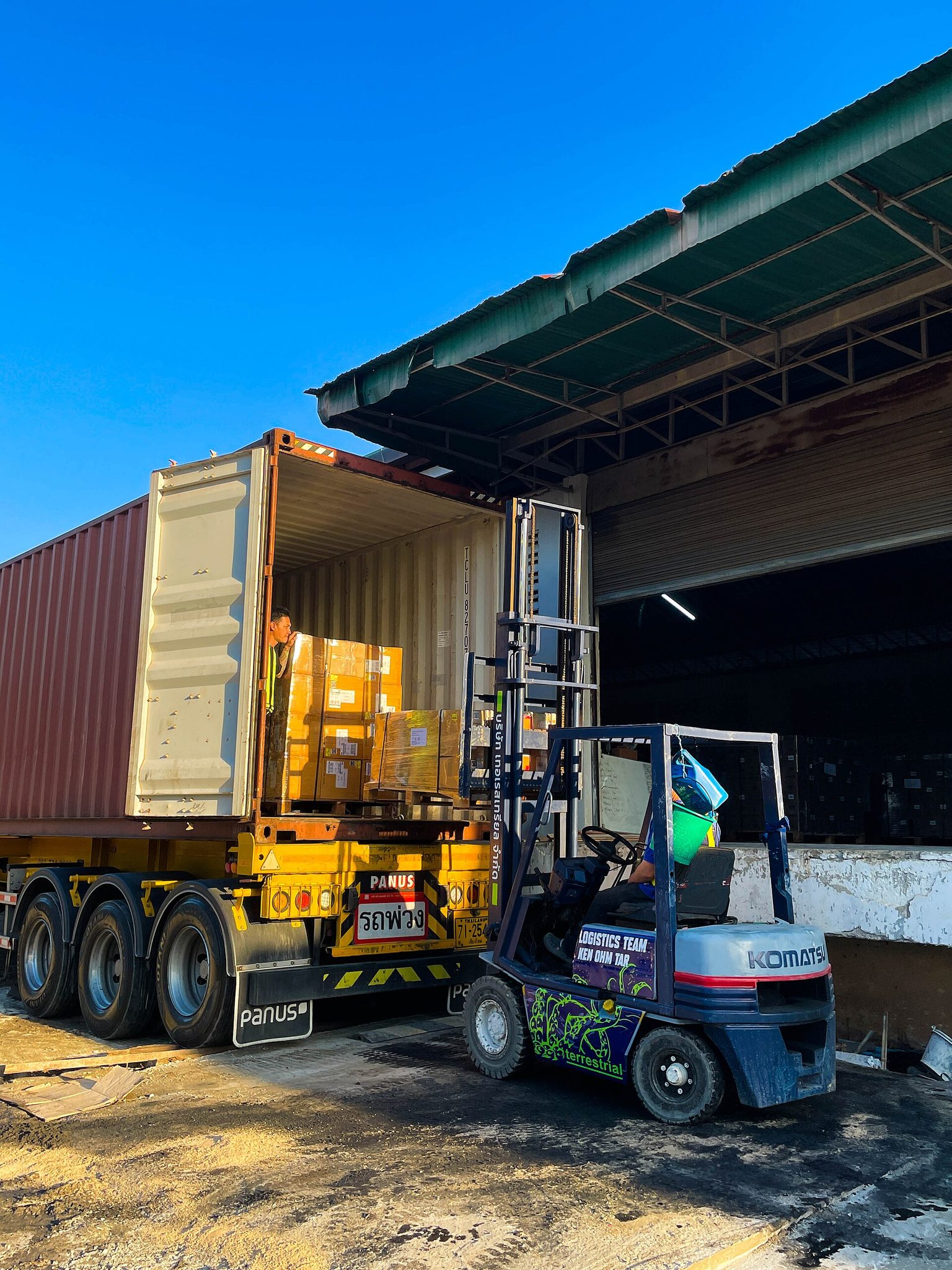
Photo: Goterrestrial / Wikimedia Commons, CC BY 4.0

Common mistakes that break FIFO/FEFO
Picking the nearest carton
Sign: old-batch cartons sit at the back of the pick slot while the new batch at the front runs down. Cause: new stock was loaded in front to save time. Fix: make back-loading the rule, pull old stock forward on every replenishment, and have the shift lead spot-check a few slots each shift.
Not recording batch numbers at receiving
Sign: the software only shows total stock, with no batches. Cause: rushed receiving that skipped batch and expiry entry. Fix: no put-away without a batch label; if needed, stop and record the missing data before putting away.
Put-away to the wrong slot without scanning
Sign: the system says the batch is in A-02-04-1, but it is not there. Cause: goods put into a nearby empty slot without scanning the location. Fix: always scan the location and then the item at put-away and at picking (Figure 5); report misplaced goods so cycle counting can correct them.
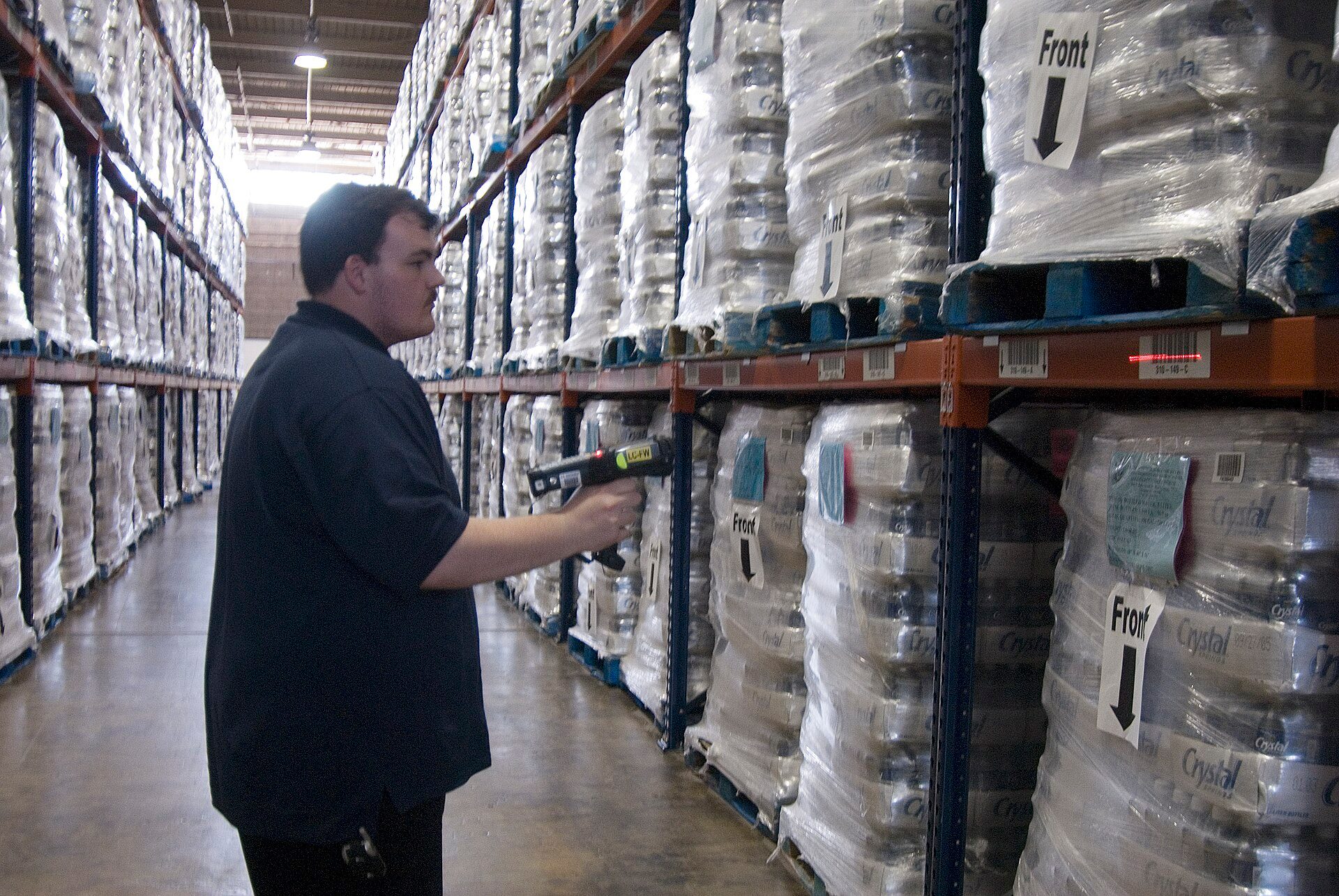
Photo: Liz Roll / Wikimedia Commons, Public domain

Forgetting the customer's shelf-life rule
Sign: the shop refuses the delivery because the dates are too short. Cause: FEFO was applied without filtering by the contract's minimum remaining life. Fix: add step 1 from the example above to the pick list, or set the rule in the WMS.
Frequently asked questions
What is the difference between FIFO and FEFO?
FIFO chooses the batch with the earliest receiving date; FEFO chooses the batch with the nearest expiry date. When a later batch has a shorter expiry, FEFO ships it first and FIFO does not.
When does a warehouse use LIFO?
When the storage method only allows access to the outer or top layer (block stacking, drive-in racks) and the goods have no expiry and do not deteriorate, such as sand, stone or steel. Never use LIFO for goods with a shelf life.
Which issuing rule is right for cosmetics and food?
FEFO, combined with a check against the customer's minimum remaining shelf life. If two batches have the same expiry, the one received first goes first.
How do I run FIFO in a small warehouse without software?
Use stock cards or an Excel file recording receiving date, batch, expiry and location; load from the back and pick from the front; use coloured stickers by expiry month. Every week, review batches with less than a month of life left and report them.
How long should a location code be?
Long enough for every slot to be unique, usually zone, aisle, bay and level, like A-03-05-2. Keep each part a fixed length and use one convention across the whole warehouse.
Practice tasks and self-assessment
- Draw a rack area with 2 aisles, each with 6 bays and 3 levels; assign location codes to all 36 slots using the zone, aisle, bay, level convention.
- Given 3 batches of one SKU (make up the receiving dates, expiries and stock), write a FEFO pick list for 100 cartons with at least 45 days of remaining life required; work out stock after picking.
- Walk through a warehouse (or a supermarket), find 3 places where new stock sits in front of old stock and write down how to re-slot them.
Self-assessment criteria
- Pass: all 36 location codes are unique, the same length and lead to the right slot.
- Pass: the pick list excludes the batch with too little life, picks in expiry order, totals the order quantity and the before and after stock adds up.
- Pass: you can explain why you never climb racks or stand under a raised pallet.
- Not yet: choosing batches by receiving date for goods with an expiry, or stock totals before and after that do not match.
Once location codes and FIFO/FEFO are second nature, move on to the next step of the roadmap: Picking & packing e-commerce orders, where the batch-and-location pick lists you just learned are used hundreds of times a shift.
Keep learning warehouse work: after FIFO/FEFO come picking and packing e-commerce orders, WMS software and scanners, and stocktakes and discrepancies. See the 8-step warehouse operative roadmap.