
Closing a sale properly means asking the customer for a decision at the moment they clearly understand the solution and have given buying signals, with one clear question, and then staying quiet while they answer. Beginners usually make one of two mistakes: they give a great consultation but never dare to ask "which package would you like", or they push customers with fake promotions and overblown promises, make one sale and lose the customer. This lesson is written the way a sales team lead coaches a newcomer: reading buying signals, five closing techniques, closing over the phone, handling "let me think about it", and keeping sales ethics so customers come back.
By the end of this lesson, you will be able to:
- Recognise six common buying signals and know when not to close yet.
- Use five closing techniques: the trial close, summary close, alternative close, small-step close and conditional assumptive close.
- Handle "let me think about it" with clarifying questions and book a next step with a date and time.
- Run a closing phone call following a six-step script.
- Work out sales funnel conversion rates and commission with figures that add up.
Learning sales properly? Handling objections and closing is step 5 of the roadmap, after the sales process, prospecting, cold calling and needs-based consulting. See the 8-step sales representative roadmap to learn in the right order.
What is closing, and why are beginners afraid of it?
Closing is the step where you ask the customer to commit: sign a contract, transfer payment, pay a deposit or agree to a specific next step. It is not an end-of-meeting trick but the natural result of the earlier steps. If you have understood the need and presented the right solution, the closing question is simply an invitation to move forward.
Three reasons beginners avoid closing
- Fear of rejection: if you do not ask, nobody says "no". But if you do not ask, nobody buys either.
- Fear of seeming "salesy": many people think closing means pushing. In fact customers are busy, and they need your help to decide.
- Needs not explored enough: closing early, before the customer sees the value, really will get you rejected.
Ethical closing
Your goal is for the customer to buy what they actually need and still be happy three months later. Sell against their needs and sooner or later they cancel, leave a bad review, and you lose every referral. Ethical closing means: be truthful about price and conditions, never invent scarcity, leave the customer free to say "no", and sometimes advise them not to buy yet.
In a face-to-face consultation like Figure 1, most of the time goes on listening and asking; the closing question takes only the last minute or two.
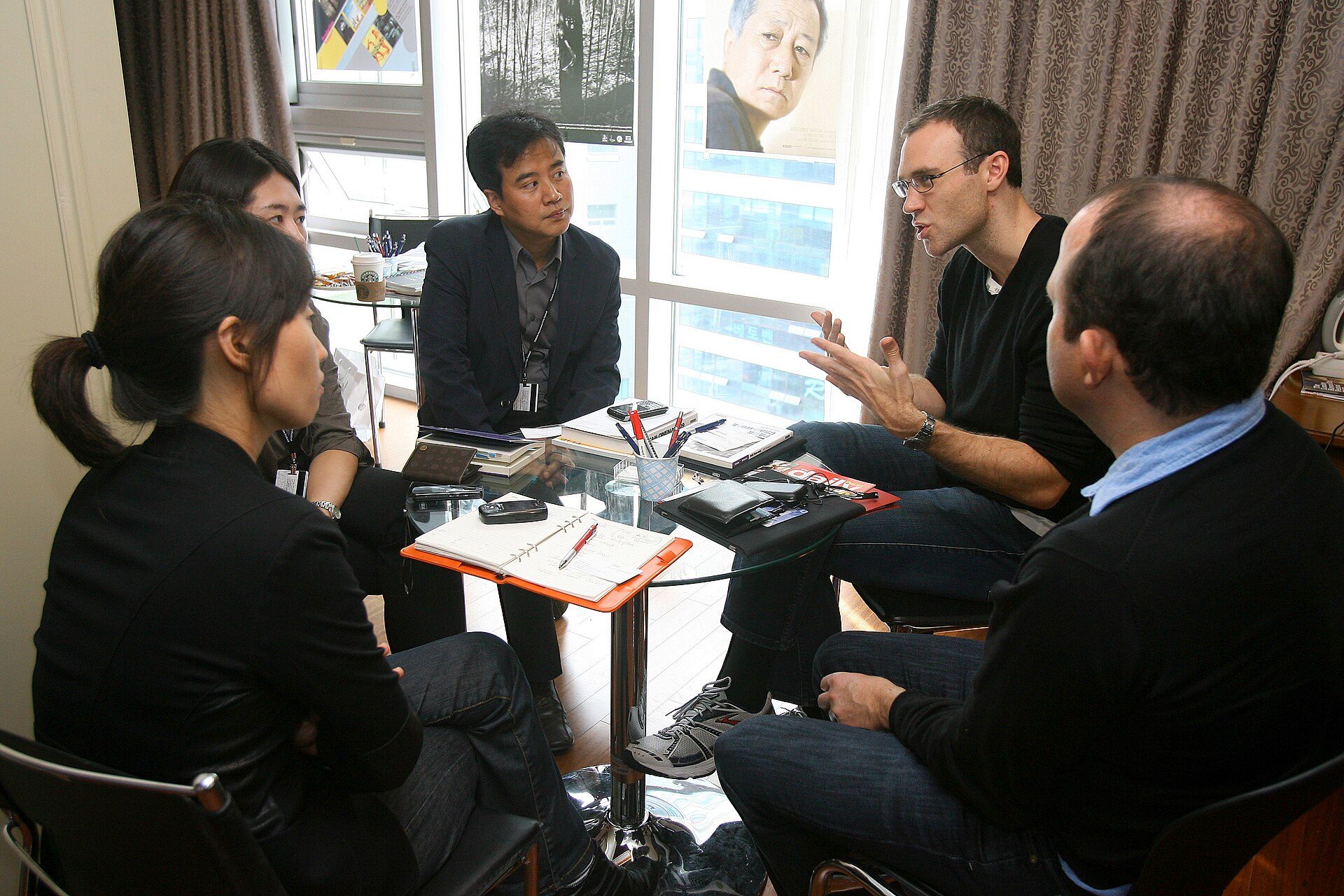
Photo: Injeongwon / Wikimedia Commons, CC BY-SA 3.0

Reading buying signals: when to close
Closing at the right time matters more than closing cleverly. Customers usually give signals through questions and behaviour before they say "yes".
Six common buying signals
| Signal | What the customer says | What you should do |
|---|---|---|
| Asks about price or payment | "Can I pay in instalments?" | Answer clearly, then trial close |
| Asks about setup details | "How long does installation take?" | Give a timeline, ask for a start date |
| Imagines using it | "So where do I see today's sales at closing time?" | Show briefly, then summary close |
| Asks about warranty or support | "Who fixes it if something goes wrong?" | Explain the real policy, promise nothing extra |
| Brings in the decision-maker | "Let me get my husband to listen too." | Recap for the newcomer, then alternative close |
| Negotiates | "Can you knock a bit off?" | Negotiate within your authority, then close |
When not to close yet
When the customer is still asking "what is this for", when you do not know who makes the decision, or when your solution does not really solve their problem. In those cases go back to exploring needs rather than forcing a close.
Questions to check before closing
Ask yourself three things: has the customer clearly stated their problem, have they agreed that this solution solves it, and does the person in front of you have authority to decide? If all three are "yes", close.
Five closing techniques and sample closing lines
The examples below use a product that is easy to picture: sales management software for a neighbourhood grocery store, at 1,990,000 VND (about 78 USD) for one year or 3,580,000 VND for two years, with a free 14-day trial (example prices, 2026 reference).
1. The trial close
A question that tests readiness without asking for a decision. "If the software warns you when stock is running low, as you just saw, would that help with reordering?" If the customer says "yes", move forward; if they hesitate, you know where the obstacle is.
2. The summary close
Restate the problems the customer mentioned and how the solution addresses them, then ask for a decision. "You need three things: daily sales figures, no stock going missing, and your daughter being able to see the books from far away. This package does all three. Shall we start this week?"
3. The alternative close
Offer two options that both suit the customer. "Would you like the one-year package at 1,990,000 VND or the two-year package at 3,580,000 VND, which works out to 1,790,000 VND a year?" Only use it once the customer wants to buy; used too early it becomes pressure.
4. The small-step close
When the customer is not ready to pay, close on a smaller commitment: "Let's install the 14-day trial today, and I'll drop by next Friday to see how you're getting on?" A small step is still a close, because it has a date and a specific action.
5. The conditional assumptive close
When the customer has given several buying signals, you speak as if the purchase is nearly done and ask a detail: "Shall I put Huong Lan Grocery as the store name on the invoice?" This technique is powerful and easily abused: only use it when the customer has genuinely agreed on the solution, and stop immediately if they say "hold on".
The general secret: ask, then stay quiet
After the closing question, do not say anything more. Beginners fear silence, keep talking, offer a discount unprompted or give the customer a way out. Count silently to five and wait.
Handling "let me think about it"
"Let me think about it" rarely means the customer will actually think about it. Usually it is a polite way of saying "there is something bothering me that I don't want to say yet". Your job is to find that thing, not to force an immediate answer.

Photo: Shixart1985 / Wikimedia Commons, CC BY 2.0

Four steps
- Agree: "Of course, it's worth thinking about."
- Clarify: "To help you decide faster, is it mainly the price, the features, or do you need to check with someone?"
- Address the real obstacle: for price, talk about value and payment options; for features, demo that part again; if they need to ask a spouse or partner, suggest a joint conversation.
- Book the next step with a date and time: "So I'll call you back at 8 pm on Thursday, after you've talked with your wife, is that all right?"
Other objections and sample replies
| Customer says | What usually lies behind it | Sample reply |
|---|---|---|
| "It's too expensive." | Has not seen the value, or is comparing with something cheaper | "What are you comparing it with? I'll go through it point by point so it's easier to choose." |
| "The other company is cheaper." | Wants a discount, or is genuinely considering a competitor | "That may be so. Tell me what they include and I'll explain the differences, so you can pick what fits best." |
| "I don't need it right now." | The problem is not painful enough, or the timing is wrong | "When would this become a priority for you? I'll note it and get in touch at the right time." |
| "Just send me the info on Zalo." | Wants to end the call | "I'll send it right away. So I send the right thing, which part interests you most?" |
When to stop
After two clarifying attempts, if the customer still declines or says clearly "I don't need it", thank them and stop. Ask permission to get back in touch in a few months if appropriate. Pushing further only gets your number blocked.
Closing over the phone: a six-step script
On the phone the customer cannot see your face and can hang up at any time. Keep sentences short and structured, with no turn longer than 20–30 seconds.
Sample script: calling back after a trial
- Greet and check timing: "Hello Ms Lan, this is Minh from the sales software company. Do you have five minutes to talk?"
- Recall the context: "You installed the trial last week; today is day 10."
- Ask about the experience: "How did you find the low-stock alerts? Was anything hard to use?"
- Trial close and summarise: "You said you haven't run out of instant noodles unexpectedly this week, and your daughter can see the takings from far away. Those are exactly the two things you needed at the start, right?"
- The closing question: "There are four trial days left. Would you like to switch to the one-year or the two-year package, so your data stays and you don't have to re-enter it?" Then stay quiet.
- Confirm and set the next step: "I'll send the contract and payment details on Zalo right away; please take a look and reply before 5 pm. Thank you."
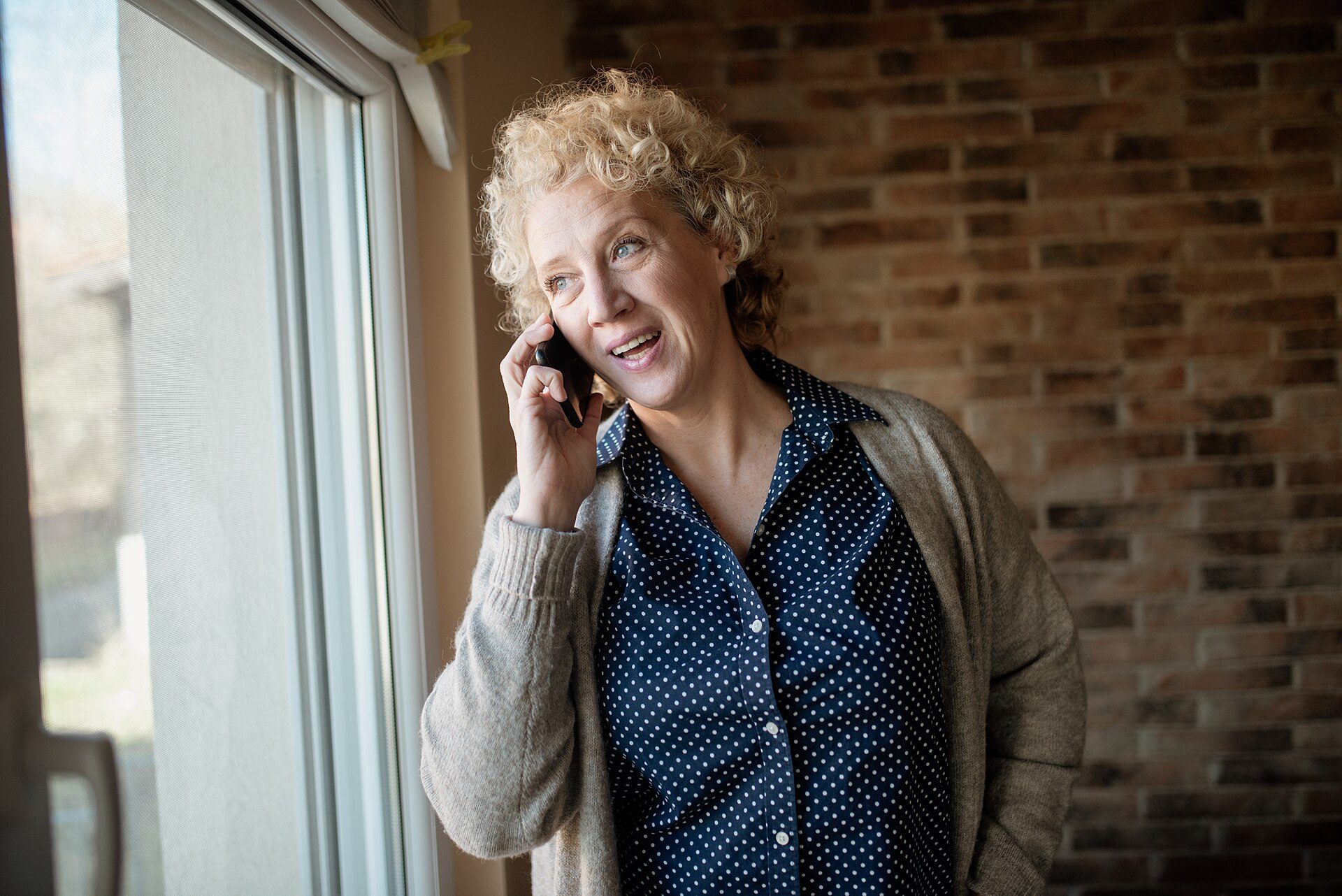
Photo: Shixart1985 / Wikimedia Commons, CC BY 2.0

Calling tips
- Call at the time the customer agreed or during office hours; avoid lunch breaks and late evenings.
- Stand up or sit straight while calling; your voice will sound stronger.
- Log notes in the CRM straight after hanging up: outcome, the customer's concern, next appointment.
Sales ethics and legal limits
Sales careers live on reputation and referrals. A contract closed on a false promise can cost you the customer, your job, and lead to legal trouble.
Ethical and legal note: Never misstate the price, hidden fees, features or warranty period; never create fake scarcity or deadlines ("today only" when the same price applies tomorrow); never run down competitors with unverified claims; never push a customer to sign after they have said "no". Only call or send promotional messages to people who have agreed to receive them or have an existing relationship with you, respect requests to stop contacting them, and never buy or sell lists of phone numbers or customer data: in Vietnam this can breach the rules on spam messages and calls and on personal data protection. Contracts and invoices must show the agreed price and terms; check the specific conditions in current regulations and company policy, and ask the legal team when unsure. When meeting a customer for the first time, choose a public place and tell your team lead about the appointment.
Negotiating price within your authority
Know exactly how large a discount you can approve yourself. Do not offer a discount before the customer asks. When you do give one, get something in return: a year paid upfront, signing this week, or a referral to another store. If it exceeds your authority, say so honestly: "I need to check this with my team lead; I'll get back to you before 3 pm."
When to advise a customer not to buy
If the store sells only a few dozen items and the owner keeps an excellent notebook, the software may not be needed yet. Saying so loses you a small order today but earns you someone who will recommend you to the whole street.
Worked example: a one-week sales funnel and commission
Minh is a new sales representative selling the software above, on 10% commission. These are the figures for one working week.
| Funnel stage | Count | Rate vs previous stage |
|---|---|---|
| Outbound calls to prospects who requested a consultation | 120 | – |
| Prospects who answered and talked | 36 | 36 ÷ 120 = 30% |
| Prospects who agreed to a demo or trial | 12 | 12 ÷ 36 ≈ 33% |
| Demos or trials actually held | 9 | 9 ÷ 12 = 75% |
| Contracts closed | 3 | 3 ÷ 9 ≈ 33% |
Sales and commission
- 2 one-year contracts: 2 × 1,990,000 = 3,980,000 VND.
- 1 two-year contract: 3,580,000 VND.
- Total sales: 3,980,000 + 3,580,000 = 7,560,000 VND.
- 10% commission: 7,560,000 × 10% = 756,000 VND.
Reading the funnel to improve
The rate from call to close is 3 ÷ 120 = 2.5%. To get 6 contracts a week, Minh has two options: make twice as many calls (240), or lift the close rate after demos from 3/9 to 6/9 using the techniques above. The second is more sustainable and less tiring. Looking at the table, Minh sees that 3 of 12 appointments were cancelled, so next week he will try texting a confirmation the day before. Real income for sales representatives depends on the company, the product and the base-salary-plus-commission structure (2026 reference, varies by area).
Common closing mistakes
Never asking for the close
Sign: lots of "very pleasant" meetings but no contracts. Cause: fear of rejection. Fix: prepare one closing line before every meeting and make yourself say it.
Talking after the closing question
Sign: offering extra discounts the customer never asked for. Cause: discomfort with silence. Fix: count silently to five and let the customer speak next.
Closing without the decision-maker
Sign: the customer agrees, then a few days later says "my family said no". Cause: not asking who decides. Fix: ask early, "Apart from you, who else is involved in this decision?" and invite them to the demo.
Promising extras to close faster
Sign: customers call demanding features or deals the company does not offer. Cause: verbal promises outside the contract. Fix: only promise what can be written into the contract; for anything uncertain say "let me check and get back to you".
Frequently asked questions
Which closing line works best?
There is no magic closing line. The effective one fits the customer's stage: trial close when they are hesitating, alternative close when they already want to buy, small-step close when they are not ready to pay.
How is closing over the phone different from closing in person?
On the phone you lose body language, so you need to ask more questions to understand what the customer is thinking, use shorter sentences, and always end with a specific appointment. Send a written summary right after the call so the customer can reread it.
After "let me think about it", how soon should I call back?
At the time you proposed and the customer agreed, usually 2–5 days. If there is no specific appointment, that is a sign you have not finished handling the objection.
Should I use a "today only" promotion to close?
Only if the offer genuinely ends today. A fake deadline may win one order, but when customers find out they lose trust, and it is false information given to a buyer.
Practice exercise and self-assessment
- Write five closing lines for the product you sell (or the example software), one per technique.
- Role-play with a friend: the "customer" says "let me think about it" three times with three different hidden reasons; use the four steps to uncover each one.
- Record one real week of your sales funnel in a table like the example, and calculate each rate, total sales and commission.
Self-assessment criteria
- Pass: every consultation ends with a closing question or an appointment with a date and time.
- Pass: after the closing question you wait in silence and do not discount on your own.
- Pass: your funnel and commission figures add up and match what is logged in the CRM.
- Not yet: using fake deadlines, promising things outside the contract, or pushing on after the customer has clearly said "no".

Photo: rawpixel.com / Wikimedia Commons, CC0

Once you can close, move on to the next step of the roadmap: Quotes, contracts, CRM and after-sales care, where you learn to turn the handshake into a clear contract and keep customers buying again and referring others.
Keep learning sales: after closing come quotes, contracts, CRM, after-sales care, a 30-day live pipeline project and job interviews. See the 8-step sales representative roadmap.