Incoterms 2020 is the set of 11 international trade rules published by the International Chamber of Commerce (ICC), in effect since 1 January 2020. They set out where the seller delivers the goods, at what point risk passes from seller to buyer, who pays the main carriage, who buys insurance and who handles export and import customs clearance. Each rule is a three-letter code such as EXW, FOB, CIF or DDP, written in the contract with a place and the version, for example "FOB Cat Lai Port, Vietnam, Incoterms® 2020". Incoterms are not law: they only bind the parties when the contract incorporates them. This lesson explains every rule with a cost-and-risk table, compares FOB with CIF, and works through FOB, CFR and CIF prices for a Vietnamese export shipment.
By the end of this lesson, you will be able to:
- List all 11 Incoterms 2020 rules and split them correctly into the two transport groups.
- Identify for each rule the point where risk passes, who pays main carriage, who insures and who clears customs.
- Explain how FOB and CIF differ, and why CIF does not mean the seller carries the risk to the destination port.
- Build FOB, CFR and CIF prices from an ex-warehouse price, with every line adding up.
- Choose a suitable rule for containerised cargo, bulk cargo and door-to-door deliveries.
Training to be an import–export officer? Incoterms and sales contracts are step 2 of the roadmap, right after the flow of an export or import shipment. See the 8-step import–export officer roadmap to learn in the right order.
What is Incoterms 2020 and what is it for?
Between the seller's warehouse and the buyer's warehouse, an international shipment passes through many stages: loading, trucking to the port, export clearance, loading on board, the sea voyage, unloading, import clearance and delivery to the warehouse. Every stage costs money and carries a risk of loss or damage. Incoterms are a shared language that lets two parties in two countries divide those stages with one abbreviation instead of pages of contract text.
What Incoterms cover
- Delivery: where and when the seller has completed delivery.
- Risk: from which moment the buyer bears loss or damage to the goods.
- Costs: who pays main carriage, handling charges, clearance charges and insurance.
- Formalities: who handles export and import customs and pays the related duties.
What Incoterms do not cover
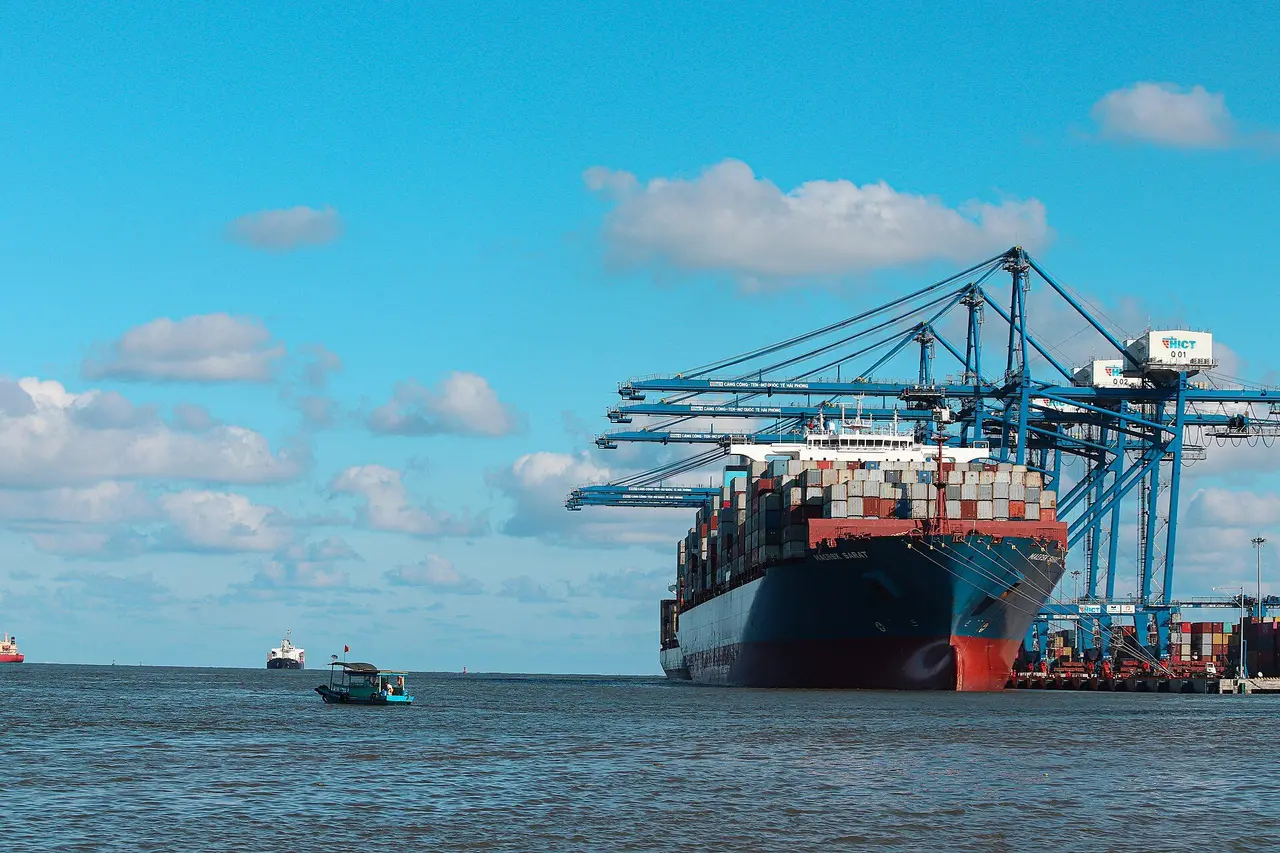
Incoterms say nothing about transfer of ownership, price, payment method (L/C, T/T), governing law or remedies for breach. Those must be written separately in the sales contract (Figure 1). Newcomers often think "under CIF the seller is responsible all the way to the destination"; that is a misunderstanding about risk, explained in the FOB and CIF section.

Photo: Blogtrepreneur / Wikimedia Commons, CC BY 2.0

How to write it correctly in a contract
The formula is [Rule] + [precise place] + Incoterms® 2020. For example: "CIF Port of Rotterdam, Netherlands, Incoterms® 2020" or "FCA Tan Cang Song Than ICD, Binh Duong, Incoterms® 2020". The more precise the place, the fewer disputes. Always state the version year, because parties may still choose the 2010 rules, and the two versions differ on several points.
The 11 Incoterms 2020 rules: who bears which costs and risks
The 11 rules fall into two groups. Group 1 has 7 rules for any mode of transport (road, rail, air, sea, multimodal): EXW, FCA, CPT, CIP, DAP, DPU, DDP. Group 2 has 4 rules for sea and inland waterway transport only: FAS, FOB, CFR, CIF.
Summary table of the 11 rules
| Rule | Risk passes to the buyer when | Seller pays main carriage? | Insurance | Export / import clearance |
|---|---|---|---|---|
| EXW – Ex Works | Goods are placed at the buyer's disposal at the named place (usually the seller's premises), not loaded on any vehicle | No | No obligation on either party | Buyer / Buyer |
| FCA – Free Carrier | At the seller's premises: goods loaded on the buyer's vehicle. Elsewhere: goods on the seller's vehicle, ready for unloading, at the disposal of the carrier nominated by the buyer | No | No obligation on either party | Seller / Buyer |
| CPT – Carriage Paid To | Goods are handed to the first carrier | Yes, to the named destination | No obligation on either party | Seller / Buyer |
| CIP – Carriage and Insurance Paid To | Goods are handed to the first carrier | Yes, to the named destination | Seller insures, minimum Institute Cargo Clauses (A), 110% of value | Seller / Buyer |
| DAP – Delivered at Place | Goods are on the arriving means of transport, ready for unloading, at the named destination | Yes | No obligation (the seller bears the risk so usually insures) | Seller / Buyer |
| DPU – Delivered at Place Unloaded | Goods have been unloaded at the named destination | Yes, including unloading | No obligation (the seller usually insures) | Seller / Buyer |
| DDP – Delivered Duty Paid | Goods are on the arriving means of transport, ready for unloading, cleared for import | Yes | No obligation (the seller usually insures) | Seller / Seller (including import duty) |
| FAS – Free Alongside Ship | Goods are placed alongside the vessel at the named port of shipment | No | No obligation on either party | Seller / Buyer |
| FOB – Free On Board | Goods are on board the vessel at the named port of shipment | No | No obligation on either party | Seller / Buyer |
| CFR – Cost and Freight | Goods are on board the vessel at the port of shipment | Yes, to the named destination port | No obligation on either party | Seller / Buyer |
| CIF – Cost, Insurance and Freight | Goods are on board the vessel at the port of shipment | Yes, to the named destination port | Seller insures, minimum Institute Cargo Clauses (C), 110% of value | Seller / Buyer |
Note: "no obligation on either party" means Incoterms do not require anyone to insure; whoever carries the risk on a given leg should insure that leg. ICC (A) and ICC (C) are the Institute Cargo Clauses of the London insurance market; (A) is the widest cover and (C) the narrowest.
A memory aid by first letter
- E (EXW): the seller does almost nothing and hands over at its own premises.
- F (FCA, FAS, FOB): the seller hands the goods to a carrier hired by the buyer; the buyer pays main carriage.
- C (CPT, CIP, CFR, CIF): the seller hires and pays for main carriage, but risk has already passed at origin. This group has "two critical points": risk passes at origin, costs stop at destination.
- D (DAP, DPU, DDP): the seller carries risk and cost all the way to the destination.
What changed from Incoterms 2010
- DAT (Delivered at Terminal) became DPU, and the place of delivery can be anywhere, not only a terminal.
- CIP raised minimum insurance cover to clauses (A); CIF keeps clauses (C).
- Under FCA, the parties can agree that the buyer instructs its carrier to issue the seller an on-board bill of lading, which helps with letter of credit payments.
- Sellers and buyers may use their own transport under FCA and the D rules, and security-related costs are allocated more clearly.
How do FOB and CIF differ?
FOB and CIF are the two rules Vietnamese traders use most: exporters often sell FOB, importers often buy CIF. Both are for sea transport only and share the same risk point: once the goods are on board the vessel at the port of shipment (Figure 2).
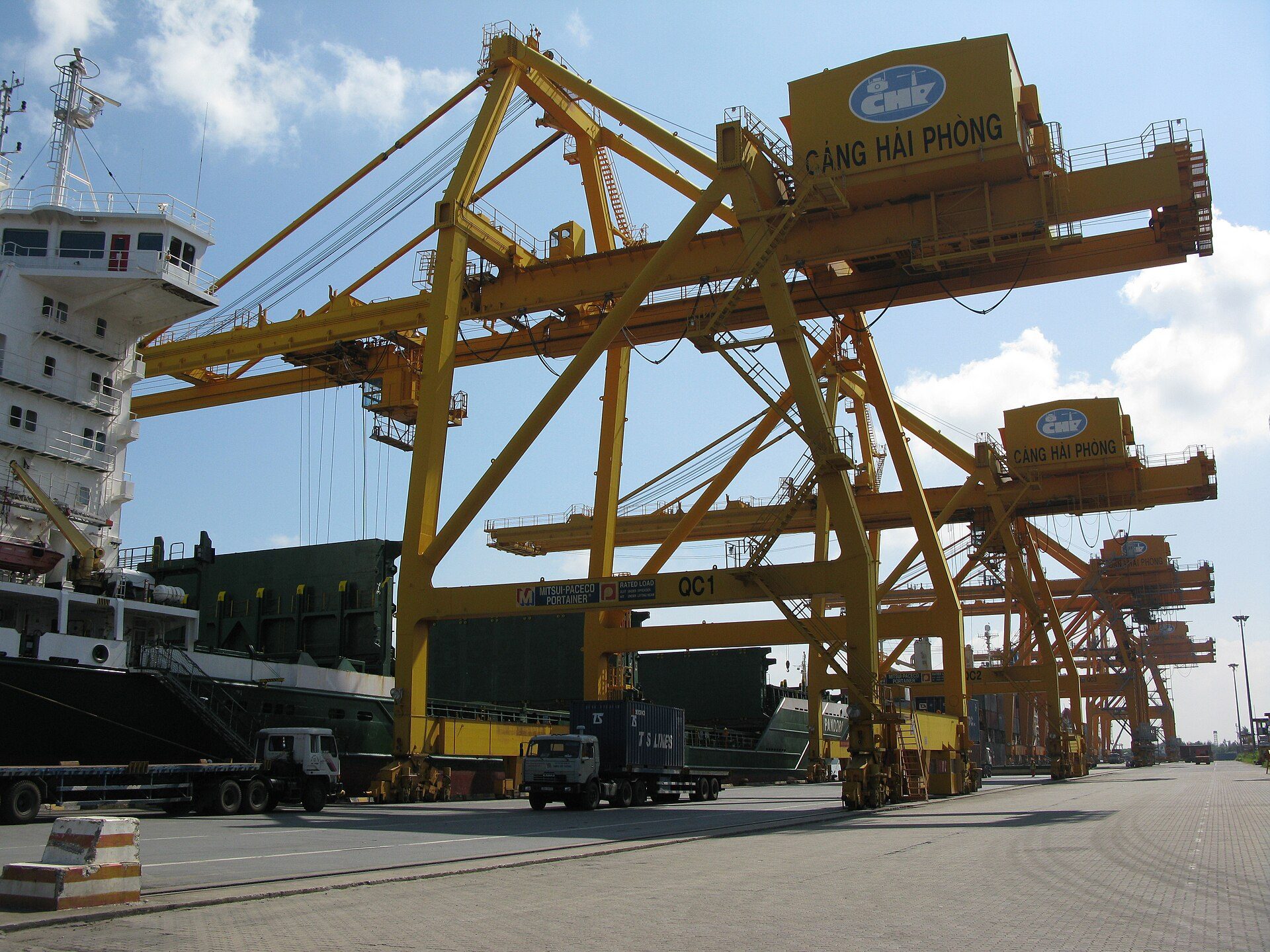
Photo: Phó Nháy / Wikimedia Commons, Public domain

What they have in common
- Risk passes to the buyer once the goods are on board at the port of shipment (for example Cat Lai or Hai Phong).
- The seller handles and pays for export clearance; the buyer handles import.
Where they differ
| Item | FOB | CIF |
|---|---|---|
| Who books the ship and pays ocean freight | Buyer | Seller |
| Who buys insurance | No obligation; the buyer insures to protect itself | Seller must insure, minimum ICC (C), 110% of value, with the buyer as beneficiary |
| Place named after the rule | Port of shipment: "FOB Cat Lai" | Destination port: "CIF Rotterdam" |
| Selling price | Lower (excludes freight and insurance) | Higher (includes freight and insurance premium) |
| Who controls the sailing schedule | Buyer (through its nominated line or forwarder) | Seller |
A common misunderstanding about CIF
Because the seller pays freight to Rotterdam, many people assume the seller carries the risk to Rotterdam. It does not: if the ship meets a storm and a container is lost overboard, the loss is the buyer's; the buyer claims from the insurer under the policy the seller bought and transferred to them. That is exactly why CIF requires insurance.
Worked example: FOB, CFR and CIF prices for a container of cashews
A company in Binh Phuoc sells one 20-foot container of cashew kernels to a buyer in the Netherlands. The ex-warehouse (EXW) price is USD 30,000. The costs below are assumed figures for practice; real prices depend on the date, shipping line and route.
Step 1: from ex-warehouse to FOB Cat Lai
- Domestic costs the seller pays until the goods are on board: bringing the empty container to the warehouse for stuffing and trucking it to port, terminal handling at origin, export customs clearance and documents: USD 450 in total.
- FOB price = 30,000 + 450 = USD 30,450.
Step 2: from FOB to CFR Rotterdam
- Ocean freight for one 20-foot container, Cat Lai to Rotterdam: USD 1,200.
- CFR price = 30,450 + 1,200 = USD 31,650.
Step 3: from CFR to CIF Rotterdam
The premium is calculated on a sum insured of 110% of the CIF price, and the CIF price itself includes the premium. The formula is CIF = CFR ÷ (1 − 110% × premium rate). With an assumed premium rate of 0.15%:
- 110% × 0.15% = 0.165% = 0.00165.
- CIF = 31,650 ÷ (1 − 0.00165) = 31,650 ÷ 0.99835 ≈ USD 31,702.
- Premium = 31,702 − 31,650 = USD 52. Check backwards: sum insured = 110% × 31,702 ≈ USD 34,872; 34,872 × 0.15% ≈ USD 52, which matches.
| Item | Amount (USD) | Running price (USD) |
|---|---|---|
| Ex-warehouse price (EXW) | 30,000 | 30,000 |
| Domestic costs + export clearance + loading on board | 450 | 30,450 (FOB Cat Lai) |
| Ocean freight to Rotterdam | 1,200 | 31,650 (CFR Rotterdam) |
| Insurance premium | 52 | 31,702 (CIF Rotterdam) |
Reading the result
Check the total: 30,000 + 450 + 1,200 + 52 = USD 31,702. Selling FOB, the seller receives USD 30,450 and the buyer pays the USD 1,200 freight and arranges its own insurance. Selling CIF, the seller receives USD 31,702 but pays out USD 1,252 for freight and insurance, so the margin on the goods is the same, and in exchange the seller controls the choice of ship and schedule. In both cases, risk passes to the buyer as soon as the container is on board at Cat Lai.
Which Incoterms rule should you choose?
There is no "best" rule, only the rule that fits both parties' capabilities and the cargo. Some practical principles:
Containers: consider FCA, CPT, CIP instead of FOB, CFR, CIF
Containers are usually handed to the shipping line at a container yard (CY) or an inland container depot (ICD) several days before they are loaded on board (Figure 3). Under FOB, risk only passes on loading, so for those days in the yard the seller still bears the risk even though the carrier already has the goods. The ICC recommends FCA, CPT and CIP for containerised cargo, so that risk passes at handover to the carrier. In practice FOB and CIF remain very common for containers in Vietnam; if you use them, the seller should understand this risk gap.
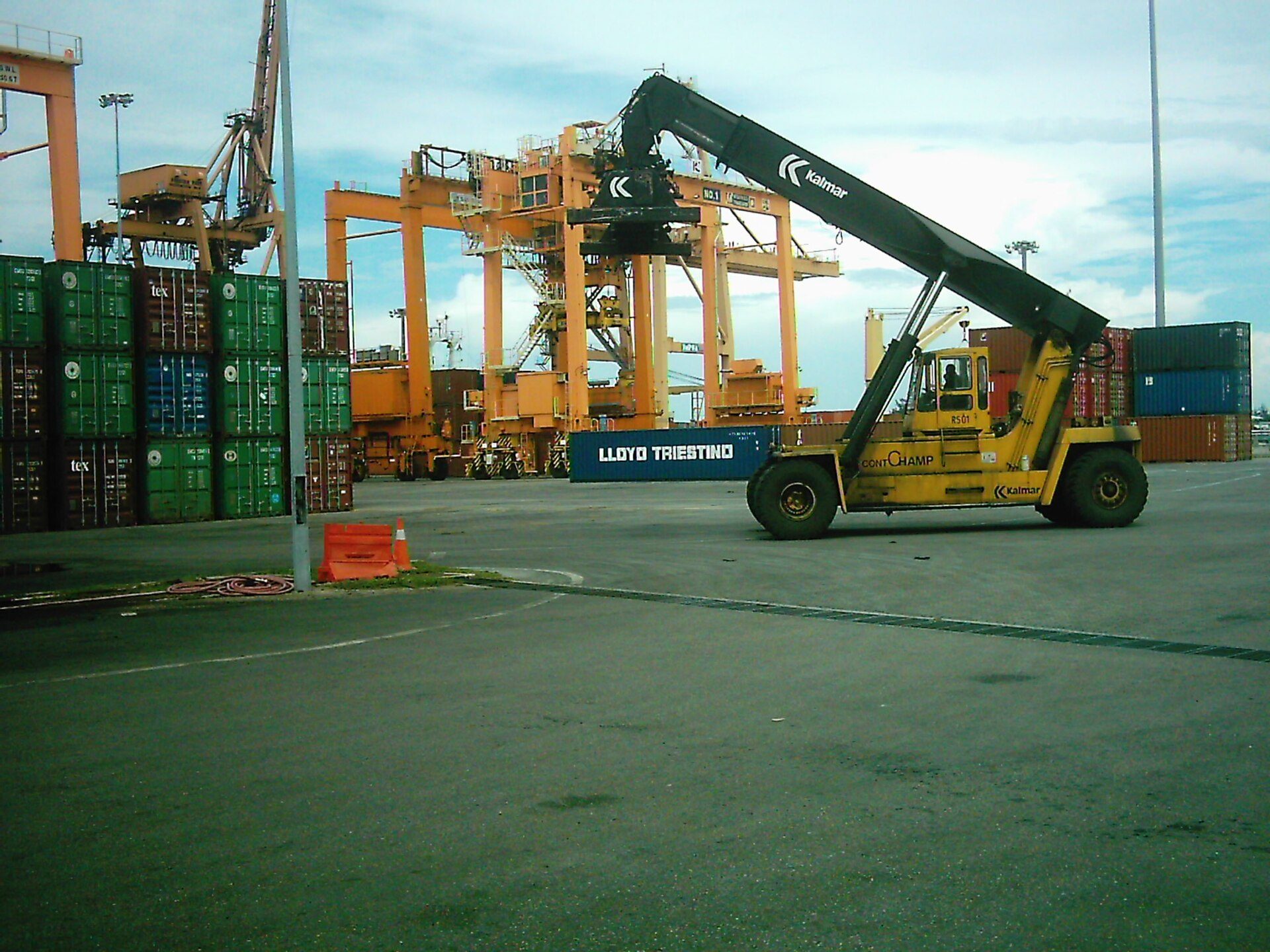
Photo: Only Truth / Wikimedia Commons, CC BY-SA 3.0

EXW and DDP: the two extremes, easy to get stuck
- EXW: a foreign buyer must handle Vietnamese export clearance, which it usually cannot do without hiring a service, and the export documents will not be in the seller's name. If you want to "deliver at the warehouse", use FCA at the seller's premises instead (Figure 4).
- DDP: the seller must clear imports and pay duties in the buyer's country. Only choose it if you have an agent, a registration there and understand that country's taxes.
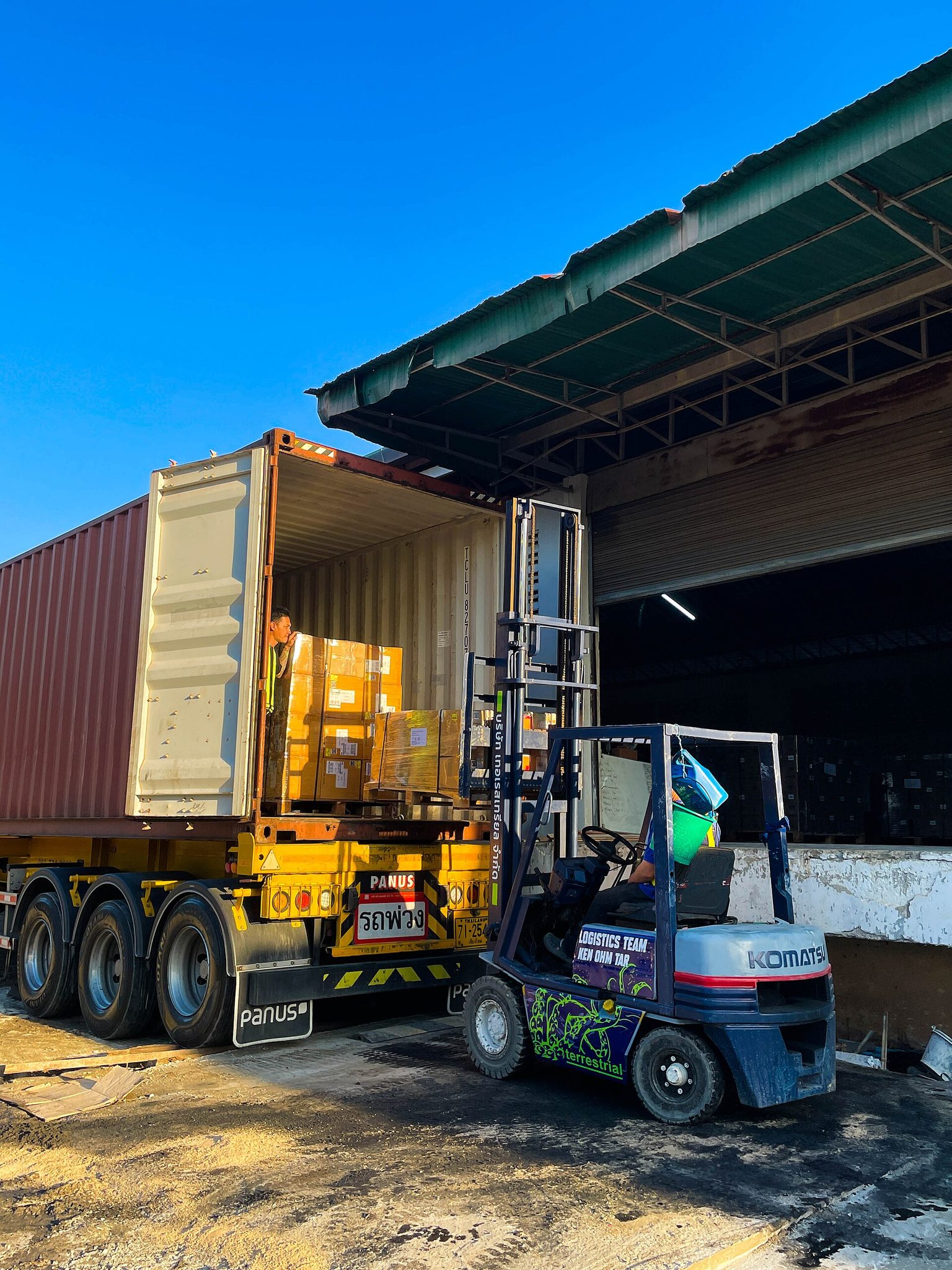
Photo: Goterrestrial / Wikimedia Commons, CC BY 4.0

Quick selection table
| Situation | Suggestion |
|---|---|
| Exporting containers, buyer has its own forwarder | FCA (port, ICD or seller's premises) |
| Exporting containers, seller has good freight rates | CPT or CIP |
| Bulk cargo loaded directly on board (bulk rice, coal, ore) | FOB, CFR, CIF, FAS |
| Selling to small buyers, door delivery, buyer does no formalities | DAP; DDP only if you can clear imports in that country |
| Importing, wanting control of freight and insurance | FCA or FOB with your own forwarder |
A note on customs value in Vietnam
When importing into Vietnam, the dutiable value usually includes freight and insurance to the first port of import, so if you buy FOB you still add the actual freight and insurance when declaring. How customs value and duties are worked out is covered in the step "HS codes, duties & FTA preferences"; always check the customs regulations currently in force.
Common mistakes when using Incoterms
No place, or a vague place
Sign: the contract just says "FOB Vietnam" or "CIF". Consequence: arguments over which port and who pays extra charges. Fix: name the port or exact place and add "Incoterms® 2020".
Selling CIF without insurance, or with the wrong cover
Sign: the buyer asks for documents including an insurance policy and the seller has none. Consequence: breach of obligation, and the bank rejects the documents under an L/C. Fix: insure at least ICC (C) for 110% of the CIF value, in the contract currency, unless the parties agree higher cover.
Using FOB, CFR or CIF for air or road freight
Sign: "FOB Noi Bai Airport", "CIF Lang Son border gate". Consequence: there is no "vessel" to define the risk point. Fix: use FCA, CPT, CIP or DAP for air and road shipments.
Thinking Incoterms decide when ownership passes
Sign: assuming the goods belong to the buyer once on board. Reality: ownership and payment are decided by the contract and the governing law. Fix: write the payment and title clauses clearly in the contract.
Frequently asked questions
How many rules are there in Incoterms 2020?
Eleven: 7 for any mode of transport (EXW, FCA, CPT, CIP, DAP, DPU, DDP) and 4 for sea and inland waterway only (FAS, FOB, CFR, CIF).
What is the most important difference between FOB and CIF?
Under CIF, the seller pays ocean freight and must insure to the destination port; under FOB, the buyer arranges both. In both, risk passes once the goods are on board at the port of shipment.
What is EXW, and should I use it for exports?
EXW means Ex Works: the buyer handles everything from loading to export clearance. For exports from Vietnam it is usually better to use FCA at the seller's premises so the seller handles export formalities.
What is DDP, and who pays import duty?
DDP means Delivered Duty Paid: the seller bears cost and risk to the destination, clears imports and pays import duty and related taxes and charges in the buyer's country, unless the contract says otherwise.
Which Incoterms rule suits a new exporter?
If the buyer has its own forwarder, FCA or FOB means the least work while you still handle export clearance yourself. Once you are used to booking freight and buying insurance, you can sell CFR, CIF, CPT or CIP for more control.
Practice tasks and self-assessment
- Rewrite the table of 11 rules from memory: full name, transport group, risk point, who pays main carriage.
- Work out FOB, CFR and CIF for a shipment with an ex-warehouse price of USD 45,000, domestic costs of USD 600, freight of USD 1,800 and a premium rate of 0.2%; check the premium backwards.
- Read a sample contract (or a real purchase order at work), find the Incoterms clause and check whether it states the rule, the place and the version.
Self-assessment criteria
- Pass: your table of 11 rules has the right groups and risk points, and states ICC (A) for CIP and ICC (C) for CIF.
- Pass: your running prices add up and the backward premium check is within USD 1 from rounding.
- Pass: you can explain why containerised cargo should consider FCA instead of FOB.
- Not yet: believing the CIF seller bears risk to the destination port, or using FOB for air freight.
Once Incoterms are clear, move on to the next step of the roadmap: Preparing trade documents, where the chosen rule decides what must appear on the invoice, the bill of lading and the insurance policy.
Keep learning import–export: after Incoterms come trade documents, HS codes and duties, electronic customs declarations, booking and international payment. See the 8-step import–export officer roadmap.