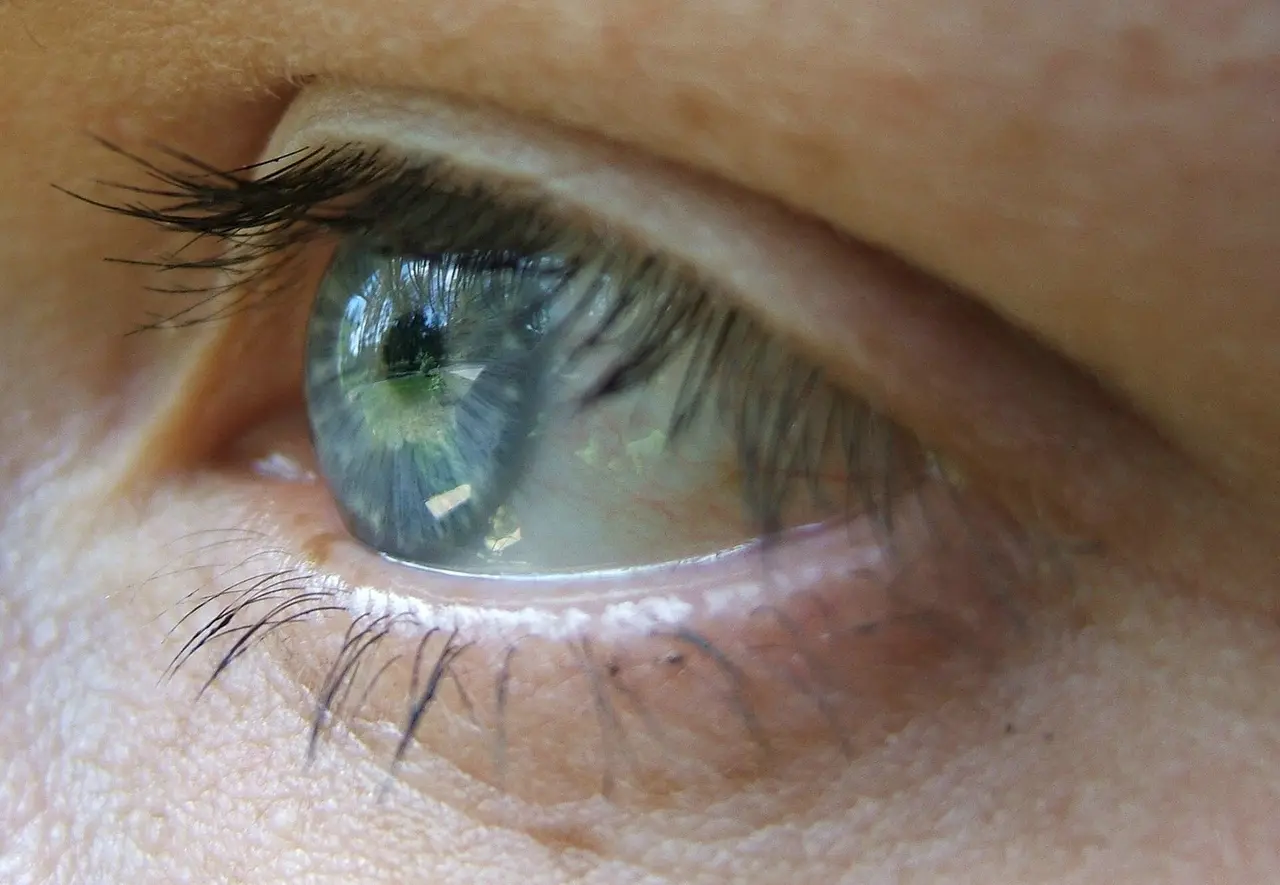
Eyelash extensions usually look good for about 2–3 weeks before they need an infill, and some may stay on for about 4–6 weeks, because each extension falls out with the natural lash it is attached to. In other words, no set of extensions lasts forever; how long they last depends on the client's lash growth cycle, the application technique, the adhesive, the room humidity and how the client looks after them. This lesson helps trainee lash technicians answer the question clients ask most, plan infills, remove lashes safely and recognise adhesive allergy around the eyes.
By the end of this lesson, you will be able to:
- Explain to clients why extensions shed gradually, when to infill and when to remove and start fresh.
- Assess a returning set: count the lashes left, the grown-out ones to remove and the number to refill.
- Remove extensions with a professional remover without pulling, protecting the eye and the natural lashes.
- Teach aftercare and recognise signs of irritation or adhesive allergy that mean removing the lashes and seeing a doctor.
Learning lash extensions properly? Infills, removal and aftercare is step 6 of the roadmap, after eye-area safety, natural lashes and materials, isolation and classic sets, lash mapping, and volume fans. See the 8-step lash technician roadmap to learn in the right order.
Why don't lash extensions last forever?
Extensions are not attached to the skin but to individual natural lashes, about 1–2 mm from the lash line. When the natural lash falls, the extension goes with it. So the question "how long do lash extensions last" really means "how fast does this client's natural lash renew" plus "how well does the adhesive hold".
The natural lash growth cycle
Each natural lash goes through a growth phase, a transition phase and a resting phase before it falls out, and the lashes are not all in the same phase at once (Figure 1). Each eye naturally sheds a few lashes a day, often quoted as about 1–5, more in people who rub their eyes or during hormonal changes. Growing lashes are short, fine and still lengthening, so an extension attached to one is pushed away from the lash line after a few weeks.
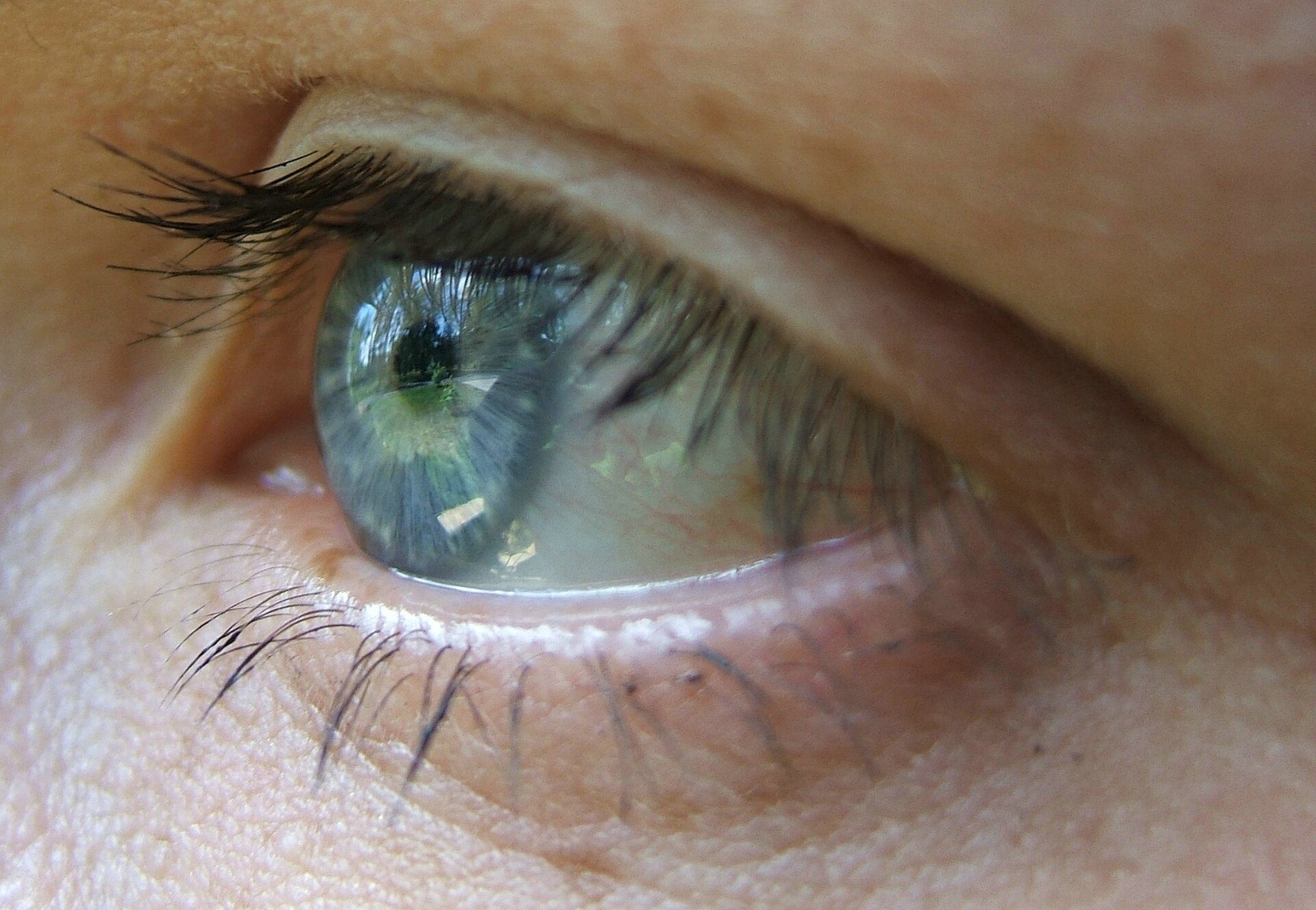
Photo: Micky Zlimen / Wikimedia Commons, CC BY-SA 2.0

Three groups of factors that decide retention
- The client: lash cycle, oily eyelids, eye rubbing, sleeping face down, oil-based make-up removers.
- The technician: cleansing oil off the lashes, isolating each lash, amount of adhesive, placement, and extensions of the right thickness and length for the natural lash.
- Environment and materials: adhesive in date and stored correctly; room temperature and humidity in the range the adhesive maker recommends.
Stuck lashes shed early and harm natural lashes
When one extension is glued to two natural lashes, the faster-growing lash pulls on the other, causing discomfort, pain and possibly early loss of natural lashes. That is why isolation is taught before this step: clean isolation is the condition for good retention.
How long lash extensions last: table by set and client
The table shows common ranges, for reference; every client is different. Use it for consultations, not as a promise.
| Situation | Looks good before an infill | Suggested schedule |
|---|---|---|
| Classic 1:1, normal skin, good aftercare | About 2–3 weeks | Infill every 2–3 weeks |
| Volume, Korean-style, wispy | About 2–3 weeks, looks full for longer | Infill every 2–3 weeks |
| Oily skin, eye rubbing, sleeps face down | About 1–2 weeks | Infill every 2 weeks, review aftercare |
| More than 4 weeks without an infill | Few lashes left, many twisted or crooked | Usually remove and do a new set |
When to infill and when to start fresh
Infill while about half the set or more remains and the remaining extensions have not grown too far from the lash line. If too few remain, or many are twisted and pointing the wrong way, remove them all and apply a new set; filling over a poor base wastes time and gives an uneven result. Each studio should have a clear rule, for example "over 4 weeks or under 40% remaining counts as a new set".
Reference prices
For reference in 2026, varying by area and studio in Vietnam: a classic set about 200,000–500,000 VND (roughly US$8–19), volume about 300,000–800,000 VND, an infill about 100,000–350,000 VND and removal about 50,000–100,000 VND (many studios remove free when you rebook). Put infill prices and conditions in your price list so clients are not surprised.
How to do an infill properly
An infill is not "adding more to make it thicker". The aim is to remove failed extensions, keep good ones and attach new extensions to newly grown natural lashes that have none, so the set is even again.
Step 1: ask and look
- Ask the client: any itching, redness, grittiness or watery eyes after the last visit; any new products around the eyes?
- If the client had signs of irritation or allergy last time, do not infill; remove instead and advise seeing a doctor.
- Brush the lashes with a clean spoolie and inspect under the lamp: gaps, twisted extensions, stuck lashes, grown-out extensions.
Step 2: remove failed extensions and cleanse
Place an under-eye pad and check it does not touch the eyeball. Remove each grown-out, twisted or stuck extension individually with professional remover applied exactly where needed, without pulling. Cleanse the lashes following your studio's procedure to remove oil and dust before applying new ones.
Step 3: attach to new growth
Isolate each newly grown natural lash (Figure 2), choose a shorter and lighter extension for young lashes, and attach about 1–2 mm from the lash line. Follow the lash map designed at the first appointment so both eyes stay matched.
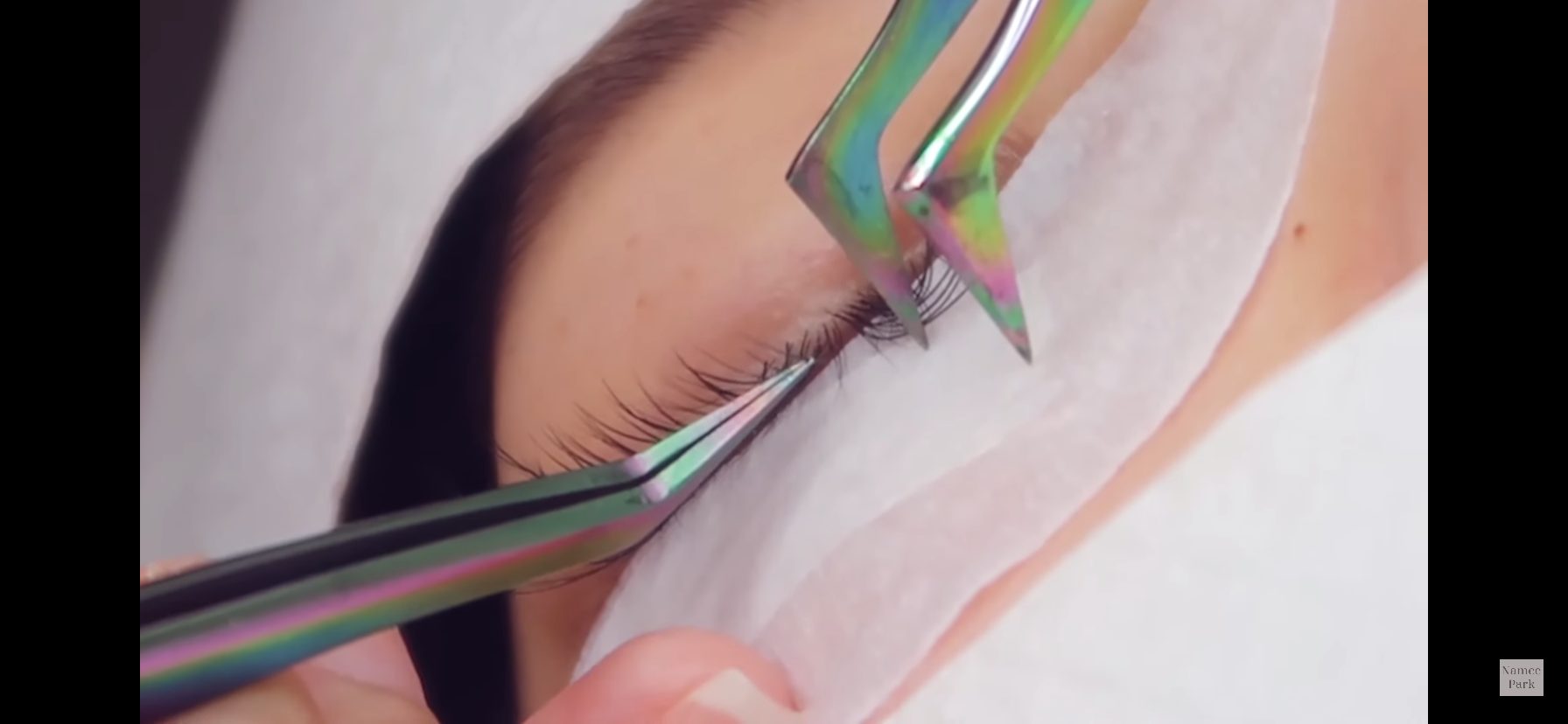
Photo: Namee Park / Wikimedia Commons, CC BY 3.0

How to remove lash extensions safely
Removing lashes correctly matters as much as applying them. Bad removal (pulling, tugging, prising with tweezers) breaks and pulls out natural lashes and can injure the lash line or get chemicals into the eye.
Why clients should not remove them at home
Clients often pull them off, rub oil on repeatedly or use steam. Pulling loses natural lashes; oil and steam get into the eyes, causing stinging and redness, and rarely dissolve the adhesive cleanly. If a client cannot come in, advise letting the extensions shed naturally, brushing daily to stop tangling, and never pulling.
In-studio removal procedure
- The client lies down with eyes closed; place an under-eye pad, check it does not touch the eyeball and the client feels nothing gritty.
- Apply a professional gel or cream remover to the bonded area with a clean applicator, following the maker's instructions; do not let it run towards the eye.
- Wait the time the maker recommends for the adhesive to soften.
- Use the applicator or tweezers to slide each extension gently off towards the lash tips; if one does not move, apply more remover and wait, never pull.
- Clean off the remover with the cleanser in your procedure before the client opens their eyes.
Checks after removal
Inspect the natural lashes: no breaks, no bald patches, no redness on the lash line. Record the reason for removal (new set, irritation, client taking a break) and the condition of the natural lashes. If the natural lashes are weak and sparse, advise the client to take a break before the next set.
Aftercare and adhesive allergy
Aftercare decides most of the retention. Give written instructions that are short and easy to remember.
The first 24 hours and every day
- Avoid water, hot steam and saunas for about the first 24 hours (or as your adhesive maker instructs).
- Brush the lashes gently every day with a clean spoolie; wash the eye area gently and pat dry.
- No oil-based removers or eye creams on the lashes; no regular mascara or lash curlers.
- No eye rubbing, try not to sleep face down, and do not trim or pull out stray extensions (Figure 3 shows a fresh, even set).
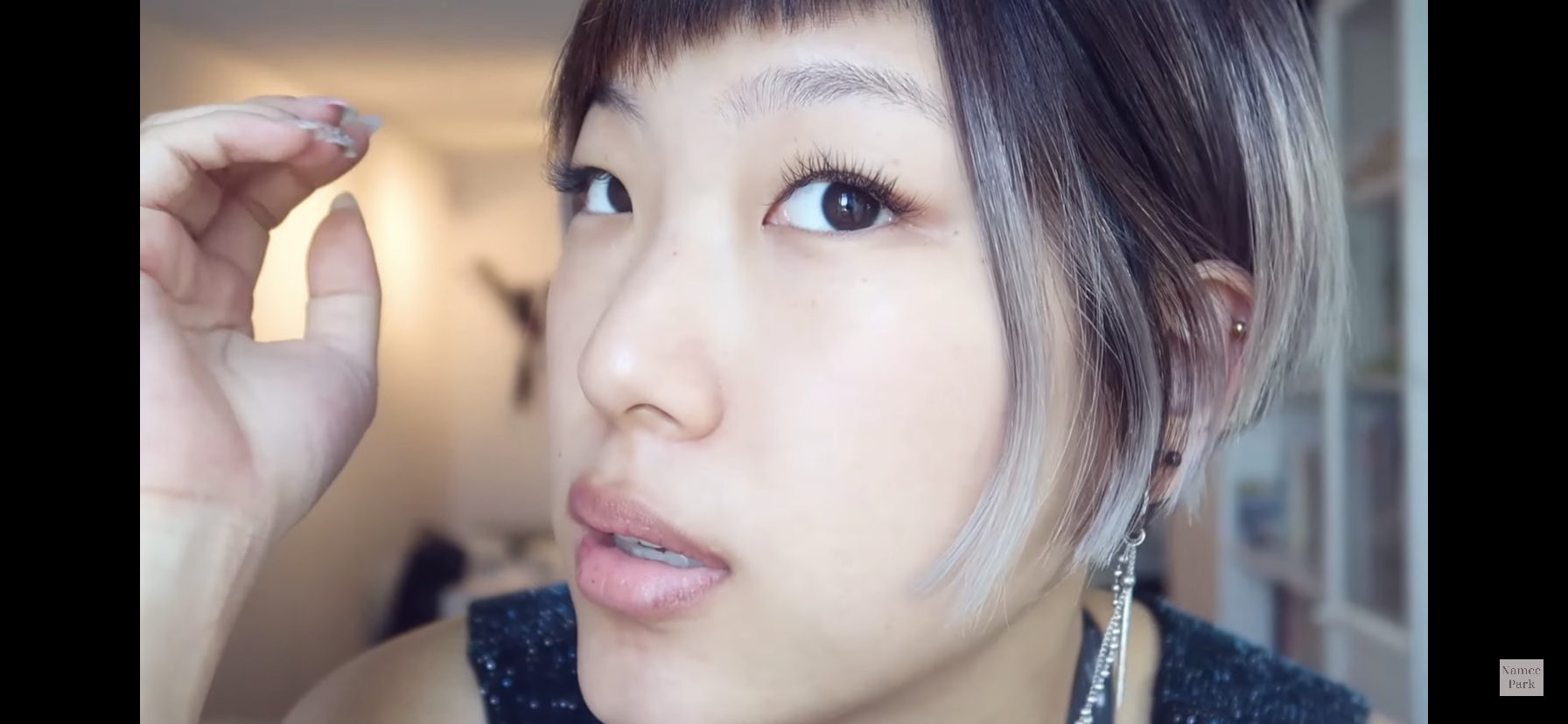
Photo: Namee Park / Wikimedia Commons, CC BY 3.0

Irritation versus allergy
Lash adhesive is usually cyanoacrylate-based and gives off fumes as it cures. Irritation usually comes from fumes or cleanser reaching the eye: red, stinging, watery eyes straight away or within hours, usually settling within 24–48 hours. Allergy is the body reacting to an adhesive ingredient: swollen, itchy, red eyelids, sometimes a rash, often appearing 24–48 hours later and possibly getting worse, even in clients who have had many sets without problems. A patch test following your studio's procedure before the first set helps spot reactions early, but cannot rule out the risk completely.
Reducing adhesive fumes
Keep the room within the temperature and humidity range the adhesive maker recommends (many quote about 20–25°C and 40–60% humidity), with a thermo-hygrometer by the bed (Figure 4). Use small drops of adhesive and replace them as instructed, never blow directly into the client's eyes, keep the client's eyes closed throughout, ventilate well, and wear a mask yourself.
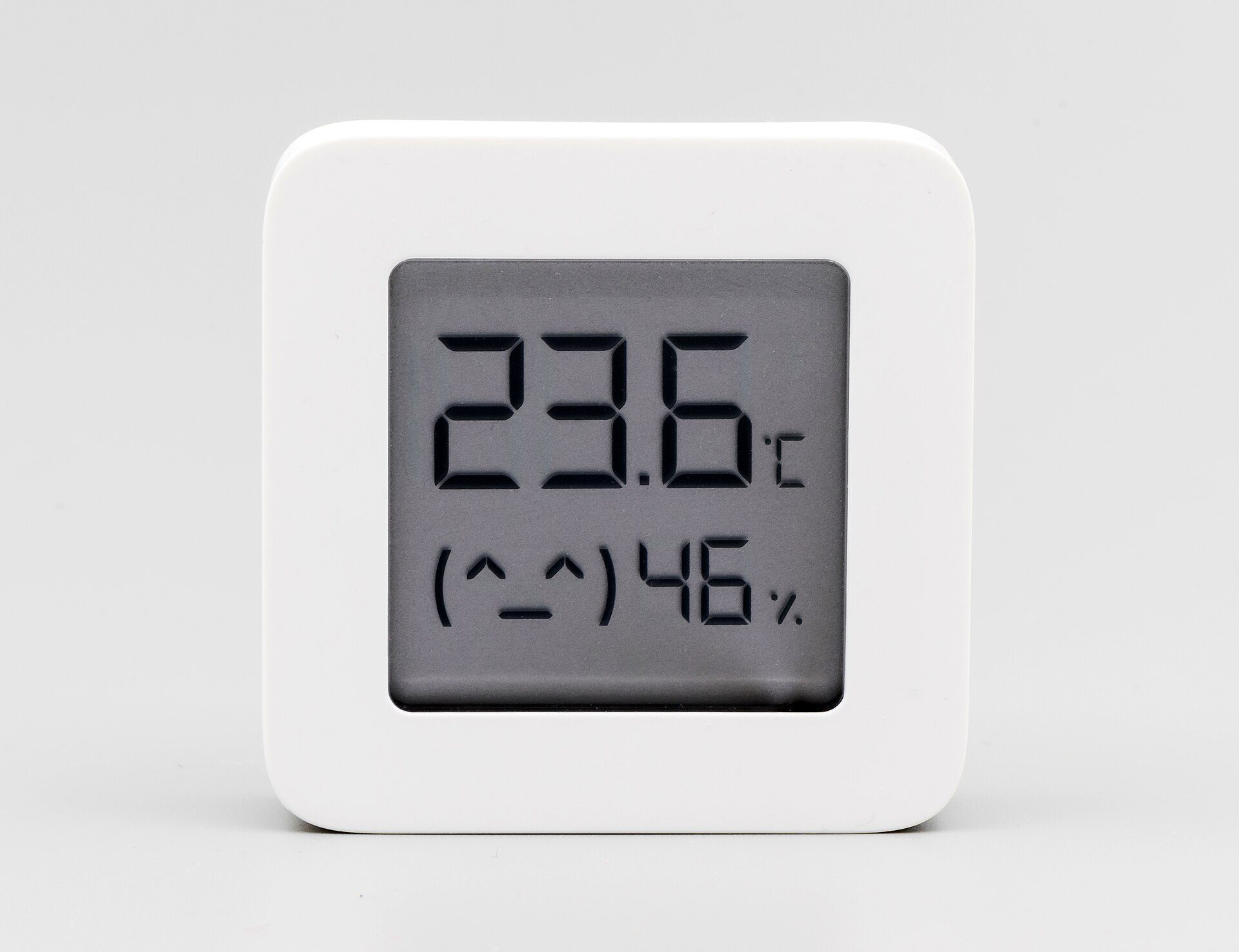
Photo: Jacek Halicki / Wikimedia Commons, CC BY-SA 4.0

Eye-area safety warning: A client with red, painful eyes, swollen eyelids, discharge, blurred vision or light sensitivity after lash extensions must have the lashes removed with professional remover and be advised to see an eye doctor or dermatologist straight away; technicians do not apply or recommend eye drops or creams. If adhesive, cleanser or remover gets into the eye, rinse at once with plenty of clean water or sterile saline, then see a doctor. A client with difficulty breathing or rapid swelling of the face or lips needs emergency care immediately (call 115 in Vietnam). Do not apply extensions to clients with conjunctivitis, blepharitis, a stye, recent eye surgery or a past adhesive allergy; ask a doctor when unsure. Shared tools (tweezers) must be cleaned and disinfected after every client, and single-use items (pads, applicators, spoolies) thrown away after each client.
Worked example: assessing and infilling a classic set after 3 weeks
A 27-year-old woman with normal skin had a first classic 1:1 set of 120 extensions per eye, with no irritation or allergy afterwards. She returns after 3 weeks, having followed the aftercare instructions.
Counting and sorting extensions (per eye)
| Group | Number | Action |
|---|---|---|
| Shed with natural lashes | 48 | No longer on the eye |
| Still on but grown out or twisted | 12 | Remove individually with remover |
| Still good, keep | 60 | Brush, cleanse, keep |
| Original total | 120 | |
Check: 48 + 12 + 60 = 120 extensions. Extensions on the eye before removal are 12 + 60 = 72, which is 60% of the set and above the 40% threshold, so an infill is right. After removing the 12 failed ones, 60 remain, and 60 new extensions go onto newly grown natural lashes to return to about 120: 60 + 60 = 120.
Time and cost
Estimated time per eye: removal and cleansing 10 minutes, attaching 60 extensions 30 minutes, total 40 minutes; about 80 minutes for both eyes worked in turn. Upkeep for 12 weeks with infills every 3 weeks (reference 2026): a new set in week 0 at 400,000 VND, infills in weeks 3, 6 and 9 at 3 × 200,000 = 600,000 VND, total 1,000,000 VND. If the client chose a new set every 3 weeks instead, it would be 4 × 400,000 = 1,600,000 VND, and the natural lashes would go through more removals.
Keeping records
Record the date, extensions remaining, removed and added, extension type (curl, length, thickness), adhesive code and opening date, room temperature and humidity, and any reaction. After 3–4 infills the record tells you whether this client sheds fast or slowly, so you can book the right interval.
Common mistakes with infills and removal
Infilling a set that is too old
Sign: after the infill the lashes look ragged, old extensions stick out, and the client says it is sparse again after a week. Cause: not wanting to spend time removing. Fix: apply the new-set threshold (over 4 weeks or under 40% left).
Pulling before the adhesive softens
Sign: the natural lash comes out with the extension and the client feels pain. Cause: rushing and not waiting long enough for the remover. Fix: apply more, wait, slide gently towards the tips.
Ignoring signs of allergy last time
Sign: last time the client's eyelids were swollen for 2 days, she is infilled anyway, and the reaction is worse. Fix: always ask before working, record it, do not infill after a reaction, and advise seeing a doctor.
A room that is too humid or too dry
Sign: the adhesive cures too fast (extensions will not bond) or too slowly (stuck lashes, more fumes). Fix: measure temperature and humidity each session and adjust with a dehumidifier, humidifier or air conditioning.
Frequently asked questions
How long do eyelash extensions last?
They usually look good for about 2–3 weeks and then need an infill; without infills they shed gradually with the natural lashes over about 4–6 weeks. Oily skin and eye rubbing shorten this.
How often should I get an infill?
Commonly every 2–3 weeks. After more than 4 weeks, or when very few extensions remain, the set is usually removed and redone.
How are lash extensions removed safely?
Ideally in the studio with professional remover: cover the lower lashes, apply remover to the bond, wait for it to soften, slide the extensions off gently and clean the area. No pulling and no prising with tweezers; at home, let them shed naturally.
What matters most in lash aftercare?
Avoid water and steam for about the first 24 hours, brush daily, avoid oil-based removers, do not rub your eyes, and skip regular mascara and lash curlers.
Do long-term lash extensions damage natural lashes?
Correct technique (clean isolation, extensions not too heavy for the natural lash, proper removal) usually does not harm natural lashes. Stuck lashes, heavy extensions or bad removal are what break and pull out natural lashes; if the natural lashes are weak, take a break.
Practice and self-assessment
- On a mannequin head with extensions, simulate a set after 3 weeks, then count and sort the extensions using the table above.
- Practise removing 20 extensions with professional remover, recording the waiting time and how many came off without pulling.
- Write a one-page aftercare sheet including the signs of irritation and allergy that mean coming back to the studio or seeing a doctor.
Self-assessment criteria
- Pass: the sorted counts add up to the original total, and the infill-or-new-set decision follows the threshold.
- Pass: all extensions come off without pulling, and no remover runs towards the eye.
- Pass: the aftercare sheet states 24 hours without water, no oil, daily brushing and when to see a doctor.
- Not yet: infilling a client whose eyelids swelled after the last visit, or removing extensions by pulling.
Once you are confident with infills, removal and aftercare, move on to the next step of the roadmap: Project: 20 sets on model clients, where you track the retention of each set through its infills as in this lesson's example.
Keep learning lash extensions: after infills, removal and aftercare come a 20-set project on model clients, then a skills check, pricing and client retention. See the 8-step lash technician roadmap.