Learning to fly an agricultural drone usually takes about 1–3 weeks for a basic course (theory, manual flight, automatic flight, mixing, final test), plus 1–2 crop seasons working with a spraying crew before you can confidently take on fields alone. To make a living from it you need three things: a training certificate from an organisation recognised by the drone maker or the authorities, registration and flight permission under the rules in force, and solid knowledge of pesticide safety. This is the last step of the roadmap: how to choose a course, prepare for the test, price spraying services and work out a pilot's income from a worked example, all in the Vietnamese context.
By the end of this lesson, you will be able to:
- Estimate how long you need to learn spray-drone flying and pick a course with enough real flying time.
- Tell apart the three kinds of paperwork people ask about: training certificate, drone registration and flight permission, pesticide safety training.
- Score your own skills against a test checklist covering manual flight, automatic flight, mixing and emergencies.
- Quote a spraying job per hectare and calculate one season's profit after drone, battery and labour costs.
- Draft a simple spraying agreement with a farmer or cooperative that covers chemicals and weather.
Learning to be an agricultural drone pilot properly? This is step 8, the final step, after flight rules and pesticide safety, spray drone anatomy, manual flying, field mapping, mixing, batteries and maintenance, and spraying real fields. See the 8-step agricultural drone pilot roadmap to learn in the right order.
What does an agricultural drone pilot do on a spraying day?
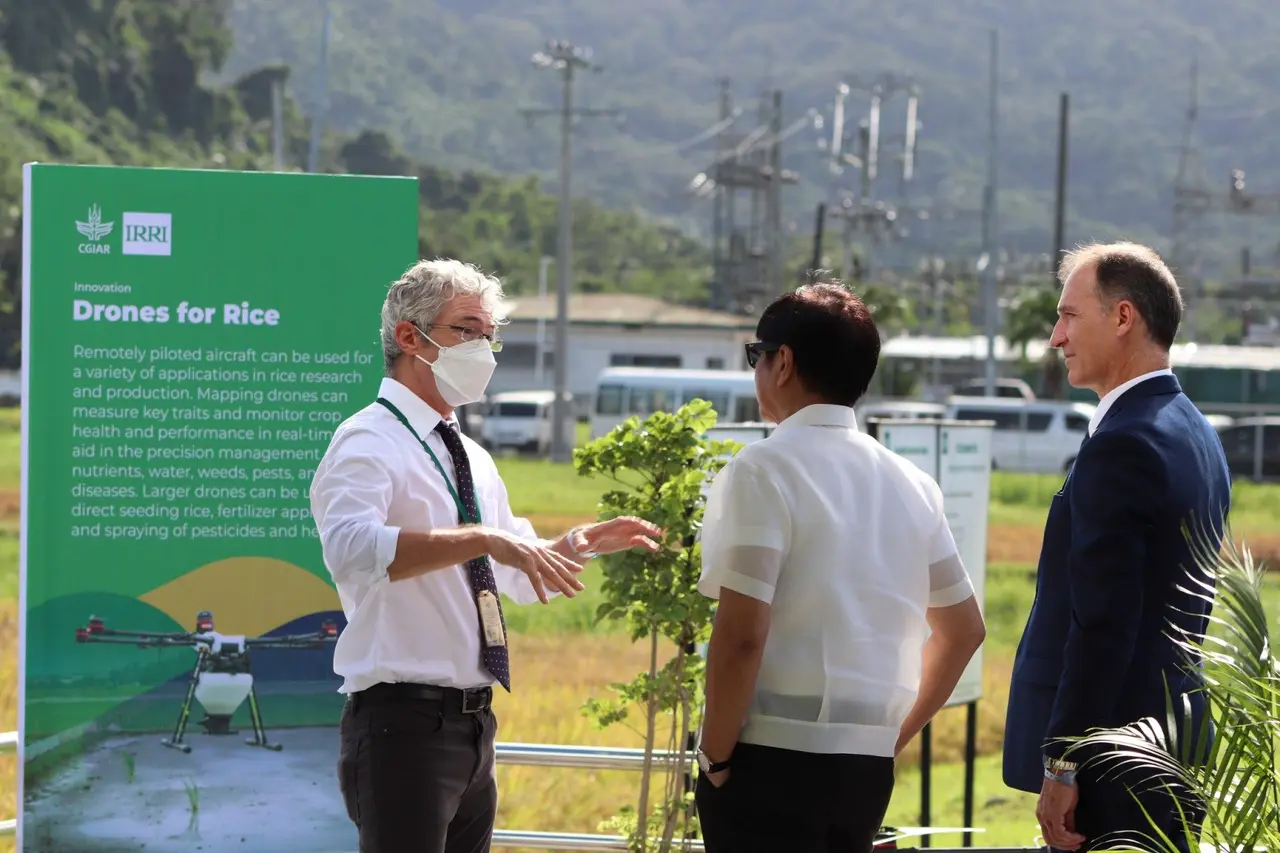
An agricultural drone pilot flies and takes responsibility for a drone that sprays pesticide, spreads fertiliser or sows seed over fields. Modern spray drones mostly fly automatic routes, but the pilot still surveys the field, builds the map, sets the parameters, watches the whole flight and steps in when something goes wrong (Figure 1).
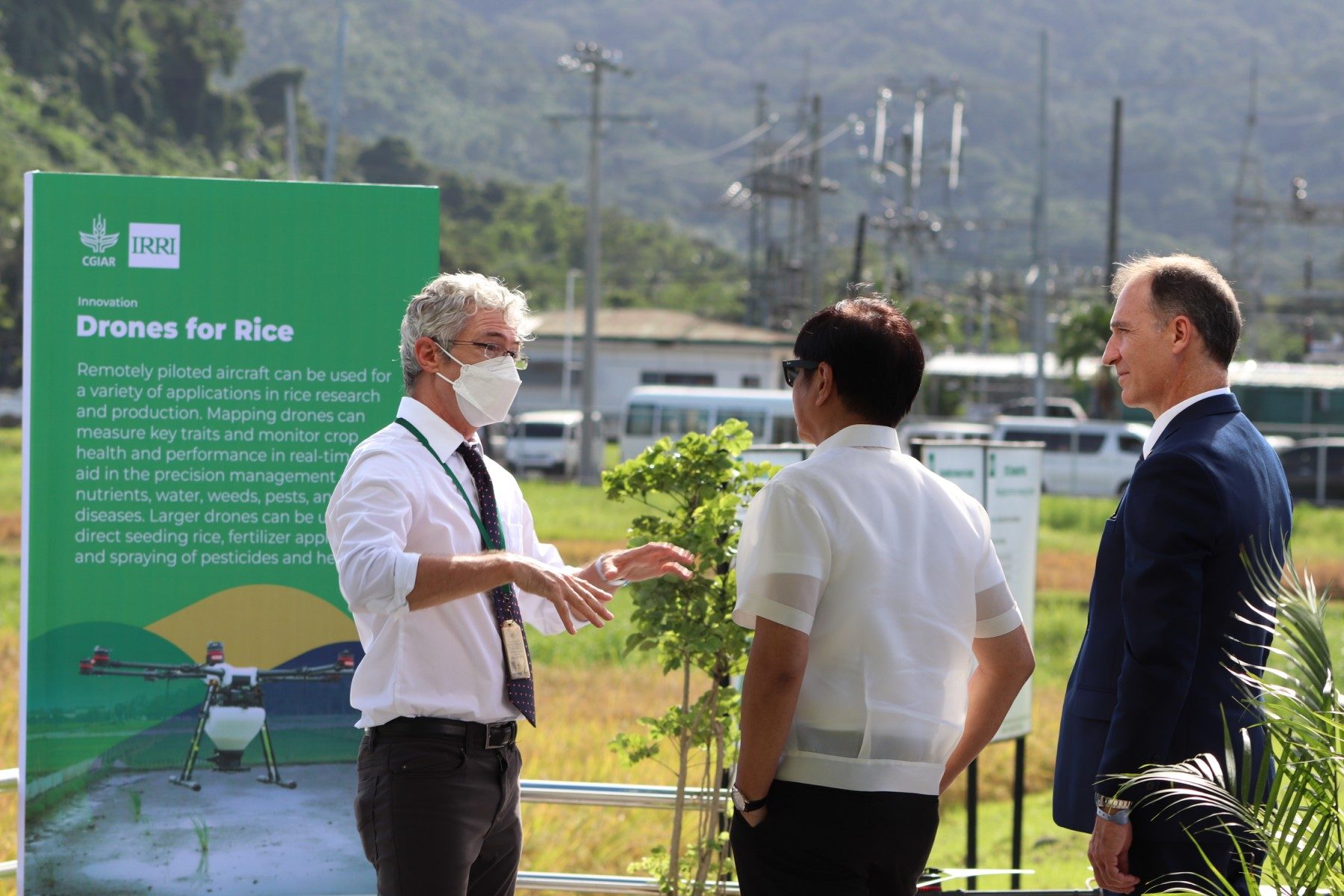
Photo: Christopher Hedreyd - PIA 4A CALABARZON / Wikimedia Commons, Public domain

A typical working day
- Early morning: check wind, rain and temperature; review the list of fields and the products farmers have bought.
- At the field: walk around for obstacles (power poles, tall trees, houses, fish ponds) and confirm the boundaries with the owner.
- Create or reload the field map and set height, speed, swath spacing and flow rate.
- Mix the chemical according to the label, fill the tank, do the pre-flight check, fly and monitor.
- Swap batteries, refill, and log area, chemical used, battery count and flight time.
- End of day: flush the tank and lines, charge batteries correctly, clean the drone.
How long does it take to learn spray-drone flying?
It depends on whether you have flown drones before and how many hours of hands-on flying the course gives you. Theory is quick; flying skill only comes from real flight time.
Typical time for each part of a basic course
| Topic | Typical duration | Passed when you can |
|---|---|---|
| Flight rules, flight safety, pesticide safety | 1–2 days | Explain no-fly zones, safe distances, protective gear and how to read a label |
| Spray drone parts, batteries, chargers, generator | 1 day | Fit propellers, check nozzles, spot a swollen battery |
| Manual flying on open ground (empty tank) | 3–5 days | Take off and land smoothly, fly a square, hold height, return to home |
| Field mapping and automatic flight | 2–3 days | Build a map with obstacles, set parameters, cover the field without gaps |
| Mixing, flow calibration, spreading | 1–2 days | Work out water and chemical per hectare, calibrate nozzles |
| Theory and practical test | 1 day | Pass the training provider's exam |
Added up, a basic course is usually about 9–14 days of training; some providers fit it into one week for people who already fly, others spread it over three weeks of evening or weekend classes. After that, work with a spraying crew for at least one season to learn real fields: odd shapes, fields mixed with trees, shifting wind, impatient farmers.
Signs of a good course
- A stated number of hands-on flying hours per trainee, not just watching the instructor fly.
- Proper sections on pesticide safety and lithium batteries, not only which buttons to press in the app.
- A test with clear criteria and a certificate showing the provider, content and dates.
- A provider authorised by the drone maker or recognised by the competent authority; ask and see the documents.
- Support afterwards: help with registration, a chance to join a spraying crew, technical warranty.
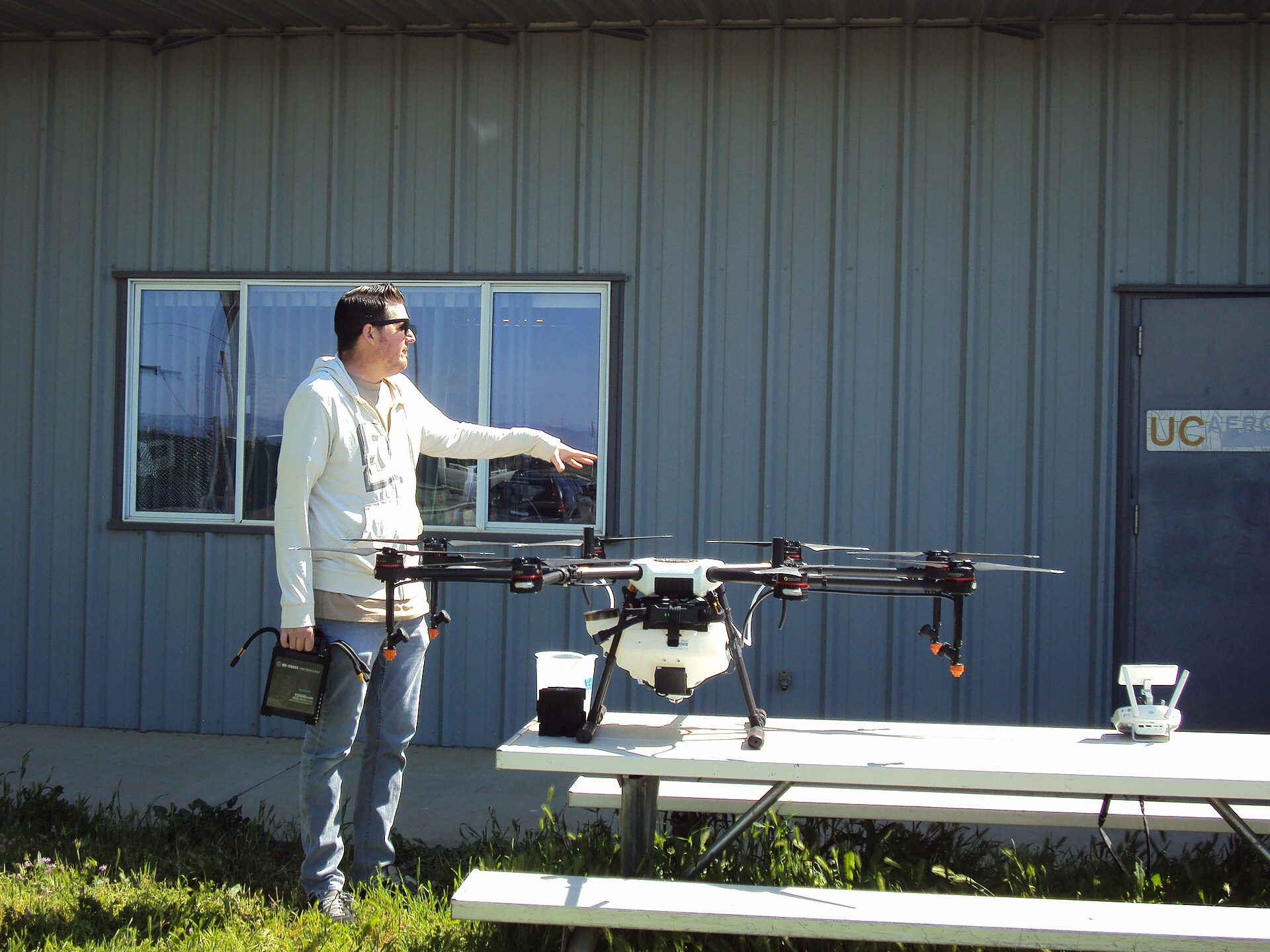
Photo: R6, State & Private Forestry, Forest Health Protection / Wikimedia Commons, Public domain

Agricultural drone pilot certificates and paperwork
People often ask about "the agricultural drone pilot certificate" as if it were one document. In practice you will meet three different kinds of paperwork, each issued by a different body for a different purpose. Rules for unmanned aircraft in Vietnam have been changing, so this lesson only gives the principles; check the exact regulations, procedures and fees with the authorities in force.
Training certificate
Issued by the drone maker, an authorised dealer or a training centre after you pass their test. It proves you completed their course and exam. Large customers such as cooperatives and agricultural companies often ask for it. Make sure the issuer genuinely runs training, not a certificate-for-cash scheme.
Drone registration and flight permission
The general principle: the drone must be registered with the competent authority, flights or flying areas must be permitted or approved under the rules, and the operator must meet the conditions that authority sets. Areas near airports, military sites and no-fly zones have stricter rules. In practice:
- Ask your drone dealer which registration and permission procedures currently apply; many dealers help with paperwork.
- Contact the local military authority or the commune government where you fly to confirm the current steps and documents.
- Keep copies of the registration and permits and carry them when you go spraying.
Pesticide safety training
Whoever mixes and sprays must understand the label, pre-harvest intervals, protective gear and container disposal. Some localities and cooperatives require a training certificate from the agriculture sector. Ask the district extension station or plant protection station about courses.
Legal note: NAMBIN does not list regulation numbers or fees because the rules may have changed. Before charging for spraying, check with the current authorities about drone registration, flight permission, operator requirements and business registration. Flying without permission or in a restricted zone can lead to fines and confiscation of the drone.
Preparing for the test: a self-scoring checklist
Every provider's test is different, but most check the skill groups below. Any group you fail, go back to that step of the roadmap.
Pre-flight check
The examiner watches whether you check the drone in order or skip steps (Figure 3). A minimum checklist:
- Propellers: no cracks or chips, locked in the right direction, folding arms locked.
- Batteries: not swollen, clean connectors, enough charge for the flight plus a reserve to land.
- Tank and nozzles: no leaks, clean filters, nozzles spinning evenly on a test run.
- Sensors: obstacle radar and positioning (RTK if fitted) report healthy status.
- Weather: wind within the maker's limit, no rain, no thunderstorms.
- Area: people and livestock out of the flight zone; a flat take-off and landing spot away from people.
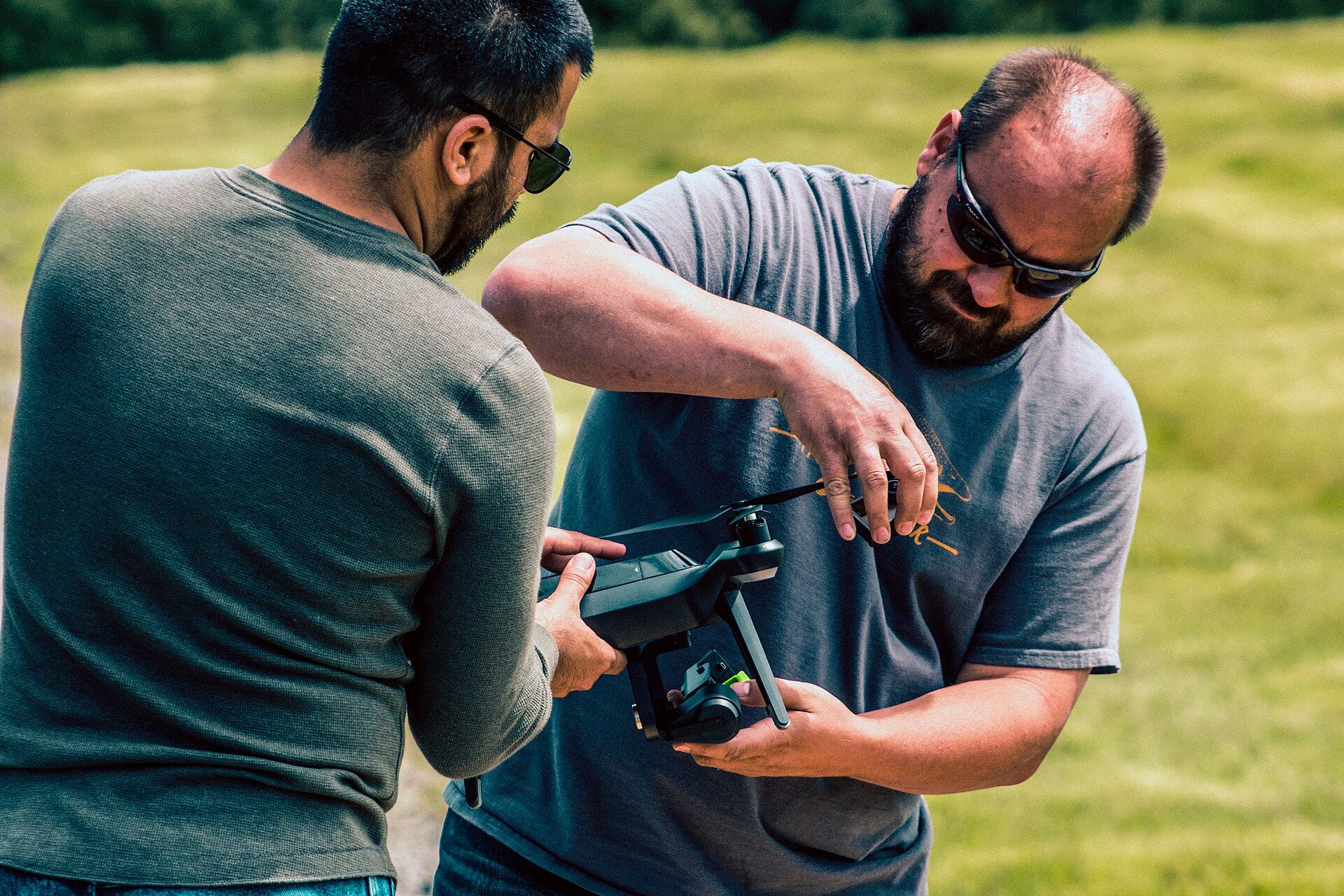
Photo: BLM Oregon & Washington / Wikimedia Commons, Public domain

Manual flight and emergencies
You must be able to fly manually when automatic mode fails: hold height, fly a square and a circle, land on a marked spot. The examiner may ask you to handle signal loss, low battery or gusts: know when to use return-to-home and when to make an emergency landing in a safe place.
Mapping and automatic flight
Build a field map with obstacles marked, set height, speed and swath spacing for the crop, and let the drone cover the field without gaps or heavy overlap. On a controller with a screen (Figure 4), read the key numbers quickly: height, speed, remaining liquid, battery level, warnings.
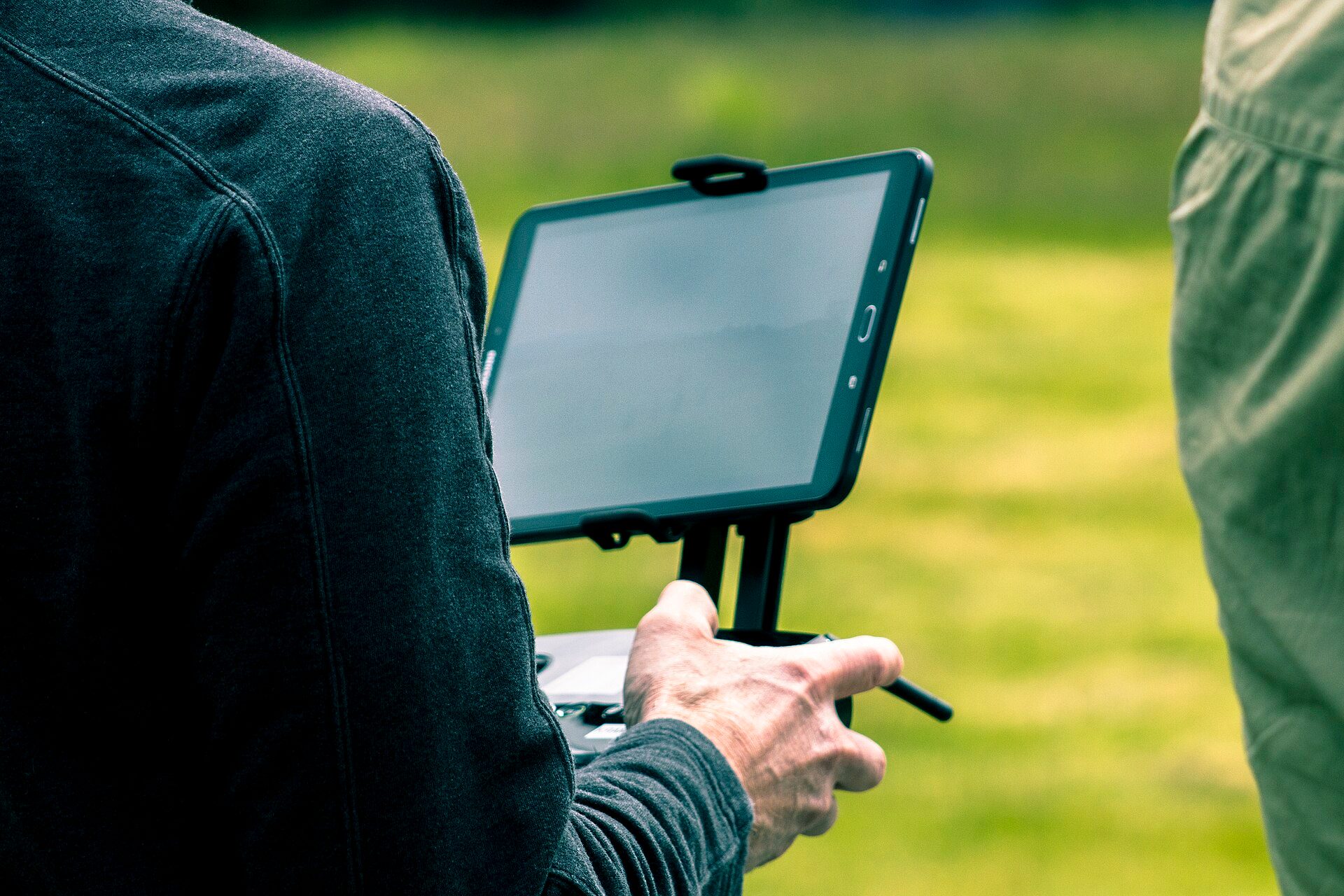
Photo: BLM Oregon & Washington / Wikimedia Commons, Public domain

Self-scoring table
| Skill | Pass | Not yet |
|---|---|---|
| Pre-flight check | Completes the checklist unprompted | Skips batteries or propellers |
| Manual flight | Holds height closely, lands on the mark | Bouncy landing, far from the mark |
| Automatic flight | Map has all obstacles, no missed swaths | Forgets power poles or tall trees |
| Mixing | Calculates chemical per tank from the label | Mixes "by feel", ignores the label |
| Emergencies | Stops, returns or lands at the right moment | Hesitates, unsure which button |
Safety: propellers, lithium batteries and pesticides
The three biggest hazards in this job are propellers, lithium batteries and pesticides.
Safety warning: Spray drone propellers are large and spin very fast and can cause serious injury: stay clear once the motors are armed, never catch a drone by hand, and keep onlookers and children away from the take-off and landing area. Do not fly near power lines, homes, schools, fish ponds or fields where people are working. Lithium batteries can catch fire or explode if swollen, dropped, punctured or charged wrongly: do not charge a hot battery, do not leave batteries charging overnight unattended, keep them on a non-flammable surface with a suitable fire extinguisher nearby, and retire a swollen battery immediately. Pesticides are toxic if inhaled or in contact with skin or eyes: wear protective clothing, chemical-resistant gloves, goggles and a mask or respirator suited to the product (Figure 5); only use products on the permitted list, at the label dose; never eat, drink or smoke while mixing. If you have signs of poisoning (dizziness, nausea, difficulty breathing), stop, leave the area, wash and go to a medical facility at once with the product label; call 115 (Vietnam's ambulance number) if it is serious.
Weather and drift
Strong wind carries spray onto neighbouring fields, ponds and houses. Hot sun makes the chemical evaporate and work less well. Spray early morning or late afternoon, and stop when wind exceeds the maker's limit. Next to fish ponds, vegetable plots or homes, leave a buffer and use a knapsack sprayer on the edge if needed.
Containers and rinse water
Never pour rinse water into canals or ditches. Take empty containers to the local collection point. Record which product went on which field so the farmer knows the pre-harvest interval.
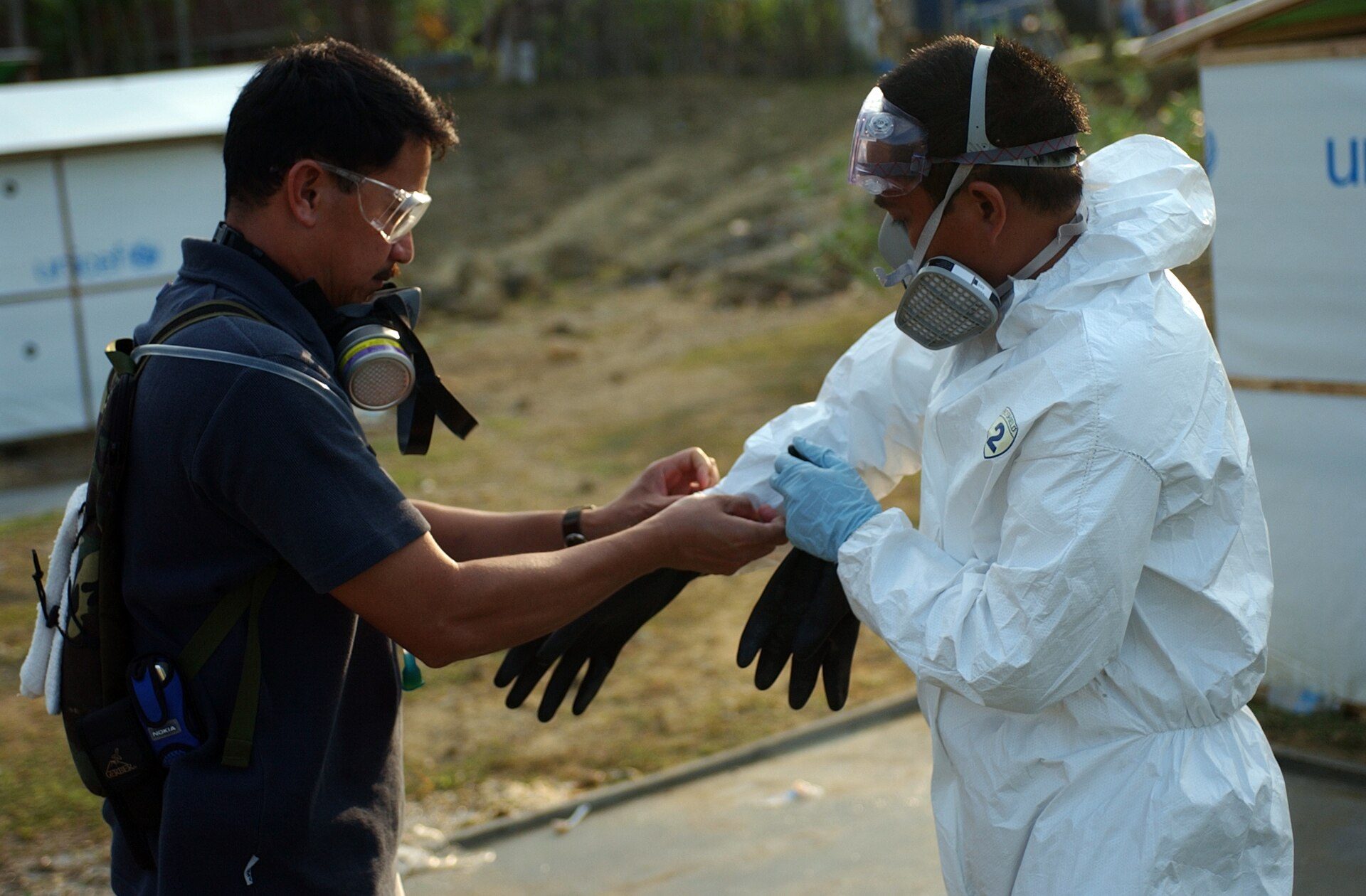
Photo: U.S. Navy photo by Photographer's Mate 2nd Class Timothy Smith / Wikimedia Commons, Public domain

Prices for drone spraying services and investment costs
Spraying is mostly priced per hectare (or per "cong", a local land unit in the Mekong Delta) per application; farmers buy the chemicals and hand them to the crew unless both sides agree an all-in price. The figures below are 2026 references for Vietnam and vary by region, crop, field size and season.
Reference price table
| Item | 2026 reference range | Notes |
|---|---|---|
| Spraying rice (labour only) | 150,000–300,000 VND/ha per application | Large, contiguous fields are cheaper |
| Spraying fruit trees, coffee | Higher than rice, quoted per tree or per ha | Tall, dense canopy, slower flying |
| Spreading fertiliser, sowing by drone | Agreed per kg or per ha | Needs a spreader, more flights |
| Basic flying course | A few million to about 15 million VND | Sometimes free with a drone purchase |
| Spray drone set (drone, batteries, charger, generator) | About 250–700 million VND | Depends on tank size, battery count, model |
Investment when you buy your own drone
Beyond the airframe, batteries are a big cost and wear out faster; each set needs several batteries in rotation. Add chargers, a generator, transport, a mixing tank, protective gear and spare parts (propellers, nozzles, pumps). Small, fragmented fields with many obstacles or long access cost more to spray; multi-season contracts with cooperatives pay less per hectare but keep you busy.
Worked example: an owner-pilot's income over one rice season
Tai lives in a rice-growing district in the Mekong Delta. He finished a basic course, worked with a crew for two seasons, then bought a mid-size spray drone set. The winter-spring season lasts about 3 months; he sprays a total of 900 hectare-applications (one hectare sprayed 3 times counts as 3), at 200,000 VND (~US$8) per hectare-application, with farmers supplying the chemicals. All figures are 2026 references for practice, not an income promise.
Revenue
900 ha-applications × 200,000 VND = 180,000,000 VND for the season.
Costs for the season
| Cost item | Calculation | Amount |
|---|---|---|
| Assistant (mixing, battery swaps) | 3 months × 7,000,000 VND | 21,000,000 VND |
| Generator fuel and travel | 900 ha-applications × 15,000 VND | 13,500,000 VND |
| Depreciation of drone and controller | 300,000,000 VND ÷ 10 seasons | 30,000,000 VND |
| Battery depreciation | 4 batteries × 25,000,000 VND ÷ 5 seasons | 20,000,000 VND |
| Maintenance, propellers, nozzles, parts | Season estimate | 6,000,000 VND |
| Phone, software, insurance, other | Season estimate | 4,500,000 VND |
| Total costs | 95,000,000 VND | |
Check: 21,000,000 + 13,500,000 + 30,000,000 + 20,000,000 + 6,000,000 + 4,500,000 = 95,000,000 VND.
Profit and how to read it
Profit before tax: 180,000,000 − 95,000,000 = 85,000,000 VND for the 3-month season, about 28.3 million VND a month. That only holds if Tai really gets 900 ha-applications: an average of 10 ha a day for 90 days, while rain and strong wind can wipe out many flying days. With only 500 ha-applications, revenue falls to 100,000,000 VND while depreciation and the assistant's pay barely change, so profit drops sharply. That is why newcomers usually work for a service crew first, at about 8–12 million VND a month in season (2026 reference, varies by region), to build skill and contacts before buying a drone.
Sample quote for a farmer
Mr Ba has 3 ha of contiguous rice needing 3 applications this season. Quote: 3 ha × 3 applications × 200,000 VND = 1,800,000 VND for labour; he buys the chemicals on the advice of the plant protection officer. State how you handle rain washing the spray off.
Offering a spraying service: agreements with farmers and cooperatives
Good flying is not enough to stay busy. Farmers and cooperatives pick crews that arrive on time, keep clear records (flight log, maintenance log, copies of documents) and take responsibility when something goes wrong. Start with your own family's fields and neighbours, then the hamlet head, the cooperative and the local pesticide dealer.
A simple spraying agreement
- Both parties' details, field location and measured area, planned number of applications.
- Price per hectare-application and payment terms (after each application or end of season).
- Who buys and chooses the chemicals; the crew only mixes per the label and per written or texted instructions.
- When spraying is postponed (rain, strong wind) and when it is redone after rain.
- Responsibility if spray drifts onto neighbouring fields or ponds because of a flying error.
Frequently asked questions
How long until I can take spraying jobs?
A basic course takes about 1–3 weeks. To work independently, join a crew for at least one season, ideally two, until you can handle fields with many obstacles and emergencies on your own.
Who issues an agricultural drone pilot certificate?
Training certificates come from the drone maker, an authorised dealer or a training centre. Legal requirements for drone registration, flight permission and operator conditions are set by the state; check the rules currently in force with the authorities and the locality where you fly.
How much does drone spraying cost?
For rice, labour is usually about 150,000–300,000 VND per hectare per application (2026 reference for Vietnam, depending on region, field size and terrain), excluding chemicals. Fruit trees and coffee are quoted separately.
Is a drone pilot's income high?
Working for a crew pays about 8–12 million VND a month in season; owner-pilots may make 20–40 million VND a month at peak after costs (2026 reference). Income is seasonal and depends on weather and the hectares you win; nothing is guaranteed.
Practice exercises and self-assessment
- Write your own training plan: which parts of the duration table you still lack, how many days, and where to learn them.
- List the documents to ask about when you meet a drone dealer and local authorities; note who you asked and when.
- Redo Tai's example with 600 ha-applications at 180,000 VND, keeping other costs the same except fuel (15,000 VND per ha-application).
- Draft a sample spraying agreement for 5 ha of rice with 3 applications.
Self-assessment criteria
- Pass: you score "pass" on all 5 skills in the test table, confirmed by an instructor.
- Pass: the 600 ha-application exercise gives revenue of 108,000,000 VND, costs of 90,500,000 VND and profit of 17,500,000 VND for the 3-month season.
- Pass: your sample agreement covers price, chemical responsibility, postponement and re-spraying.
- Not yet: you do not know the local registration and permission procedure, or you still mix "by feel".
This is the final step of the roadmap. To review, go back through the steps in order, starting with Flight rules, flight safety & pesticides, and redo each step's exercises. To grow further, learn fertiliser spreading and drone seeding in depth, RTK mapping for large areas, or drone repair to work as a technician for a dealer.
Review the agricultural drone pilot path: flight rules, spray drone anatomy, manual flight, mapping, mixing, batteries and maintenance, real-field spraying and offering services. See the 8-step agricultural drone pilot roadmap.