A car ceramic coating is a liquid silica-based chemical (usually SiO₂ or a similar compound) applied over the paint, which cures into a very thin, clear film bonded to the clearcoat, making the paint glossier, water-repellent, less prone to dirt and easier to wash. It is not armour: a ceramic coating does not stop deep scratches, stone chips or scrapes, and how long it really lasts depends heavily on surface preparation and how the owner looks after the car. This lesson helps detailing technicians understand what the coating really is, apply it properly, price it and advise customers without overpromising, in the Vietnamese market context.
By the end of this lesson, you will be able to:
- Explain to a customer whether ceramic coating is worth it: what it does, what it does not, and what "9H" really means.
- Carry out a 10-step coating process from washing, decontamination and polishing to an IPA wipe, section-by-section application and timed levelling.
- Tell ceramic coating and PPF apart and recommend the right package to each customer.
- Write a quote and work out the cost of a coating package with figures that add up.
- Tell customers how long to wait before washing a coated car and how to maintain the coating.
Learning car detailing and tint properly? Ceramic coating is step 5 of the roadmap, after chemical safety, two-bucket washing, interior cleaning and paint correction. See the 8-step car detailing and tint technician roadmap to learn in the right order.
What is a ceramic coating and how does it work?
Modern car paint has several layers: primer, colour, and on top a clear gloss layer (clearcoat). Almost every swirl, water spot or dullness a customer sees sits in that clearcoat. The ceramic goes on top of it.
From liquid to film
Ceramic coating liquid contains silica or polysilazane compounds dissolved in solvent. Once applied, the solvent evaporates, the compounds react with moisture in the air and bond to the surface, gradually curing into a hard film much thinner than the clearcoat. Because the film is so thin, it preserves whatever is underneath: coat over swirled paint and the swirls are "locked in" under the coating.
The water-repellent effect
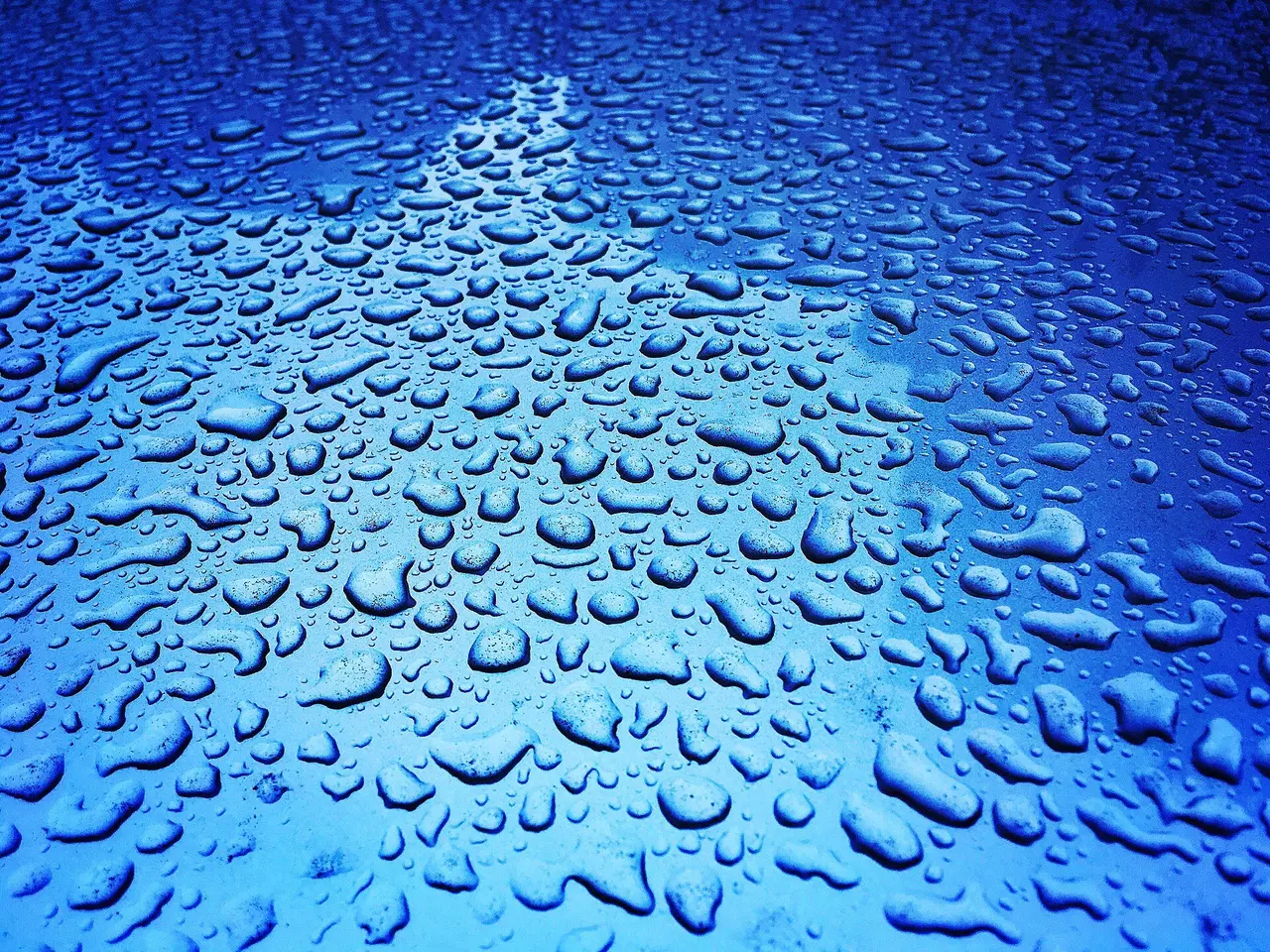
A coated surface has low surface energy, so water pulls into round beads and rolls off, taking some dirt with it (Figure 1). This is what customers notice most, but it is not the only measure: a coating covered in dirt or mineral deposits beads less well even though it is still there.
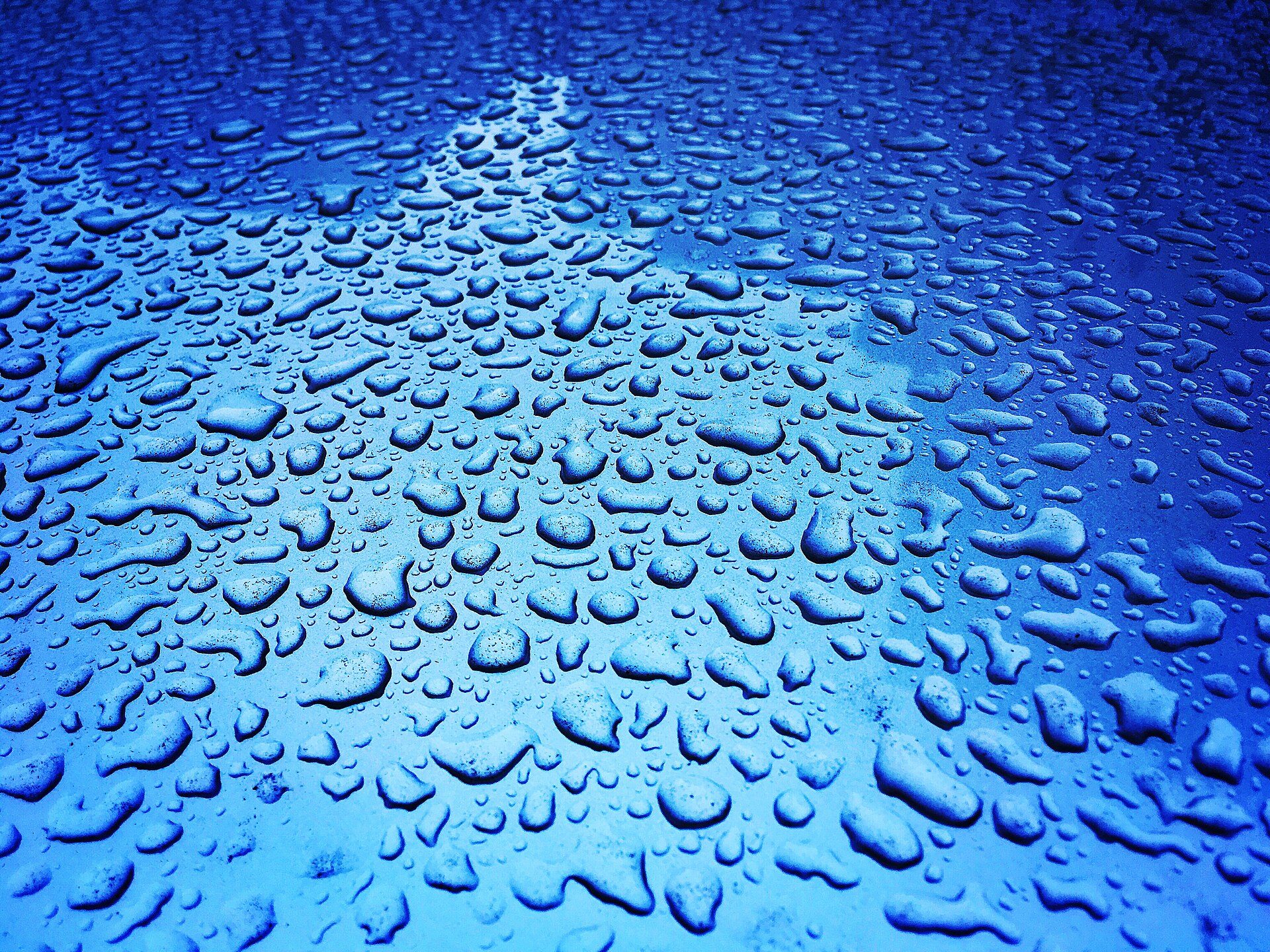
Photo: Carlos Ebert from São Paulo, BrazilGRU / Wikimedia Commons, CC BY 2.0

What "9H" means
Many products are labelled "9H". That is the top of the pencil hardness scale (from soft to hard), usually measured on a test panel rather than on a customer's car. It does not mean the coating resists keys, grit or stone chips. A technician should never use "9H" as a scratch-proof promise.
Is ceramic coating worth it? What it can and cannot do
The honest answer: it is good for owners who want a glossy, easy-to-wash car that stays cleaner and are willing to care for it properly; it is not worth the money if the customer expects the car to "never scratch" or "never need washing".
What ceramic can do
- Add gloss and depth of colour when applied over corrected paint.
- Repel water, so dust, mud, tree sap and bird droppings bond less and wash off more easily.
- Reduce the effect of UV and mild chemicals on the clearcoat to some extent.
- Reduce wash-induced swirls because the surface is slicker, provided the customer washes correctly.
What ceramic cannot do
- It does not stop deep scratches, stone chips or scrapes; for mechanical protection the customer needs PPF.
- It does not remove existing scratches; the paint must be polished first.
- It does not replace washing; the car still gets dirty, it just cleans more easily.
- It does not fully prevent water spots: hard water or dirty rain drying on the car in the sun still leaves mineral marks.
Real-world durability
Makers usually claim from about 1 year to several years, depending on the product and the number of layers. In practice it depends on preparation, curing conditions, whether the car lives outdoors or under cover, and how the owner washes it. Write the shop's and the maker's actual warranty policy on the card, with the maintenance conditions; never present a brochure figure as a promise.
How do ceramic coating and PPF differ?
Customers often ask whether to coat or fit PPF (paint protection film, a clear thermoplastic polyurethane film). They are different by nature and can be combined (Figure 2).
| Criterion | Ceramic coating | PPF |
|---|---|---|
| Nature | A cured chemical film, very thin | A thick film with adhesive, applied over the paint |
| Scratch and stone-chip protection | Negligible | Good; many films self-heal light scratches with heat |
| Gloss, water repellence, easy washing | Good | Depends on film; many shops coat the PPF too |
| Application time | About 1–2 days including polishing | About 2–5 days for a full car |
| Full-car price (2026 reference, Vietnam) | About 3–20 million VND | About 15–60 million VND and up |
| Best for | City cars, owners wanting gloss and easy washing | New and luxury cars, frequent highway driving |
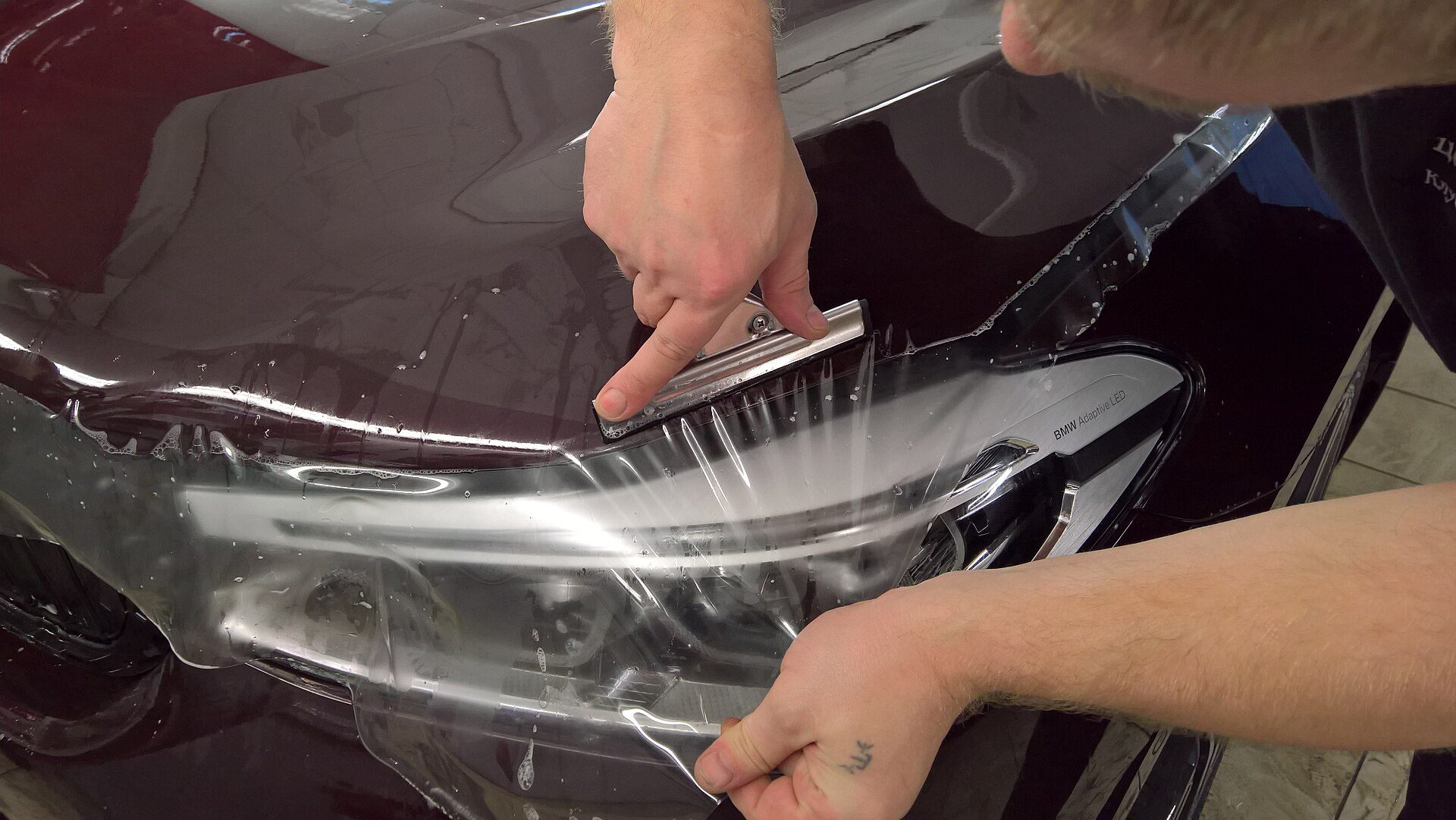
Photo: Dmitry757 / Wikimedia Commons, CC BY-SA 4.0

A common package at detailing centres: PPF on the areas that take stone chips (front bumper, bonnet, mirrors), ceramic coating on the rest and on top of the film. Film fitting is the next step in the roadmap.
A standard 10-step ceramic coating process
Nine-tenths of coating quality comes from preparation. The ceramic will show every flaw underneath.
Surface preparation (steps 1–6)
- Inspect and photograph: check every panel under a light, note deep scratches, stone chips and resprayed areas; measure paint thickness with a gauge to find thin spots.
- Wash: snow foam (Figure 3), two-bucket wash, wheels and tyres, door shuts.
- Remove iron fallout and tar: with dedicated removers, rinse thoroughly.
- Clay: clay the paint with lubricant to remove bonded contamination washing leaves behind; it should feel glass-smooth.
- Paint correction: choose 1–3 stages depending on the paint, with a DA polisher, without thinning edges.
- IPA wipe: wipe with diluted isopropyl alcohol (or a dedicated panel prep) to remove polishing oils; otherwise the ceramic bonds poorly.
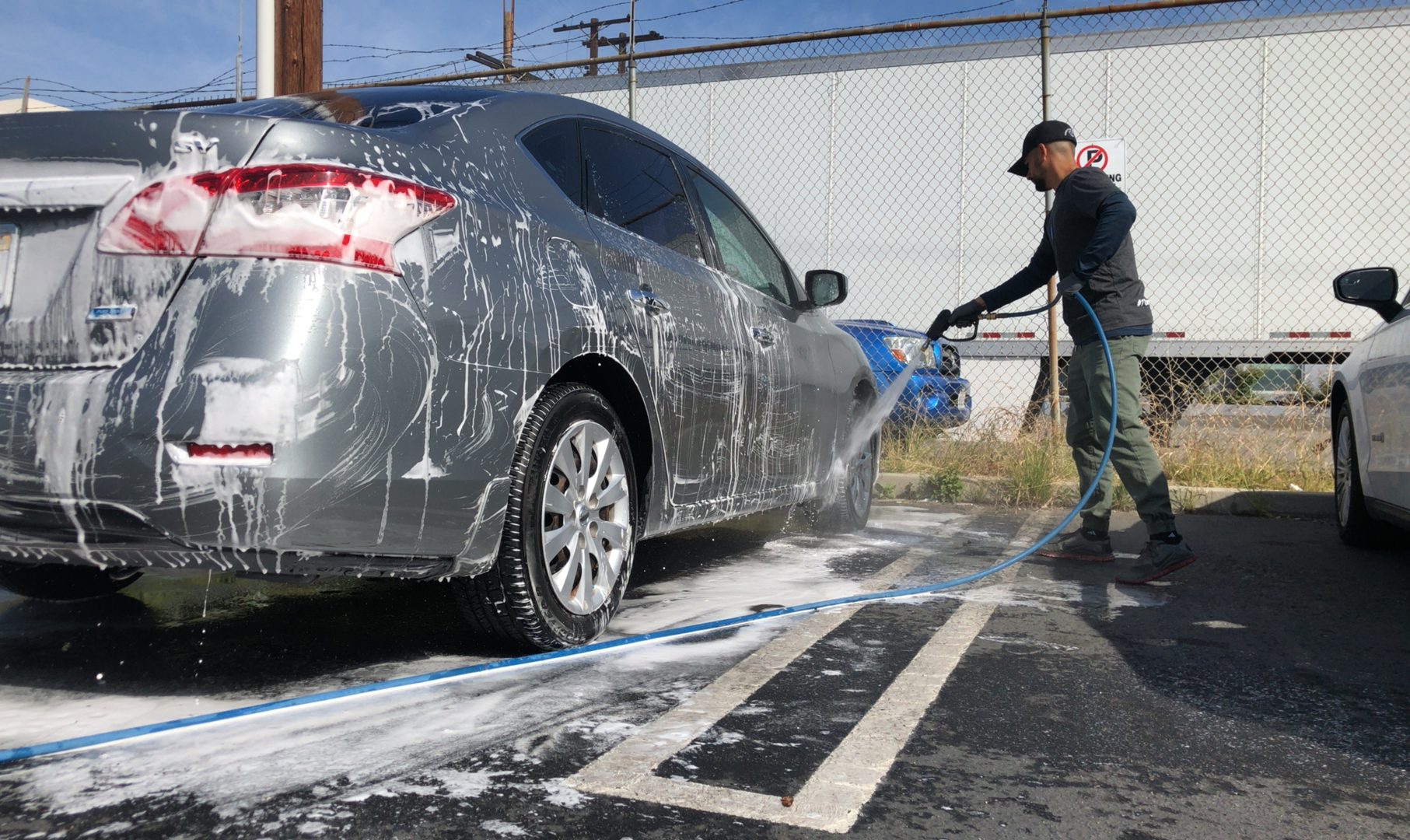
Photo: Juanacosta84 / Wikimedia Commons, CC BY-SA 4.0

Coating and finishing (steps 7–10)
- Apply in small sections: put a few drops on a microfiber-wrapped applicator and spread over a section of about 50 × 50 cm in horizontal then vertical passes (Figure 4).
- Time the levelling: wait until the surface shows a rainbow sheen or slight haze (timing depends on product, temperature and humidity), wipe once with a clean towel, then again with a second towel.
- Inspect for high spots: look for thick, unlevelled patches that look like oily smears. Caught early, re-wet with a little product and wipe; once hard, they must be polished off.
- Initial cure: keep the car indoors, dust-free and dry for the time the maker recommends; for a second layer, wait the full interval between layers.
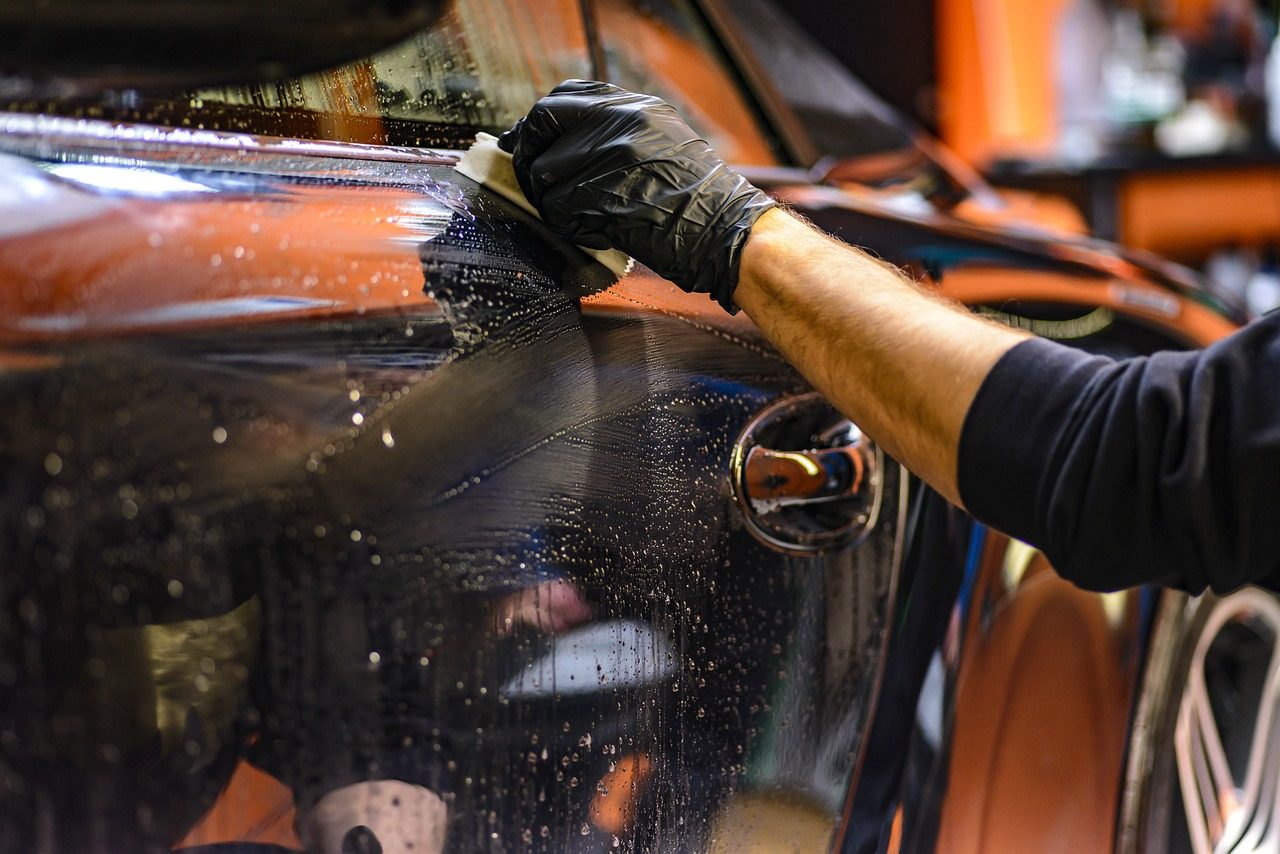
Photo: AZ Auto Detailing / Wikimedia Commons, CC BY-SA 4.0

Temperature, humidity and light
Work in the shade on paint that is cool to the touch. Hot paint in the sun makes the product flash too quickly, hard to wipe and prone to streaks. High humidity, such as northern Vietnam's damp spring, changes levelling and curing times; test a small section first. Use a handheld inspection light and good overhead lighting to see high spots.
Safety when applying ceramic coatings
Ceramic coatings and IPA both contain solvents. Using them daily in a closed room without protection builds up risk to lungs, skin and eyes.
Safety warning: Read the product label and safety data sheet (SDS) before use. Wear nitrile gloves (cured ceramic on skin is very hard to remove), safety glasses and a mask with organic vapour cartridges when coating indoors; open ventilation or run an extractor fan. IPA and solvents are flammable: no smoking, no flames and no spark-producing equipment near the coating area; put chemical-soaked towels in a closed bin. Polishers are electric: keep cables and sockets away from water, use a residual-current protected socket, and unplug when changing pads. If product gets in your eyes, rinse with clean water continuously for at least 15 minutes and see a doctor; if you feel dizzy or short of breath, get to fresh air immediately.
Storing the product
An opened bottle of ceramic exposed to moisture gradually cures inside the bottle. Close it tightly after use, write the opening date and use it within the maker's time limit. Do not use product that has thickened; it streaks easily.
Customers and children
Keep customers and children out of the coating area while you work. Close the door and put up a sign.
Ceramic coating prices and a costing example
Prices vary with vehicle size, the number of polishing stages, the number of layers, the product, and whether glass, wheels and trim are coated too. The figures below are 2026 references for Vietnam and vary by region and shop.
Reference prices by package
| Package | Small car (A, B segment) | C, D segment sedan | 7-seat SUV, pickup |
|---|---|---|---|
| Basic: wash, decontaminate, 1-stage polish, 1 layer | 3–5 million VND | 4–7 million VND | 5–8 million VND |
| Standard: 2-stage polish, 2 layers | 5–8 million VND | 6–10 million VND | 8–12 million VND |
| Premium: 3-stage polish, multiple layers, glass, wheels, trim | 8–14 million VND | 10–18 million VND | 12–20 million VND |
Worked example: standard package for a black C-segment sedan
A 2-year-old black C-segment sedan with heavy swirls from machine washing. The shop quotes the standard package: 2-stage polish, 2 layers, sale price 7,000,000 VND (~US$265). One lead technician does the work with a helper for washing. Working time:
- Wash, iron removal, clay: 1.5 + 0.5 = 2 hours.
- Two-stage polish: 4 hours.
- IPA wipe: 0.5 hours.
- Two layers of coating: 2 hours, plus 1 hour waiting between layers.
- Inspection and handover: 0.5 hours.
- Total: 2 + 4 + 0.5 + 2 + 1 + 0.5 = 10 hours, plus one night indoors for the initial cure, with delivery the next morning.
| Cost item | Calculation | Amount |
|---|---|---|
| Ceramic coating | 2 bottles × 800,000 VND | 1,600,000 VND |
| Compounds, pad wear, towels, IPA, wash chemicals | Package estimate | 400,000 VND |
| Lead technician labour | 10 hours × 70,000 VND | 700,000 VND |
| Wash helper | 2 hours × 40,000 VND | 80,000 VND |
| Electricity, water, rent share | Package estimate | 520,000 VND |
| Total cost | 3,300,000 VND | |
Check: 1,600,000 + 400,000 + 700,000 + 80,000 + 520,000 = 3,300,000 VND. Gross margin: 7,000,000 − 3,300,000 = 3,700,000 VND, but the shop still has to cover advertising, warranty work (customers coming back for maintenance), idle time and tax. Cut the price to 4,000,000 VND while still doing a 2-stage polish and the gross margin drops to 700,000 VND. That is why you should not skip polishing to cut the price: quality falls and customers come back to complain.
How long before washing a coated car, and how to maintain it
The coating needs time to fully cure, longer than it takes to feel dry. Most shops follow the product maker's instructions; the times below are typical, and you should always write the times for your actual product on the handover card.
The first days after coating
- Keep the car away from water and rain for about the first 12–24 hours; if it gets wet, blot gently with a clean microfiber towel without rubbing.
- No soap or chemical washing for about the first week (depending on the product).
- Avoid parking under sap-dripping trees or where birds perch; wet and remove bird droppings quickly.
Routine maintenance schedule
| Task | Suggested frequency | Notes |
|---|---|---|
| Two-bucket wash with pH-neutral shampoo | Every 1–2 weeks | Avoid brush car washes and harsh chemicals |
| Spray topper (maintenance coat) | Every 1–3 months | Keeps water repellence, per the maker's instructions |
| Shop inspection, light mineral removal | Every 6–12 months | As required by the shop's warranty |
Signs the coating is weakening
Water beads less, sheets in patches, and the surface gets dirty faster. Before concluding the coating is gone, wash and lightly decontaminate, then test again; often it is just a layer of dirt hiding the coating.
Common ceramic coating mistakes
Rainbow streaks and oily high spots
Sign: visible smears in sunlight. Cause: wiping too late, sections too large, hot paint. Fix: caught early, re-wet and wipe; once hard, lightly polish that area and recoat.
Coating unpolished paint
Sign: the car is glossier after coating but swirls are still obvious under a light. Cause: skipping correction to lower the price. Fix: advise properly from the start; if the customer chooses a no-polish package, write it on the job card.
Poor bonding, early failure
Sign: water repellence fades within a few weeks. Cause: no IPA wipe, leftover polishing oils or wax. Fix: always wipe with IPA before coating, using separate clean towels.
Frequently asked questions
Is ceramic coating worth it?
Yes, if the owner wants a glossy, water-repellent, easy-to-wash car and will wash it properly. Not if they expect scratch protection or no more washing.
How much does a ceramic coating cost?
About 3–20 million VND depending on vehicle size, polishing stages and number of layers (2026 reference for Vietnam, varying by region). Cheap packages usually skip paint correction.
How long after coating can I wash the car?
Typically keep it dry for the first 12–24 hours and avoid chemical washing for about the first week; follow the instructions for the product your shop used.
Ceramic or PPF: what is the difference, and which should I choose?
Ceramic is a thin chemical film for gloss and easy washing; PPF is a thick film against stone chips and scratches. Cars that do a lot of highway driving and expensive new cars benefit from PPF on the front and ceramic on the rest.
Practice exercises and self-assessment
- On a test bonnet, split it in half: coat one half, leave the other; spray water and photograph the difference.
- Coat one 50 × 50 cm section and record temperature, humidity and the time from application to wipe.
- Cost a premium package for a 7-seat SUV: 3 bottles × 800,000 VND, supplies 600,000 VND, lead technician 14 hours × 70,000 VND, helper 3 hours × 40,000 VND, utilities and rent 700,000 VND.
Self-assessment criteria
- Pass: no rainbow streaks under a light on your test section, and the coated half beads water clearly better than the uncoated half.
- Pass: your costing gives 2,400,000 + 600,000 + 980,000 + 120,000 + 700,000 = 4,800,000 VND.
- Pass: you can explain "9H" and why ceramic does not replace PPF in your own words.
- Not yet: you skip the IPA wipe, coat in direct sun, or promise customers a number of years as a guarantee.
With ceramic coating done, move on to the next step of the roadmap: Window tint & paint protection film, where you learn to cut film, heat-shrink windscreen film and fit PPF around edges and curves.
Keep learning car detailing and tint: after ceramic coating come window tint, PPF, a complete care package for a new car and opening your own studio. See the 8-step car detailing and tint technician roadmap.