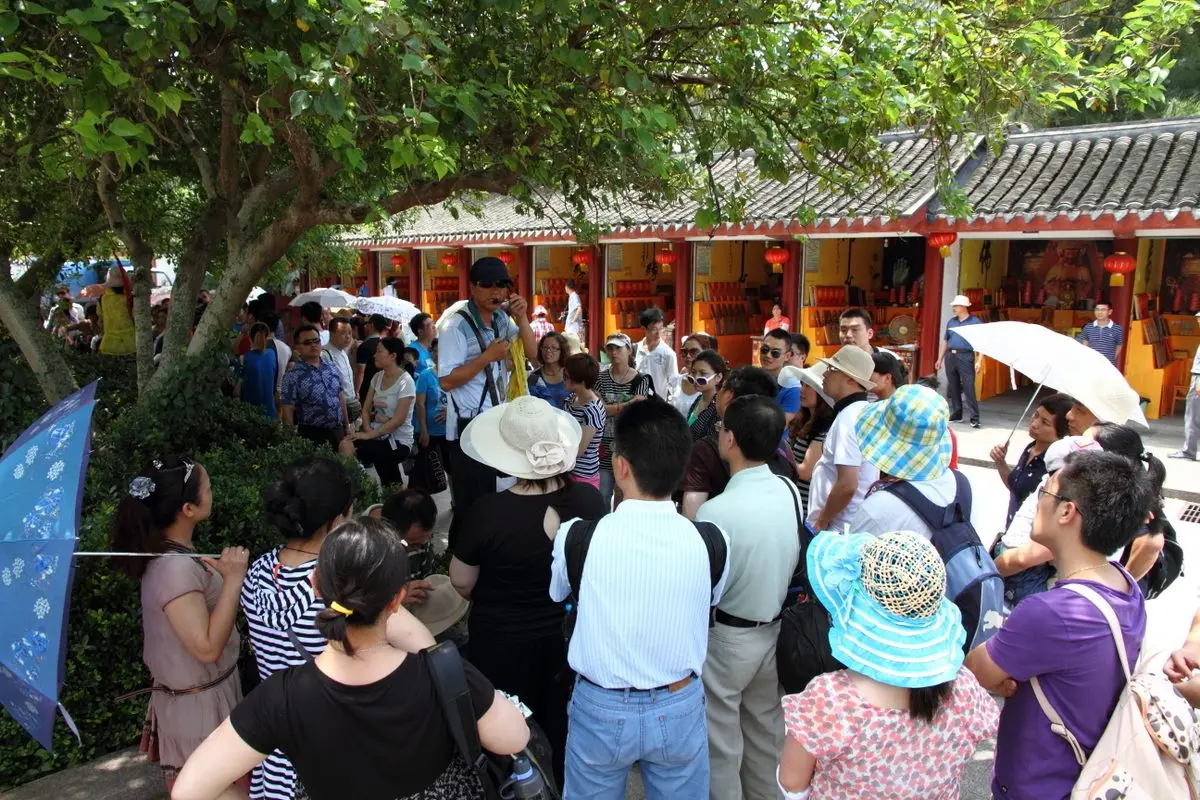
A tour guide card is the mandatory licence for anyone guiding tourists in Vietnam, and under the 2017 Law on Tourism there are 3 types: the international tour guide card, the domestic tour guide card and the on-site tour guide card. To get one you must meet general requirements on personal record and health, hold the qualification required for that card type (a degree in tour guiding, or a professional guiding certificate obtained by exam or assessment), add foreign-language proficiency for the international card, then apply to the provincial authority in charge of tourism. This lesson helps you choose the right card, understand the path from training and exams to the application, and know where to check the details so outdated information online does not mislead you.
By the end of this lesson, you will be able to:
- Tell apart the domestic, international and on-site guide cards by scope of work and type of guests.
- Check which card you already qualify for, and which degree, certificate or language proof you still lack.
- Plan your training, the professional guiding exam and your application, with a timeline and budget that add up.
- Look up the current procedure on the public services portal or at the provincial tourism department instead of trusting figures circulating online.
- State the principles of guiding legally and ethically.
Want to become a tour guide properly? Understanding the job, the licence and ethics is step 1 of the roadmap, before destination knowledge and commentary skills. See the 8-step tour guide roadmap to learn in the right order.
What is a tour guide card, and why do you need one?
A tour guide card is issued by the competent state authority and confirms that you are qualified to work as a guide within a certain scope. When leading a group, the guide must wear the card so that guests, site managers and inspectors can recognise them (Figure 1).
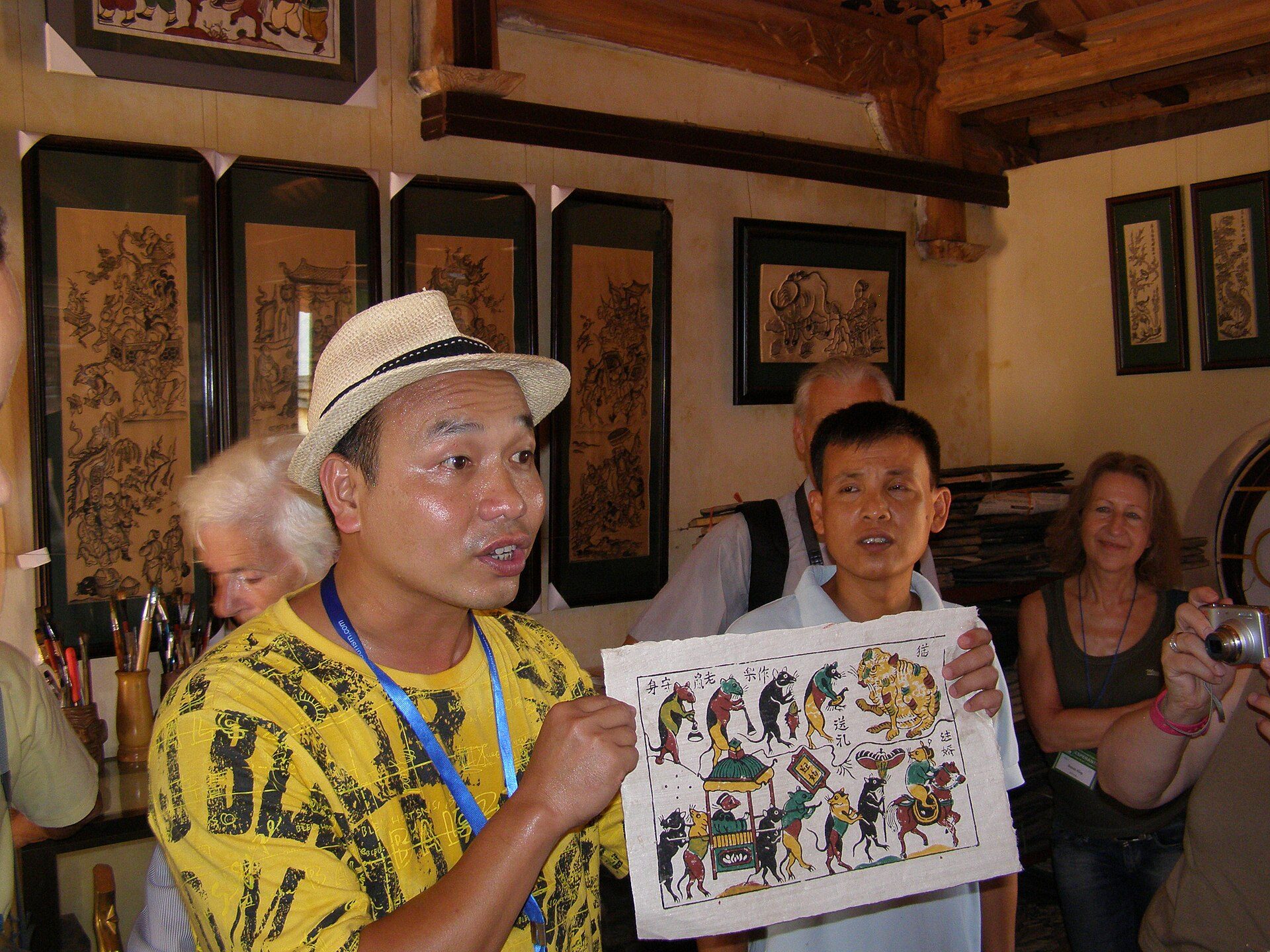
Photo: RG72 / Wikimedia Commons, CC BY-SA 4.0

The card is one requirement, not a ticket to run tours
Even with a card, to guide a group legally you work through a licensed travel company on a tour programme, with a contract or written assignment as the rules require. On-site guides work within a tourist site or area as assigned by its management. The full conditions for practising are in the Law on Tourism and its implementing documents; reread the current version when you start taking tours.
Why you should not guide without a card
Guiding without a card, or beyond the scope of your card, is a violation that can bring an administrative fine, and the company that hired you also takes a risk.
Do not trust old figures online
The rules on guide cards have changed over the years and may be amended again. Many articles online still copy old application forms, fees and issuing offices. The rule of this lesson: state only what is certain under the 2017 Law on Tourism, and look up specific figures (fees, processing times, forms, language standards) on the public services portal or ask the provincial tourism department where you will apply.
The 3 card types: domestic, international, on-site
The 2017 Law on Tourism divides guide cards into 3 types that differ in scope and in which guests you may guide. Choosing the wrong type means repeating training and exams.
Domestic tour guide card
For guiding domestic tourists, meaning Vietnamese citizens and foreigners residing in Vietnam travelling within the country, anywhere in Vietnam. This is the best fit for newcomers guiding domestic tours for travel companies, corporate groups and school groups.
International tour guide card
For guiding both international visitors to Vietnam and domestic tourists nationwide, and for taking Vietnamese tourists abroad. It requires a higher qualification and fluency in a foreign language; the registered working language is usually shown on the card. For example, a guide taking foreign visitors aboard a cruise boat in Ha Long Bay (Figure 2) needs an international card.
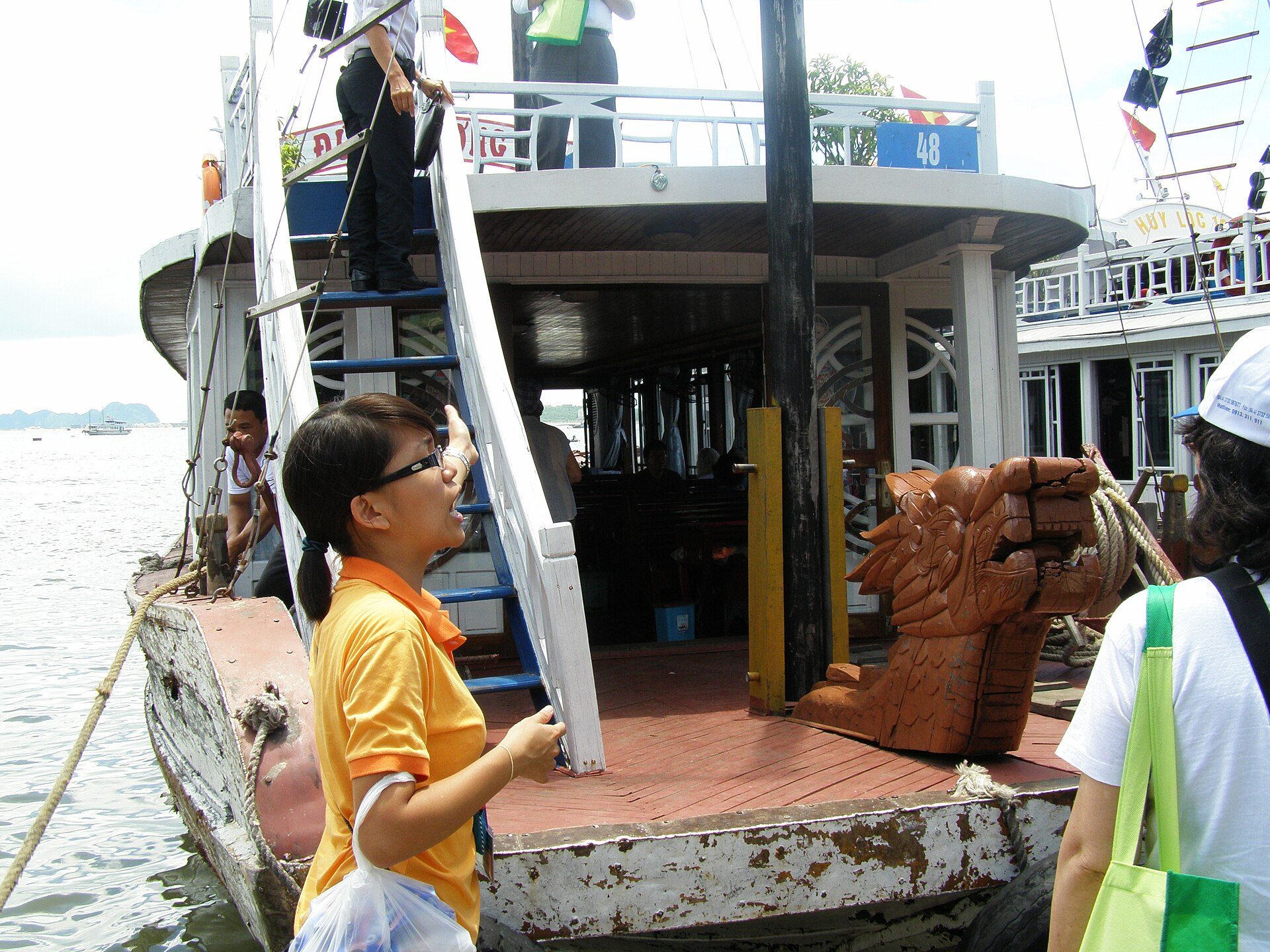
Photo: RG72 / Wikimedia Commons, CC BY-SA 4.0

On-site tour guide card
For guiding visitors within one tourist area or site, such as guides at a heritage site, museum, craft village or national park (Figure 3). An on-site card holder may not lead multi-province tours. It suits people who work long term at one site and know it in great depth.
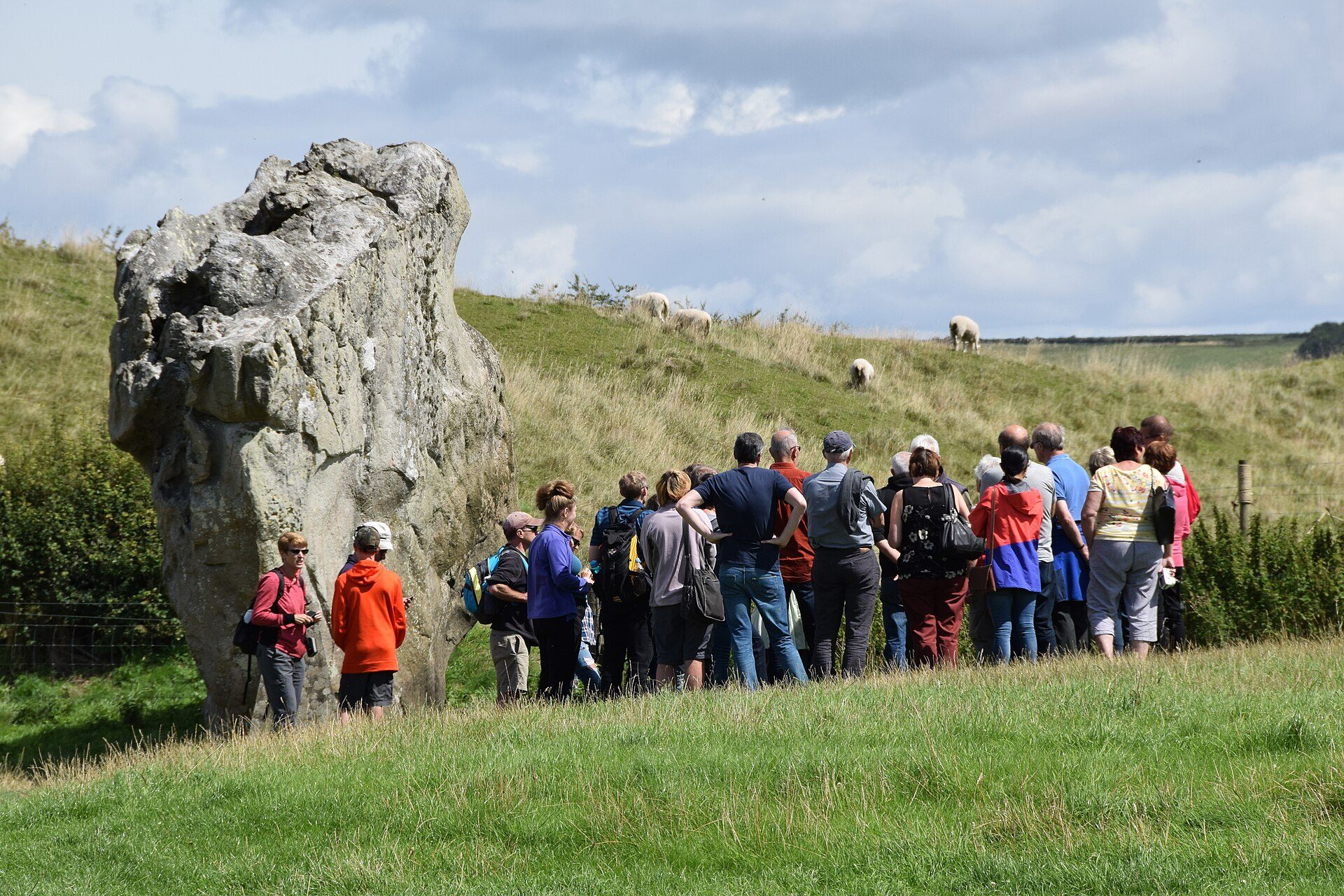
Photo: Stevekeiretsu / Wikimedia Commons, CC BY-SA 4.0

Quick comparison
| Card type | Scope | Guests you may guide | Main requirement (principle) |
|---|---|---|---|
| Domestic | Nationwide | Domestic tourists | Intermediate vocational level or higher in tour guiding, or another field plus a domestic guiding certificate |
| International | Nationwide and outbound tours | International visitors, domestic tourists, Vietnamese travelling abroad | College level or higher in tour guiding, or another field plus an international guiding certificate; fluency in the registered language |
| On-site | One tourist area or site | Visitors to that site | Passing the on-site guiding assessment held by the provincial tourism authority |
The requirement column gives only the main principles. Full conditions, exact language standards and supporting documents are in the current implementing regulations.
Requirements for domestic, international and on-site cards
All card types share general requirements, and each adds a qualification requirement.
General requirements
- Vietnamese citizen with full civil legal capacity.
- No infectious disease and no drug use, shown by a health certificate in the required form and within its validity period.
- Meets the qualification requirement for the card type below.
Domestic card
An intermediate vocational diploma or higher in tour guiding, or an intermediate diploma or higher in another field plus a domestic tour guiding certificate. The certificate is obtained after training and passing the professional guiding exam as required.
International card
A college diploma or higher in tour guiding, or a college diploma or higher in another field plus an international tour guiding certificate, together with fluency in the registered working language. The implementing documents list which papers prove language proficiency (a degree taught in that language, a certificate at a given level, and so on); check the exact level in the current version before booking a language test.
On-site card
Passing the on-site guiding assessment organised by the provincial tourism authority. The content relates to the site where you will work. Ask the site management or the provincial tourism department about the schedule.
The professional guiding exam: who sits it, what it covers, how to prepare
Not everyone has to take it. People with a tour guiding degree at the right level use that degree; people from other fields need the professional certificate.
Who needs the certificate
- Graduates of other fields (English, history, business…) who want a domestic or international card.
- Domestic card holders moving to an international card whose degree is not at the required specialist level.
- Would-be on-site guides take the on-site assessment instead of the domestic or international exam.
Typical content
The exam usually has a knowledge part (Vietnamese culture, history and geography, tourism law, guiding practice) and a practical commentary part. The structure, duration and organising body follow the current regulations; read the enrolment notices of training providers and announcements from the tourism authority.
How to prepare well
- Build a notebook by region: one page per key province or city (heritage sites, festivals, specialities, basic facts from reliable sources).
- Study tourism law closely: guides' rights and duties, card types, conditions for practising.
- Practise 10-minute commentaries on 3–5 familiar sites, time them, record them and ask others for feedback.
- For the international card, practise commentary in your registered language from an outline, not word-for-word memorisation.
Application file and where to apply
You apply to the provincial authority in charge of tourism (its name varies by province after administrative restructuring), in person, by post or online where the procedure is available on the public services portal.
A typical file
- Application form in the current template.
- A personal background statement as the procedure requires.
- Certified copies, or copies with originals for comparison, of degrees, the guiding certificate and language proof (international card).
- A health certificate issued by an authorised medical facility, within its validity period.
- Portrait photos in the required size.
These are the usual groups of documents. For the exact list, forms and number of copies, see the procedure "issuing a tour guide card" on the National Public Services Portal (in Vietnamese) or the portal of the province where you apply.
Fees and processing time
There is a card fee and a processing deadline, both set by current regulations and shown on the procedure page. This lesson gives no figure because fees can be adjusted; when budgeting, look up the procedure page and fill in the "card fee" line in the example table below.
Validity, renewal and reissue
Under the 2017 Law on Tourism, international and domestic guide cards are valid for 5 years; renew before expiry. A lost or damaged card, or changed details, calls for a reissue. For the validity of on-site cards and the renewal and reissue files, check the current rules. A card can be revoked for violations, for example letting someone else use it.
Guiding legally and ethically
The card lets you work; your reputation comes from how you work. Travel companies and guests judge guides more on honesty than on their commentary voice.
What guides must do
- Wear the card when guiding and carry the tour programme and assignment papers.
- Follow the agreed programme; any change must be reported to operations and agreed by the guests.
- Brief guests on site rules, local customs and safety risks.
- Protect the destination's reputation: give accurate, sourced commentary, never invented anecdotes.
What to avoid at all costs
Important: Never lend your card, and never guide beyond its scope (a domestic card leading international visitors, an on-site card leading inter-provincial tours). Never push guests into shopping stops for commission or collect extra money outside the programme. These acts can lead to administrative fines, card revocation and damage to the whole profession. The exact penalties are set by the decree on administrative sanctions in tourism currently in force.
Guests watch you at heritage sites too
At heritage sites such as the Hue Imperial City (Figure 4), the guide reminds guests to dress appropriately, not to climb on structures and not to touch artefacts. If guests misbehave and the guide stays silent, the site remembers the company's name and yours.
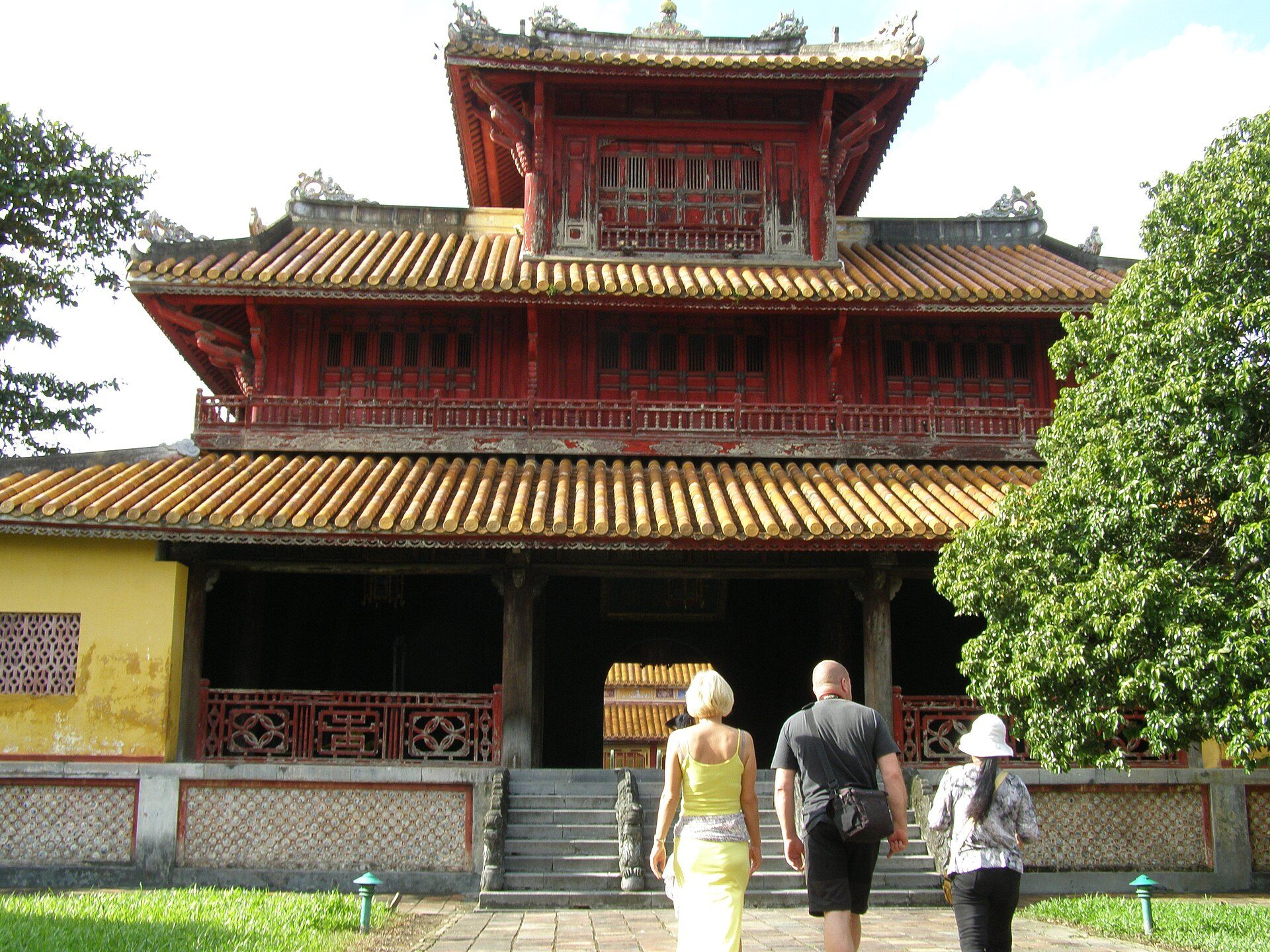
Photo: RG72 / Wikimedia Commons, CC BY-SA 4.0

Worked example: an international card plan for an English graduate
Lan, 23, has a university degree in English and wants to guide English-speaking groups. Her degree is in another field and above college level, so she needs the international guiding certificate. A degree taught in English may count as language proof, but she must check the current rules; assume she still takes an English certificate to be safe.
Planned timeline
| Phase | Task | Planned time |
|---|---|---|
| 1 | Look up the procedure on the portal, choose a training provider | 1 week |
| 2 | International guiding course (evenings, weekends) | 8 weeks |
| 3 | Revise and sit the guiding exam, plus an English test in parallel | 3 weeks |
| 4 | Wait for results, collect certificates, health check, prepare the file | 4 weeks |
| Total time until the file is submitted | 16 weeks | |
Check: 1 + 8 + 3 + 4 = 16 weeks, about 4 months. After submission, the waiting time follows the processing deadline on the procedure page; these are planning estimates, and real course and exam dates may differ.
Planned budget (2026 reference, varies by province and provider)
| Item | Estimate |
|---|---|
| International guiding course including exam | 5,000,000 VND |
| English certificate test | 1,800,000 VND |
| Health check | 400,000 VND |
| Study materials, notebook, maps | 500,000 VND |
| Photos, certified copies, travel to submit | 300,000 VND |
| Subtotal (excluding the card fee) | 8,000,000 VND |
| Card fee | Check the current procedure page |
Check: 5,000,000 + 1,800,000 + 400,000 + 500,000 + 300,000 = 8,000,000 VND (about US$310). Course fees vary widely, usually from a few million up to around 8 million VND depending on the provider and format; ask whether the exam fee is included. If Lan already has a valid English certificate, the budget drops to 6,200,000 VND.
Common misconceptions about guide cards
"A university degree is enough for a card"
Wrong. A degree in another field is only part of it; you still need the professional guiding certificate for the right card type, and language proof for the international card.
"A domestic card is fine for Western tourists"
International visitors to Vietnam must be guided by an international card holder. Foreigners residing in Vietnam travelling domestically count as domestic tourists; read the definitions in the law before accepting a group.
"With a card I can run tours for my own customers"
Domestic and international guides work through licensed travel companies, on a tour programme with a contract or assignment as required. Collecting guests, taking payment and running tours yourself without a licensed company is a major legal risk.
Frequently asked questions
What are the requirements for a domestic guide card?
In principle under the 2017 Law on Tourism: Vietnamese citizen, full civil legal capacity, fit health, and an intermediate diploma or higher in tour guiding, or in another field plus a domestic guiding certificate.
How does the international card differ from the domestic card?
It covers international visitors to Vietnam and Vietnamese travelling abroad, requires college level or higher and fluency in the registered language.
Where do I take the professional guiding exam?
At providers and bodies authorised to hold it under the current rules. Ask the tourism department of the province where you will apply which certificates it accepts.
What goes into the card application?
Usually an application form, a background statement, copies of degrees and certificates, language proof (international card), a health certificate and photos. Check the exact list on the public services portal procedure page.
How long is a guide card valid?
Under the 2017 Law on Tourism, international and domestic cards are valid for 5 years. Check the current rules again when you renew.
Can an on-site card holder lead tours?
No. The on-site card applies only within one tourist area or site; to lead tours to several places you need a domestic or international card.
Practice and self-assessment
- Write 3 lines: which guests you want to guide, where, and in which language; choose the card type from that.
- Compare your degrees and certificates with the comparison table; list what is missing.
- Find the procedure "issuing a tour guide card" for your province or city; copy the current document list, fee and processing deadline.
- Draw up your own timeline and budget following the example, and check the sums.
Self-assessment criteria
- Pass: you state the scope of all 3 card types correctly and choose your card with a reason.
- Pass: your document list comes from the official procedure page, with the date you checked it.
- Pass: your timeline and budget add up and mark which items are estimates.
- Not yet: you use forms or fees from old online articles without checking an official source.
Once you understand the card and the rules, move on to the next step of the roadmap: Destination knowledge & regional culture, where you build a sourced notebook for popular routes, knowledge you need both for the guiding exam and every day with a group.
Keep learning to be a tour guide: after the licence come destination knowledge, commentary, running a group, safety and first aid, handling incidents, then guiding real tours. See the 8-step tour guide roadmap.