To remove yellow stains from a white shirt, read the care label first, treat collar grease with dish soap, apply a paste of baking soda and 3% hydrogen peroxide to underarm sweat stains, then soak the whole shirt in an oxygen bleach solution in warm water as the pack directs; chlorine bleach is only for white cotton whose label allows it. Most white shirts that end up more yellow after treatment were hit with chlorine bleach on a sweat stain, ironed or tumble-dried before the stain was gone, or treated with chemicals mixed at random. This lesson is written the way an experienced housekeeper coaches a newcomer, with a worked example of treating 5 white shirts for a family, with time and cost figures that add up.
By the end of this lesson, you will be able to:
- Tell apart 4 common kinds of yellowing (collar, underarm, storage, bleach damage) and choose the right treatment.
- Read the bleach and temperature symbols on a care label and know when chlorine bleach is allowed and when only oxygen bleach is.
- Mix and use hydrogen peroxide, baking soda, oxygen bleach and chlorine bleach in the right amounts and for the right time.
- Handle chemicals safely: gloves, ventilation, and never mixing chlorine bleach with acids or ammonia.
- Plan a batch of white shirts with a time and materials cost you can calculate.
Learning to be a professional housekeeper? Laundry and stain removal is step 3 of the roadmap, after chemical, electrical and gas safety and systematic cleaning. See the 8-step professional housekeeper roadmap to learn in the right order.
Why do white shirts turn yellow?
Knowing the cause tells you which product to use. Collar stains, underarm stains and storage yellowing all look yellow, but they are made of different things.
Collar and cuff stains: body oil and dirt
The skin on the neck produces oil (sebum), which mixes with sweat and street dust in the collar seam. A normal machine wash does not remove it all, and over time the oil oxidises and turns yellow or grey. This type needs a grease remover, such as dish soap or bar soap, brushed in gently before washing.
Underarm stains: sweat and antiperspirant
Sweat contains protein and salts. Many antiperspirants contain aluminium compounds; combined with sweat and hot-water washing they build up in the fibres as stiff yellow patches. This is the hardest type, and the easiest to make worse: hot water or chlorine bleach on a protein stain can darken it.
Storage yellowing and bleach yellowing
Shirts stored with detergent residue, while slightly damp, or in sealed plastic bags often turn evenly yellow, especially in humid weather. Another type is caused by chlorine bleach itself: fabrics with stretch fibres (spandex), silk, wool, or anti-wrinkle finishes turn permanently yellow when bleached and cannot be restored.
Read the care label before bleaching
The care label sewn into the side seam or collar shows the maximum temperature, which bleach is allowed, and how to dry and iron (Figure 1). A professional housekeeper reads the label before using any stain remover, especially on the employer's expensive clothes.
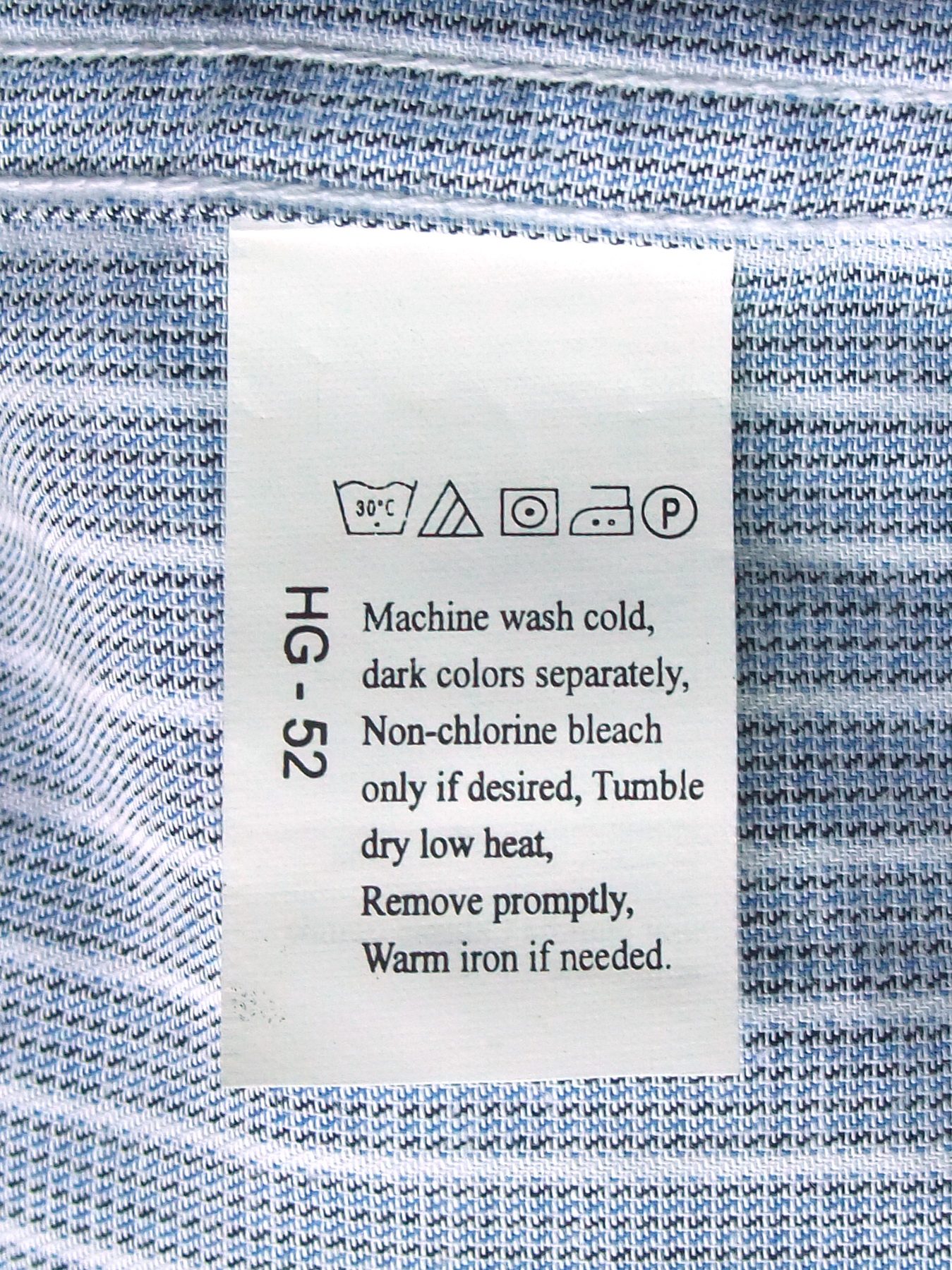
Photo: Mk2010 / Wikimedia Commons, CC BY-SA 3.0
Symbols you must know
| Symbol | Meaning | What it means for stain removal |
|---|---|---|
| Empty triangle | Any bleach allowed | Diluted chlorine bleach or oxygen bleach may be used |
| Triangle with 2 diagonal lines | Non-chlorine bleach only | Only hydrogen peroxide or oxygen bleach; no chlorine bleach |
| Crossed-out triangle | Do not bleach | Only soap, dish soap, mild baking soda; send valuable items to a cleaner |
| Wash tub marked 30, 40, 60 | Maximum wash temperature (°C) | The soaking water must not be hotter than this |
| Tub with a hand | Hand wash only | Short soaks, no hard brushing |
| Circle (letter P or F) | Professional dry cleaning | Ask the employer; usually send to a dry cleaner |
Check fibre content and colourfastness
The label also lists fibres: 100% cotton tolerates the most treatments; polyester and blends tolerate oxygen bleach; silk, wool and stretch fabrics need a light touch. White shirts with coloured embroidery, trims or prints need a spot test on an inside seam: dab one drop, wait 5 minutes, blot with a white cloth, and continue only if no colour transfers and the fabric does not change.
What if the label is missing?
Treat the shirt as if chlorine bleach is not allowed: use only dish soap, baking soda and oxygen bleach in moderately warm water (about 30-40°C). Ask the employer where it was bought and what it is made of before trying anything stronger.
Household stain removers: which one for which stain
Most homes have the products below. Each is strong against one kind of stain; used in the wrong place it is useless or harmful.
| Product | Works best on | Typical use | Do not use on |
|---|---|---|---|
| Dish soap | Collar and cuff grease | Apply directly, brush gently, leave 15 minutes | Almost always safe; rinse well |
| Baking soda | Odour, light sweat stains | Mix into a paste with a little water, leave 30-60 minutes | Silk, wool (alkali weakens protein fibres) |
| 3% hydrogen peroxide | Sweat stains, yellowing on whites | Mix with baking soda and dish soap, leave 30-60 minutes | Coloureds, silk, wool; spot test first |
| Oxygen bleach powder | Overall yellowing, stored clothes | Soak in warm water at the dose on the pack, 1-6 hours | Silk, wool, metal trims |
| Chlorine bleach | Old stains on white cotton, disinfecting | Dilute exactly as labelled, short soak, rinse very well | Spandex, silk, wool, protein sweat stains, "non-chlorine" labels |
| White vinegar | Antiperspirant residue, hard-water deposits | Dilute in water, soak the underarm area 30 minutes | Never with or at the same time as chlorine bleach |
3% hydrogen peroxide
The 3% hydrogen peroxide sold in pharmacies (Figure 2) is a mild bleach that breaks down into water and oxygen. It whitens yellow stains on white fabric but can also fade coloured fabric. Keep the bottle closed in a dark place; once opened many times it gradually weakens.
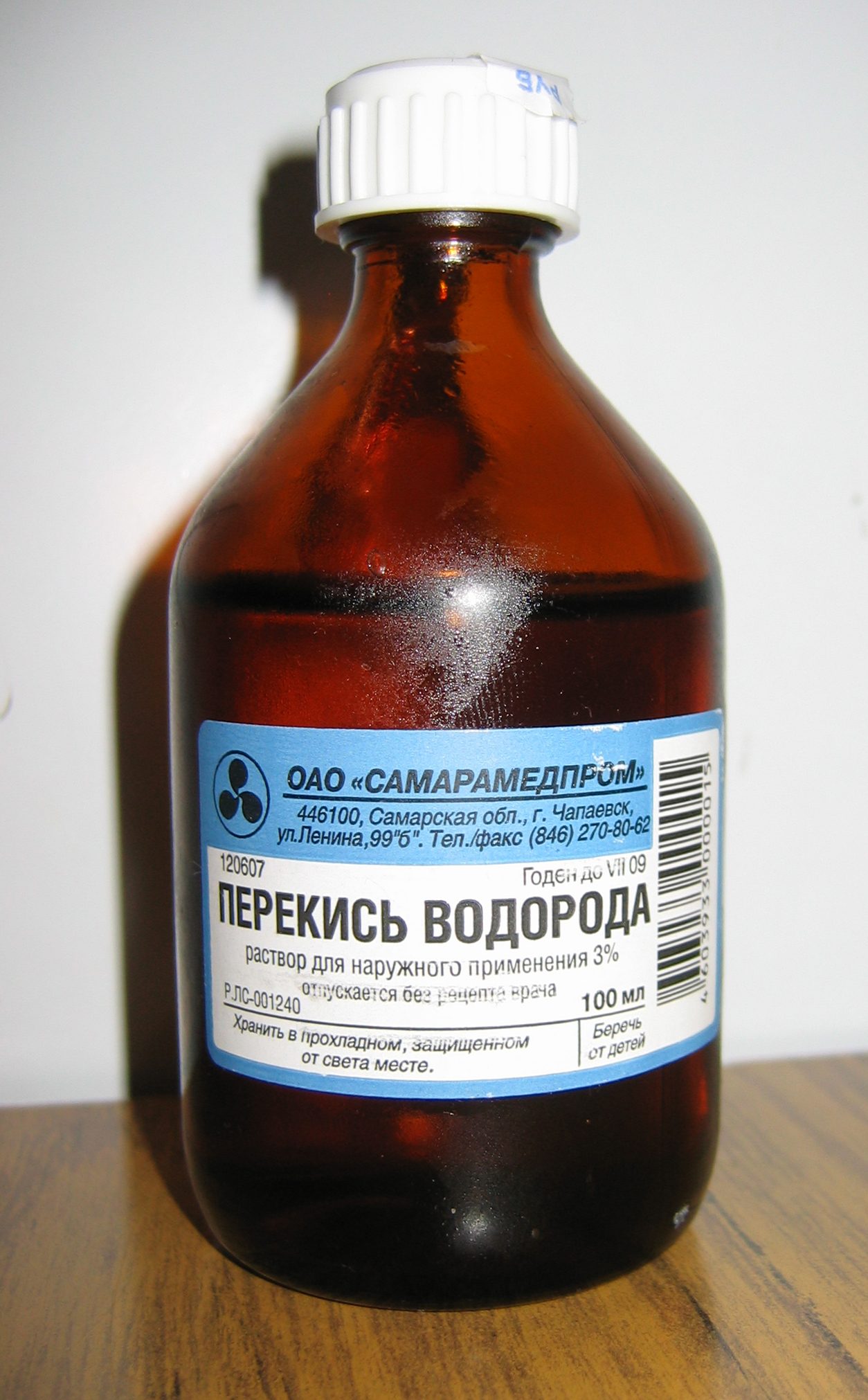
Photo: User:Yanachka / Wikimedia Commons, Public domain
Baking soda
Baking soda (sodium bicarbonate, Figure 3) is a fine, mildly alkaline white powder that deodorises and loosens dirt. On its own it handles light stains; mixed with hydrogen peroxide it forms a paste that clings to the stain and keeps the bleach in place for longer.
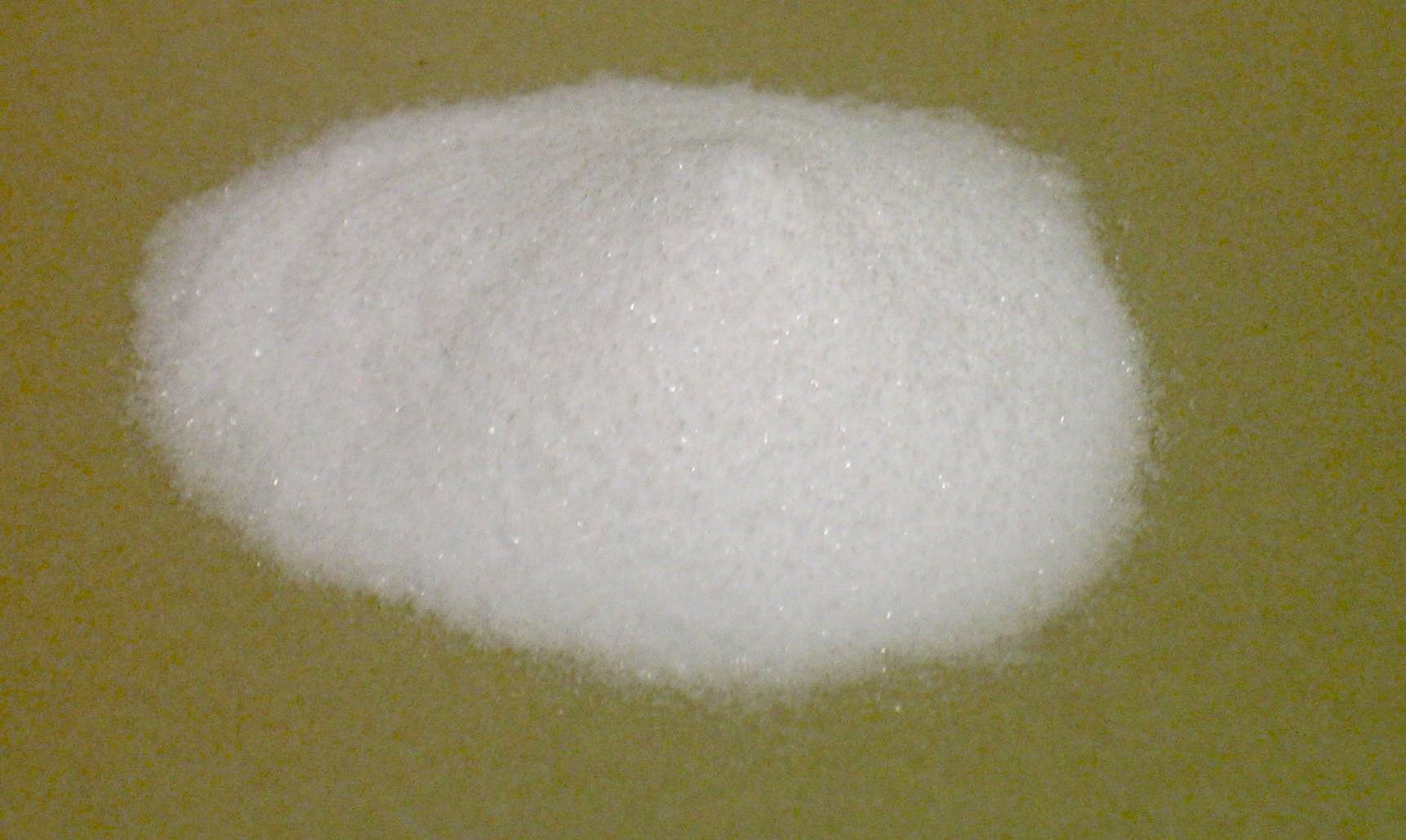
Photo: Thavox / Wikimedia Commons, Public domain
Oxygen bleach and chlorine bleach
Oxygen bleach powder (usually sodium percarbonate) releases hydrogen peroxide in warm water and suits whole-garment soaks. Chlorine bleach (called "javel" in Vietnam) is strong and cheap but weakens fibres, yellows synthetics and is dangerous when mixed. For white shirts with sweat stains, use oxygen bleach first; chlorine bleach is the last resort for white cotton with an empty-triangle label.
Chemical safety when removing stains
Stain removal means using chemicals at home, often in a small, poorly ventilated bathroom. One wrong mix can send you to hospital.
Safety warning: Never mix chlorine bleach with acids (vinegar, lemon juice, toilet bowl cleaner, descaler), because it releases toxic chlorine gas; never mix it with ammonia (some glass cleaners, urine in underwear or nappies), because it releases toxic chloramine gas. Do not mix chlorine bleach with hydrogen peroxide or oxygen bleach, and do not pour two different bleaches into the same basin one after the other: rinse the basin and garment in between. Always wear rubber gloves, open a window or run an extractor fan, and add chemicals to water (not water to chemicals). Do not store home-made mixtures in a closed bottle (the gas they release can blow the cap off); mix only what you will use. Splashed in the eyes: rinse with clean running water for at least 15 minutes, then see a doctor. If a sharp smell makes you cough, feel tight in the chest or short of breath: get into fresh air at once and call 115 (Vietnam's emergency number) if breathing does not improve. Store chemicals high up, out of children's reach, in their original labelled containers.
Minimum protective gear
- Rubber or nitrile gloves with long cuffs so bleach cannot run inside.
- A mask when mixing chlorine bleach or fine bleach powder.
- A dedicated plastic basin for bleaching, never a food basin or an aluminium tub.
Ask the employer before strong treatments
School uniforms, white ao dai (the Vietnamese long dress) and designer shirts are valuable to the household. Before using chlorine bleach or long soaks, photograph the stain, explain what you will do and the risk, and proceed only with consent. This is the work ethic from step 1: be transparent with your employer.
Step-by-step removal for each type of stain
General rule: go from mild to strong, cool water before warm, and never iron or tumble-dry while a stain remains, because heat "sets" it into the fibres.
Collar and cuff stains
- Wet the collar with cool water.
- Apply a thin layer of dish soap (or shampoo) along the stain, inside and outside.
- Brush gently with a soft old toothbrush along the weave, without scrubbing hard enough to fray the seam.
- Leave 15-30 minutes for the soap to work into the oil.
- If still yellow, apply the baking soda and peroxide paste below, then wash as usual.
Underarm sweat stains
- Soak the underarms in cool water with diluted vinegar for about 30 minutes to soften antiperspirant residue, then rinse all the vinegar out (Figure 4).
- Make the paste: 2 tablespoons baking soda, 2 tablespoons 3% hydrogen peroxide, half a teaspoon of dish soap.
- Wearing gloves, apply it to both sides of the stain, brush gently and leave 30-60 minutes without letting it dry hard.
- Rinse and check in daylight. If the stain remains, repeat rather than using a stronger mix.
- Wash with an enzyme detergent at the temperature the label allows.
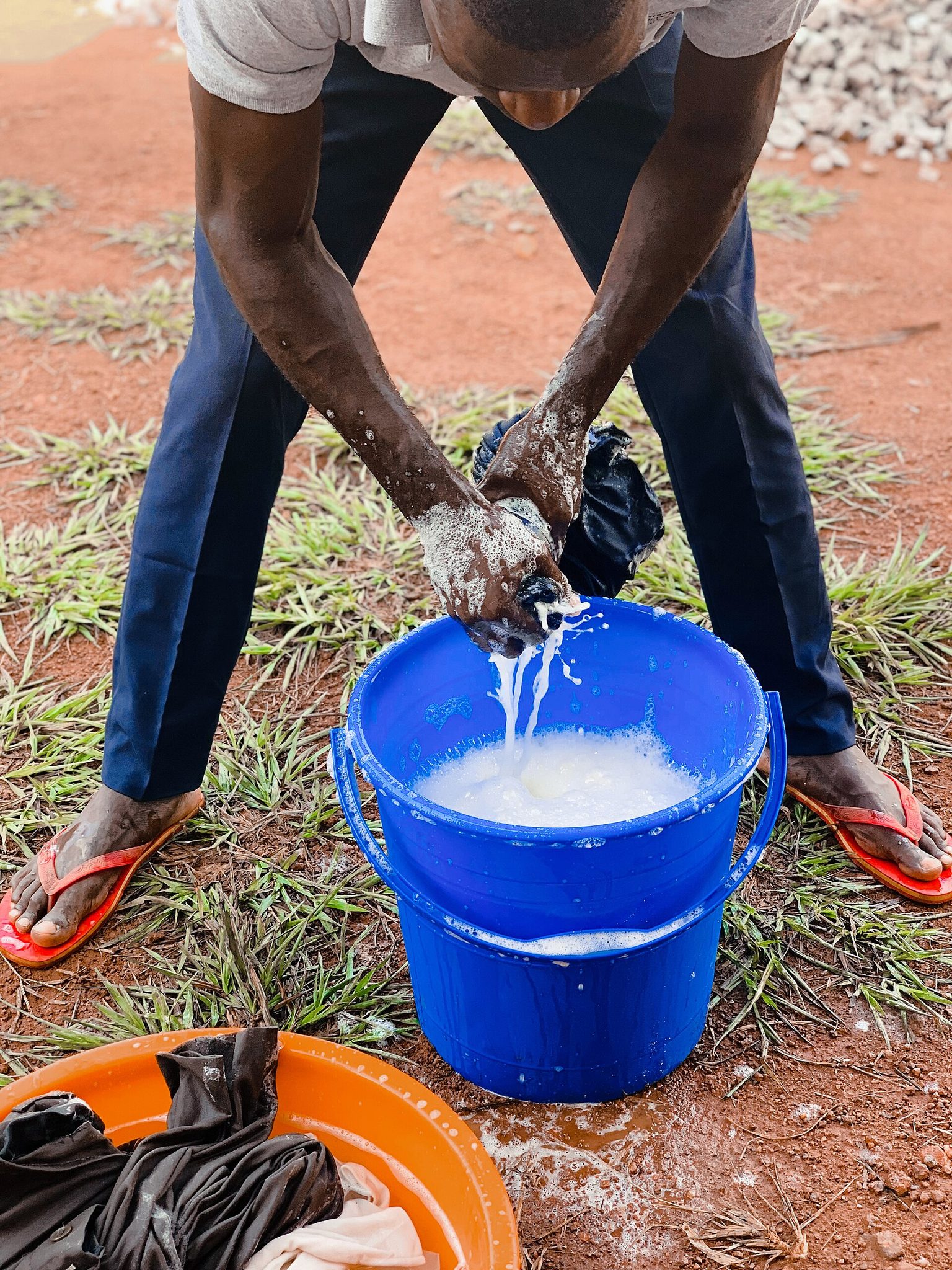
Photo: SharonDawn / Wikimedia Commons, CC BY-SA 4.0
Overall yellowing and stored clothes
- Dissolve oxygen bleach in warm water at the dose on the pack, usually about 40°C, or cooler if the shirt label says 30°C.
- Soak the shirt fully submerged for 1 to 6 hours, turning it halfway.
- Wash again, rinse twice, and dry in an airy place in gentle sunshine (Figure 5).
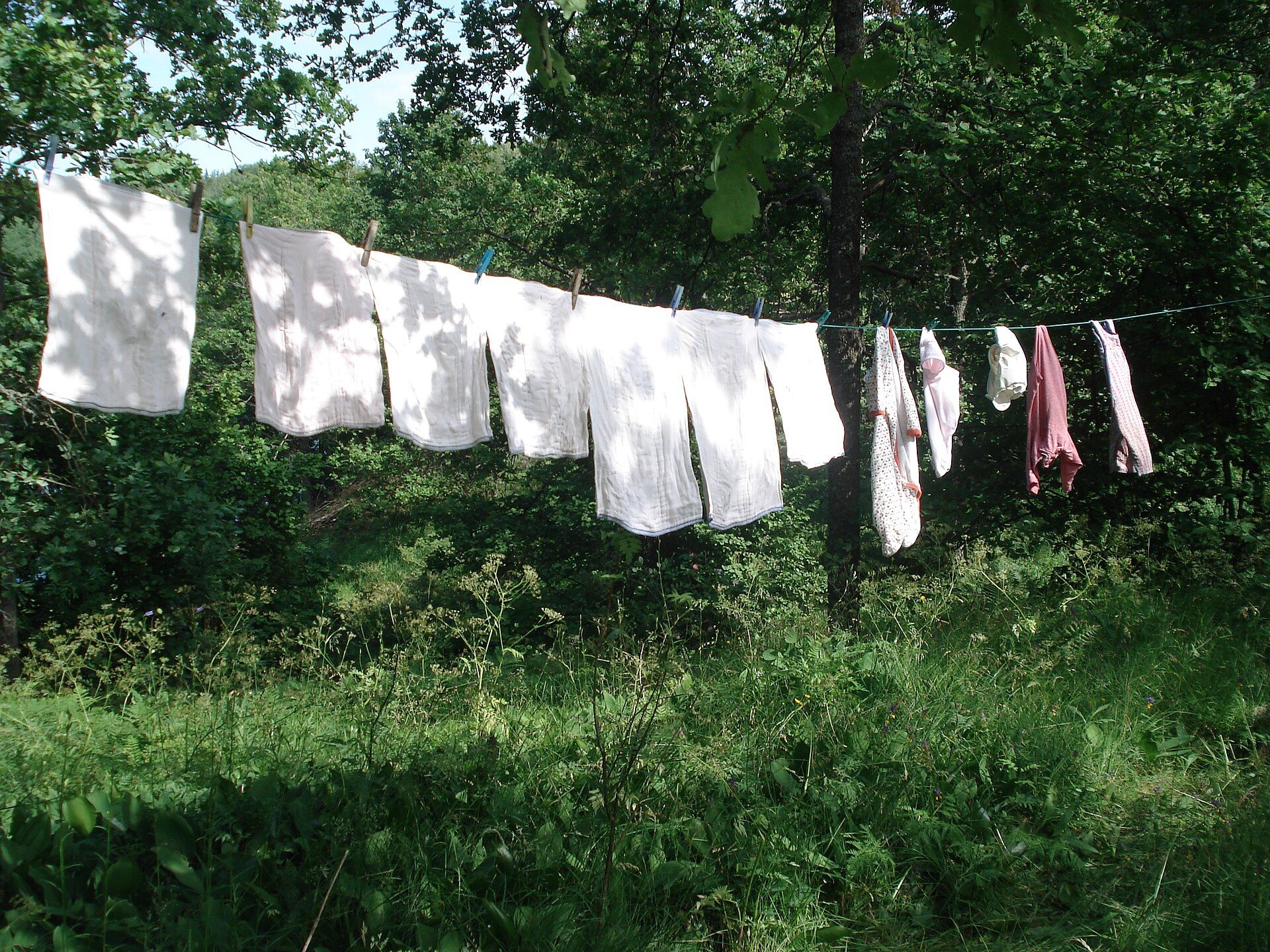
Photo: C. K. Klose / Wikimedia Commons, CC BY-SA 3.0
When to use chlorine bleach
Only when the shirt is white cotton (or linen), the label shows an empty triangle, the stain is not a protein sweat stain, and oxygen bleach has failed. Dilute with cool water exactly as the bottle says, soak briefly as directed, and rinse several times until the smell is gone. Neat bleach poured on a shirt rots the fabric into holes after a few washes.
Worked example: 5 white shirts with collar and underarm stains
The situation: you work hourly for a family in an apartment. They give you 5 white work shirts, all cotton-polyester blend, labelled with a triangle with two lines (non-chlorine bleach only) and a maximum wash of 40°C. All 5 have yellow collars and moderate underarm stains.
Plan and time
- Chlorine bleach is ruled out by the label; use dish soap, the baking soda and peroxide paste, and oxygen bleach.
- Pre-treatment: 5 shirts × 5 minutes (collar 2 minutes + underarms 3 minutes) = 25 minutes hands-on.
- Mixing the soak and loading shirts: 10 minutes; soaking 4 hours (do other work while waiting).
- Washing and rinsing: 15 minutes; checking each shirt in daylight and hanging out: 10 minutes.
- Total hands-on time: 25 + 10 + 15 + 10 = 60 minutes.
Materials and cost (2026 reference prices in Vietnam, vary by region and product)
| Item | Amount used | Reference unit price | Cost |
|---|---|---|---|
| Baking soda | 5 shirts × 20 g = 100 g | 60,000 VND/kg | 6,000 VND |
| 3% hydrogen peroxide | 5 shirts × 20 ml = 100 ml | 10,000 VND/100 ml | 10,000 VND |
| Dish soap | 5 shirts × 5 ml = 25 ml | 40,000 VND/litre | 1,000 VND |
| Oxygen bleach | 1 basin of 8 litres, 30 g | 150,000 VND/kg | 4,500 VND |
| Total | 21,500 VND | ||
Check: 6,000 + 10,000 + 1,000 + 4,500 = 21,500 VND (about USD 0.85), or 21,500 / 5 = 4,300 VND per shirt. The oxygen bleach dose here is only an example; always measure by the pack you are using. Actual result: 4 shirts came clean in one round, 1 shirt with an old underarm stain was still faint and got a second 45-minute application. You note in the handover log which shirts were treated, with what, and which still show marks, so the employer can decide whether to use a laundry service.
Common mistakes when whitening shirts
Chlorine bleach on sweat stains
Sign: the underarm stain turns darker yellow, the fabric around it stiff or thin. Cause: chlorine reacts with protein in sweat and weakens the fibres. Fix: stop using chlorine bleach, rinse very well, switch to hydrogen peroxide and oxygen bleach; chlorine yellowing on synthetics is usually permanent, so tell the employer.
Ironing or drying before the stain is gone
Sign: the stain was faint before ironing and became a clear yellow mark afterwards. Cause: heat bonds protein and oil to the fibres. Fix: always check in daylight while the shirt is still wet; if the stain remains, treat again and do not iron.
Soaking in water that is too hot
Sign: the shirt shrinks, stretch fibres sag, protein stains darken. Cause: pouring in boiling water "to make it stronger". Fix: follow the label temperature and start sweat stains in cool water.
Storing shirts with soap residue or damp
Sign: the shirt was white when put away and yellow a few months later. Cause: oxidised detergent residue, damp, sealed plastic bags. Fix: rinse enough, dry completely, store in a cloth bag or on a hanger in an airy wardrobe, and air the wardrobe in humid weather.
Preventing yellowing on white shirts
Habits you can suggest to the household
- Let antiperspirant dry completely before dressing, and use only as much as needed.
- Wash white shirts within 1-2 days of wearing instead of leaving them in a damp basket all week.
- Wear a thin undershirt beneath dress shirts in hot weather.
Your own laundry habits
- At every wash, apply dish soap to collars and cuffs 15 minutes beforehand.
- Wash whites separately from colours and do not overload the machine, so rinsing is even.
- Dry in an airy place in gentle sun; avoid long hours in harsh midday sun that make fibres brittle.
When to send items to a laundry
Silk, wool, suits, wedding dresses, anything labelled dry clean only, beaded or metal-trimmed items, or stains that survived 2 rounds of treatment. Tell the employer instead of trying something stronger.
Practice exercises and self-assessment
- Photograph the care labels of 5 white shirts at home and note the bleach symbol, maximum temperature and allowed bleach for each.
- Treat 1 shirt with a collar stain and 1 with an underarm stain using the steps above, timing each step and recording the result once dry.
- Draw up a materials and cost table for 8 shirts following the example.
Self-assessment criteria
- Pass: you read the bleach symbol correctly on all 5 labels and never use chlorine bleach on a two-line or crossed triangle.
- Pass: stains fade clearly within at most 2 rounds, the fabric is not thinner and embroidery colours have not faded.
- Pass: you always wear gloves, ventilate, rinse the basin between products and never mix chemicals.
- Not yet: mixing bleach with vinegar or anything else, ironing before the stain is gone, or bleaching valuable items without asking.
Frequently asked questions
What is the quickest way to clean a yellow collar?
Apply dish soap directly, brush gently, leave 15-30 minutes and wash; it is the quickest and safest method because collar stains are mostly body oil. For old, long-yellowed stains, add the baking soda and peroxide paste.
Can underarm sweat stains be removed completely?
New and moderate stains usually come out with diluted vinegar followed by the baking soda and 3% peroxide paste. Years-old stains where the fabric has gone stiff and thin can only be lightened, because the fibres are already damaged.
Do hydrogen peroxide and baking soda harm shirts?
On white cotton and polyester, 3% hydrogen peroxide applied for 30-60 minutes is safe. Do not use it on coloureds without a spot test, and do not use strong baking soda pastes on silk or wool.
How do I use chlorine bleach correctly?
Only on white cotton with an empty-triangle label, diluted in cool water as the bottle directs, with a short soak and several rinses. Never mix it with vinegar, lemon, toilet cleaner, ammonia or any other bleach.
What if a stored white shirt has turned yellow all over?
Soak it in oxygen bleach and warm water as the pack directs for 1-6 hours, wash again and dry completely. Then store it in a cloth bag in an airy wardrobe, never in a sealed plastic bag.
With washing and stain removal done properly, move on to the next roadmap step: Shopping, home cooking and food safety, where you learn to choose fresh food, store raw and cooked food separately and keep a transparent record of market spending.
Keep learning professional housekeeping: after laundry come home cooking and food safety, modern appliances, basic childminding, a one-week apartment project and employment contracts. See the 8-step professional housekeeper roadmap.