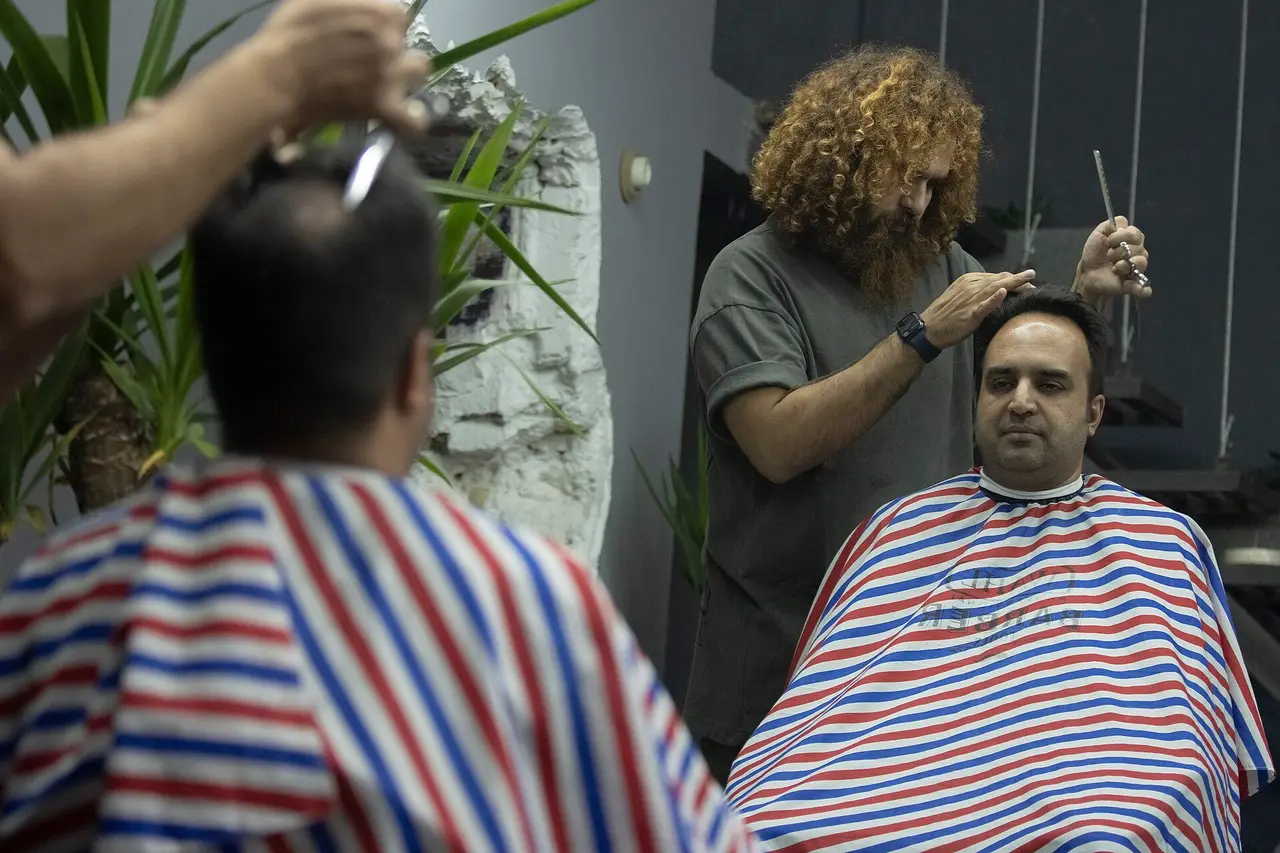
Learning hairdressing takes about 3–6 months to work as a junior assistant (shampooing, blow-drying, helping mix colour), 9–12 months to cut and do basic chemical services on your own, and usually 1.5–3 years to become a senior stylist who handles full cut, perm and colour jobs. Whether it takes longer or shorter depends on the way you learn and the number of supervised hours you spend on real hair, not on a training centre's promise of an "express course". This lesson compares the three common ways to learn hairdressing in Vietnam, 2026 reference fees, the skills you must cover, a minimum tool kit and typical pay from junior to senior stylist.
By the end of this lesson, you will be able to:
- Answer "how long does it take to learn hairdressing" using three milestones: junior assistant, independent basic services and senior stylist.
- Compare a training centre, a salon apprenticeship and short courses by length, fees and the paperwork you receive.
- List the skills in the 8-step roadmap and the minimum total of supervised practice (about 390–570 hours).
- Build a minimum tool kit list whose total matches the sum of each item.
- Carry out a 48-hour allergy patch test correctly and respond when colour gets into a client's eye.
Want to learn hairdressing in the right order? NAMBIN splits the trade into 8 steps, starting with salon hygiene and chemical safety — the first thing every salon checks when it takes on an apprentice. See the 8-step hairstylist roadmap.
Quick answer: how long does it take to learn hairdressing?
"Finishing" hairdressing is not a graduation day but three milestones in a row: being safe when you touch a client's hair, completing a whole service on your own, and being skilled enough to take on difficult jobs.
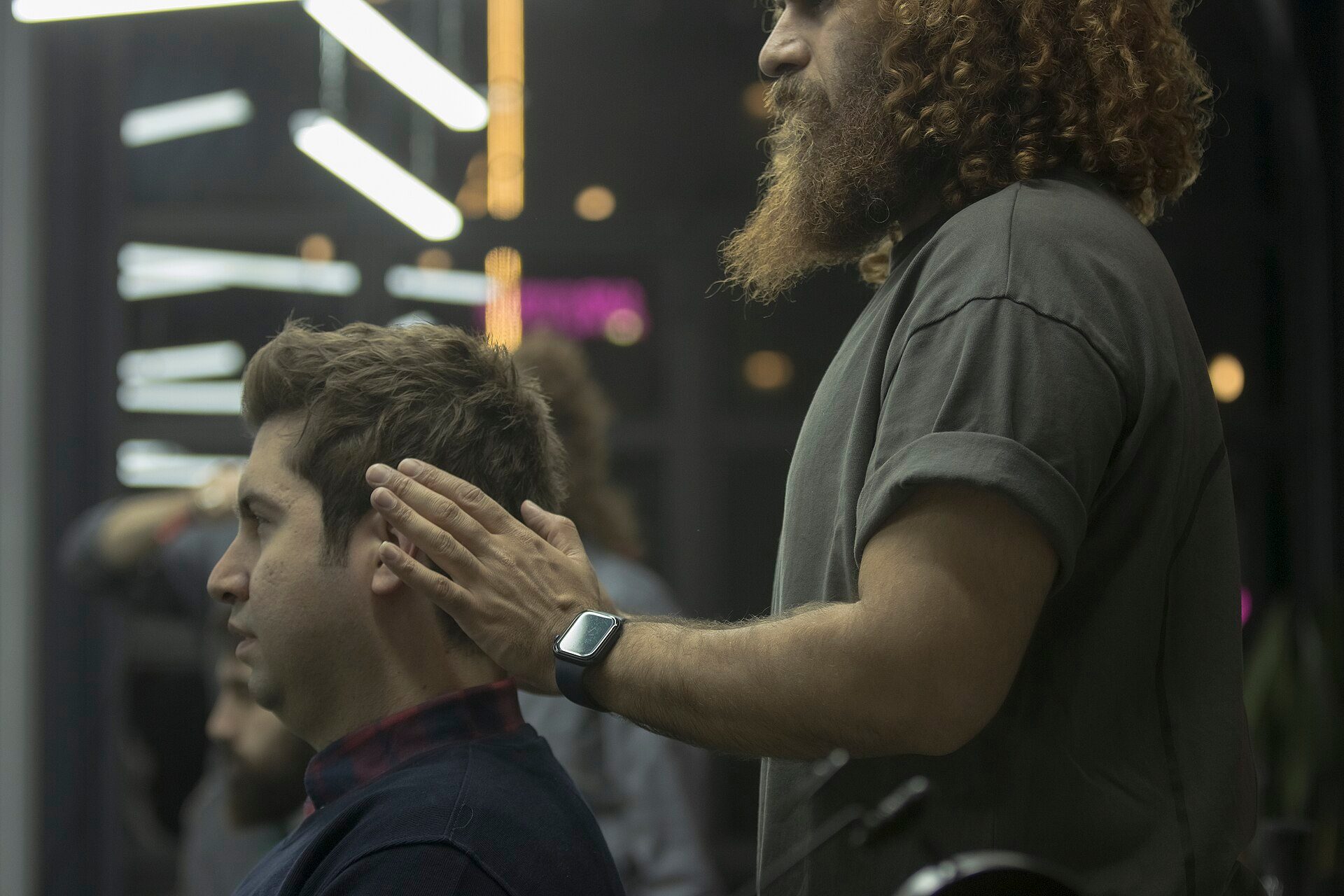
Photo: Mostafameraji / Wikimedia Commons, CC0
Milestone 1: junior assistant — about 3–6 months
You shampoo with a scalp massage, blow-dry, prepare towels and colour bowls, help the senior stylist wind perm rods and fold foils. The most important skills at this stage are tool hygiene and chemical safety: gloves, patch tests, and what to do when product gets into an eye.
Milestone 2: independent basic services — about 9–12 months
You can cut a bob, layers and a fringe yourself, and do perms, straightening and single-colour grey coverage on healthy hair. Many salons only hand you clients after you have done about 30–50 jobs with a senior stylist checking, without needing corrections.
Milestone 3: senior stylist — usually after 1.5–3 years
A senior stylist takes the difficult jobs: hair bleached many times, damaged hair that needs repair, multi-tone fashion colours. They work out colour formulas themselves and take responsibility for the result. This stage needs real time at the chair; it cannot be rushed in a classroom.
3 ways to learn hairdressing: length and 2026 reference fees
In Vietnam there are three common ways to learn hairdressing. None is best for everyone; choose based on three things: how much money you have, how soon you need an income, and whether you need paperwork straight away. The table summarises; the sections below explain the pros and cons. Fees are in Vietnamese dong (VND); 1 million VND is roughly 40 USD.
| Way of learning | Length | 2026 reference fee | Typical share of practice | Paperwork |
|---|---|---|---|---|
| Training centre or hairdressing school (full course) | 3–6 months | 10–35 million VND | 50–70%, on mannequin heads and models | Certificate of completion; a licensed vocational institution may issue an elementary vocational certificate |
| Salon apprenticeship (mentored) | 6–12 months | 0–10 million VND, often with a work commitment | 80–90%, on real clients | Usually none, or an internal letter |
| Short topic courses (cutting, perms, colour…) | 1–4 weeks each | 3–15 million VND each | Varies, often one model per session | Topic certificate |
Figures are 2026 references and vary by region and provider. Always ask whether the fee includes chemicals and mannequin heads.
Training centre or hairdressing school
A full course teaches everything from shampoo and blow-dry to cutting, perms and colour, with a curriculum and practice on mannequin heads before real people. The downsides: higher cost and 3–6 months with almost no income. Ask how many practice hours are graded by a teacher and whether there is a salon placement.
Salon apprenticeship
You start by shampooing and cleaning, then a senior stylist gradually teaches you each skill, often in exchange for a commitment to work 6–12 months after training. You learn on real clients and get an allowance early, but chemical theory is easily rushed when the salon is busy. Read the agreement carefully: allowance at each stage, penalty for leaving early, and what you will be taught.
Short topic courses
A 1–4 week course focuses on one skill such as layered cutting, digital perms or balayage. This is a way to add skills once you have a foundation, not a way into the trade from zero: someone who memorises colour formulas without knowing how to read hair can easily burn a client's hair.
What skills do you need to learn? The 8-step roadmap
Whichever way you learn, you have to work through all 8 steps below in order; the most common gap is step 1 — safety. Hours are minimum references.
| Step | What you learn | Minimum practice hours |
|---|---|---|
| 1. Salon hygiene, chemical safety & patch tests | Disinfect scissors, combs, towels; gloves, ventilation; 48-hour patch test; first aid | 20–30 hours |
| 2. Hair and scalp analysis & consultations | Density, porosity, chemical history; face shape; client cards | 20–30 hours |
| 3. Shampoo, blow-dry & quick styling | Massage shampoo, round-brush blow-dry, curling iron, updos and braids | 60–80 hours |
| 4. Women's cuts: bob, layers, fringes | Sectioning, elevation, cutting lines; checking balance | 100–150 hours |
| 5. Safe perms, relaxing & straightening | Choosing products by hair type, timing, elasticity tests | 60–80 hours |
| 6. Colouring, bleaching & hair repair | Colour charts, levels, developer; grey coverage; bleaching; repair | 80–120 hours |
| 7. 15-look portfolio project | Work on models, before and after photos, formula log | 40–60 hours |
| 8. Skills test, pricing & client retention | Timed test, price list by hair length, client follow-up | 10–20 hours |
| Total | 390–570 hours |
Adding up the last column: 20 + 20 + 60 + 100 + 60 + 80 + 40 + 10 = 390 hours, and 30 + 30 + 80 + 150 + 80 + 120 + 60 + 20 = 570 hours. At 25 practice hours a week (5 hours a day, 5 days), 390–570 hours means about 16–23 weeks, or 4–6 months — consistent with a serious full course. A course promising cutting, perms and colour in 60–80 hours is leaving out most of this workload.
Steps 1–3: safety basics, reading hair, shampoo and blow-dry
The first three steps take few hours but they are what a salon looks at when it takes you on. You must be able to read density, porosity (how fast hair absorbs water and product) and chemical history, because every later product choice depends on it. Shampooing properly is also a skill: warm, not hot, water and no scratching the scalp with nails (see Figure 2).
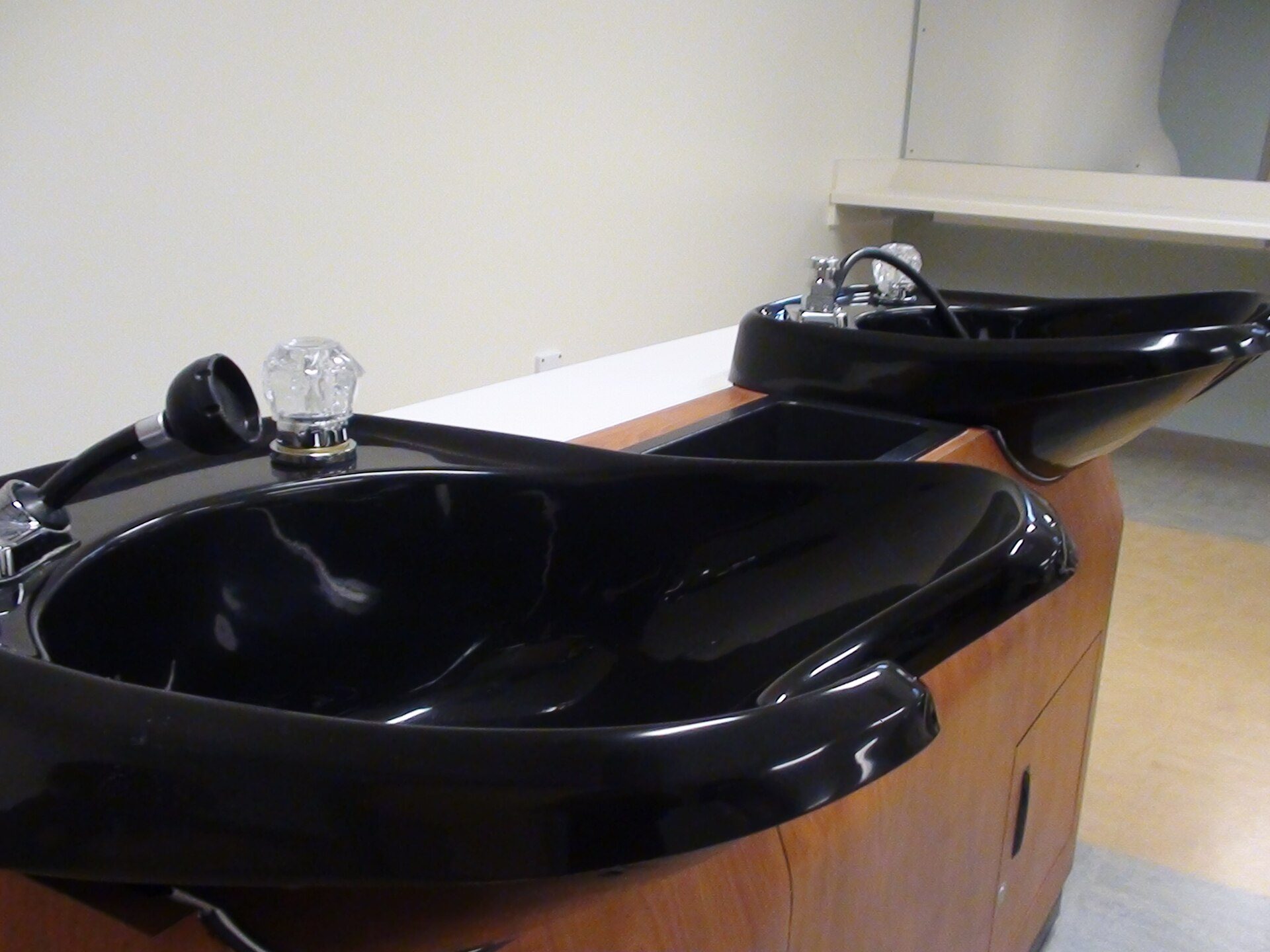
Photo: johnrosman / Wikimedia Commons, CC BY 2.0
Step 4: cutting — the most hours
Your hands need hundreds of repetitions before they are consistent. Assessors look at three things: clean sectioning, correct elevation (0°, 45°, 90°) and balance between both sides. Practise on a mannequin head first, then models, and only then clients.
Steps 5–6: perm, straightening and colour chemicals
This is the riskiest part: the wrong product or too much processing time can burn hair, snap it or make it fall out in patches. You learn to read product labels, developer strength (the oxidising cream, usually labelled 3%, 6%, 9% or 12%), processing time and how to test hair elasticity before and during the service. Beginners should only do chemical work with a senior stylist standing beside them.
Steps 7–8: portfolio, pricing and client retention
A 15-look portfolio with before and after photos is your "CV" when you apply as a senior stylist. The final step covers pricing by hair length and following up with clients after a service.
Chemical safety for perms and colour, and the 48-hour patch test
Chemical safety is step 1 of the roadmap because you must learn it before you are allowed to hold a colour bowl. Perm lotions, relaxers, hair dyes and bleach powder can cause irritation, scalp burns, eye injuries and allergies; PPD (para-phenylenediamine), found in many dyes, is a common allergen, and a reaction can be stronger the next time.
How to do a 48-hour patch test
- Read the instructions for the exact product you will use — each manufacturer specifies how to prepare the test.
- Clean a small patch of skin behind the ear or on the inner elbow.
- Apply a small amount with a cotton bud as instructed, let it dry naturally and do not cover it.
- Ask the client to keep the area dry and watch it for 48 hours.
- If there is redness, itching, burning, a rash, swelling or blistering: do not colour, note it on the client card and advise the client to see a dermatologist.
- Only book the colour if there is no reaction after 48 hours. Record the test date and product on the client card.
Repeat the test when the client changes product, has not coloured for a long time, or has recently reacted to hair dye or a black henna tattoo. Postponing an appointment by two days is always cheaper than a severe allergic reaction.
Ventilation, gloves and mixing
Mix products in a ventilated area, wear gloves (disposable nitrile gloves are common), and never combine products of different types or brands unless the instructions allow it. Close containers right after use and never pour leftover mix back into the bottle. Do not apply chemicals to a scalp that is scratched, inflamed, heavily flaking or freshly shaved.
Chemical safety warning: product in the eye — rinse immediately with plenty of clean running water for about 15 minutes with the eyelid held open, then take the client to an eye doctor. A client feels the scalp burning during processing — rinse with cool water at once; never "hold on a few more minutes". A client's face or lips swell, they struggle to breathe or feel faint after contact with the product — this is a severe allergic reaction: call 115 (Vietnam's emergency medical number) straight away. Stylists with cracked or persistently itchy hands should see a dermatologist; hairdressers handle chemicals and water so much that hand dermatitis is very common without gloves.
Cleaning tools between clients
Remove hair, wash combs and scissors in soapy water, dry them, then disinfect according to the instructions of the solution you use. Use separate towels and capes for each client. Postpone the service if the scalp has a fungal infection, lice or an open wound.
Minimum tool kit for a hairdressing learner and its cost
The place where you learn usually provides equipment and chemicals; you only need a personal kit to practise at home. Figure 3 shows a typical hairdresser's working tools.
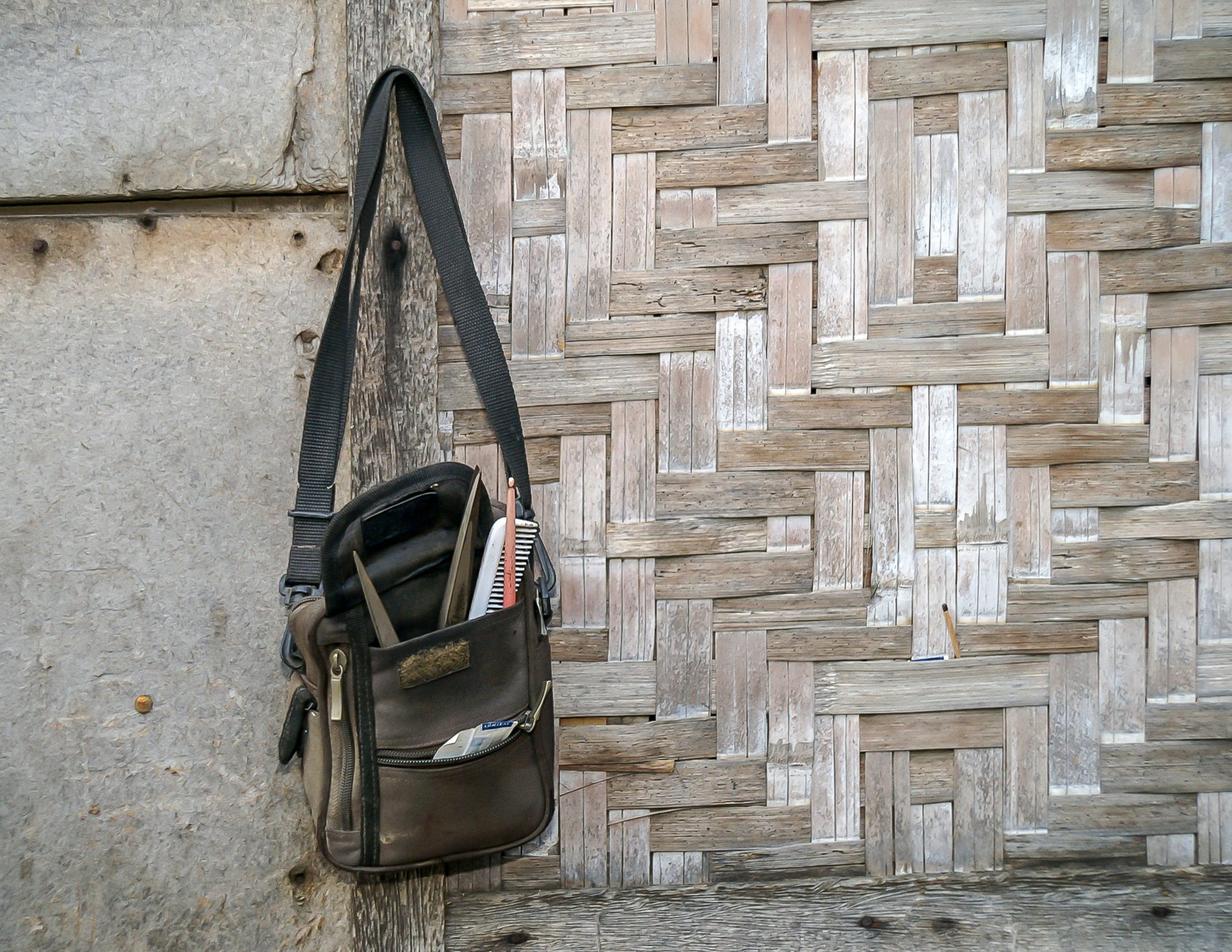
Photo: CEphoto, Uwe Aranas / Wikimedia Commons, CC BY-SA 3.0
| Item | Quantity | Example cost |
|---|---|---|
| Straight cutting scissors, learner grade | 1 | 600,000 VND |
| Thinning scissors | 1 | 500,000 VND |
| Comb set (cutting comb, tail comb, wide-tooth comb) | 1 set | 150,000 VND |
| Sectioning clips | set of 10 | 100,000 VND |
| Hair dryer | 1 | 700,000 VND |
| Round brushes for blow-drying | 2 | 200,000 VND |
| Curling/flat iron | 1 | 600,000 VND |
| Water spray bottle | 1 | 50,000 VND |
| Cutting capes | 2 | 150,000 VND |
| Nitrile gloves | 1 box | 150,000 VND |
| Colour bowl and brush | 1 set | 100,000 VND |
| Human-hair mannequin head + table clamp | 1 set | 900,000 VND |
| Total | 4,200,000 VND |
Adding up: 600 + 500 + 150 + 100 + 700 + 200 + 600 + 50 + 150 + 150 + 100 + 900 = 4,200 thousand VND, or 4.2 million VND (about 170 USD). Prices are illustrative; as a 2026 reference, a starter kit costs about 3–7 million VND depending on region and quality.
What to buy first, what to buy later
Buy scissors, combs, clips and the mannequin head right away, because cutting practice takes the most hours; the dryer and iron can be borrowed from your school or salon for the first few months. Very cheap, blunt scissors leave split ends; scissors costing several million are not needed until you can hold them correctly.
Keeping tools clean and organised
Many stylists wear a leather belt pouch so scissors and combs are always within reach (Figure 4). Scissors must be wiped dry after every client, oiled, and never dropped — a single fall can misalign the blades.
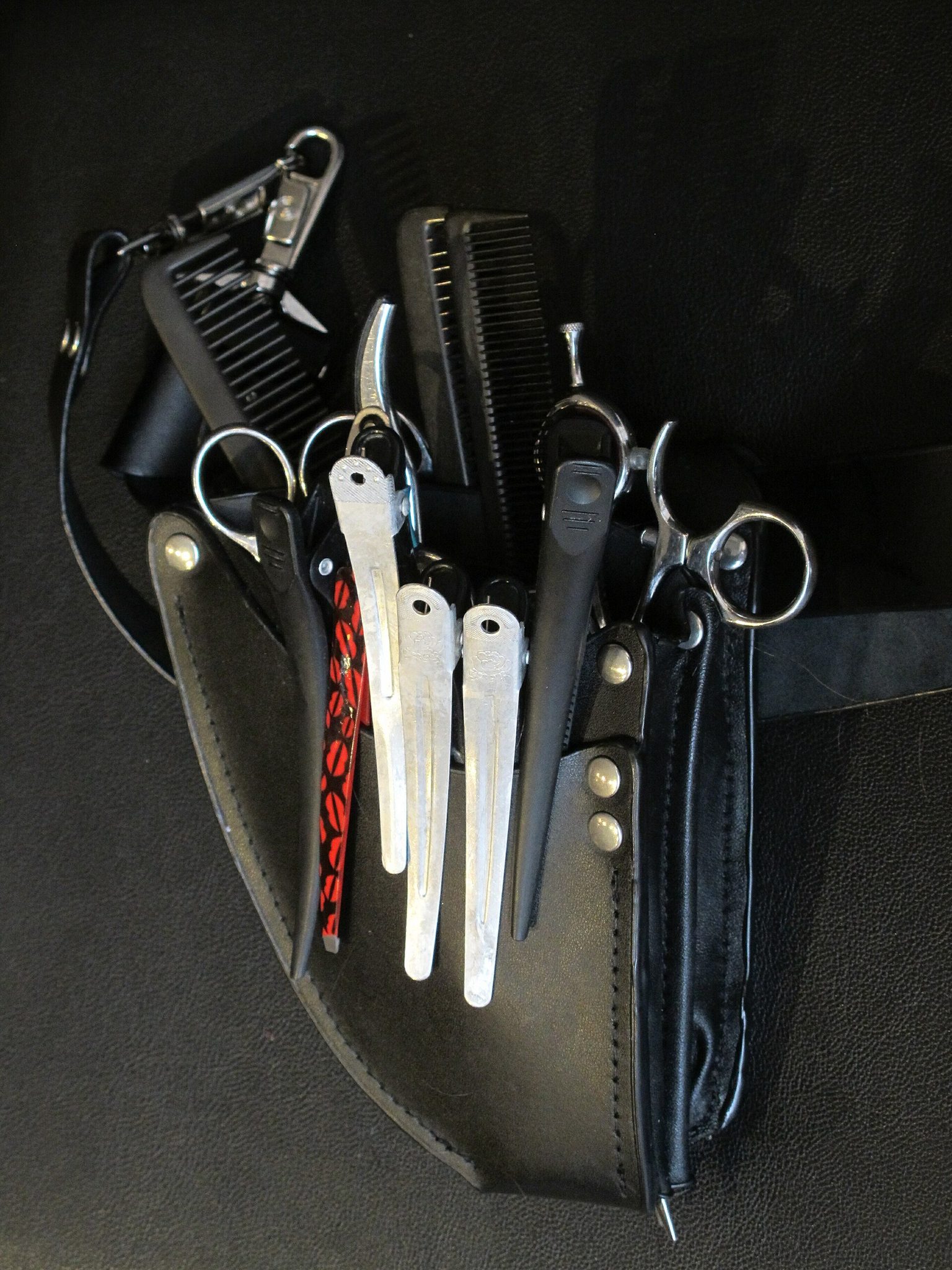
Photo: Lisa Risager from Denmark / Wikimedia Commons, CC BY-SA 2.0
Pay from junior assistant to senior stylist: 2026 reference
Income grows with skill and regular clients. The table below shows 2026 reference ranges in Vietnam, varying by region and salon; it is not an income guarantee.
| Stage | Typical work | 2026 reference income |
|---|---|---|
| Apprentice | Shampooing, cleaning, assisting | 0–4 million VND/month allowance, some salons include meals |
| Junior assistant | Shampoo and blow-dry, assisting with chemicals, simple cuts | 6–9 million VND/month |
| Stylist, basic cuts and chemicals | Own cuts, perms, single-colour work | 9–15 million VND/month (salary + commission) |
| Experienced senior stylist | Fashion colour, repair, regular clients | 15–30 million VND/month |
| Owner of a small salon | Working and managing | About 15–30 million VND/month after costs, seasonal |
Commission drives a senior stylist's income
Many salons pay a base salary plus commission per service. Stylists with regular clients and strong fashion-colour skills often earn more in commission than in base pay. Ask how commission is calculated when you accept a job, including who pays when a client asks for a redo. Before Tet (Lunar New Year) and in wedding season salons get several times busier — never skip a patch test or cut processing time because clients are queuing.
Worked example: Linh, 19, chooses how to learn over 9 months
Linh has about 33 million VND in savings and wants an income as soon as possible. She compares two plans over 9 months (all figures are illustrative 2026 references).
Plan A: 5-month full course, then work as a junior assistant
- Full course fee: 25 million VND.
- Tool kit as in the table above: 4.2 million VND.
- Travel for 5 months × 0.6 million = 3 million VND.
- Total spending: 25 + 4.2 + 3 = 32.2 million VND — almost all her savings, with 5 months of no income.
- Months 6–9 as a junior assistant at a salon: 7 million × 4 months = 28 million. After 9 months: 28 − 32.2 = −4.2 million VND.
Plan B: salon apprenticeship + a short colour course
- Apprenticeship fee (deducted from the allowance): 5 million VND.
- Tool kit: 4.2 million; weekend colour course in months 7–8: 8 million; travel for 9 months × 0.4 million = 3.6 million.
- Total spending: 5 + 4.2 + 8 + 3.6 = 20.8 million VND.
- Allowance: months 1–3 at 2 million × 3 = 6 million; months 4–9 at 4 million × 6 = 24 million; total 30 million.
- After 9 months: 30 − 20.8 = +9.2 million VND, in exchange for a commitment to work 12 more months at the salon.
Linh's conclusion
Plan B is better financially (a gap of 9.2 − (−4.2) = 13.4 million after 9 months) and gives more work on real clients. Plan A suits people who want structured learning and paperwork first and do not want to be tied by a commitment. Linh chooses B, but studies chemical theory on her own and asks the senior stylist to assess her safety routine separately.
Common mistakes when choosing where to learn
Choosing an "express" course that promises everything
Sign: a 3–4 week course covering cutting, perms, colour and bleaching. Cause: comparing by days and price, not by practice hours. Fix: convert everything into hours at the chair with someone grading you; fewer than about 390 hours for all 8 steps is not enough to work independently.
Skipping safety because "every salon does it this way"
Sign: mixing colour bare-handed, no patch tests. Cause: bad habits at the place of learning. Fix: keep your own standard — gloves, ventilation, 48-hour tests.
Learning chemicals before learning to read hair
Sign: you know formulas but colour on bleached hair turns patchy and perms break damaged hair. Cause: skipping hair analysis. Fix: finish step 2 before doing chemical work, and always test on a small strand first.
Frequently asked questions
How long until I earn money from hairdressing?
A salon apprenticeship pays an allowance from the first month. A training centre usually takes 3–6 months before you can apply as a junior assistant at a reference 6–9 million VND per month. Becoming a senior stylist usually takes 1.5–3 years of real work.
How much does it cost to learn hairdressing?
2026 references: apprenticeship 0–10 million, short topic courses 3–15 million each, full centre course 10–35 million VND, plus a tool kit of about 3–7 million. Compare graded practice hours, not just price.
Do I need a certificate to work as a hairdresser?
Many salons hire on practical skill and a portfolio. An elementary certificate from a licensed vocational institution still helps when applying to large chains; check the exact requirements with the employer and current regulations in Vietnam.
Can men learn women's hairdressing, or women learn barbering?
Yes. The trade needs skilful hands, an eye for style, stamina for standing and good communication, regardless of gender. If you only want to cut men's hair with clippers, look into the barber trade — a separate roadmap focused on clippers, fades and shaving.
Can I work in hairdressing if I am allergic to hair dye?
See a dermatologist before committing to the trade; only a doctor can assess how serious it is and advise you properly.
Exercise: plan your own hairdressing training
- Write down how much money you can spend on training and how many months you can manage without income.
- Pick 2 ways of learning from the comparison table and calculate total spending and income after 9 months, like Linh did.
- Call at least 2 providers: ask for graded practice hours and whether the fee includes chemicals.
- List your tool kit at real local prices and add up the total.
- Explain the 48-hour patch test and what to do when product gets into an eye to someone else, without looking at this lesson.
Self-assessment criteria
- Pass: the plan shows total cost as a number and the sums match; it includes at least 390 practice hours across the 8 steps; it has a junior assistant milestone.
- Pass: you can state the 6 patch-test steps, 3 signs that mean "do not colour" and when to call 115.
- Not yet: the plan only says "take an express course and start work", has no practice hours, or skips the patch test.
With hygiene and chemical safety in place, you are ready for the next step in the roadmap: Hair and scalp analysis & consultations — learning to read density, porosity and chemical history before choosing any service. See the 8-step hairstylist roadmap.