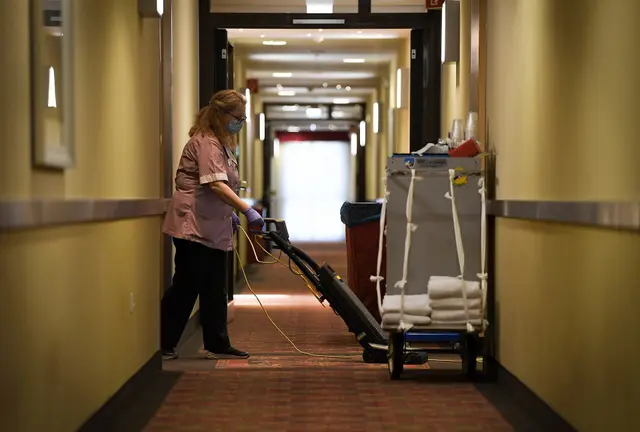
Car wash chemical safety starts with reading the label before you open the cap: know whether the product is an acid, an alkali or a solvent, dilute it to the stated ratio, wear the right gloves, eye protection and mask for each job, and never mix two chemicals together. In a detailing shop, chemicals, water and electricity sit side by side all shift long: the pressure washer, the polisher and the vacuum all plug in inside a wet area, so a residual current device and sensible cable routing matter as much as a pair of gloves. This is the first lesson for newcomers training as car care technicians in Vietnam, written the way a senior detailer coaches an apprentice, with a starter tool kit and a worked dilution example.
By the end of this lesson, you will be able to:
- Tell apart 6 groups of detailing chemicals (neutral, alkaline, acidic, iron removers, solvents, protective coatings) and the risks of each.
- Read the hazard pictograms, signal words and dilution ratio on a label, and find the right sections in a safety data sheet (SDS).
- Choose suitable protective gear for washing, acid glass cleaning, solvents, ceramic coating and machine polishing.
- Set up power and water safely for a pressure washer and polisher, and give first aid when chemicals get into eyes or onto skin.
- Mix a 1-litre bottle at 1:10 and draw up a starter tool kit budget whose figures add up.
Just starting out in car care and window film? Chemical, electrical and tool safety is step 1, before washing, interior cleaning, paint correction, ceramic coating and film installation. See the 8-step car care and window film technician roadmap to learn in the right order.
Why safety is the first step in detailing
A detailing technician may handle a dozen chemicals in one day: car shampoo, snow foam, all-purpose cleaner, wheel cleaner, iron remover, glass water-spot remover, tar remover, isopropyl alcohol (IPA) and ceramic coating. A splash now and then does little harm, but years of daily work without protection lead to hand dermatitis, eye irritation, coughing and headaches. On top of that come electric shock in a wet area and accidents with high-speed machines.
Three main groups of risk
- Chemicals: skin and eye burns from strong acids and alkalis; breathing in solvent vapour; toxic gas from accidental mixing.
- Electricity and water: wet cables, sockets and handheld machines in the wash bay.
- Machines and sharp tools: high-pressure jets, polishers catching their own cables, film-cutting knives, slippery floors.
Damaging the car is also an accident
The wrong chemical, or one mixed too strong, does not only harm people: it stains glass, fades textured plastic, corrodes polished aluminium wheels and leaves marks on paint. Customers do not care what you used, they only see that the car was damaged after a wash. Understanding chemicals protects both you and the customer's car.
6 groups of detailing chemicals and their risks
pH tells you whether a solution is acidic (below 7), neutral (around 7) or alkaline (above 7). The further from 7, the stronger it is: it cleans better but is also more likely to burn skin and harm surfaces. The table sums up the groups you will meet every day; the exact properties always follow the label of the product you use.
| Group | Typical use | Main risk | Minimum protection |
|---|---|---|---|
| Neutral | Car shampoo for routine body washing | Mild irritation with long contact | Nitrile gloves |
| Alkaline | Snow foam pre-wash, all-purpose cleaner (APC), engine bay degreaser | Dry, sore skin; eye burns; faded plastic and stained aluminium if too strong | Nitrile gloves, eye protection |
| Acidic | Glass water-spot remover, limescale remover, some wheel cleaners | Skin and eye burns; etching of metal, stone and glass if left to dry | Long gloves, sealed goggles, mask |
| Iron removers | Removing iron particles from paint and wheels, usually turning purple as they react | Very unpleasant smell, eye and airway irritation | Nitrile gloves, goggles, ventilation |
| Solvents | Tar and adhesive removers, IPA wipe before coating | Flammable; vapour causes dizziness and headaches | Nitrile gloves, goggles, organic vapour respirator in closed rooms |
| Protective coatings | Ceramic, sealant, plastic and leather dressings | Evaporating solvents; ceramic on skin is hard to remove | Nitrile gloves, goggles, respirator, ventilated room |
Never mix chemicals
Use each chemical on its own and rinse with water before using another on the same surface. Mixing acid with alkali can produce heat and spatter; mixing chlorine products with acid or ammonia gives off toxic gas. Never pour leftovers into a shared can, and never reuse a spray bottle for a different product without washing it and relabelling it.
Never let chemicals dry on a surface
In sunlight or on a hot surface (a bonnet just back from a drive), chemicals dry very fast, concentrate and leave stains, especially acids on glass and wheels. Work in the shade on cool panels, one small section at a time, keep to the dwell time on the label and rinse thoroughly.
Reading labels and the safety data sheet (SDS)
The label on a can or bottle is the shortest safety document you always have to hand (Figure 1). The Globally Harmonized System of classification and labelling of chemicals (GHS) uses hazard pictograms in red-bordered diamonds, with a signal word, hazard statements and precautionary statements.
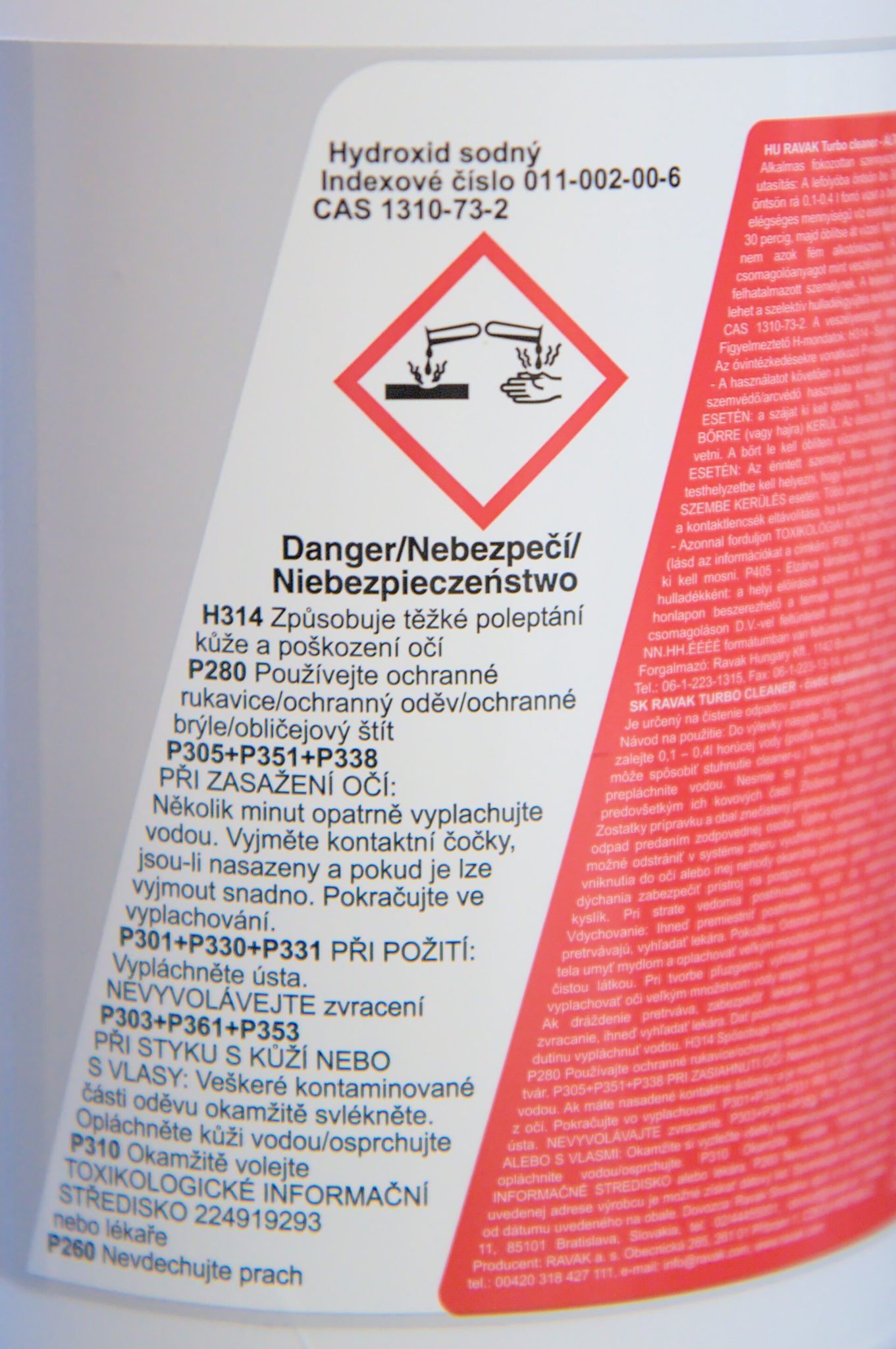
Photo: Petr Kadlec / Wikimedia Commons, CC BY-SA 4.0
What to read on the label before opening it
- Hazard pictograms: corrosion (liquid eating a hand and metal), flame (flammable), exclamation mark (irritant), skull (acute toxicity), dead tree and fish (harmful to aquatic life).
- Signal word: "Danger" is a higher level than "Warning".
- Hazard and precautionary statements: causes skin burns, causes eye irritation; wear gloves and eye protection; rinse eyes with water for several minutes if splashed.
- Dilution ratio and suitable surfaces: 1:10 for interiors, 1:5 for engine bays; not for polished aluminium, tinted film, and so on.
- Dwell time: how many minutes before rinsing, and do not let it dry.
When to use the safety data sheet
The SDS is the full document supplied by the manufacturer or distributor; under GHS it has 16 sections. As a beginner, remember four: section 2 (hazard identification), section 4 (first aid), section 7 (handling and storage) and section 8 (exposure controls and personal protection). When a new product comes in, ask the supplier for the SDS, print it or save it on your phone, and keep it by the chemical shelf. If a bottle has no Vietnamese label or an unclear origin, ask the shop owner before using it.
Understanding a "1:10" ratio
Most brands write ratios as "1 part chemical : 10 parts water", making 11 parts in total. Some brands write it differently, so always read how the maker explains it. Mixing stronger does not clean proportionally better; it only raises the risk to your hands and to the surface, and wastes money.
Protective gear for each job
No single set of gear fits every job. The rule: look at the chemical and the action (spraying, scrubbing, wiping, misting) to choose gloves, eye protection, mask and footwear.
Gloves
Disposable nitrile gloves suit most washing, wiping and coating work. For acids, strong alkalis or long immersion, use thicker rubber or nitrile gloves with long cuffs (Figure 2). Replace torn gloves at once; remove gloves by turning them inside out and wash your hands afterwards. Hand cream at the end of the shift keeps skin from cracking after constant contact with water and cleaners.
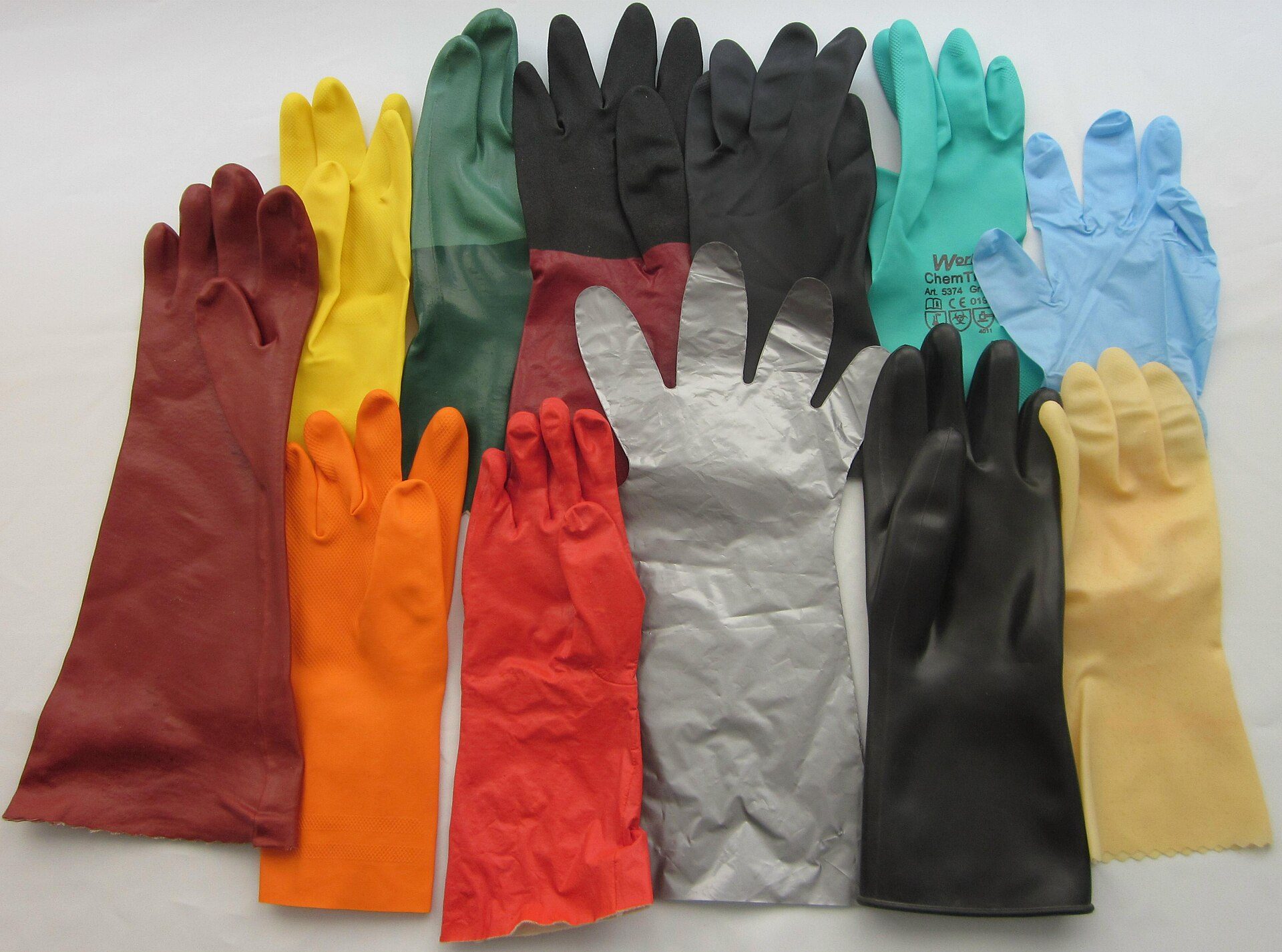
Photo: Work-psa / Wikimedia Commons, CC BY-SA 3.0
Eye protection, masks and footwear
Wear close-fitting goggles when spraying chemicals at wheels, underbodies and engine bays, where splashback is common. An ordinary face mask only stops dust; for solvent vapour and ceramic coating in a closed room you need a respirator with organic vapour cartridges, replaced as the maker instructs. Wear boots or non-slip shoes, never flip-flops, in the wash bay.
Quick protective gear guide
| Job | Gloves | Eyes | Breathing | Other |
|---|---|---|---|---|
| Body wash, snow foam | Nitrile | Glasses when spraying close | Not required | Non-slip boots |
| Wheel, iron and engine bay cleaning | Thick nitrile | Sealed goggles | Mask, ventilation | Boots, waterproof apron |
| Acid glass spot removal | Long-cuff rubber or nitrile | Sealed goggles | Mask | Small sections, in the shade |
| IPA wipe, tar removal, ceramic coating | Nitrile | Glasses | Organic vapour respirator | Ventilated room, no flames |
| Machine polishing | Optional | Glasses | Dust mask | Hearing protection for long sessions, hair tied back, no dangling lanyards |
Electricity, water and machines in the shop
The wash bay is electrically dangerous: a wet floor, wet people and handheld machines running on 220V mains (the standard supply in Vietnam). A cable with cracked insulation lying in a puddle is enough to cause a dangerous shock.
Residual current devices and cable routing
The circuit feeding the pressure washer, polisher and vacuum should be protected by a residual current device (RCD/RCCB, called "aptomat chong giat" in Vietnam) of the personal-protection type with a 30 mA trip threshold (Figure 3). Press its "Test" button regularly to make sure it still trips. Installing or repairing the distribution board is a job for a qualified electrician; a detailing technician does not wire anything themselves.
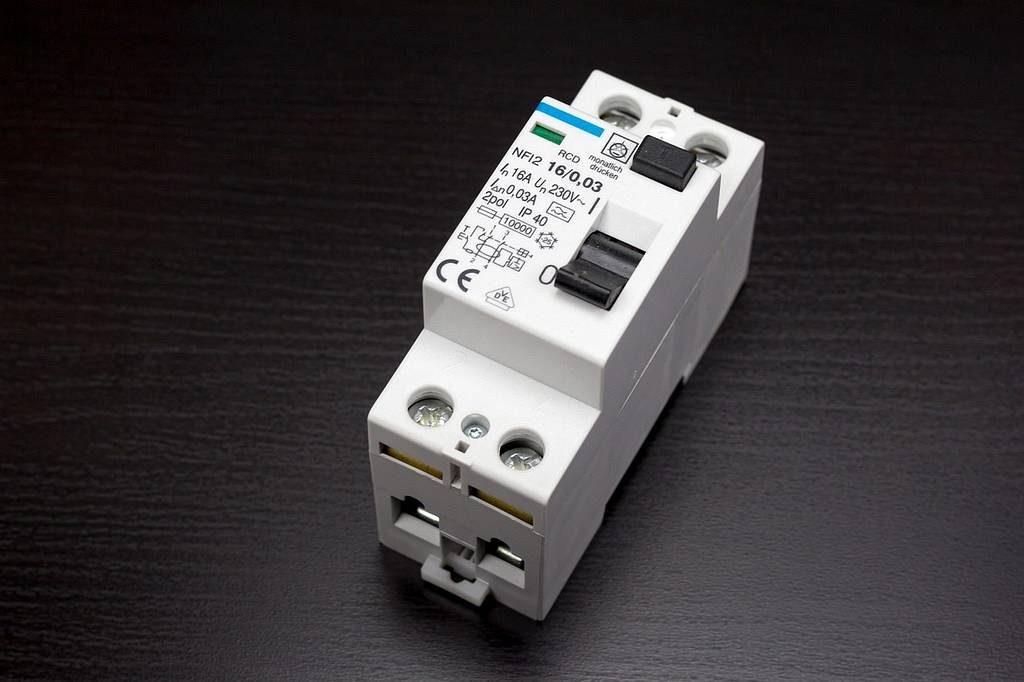
Photo: Diermaier / Wikimedia Commons, CC0
- Sockets mounted high on the wall, away from the spray zone, with covers.
- Cables kept off wet floors and out from under car wheels; use hooks or a cable reel.
- Never plug or unplug with wet hands; never spray towards sockets, the distribution board or plugged-in machines.
- Unplug before changing pads or cleaning the polisher; drape the polisher cable over your shoulder so it cannot wrap around the pad.
Pressure washers
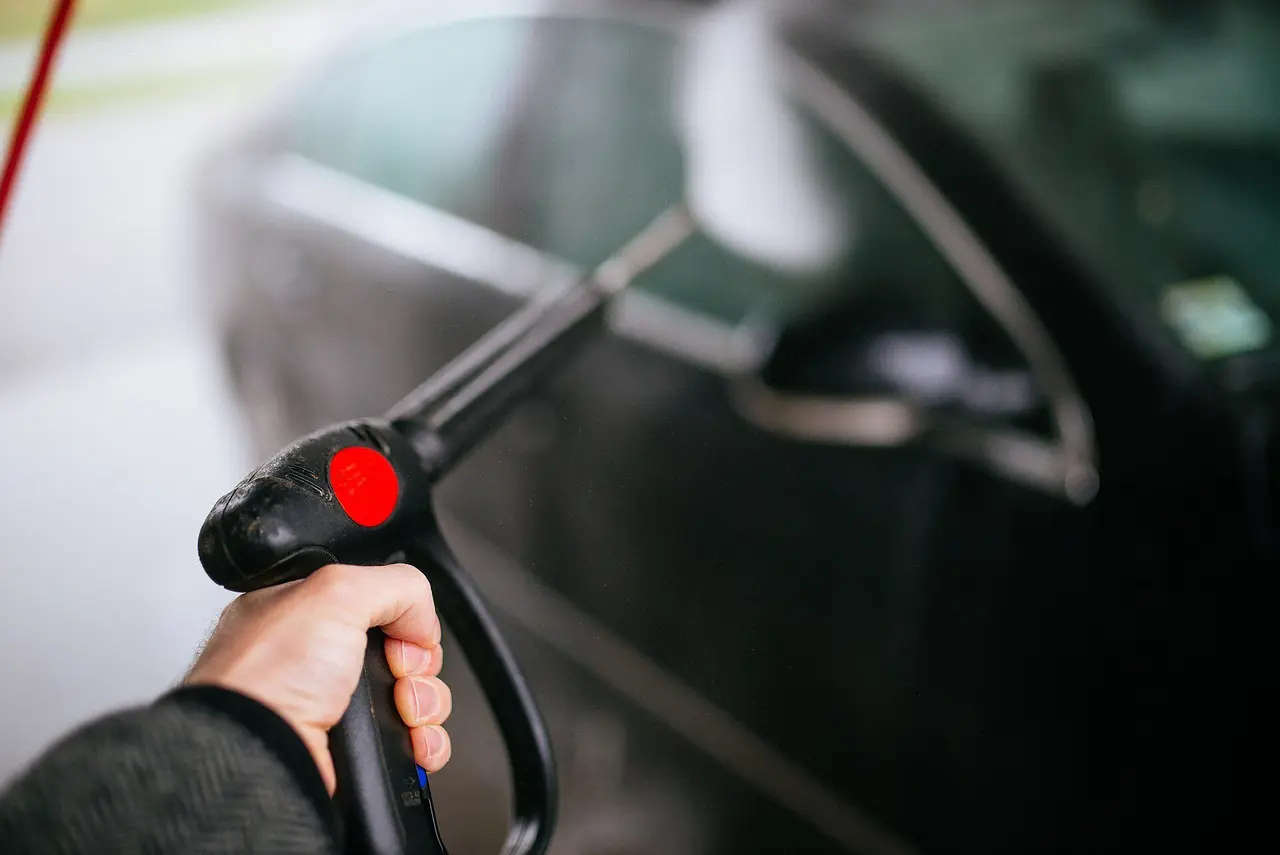
A high-pressure jet can cut skin, force dirty water into a wound and damage seals, decals and film edges if held too close (Figure 4). Never point the lance at a person, even as a joke. Keep the nozzle at the distance the maker recommends, and do not spray directly at film edges, rubber seals, charging ports or a hot engine bay. Lock the trigger when you put the gun down.
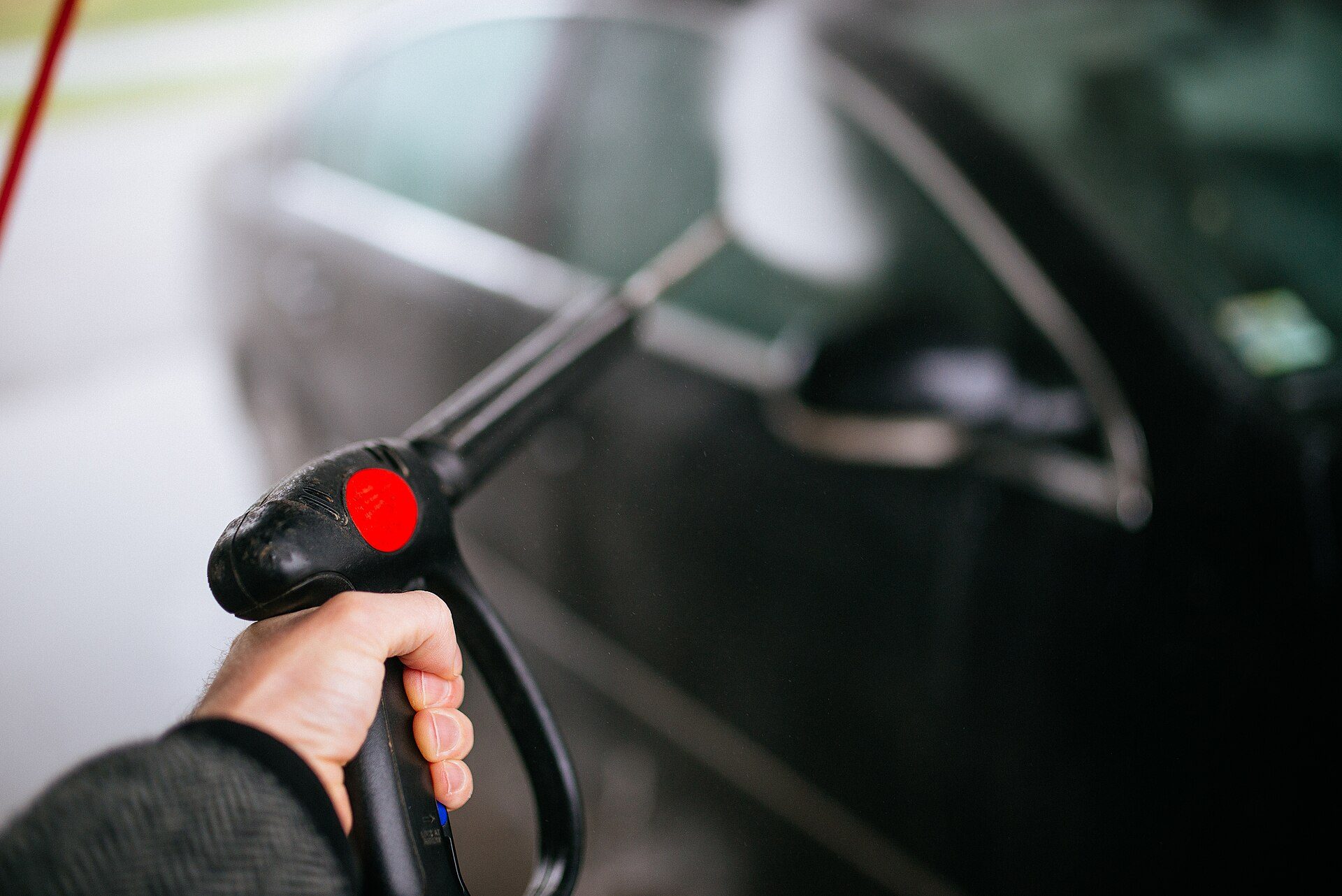
Photo: Shixart1985 / Wikimedia Commons, CC BY 2.0
Polishers
A dual action (DA, random orbital) polisher both spins and oscillates, so it rarely burns through paint, making it right for beginners. A rotary polisher cuts faster but builds more heat, easily burns edges and leaves holograms if your hand is not yet steady. Before switching on: check the pad is fixed firmly, place the pad on the panel before starting, and switch off while the pad is still on the panel so product does not fling off.
Mixing, storage and first aid
Rules for mixing and containers
- Mix in a ventilated area, water into the bottle first and chemical second, to avoid splashing concentrate.
- Use a graduated measuring jug; never judge by eye.
- Label every spray bottle with the product name, ratio and date mixed. Never store chemicals in drinking-water bottles.
- Keep the chemical shelf ventilated and out of the sun; acids and alkalis on separate shelves, solvents away from heat and sparks, cans tightly closed.
Solvent-soaked cloths and leftover chemicals
Spread cloths soaked with solvent or ceramic outdoors to evaporate, or put them in a lidded metal bin; never leave them balled up in a hot corner. Do not pour concentrated chemicals down the drain; ask the shop owner how waste is collected under local rules.
Safety warning and first aid: Chemical in the eyes: rinse immediately with clean running water for at least 15 minutes, remove contact lenses if easy, then see a doctor and bring the product label. On the skin: remove contaminated gloves and clothing and flush with plenty of water. Dizziness or breathing difficulty from vapour: get to fresh air at once. Swallowed: do not induce vomiting, rinse the mouth, call emergency number 115 (Vietnam) and give the label or SDS to the medical staff. Never mix two chemicals. If someone is being electrocuted, switch off the breaker first and never touch them with bare hands.
A basic detailing tool kit for beginners
The right tools let you clean without scratching. Most swirl marks on car paint come from dirty towels, gritty wash mitts and poor wiping technique, not from chemicals.
Colour-coded microfibre towels
Microfibre towels trap dirt in the fibres instead of dragging it across the paint (Figure 5). Set a colour code from day one, for example one colour for paint, one for glass, one for wheels and engine bay, one for interiors. A towel dropped on the floor goes into the wash, never back on the paint. Wash microfibre separately and without fabric softener, which clogs the fibres.
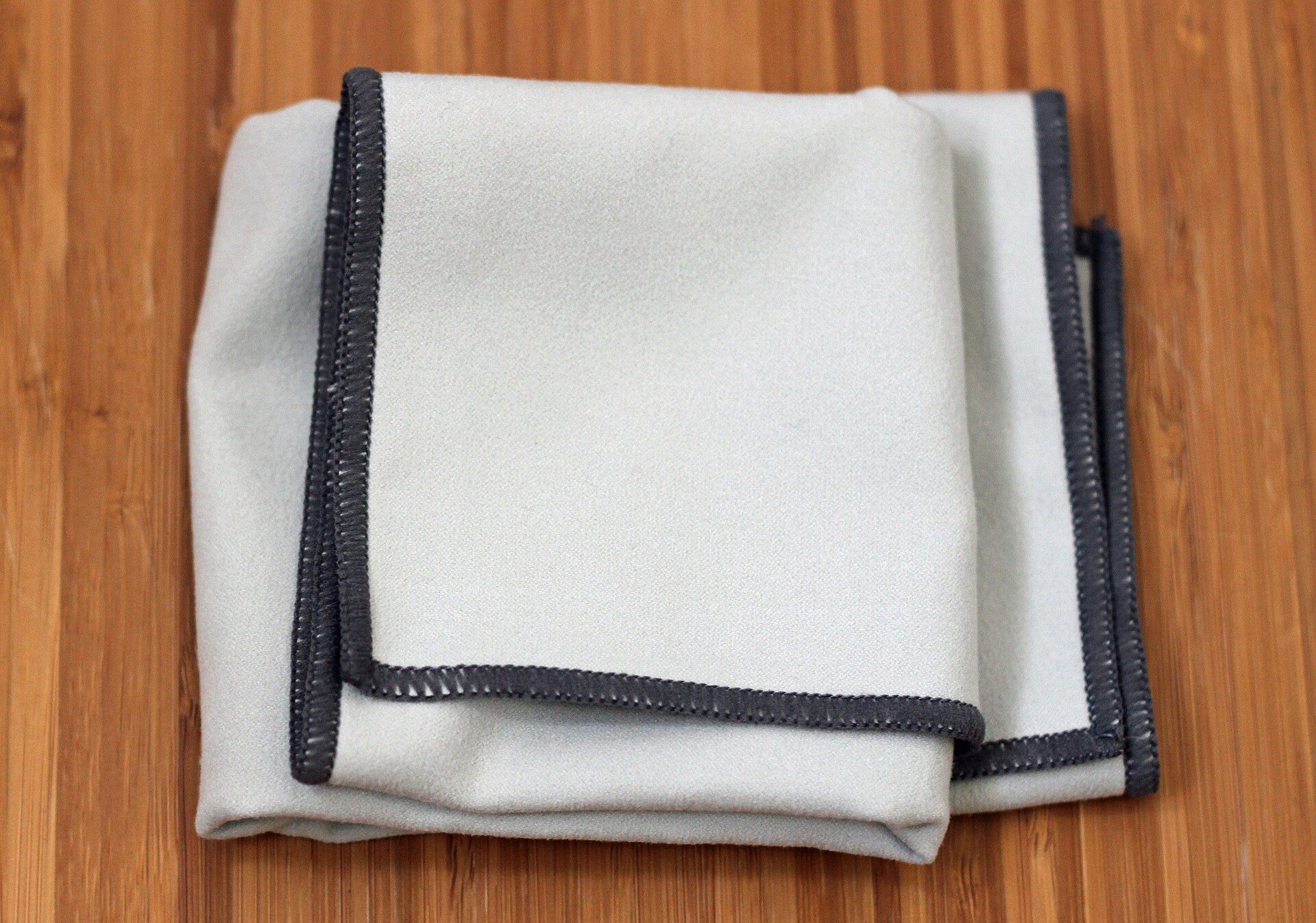
Photo: HelenOnline / Wikimedia Commons, CC BY-SA 3.0
Brushes, buckets and machines
- Two buckets with grit guards (one with shampoo, one with clean rinse water for the mitt) and a soft wash mitt.
- Wheel brush, tyre brush and soft detailing brushes for badges, grilles and interiors.
- Pressure washer, snow foam lance, wet and dry vacuum, air blower.
- DA polisher with cutting and finishing pads, and a paint inspection light.
Worked example: mixing APC at 1:10 and budgeting a starter kit
The situation: Tuan, 20, has just started at a small detailing shop on the edge of town. On day one, the senior detailer gives him two tasks: mix a 1-litre bottle of all-purpose cleaner (APC) at 1:10 for interiors, and list the starter tools for a new work bay.
Step 1: mix a 1-litre bottle at 1:10
- The label says 1:10, meaning 1 part chemical to 10 parts water, 11 parts in total.
- One part: 1,000 ml ÷ 11 ≈ 91 ml. Chemical: 91 ml; water: 1,000 − 91 = 909 ml.
- Check: 91 + 909 = 1,000 ml. Pour 909 ml of water into the bottle first, then 91 ml of chemical, shake gently and label it "APC 1:10, interior, date mixed".
- If Tuan misread "1:10" as 100 ml of chemical plus 1,000 ml of water, the bottle would overflow and the mix would be stronger than intended; always work from the total number of parts.
Step 2: starter kit and cost (2026 reference prices, varying by area and model)
| Item | Price range | Price chosen |
|---|---|---|
| Semi-professional pressure washer | 2,000,000–6,000,000 VND | 3,500,000 VND |
| Snow foam lance | 300,000–1,200,000 VND | 600,000 VND |
| Two buckets, grit guards, wash mitt | 200,000–600,000 VND | 400,000 VND |
| 20 microfibre towels (4 colours) | 400,000–1,200,000 VND | 800,000 VND |
| Wheel, tyre and detailing brush set | 200,000–800,000 VND | 500,000 VND |
| DA polisher with pads | 2,500,000–8,000,000 VND | 4,000,000 VND |
| Protective gear: gloves, goggles, respirator, boots | 400,000–1,200,000 VND | 800,000 VND |
| RCD and wall-mounted sockets (excluding electrician's labour) | 300,000–900,000 VND | 600,000 VND |
| Total | 11,200,000 VND | |
Check: 3,500,000 + 600,000 + 400,000 + 800,000 + 500,000 + 4,000,000 + 800,000 + 600,000 = 11,200,000 VND (about USD 430). The two most expensive items, the pressure washer and the polisher, make up 7,500,000 VND; protective gear and the RCD are only 1,400,000 VND but are the part you must never cut. Consumable chemicals are budgeted separately by the number of cars per month.
Common mistakes and how to fix them
Mixing "extra strong" to work faster
Signs: faded interior plastics, dull aluminium wheels, sore hands after the shift. Cause: believing stronger means cleaner. Fix: measure the ratio with a jug; for heavy dirt, repeat or use a brush instead of raising the concentration beyond the instructions.
Letting acid glass cleaner dry in the sun
Signs: hazy marks on the glass that will not wipe off. Cause: working in sunlight and exceeding the dwell time. Fix: work in the shade on cool glass, in small squares, rinsing at once; if the glass is already etched, tell the senior detailer and do not scrub hard yourself.
Cables lying in puddles
Signs: vacuum or polisher cables running across the wet floor. Fix: hang the cables, use high covered sockets, and test the RCD with its Test button every week.
No eye protection when spraying wheel cleaner
Signs: chemical splashes back from the wheel spokes and stings your eyes. Fix: sealed goggles are mandatory when spraying chemicals low down, under the car or in the engine bay.
Frequently asked questions
Are car wash chemicals bad for your hands?
Neutral car shampoo is fairly gentle, but alkaline and acid cleaners and solvents dry and sting the skin and can cause dermatitis with daily contact. Wear nitrile gloves, wash your hands after the shift and use hand cream; if your hands stay cracked, itchy or blistered, see a dermatologist.
Can I wash a car with dishwashing liquid?
It is not recommended. Many dishwashing liquids are strong degreasers that can strip wax and sealant from the paint. Use a dedicated pH-neutral car shampoo for routine washes.
Should beginners use a DA or a rotary polisher?
Start with a DA polisher, which rarely burns paint and is easy to control. Use a rotary only after practising on test panels with a senior detailer's guidance, at the paint correction step.
Does a small shop really need an RCD?
Yes. The wash bay is wet all year and handheld machines run on 220V; an RCD is the last line of protection when a cable or machine develops a fault. Have a qualified electrician install and check it.
Practice tasks and self-assessment
- Pick 5 chemical bottles in the shop and note for each: chemical group, hazard pictograms, signal word, dilution ratio and surfaces it must not be used on.
- Find the SDS for one product, read sections 2, 4, 7 and 8, and summarise each in 1–2 sentences.
- Mix a 500 ml bottle at 1:4 and a 1-litre bottle at 1:10, writing down your calculations and labelling the bottles.
- Walk around the work area, list every electrical point near water and suggest a fix.
Self-assessment criteria
- Pass: all 5 bottles classified correctly, with the minimum protection for each.
- Pass: correct dilution maths (a 500 ml bottle at 1:4 is 100 ml chemical + 400 ml water), and every bottle labelled with name, ratio and date.
- Pass: you can repeat the first-aid steps for a chemical in the eye without looking at the lesson.
- Not yet: mixing by eye, storing chemicals in drinking bottles, spraying wheel cleaner without goggles, or leaving cables on a wet floor.
With safety and tools under control, move on to the next roadmap step: Two-bucket wash, iron removal and clay bar, where you learn snow foam pre-washing, the two-bucket method to avoid swirl marks, and decontaminating paint before polishing. When you reach the protection step, also read ceramic coating for cars: what it is, how to apply it, price and care.
Keep learning car care and window film: after chemical safety come proper washing, interior and engine bay cleaning, paint correction, ceramic coating and film installation. See the 8-step car care and window film technician roadmap.