The monthly accounting work of a small company in Vietnam follows a fixed loop: collect and check source documents, verify incoming e-invoices, record transactions in the books, reconcile the bank, receivables, payables and stock, run payroll and social insurance, file tax returns monthly or quarterly, then close the books and report to the director. Newcomers rarely struggle because they lack theory; they struggle because they do not know which tasks are daily, which pile up at month-end and which only fall due at the end of a quarter. This lesson gives you a ready-to-use task calendar, a month-end checklist and a worked example of the hours needed for a 10-employee company.
By the end of this lesson, you will be able to:
- Organise accounting work into 5 rhythms: daily, weekly, monthly, quarterly and yearly.
- Check an incoming e-invoice against 6 points before it goes into the books.
- Complete the 3 month-end reconciliations — bank, receivables/payables and stock — and know when the figures "match".
- Estimate the monthly accounting hours of a small company and compare an in-house accountant with an outsourced service.
- Use a 12-item checklist to close a month without missing anything.
Want to learn small business accounting in the right order? This lesson belongs to step 1 – accounting principles. See the 8-step small business accountant path (in Vietnamese): source documents, e-invoices, accounting software, tax filing, payroll and financial statements.
What does a small business accountant do in a month?
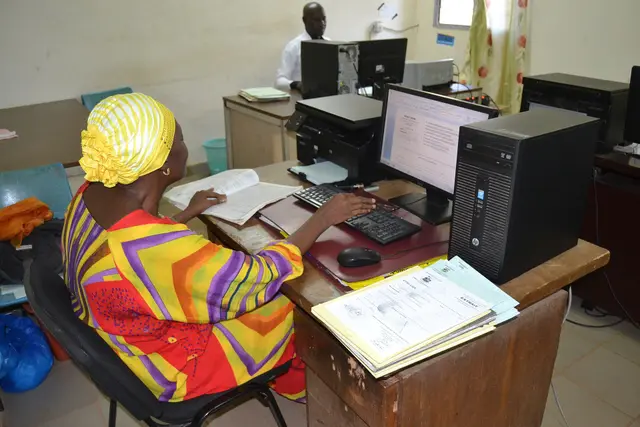
Think of the accountant as the keeper of the company's "money diary" (Figure 1). Every purchase, sale, salary payment or receipt needs a supporting document, and that document must be recorded in the right account and the right period. At month-end you check that the books match reality: cash in the books equals what the bank reports, and stock in the books equals what is on the shelves.

Photo: Mweufika / Wikimedia Commons, CC BY-SA 4.0
Three big groups of work
Every task falls into one of three groups. Recording: collecting documents, checking invoices and posting entries (recording each transaction as a debit and a credit). Checking: reconciling the books with the bank, customers, suppliers and the warehouse. Reporting and obligations: payroll, insurance, tax returns, internal reports and archiving. Beginners tend to neglect the second group, so errors pile up until year-end.
Small company or household business?
In Vietnam, a small limited liability or joint stock company keeps books under the accounting regime for small and medium enterprises, files annual financial statements and settles corporate income tax. Household businesses (ho kinh doanh — sole traders registered as households) have simpler tax filing and bookkeeping, and the rules for them are changing. This lesson is written for small companies; if you work for a household business, keep the same rhythm but check the current rules that apply to households.
Why work steadily every month? A wrong invoice found early takes one phone call to fix; found a year later, it may mean an amended return and late-payment interest.
The accounting calendar: daily, weekly, monthly, quarterly, yearly
Below is a sample calendar for a small trading or service company that files value added tax (VAT) quarterly. Print it, pin it beside your desk and adjust it to your company.
| Rhythm | Main tasks | Expected result |
|---|---|---|
| Daily | Receive documents (receipts, payment vouchers, stock in/out notes, invoices), issue sales invoices, record petty cash | Documents signed and numbered; cash at day-end matches the cash book |
| Weekly | Download and check incoming e-invoices; post purchases and sales; review bank transactions | No invoice left "pending" for more than 7 days; a list of faulty invoices |
| Monthly | Reconcile bank, receivables/payables and stock; payroll, insurance, personal income tax withheld; close the month; internal report | Signed reconciliations; approved payroll; report to the director |
| Quarterly | Quarterly VAT return, personal income tax return (if filed quarterly), provisional corporate income tax | Returns filed on time on the e-tax portal, payment slips kept on file |
| Yearly | Stock and asset count; financial statements; annual tax finalisation; archiving | Annual reports on time; records kept for the required period |
One month, split into weeks
- Days 1–5: collect the last documents of the previous month, lock the timesheet.
- Days 5–10: calculate salaries, insurance and personal income tax; get approval and pay.
- Days 10–15: reconcile bank, receivables/payables and stock for the previous month; resolve differences.
- Days 15–20: close the previous month and send the internal report; in the first month of a quarter, prepare the quarterly return figures.
- Day 20 to month-end: post the current month's transactions; in the first month of a quarter, file the quarterly return before the deadline.
Exact dates follow each company's internal rules; the order never changes: documents first, posting second, reconcile before closing, close before filing tax.
Collecting documents and checking incoming e-invoices
Source documents are the evidence behind every figure in the books. In a small company they arrive from many people: the purchasing clerk, the delivery driver, the director who paid by card and forgot to say. Your first job is to set clear rules: who hands in what, when and where. Invoices in any country carry the same core information (Figure 2), and that is what the accountant checks first.
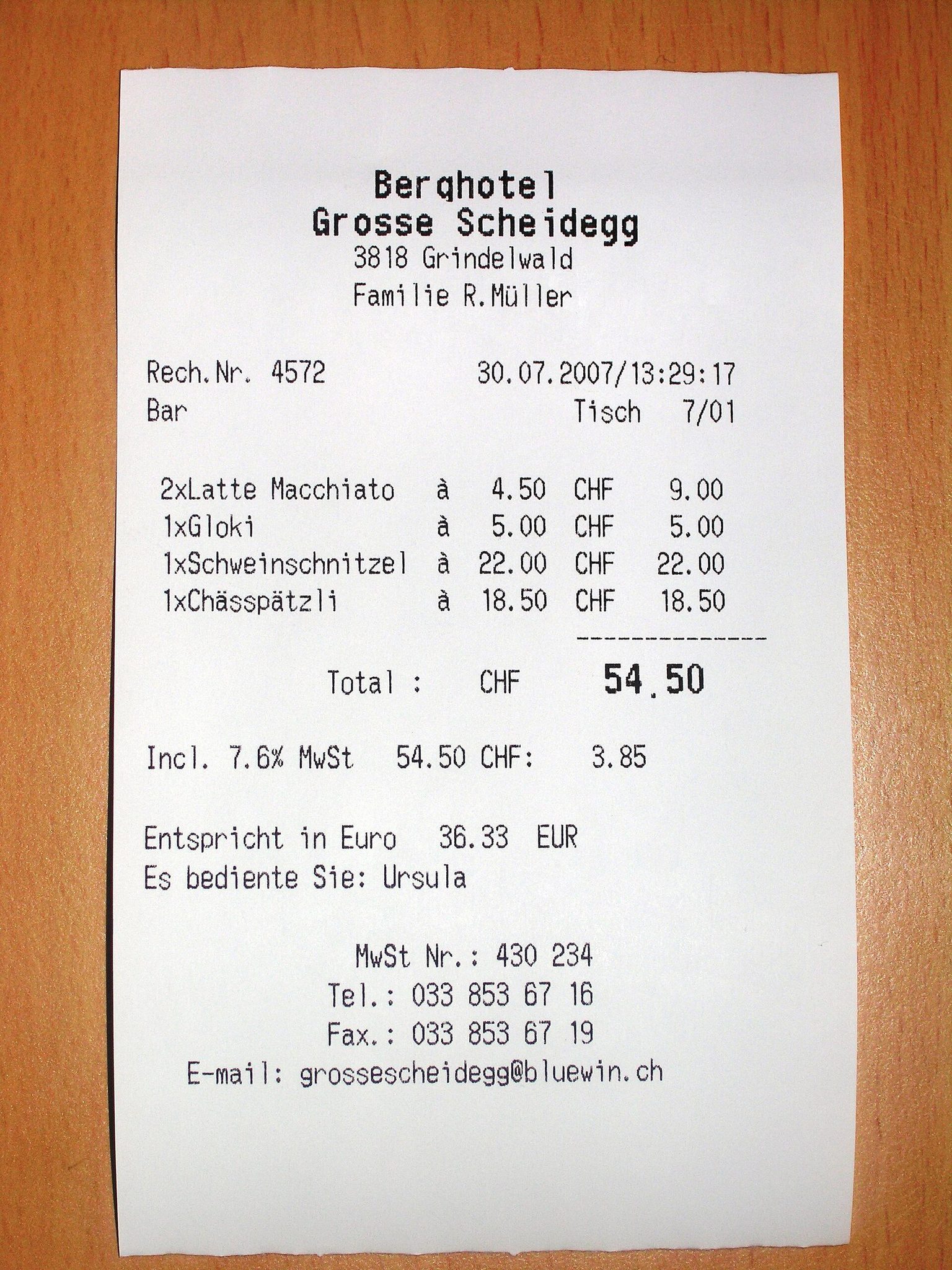
Photo: Audrius Meskauskas ( Audriusa ) / Wikimedia Commons, CC BY-SA 3.0
Set document collection rules
- E-invoices: suppliers send them to one shared accounting email, never to staff members' personal inboxes.
- Paper documents: handed in within 3 working days, with a payment request signed by the approver.
- Card and e-wallet payments: photograph the receipt immediately and save it to a shared folder named "date – supplier – amount".
Check incoming e-invoices against 6 points
An incoming (purchase) invoice is one your company receives when buying goods or services. Before posting it, check all six points; if one fails, do not post it — put it on the list for the seller to correct.
- Buyer name, tax code and address match your company's registration.
- The invoice is valid: look it up on the tax authority's e-invoice portal using the series, number and seller's tax code.
- The seller is active: check the status of the seller's tax code.
- Content matches reality: item names, quantities and unit prices agree with the contract or goods received note.
- Amounts and tax rate: add up the net amount, the tax and the total.
- Payment method: larger invoices usually need non-cash payment for the input VAT to be deductible — check the current threshold and conditions in the regulations.
What if the invoice is wrong?
Do not fix it yourself and do not ignore it. Ask the seller to issue an adjusting or replacement invoice under the current e-invoice rules, and note the date you reported it, who received it and the deadline. The difference between "adjust" and "replace" is covered in step 2 of the path.
Posting and the three month-end reconciliations
Posting means recording each transaction under double entry: one side debit, one side credit, and both sides always equal. Accounting software generates the entries from your documents; your job is to choose the right customer, supplier or item, the right account and the right date.
Bank reconciliation
Download the full month's bank statement and compare it line by line with the bank ledger. The month-end balance in the books must equal the statement balance. If not, look for three usual causes: bank fees or interest not yet recorded; a customer transfer you cannot match to an invoice; a payment entered with the wrong amount or the wrong bank account.
Receivables and payables
Receivables are what customers still owe you; payables are what you still owe suppliers. Each month, review the ageing report and tell the director about anything overdue by 30, 60 or 90 days. With major partners, exchange a signed balance confirmation at least every quarter; at year-end it is practically essential.
Stock reconciliation
Stock in the books must match stock on the shelves. Small companies usually count on a rotating basis: 10–20 high-value items this month, another group next month. Any difference needs a signed record and a reason (damage, short delivery, wrong item code) before you adjust the books.
Payroll, insurance and monthly or quarterly tax filing
These tasks have deadlines set by the state, so being one day late can trigger late-payment interest. The principle: know whether your company files monthly or quarterly, put the deadlines in your calendar at the start of the year, and always check the current rules. Withholding each deduction correctly on the payroll has been the accountant's job for generations (Figure 3).
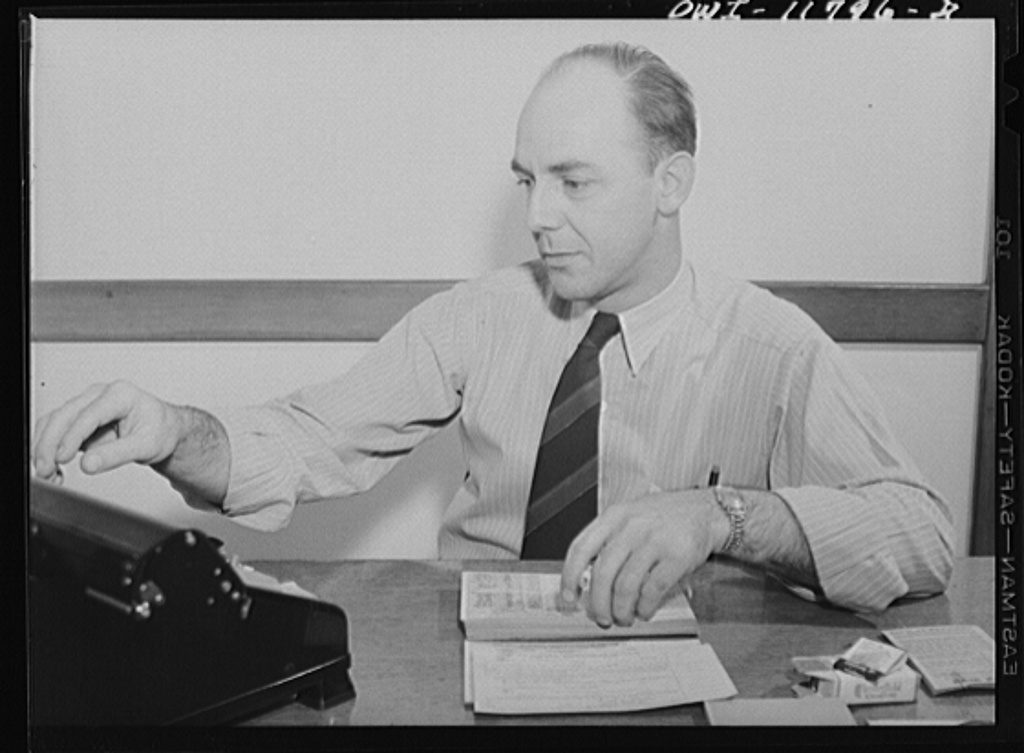
Photo: Marjory Collins / Wikimedia Commons, Public domain
Payroll and insurance
From the timesheet, calculate gross pay, deduct the employee's share of insurance and the personal income tax withheld, and arrive at net pay; at the same time, calculate the employer's share of social, health and unemployment insurance. Contribution rates and the salary base can change: take them from current regulations or the notice of the social insurance office, never from last year's payroll file. Insurance is usually paid monthly; check any other payment cycle with the insurance office.
Filing monthly or quarterly?
VAT returns and personal income tax withholding returns are filed monthly or quarterly. Under the rules in force at the time of writing, companies whose previous-year revenue is below a set threshold, and newly established companies, usually file quarterly. For the exact threshold and the procedure for switching, check the current tax administration regulations or ask your local tax office.
Deadlines: know the principle, re-check every year
- Monthly filing: the deadline usually falls in the middle of the following month (currently the 20th).
- Quarterly filing: usually the last day of the first month of the following quarter.
- Provisional corporate income tax: quarterly, due within the first month of the following quarter.
- Annual finalisation and financial statements: within the first few months of the following year, according to the deadline for each document.
- A deadline falling on a day off is usually moved to the next working day; late-payment interest and penalties follow current regulations.
At the start of each year, compare these milestones with the regulations in force on the tax authority's website, then add them to your phone calendar with a reminder 5 days ahead.
Legal note: this lesson explains principles for planning your work; it does not replace the law. Filing deadlines, insurance rates, the quarterly filing threshold and penalties in Vietnam can change; always check the current regulations on the official websites of the tax authority and social insurance agency, or ask the officer in charge.
Worked example: a 10-employee trading company
An Phat Co. (a fictitious name) wholesales household goods, has 10 employees and files VAT quarterly. Each month it has about 150 sales invoices, 60 purchase invoices, 2 bank accounts with about 200 transactions and 300 stock items. The table estimates the accounting hours for a normal month (illustrative figures, 2026 reference).
| Task | Hours/month | Note |
|---|---|---|
| Collect, sort and check paper documents | 10 | About 30 minutes per working day |
| Check incoming e-invoices | 6 | 60 invoices × 6 minutes |
| Post purchases, sales and expenses in the software | 16 | Mostly sales invoices |
| Bank reconciliation | 6 | 2 accounts, about 200 lines |
| Receivables/payables reconciliation, chasing debts | 6 | About 40 customers, 25 suppliers |
| Stock reconciliation, rotating counts | 6 | 20 high-value items |
| Timesheets, payroll, insurance, personal income tax | 8 | 10 employees |
| Tax (monthly review, quarterly return) | 4 | Average: 12 hours in the filing month ÷ 3 months |
| Closing and internal report | 6 | Revenue, gross profit, cash, debts |
| Archiving and ad hoc work | 4 | Contracts, letters, tax office queries |
| Total | 72 | ≈ 9 eight-hour working days |
Adding up: 10 + 6 + 16 + 6 + 6 + 6 + 8 + 4 + 6 + 4 = 72 hours a month, or 9 eight-hour days. Year-end adds about 40 hours for stock counts, financial statements and tax finalisation. With this workload the company does not necessarily need a full-time accountant.
In-house accountant or outsourced service?
An in-house accountant knows the goods and can chase debtors directly, but costs more and the company depends on one person. An accounting service collects documents periodically, keeps the books and files returns; it is cheaper, but someone in the company still has to gather documents and handle cash. Reference costs for 2026 in Vietnam, varying by region and invoice volume:
| Option | 2026 reference cost | Suits when |
|---|---|---|
| Full-time in-house accountant | Salary 8–14 million VND/month (about 310–540 USD), plus employer insurance and software | Many invoices, complex stock, the director needs daily figures |
| Part-time accountant (a few sessions a week) | 4–8 million VND/month | 60–90 hours a month, like An Phat |
| Full-service accounting firm | 1.5–6 million VND/month depending on invoices; some charge extra for year-end finalisation | Few transactions, someone already keeps documents and cash |
How An Phat decides
An Phat compares two options over a year (illustrative). Service: a fee of 3.5 million × 12 months = 42 million, plus a year-end fee of 3.5 million, total 45.5 million VND. Part-time accountant: 6 million × 12 = 72 million, plus software at 6 million a year, total 78 million VND. The difference is 78 − 45.5 = 32.5 million VND a year. The director chooses the service, but makes the storekeeper, who also handles cash, collect documents every day — because the 10 hours of "document collection" still have to be done on site.
Month-end closing checklist
Closing the books means locking the month's figures so that nobody edits them, then reporting. Software usually has a period-lock function; if not, set a rule such as "no edits to the previous month after the 20th without the director's approval". On these days the accountant compares every figure on paper with the data on screen (Figure 4).

Photo: Shixart1985 / Wikimedia Commons, CC BY 2.0
12 items to tick
- All documents for the month received; missing ones reported to the person responsible.
- Incoming invoices checked against the 6 points; faulty ones on the tracking list.
- Sales invoices in the software match the e-invoice system.
- Each bank account balance in the books equals the statement.
- Physical cash count equals the cash book, with a signed count record.
- Ageing report prepared; overdue items reported to the director.
- Stock for the rotating-count items matches the books or has a signed variance record.
- Payroll, insurance and personal income tax approved and posted.
- Prepaid expenses and depreciation (if any) allocated.
- No "strange" balances left (negative cash or stock).
- One-page internal report sent to the director: revenue, gross profit, cash, debts, stock.
- Paper documents bound by month; electronic files backed up in two places.
Common mistakes of new accountants
Posting before checking the invoice
Sign: at quarter-end you discover that a seller had stopped operating, and the invoice has to be removed from the return. Cause: posting as soon as the email arrives, just to get it done. Fix: post in weekly batches and only invoices that passed the 6-point check.
Leaving reconciliations until year-end
Sign: the bank balance is off for no clear reason, and customers will not confirm their balances. Cause: "I'll do it next month", every month. Fix: no closing until reconciliations are done.
Using last year's insurance rates and deadlines
Sign: insurance amounts on the payroll differ from the insurance office's notice. Cause: copying formulas from last year's file. Fix: at the start of each year and whenever new regulations appear, update the rates, the regional minimum wage and the filing calendar.
Frequently asked questions
How many hours a month does a small business accountant work?
It depends on invoices, staff and stock. A 10-employee trading company like the example needs about 70–80 hours a month; a service company with few invoices may need only 20–40 hours.
Is monthly or quarterly filing better?
It is not a free choice: it depends on revenue conditions and current regulations. Quarterly filing means fewer submissions, but invoice checks, posting and reconciliations still happen every month.
Must a company with no revenue still file returns?
As a general principle, an operating company still files returns on time even with no transactions. Some exemptions exist; check the current rules rather than skipping a return on your own.
Can a beginner offer accounting services?
Work 1–2 years under an experienced accountant before taking on other companies' books. Providing professional accounting services in Vietnam also requires the relevant certificate and registration under current regulations.
Exercise: build an accounting calendar for a sample company
- Pick a company you know, or use An Phat; note monthly sales and purchase invoices, employees and bank accounts.
- Draw up a 5-rhythm calendar (daily – weekly – monthly – quarterly – yearly).
- Estimate hours per task, add them up and convert to working days.
- Check on the tax authority's official website whether the company files VAT monthly or quarterly and when the next deadline is; note the source.
Self-assessment criteria
- Pass: all 5 rhythms present; the hours add up correctly; at least 3 reconciliations included.
- Pass: filing deadlines recorded with an official source and the date you checked it.
- Not yet: the calendar only says "file tax" with no invoice checks or reconciliations, or deadlines copied from an unclear source.
The next step in the path is Source documents, e-invoices & filing: an in-depth look at issuing, checking and correcting invoices — the most time-consuming part of the calendar above.
Keep learning step by step: See the 8-step small business accountant path (in Vietnamese) on NAMBIN, from accounting principles to keeping a full quarter of books and getting work.