Good hotel receptionist etiquette means standing upright at the desk in a clean, tidy uniform, making eye contact and greeting every guest within 10 seconds of them approaching, speaking clearly at a moderate pace, addressing guests by name or with a polite title, and answering the phone within 3 rings using a fixed greeting. Guests see these things before they ever see the software, the room rate or the paperwork, which is why front office managers judge newcomers on their manner in the very first week. This lesson is written the way a shift leader coaches a new starter: it explains the reasons, gives you a pre-shift checklist you can use today, phone scripts in English with the Vietnamese context, and a worked example of a 20-minute start-of-shift routine where the times add up.
By the end of this lesson, you will be able to:
- Check your own uniform and personal grooming before a shift with a 10-point list and fix any issue within 3 minutes.
- Stand at the desk correctly and greet guests within 10 seconds, even when you are busy with something else.
- Adjust your voice, eye contact and smile, and avoid 6 gestures that put guests off.
- Address Vietnamese and international guests politely, without mixing up family names and given names.
- Handle phone calls with a script: greet, identify the need, hold, transfer, and take a message with all 5 details.
New to front desk work? Etiquette and communication are step 1 of the roadmap, before room types, check-in on the property management system, guest registration and cashiering. See the 8-step hotel receptionist roadmap to learn in the right order.
What is front desk etiquette, and why do guests judge so fast?
Etiquette, or professional manner, is how you present yourself and behave at work: posture, uniform, facial expression, voice, eye contact and the way you answer. At the front desk, guests have no idea whether you are good with the software; they only see whether you looked at them, greeted them and look neat. That impression forms in a few seconds and colours the whole stay.
The front desk is the hotel's shop window
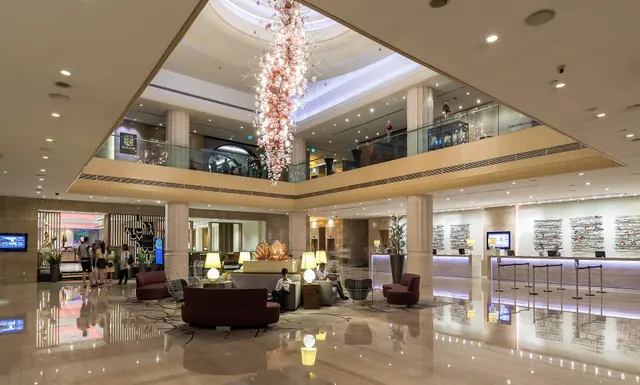
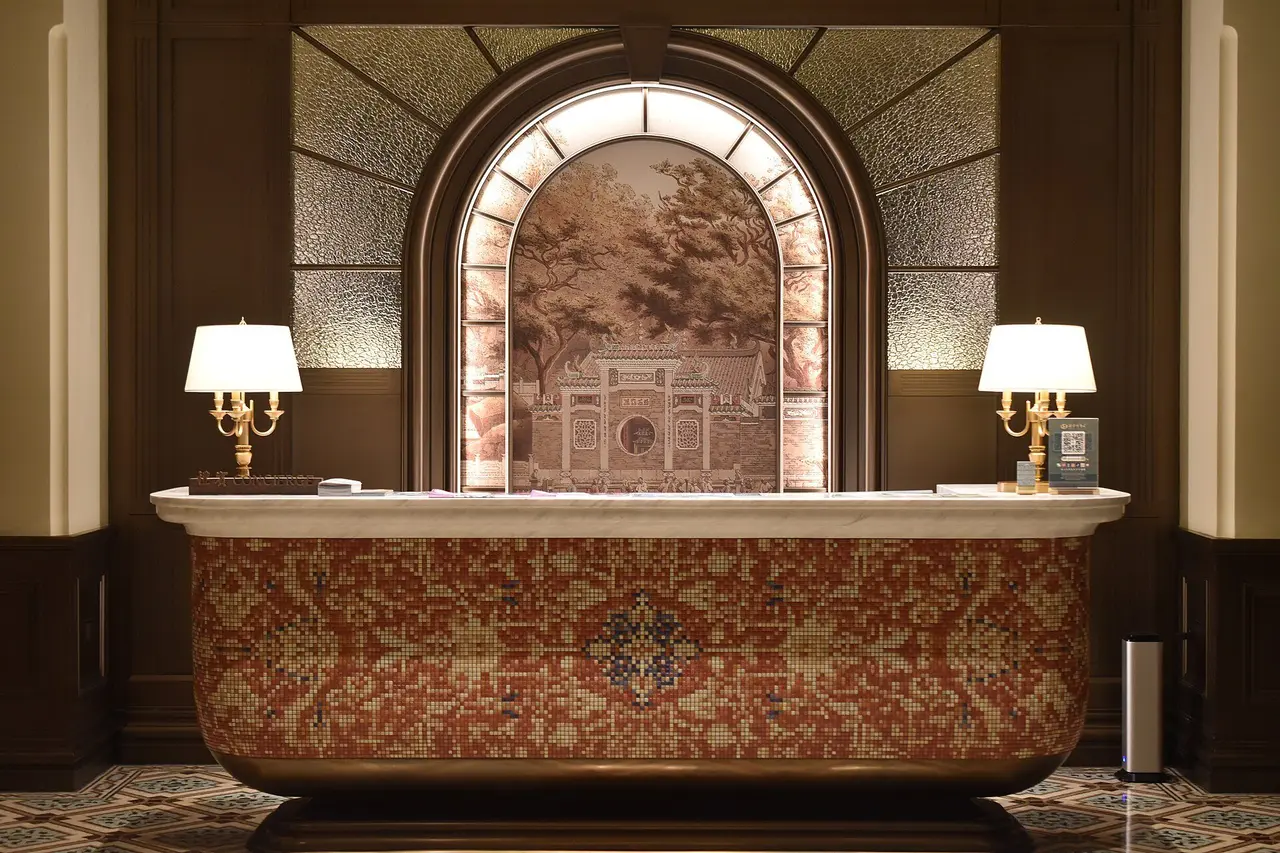
Guests meet reception at least twice, at check-in and check-out, plus every time they ask for directions, leave luggage or call down from their room. A tidy, clean desk with someone standing ready (Figure 1) tells guests the hotel is well run. A desk covered in paper, with staff looking down at their phones, says the opposite, however nice the rooms are.
Etiquette is not about being good-looking
Many people think receptionists have to be tall and attractive. In practice, guests remember a receptionist who was polite, quick and remembered their name far more than a face. Most hotels have standards for neatness, cleanliness and speech; some set appearance requirements when hiring, but what you can practise, and what you are assessed on every day, is your manner.
Every hotel has its own standards manual
Each hotel, and especially each chain, has a standards manual (usually called SOPs and a grooming standard) that sets out the uniform, the greeting and how to answer the phone. This lesson covers common practice so that you have a foundation; once you start work, the standard of your own hotel is the one that counts. On your first day, ask to read that manual and ask the shift leader about anything unclear.
Uniform and personal grooming before each shift
Uniform and personal grooming are the easiest things to check, so they are also the things you are most often corrected on. The effective approach is a fixed checklist and a look in the mirror before you go out to the desk, the same way every shift.
Uniform and name badge
- Uniform: clean, ironed, all buttons present, not frayed or faded. Hotels usually issue 2–3 sets for laundry rotation; keep a spare in your locker in case you spill coffee mid-shift.
- Name badge: worn in the required place (usually the left side of the chest), straight and readable. Guests need your name to call you and to praise or give feedback to the right person.
- Shoes: closed toe, clean, in the required colour. Receptionists stand for 6–8 hours a shift, so choose comfortable shoes with non-slip soles and a modest heel.
- Accessories: a watch, a wedding ring and small earrings are usually accepted; large jewellery and jangling bracelets usually are not.
Hair, nails and body odour
Hair should be neat and not fall over your face; long hair tied back or in a bun. Men should be clean-shaven, or keep a neat beard if the hotel allows it. Nails short and clean; if polish is allowed, keep it a subtle colour with no chips. Make-up light and natural. Body odour and breath matter a lot because you talk to guests at close range across the counter: shower before the shift, use deodorant, avoid strong perfume, avoid strong-smelling food during your break and rinse your mouth after eating.
The 10-point grooming checklist
| Item | Pass when | Common faults |
|---|---|---|
| 1. Uniform | Clean, ironed, all buttons | Creased back, dirty cuffs |
| 2. Name badge | Right place, straight | Forgotten, crooked |
| 3. Hair | Neat, off the face | Fringe in the eyes, messy hair |
| 4. Face | Clean, light make-up or shaved | Stubble, heavy lipstick |
| 5. Nails | Short, clean | Long nails, chipped polish |
| 6. Breath and odour | No unusual smell | Cigarette or food smell |
| 7. Jewellery | Little, small, silent | Big bangles, many rings |
| 8. Shoes and socks | Clean, right colour | Dusty shoes, slippers |
| 9. Personal phone | In the locker or on silent | Holding a phone at the desk |
| 10. Personal tools | Pen and small notebook | Borrowing the guest's pen |
Take a photo of this table and keep it in your locker. Checking the 10 items in the mirror takes about 3 minutes; do it consistently for 2 weeks and it becomes a habit you no longer need the table for.
Standing at the desk and greeting within 10 seconds
Walking up to a desk where nobody looks up feels like being ignored. Many hotels therefore use a simple rule: once a guest comes into your line of sight, within 10 seconds they should get eye contact, a smile and a greeting.
Posture at the desk
- Stand straight, feet shoulder-width apart, weight evenly spread; do not lean on the desk or prop yourself on your elbows.
- Rest your hands lightly on the counter or clasp them in front of you; do not fold your arms or put your hands in your pockets.
- Face the lobby entrance, and place the monitor so that you only need to glance down, never turning your back on the door.
The 10-second rule when a guest approaches
As a guest walks toward the desk, look up, make eye contact and smile; when they are close (about 2–3 steps away), greet them out loud, for example "Good morning, welcome to…", or the Vietnamese equivalent for local guests. Many hotels in Vietnam combine this with a slight bow or a joined-hands greeting in the brand's own style (Figure 2). The greeting always includes the hotel's name and an offer: "How may I help you?"
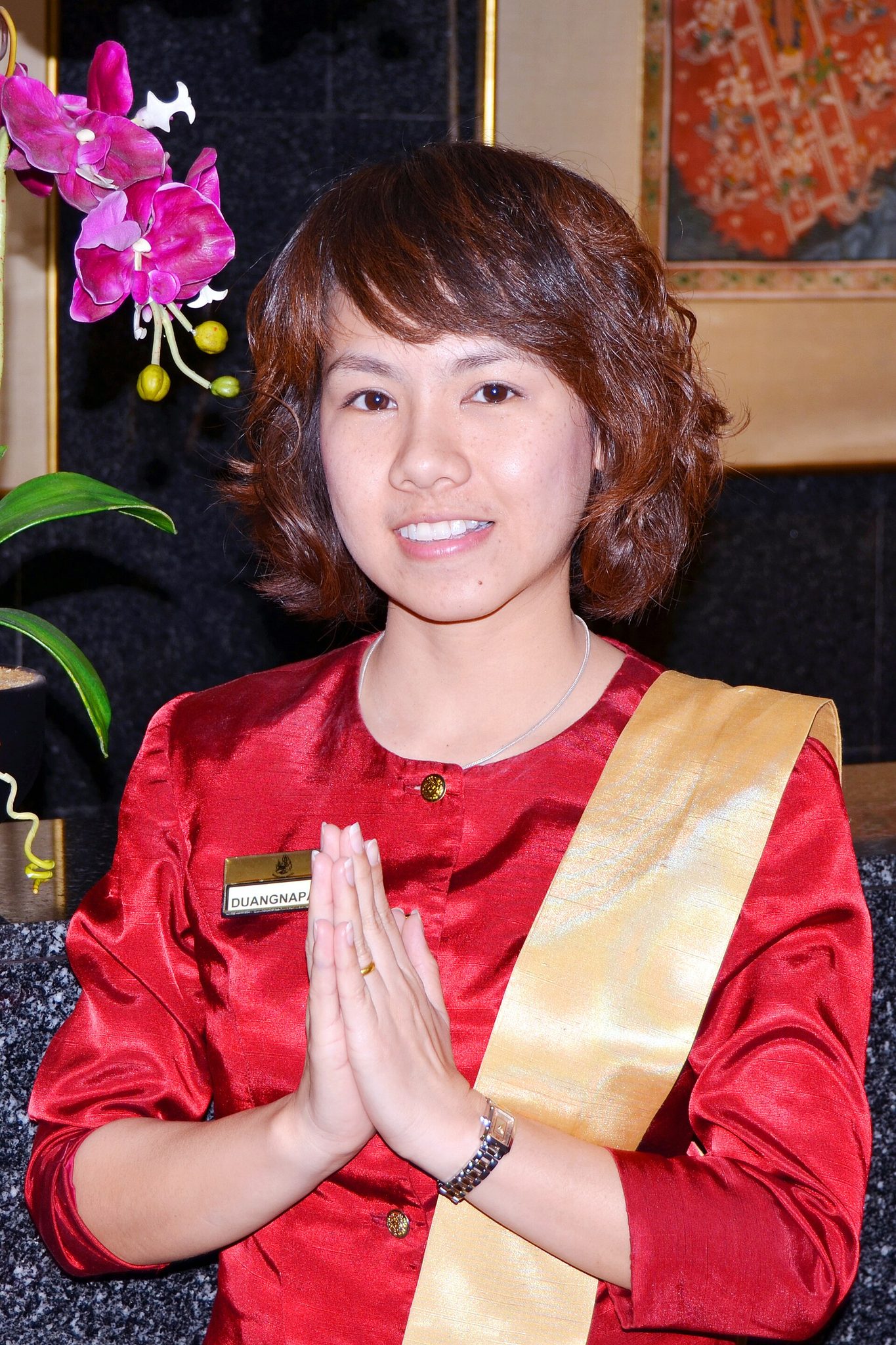
Photo: Mamichaelraj / Wikimedia Commons, CC BY-SA 4.0
When you are busy with another guest or on the phone
You do not have to drop what you are doing, but the new guest must know you have seen them. If you are serving guest A and guest B arrives: look up at guest B, nod, smile and say briefly "I will be with you in a moment". If you are on the phone: look at the guest, nod and raise a hand slightly to signal "one moment", finish the call as quickly as you can, then apologise for the wait. If a colleague is free, signal them to take the guest.
Voice, eye contact and body language
The same sentence, "Please wait a moment", said in an even tone with a smile makes a guest feel cared for; said quickly and curtly without looking up, it feels like being brushed off. Communication at the desk is three things working together: words, voice and body.
Voice: clear, moderate, with intonation
- Pace: a little slower than when you chat with friends, especially when giving room numbers, prices and times.
- Volume: loud enough for the guest in front of you, not loud enough to fill the lobby. Private information (room number, amounts) is said quietly or pointed to on paper, never read out loud.
- Intonation: rise slightly at the end of a question, and avoid the tired, dragged-out tone at the end of a shift. In Vietnamese, use the polite particles "da", "vang" and "a" in the right places.
- Wording: avoid slang and never just say "I don't know"; say instead "Let me check and get back to you within 5 minutes".
Eye contact and smile
Look at the guest's eye area when greeting and while they speak, glancing down at paperwork or the screen and back again; do not stare, and do not look a guest up and down. A natural smile comes most easily when you are genuinely paying attention. With an annoyed guest, a serious, listening expression works better than a big smile.
6 gestures to avoid at the desk
- Folding your arms or putting your hands on your hips.
- Pointing at a guest, or giving directions with one finger (use the whole hand, palm up).
- Chewing gum, eating or drinking at the desk.
- Chatting privately with colleagues or laughing loudly when guests are present.
- Constantly checking your personal phone or the clock.
- Handing things over carelessly with one hand; give key cards and documents with both hands, or one hand supported by the other, text facing the guest.
How to address guests and use their names politely
Using the right name is the fastest way to make a guest feel remembered. Getting a name wrong or being over-familiar is something guests remember for a long time.
Vietnamese guests
Vietnamese uses kinship terms: "anh" or "chi" (older brother or sister) for guests of similar or slightly older age, "co" or "chu" for older guests, with the receptionist calling themselves "em". In writing and email, the formal "Quy khach" (valued guest) is used. Once you know the name, use it with the kinship term ("anh Minh", "chi Lan"). When unsure of age, "anh/chi" is safer than "co/chu", since many guests dislike being treated as old.
International guests
- Use a title plus family name: "Mr. Smith", "Ms. Garcia". Use "Ms." when you do not know a woman's marital status.
- Chinese, Korean and Japanese names are often written family name first (for Kim Min-jun, the family name is Kim, so "Mr. Kim"). Passports show separate Surname and Given name fields; read those fields instead of guessing.
- If a guest says "Call me John", you may use the name they prefer; note it in the guest profile so the next shift knows.
- If a name is hard to pronounce, asking "Could you tell me how to pronounce your name?" is better than getting it wrong repeatedly.
How often to use a guest's name
Common practice is to use the guest's name about 2–3 times in one interaction: when greeting once you know it, when confirming details, and when saying goodbye. Using it in every sentence sounds fake. Never call out a guest's name together with their room number across the lobby; room number and guest data confidentiality is covered in detail in the lesson on the 8-step hotel check-in procedure.
Answering the front desk phone with a script
A call to the desk may come from a guest's room, someone asking about a booking, a partner or another department. The caller cannot see you, so your voice is everything. A fixed script stops you skipping steps when the desk is busy.
Answer within 3 rings
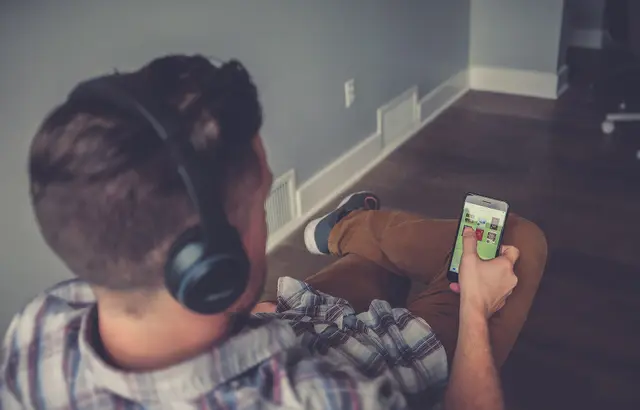
Many hotels require the phone to be answered before the third ring. Before picking up, stop typing and have a pen and message pad ready (Figure 3). Smile as you speak: listeners can hear a smile in a voice. The greeting includes a time-of-day greeting, the hotel's name, the department, your name and an offer of help.
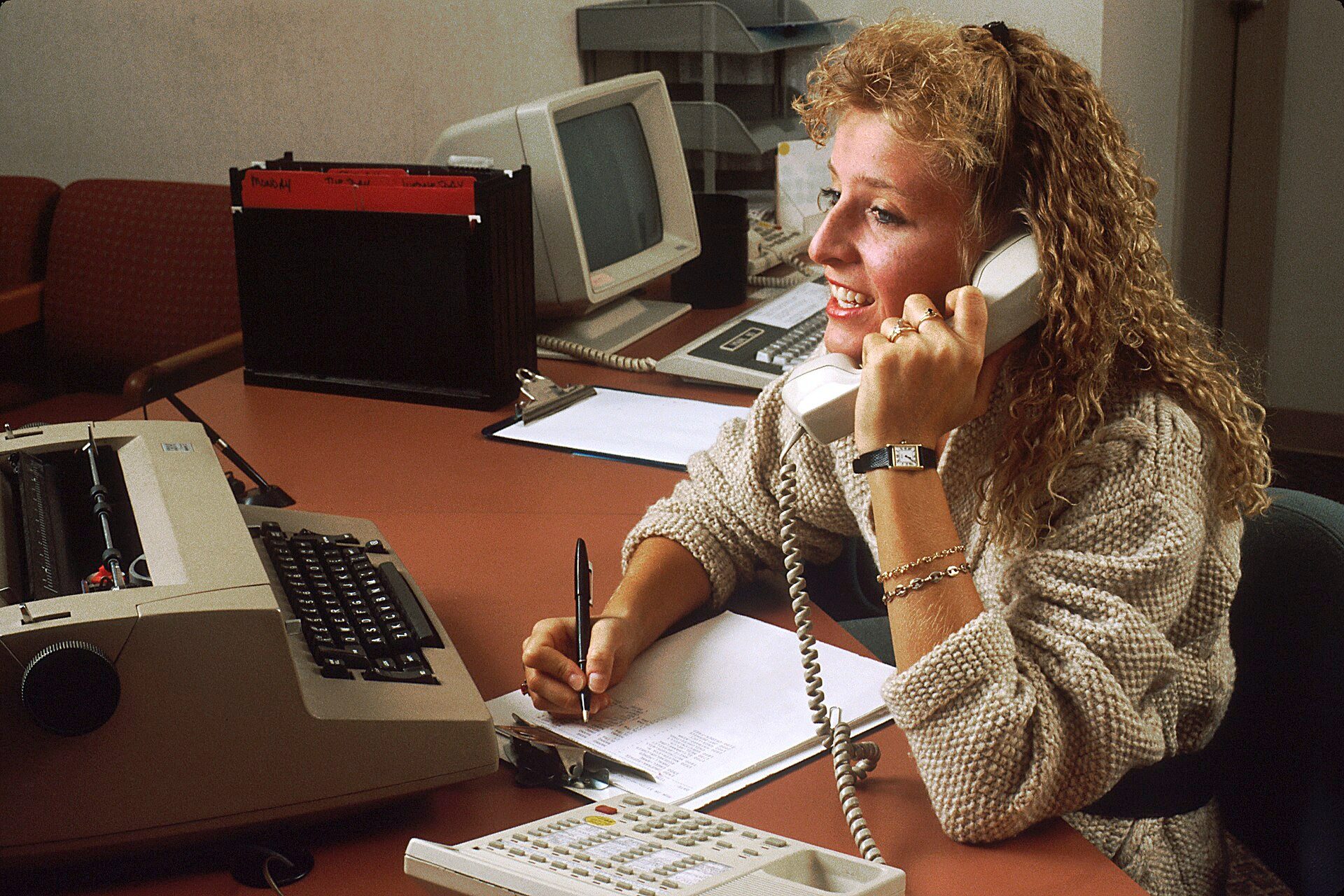
Photo: Bill Branson (photographer) / Wikimedia Commons, Public domain
Sample scripts
| Situation | What to say | Note for Vietnamese-speaking callers |
|---|---|---|
| Outside call | "Good morning, … Hotel, front desk, Hoa speaking. How may I help you?" | Same structure in Vietnamese, with polite particles |
| Call from a guest room | "Good evening, Mr. Brown, front desk. How may I help you?" | The phone shows the room guest's name; use it |
| Asking to hold | "May I put you on hold for a moment while I check?" | Give an expected wait, for example about 1 minute |
| Returning from hold | "Thank you for waiting…" | Always thank the caller first |
| Transferring | "I will transfer your call to the restaurant now." | Say where you are transferring to |
| Ending | "Thank you for calling. Have a nice day." | Let the caller hang up first |
Holding, transferring and taking messages
Always ask before putting someone on hold, and do not leave them for more than about 30–60 seconds without coming back with an update. When transferring, tell the caller where they are going; if the other department does not answer, come back and take a message rather than leaving the caller ringing. A message needs 5 details: caller, contact number, content, recipient and time of call; read it back for the caller to confirm. If an outside caller asks for a guest's room number, do not give it; you may connect the call to the room or take a message, according to hotel policy.
Worked example: a 20-minute start to the morning shift
Lan is a new receptionist at a 60-room, 3-star hotel in Da Nang, and the morning shift starts at 6:00. The shift leader asks staff to be in the staff area 20 minutes early. Here is how Lan uses those 20 minutes.
Pre-shift timetable
| Time | Task | Minutes |
|---|---|---|
| 5:40–5:45 | Change into uniform, put phone and bag in the locker | 5 |
| 5:45–5:48 | Mirror check of the 10 grooming points | 3 |
| 5:48–5:58 | Night shift handover: handover log, today's arrivals and departures, VIP guests, special requests | 10 |
| 5:58–6:00 | Desk check: pens, message pads, phone, clear counter | 2 |
| Total | 20 | |
Check: 5 + 3 + 10 + 2 = 20 minutes, exactly 5:40–6:00. Lan writes the names of the 4 guests checking out early (before 7:00) in her notebook so she can greet them by name.
6:05: a guest arrives while she is on the phone
At 6:05, room 305 calls to ask about breakfast hours. At that moment Mr. Tanaka, one of the 4 early check-outs, wheels his suitcase to the desk. Lan looks at him, nods, smiles and raises a hand slightly to ask him to wait; she answers room 305 in about 20 seconds ("Breakfast is served in the second-floor restaurant from 6:30 to 9:30") and ends the call. Then she turns: "Good morning, Mr. Tanaka. Thank you for waiting. Are you checking out this morning?" Mr. Tanaka hardly waits, hears his family name used correctly and feels recognised.
Difficult guests and keeping yourself safe
Most guests are polite, but receptionists on evening and night shifts will meet drunk guests, shouting guests, or strangers who are not staying at the hotel. Professional manner includes staying calm and knowing when to call for help.
Safety note: Do not argue one-on-one, do not touch an agitated guest, and keep the counter between you. Call security or the shift leader immediately if a guest threatens you, harasses anyone, or a stranger demands access to a guest's room. If there is clear danger (a weapon, a fight, someone unconscious), alert security and the duty manager and call 113 (police) or 115 (ambulance) in Vietnam, following hotel procedure. Never give a key card or room number to anyone who cannot prove they are a registered guest.
What to say when a guest raises their voice
Listen to the end without interrupting, nod, then restate the problem in your own words: "I understand you are unhappy because the air conditioning in your room is not cooling". Full complaint handling comes in step 6 of the roadmap; at step 1 you only need to keep your voice calm, your expression serious, and call the shift leader when the issue is beyond your authority.
Common mistakes new receptionists make, and how to fix them
Head down in the screen
Sign: guests stand at the desk for several seconds before being greeted. Cause: the monitor faces away from the door, or you are absorbed in typing. Fix: adjust the screen, look up at the lobby every few dozen seconds, and apply the 10-second rule.
Speaking too fast when giving numbers
Sign: guests ask you to repeat the room rate or breakfast times. Cause: speaking out of habit. Fix: say numbers slowly, in groups, or write them down and point.
Wrong family name
Sign: a guest corrects you, "It's Mr. Lee, not Mr. Min". Cause: guessing the name order. Fix: read the Surname field on the passport, ask when unsure, and note how the guest likes to be addressed in their profile.
Leaving callers on hold too long
Sign: callers hang up or call back irritated. Cause: forgetting the held call when the desk is busy. Fix: after 30–60 seconds, come back with an update, or take a number and call back.
Frequently asked questions
What communication skills does a hotel receptionist need?
Greeting and addressing guests correctly, listening and restating requests, speaking clearly and concisely, handling calls with a script, introducing hotel services, and staying calm when guests complain. At step 1, focus on greeting, forms of address, voice and the phone.
Are appearance standards for hotel receptionists strict?
It depends on the hotel. What almost every hotel shares is neatness, cleanliness, a proper uniform and clear speech. Some upscale hotels have specific requirements when hiring; read the job advert carefully rather than relying on rumours.
How should a hotel receptionist answer the phone professionally?
Answer within 3 rings, greet with the time of day, hotel name, department and your name; take notes while listening; ask before putting someone on hold; take messages with all 5 details and read them back; never reveal a guest's room number.
Do receptionists need fluent English from day one?
Not fluent, but you need the greetings, phone phrases, holding phrases and thank-yous in the table above by heart. Deeper situational English comes in step 6 of the roadmap. Hotels with many international guests prefer staff who can speak English.
Is standing for a whole shift tiring?
Yes, especially in the first week. Comfortable shoes, shifting your weight, walking when there is a task, drinking enough water and stretching your legs during breaks all help. If foot or back pain lasts for several weeks, see a doctor.
Practice exercises and self-assessment
- For 5 shifts in a row, do the 10-point mirror check before the shift and record how many items pass.
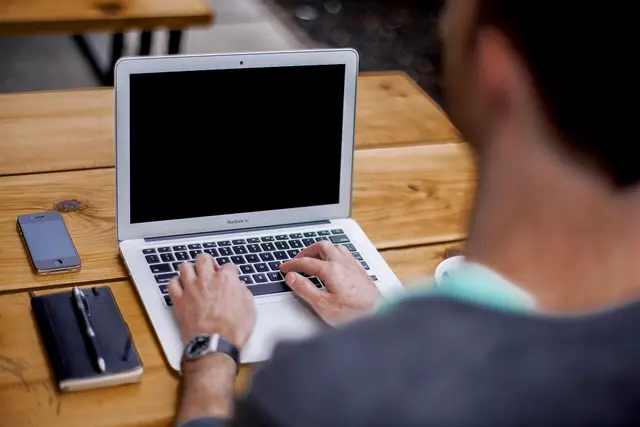
- Ask a friend to play a guest walking from the door to the desk 10 times, while a third person times how long it takes from the guest entering your view to your greeting (Figure 4 shows a tidy workstation where the screen does not block your view).
- Record 3 practice calls: answering, holding and taking a message. Listen back to your pace and intonation.
- Read out 10 international guest names from a sample list and identify the family name and the correct form of address.
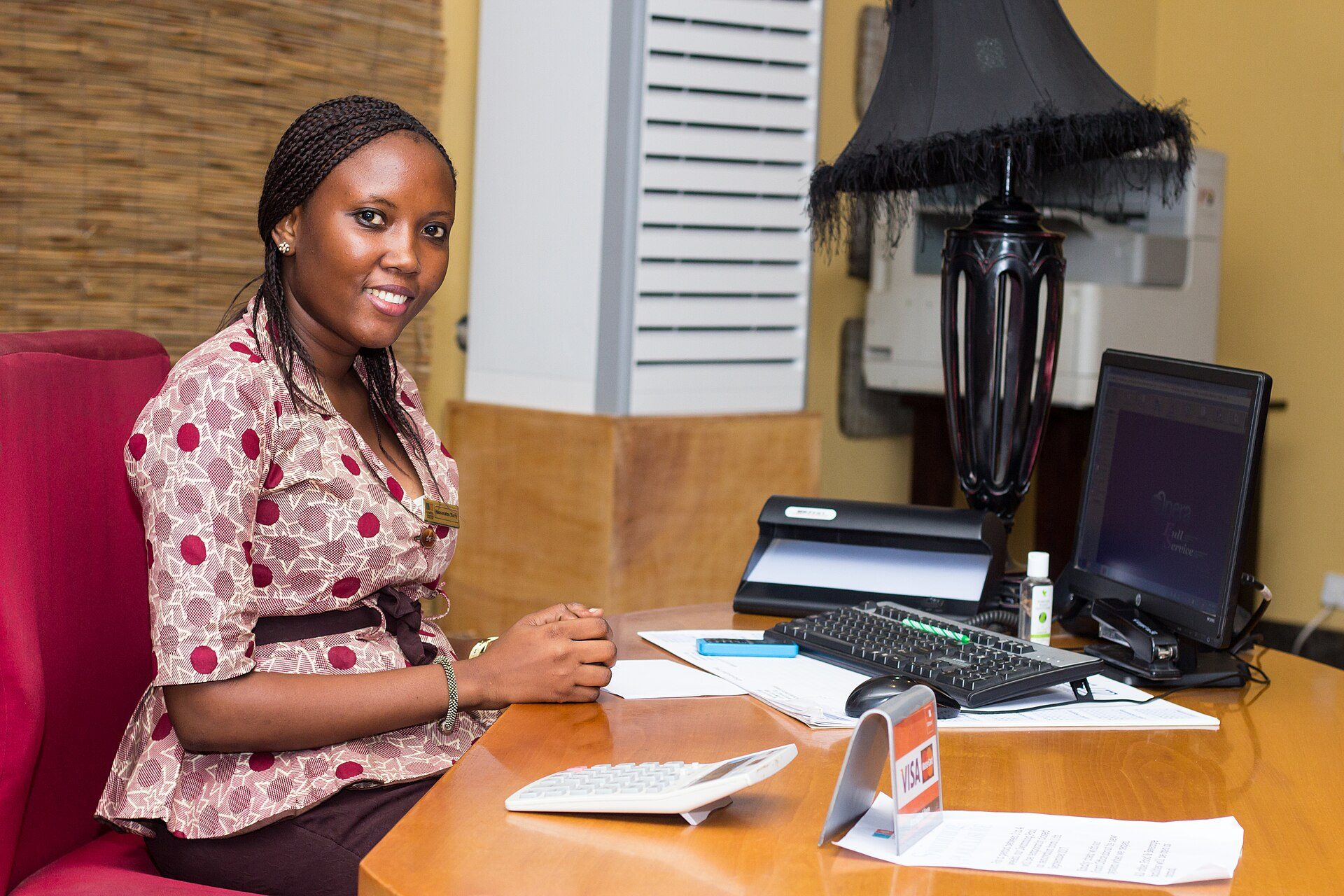
Photo: Appreciating Beauty Photography / Wikimedia Commons, CC BY-SA 4.0
Self-assessment criteria
- Pass: all 10 grooming points met on 5 shifts in a row.
- Pass: in all 10 role plays, you greet within 10 seconds with eye contact and a smile.
- Pass: all 3 calls answered before the third ring, with the full greeting and messages containing all 5 details.
- Pass: correct family name for at least 9 of the 10 international names.
- Not yet: holding a personal phone at the desk, folding your arms when guests arrive, or reading a room number out loud in the lobby.
Once good manners have become a habit, move on to the next step of the roadmap: Room types, rates & booking channels, where you learn to tell room types apart, how hotels set rates and which channels guests book through.
Keep learning hotel reception: after etiquette come room types and booking channels, check-in on the PMS, guest registration, cashiering, complaint handling and real shifts. See the 8-step hotel receptionist roadmap.