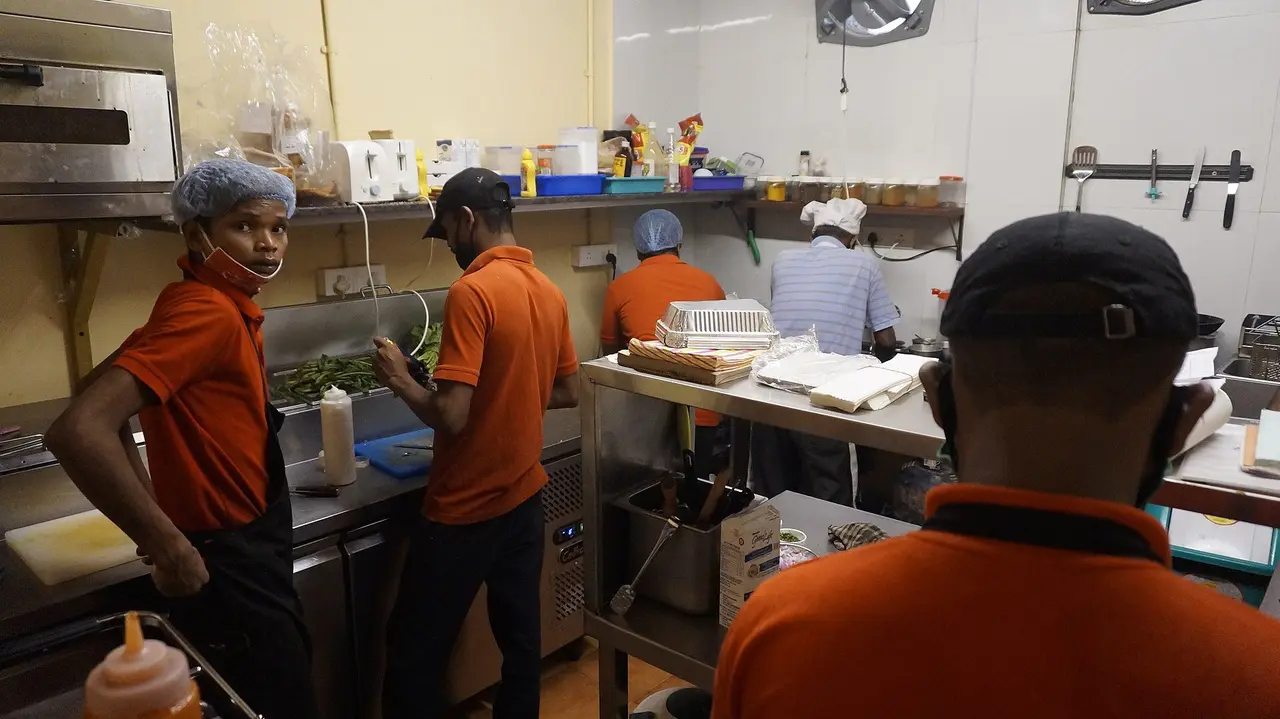
A kitchen assistant (called "phu bep" in Vietnam, also known as a kitchen helper, prep cook or commis) works in a professional kitchen supporting the cooks: receiving and storing ingredients, prepping vegetables, meat and fish, getting everything ready before service, restocking the line when it gets busy, and keeping the kitchen clean and safe. It is the most common way into kitchen work: many places hire people without experience, starting pay in Vietnam is roughly 5–7 million VND a month as a 2026 reference, and meals are often included. This lesson explains what a kitchen assistant does in a shift, what the job pays in 2026, how long it takes to learn, and how to prepare for the skills test and your job application.
By the end of this lesson, you will be able to:
- Explain how a kitchen assistant differs from a kitchen porter, a cook and a head chef, and how people progress from the role.
- Describe a kitchen assistant's shift hour by hour in a restaurant and in an industrial canteen.
- Compare two job offers by the money actually left over each month, not just the headline wage.
- Practise the 60-minute skills test: three vegetable cuts, cleaning one fish and 500 g of prawns.
- Prepare your application, answer interview questions, do a trial shift and spot suspicious job offers.
Starting kitchen work from zero? The skills test and job hunt are the last step of the roadmap, after food safety, knife and gas safety, receiving goods, prep work and mise en place. See the 8-step kitchen assistant roadmap to learn in the right order.
What a kitchen assistant is, and where the role sits
A professional kitchen works like a team: everyone has a part, and everything aims at getting dishes out on time, to standard and safely. The kitchen assistant handles the preparation so the cooks can focus on cooking.
The usual kitchen hierarchy
- Kitchen porter, dishwasher: washes equipment and dishes, takes out rubbish, mops floors. Handles little or no food.
- Kitchen assistant: receives goods, preps, portions, makes stocks and sauces as instructed, restocks the hot line and keeps the area clean.
- Cook (line cook): cooks dishes to recipe and runs a station such as the wok, grill or cold section.
- Sous chef, head chef: plans the menu, orders stock, calculates food cost, writes the rota, trains staff and is responsible for the whole kitchen.
How is it different from a kitchen porter?
The biggest difference is that a kitchen assistant works directly with food and knives, so they must know food safety, knife skills, portioning by the gram and storage rules. Many small eateries merge the two roles, so the assistant also washes up; large restaurants and hotels keep them separate. When applying, ask for the job description so you know exactly what you will do.
Career progression
Hard-working, careful assistants are often given a chance to run a station after a while, then move up to cook. How long that takes depends on ability and workplace: for some it is a few months, for others a few years. Fast, clean prep with little waste is the foundation of every good cook, so do not treat the job as "temporary manual work".
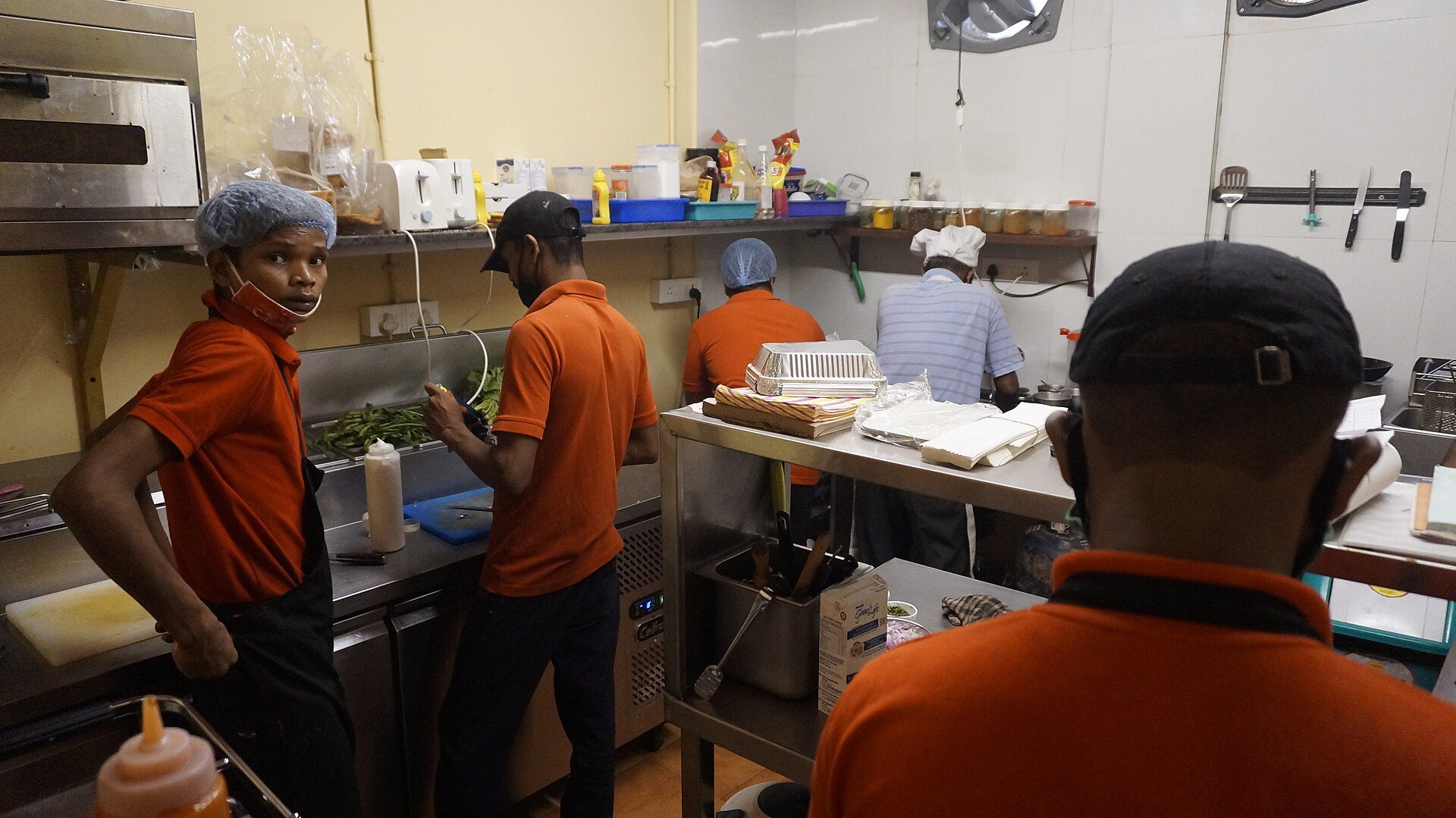
Photo: Fredericknoronha / Wikimedia Commons, CC BY-SA 4.0
What does a kitchen assistant do?
The work falls into five groups, matching the middle five steps of the roadmap. The balance differs from one workplace to another, but almost every kitchen assistant does all five.
Receiving, checking and storing goods
In the morning suppliers deliver meat, fish, vegetables and dry goods. The assistant checks quantities against the delivery note, freshness, the temperature of frozen goods and use-by dates, then labels them with the date and puts them into the fridge, freezer or cold room on a first-in, first-out (FIFO) basis, with raw food stored below cooked food (Figure 4). Goods that fail the check go to the head chef to be returned immediately; never accept them on your own.
Prepping vegetables, meat, fish and seafood
This takes the most hours: washing vegetables (Figure 2), peeling, slicing, cutting julienne and dice, mincing onion and garlic; breaking down chickens, cutting meat along the grain, cleaning fish, prawns and squid; and portioning by weight. Head chefs judge assistants mainly on speed, consistency and waste at this stage.
Mise en place and support during the rush
Mise en place (French for "everything in its place") means having prepped ingredients, stocks, sauces and seasonings ready according to the prep list, set out in trays for each station. When it gets busy, the assistant restocks the hot line, plates simple dishes and keeps washing equipment so the line never runs out of pans or trays.
Cleaning and closing down
Wipe the benches, wash colour-coded boards and knives, scrub the stoves, mop the floor, sort the rubbish, log fridge temperatures and check the gas valves are shut. A clean kitchen at the end of a shift lets the next shift work safely and helps the kitchen pass food safety inspections.
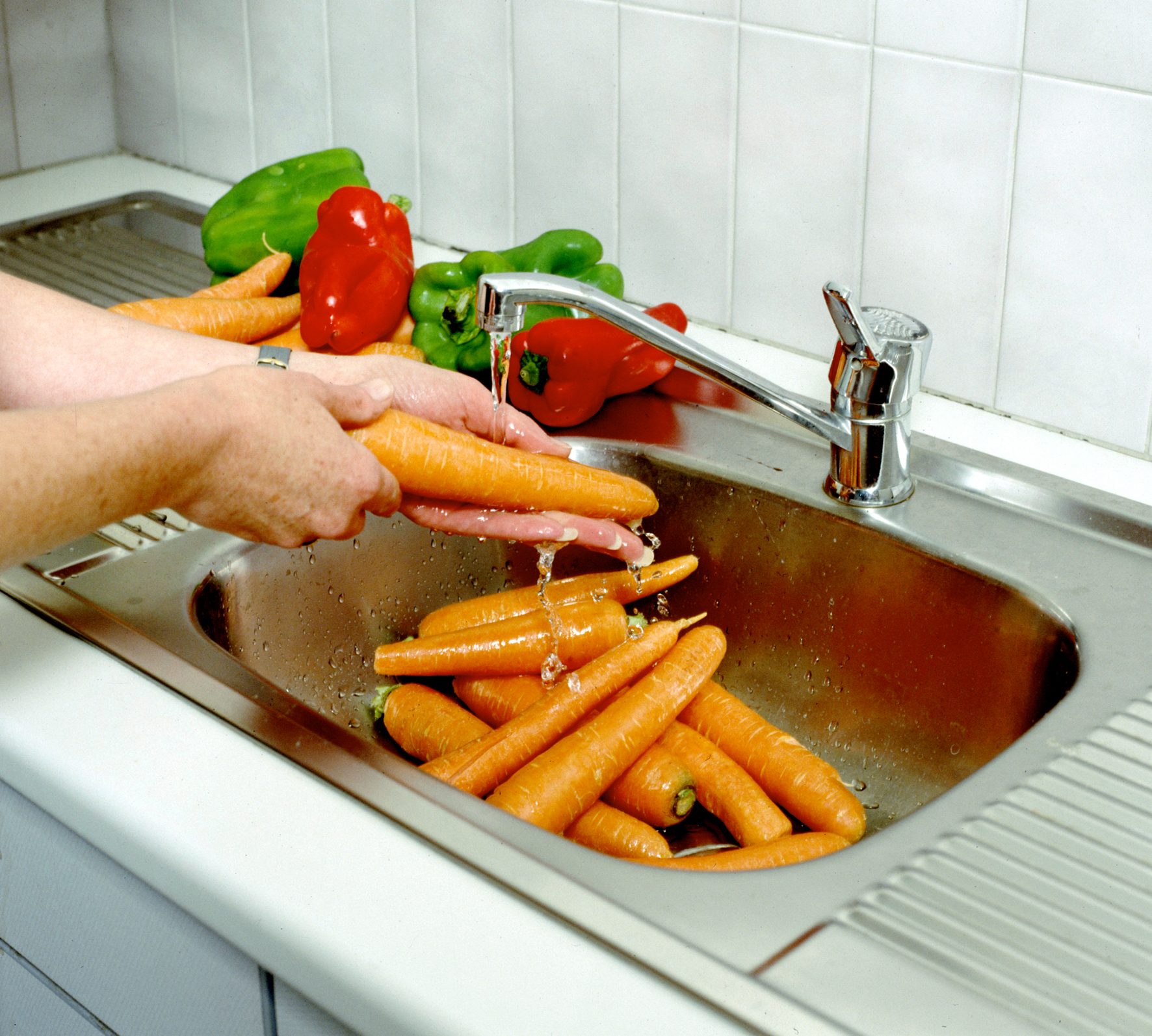
Photo: Tracey Nicholls, CSIRO / Wikimedia Commons, CC BY 3.0
A kitchen assistant's shift in a restaurant
Many restaurants in Vietnam use split shifts: work lunch, break in the afternoon, then work dinner. The table shows a typical 8-hour split shift at a Vietnamese restaurant serving about 120 guests a day.
| Time | Main tasks | Duration |
|---|---|---|
| 9:00 – 9:30 | Change into uniform, wash hands, receive, check and store deliveries | 30 minutes |
| 9:30 – 11:00 | Prep from the prep list: herbs, onion and garlic, meat, fish | 90 minutes |
| 11:00 – 13:00 | Lunch rush: restock, plate side dishes, keep washing | 120 minutes |
| 13:00 – 13:30 | Clean the station, top up ingredients for the evening | 30 minutes |
| 13:30 – 16:30 | Mid-shift break (unpaid) | — |
| 16:30 – 17:30 | Extra prep, dipping sauces and sauces | 60 minutes |
| 17:30 – 19:30 | Dinner rush | 120 minutes |
| 19:30 – 20:00 | Clean down, label leftovers, log fridge temperatures, shut off gas | 30 minutes |
Adding up working time: 30 + 90 + 120 + 30 + 60 + 120 + 30 = 480 minutes, exactly 8 hours. Industrial canteens are different: they usually start very early (some at 4–5 a.m.) to have lunch ready for factory workers, with large prep volumes (hundreds to thousands of meals) but simpler menus. Hotels add night shifts and banquets, with stricter paperwork.
What nobody tells you at the interview
- You stand for almost the whole shift in a hot kitchen with wet floors; weekends and public holidays are the busiest, so days off then are hard to get.
- The rush is high pressure and the head chef speaks fast and briefly; that is how kitchens work, not a sign they dislike you.
- In return: meals on site, learning on the job, and a real chance to become a cook if you work at it.
Common workplaces
Family eateries and budget restaurants; Vietnamese, Asian and Western restaurants; fast-food chains; industrial canteens in industrial parks, schools and hospitals; hotels and resorts; and central kitchens that only prep and pre-cook for a chain's outlets. Newcomers usually find it easiest to start in industrial canteens and busy eateries, which need many hands for prep.
Kitchen assistant pay in 2026 and what comes with it
The figures below are 2026 reference estimates for Vietnam and vary by region, type of workplace and experience; they are not an income guarantee. Big cities, tourist areas and hotels usually pay more than provincial towns.
| Position / experience | Monthly pay (reference) | Often included |
|---|---|---|
| New assistant, no experience | 5–7 million VND (about US$200–280) | Meals during shifts, sometimes housing |
| Over 1 year, fast at prep | 7–9 million VND | Attendance allowance, overtime |
| Experienced assistant, prep team lead | 8–12 million VND | Bonuses, sometimes a share of service charge in hotels |
| Hourly, part-time | about 20,000–30,000 VND/hour | Usually not all meals |
Read the extras carefully
- Meals and housing: these can be worth 1–3 million VND a month if you would otherwise pay for them. Ask how many meals, how many people per room, and whether electricity and water are deducted.
- Overtime and holidays: ask how they are paid and whether that is written into the contract.
- Labour contract and insurance: for steady work you should have a contract; when a contract falls under compulsory insurance, the worker and employer both pay social, health and unemployment insurance at the legal rates, so take-home pay is lower than the contract wage. Ask HR for the exact figures and check the current regulations.
- Probation pay: usually lower than the full wage for a short period; ask how long probation lasts and what it pays.
Worked example: comparing two job offers
You are 20, moving from the countryside to the city, and have two offers as a kitchen assistant, both for 26 working days a month.
- Offer A, a city-centre restaurant: 6,500,000 VND a month, 2 meals per working day, no housing. A shared rented room costs you 1,800,000 VND a month including utilities, and you buy breakfast yourself: 26 × 30,000 = 780,000 VND.
- Offer B, an industrial canteen: 5,800,000 VND a month, 3 meals a day, dormitory housing with 300,000 VND a month for utilities.
| Item | Offer A | Offer B |
|---|---|---|
| Wage | 6,500,000 VND | 5,800,000 VND |
| Housing, utilities | − 1,800,000 VND | − 300,000 VND |
| Food you pay for | − 780,000 VND | 0 VND |
| Left each month | 3,920,000 VND | 5,500,000 VND |
Check: A leaves 6,500,000 − 1,800,000 − 780,000 = 3,920,000 VND; B leaves 5,800,000 − 300,000 = 5,500,000 VND; B leaves 1,580,000 VND more each month despite a wage 700,000 VND lower. But A is an à la carte restaurant, so you would learn more dishes and techniques, which helps if you want to become a cook. There is no right answer for everyone: if you need to save, B suits you better; if you want to learn fast, A suits you better. What matters is calculating what is left, not just comparing wages. (Compulsory insurance contributions, if they apply, come off at the legal rates at both places.)
How long does it take to learn, and what do you learn?
No qualification is legally required to work as a kitchen assistant, but there are skills and papers almost every employer asks for. Preparation time depends on how you learn.
Three ways in
- Start working and learn on the job: join a busy eatery or industrial canteen and learn from the people there. It usually takes about 1–3 months to handle basic prep confidently. You earn straight away, but the learning is unstructured and you may pick up bad habits.
- A short course at a vocational school or centre: usually about 1–3 months with practical sessions and a certificate from the provider. Fees vary; ask how many practical sessions there are and whether they help with job placement.
- Self-study along the roadmap, then a trial shift: learn the safety knowledge, practise knife work at home, then ask for a trial. Good for people still working another job.
Skills to have before you apply
Following the 8-step roadmap: personal hygiene and food safety; knife, gas, hot oil and slippery floor safety; receiving goods and storage; vegetable prep and basic knife cuts (Figure 3); meat, fish and seafood prep; mise en place; and a project prepping for a 100-meal service. Beyond hand skills, head chefs value people who are punctual, understand quickly and ask when unsure.
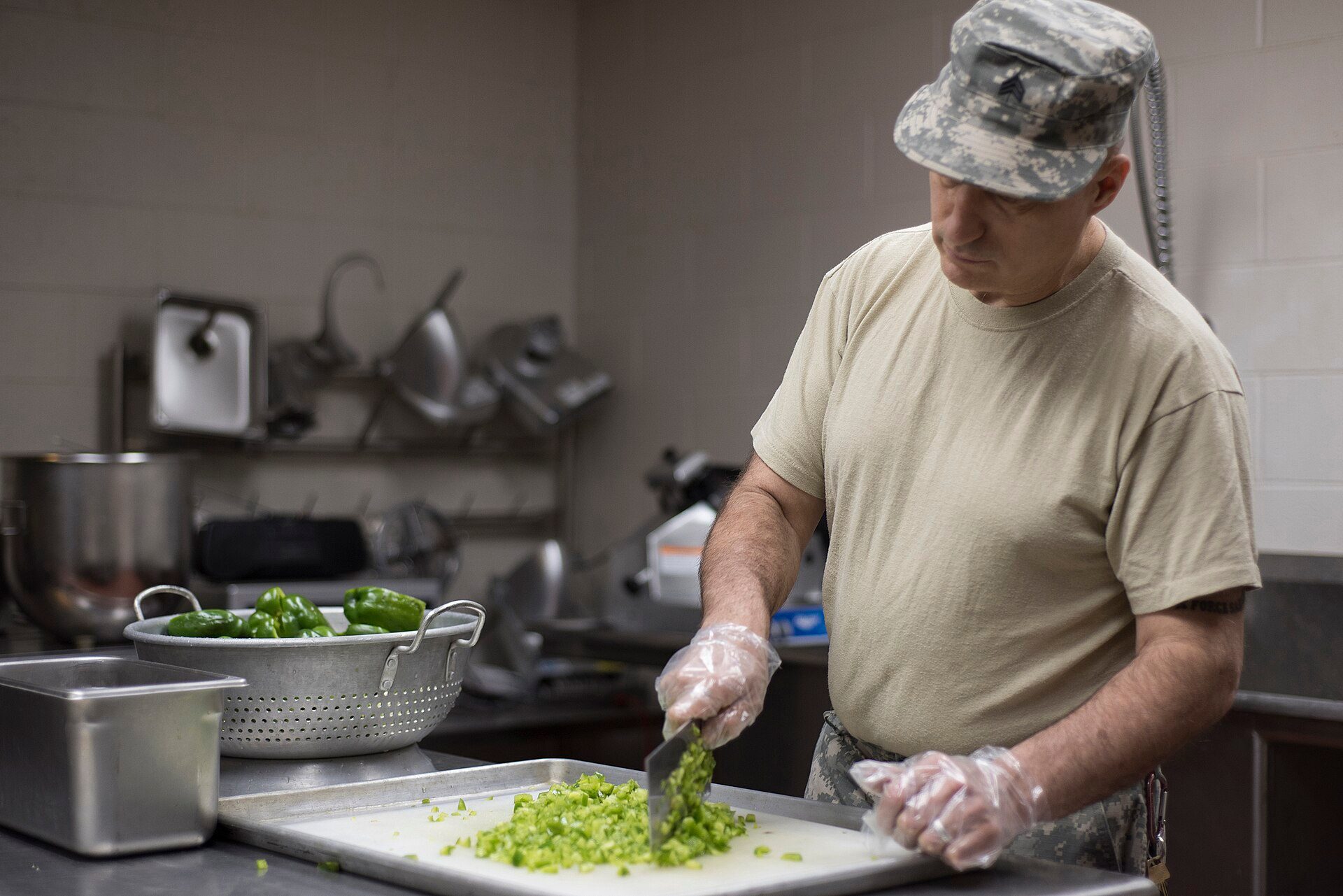
Photo: Tech. Sgt. Sarah Mattison / Wikimedia Commons, Public domain
Documents you will usually be asked for
Your ID card, a short CV or personal record, and a valid health check certificate. Many food businesses in Vietnam require staff who handle food directly to have a certificate of food safety knowledge and regular health checks; the exact requirements may differ by type of business and change over time, so ask the employer and the local food safety authority about the current rules.
The skills test: practising the 60-minute exam
At the last step of the roadmap you test yourself as if it were a real trial shift. Many kitchens run trials exactly like this: hand you ingredients, give you tasks and watch you work.
Practical tasks
- Cut 3 vegetables: carrot julienne, diced onion, evenly sliced potato (about 300 g of each).
- Clean 1 fish of about 1 kg: scale, gut, remove the gills, rinse, then cut into steaks or fillet as asked.
- Clean 500 g of prawns: peel, leave tails on if asked, remove the vein.
- Clean your station, wash knife and boards, weigh the waste and record the results.
Marking criteria
- On time: all 4 tasks done in 60 minutes.
- Correct technique: even cuts; fish free of scales, gills and blood; prawns fully deveined.
- Safety and hygiene: colour-coded boards (raw, cooked, vegetables), knives kept in their place, no cuts to yourself, raw salad vegetables kept away from raw fish.
- Reasonable waste: trimmings within the level the head chef sets.
Theory quiz
Revise 10–15 questions: the 6-step handwash, fridge and freezer temperatures, FIFO, safe thawing in the fridge, dealing with a pan of oil on fire, what to do if you smell gas, first aid for cuts and burns.
Safety warning: Knives, gas, hot oil and slippery floors are a kitchen assistant's four main sources of accidents. Always cut with the blade moving away from you, fingers curled in a "claw", never try to catch a falling knife, and leave knives on the board rather than hidden in a sink of water. If you smell gas: close the valve, open the doors, do not light a flame or touch electrical switches, and tell the person in charge. If a pan of oil catches fire: turn off the heat, cover it with a lid or fire blanket, and never throw water on it. Wear non-slip shoes and wipe up water and oil spills immediately. A deep cut that keeps bleeding after about 10 minutes of firm pressure, a gaping cut, loss of feeling in a finger, or a burn larger than the palm or with large blisters needs a medical facility straight away. Report any cut or burn to the head chef, cover it with a waterproof dressing and wear a glove before handling food again.
How to get a kitchen assistant job
Kitchen assistants are hired constantly, so there are plenty of openings; your job is to choose the right place and show you are reliable during your first trial.
Where to look
- Hospitality job sites and recruitment groups, and general job boards for entry-level work.
- Ask in person at busy eateries near where you live during quiet hours (around 14:00–16:00).
- Hotel HR departments, industrial catering companies, and vocational schools that offer job placement.
Application and interview
Keep your CV to one page: the prep skills you have practised, your health check certificate, food safety certificate (if you have one), when you can work (split shifts, weekends, holidays) and where you live. Common questions: "Can you work split shifts and weekends?", "What cuts have you done?", "What do you do if you smell gas?", "Do you plan to stay in kitchens long-term?". Answer honestly and briefly, then ask about probation pay, full pay, meals and housing, days off and the contract.
Trial shifts and warning signs
For a trial shift, arrive 15 minutes early in non-slip shoes, with hair tied back and nails short. Follow instructions exactly, ask when unsure, and clean your station before you leave. Be wary of anyone who asks for a deposit or placement fee, wants to keep original documents such as your ID card, or promises unusually high pay with nothing in writing; turn these down or ask someone experienced first.
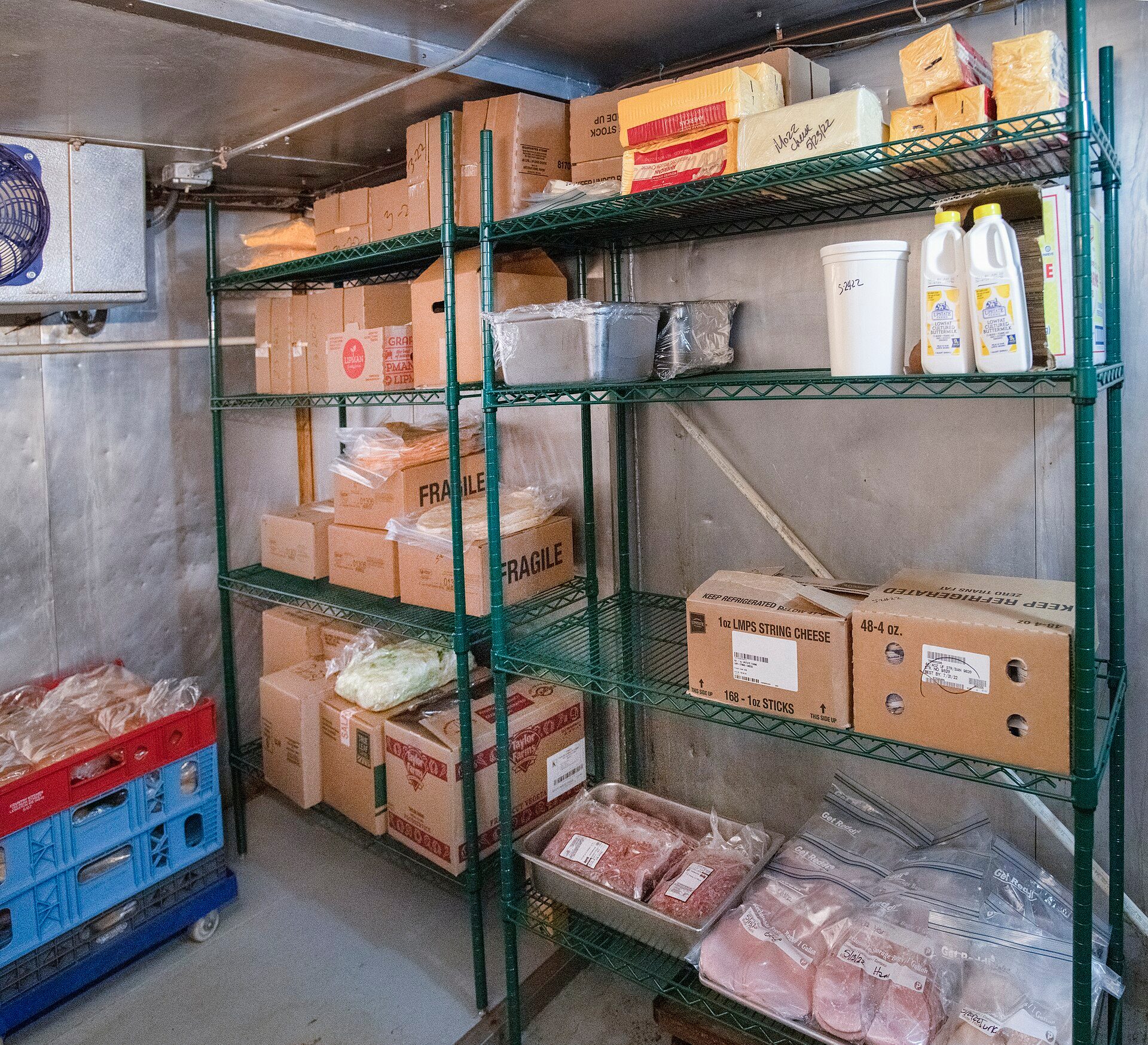
Photo: USDAgov / Wikimedia Commons, Public domain
Frequently asked questions
What tasks does a kitchen assistant do?
Receiving and storing goods; prepping vegetables, meat, fish and seafood; making stocks, sauces and seasonings from the prep list; restocking the hot line during the rush; washing equipment and cleaning the kitchen at the end of the shift. In small eateries they may also wash dishes.
How much does a kitchen assistant earn in 2026?
As a 2026 reference for Vietnam, varying by region and workplace: newcomers earn about 5–7 million VND a month, often with meals; experienced assistants or prep leads about 8–12 million VND. Compare what is left after food and housing, not just the wage.
How long does it take to become a kitchen assistant?
A complete beginner usually needs about 1–3 months of on-the-job learning or a short course to handle basic prep confidently. Learn food safety and knife and gas safety before your first day.
Do you need experience to get a kitchen assistant job?
Many places hire people without experience, especially industrial canteens and busy eateries. Having a health check certificate ready, basic knife skills and food safety knowledge helps you get hired faster and on better probation pay.
Is the job suitable for women?
Yes; many canteens and restaurants have female kitchen assistants. Some tasks, such as moving large pots and heavy boxes, should be done by two people or with a trolley, for men and women alike.
Practice tasks and self-assessment
- Time the 60-minute test at home with vegetables, 1 fish and 500 g of prawns; record the time for each part and the weight of waste.
- Write a one-page CV following the guidance in the job-hunting section.
- Build a "left each month" table for two real workplaces in your area, following the worked example.
- Ask a friend or relative to play the head chef and interview you with the 5 questions above.
Self-assessment criteria
- Pass: the test is finished within 60 minutes, cuts are even, fish and prawns are clean, and you did not cut yourself.
- Pass: you can explain how to handle a gas smell, an oil fire and a burn without looking anything up.
- Pass: your comparison of two offers adds up and covers meals, housing, days off and the contract.
- Not yet: over 75 minutes, one board shared for raw meat and raw salad vegetables, or choosing a job only by the wage figure.
This is the final step of the kitchen assistant roadmap. To revise, go back to the step "Project: prepping for a 100-meal service" and repeat it with a different menu, aiming for less waste than last time. Once you are settled in a job, the natural next step is learning to cook so you can become a cook; you could start with a foundation of Vietnamese cooking such as making pho beef broth for a restaurant.
Learn kitchen assistant work properly: 8 steps from food safety, knife and gas safety, receiving goods, prep and mise en place to a 100-meal project and getting hired. See the 8-step kitchen assistant roadmap.