Safe waterproofing work means three things before you open a tin: read the label and safety data sheet to know where the material's hazards lie, wear the right gloves, goggles and organic vapour respirator, and prepare for fire and falls if you will be torching membrane or working on a roof or rooftop terrace without a parapet. Waterproofers work with PU, epoxy, flammable solvents, open-flame gas torches and high roof edges, yet many beginners only learn "apply a few coats" and skip this part. This first lesson of the roadmap helps you read chemical labels, choose protective equipment, use a gas torch and a safety harness properly, and gives you a checklist you can use on site straight away.
By the end of this lesson, you will be able to:
- Read the label and safety data sheet (SDS) of a waterproofing product, recognising the hazard pictograms and the first-aid section.
- Choose the right gloves, eye protection and vapour respirator for PU, epoxy, solvents, cement-based materials and bitumen.
- Check, operate and shut down a gas torch safely, with a fire watcher and an extinguisher in place.
- Wear a full-body harness, choose a solid anchor point and organise work on roofs and terraces without a parapet.
- Prepare a pre-shift checklist and budget the protective kit for a two-person crew, with figures that add up.
Just starting as a waterproofer? Chemical, torch and roof safety is step 1 of the 8-step roadmap, before diagnosing leaks and the material systems. See the waterproofing specialist roadmap to learn in the right order.
Three groups of hazards for waterproofers
A day of rooftop waterproofing can include chipping and grinding concrete, brushing on a solvent-based primer, torching bitumen membrane and hauling 30–40 kg rolls up to the roof. Each job carries a different kind of hazard.
Chemicals
One- and two-component PU (polyurethane), epoxy, solvent-based primers, hardeners and joint sealants can all irritate skin, eyes and airways; some ingredients of PU and epoxy can sensitise the body after repeated contact, so that later even a little exposure causes a rash or breathing trouble. Cement-based materials are alkaline and cause chemical burns if left on skin. Molten bitumen during torching causes heat burns.
Fire and explosion
A gas torch uses a very hot open flame, the gas cylinder is under pressure, and the solvents in primers and cleaners are highly flammable. Torch flame can catch the foam insulation under metal roofing, plastic pipes, cables or curtains on the floor below without the crew seeing it, and smoulder after everyone has left.
Heights and weather
Rooftop terraces and flat roofs on Vietnamese town houses often have no parapet or only a low one. Waterproofers walk backwards while rolling or brushing and keep their eyes on the surface, so it is easy to step off an edge. Midday sun on a concrete roof, slippery rain and strong wind all increase the risk.
Hazard and main control table
| Hazard group | Typical situation | Main controls |
|---|---|---|
| Chemicals | Mixing PU or epoxy; brushing solvent primer in a closed room | Read label and SDS; nitrile gloves, goggles, vapour respirator; ventilation |
| Cement alkalinity | Mixing and brushing cement-based products | Gloves, goggles, long sleeves; wash skin at once |
| Fire and explosion | Torching bitumen membrane, solvents near a flame | Gas leak check, fire watcher, extinguisher, watch after torching |
| Falls from height | Terraces and flat roofs without a parapet | Full-body harness, solid anchor, never work alone at the edge |
| Heat and weather | Working at midday, in rain or strong wind | Avoid peak sun, rest in shade, drink water, stop in rain or wind |
Read the label and safety data sheet before opening the tin
Each waterproofing product has its own safe-use rules, and the manufacturer has printed them on the label. The habit of reading the label before opening a tin lets you choose the right protection and know the first aid if something goes wrong.
What is on the label
- Hazard pictograms (red-bordered diamonds): a flame means flammable; an exclamation mark means irritant or harmful; a person with a star on the chest means a long-term health hazard such as respiratory sensitisation; the corrosion symbol means skin burns and eye damage.
- Signal word: "Danger" is more serious than "Warning".
- Hazard and precautionary statements: for example, do not breathe vapour, wear gloves, what to do if it gets in the eyes.
- Shelf life, mixing ratio and working time for two-component products.
The safety data sheet (SDS)
A safety data sheet (SDS, also called MSDS) is a multi-page manufacturer's document for each product. Ask the supplier or download it from the maker's website and keep a copy on your phone. At minimum read the sections on hazard identification, first aid, firefighting, personal protective equipment, storage and disposal. If the label or SDS is only in a foreign language, get someone to translate these sections before use.
Notes by material group
- Solvent-based PU and PU containing isocyanates: vapour can cause respiratory sensitisation; ventilate, wear a vapour respirator, no eating, drinking or smoking while working.
- Epoxy: repeated skin contact easily causes skin allergy; nitrile gloves, keep it off your skin, wash with soap rather than solvent.
- Solvent-based primers and thinners: highly flammable, heavy vapour spreads along the floor; no flames in the area.
- Cement-based materials: alkaline; goggles and gloves are compulsory when mixing with a paddle mixer.
Protective equipment: gloves, goggles, vapour respirators
Protective equipment only works if it is the right type. Cloth masks and surgical masks do not stop solvent vapour; knitted gloves do not stop epoxy.
Choosing protection by material
| Material / task | Gloves | Eyes | Breathing |
|---|---|---|---|
| Cement-based (mixing, brushing) | Nitrile or rubber | Sealed goggles when mixing | Dust mask when pouring powder |
| PU, epoxy, solvent primer | Thick nitrile | Sealed goggles | Half-mask with organic vapour cartridges |
| Torch-on bitumen membrane | Heat-resistant leather | Safety glasses | Stand upwind, avoid breathing fumes |
| Chipping, grinding concrete | Cloth or leather | Sealed goggles | Fine dust mask |
Organic vapour respirator
A half-mask respirator has two filter cartridges, one on each side, as in Figure 1. Organic vapour cartridges are for solvent vapour; dust filters only stop dust, not vapour. Every time you put it on, cover both cartridges with your palms and breathe in gently: if the mask pulls tight to your face, it seals. A thick beard breaks the seal. Cartridges have a limited life; if you can smell solvent through the mask, it is time to change them. Store the mask in a sealed bag, not hanging next to solvent tins.
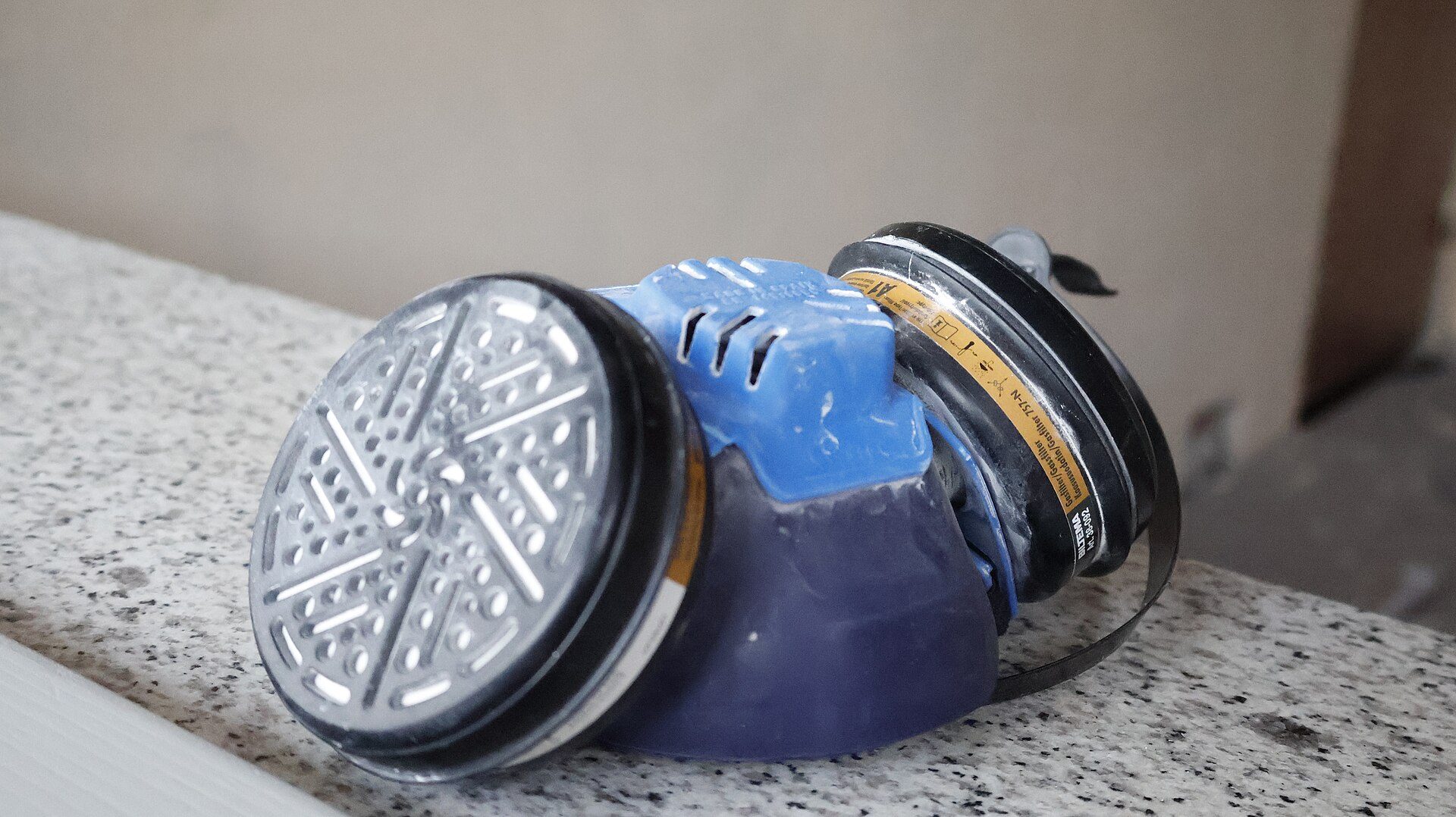
Photo: Kent Madsen / Wikimedia Commons, CC BY-SA 2.0
Clothing and footwear
Long sleeves, long trousers and a cloth hat when working in the sun. Safety shoes with non-slip, closed toes; never flip-flops on a roof or on freshly primed floors. Wash chemical-stained clothes separately rather than mixing them with the family's laundry.
Using a gas torch safely
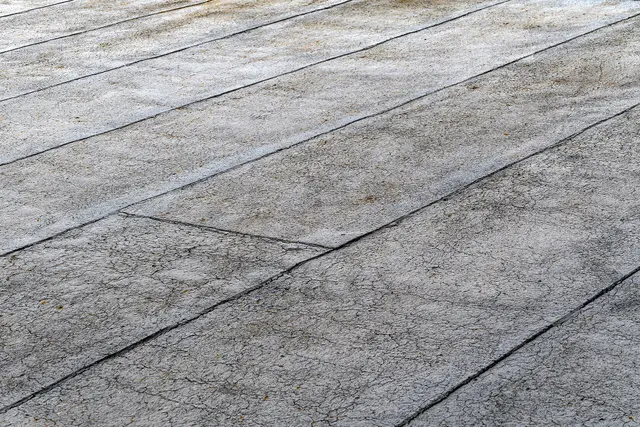
Torching bitumen membrane is the most fire-intensive job in the trade: the torch heats the underside of the roll so the bitumen melts and bonds to the substrate, as in Figure 2. The flame is right at floor level and the operator is focused on the membrane edge, so it is easy to forget the surroundings.
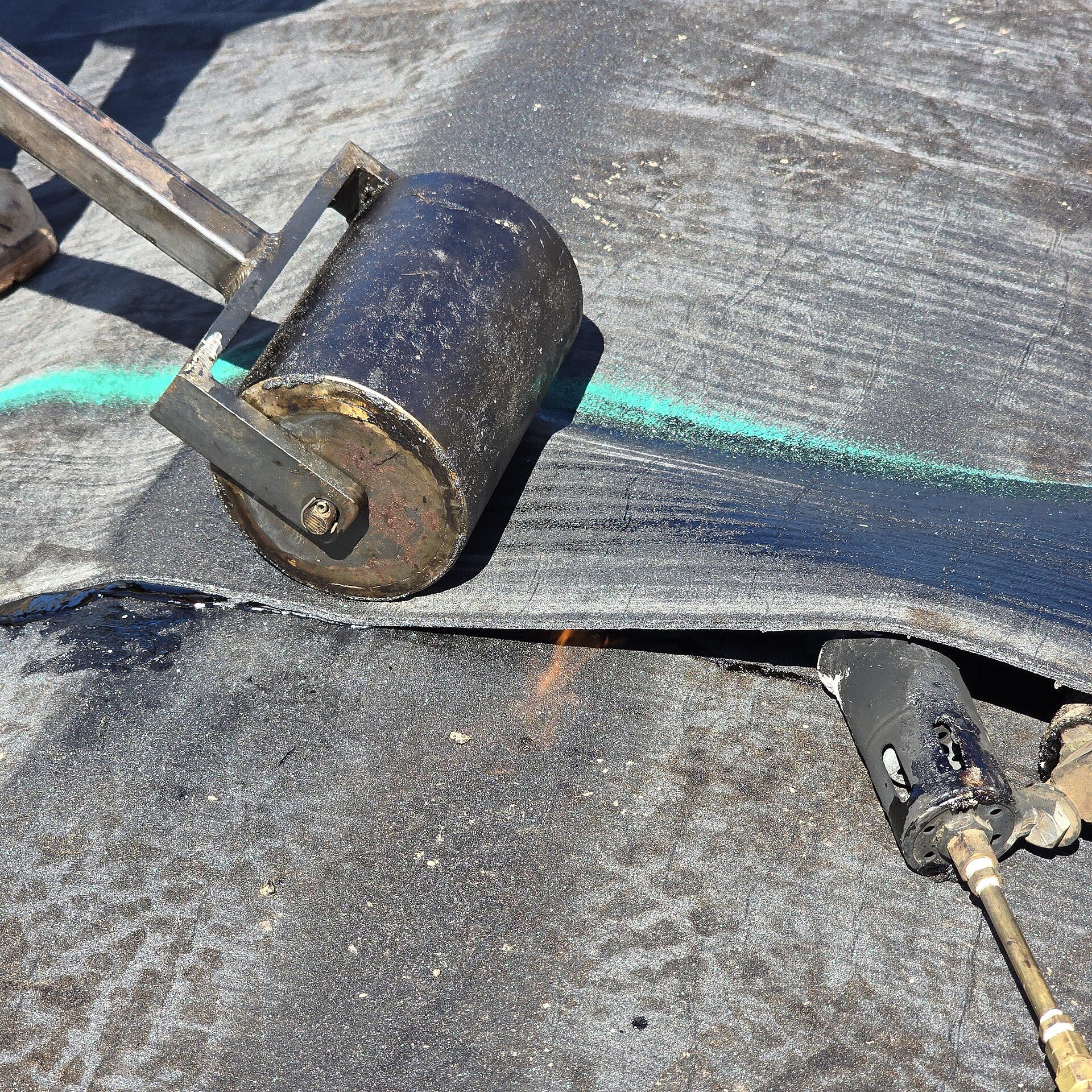
Photo: Pathfounder / Wikimedia Commons, CC0
Checks before each shift
- Check the gas hose for cracks or bulges and that both ends are clamped tight; the regulator and torch head are not dented.
- Open the valve and spray soapy water on every joint: bubbles mean a leak, so close the valve and repair it. Never use a flame to look for leaks.
- Stand the gas cylinder upright on a level spot, away from the torching area and away from the roof edge (Figure 3).
- Clear flammables: solvent tins, rags, foam, cardboard; shield plastic pipes, cables and solar water heaters.
- Put an extinguisher on the roof and assign one person as fire watcher.
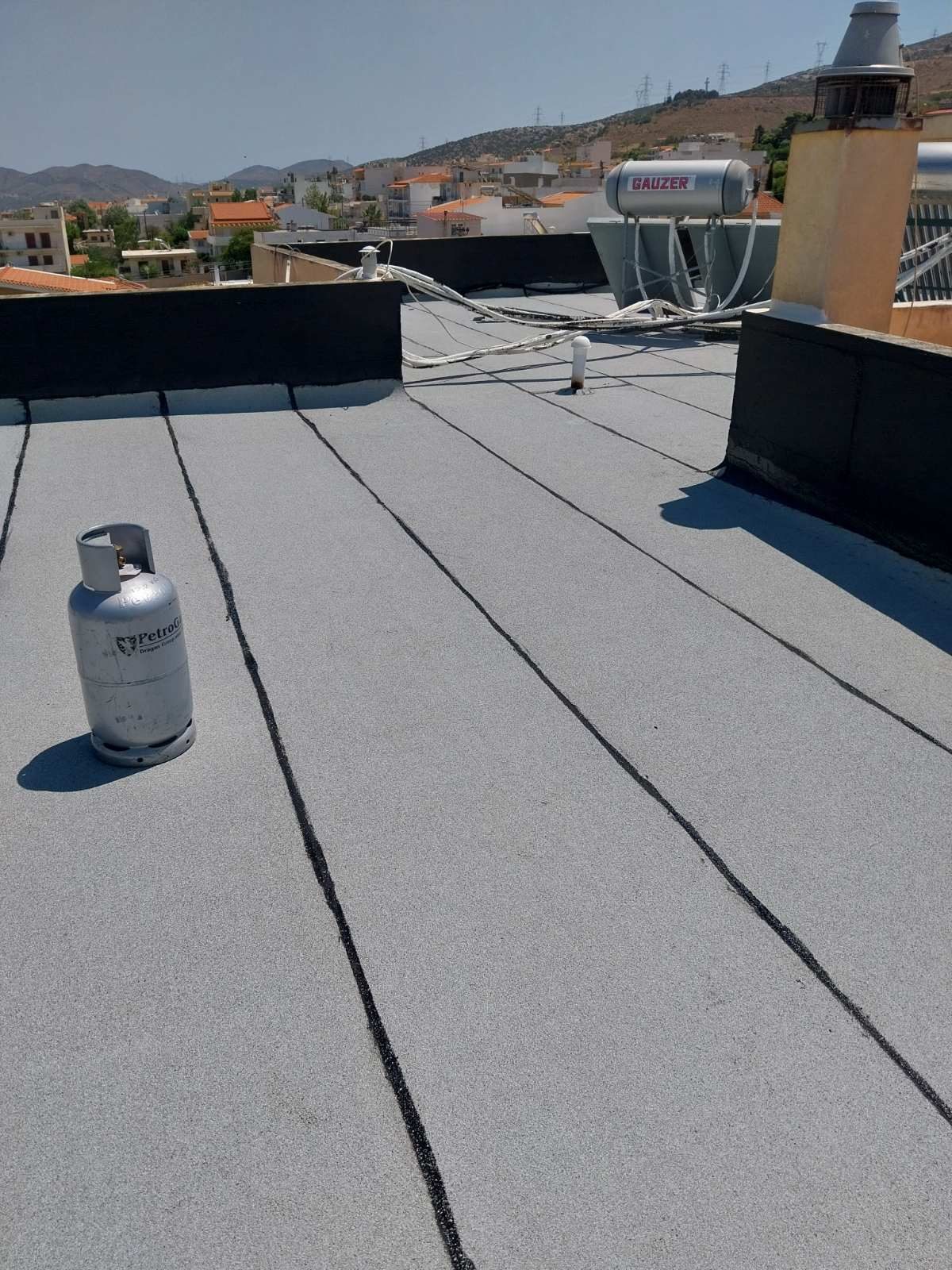
Photo: Μάριος-Μητσόγλου / Wikimedia Commons, CC BY-SA 4.0
While torching
Light the torch as its instructions describe, point the flame down at the membrane and never towards the cylinder, the hose or a person. Do not torch over a solvent primer that is not fully dry. Near wall bases, pipe penetrations and gaps under metal roofing, turn the flame down and shield the area, because flame easily gets into places you cannot see. Rest a lit torch on its stand, never lying on the membrane.
After torching
Close the cylinder valve first, let the torch flame burn off the gas left in the hose until it goes out, then close the torch valve. Watch the whole area for at least 30–60 minutes, looking and feeling carefully at wall bases, roof gaps and where the roof meets metal sheeting. Store the cylinder upright in a ventilated place, never in a closed room or in strong sun.
Working on roofs and terraces without a parapet
Falls from height kill. A terrace three to five storeys up on a town house is high enough for one misstep to become a serious accident.
Full-body harness and anchor points
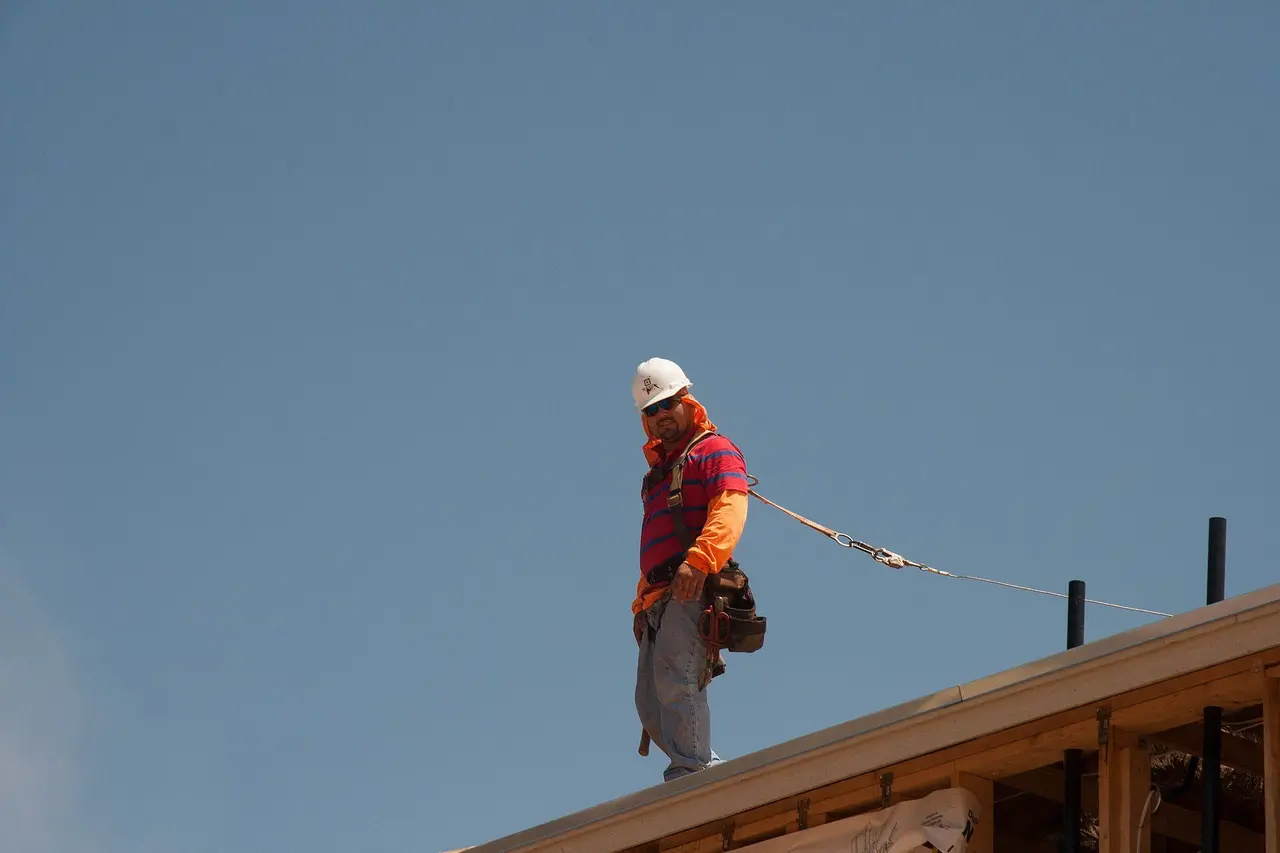
When the parapet is lower than about 1 m or there is none, wear a full-body harness (with shoulder and leg straps) and clip the lanyard to a solid anchor such as a concrete column, a beam or a purpose-made anchor, like the worker in Figure 4. Never anchor to water pipes, stainless water tank legs, rusty railings or laundry frames. Adjust the lanyard short enough that you cannot reach the edge if possible. Inspect straps, buckles and lanyard before every shift; replace a harness that has arrested a fall.
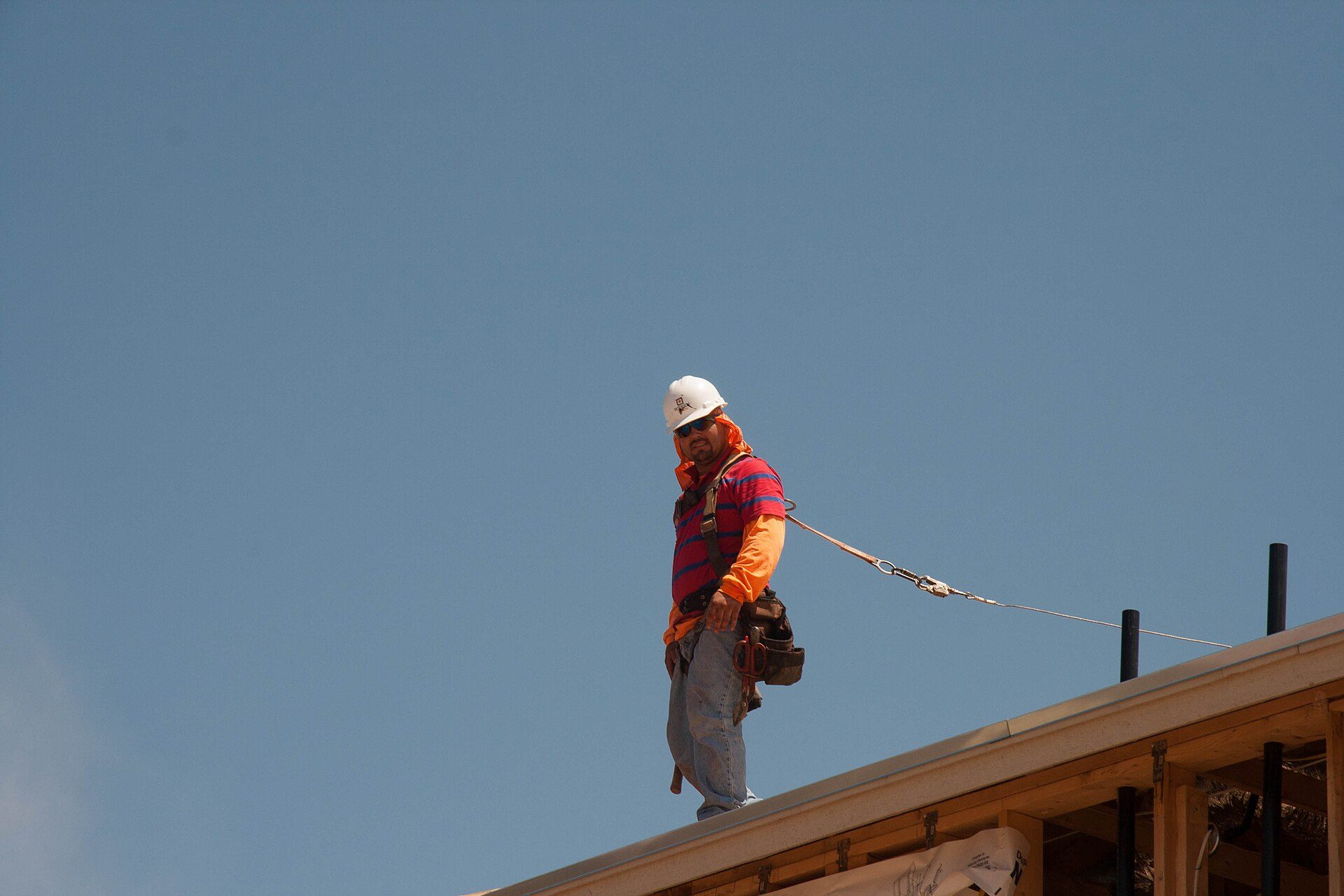
Photo: National Institute for Occupational Safety and Health (NIOSH) from USA / Wikimedia Commons, Public domain
Fall-prevention habits
- Mark a line or string a warning rope about 2 m from the roof edge; anyone working beyond it must be clipped on.
- Roll and brush while moving towards the inside, never walking backwards towards the edge.
- Never leave an apprentice working alone on a terrace without a parapet.
- Move membrane rolls and material tins with a pulley or by the internal stairs, with someone keeping the area below clear.
Heat, rain and wind
In Vietnam a concrete roof at midday in summer is extremely hot. Schedule heavy work for early morning and late afternoon, rest in the shade and drink water regularly. Dizziness, nausea, hot red skin and confusion are signs of heatstroke: move the person somewhere cool, cool them down and call 115 (ambulance) if it is serious. Stop work in rain, on wet slippery roofs or in strong wind. Figure 5 shows a common mistake: wearing flip-flops on a roof with no parapet.
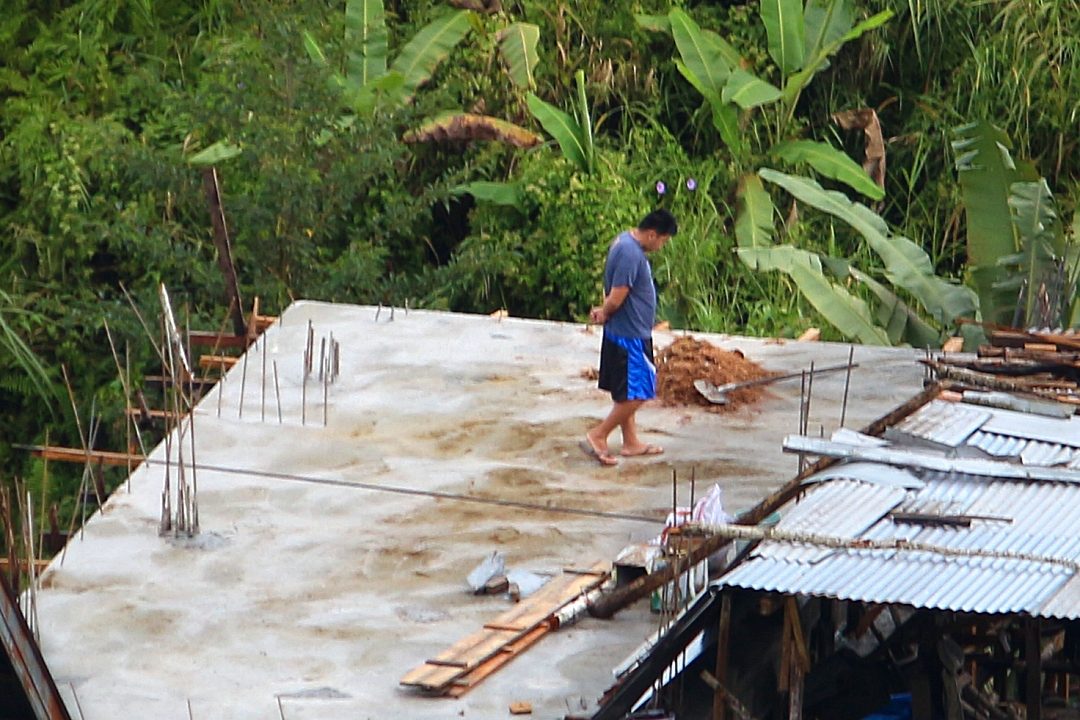
Photo: Marek Ślusarczyk ( Tupungato ) Photo portfolio / Wikimedia Commons, CC BY 3.0
Storage, cleaning and disposal
Storing materials
Keep PU, epoxy and solvent tins in a cool, shaded, ventilated place with lids closed, away from flames and out of reach of the owner's small children. Never decant solvent into drinking bottles.
Empty tins, rags and leftovers
Empty chemical tins, solvent-soaked rags and hardened leftover material are waste that needs separate handling; do not pour it into drains and do not burn it. Solvent-soaked rags catch fire very easily: put them in a metal bin with a lid, keep them away from flames and dispose of them as the disposal section of the SDS says. Ask your local waste collection service and check the current regulations.
Personal hygiene
Wash hands and face with soap before eating or drinking and before going home; never use petrol or solvent to clean your hands.
Safety warning and first aid: Always read the label and safety data sheet before using a new product. Chemical in the eyes: rinse with clean running water for at least 15 minutes, remove contact lenses if any, and see a doctor immediately. On skin: wipe off, wash with soap and plenty of water; blistering or lasting burning pain needs a doctor. Dizziness or nausea from solvent vapour: get to fresh air at once; breathing difficulty or fainting means calling 115 (ambulance). Burns from the torch flame or hot bitumen: cool with clean water, do not peel bitumen off the skin, and go to a medical facility. A spreading fire or a gas leak you cannot shut off: evacuate and call 114 (fire). A parapet below about 1 m or none: a full-body harness on a solid anchor is compulsory. People with a history of asthma or allergies should ask a doctor before working regularly with PU or epoxy.
Worked example: safety preparation for a 40 m² terrace
A two-person crew is waterproofing a 40 m² rooftop terrace on a four-storey town house, with a 0.6 m masonry parapet and the neighbour's metal roof right against the west wall. The system is a solvent-based primer followed by torch-on bitumen membrane; for the full method see the lesson rooftop waterproofing: materials, method and a sample quote. Here we cover only the safety part.
Quick on-site assessment
- Parapet 0.6 m, lower than about 1 m: both workers wear harnesses, anchored to the two concrete columns of the stair housing.
- The neighbour's metal roof has foam insulation: along the 1 m strip by the west wall, torch with a small flame behind a shield, with the fire watcher standing on that side.
- Solvent primer: brush it in the morning, let it dry as the maker instructs, torch in the afternoon; no flames while priming.
- Ask the owner to close the fourth-floor windows and keep small children off the terrace.
Protective kit cost for a two-person crew (2026 reference prices, varying by region and product)
| Item | Quantity × unit price | Amount |
|---|---|---|
| Half-mask + organic vapour cartridges | 2 × 450,000 VND | 900,000 VND |
| Replacement cartridges (pair) | 2 × 150,000 VND | 300,000 VND |
| Sealed safety goggles | 2 × 80,000 VND | 160,000 VND |
| Thick nitrile gloves (box) | 1 × 200,000 VND | 200,000 VND |
| Heat-resistant leather gloves for torching | 1 pair × 150,000 VND | 150,000 VND |
| Full-body harness + lanyard | 2 × 1,200,000 VND | 2,400,000 VND |
| Dry powder extinguisher, 4 kg | 1 × 300,000 VND | 300,000 VND |
| Soapy water spray bottle for leak checks | 1 × 30,000 VND | 30,000 VND |
| Non-slip safety shoes | 2 × 350,000 VND | 700,000 VND |
| Total | 5,140,000 VND | |
Check: 900,000 + 300,000 + 160,000 + 200,000 + 150,000 + 2,400,000 + 300,000 + 30,000 + 700,000 = 5,140,000 VND (about 200 USD). Most items last many jobs; cartridges and nitrile gloves are consumables and should be included in each job's cost when quoting.
Pre-shift checklist taped inside the toolbox lid
- Labels read and SDS available for today's materials.
- Masks seal, cartridges in date; gloves and goggles for both workers.
- Gas leak test with soapy water: pass. Extinguisher on the roof, gauge in the green.
- Harnesses inspected, anchor points chosen.
- Forecast: no rain, no strong wind; drinking water and a shaded rest spot ready.
Common beginner mistakes
Wearing a surgical mask while applying PU in a closed room
Sign: dizziness and headache after a session. Cause: the mask does not filter vapour, and the room is not ventilated. Fix: a respirator with organic vapour cartridges, open the doors, use a fan to push air outside, work in short spells.
Torching while the primer is still wet
Sign: flames flare up as the torch comes close. Cause: solvent vapour from the primer has not evaporated. Fix: wait for it to dry as the maker instructs and check it is touch-dry before torching.
Clipping the harness to a water pipe
Sign: the lanyard is clipped to a plastic pipe or the leg of a stainless water tank because it is handy. Fix: anchor to a concrete column, beam or purpose-made anchor; if there is none, set up a solid temporary anchor before approaching the edge.
Leaving the site right after torching
Sign: that evening the owner reports a burning smell at the base of a wall. Fix: always watch for 30–60 minutes after torching, checking carefully where the roof meets metal sheeting and wall gaps.
Frequently asked questions
Is PU waterproofing toxic?
PU, especially solvent-based types, gives off irritating vapour, and some ingredients can cause respiratory sensitisation after repeated exposure. Once it has dried and fully cured as the maker specifies, vapour drops greatly. Applicators need ventilation, a vapour respirator, gloves and the SDS of the exact product.
Which mask should I use for waterproofing?
For PU, epoxy and solvent primers: a half-mask with organic vapour cartridges. For chipping, grinding and pouring cement powder: a fine dust mask. Cloth and surgical masks are not enough.
When is a harness compulsory on a rooftop terrace?
When working near an edge where the parapet is lower than about 1 m or absent, on pitched or metal roofs, or when you must lean out to deal with edges and gutters. Vietnam has specific regulations on occupational safety for work at height; check the current documents and the client's requirements.
What should I do if epoxy or PU gets on my skin?
Wipe off as much as possible with a dry rag, then wash with soap and plenty of water; do not use solvent on skin, because it drives the chemical in deeper. A spreading rash, itching or breathing difficulty needs a doctor.
Practice tasks and self-assessment
- Take two waterproofing products from a store or warehouse (one cement-based, one PU or epoxy), photograph the labels and note the pictograms, signal word and first-aid instructions.
- Find the SDS of one product and summarise five sections: hazards, first aid, firefighting, protection, storage.
- With a senior waterproofer supervising, test for gas leaks with soapy water and practise shutting down the torch in the correct order.
- Survey a real rooftop terrace and mark anchor points, the edge warning line and where the gas cylinder and extinguisher go.
Self-assessment criteria
- Pass: you read the pictograms correctly and choose the right gloves, goggles and cartridges for each material.
- Pass: you test for leaks without a flame; you shut down the torch with the cylinder valve first and the torch valve last.
- Pass: your anchor is a column, beam or purpose-made anchor; the harness is inspected before the shift.
- Not yet: you use a surgical mask for PU, torch over wet primer, or work at the edge without clipping on.
Once you can work safely with chemicals, flame and heights, move on to the next step of the roadmap: Diagnosing leaks & site surveys, where you learn to find exactly where water gets in before choosing a material. Bathrooms are the most common source of leaks; you can read the lesson bathroom waterproofing: materials, method and the ponding test in advance.
Keep learning waterproofing: after safety come leak diagnosis, cement-based waterproofing and pipe penetrations, bathrooms, rooftop torch-on membrane and PU, walls and PU injection. See the 8-step waterproofing specialist roadmap.