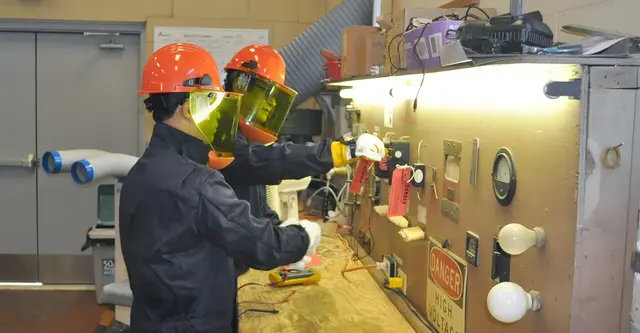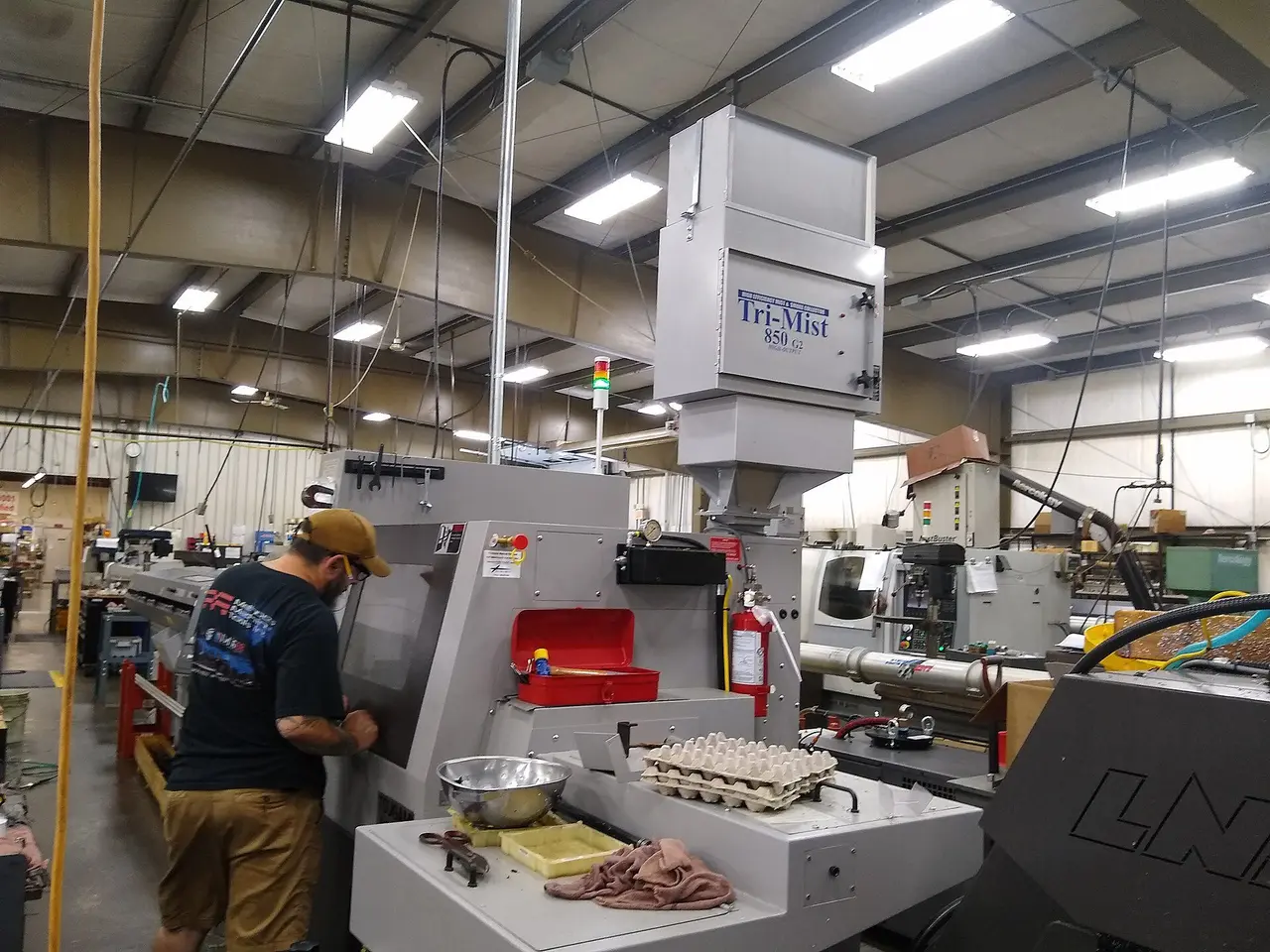
CNC machine safety comes down to one principle: never let any part of your body, clothing or gloves near the spindle, chuck or tool while the machine is turning, and always know how to stop the machine within a second. Most accidents in a CNC shop are not caused by broken machines but by small habits: clearing chips with cotton gloves, leaving the chuck key in the chuck, opening the door before the spindle has fully stopped, running a new program at full speed. This is the first lesson to read before you stand at a machine, written the way a senior machinist briefs a newcomer, with a start-of-shift checklist you can use straight away.
By the end of this lesson, you will be able to:
- Choose the right protective equipment at the machine and explain why gloves are not worn near rotating parts.
- Use the emergency stop, feed hold and door interlock correctly, and know which one to press when.
- Check workholding, tools and the chuck key before pressing start.
- Handle hot, sharp chips and coolant safely for your skin, your eyes and the shop floor.
- Do 5S at the machine and run start-of-shift and end-of-shift checklists in about 15–20 minutes.
Just starting out as a CNC machinist? Machine tool safety is step 1 of the roadmap, before drawings, measuring tools, cutting tools and G-code. See the 8-step CNC machinist roadmap to learn in the right order.
Why do CNC machines with guard doors still cause accidents?
A CNC (computer numerical control) machine runs from a program, so many beginners think closing the door makes it safe. In reality the operator opens the door many times per shift to load parts, measure, change tools and clear chips; at those moments the spindle may still be coasting and the chips are still hot and sharp.
Five main hazards at the machine
- Entanglement: a rotating spindle, chuck or tool can pull in gloves, sleeves, long hair or a necklace in a fraction of a second.
- Ejection: chips, pieces of a broken tool and loosely clamped parts can fly out at very high speed.
- Cuts and burns: fresh steel chips are razor sharp and hot; undeburred part edges cut hands.
- Chemicals and slips: coolant irritates the skin, oil mist hangs in the air, oily floors cause falls.
- Machine crashes: a wrong work offset or tool offset drives the tool into the vise or chuck; fragments fly and the machine is badly damaged.
Automatic does not mean you can look away
One person often runs 1–3 machines and is responsible for listening to the cut, watching the chips and stopping the machine when something is unusual: squealing, heavy vibration, chips turning blue or purple, smoke.
What an apprentice is allowed to do
In the first weeks, a newcomer usually only loads parts on a proven program, measures parts and clears chips with a senior machinist nearby. Do not edit programs or change tool offsets on your own.
The right protective gear: why no gloves near rotating parts
Protective equipment in a CNC shop differs from a welding shop or a construction site. The best-known rule, and the most often broken: do not wear gloves near anything that is rotating.
Gloves: when they are banned and when you should wear them
A cotton or knitted glove caught by a chuck or drill drags the whole hand in before you can pull away. A bare hand touching a rotating part usually gets a scrape; a caught glove can break or sever fingers. So:
- No gloves while the machine is running and your hands are near the cutting zone, when jogging with the handwheel (MPG), and on drill presses and manual lathes.
- Cut-resistant gloves once the spindle has fully stopped: carrying sharp parts, gathering chips, changing multi-flute cutters.
- Nitrile gloves for wiping the machine and topping up or mixing coolant, with the machine stopped.
Glasses, shoes, hearing and clothing
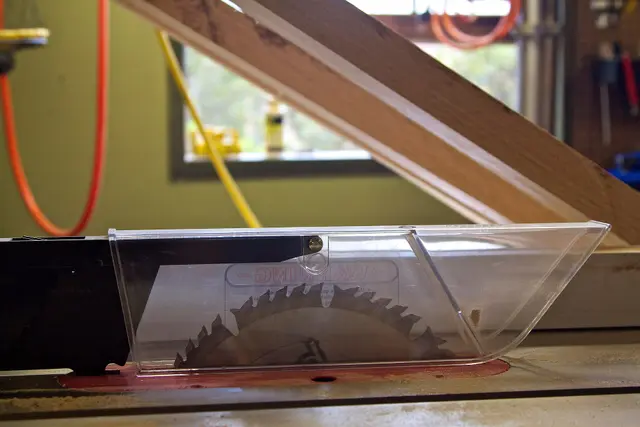
Safety glasses with side shields are mandatory in the machine area, even when the door is closed (Figure 1), because you still open doors, use air guns and stand next to other people's machines. Oil-resistant, slip-resistant steel-toe shoes protect your feet from dropped parts and vises. Earplugs or earmuffs are needed in noisy areas, especially near bar-fed lathes and air compressors. Keep clothing close-fitting, sleeves buttoned or rolled tight, and no loose jackets.
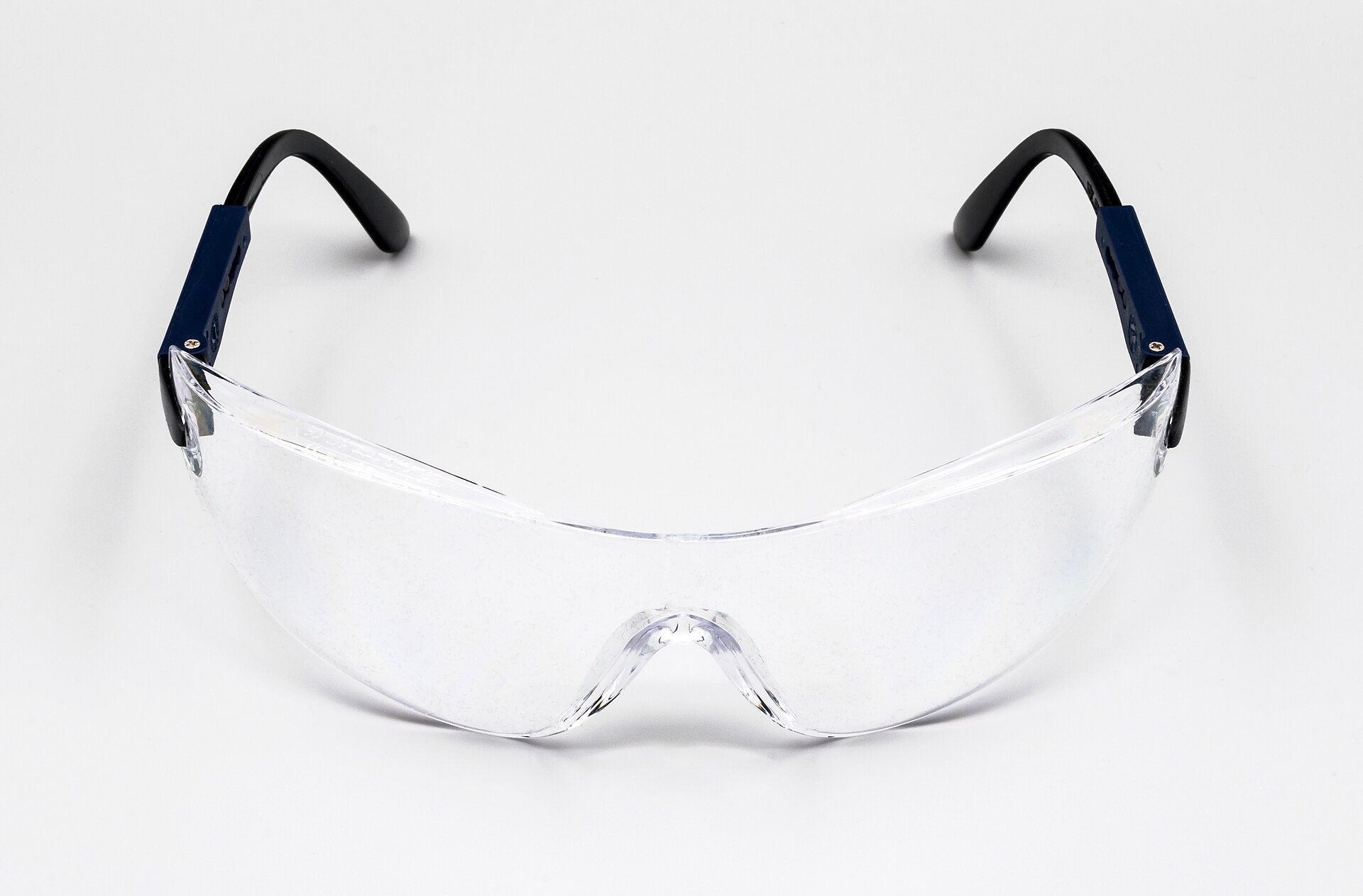
Photo: Jacek Halicki / Wikimedia Commons, CC BY-SA 4.0
Hair, jewellery and phones
Tie long hair up inside a cap. Remove rings, bracelets, watches and necklaces before the shift: a ring caught on a part edge can strip the skin off a finger. Do not text while watching a machine.
Summary of protective equipment at a CNC machine
| Equipment | When to use | Notes |
|---|---|---|
| Safety glasses with side shields | The whole time in the machine area | Replace when scratched; over-glasses type if you wear prescription glasses |
| Steel-toe shoes, oil-resistant soles | All shift | No sandals or canvas shoes |
| Earplugs, earmuffs | Noisy areas, bar-fed lathes, compressors running | Do not reuse disposable earplugs |
| Cut-resistant gloves | Spindle stopped: sharp parts, chips, tool changes | Take them off before running the machine |
| Nitrile gloves | Wiping the machine, mixing coolant | Never while the machine is turning |
| Cotton or knitted gloves | Not used at CNC machines | The easiest to get caught |
Emergency stop, guard doors and test runs
Before you are allowed to press Cycle Start, you must be able to find these three controls without looking: emergency stop, feed hold and the override knobs.
Three ways to stop the machine
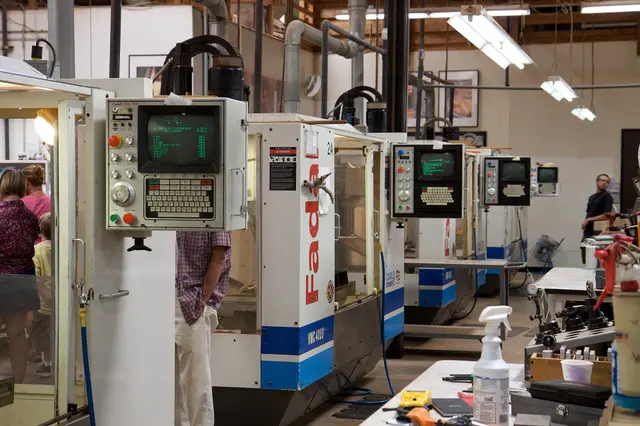
- Emergency stop (E-stop): the red mushroom button on a yellow background (Figure 2). It cuts motion immediately; use it when someone is in danger, a crash is about to happen, or there is smoke or fire. Afterwards the machine usually has to be reset and re-homed.
- Feed hold: stops the X, Y and Z axes, but the spindle may keep turning. Use it when you doubt a toolpath or want to check coordinates.
- Override knobs: reduce the feed rate and rapid speed. Use them when proving out a new program.
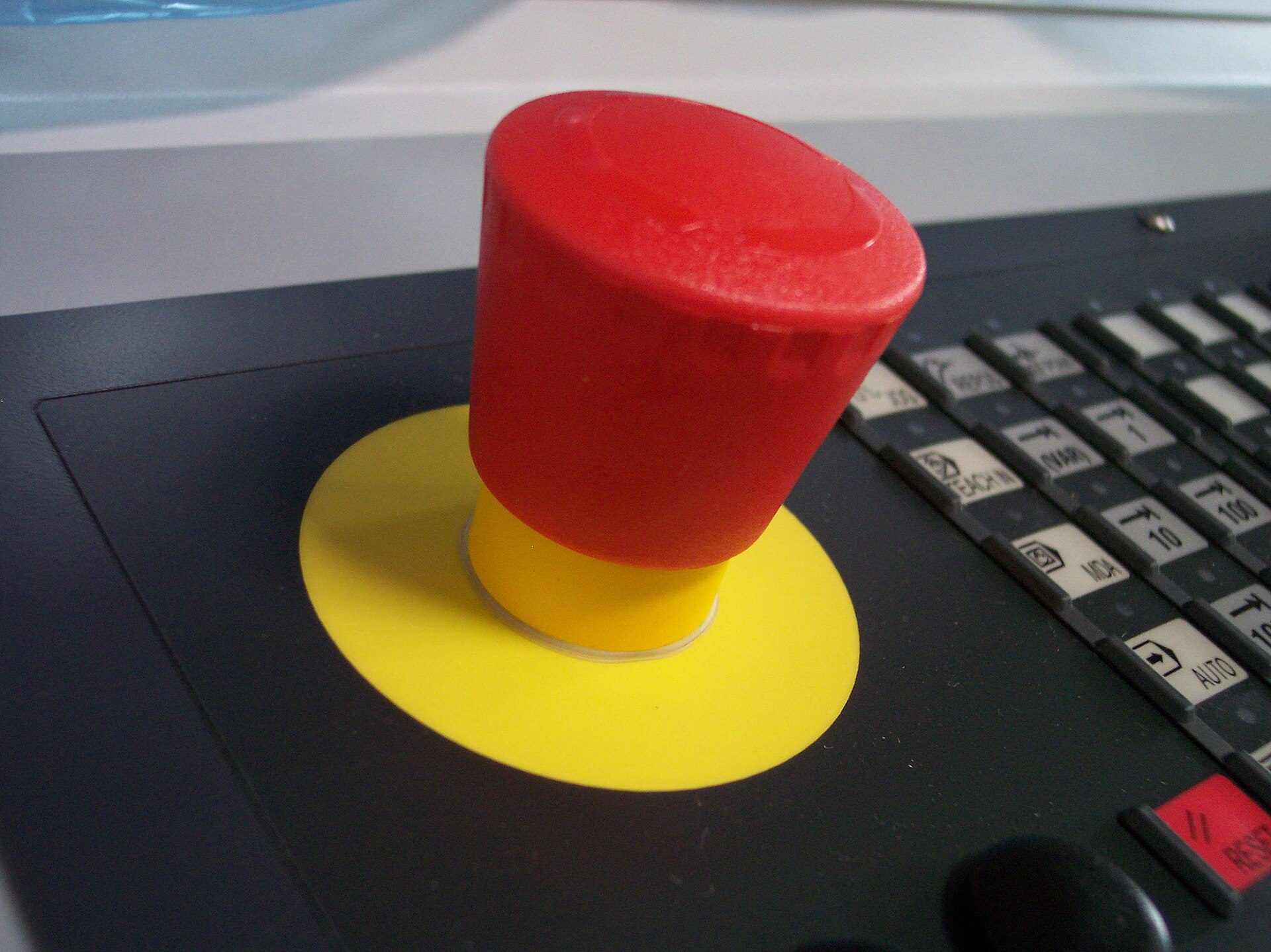
Photo: User:Stahlkocher / Wikimedia Commons, CC BY-SA 3.0
Guard doors and interlocks
Most modern CNC machines have a door interlock: opening the door stops the spindle or prevents the program from running. Your job is never to bypass it, tape it or wedge the door switch to save time. On older machines without an interlock, discipline matters even more: only open the door when the spindle has fully stopped and you can see the chuck standing still.
Proving out a new program
A new or edited program is always run the same way: single block mode, rapid override turned down, a hand ready on the stop button, eyes on the gap between tool and part at every rapid move. How to read each line and prove out a program is covered in G-code basics for beginners; at this first step you only need the rule: never run an unproven program at 100%.
Clamp parts and tools securely before running
A loosely clamped part is one of the most dangerous causes of ejection. The cutting force of a milling cutter or turning tool is enough to rip a part out of a vise or chuck if it is held wrongly.
Clamping a part in a milling vise
The part must sit firmly on parallels with enough depth in the vise jaws (Figure 3). A part sticking up too far above the jaws vibrates and can pop out. Wipe chips off the jaws and parallels before setting the part, because one trapped chip tilts the part and spoils the grip. Tighten with the proper handle; do not add a pipe extension to over-tighten.
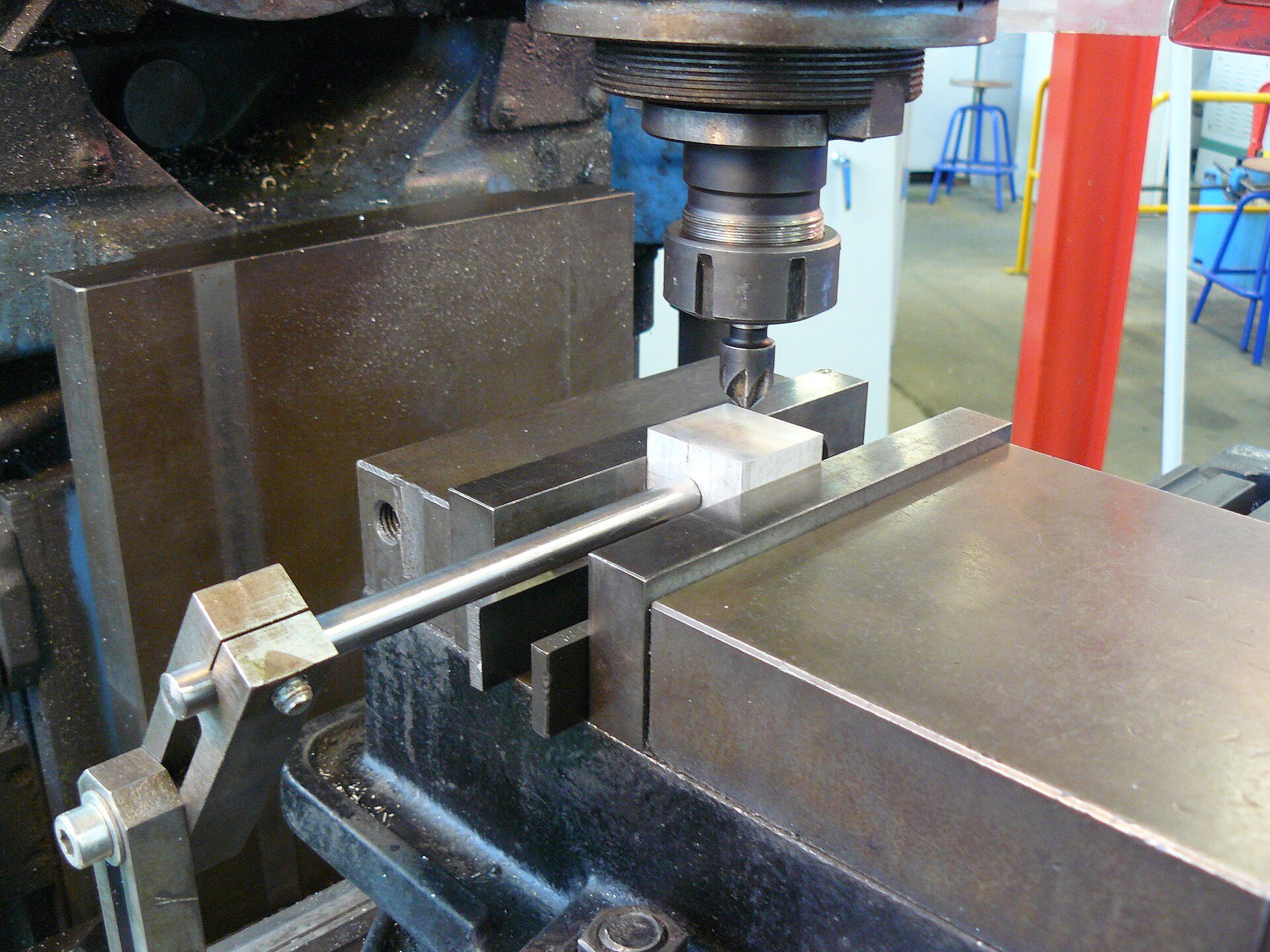
Photo: Cdang / Wikimedia Commons, Public domain
Lathe chucks and the chuck key
The life-or-death rule at a lathe: the chuck key is either in your hand or on its holder. A key left in the chuck becomes a bullet the moment the spindle starts. On CNC lathes with hydraulic chucks, check the clamping pressure is set to the shop's value for that part; long bar stock sticking out of the spindle needs a support tube or tailstock.
Tools and tool holders
Inserts must not be chipped, screws must be tight, and tool stick-out from the holder no longer than needed (long stick-out chatters, breaks and throws fragments). If a tool breaks, press stop and wait until the spindle has fully stopped before opening the door.
Hot, sharp chips and cutting coolant
Chip cuts and dermatitis from coolant are very common in machine shops, even though they do not "look dangerous" like a spinning cutter.
Clearing chips the right way
- Use a chip hook, a stiff brush and a small shovel; never bare hands or cotton gloves.
- Long stringy chips wrapped around the tool or part: stop the machine, wait for the spindle to stop, then cut or hook them out. Never pull chips while the machine is turning.
- Limit compressed air: it blows chips into the eyes of people nearby and pushes chips into the way covers. If the shop allows it, use a low-pressure air gun pointed away from people, always with glasses on.
- Empty chips into the right bin (steel, aluminium and brass kept apart) so the shop can sell scrap and aluminium chips do not mix with oil and become a fire risk.
Coolant: skin, eyes and air
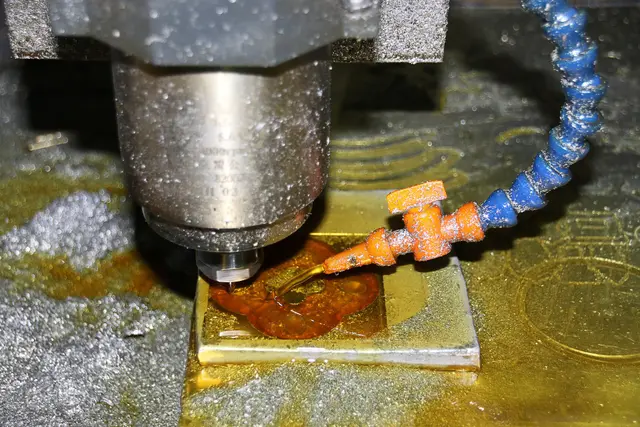
Water-miscible coolant both cools and lubricates the cut and washes chips away (Figure 4). Long-term contact causes dry, cracked skin and contact dermatitis; neglected coolant grows bacteria and starts to smell. Good habits: wear nitrile gloves when wiping the machine, wash your hands with soap before eating, use skin cream at the end of the shift, mix to the concentration the supplier specifies, and keep the door closed while coolant is flowing to reduce oil mist.
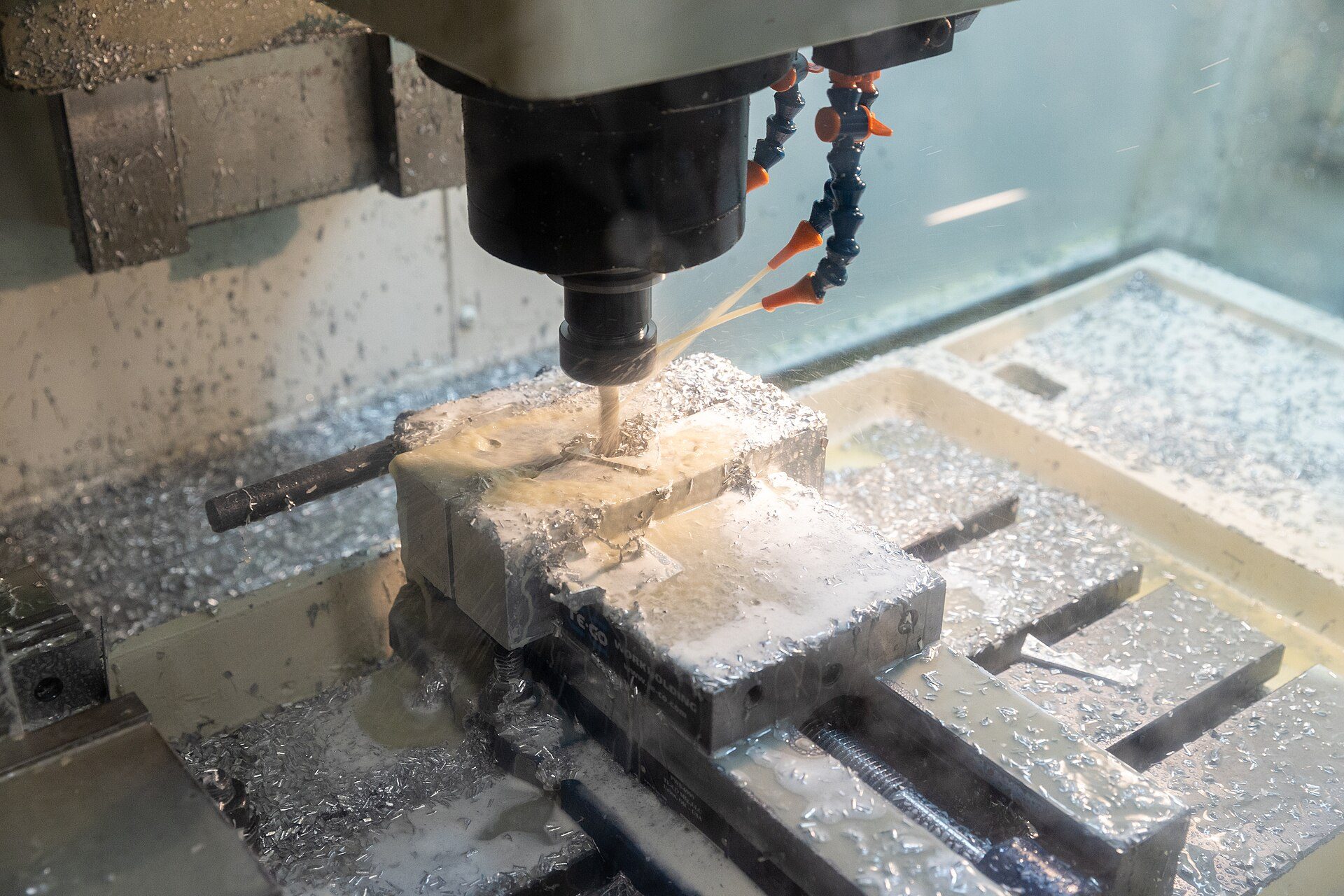
Photo: NASA's Scientific Visualization Studio - Advocates in Manpower Management, Inc./Sophia Roberts, KBR Wyle Services, LLC/Scott Wiessinger, University of Maryland College Park/Jeanette Kazmierczak, ADNET / Wikimedia Commons, Public domain
Slippery floors and fire risk
Wipe up oil and coolant on the floor immediately. Machines using neat cutting oil (not mixed with water) can catch fire when a dull tool rubs and overheats: know where the nearest extinguisher is and how to use it.
5S at the machine and start and end of shift checklists
5S is a method for keeping the workplace tidy and clean that originated in Japan, and almost every foreign-invested (FDI) factory in Vietnam uses it. For an operator, 5S is the habit that keeps you from tripping, grabbing the wrong tool or leaving something inside the machine.
The five S's at a CNC machine
| S | Meaning | What to do at the machine |
|---|---|---|
| Sort | Remove what is not needed | Worn tools, scrap parts and dirty rags off the machine table |
| Set in order | A place for everything | Chuck key, vise handle and measuring tools on a fixed, labelled holder |
| Shine | Clean and inspect | Clear chips and wipe oil; check for leaks and cracked coolant lines as you clean |
| Standardise | Keep the standard | Use the same start and end of shift checklist every day |
| Sustain | Make it a habit | Do it without being reminded; hand over the shift clearly |
Start-of-shift checklist (about 15 minutes)
- Put on protective gear, remove jewellery, tie hair up.
- Read the shift log: any incidents on the last shift, which tools are nearly worn.
- Look around the machine: dry floor, no tools on the table, door and window not cracked.
- Check way oil level, coolant level and smell, and air pressure.
- Test the emergency stop and door interlock as the shop requires.
- Run the spindle warm-up program if the shop has one.
End of shift and handover
Clear chips from the machine and chip tray, wipe the table, return tools to the holder, and write the shift log: parts completed, tools changed, problems, unfinished work. A note such as "10 mm end mill in T5 has run 6 hours, due for change" can save the next shift a broken tool.
10 CNC safety rules to know by heart
- No gloves, rings or watches, and no loose long hair, while the machine is turning.
- Always wear safety glasses and steel-toe shoes in the machine area.
- Know where the emergency stop, feed hold and override knobs are before you run.
- Close the door when running and never bypass the door interlock.
- Only open the door or reach in once the spindle has fully stopped.
- Clamp parts firmly on chip-free jaws, and remove the chuck key as soon as it is tightened.
- Prove out new programs in single block, with overrides down and a hand on stop.
- Clear chips with a hook or brush with the machine stopped; never by hand, and limit compressed air.
- Wipe up oil and coolant on the floor at once; know the nearest extinguisher (see Figure 5).
- If you hear odd noises, feel vibration or see smoke, stop and report; do not fix things beyond your assigned job.
Worked example: an 8-hour shift running a CNC mill
Hung, 20, is in his second week at a precision engineering shop in Bac Ninh. His shift has 480 working minutes (not counting the meal break). He runs one CNC mill on a batch of 40 aluminium flanges; the program was proved out by the senior machinist the day before, and each part takes about 9 minutes including loading.
How the shift time is spent
| Task | Calculation | Time (minutes) |
|---|---|---|
| Start-of-shift checklist, reading the shift log | Per checklist | 15 |
| Spindle warm-up | Warm-up program | 10 |
| First part: set up, single block run, measure, senior approval | Slow run, stops to measure | 35 |
| Batch production | 40 parts × 9 minutes | 360 |
| Clearing chips mid-shift | 2 times × 10 minutes | 20 |
| Random inspection | 4 times × 5 minutes | 20 |
| End-of-shift 5S and shift log | Per checklist | 20 |
| Total | 480 | |
Check: 15 + 10 + 35 + 360 + 20 + 20 + 20 = 480 minutes, matching the shift. The time spent purely on safety and 5S (start of shift, chip clearing, end of shift) is 15 + 20 + 20 = 55 minutes, about 11% of the shift. Many beginners want to cut those 55 minutes to run extra parts; in practice a single crash into the vise caused by a trapped chip can stop the machine for a whole day.
An incident during the shift
On part 23, Hung hears an unusual squeal and sees the chips darken. He presses feed hold, waits for the spindle to stop completely, opens the door and finds a chipped cutter tooth. He does not change the tool and adjust the offset himself; he calls the senior machinist and writes in the log: "part 23, T3 tooth chipped, tool changed, part 23 re-measured and OK". That is exactly how to run a machine: notice, stop safely, report, record.
Common beginner mistakes at the machine
Brushing chips away with cotton gloves while the machine turns
Sign: seeing chips wrap around the tool and reaching in by reflex. Cause: impatience, thinking "it is only one second". Fix: train a new reflex where your hand goes to feed hold first, never to the cutting zone; use the chip hook only once the spindle has stopped.
Leaving the chuck key or tools inside the machine
Sign: key, spanner or ruler left on the chuck or table after setup. Cause: no fixed place for tools. Fix: set up a tool holder by the machine, follow the rule "pull the key out before letting go", and look over the whole work area before closing the door.
Opening the door before the spindle stops, or bypassing the interlock
Sign: opening the door the instant the program ends, or finding the door switch taped over. Cause: wanting to save a few seconds. Fix: open only when the chuck and tool are visibly still; if an interlock has been bypassed, report it to your team leader and do not use that machine.
First aid and incident reporting in the shop
Safety warning: If someone is caught in a machine or seriously injured: press the emergency stop, isolate the machine power if you can, call the team leader and the shop first aider, and call 115 (Vietnam's emergency medical number) for heavy bleeding, crush injuries or loss of consciousness. Do not try to turn the chuck backwards or dismantle the machine to free the person without qualified guidance. Do not run a machine before you have had safety training, or when tired, sleepy, after drinking alcohol or taking drowsy medicine.
Chips or coolant in the eye
Do not rub your eye. Rinse with clean water or at an eyewash station continuously for about 15 minutes. If a metal chip is stuck in the eye, or the eye is painful, red or vision is blurred, see an eye specialist immediately; do not try to remove it with a toothpick or magnet.
Chip cuts and burns
Small cuts: clean, apply pressure to stop bleeding, bandage. Deep cuts, bleeding that will not stop, or metal still in the wound: go to a medical facility. Burns from hot chips: cool under running water for 15–20 minutes; do not apply toothpaste or oil. Rash, cracking or lasting itch from coolant: tell the shop and see a dermatologist.
Report near misses too
A tool crashing into the vise, a part popping out, a glove nearly caught are near misses: report them to your team leader even if nobody was hurt, so the shop can fix the cause before a real accident happens.
Frequently asked questions
Can you wear gloves when operating a CNC machine?
Not while the machine is turning and your hands are near the cutting zone. Once the spindle has fully stopped, wear cut-resistant gloves for handling sharp parts and chips, and nitrile gloves for wiping the machine and mixing coolant.
Is CNC coolant toxic?
Used properly the risk is low, but long-term contact can cause dermatitis and oil mist irritates the airways. Mix to the right concentration, replace coolant when it smells, wear gloves, wash your hands and keep the door closed while coolant is flowing. Read the safety data sheet (SDS) for the product your shop uses.
Do you need a safety certificate to run a CNC machine in Vietnam?
Employers are responsible for giving workers safety training before assigning work and refresher training as required by current regulations. Specific requirements depend on the machine and the job, so ask your shop's safety or HR department and check the current official regulations rather than relying on hearsay.
How long before a newcomer can run a machine alone?
It depends on the shop; usually a few weeks to a few months of supervised work, once you know the safety rules, can read drawings and can measure parts. Pay levels and skill grades are covered in CNC machinist pay in Vietnam 2026.
Practice tasks and self-assessment
- Stand in front of a CNC machine (at school or at work), close your eyes and point to the emergency stop, feed hold and override knobs. Do it 3 times.
- Write a start-of-shift checklist for the machine you are learning on, using the 6-step template above, and ask a senior machinist to add to it.
- Plan the time for a 480-minute shift running 50 parts at 7 minutes each, keeping the same safety items as in the example.
Self-assessment criteria
- Pass: you point to all 3 stop controls in under 2 seconds each, all 3 times.
- Pass: you can give at least 3 reasons not to wear cotton gloves near a rotating spindle, and say when cut-resistant gloves are allowed.
- Pass: your start-of-shift checklist has all 6 steps and has been reviewed by a senior machinist for the real machine.
- Pass: your shift plan adds up to exactly 480 minutes (50 × 7 = 350 minutes of production).
- Not yet: you still wear a ring or watch at the machine, or open the door before the chuck has fully stopped.
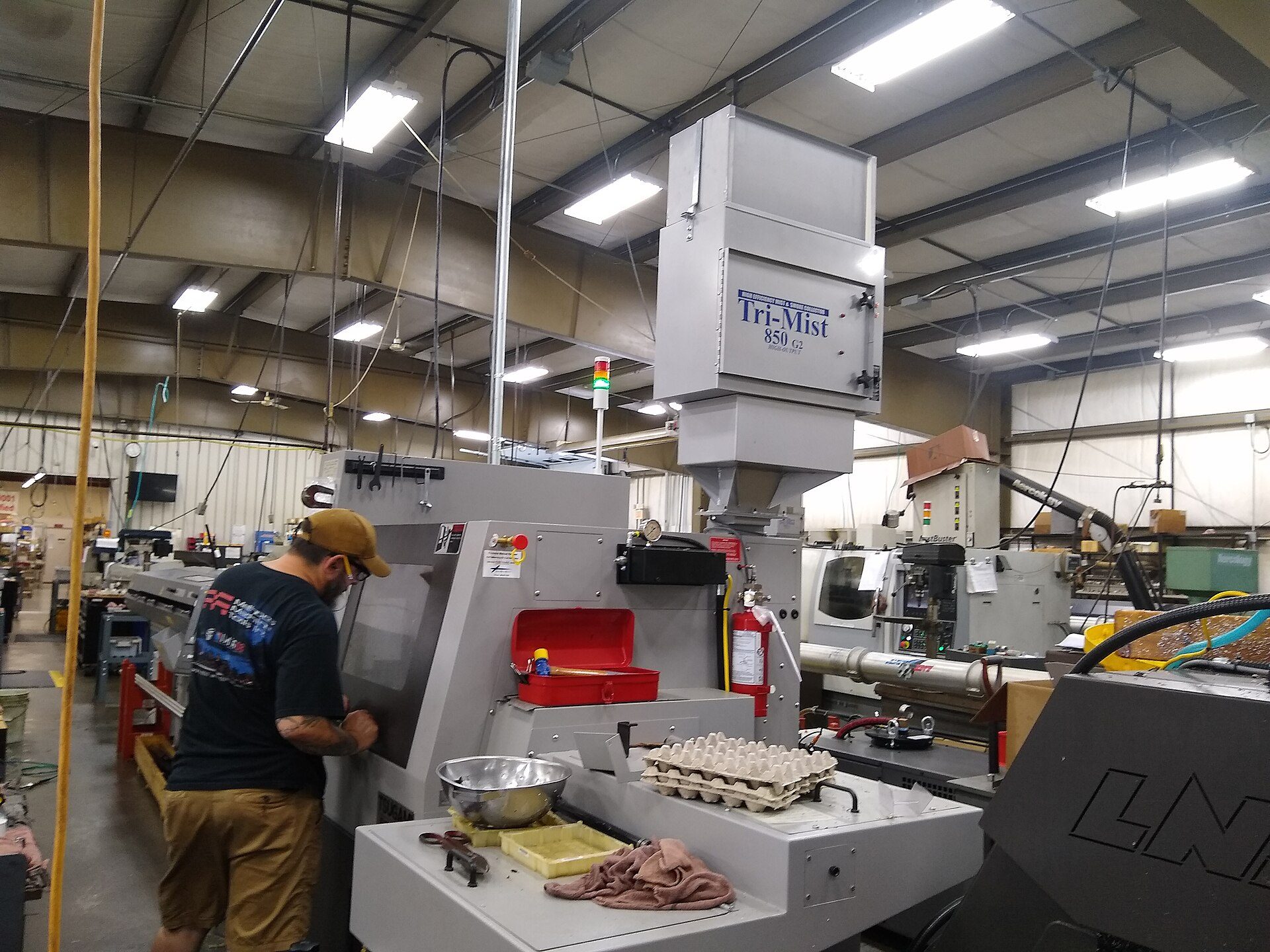
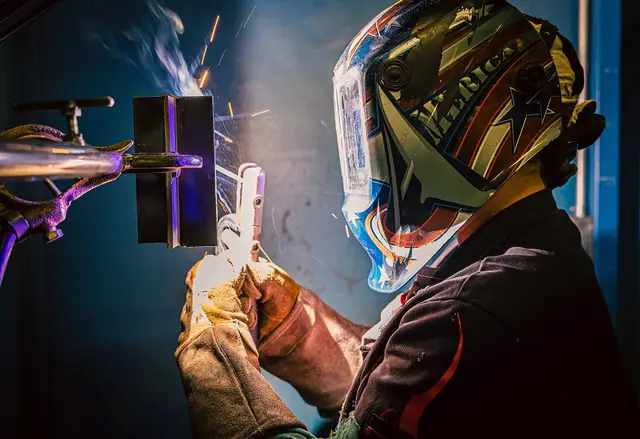
Photo: Whoisjohngalt / Wikimedia Commons, CC BY-SA 4.0
Once you know the safety rules, move on to the next roadmap step: Reading technical drawings, tolerances and surface roughness, where you learn projections, sections, dimensions and how the tolerance numbers decide whether a part passes or fails.
Keep learning CNC machining: after safety come drawings, measuring tools, cutting tools and speeds, part and tool setup, G-code and CAM programming. See the 8-step CNC machinist roadmap.