Learning air-conditioner repair takes about 3–6 months to handle basic work (cleaning, installing with a mentor), 6–12 months to install and maintain units independently, and usually 1.5–3 years to diagnose faults and repair inverter boards for customers on your own. Adverts promising "job-ready in 2 weeks" are only true for cleaning units; charging refrigerant and repairing boards are skills that need real working time. This lesson helps you choose an affordable way to train, understand what you need to learn and how many hours it takes, and see what a refrigeration and air-conditioning technician earns in 2026.
By the end of this lesson, you will be able to:
- Answer "how long does it take to learn air-conditioner repair" in terms of 3 skill milestones, with the work you can do at each.
- Compare 4 ways of training by duration, 2026 reference fees and the paperwork you receive.
- List the 8 skill groups and the minimum total practice hours to become job-ready.
- Read the 2026 pay table for technicians by level, and understand why income rises and falls with the seasons.
- Draw up a 12-month learning plan with your own costs and income in actual numbers.
Where to start? See NAMBIN's 8-step roadmap for refrigeration and air-conditioning technicians: electrical and refrigerant safety, the refrigeration cycle, installation, vacuuming and gas charging, cleaning and maintenance, diagnosing inverter boards, a flat project, and vocational certificates.
Quick answer: how long does it take to learn air-conditioner repair?
In the air-conditioning trade, "finishing your training" is not a single date but three milestones in a row. Each answers one question: are you safe enough to follow a technician onto job sites, can you complete a whole job for a customer by yourself, and are you good enough to take on difficult breakdowns?
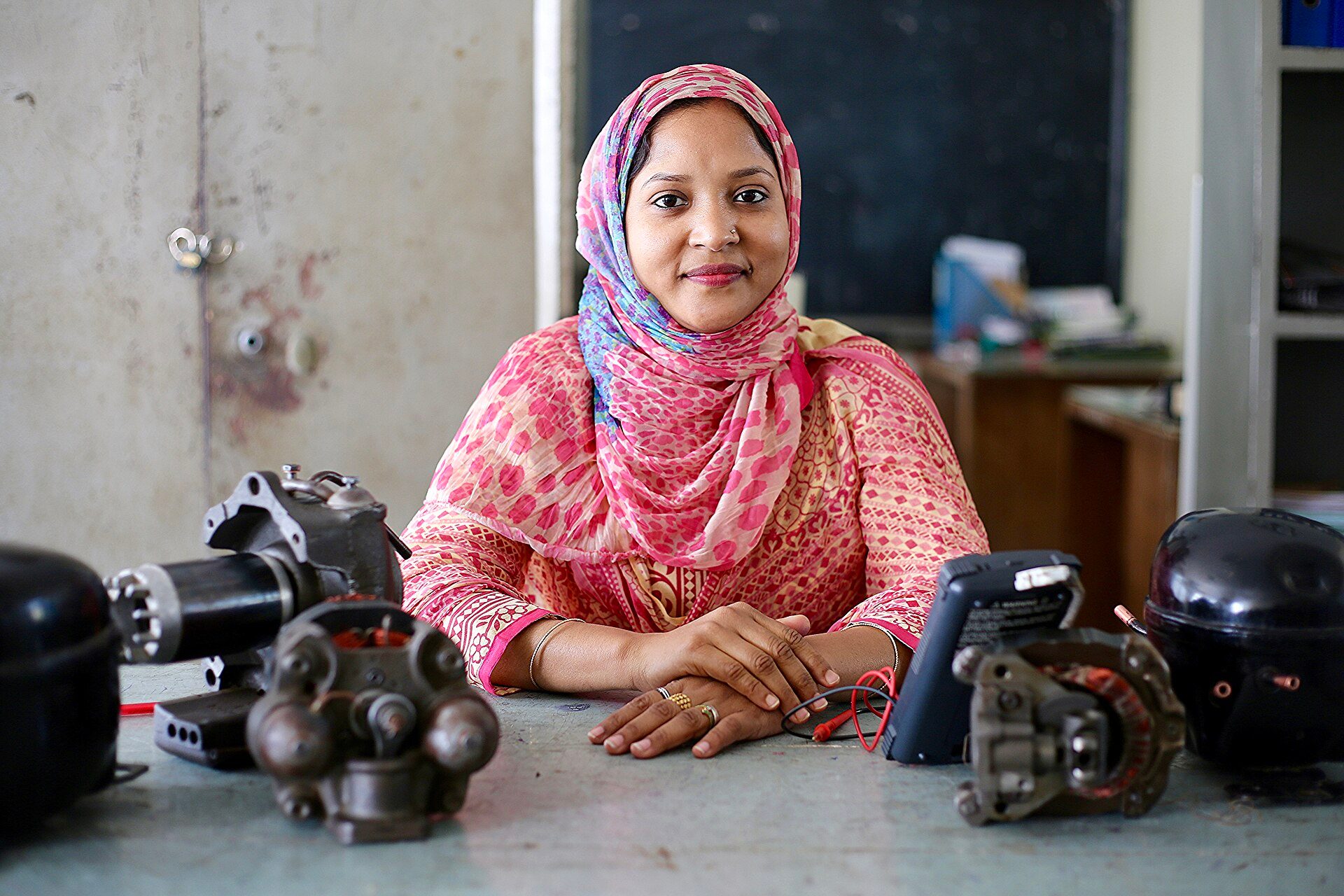
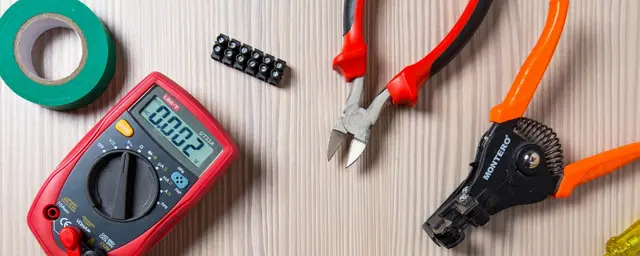
Photo: DFID - UK Department for International Development / Wikimedia Commons, CC BY 2.0
Milestone 1: helper — about 1–3 months
You understand electrical safety and safety when working at height, and know the names and uses of the tools; you can wash filters yourself, help pressure-wash indoor coils, run drain lines, and carry and hold outdoor units during mounting. A helper is not yet allowed to make electrical connections or charge refrigerant on their own. Studying intensively at about 20–25 hours a week, most learners reach this milestone after 6–10 weeks.
Milestone 2: independent installation and maintenance technician — about 6–12 months
You can install a complete wall-mounted unit yourself: choosing the position, drilling the wall, flaring the pipes, tightening flare nuts with a torque wrench, vacuuming, wiring and test running; and you can service all the units in a flat and record the measurements on a sheet. What decides it is the number of jobs done under supervision: many shops only let a technician install alone after about 30–50 units done alongside a lead technician without callbacks for refrigerant leaks or water drips.
Milestone 3: repair technician — usually after 1.5–3 years
A repair technician can diagnose a unit that isn't cooling, read error codes, test sensors, fans and the power module on an inverter board, and tell a board fault from a compressor fault. This milestone needs a grounding in electronics and plenty of real broken units to practise on; it can't be rushed in a classroom.
4 ways to train and 2026 reference fees
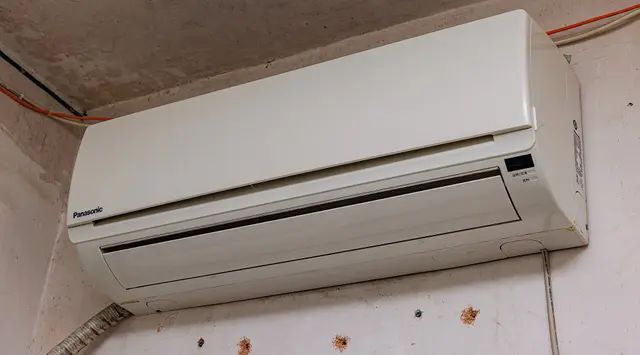
There is no best way to train for everyone. Choose by three things: how much money you have, how soon you need an income, and whether you need a certificate right away to get into a company. Figure 2 shows a theory lesson at a vocational school — the part that shop-based apprenticeships often skip.
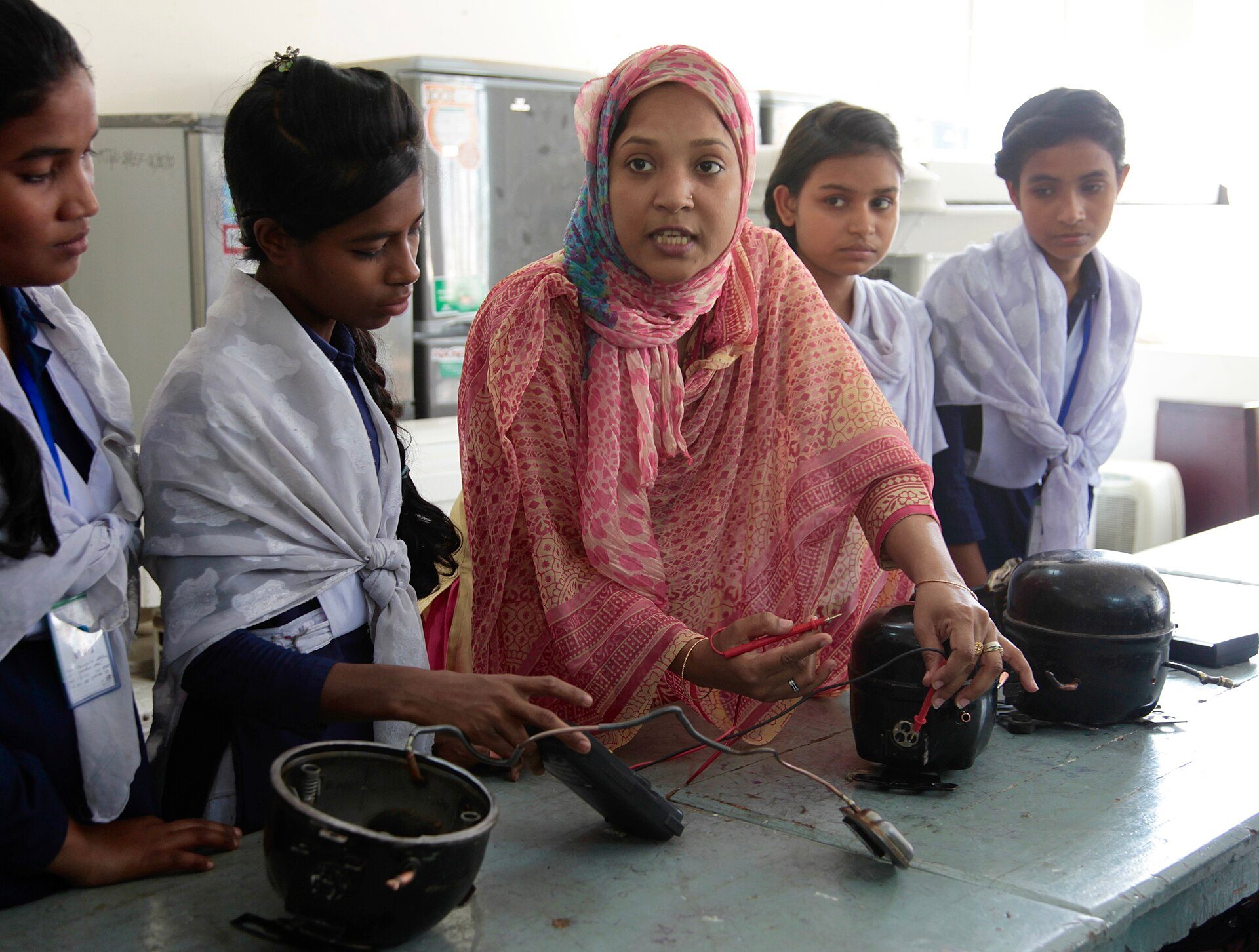
Photo: DFID - UK Department for International Development / Wikimedia Commons, CC BY 2.0
Short-course training centres
Courses of 1–3 months, with reference fees of 4–12 million VND (Vietnamese dong; 1 million VND is roughly 40 US dollars), depending on content (cleaning and installation only, or board repair too). Advantages: fast, with training rigs. Drawbacks: you usually receive a certificate of course completion, and the number of hours on real units varies hugely between centres. Ask clearly "how many units does each trainee install themselves, and how many times do they vacuum a system themselves?" before you pay.
Apprenticeship at an air-conditioning shop or dealer
You follow a lead technician on jobs for 3–12 months. Many places charge no fee and pay an allowance immediately; some charge 1–3 million VND or ask for a work commitment. You learn the real job and earn, but the theory (the refrigeration cycle, board electronics) is often taught superficially because the hot season is so busy. Read the commitment carefully: allowance, duration, penalty for leaving early.
Vocational schools: elementary, intermediate and college levels
An elementary-level ("so cap") refrigeration course takes about 3–6 months, with reference fees of 3–10 million VND, a final exam and an elementary certificate. Some localities have programmes that support vocational training fees for certain groups (rural workers, demobilised soldiers and others) — ask the local labour office or employment service centre. Intermediate and college programmes in refrigeration and air-conditioning engineering take about 1.5–3 years, suited to young people who want to work for building-services contractors, building management or central air-conditioning systems.
Self-study online combined with practice
Theory, reading diagrams and error codes can be learned from documents and videos. But flaring pipes, torque tightening, vacuuming and pressure measurement need someone watching and correcting your hands. Studying only from videos and then taking jobs from customers is the easiest way to cause refrigerant leaks and wreck compressors.
| Route | Duration | Reference fees 2026 | Practice | Paperwork |
|---|---|---|---|---|
| Short-course centre | 1–3 months | 4–12 million VND | Training rigs + some real units | Certificate of course completion |
| Shop apprenticeship | 3–12 months | 0–3 million VND, usually with an allowance | A great deal, on real job sites | Usually none |
| Vocational school, elementary level | 3–6 months | 3–10 million VND (support available in some places) | School workshop | Elementary certificate |
| Intermediate, college | 1.5–3 years | Per each school's fee schedule | Workshop + company internship | Intermediate or college diploma |
These figures are reference ranges for 2026 and differ by region and provider; they are not the price list of any particular institution. The route many good technicians have taken: learn the foundations at a school or centre for a few months, then apprentice through one hot season at a busy shop.
What do you need to learn? 8 skill groups and hours
Wherever you study, you must work through all eight skill groups below — which are also the 8 steps of the NAMBIN roadmap. A course missing any group has a gap, and the most common gaps are safety and vacuuming.
| Skill group (roadmap step) | What you learn | Reference minimum hours |
|---|---|---|
| 1. Electrical safety, refrigerants, working at height | Isolating power, voltage testers, harnesses, flammable R32 | 15–20 hours |
| 2. Refrigeration cycle, reading pressure gauges | Compressor, condenser, expansion device, evaporator; pressure–temperature | 30–40 hours |
| 3. Installing wall-mounted units | Positioning, brackets, drilling, flaring, torque wrench, drain line, wiring | 60–80 hours |
| 4. Vacuuming, leak testing, charging refrigerant | Vacuum pump, micron gauge, nitrogen, charging by weight | 30–40 hours |
| 5. Cleaning and maintaining air conditioners and fridges | Pressure washing, cleaning bags, blowers, capacitors, current measurement | 30–40 hours |
| 6. Diagnosing error codes, inverter boards | Error codes, sensors, DC fans, power modules, filter capacitors | 60–100 hours |
| 7. New installation and full-maintenance project | A complete flat, recording measurements, handover sheet | 20–30 hours |
| 8. Certificates, quoting, finding customers | Exam revision, price lists, warranties, taking on work | 15–20 hours |
| Total | 260–370 hours |
At 20 hours a week, 260–370 hours comes to about 13–19 weeks, or 3–5 months — matching the "3–6 months to handle basic work" milestone at the start of this lesson. Group 6 (inverter boards) usually has to be developed further on the job before it is solid.
Safety and basic electrics: learn these first
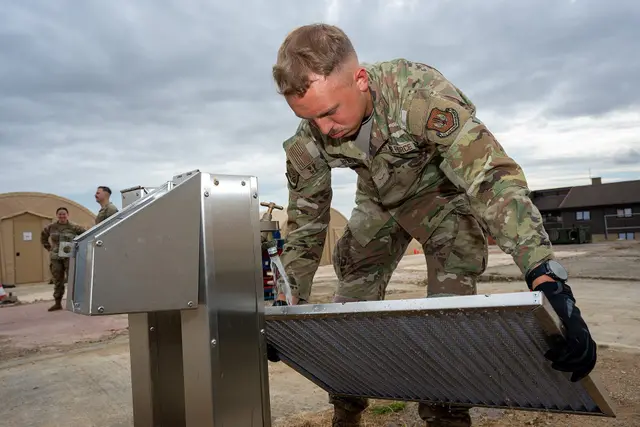
The air-conditioning trade has three main hazards: electric shock (units run on 220 V mains, and inverter boards have capacitors that hold high voltage after switch-off), falls when mounting outdoor units, and refrigerant (cold burns, and R32 is flammable). Figure 3 shows a master technician guiding a newcomer through a voltage measurement — the kind of hands-on mentoring that video cannot replace.
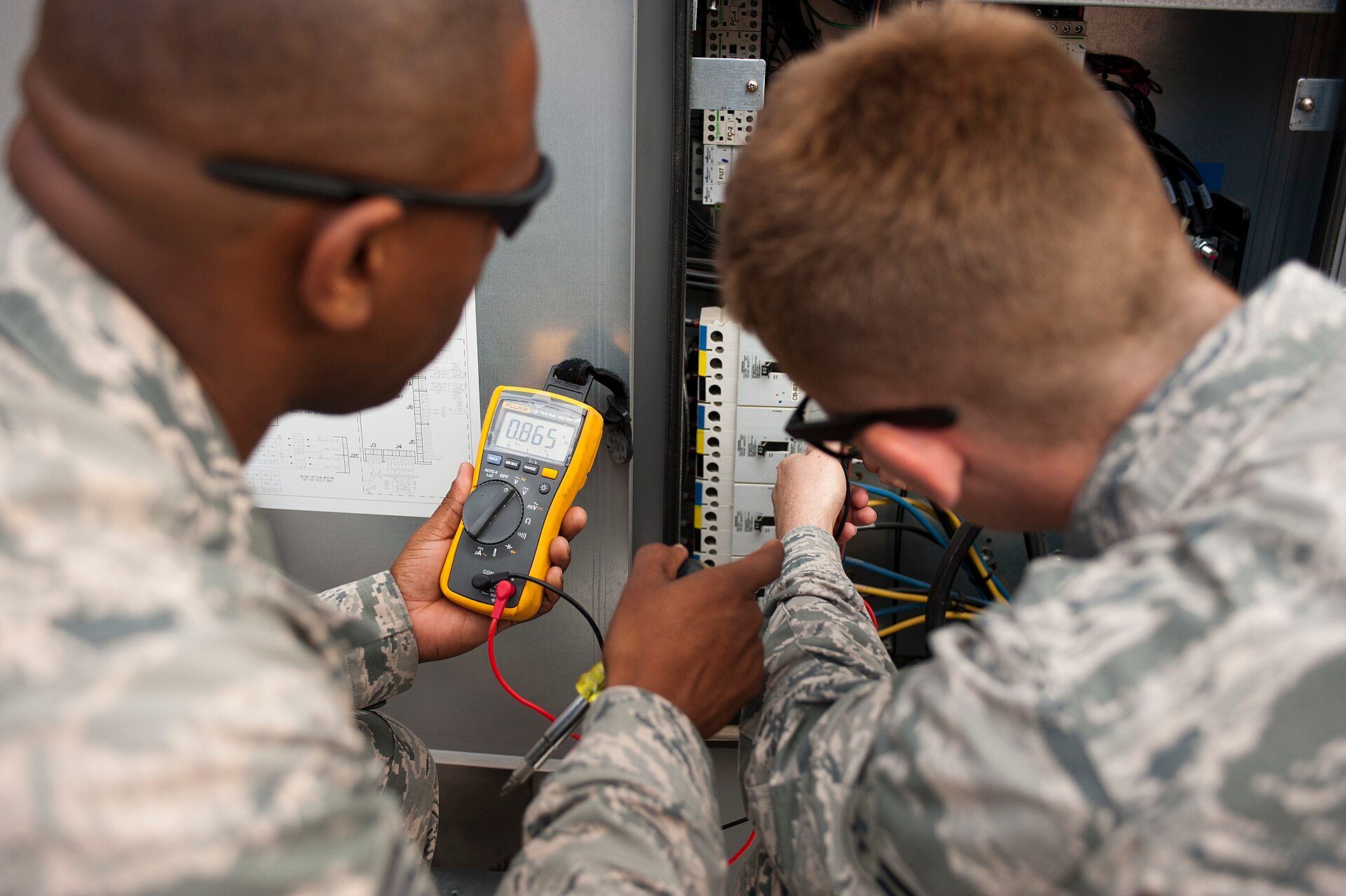
Photo: Airman 1st Class Mikaley Towle / Wikimedia Commons, Public domain
Vacuuming and charging refrigerant: the skill that marks a good technician
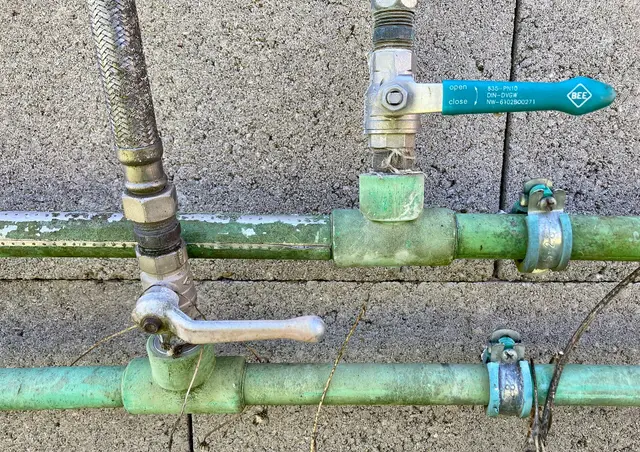
Skipping the vacuum and leaving moisture and air in the pipework is the leading cause of failed inverter compressors. A good technician pulls a vacuum to the required level (measured with a micron gauge), holds it to check that it doesn't rise, and only then opens the valves. Refrigerant top-ups are done by weight or by pressure and current — never "by eye" (Figure 4).
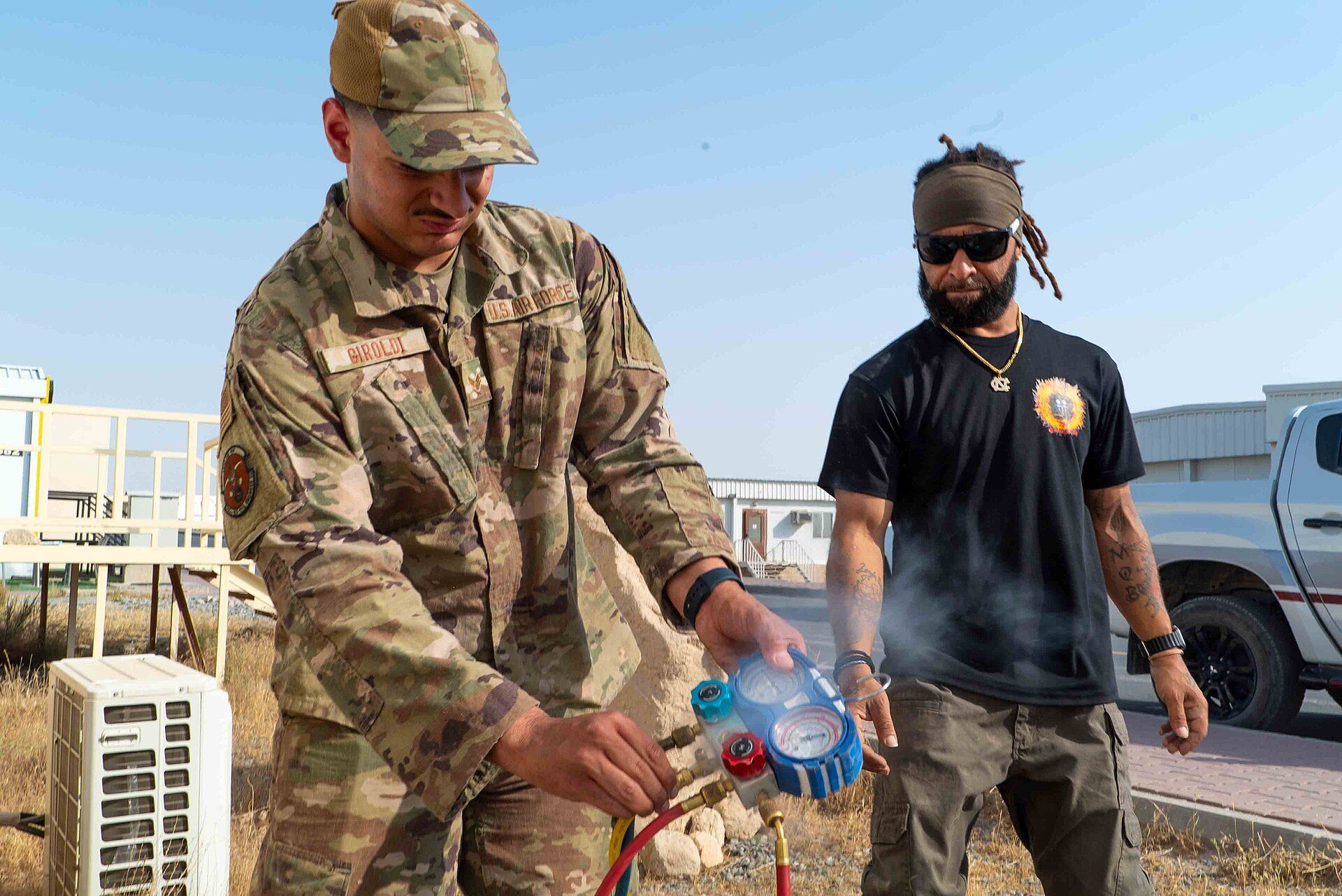
Photo: U.S. Air Force photo by Senior Airman Mark Colmenares / Wikimedia Commons, Public domain
Inverter boards: the longest part to learn
Most units sold today are inverters. To repair boards, you need to read block diagrams, test power supplies, sensors, DC fans and power modules, and look up error codes in each manufacturer's documentation. Technicians usually learn this after they are solid at installation and maintenance, because it takes many real broken units to practise on.
Safety warning: avoid courses that let trainees charge refrigerant, mount outdoor units outside balcony railings or repair boards before they have learned safety. Always switch off the circuit breaker and check with a voltage tester before touching any wire; wait for the capacitors on an inverter board to discharge. When working at height, wear a full-body harness clipped to a secure anchor point — never to a flimsy railing or a water pipe. R32 is flammable: no smoking and no flames near where refrigerant is released or charged.
How much does an air-conditioning technician earn in 2026?
A technician's income rises with skill and varies with the season. The table below gives reference ranges for 2026, depending on region, workplace and the amount of work; it is not a guaranteed income.
| Level | Work you can do | Reference income 2026 (million VND/month) |
|---|---|---|
| Apprentice | Carrying, washing filters, running drain lines | 4–7 (allowance) |
| Helper | Pressure washing, assisting installation, running pipes | 7–10 |
| Installation and maintenance technician | Installing complete units, vacuuming, servicing a whole flat | 10–15 |
| Repair technician, lead technician | Diagnosing, board repair, charging, mentoring new technicians | 15–25 |
| Self-employed with regular customers | Complete installation, cleaning and repair jobs, with own tools | 15–30, more in the hot season |
For a rough comparison, 10 million VND a month is about 400 US dollars.
Why income rises and falls with the seasons
From about April to August, demand for new installations and cleaning rises sharply; technicians work from morning to night and can earn one and a half to two times what they earn in an ordinary month. In the cool season in northern Vietnam there is less work, and technicians switch to repairing fridges and washing machines or building maintenance. In the south, work is steadier all year round.
Working for a company or self-employed
Working for an electronics dealer, a building maintenance company or an apartment complex: stable pay, social insurance, and the chance to learn larger systems. Self-employed: higher income once you have regular customers, but you must invest in your own tools and vehicle, handle warranties yourself, and find customers through dealers, technician-booking apps and social media.
Tools to invest in
A basic tool kit includes a manifold gauge, vacuum pump, flaring and pipe-cutting set, torque wrench, clamp meter, drill, pressure washer, cleaning bag, ladder and safety harness. 2026 reference cost: about 8–15 million VND for a basic kit, 20–40 million for a full kit with a micron gauge, refrigerant scales and a core drill. Apprentices usually use the shop's tools and buy their own gradually.
Refrigeration vocational certificates: which kind, and when?
You will come across three kinds of paper: an elementary certificate issued after an exam by a licensed vocational education institution; a certificate of course completion from a training centre; and a national occupational skills certificate obtained through an assessment run by a licensed organisation. Households rarely ask for papers, but maintenance companies, buildings and building-services projects often require them.
Certificate before or after starting work?
If you want to join a company or building team straight away, study at a vocational school and get your certificate first. If you need an income soon, apprentice first and take an elementary course in the evenings, or prepare for the skills assessment, during your first year: you learn faster because you already have the hands-on skills, and you won't get stuck when you want to change workplace.
How to prepare for the exam
The practical exam usually includes installation, vacuuming, charging refrigerant, testing and dealing with some faults within a time limit; the theory part covers the refrigeration cycle, electrics and safety. Revise all 8 skill groups in the table above, time yourself when practising, and mark yourself against a checklist.
Worked example: Nam, 19, a 12-month learning plan
Nam lives in Binh Duong province, has finished high school, has 10 million VND in savings and needs an income within 4 months. He plans to start in January to be ready for the hot season (all figures are illustrative, 2026 reference).
Spending
- Months 1–3: daytime elementary refrigeration course, fee 6 million VND.
- Initial protective gear and hand tools (gloves, glasses, screwdrivers, voltage tester, multimeter): 3 million VND.
- Month 10: buying a vacuum pump, manifold gauge and flaring set to take jobs outside working hours: 10 million VND.
- Total spending: 6 + 3 + 10 = 19 million VND.
Income
- Months 4–9: apprentice at a busy air-conditioning shop, allowance 5 million/month × 6 months = 30 million VND.
- Months 10–12: promoted to helper, 8 million/month × 3 months = 24 million VND.
- Total income: 30 + 24 = 54 million VND.
- Income minus spending: 54 − 19 = 35 million VND (about 1,400 US dollars), before food, rent and travel.
Results after 12 months
By the end of the year Nam has an elementary certificate, has installed about 60 wall-mounted units alongside a lead technician and cleaned several hundred units during the hot season, and is starting to be sent out by the shop to install alone. In March of the following year he plans to register for the national skills assessment and study inverter boards. The key point: Nam used the first 3 months to learn the foundations and finished just before the hot season, so the shop took him on straight away in April.
Common mistakes when learning the air-conditioning trade
Taking a "2-week crash course" and then repairing for customers
Sign: a few days after an installation, the customer calls back about a refrigerant leak or dripping water. Cause: not enough practice hours flaring pipes, torque tightening and vacuuming. Fix: convert the course into practice hours; set yourself a minimum of 30 units installed alongside a lead technician before taking your own jobs.
Skipping the vacuum because "the old hands always did it that way"
Sign: a newly installed inverter unit shows an error after a few months and the compressor gets noisy. Cause: moisture and air in the pipework. Fix: always vacuum and do a vacuum hold test; record the reading on the sheet.
Learning board repair before you are solid at installation
Sign: you can swap components by following videos but cannot explain the refrigeration cycle. Cause: chasing the "money-making" part. Fix: follow the roadmap in order; learn boards only once you are solid at measuring voltage and pressure.
Taking safety at height lightly
Sign: mounting outdoor units without a harness, standing outside the railing. Cause: haste, overconfidence. Fix: don't do it without a harness and an anchor point; refuse the job if the customer won't let you work properly.
Frequently asked questions
How long until I earn a wage while learning air-conditioner repair?
Shop apprentices usually get an allowance from the first month. If you study at a centre or an elementary-level school for 1–6 months, you then apply to work as a helper. Taking installation and maintenance jobs on your own usually comes after 6–12 months; solid board repair usually after 1.5–3 years.
How much does it cost to learn the refrigeration trade?
2026 reference: apprenticeship 0–3 million VND, short-course centre 4–12 million, elementary level 3–10 million (with support in some places), plus a basic tool kit of 8–15 million when you start taking your own jobs.
How much do air-conditioning technicians earn in 2026?
About 7–10 million VND a month for helpers, 10–15 million for installation and maintenance technicians, and 15–30 million for repair technicians or the self-employed; more in the hot season. It depends on the region and the amount of work.
I'm not good at electrics — can I still learn?
Yes. The electrical knowledge the trade needs is taught from the beginning in the roadmap. What matters is being careful, coping with heat and working at height, and having the patience to measure rather than guess.
Can women work as air-conditioning technicians?
Yes. Cleaning, maintenance, diagnosis, board repair and customer advice don't require special physical strength; carrying outdoor units is usually done as a team. Many vocational schools have female instructors and trainees in refrigeration.
Exercise: draw up your own 12-month learning plan
- Write down how much money you can put towards training and how many months you can manage without an income.
- Choose 2 routes from the comparison table and calculate total costs and income, as in Nam's example.
- Call at least 2 training providers or shops that take apprentices: practice hours, how many units you install yourself, paperwork received, allowance.
- Tick off the 8 skill groups in the hours table and write down where you will learn each one and the month you expect to finish it.
- Set milestones: which month you start apprenticing (before the hot season), which month you install alone, which month you sit the certificate.
Self-assessment criteria
- Pass: the plan has total costs and income in actual numbers, and the additions and subtractions are correct; it includes at least 260 practice hours across the 8 skill groups.
- Pass: it has a milestone for completing safety training before working at height, and a certificate milestone within the first 12–18 months.
- Not yet: the plan only says "do a crash course and take jobs", has no practice hours, or skips vacuuming and safety at height.
This is the final step of the roadmap — Vocational certificates, quoting and finding customers. To revise, go back and mark yourself step by step against the 8 skill groups table, and practise the weaker parts again (usually vacuuming and board testing). Once you are solid on wall-mounted units, you can move on to floor-standing and ceiling cassette units, multi-split systems, cold rooms, or opening a small air-conditioning shop. Review the full 8-step roadmap for refrigeration and air-conditioning technicians, which also includes the lessons on cleaning an air conditioner at home and on air conditioners that won't cool.