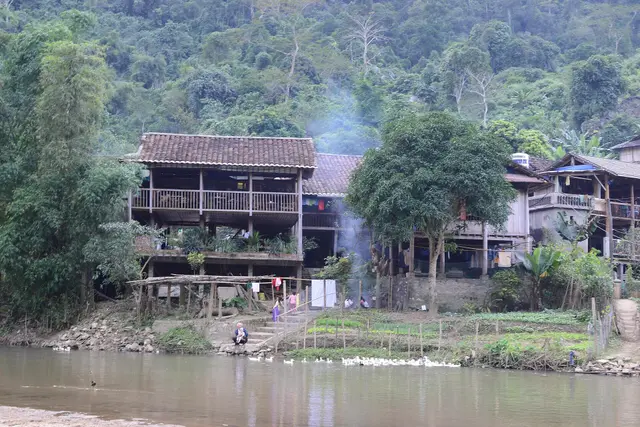
Setting up a homestay business in Vietnam involves 5 main tasks before your first guest arrives: confirming you have the right to use the property for business, registering the business (usually as a household business), meeting public security and fire safety requirements, setting up how you will register guests' stays with the police, and declaring tax. Specific rules change over time and each locality gives its own guidance, so this lesson does not replace the authorities: it helps you know whom to ask, what to ask and in what order. The fire safety part is written as a room-by-room checklist, with a worked equipment budget for a 3-storey, 5-room house.
By the end of this lesson, you will be able to:
- List the documents and the order of procedures for a specific homestay, and know which authority to ask about each.
- Check in advance the risk of "not allowed to rent out": the lease, apartment building rules, zoning.
- Set up a process for collecting ID and registering stays for Vietnamese and foreign guests.
- Inspect fire safety room by room with a checklist and budget the equipment with figures that add up.
- Write safety rules for guests and know what to do in case of fire, smoke or a guest who cannot be reached.
Starting out as a homestay or Airbnb host? This is step 1 of the roadmap: accommodation business paperwork and fire safety, the foundation before choosing a model, listing and pricing. See the 8-step homestay and Airbnb host roadmap to learn in the right order.
Why do the paperwork before taking guests?
Many people think listing a room on Airbnb or Booking is enough. In fact, renting rooms by the night is an accommodation business, a sector with conditions on public security and fire safety. Booking platforms are only sales channels; they do not do the paperwork for you.
Risks of operating without permits
- Fines or suspension when police or an inspection team visit, just when guests are staying.
- Total loss after an incident: if there is a fire, an injured guest or theft and the property was not compliant, the owner's liability is heavy and insurers may refuse to pay.
- Termination by the landlord or building management if the lease or building rules do not allow accommodation business.
- Losing your platform account after repeated complaints from guests or neighbours.
How to use this lesson
This lesson only states principles that are certain; it gives no document numbers, fees or deadlines because they change and differ by locality. Before acting, ask directly: the commune or ward People's Committee or the business registration office where the property is; the commune or ward police; the fire police; the tax office; and the provincial tourism authority. Write down the name of the official, the date and their answer.
Step 0: confirm the right to use the property for business
Do this before spending anything on renovation. Many people furnish a property and only then learn it cannot be used for accommodation business.
Your own house
Check whose name is on the land use and house ownership certificate. For co-owned property (spouses, siblings), get written consent from all co-owners. Houses built without a permit or with extra storeys added often run into trouble meeting fire safety requirements.
A house you rent to sublet
The lease must state the purpose of accommodation business and that the tenant may rent rooms to guests by the night. A lease that only says "for residence" lets the landlord end it when they find out. Ask the landlord which documents you will need copies of for the paperwork (house certificate, owner's ID).
Apartments
Many apartment buildings have rules restricting or banning short-term rentals; management may refuse to register guests at reception or issue lift cards to them. Before renting or buying an apartment for Airbnb, ask the building management in writing and read the building rules and purchase contract carefully. Local policies on short-term apartment rentals are also under discussion and may change; follow new guidance from the authorities where you operate.
Business registration, public security and accommodation notification
This is the main paperwork. The table below shows a common order; ask locally about the exact authority and documents.
Order of procedures and where to ask
| Order | Task | Where to ask | Notes |
|---|---|---|---|
| 1 | Confirm right to use the property, building rules | Landlord, building management | Before investing |
| 2 | Register a household business or company for accommodation services | Local business registration office (ask the commune or ward People's Committee) | Ask whether a household business or company suits your scale |
| 3 | Meet fire safety requirements for the building size | Fire police | Ask before renovating so you do it right once |
| 4 | Certificate of meeting public security and order conditions | Commune or ward police, or the competent level | Usually needs fire safety documents and the owner's background record |
| 5 | Notify operation as a tourist accommodation establishment | Provincial tourism authority | Ask which category fits, for example a house with rooms for tourists |
| 6 | Tax registration and how to declare | Local tax office | Ask about income received through foreign platforms too |
| 7 | Set up a channel for registering guests' stays | Commune or ward police | Ask about the method, deadline and foreign guests |
Household business or company
A beginner with one property and a few rooms usually registers a household business because the procedure is simpler. If you run several properties in different places, hire staff, or need to issue VAT invoices to corporate guests, ask an accountant or the registration office about setting up a company. Rules on how many locations a household business may operate can change; ask when you register.
Public security conditions
Accommodation business is a conditional business line regarding public security and order. The person registered must meet background requirements, the property must meet appropriate fire safety conditions, and the owner is responsible for managing staying guests. Ask the commune or ward police for the current list of documents and forms.
Notifying the tourism authority
A homestay that hosts tourists is a tourist accommodation establishment; it usually has to notify the provincial tourism authority of its operation and meet minimum requirements for facilities and service. This also gets you onto the locality's list of accommodation. Ask the department in charge of tourism where you operate.
Registering guests' stays and tax on room rental
These two tasks repeat daily and every tax period, so make them habits from the very first guest.
Collecting ID and registering stays
- When a guest books, message them in advance: "As required by law, please bring your ID card or passport at check-in so we can register your stay."
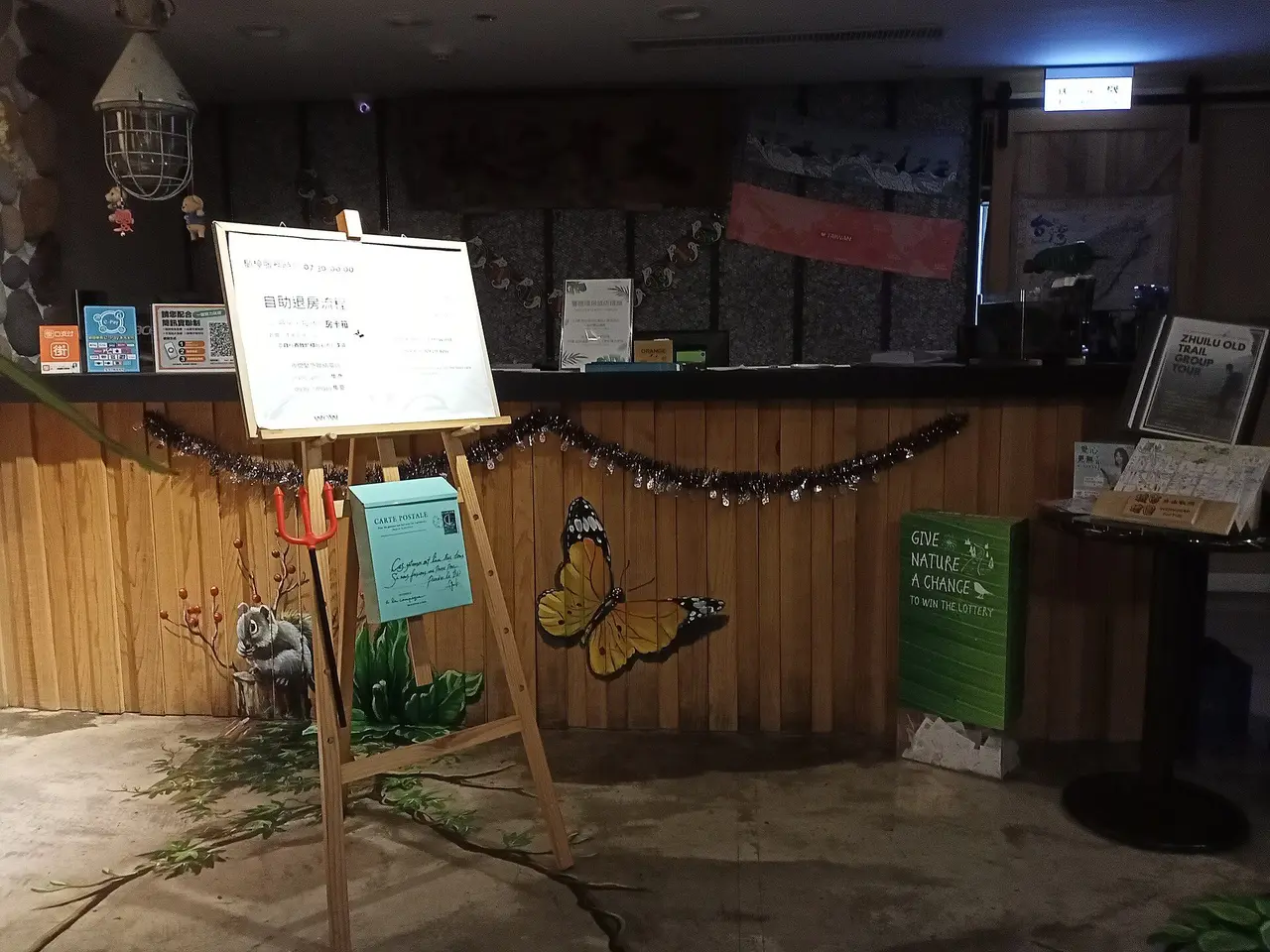
- At check-in (Figure 1), check the ID of every person staying, including companions, and compare the photo with the person.
- Register the stay with the police through the channel and within the deadline you were given (software, an app or a register book); foreign guests have their own registration method, so ask the local police.
- Never keep a guest's original documents as a deposit. If you must store information, keep only what registration requires, keep it secure and never share it in chat groups.
- For self check-in with a keypad lock, you still need an ID step (for example the guest sends a photo of their ID through the platform's messaging) and an in-person check when possible.
Protecting guests' personal data
IDs, phone numbers and photos of guests are personal data. Do not post photos of guests online without consent, do not send ID photos to your cleaners' Zalo group (Zalo is a popular messaging app in Vietnam), and delete data you no longer need. Leaking guest data may breach Vietnam's personal data protection rules.
Tax on room rental: principles
- Nightly room income is business revenue and must be declared and taxed under the rules for household businesses or companies, including when guests pay through foreign platforms.
- Household businesses usually pay value added tax and personal income tax calculated on revenue; the exemption threshold, rates and the way household business tax is managed are being revised, so ask the tax office.
- Keep full records: each platform's payout reports, bank statements, expense invoices. Total revenue by platform every month.
- Hire an accounting service when revenue grows or you run several properties; it costs far less than back taxes and late-payment penalties.
Insurance
Ask the fire police and insurers whether your property falls under compulsory fire and explosion insurance. Also consider property and guest liability insurance. Booking platforms' host protection programmes have their own conditions; read them carefully and do not treat them as a substitute for insurance.
Homestay fire safety: a room-by-room checklist
Vietnamese tube houses, houses with mezzanines and wooden houses carry a high fire risk: a single exit, fully barred windows, gas cookers and old wiring. Guests do not know the house and sleep deeply at night, so the safety standard must be higher than for a family home. Official fire safety requirements and procedures depend on building size and structure; the list below is a sensible minimum, so ask the fire police what applies to your property.
Fire safety warning: Every floor where guests sleep needs a second way out (a balcony, a window with an opening escape panel, an escape ladder); never fit fully closed window bars, never lock escape doors at night, never store things on the stairs. Do not let guests cook with gas in bedrooms, and never charge electric motorbikes or e-bikes indoors or under the stairs. Have a qualified electrician check the wiring: residual current protection, no overloaded cables, safe sockets in bathrooms. In a fire: raise the alarm, lead guests out by the nearest exit, call 114 (fire services in Vietnam); never go back for belongings, never use water on electrical or grease fires. For an ambulance call 115.
Equipment you need
- Fire extinguishers: in the corridor of every floor, near the kitchen and stairs, hung at hand height with instructions facing out (Figure 2). Check the pressure gauge and expiry regularly.
- Smoke alarms: in every bedroom, corridor and kitchen (Figure 3); battery-powered standalone units must be tested with the test button monthly and batteries changed as instructed.
- Emergency lights and exit signs: light up automatically in a power cut; place them on stairs, corridors and exits (Figure 4).
- Smoke hoods and a torch in every room, with instructions.
- Escape plan and emergency numbers (114 fire, 113 police, 115 ambulance) on the back of every room door, with an English version for foreign guests.
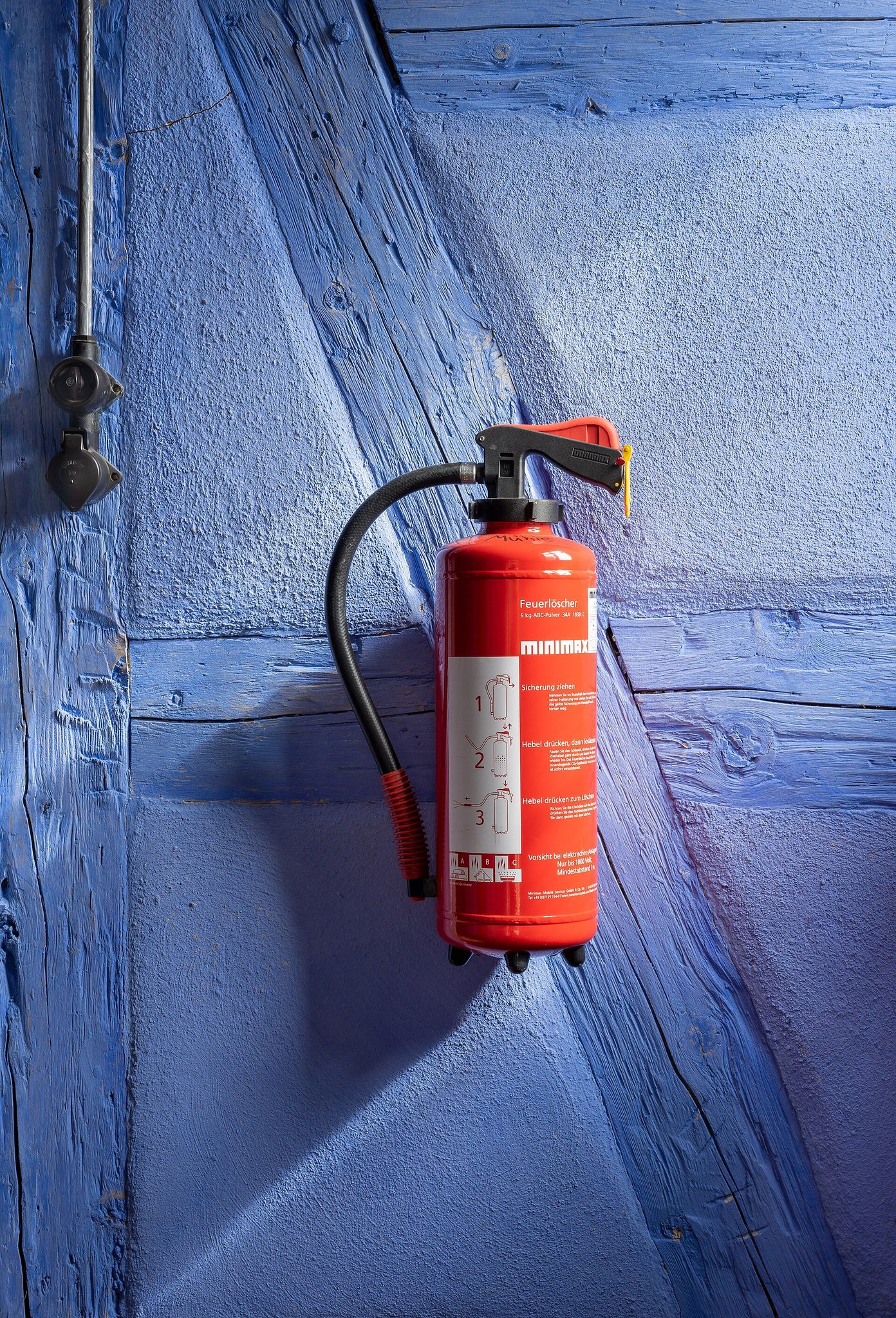
Photo: Roman Eisele / Wikimedia Commons, CC BY-SA 4.0
Room inspection checklist
| Item | Pass when | How often |
|---|---|---|
| Smoke alarm | Test button gives a loud alarm, light flashes normally | Monthly |
| Second exit | Window or escape panel opens from inside without a key | Every cleaning |
| Sockets and cables | Not hot, not scorched, no stacked adaptors | Every cleaning |
| Floor extinguisher | Gauge in the green, pin and seal intact | Monthly |
| Emergency and exit lights | Light up when power is switched off as a test | Quarterly |
| Escape plan, emergency numbers | Still posted, legible, correct for the room | Every cleaning |
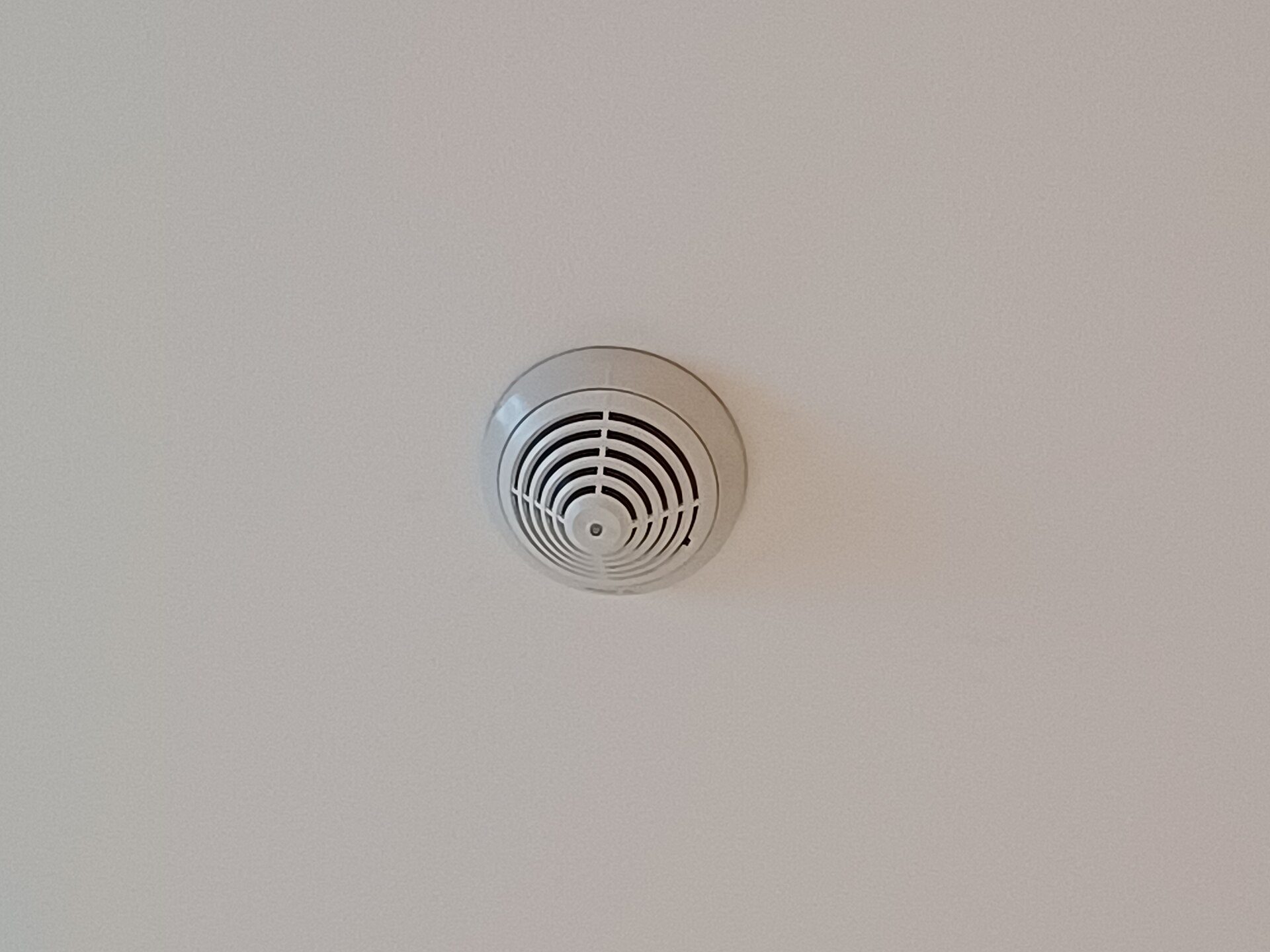
Photo: Curpharar / Wikimedia Commons, CC BY-SA 4.0
Safety rules for guests
Keep the rules short, with pictures, posted in the room and sent in a message before arrival: no smoking in rooms, no cooking in bedrooms, no charging electric vehicles indoors, no flammable materials, where the extinguisher and exits are. At check-in, personally show guests the second exit and how to open the escape panel.
Worked example: fire safety budget for a 3-storey, 5-room house
Mai rents a 3-storey townhouse in Hoi An to run as a 5-room homestay: the ground floor has a shared kitchen, a living room and 1 bedroom; the first floor has 2 rooms; the second floor has 2 rooms. The rear windows on the upper floors have fully closed bars. Before renovating, she asks the local fire police and gets guidance for her house. The equipment budget below uses 2026 reference prices that vary by area and product.
Equipment budget
| Item | Quantity × unit price | Amount |
|---|---|---|
| 4 kg powder extinguisher (each floor, stairs) | 5 × 250,000 VND | 1,250,000 VND |
| 3 kg CO2 extinguisher (kitchen, electrical panel) | 1 × 450,000 VND | 450,000 VND |
| Standalone smoke alarm (5 rooms, corridor, kitchen) | 7 × 250,000 VND | 1,750,000 VND |
| Emergency light | 3 × 200,000 VND | 600,000 VND |
| Exit sign | 3 × 180,000 VND | 540,000 VND |
| Smoke hood (2 per room) | 10 × 150,000 VND | 1,500,000 VND |
| Rope escape ladder for the top floor | 1 × 1,800,000 VND | 1,800,000 VND |
| Refitting window bars with an opening escape panel | 2 × 1,200,000 VND | 2,400,000 VND |
| Printed bilingual escape plans and rules | 1 set × 300,000 VND | 300,000 VND |
| Total | 10,590,000 VND | |
Checking the sum and the monthly cost
1,250,000 + 450,000 + 1,750,000 + 600,000 + 540,000 + 1,500,000 + 1,800,000 + 2,400,000 + 300,000 = 10,590,000 VND (roughly 400 USD). Spread over the first 12 months: 10,590,000 ÷ 12 = 882,500 VND per month, or about 176,500 VND per room per month for 5 rooms. That is less than one room night in many places; there is no reason to cut it.
What is not in the table
Electrical inspection and repairs by an electrician, checking the shared kitchen's gas pipes and valves, fire and explosion insurance (if compulsory for her property) and any extra items the fire police require must be added. Mai lists these as separate lines in her capital budget so the next step, the break-even calculation, is accurate.
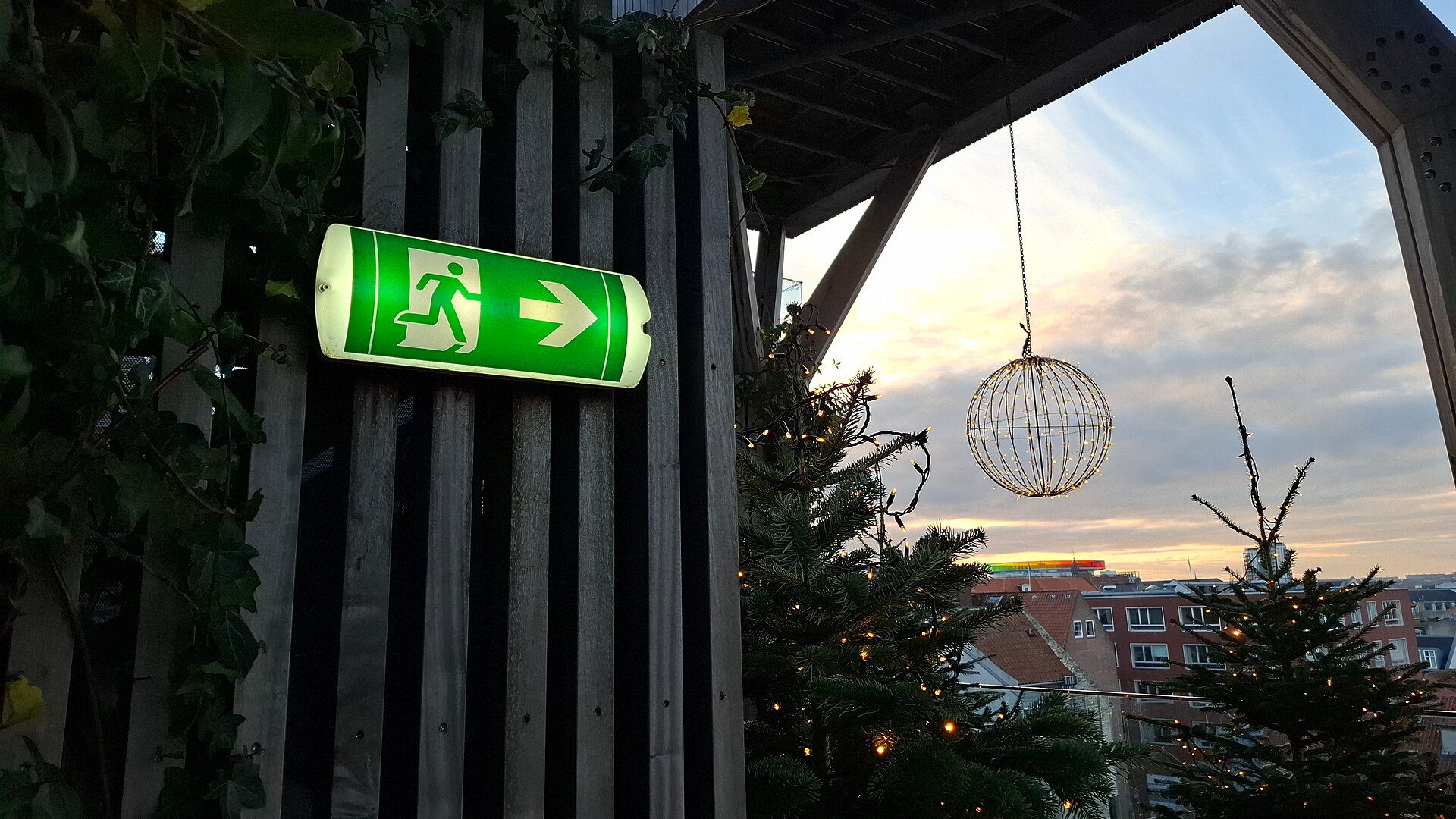
Photo: Ciara Ní Riain / Wikimedia Commons, CC BY-SA 4.0
Common mistakes when opening a homestay
Renovating first, asking about fire safety later
Sign: closed window bars, a mezzanine and timber partitions are built, then you are told to remove and redo them. Cause: doing things in the wrong order. Fix: ask the fire police before designing or renovating.
Not registering "regulars" or "one-night guests"
Sign: guest names missing from the records when police check. Cause: treating registration as a nuisance. Fix: make registration a compulsory step of check-in, with no exceptions.
Renting an apartment for Airbnb without asking management
Sign: security will not let guests up, neighbours complain, the lease is terminated. Cause: trusting an agent's "everyone does it". Fix: ask the building management in writing before signing a lease.
Buying fire equipment and forgetting it
Sign: extinguishers without pressure, smoke alarms with dead batteries, emergency lights that do not work. Cause: no inspection schedule. Fix: add the checklist above to the cleaning log and record the date and the person who checked.
Frequently asked questions
Do I need a licence to open a homestay in Vietnam?
Renting rooms by the night is an accommodation business: you need business registration and must meet public security and fire safety conditions; a homestay for tourists also falls under rules for tourist accommodation. Ask the commune or ward People's Committee and police where the property is for the exact documents.
Can I run an apartment on Airbnb?
It depends on the building rules, your contract and local guidance. Many buildings restrict or ban short-term rentals. Ask the building management in writing before investing.
Do one-night guests need to be registered?
Accommodation businesses must register guests' stays as required, regardless of the number of nights. Ask the commune or ward police about the current channel and deadline.
How is homestay income taxed?
Room income must be declared and taxed under the rules for household businesses or companies, including money received through foreign platforms. Ask the local tax office about the current threshold and rates.
What minimum fire equipment does a small homestay need?
At least an extinguisher on each floor, a smoke alarm in each bedroom, emergency lights and exit signs, a second exit on every floor where guests sleep, and an escape plan. Official requirements depend on the building; ask the fire police.
Practice and self-assessment
- Choose a real property (yours or one you plan to rent) and build the 7-step table above with columns "done", "need to ask", "ask whom".
- Walk through the property, sketch each floor and mark extinguishers, smoke alarms and second exits.
- Budget the fire equipment using Mai's table as a template and check the sum.
- Write 6 lines of bilingual Vietnamese and English safety rules for guests.
Self-assessment criteria
- Pass: every procedure step names the authority to ask and notes the actual answer.
- Pass: your sketch shows a second exit on every floor where guests sleep.
- Pass: the budget total matches the lines, marked "reference" with the year.
- Not yet: fully closed window bars remain without an escape panel, or you have no way to register guests' stays.
With the paperwork and safety in place, move on to the next step of the roadmap: Choosing a model, location & break-even, where you compare subletting, managing for owners and owning, and work out the occupancy you need to avoid a loss. The detailed capital calculation is in how much capital does a homestay need? Budget and break-even.
Keep learning homestay operations: after the paperwork come choosing a model, room setup and listing, seasonal pricing, guest messaging, cleaning and maintenance. See the 8-step homestay and Airbnb host roadmap.