The most reliable way to tell genuine cosmetics from fakes is to check four things together: a supply source with invoices and delivery papers; a complete Vietnamese supplementary label that matches the original label; a clearly printed batch code and expiry date that match between box and bottle; and an anti-counterfeit seal or QR code that leads to the brand's official site. No single sign is enough on its own, because fakes are printed better every year and seals can be copied too. This is the first lesson for beauty advisors in Vietnam: you learn to check stock like a careful counter assistant, and to talk to customers honestly without turning cosmetics into "medicine".
By the end of this lesson, you will be able to:
- Read a Vietnamese supplementary label and point out the 8 pieces of information it must carry, compared with the original label.
- Read the manufacture date, expiry date, batch code and period-after-opening (PAO) symbol to work out how long a product is still usable.
- Check an incoming delivery with a 10-point checklist and write a record when a product looks suspicious.
- Recognise advice that breaks professional ethics (instant whitening, acne gone for good) and replace it with honest wording.
- Know when to stop selling and advise the customer to see a dermatologist.
Starting out as a beauty advisor? This is step 1 of the roadmap: genuine products, Vietnamese labels and advisory ethics, the foundation before skin types, ingredients and sales skills. See the 8-step beauty advisor roadmap to learn in the right order.
Why does a beauty advisor need to spot fake cosmetics?
Customers who buy at a counter assume the product is genuine, in date and safe. If something goes wrong, the people answerable to the customer are the shop and the advisor who recommended it.
Fake, look-alike and unknown-origin products
- Counterfeit: copies another brand's name and packaging; what is inside is not that brand's product.
- Look-alike: uses a similar name or bottle shape so buyers confuse it, without printing the real brand name.
- Unknown origin: may be genuine but has no import papers, no Vietnamese label and no record of how it was stored. A proper shop should not sell it.
- Short-dated and expired: genuine but close to or past its expiry date; expired stock is never sold.
Risks for customers and for the shop
Unregulated products, especially unlabelled tubs of mixed whitening cream (known in Vietnam as "kem tron"), can contain banned substances or ingredients meant only for prescription use, causing irritation, breakouts and long-lasting thinning of the skin. A shop selling fakes or goods of unknown origin can be fined, have stock seized and lose its reputation. An advisor who checks stock is the last line of protection before a product reaches the customer.
Cosmetics must be notified before sale
In Vietnam, a cosmetic product must be notified to the drug regulatory authority and receive a notification receipt number before it can be sold. You do not need to know the procedure, but you need to know two things: a properly imported product has a notification record that can be looked up, and the claims on the label must match what was notified. The lookup site and method can change, so ask your store manager or distributor how it is done today.
Reading the Vietnamese label: 8 items it must show
Imported goods sold in Vietnam must carry a supplementary label in Vietnamese stuck on the box or bottle. It is not a token sticker: it tells you who is responsible for the product if something goes wrong. Under general labelling principles a cosmetic supplementary label usually carries the items below; detailed rules can change, so check the current regulations or ask the distributor when in doubt.
The 8 items
- Product name (matching the original label).
- Uses and directions, in Vietnamese.
- Ingredients (the INCI list), as on the original label in Figure 1.
- Net content: volume (ml) or weight (g).
- Name and address of the organisation or person responsible for placing the product on the market.
- Country of origin.
- Batch number, and manufacture date or expiry date.
- Warnings and precautions (avoid eyes, patch test first, and so on).
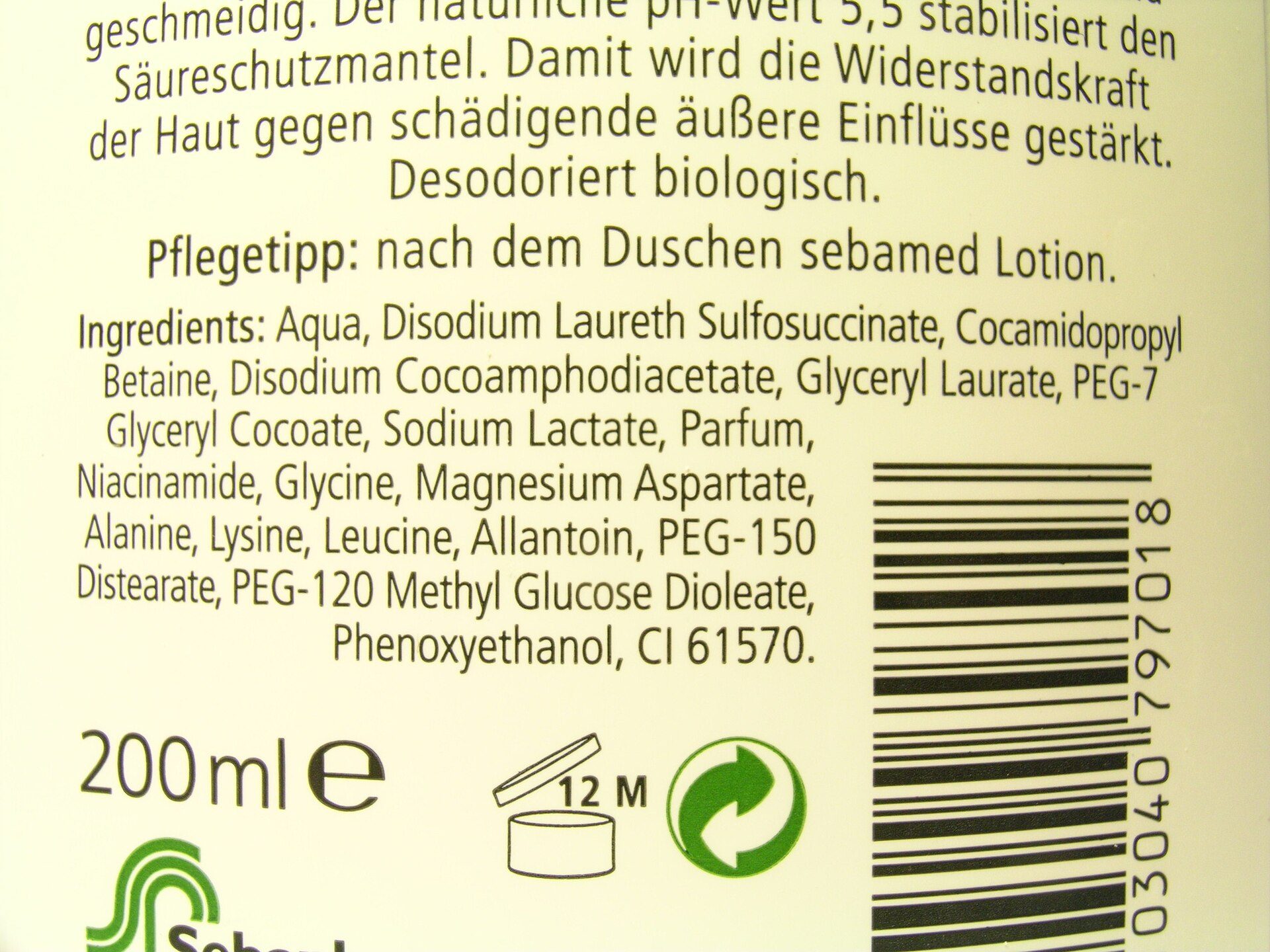
Photo: No machine-readable author provided. Abdull assumed (based on copyright claims). / Wikimedia Commons, CC BY-SA 3.0
Compare the supplementary label with the original
Put the two labels side by side and compare line by line. Product name, volume and origin must be identical. The ingredients on the Vietnamese label usually repeat the INCI names; if the order or number of ingredients differs a lot from the original, the label was printed for another product or printed carelessly. How to read each group of ingredients is covered in how to read cosmetic ingredients: the INCI list, actives and concentrations (step 3 of the roadmap).
Warning signs on a supplementary label
- The sticker covers the batch code or expiry date on the original label.
- No name or address of the responsible company, or only a phone number.
- Many spelling mistakes, blurred print, lifting edges, signs of being peeled and re-stuck.
- Claims in Vietnamese go further than the original, for example "moisturising" on the original but "treats melasma" on the sticker.
Expiry date, batch code and the open-jar symbol
These three decide whether a product can still be sold and used; every brand prints them differently, so beginners often get them wrong.
Manufacture date and expiry date
The expiry date usually follows EXP, "Use by" or "Best before" (HSD in Vietnamese); the manufacture date follows MFG, "Production" or a letter P as in Figure 2 (NSX in Vietnamese). Some brands print only the manufacture date plus a shelf life, such as "best used within 36 months of manufacture", and you have to work out the expiry date yourself. Dates may be day/month/year or year/month/day; when unsure, ask the distributor rather than guess.
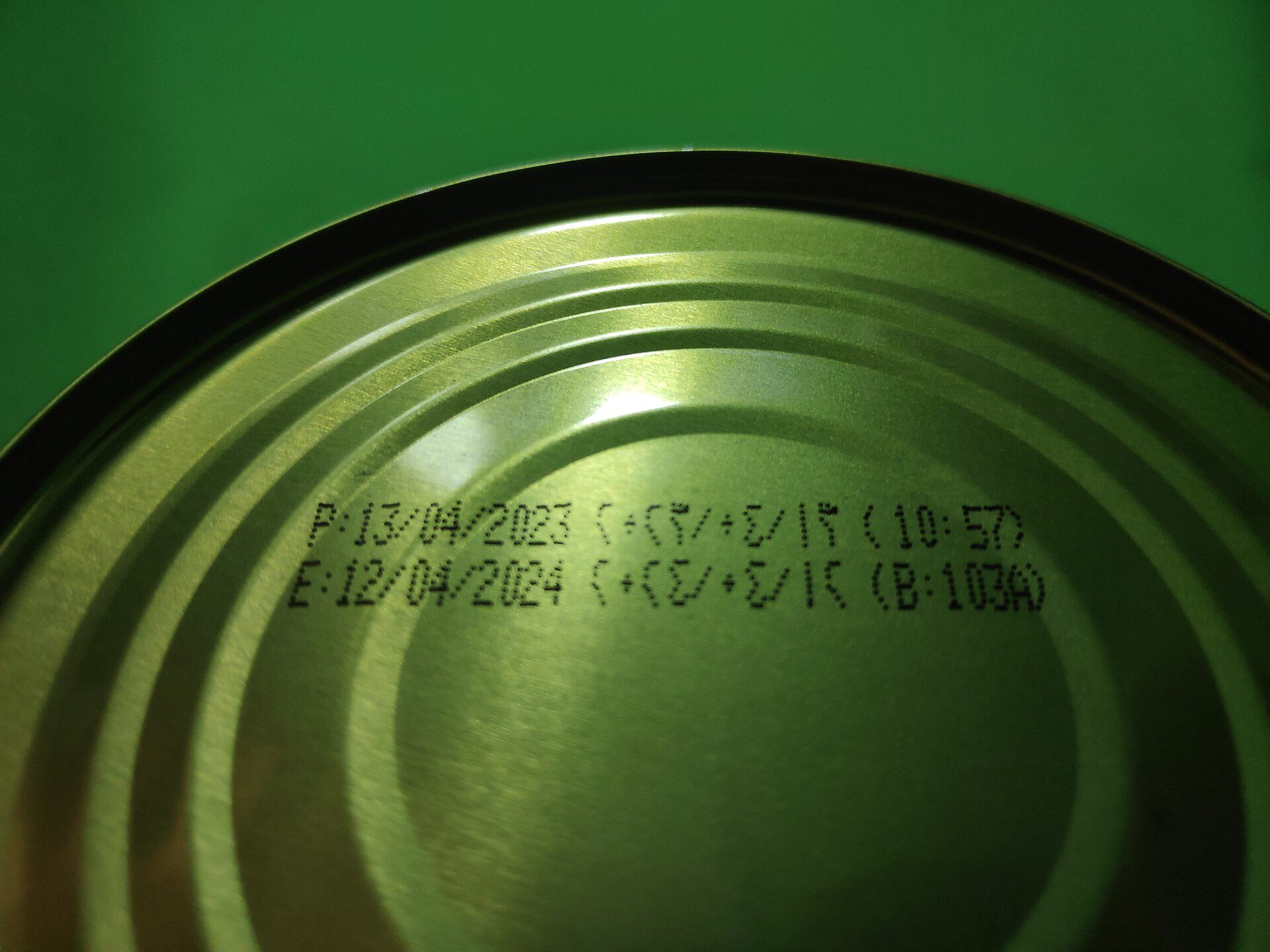
Photo: Gaurav Dhwaj Khadka / Wikimedia Commons, CC BY-SA 4.0
What the batch (lot) code is for
The batch code identifies the production run. When a brand recalls a faulty run, it announces it by batch code. The batch code on the box and on the bottle (often embossed or inkjet-printed on the base or the crimp of a tube) must match. A box with one code and a bottle with another suggests the box and bottle were paired up later; set that item aside.
The open-jar symbol (PAO)
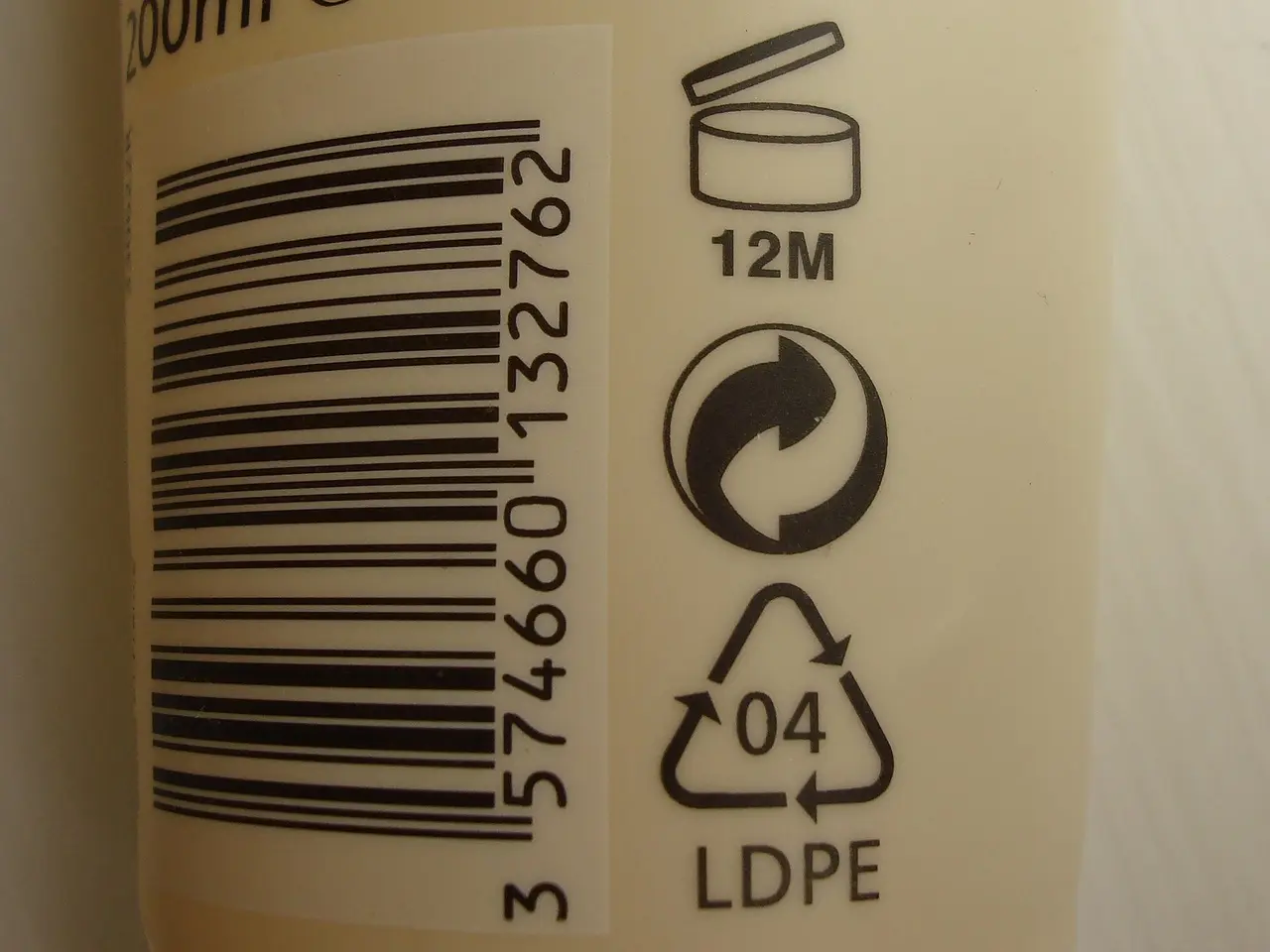
An open-jar icon with a number and the letter M, such as 6M, 12M or 24M (Figure 3), is the PAO (period after opening): once opened for the first time, use it within that many months. PAO does not replace the expiry date: unopened products follow the printed expiry date, opened ones follow whichever comes first. When selling, tell customers to write the opening date on the bottle with a marker.
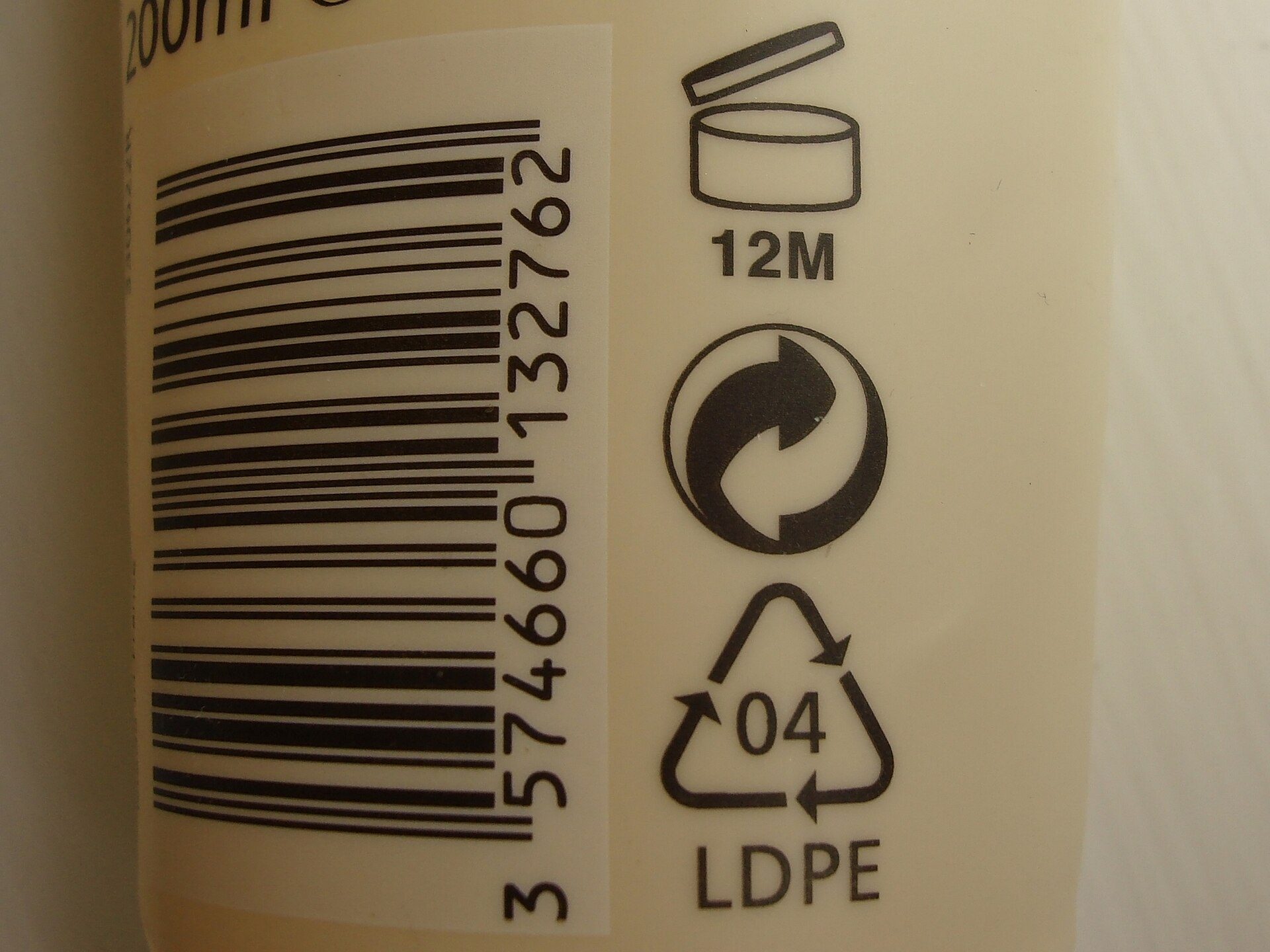
Photo: Trounce / Wikimedia Commons, CC BY-SA 3.0
A barcode does not prove a product is genuine
The first digits of an EAN barcode only show which country's numbering body issued the code, not where the product was made, and certainly not that it is genuine; counterfeiters can reprint a real barcode exactly. Never tell a customer "a barcode starting with 3 means real French goods".
Anti-counterfeit seals, QR codes and supply sources
Seals filter out some fakes, but seals get copied too; treat them as one layer among several.
Common seal types
- Hologram seals: tilt the seal and the image changes colour and shape. Copies are often just shiny, without a clear change.
- Scratch-off or secret codes: scratch to reveal a code, then text it or enter it on the brand's site. A code that has already been checked many times is suspicious.
- QR codes: scan with a phone; it must open the official domain of the brand or distributor. A QR code leading to an unknown site, or a page that only says "genuine product" without product details, is suspicious.
- Tamper seals and shrink wrap: intact, not torn, no sign of being heated and re-sealed.
The supply source matters more than any seal
Genuine products follow a chain: brand or importer, then distributor, then shop. Every delivery needs an invoice and delivery note listing product names, quantities and batch codes. A new advisor does not choose suppliers, but has the right and the duty to tell the manager when a delivery looks unusual: an unusually low purchase price, a carton without paperwork, or batch codes on the note that differ from those on the goods.
Personally imported and pre-order goods
Products brought in personally from abroad (called "hang xach tay" in Vietnam) may be genuine but usually lack a Vietnamese label and official import papers, so proper counters do not stock them. If a customer compares your price with such goods, explain honestly: you are not calling their product fake, but your counter only sells items with a Vietnamese label and papers, which can be returned if there is a problem.
The 10-point receiving check and a quick reference table
Run this check on every delivery, and a quick re-check when moving stock from the storeroom to the shelf.
10-point checklist when receiving goods
- Compare the delivery note with the order: names and quantities.
- Check cartons: sealed, dry, not badly crushed.
- Check the shrink wrap and tamper seal on each box.
- Check the Vietnamese label has all 8 items and does not cover the batch code or expiry date.
- Compare batch codes on the box, the bottle and the delivery note.
- Note the expiry date; tell the manager if it is below the shop's minimum (for example under 6 months).
- Scan the QR code or check the seal on a few boxes per batch.
- If there is an opened tester, compare colour, smell and texture with the previous batch.
- Suspicious items: set aside in a separate box labelled "awaiting verification", never put on display.
- Record the delivery in the stock book, write a report and photograph the batch codes of suspicious items.
Quick reference: signs and actions
| What to check | Pass | Warning sign | Action |
|---|---|---|---|
| Vietnamese label | Complete, matches original | No responsible company, batch code covered | Set aside, tell the manager |
| Batch code | Box, bottle and note match | Box and bottle differ | Set aside, photograph, ask the distributor |
| Expiry date | Above the shop minimum | Short-dated, altered, covered | Tell the manager; never sell expired stock |
| Seal, QR | Clear hologram change, QR to official site | QR to unknown site, code checked many times | Set aside, send the code to the brand |
| Look and smell | Same as previous batch | Odd smell, separation, colour change | Stop using the tester, tell the manager |
| Purchase price | On the distributor price list | Unusually cheap for the market | Manager re-checks the source |
Testers must be clean and in date too
Testers are used by many customers and pick up germs easily. Write the opening date on them and replace them when colour or smell changes. Do not let customers dip fingers into jars: use spatulas, cotton pads and cleaned brushes. Take lipstick samples with a spatula; never apply a tester straight to a customer's lips.
Worked example: checking 48 boxes of sunscreen
A cosmetics counter in a shopping mall receives 48 boxes of 50 ml sunscreen. Shop rules: incoming goods should have at least 12 months left; 6–12 months is accepted but must be sold first; under 6 months goes back to the distributor. The delivery date is 15 November 2026.
Results box by box
- 40 boxes, batch A1, expiry 10/2028: about 23 months left, pass.
- 3 boxes, batch A1, expiry 10/2028, but the bottle inside is printed with batch B7: box and bottle do not match, set aside for verification.
- 4 boxes, batch C2, expiry 08/2027: about 9 months left, accepted but placed at the front to sell first.
- 1 box with torn shrink wrap and a peeled seal: set aside, request a replacement.
Check the sum: 40 + 3 + 4 + 1 = 48 boxes. To the shelf: 40 + 4 = 44 boxes. Set aside: 3 + 1 = 4 boxes. 44 + 4 = 48, matching the delivery note.
Working out remaining life after opening
Batch C2 has a PAO of 12M and a printed expiry of 08/2027. A customer buys it on 15 November 2026 and opens it straight away. By PAO it lasts until about 11/2027; by the printed date only until 08/2027. Whichever comes first applies, so 08/2027, about 9 months. Using about 1 ml every morning for face and neck, a 50 ml bottle lasts about 50 days, so it will be finished well in time. You still state the expiry date clearly; never quietly sell short-dated stock.
Quarantine record
| Product | Quantity | Reason | Photo | Next step |
|---|---|---|---|---|
| Sunscreen 50 ml, box batch A1 | 3 | Bottle inside is batch B7, does not match box | Yes, box and bottle codes | Send to distributor to verify |
| Sunscreen 50 ml, batch A1 | 1 | Torn shrink wrap, peeled seal | Yes | Replace box |
| Total set aside | 4 | |||
The record is signed by the receiver and the shift manager. Write down exactly what you saw; do not conclude "fake" on your own.
Advisory ethics: cosmetics are not medicine
Cosmetics clean, perfume, protect, keep skin in good condition and change appearance. They are not medicines and are not used to diagnose or treat disease. Everything you tell a customer must stay within the product's notified uses.
Promises you must never make
- "Two shades lighter in 7 days", "instant whitening": no compliant product can promise this; products that do are usually suspect.
- "Cures acne for good", "removes melasma permanently": acne and melasma involve hormones, genetics and sun, and need a doctor's assessment.
- "No side effects", "100% safe for every skin type": any product can irritate some people.
- "Every doctor uses this", "treats dermatitis": borrowing medical authority to sell.
Honest alternatives
| Instead of | Say |
|---|---|
| Two weeks and your acne is gone | This helps cleanse and control oil; if you have a lot of inflamed acne, please see a dermatologist |
| Instant whitening | Used regularly with sunscreen it helps even out skin tone; changes usually take several weeks |
| It never irritates | Try it first on a small area behind the ear or inside the arm; stop if it stings or turns red |
| This treats dermatitis | This is a cosmetic, not a treatment; if you have dermatitis, please ask your doctor before using it |
Do not upsell what the customer does not need
Only suggest an extra product when it meets a need the customer has told you about. Suggesting an exfoliant to someone whose sensitive skin is already red and stinging causes harm. Customers come back because they trust you, not because you sold them many items at once.
When to stop selling and recommend a doctor
Health note: A beauty advisor does not diagnose skin conditions and does not replace a doctor. Advise the customer to stop using the product and see a dermatologist when: skin swells, breaks out in a rash, burns, weeps or forms pus after using a cosmetic; acne is heavily inflamed, cystic or scarring; a patch of skin changes colour, or a mole changes size or bleeds; skin becomes thin, red and shows visible blood vessels after using unlabelled whitening creams. Swelling of the face or lips or difficulty breathing after applying a product is an emergency: call 115 (the emergency number in Vietnam) or go to the nearest medical facility immediately. Pregnant or breastfeeding women and people under treatment for skin disease should ask a doctor before using products with strong actives.
When a customer brings in a suspicious product
Check the label, batch code and seal and say exactly what you can see: "This jar has no Vietnamese label and no responsible company, so I cannot confirm where it comes from; I suggest you stop using it." Do not declare it fake without grounds, and do not criticise other sellers.
When a customer reacts to a product bought at your counter
- Advise them to stop using it immediately and rinse with cool water.
- Record the product name, batch code, purchase date, dates of use and symptoms; keep the bottle.
- Advise a doctor's visit if any sign in the health note above appears.
- Tell the manager so they can deal with the distributor under the return policy.
Common beginner mistakes
Trusting a hologram completely
Sign: a shiny seal is taken as proof of authenticity. Cause: not knowing seals are copied too. Fix: check the seal together with the label, batch code and import papers.
Ignoring expiry dates when stocking shelves
Sign: old stock sits at the back, new stock at the front, and expired items turn up at stocktake. Cause: stocking the shelf whichever way is convenient. Fix: earliest expiry goes to the front (first expiring, first out), and check shelf dates weekly.
Copying online advertising when advising
Sign: using phrases like "two shades lighter" or "cured for good" because livestreamers say them. Fix: only state the uses printed on the notified label, and use the honest alternatives table above.
Frequently asked questions
What is the quickest way to check if cosmetics are genuine?
There is no one-step check. The quickest is four points: a complete Vietnamese label, matching batch codes on box and bottle, a clear expiry date, and a seal or QR code leading to the official site; for shops, add the import papers.
Is a cosmetic without a Vietnamese label always fake?
Not necessarily, but it is not eligible for sale at a proper counter and nobody can be identified as responsible for it. An advisor should not sell it and should tell the customer so.
What does 12M on a cosmetic mean?
It is the open-jar (PAO) symbol: use the product within 12 months of first opening. If the printed expiry date comes sooner, follow the printed date.
Can expired cosmetics still be used?
They should not be. Preservatives and actives can weaken, the product is more easily contaminated and can irritate. A counter never sells expired stock, even at a discount.
A customer asks whether a cream will cure acne for good. What do I say?
Tell the truth: cosmetics help cleanse, reduce oil and reduce clogging, but they do not cure acne for good. If acne is heavily inflamed, cystic or scarring, recommend a dermatologist.
Practice and self-assessment
- Take 3 cosmetic products at home, copy out the Vietnamese label (or the label) and mark which of the 8 items are present or missing.
- Find the batch code, manufacture date, expiry date and PAO on each; work out the use-by date if opened today.
- Rewrite 5 cosmetic advertising lines you have seen online as honest advice using the table above.
- Role-play: a friend hands you an unlabelled jar and asks "real or fake?"; answer within 1 minute.
Self-assessment criteria
- Pass: you identify all 8 label items on at least 2 products and work out the use-by date correctly with the "whichever comes first" rule.
- Pass: none of your 5 rewritten lines still says "treat", "for good", "instant" or "100%".
- Pass: in the role-play you state only what you can see, do not jump to conclusions, and advise stopping use or seeing a doctor when needed.
- Not yet: you call a product genuine just because it has a seal, or use the barcode to guess its origin.
Once you can check stock and keep your advice honest, move on to the next step of the roadmap: Skin types, concerns & when to refer, where you learn to recognise oily, dry, combination and sensitive skin and the signs that mean you should send a customer to a doctor instead of selling another product.
Keep learning as a beauty advisor: after genuine products come skin types, ingredients, budget skincare routines, makeup demos, sales skills and after-sales care. See the 8-step beauty advisor roadmap.