The basic cocktail bar tools are five pieces: a shaker to shake, a jigger to measure, a bar spoon to stir, a strainer to hold back ice and a muddler to crush fruit and herbs. Alongside them come the 8 base spirits every bar stocks: gin, vodka, rum, tequila, whisky, brandy, liqueur and vermouth. Before you learn any recipe, a head bartender will check that you can name each tool, know which bottle is which spirit, read a label, store open bottles in the right place and count stock without mistakes.
By the end of this lesson, you will be able to:
- Name, choose and clean the 5 core tools and the supporting tools on the bar.
- Tell the 8 base spirits apart by raw material, alcohol strength, flavour and signature cocktail.
- Read a bottle label: type, strength, volume, age, origin, tax stamp and Vietnamese sub-label.
- Check incoming stock to set aside suspected counterfeits, and know what to do if a guest shows signs of poisoning.
- Store open bottles and count stock by weighing bottles, working out losses with figures that add up.
Learning bartending from scratch? Tools and base spirits are step 2, after responsible alcohol service and before shake, stir, build and muddle techniques. See the 8-step bartender roadmap to learn in the right order.
The basic cocktail tool kit: 5 core pieces
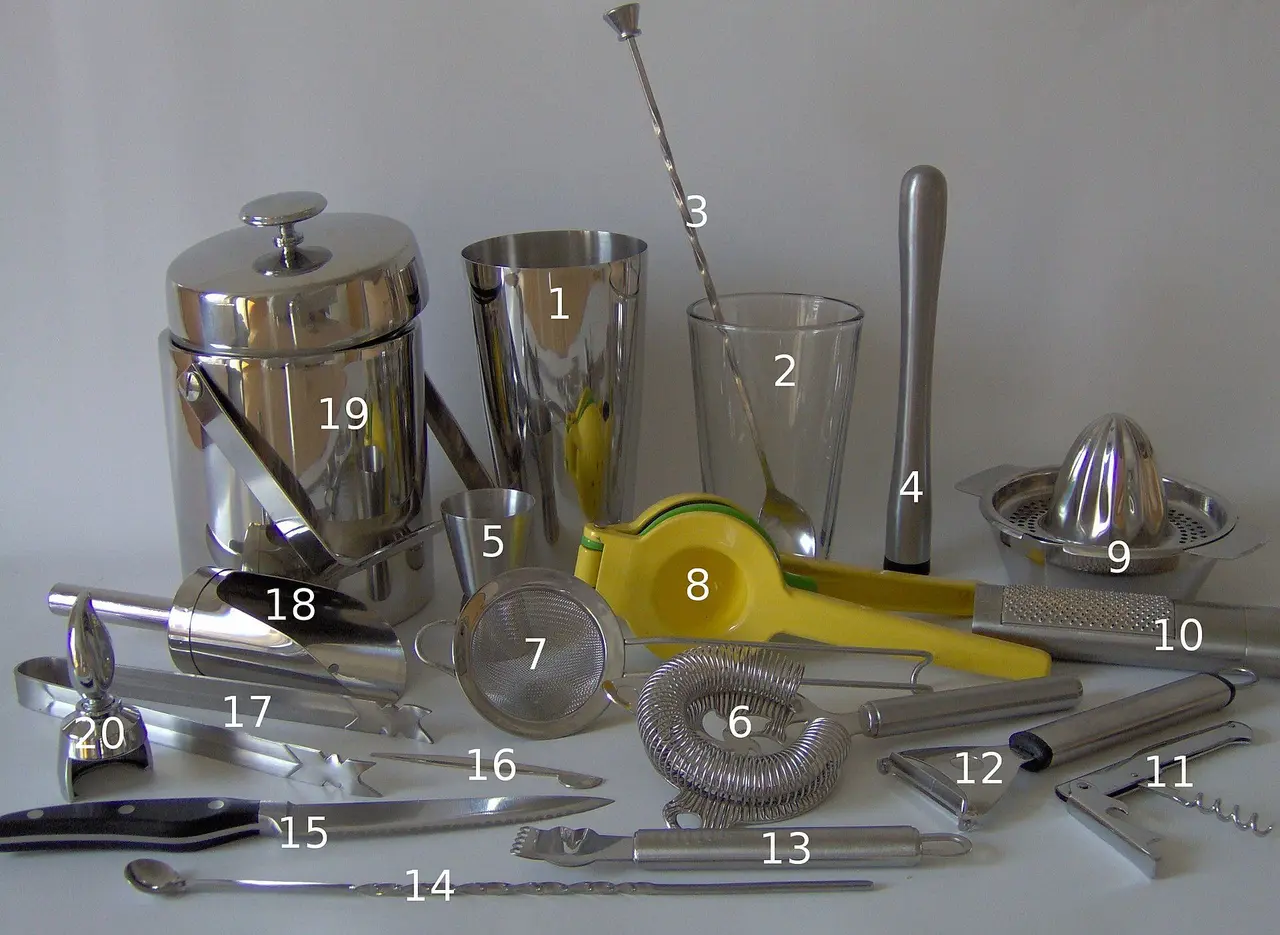
Figure 1 shows a typical bar tool set, numbered so you can practise naming them: 1 and 2 are a Boston shaker, 3 is a bar spoon, 4 is a muddler, 5 is a jigger and 6 is a spring strainer.
Shakers: Boston, cobbler and how to choose
A shaker is used to shake spirits, juice and ice so the drink gets cold, mixed and frothy. These are the two types you will see most in Vietnam:
- Boston shaker (Figure 1, items 1 and 2): two parts, a large steel tin capped by a smaller tin or a glass. Fast to shake and easy to wash, but it needs a separate strainer; most bars use the two-tin version because it does not break.
- Cobbler shaker (Figure 2): three parts, a body, a lid with a built-in strainer and a small cap. Handy for beginners, but the lid tends to stick when cold.
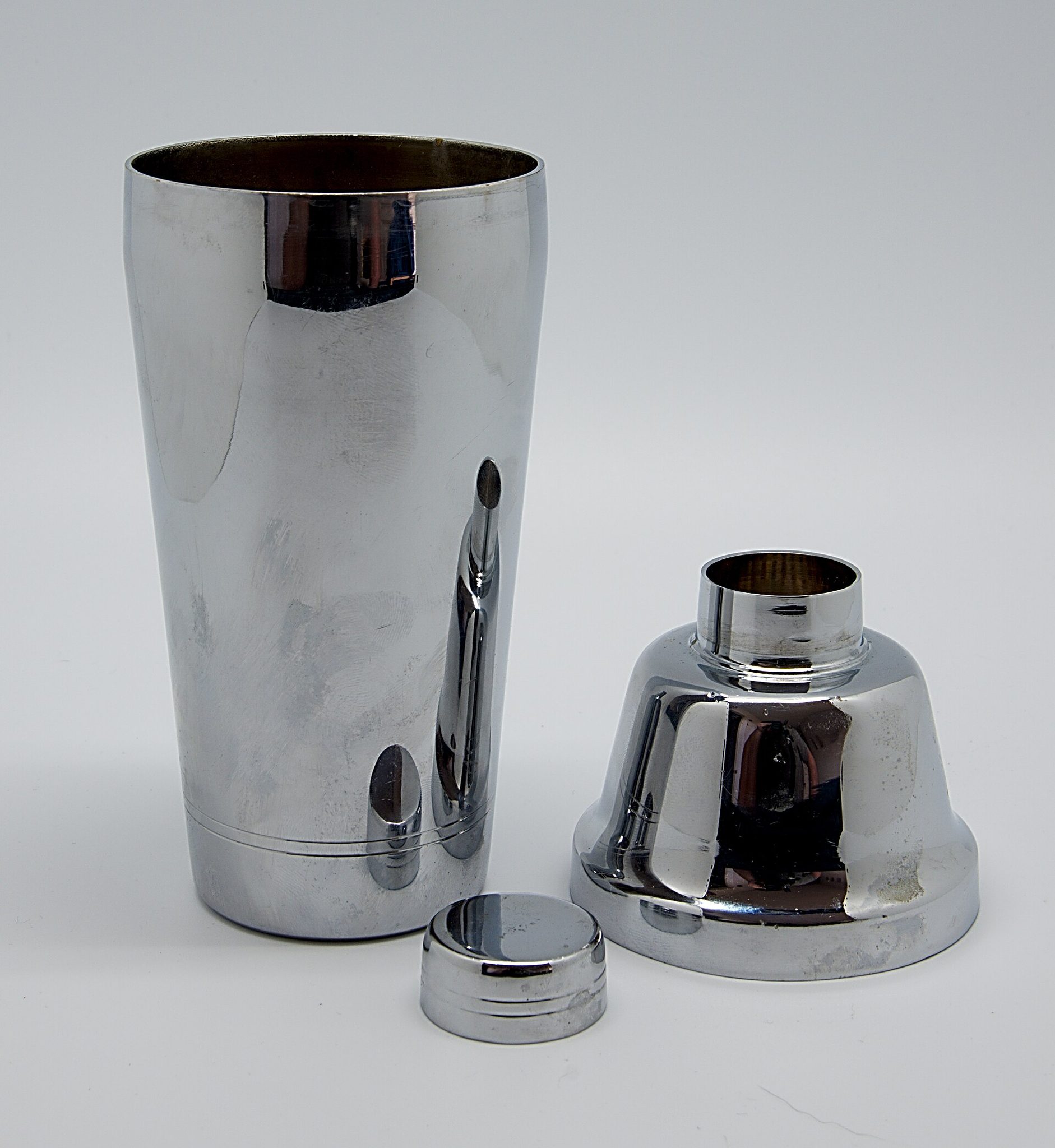
Photo: Clément Bucco-Lechat / Wikimedia Commons, CC BY-SA 3.0
When buying, test-shake with water and ice: the parts must seal tightly and not leak onto your hands. If a cobbler lid sticks, do not pry it with a knife; hold the body and tap the edge of the lid with the heel of your hand.
The jigger: the most important tool for pour cost
A jigger is a double-ended measuring cup with a different volume at each end, usually 30/45 ml, 30/60 ml or 25/50 ml. Over-pouring by 5 ml per drink can leave the stock a dozen bottles short by the end of the month. Many jiggers have lines inside for smaller measures.
Do not trust the volume printed on a new jigger. Fill it with water to the brim and weigh it on a digital scale (1 ml of water is about 1 g); if it is off by more than 2 ml, throw it out. Fast, clean jigger pouring is covered in step 3.
Bar spoon and muddler
A bar spoon has a long handle of about 30–40 cm, twisted so it spins smoothly in a mixing glass. One full spoon is about 5 ml, and the other end may have a flat disc for layering drinks.
A muddler crushes fruit, herbs and sugar. Choose stainless steel with a toothed plastic head, or plain unvarnished wood; avoid painted or lacquered wood, because the coating flakes into drinks after a few months. How to muddle mint with the right pressure is covered in how to make a mojito the bar way.
Strainers: holding back ice and double straining
- Hawthorne strainer: a strainer with a coiled spring round the edge, placed over the shaker tin to hold back ice while pouring.
- Julep strainer: a large perforated spoon, used with a mixing glass for stirred drinks.
- Fine strainer (Figure 1, item 7): a small cone of fine mesh that catches ice chips, fruit pulp and passion fruit seeds.
Double straining means pouring through a Hawthorne and a fine strainer at the same time, as in Figure 3. Drinks served without ice in a stemmed glass, such as a Daiquiri or Margarita, are usually double strained so the surface is clear, with no floating ice shards.
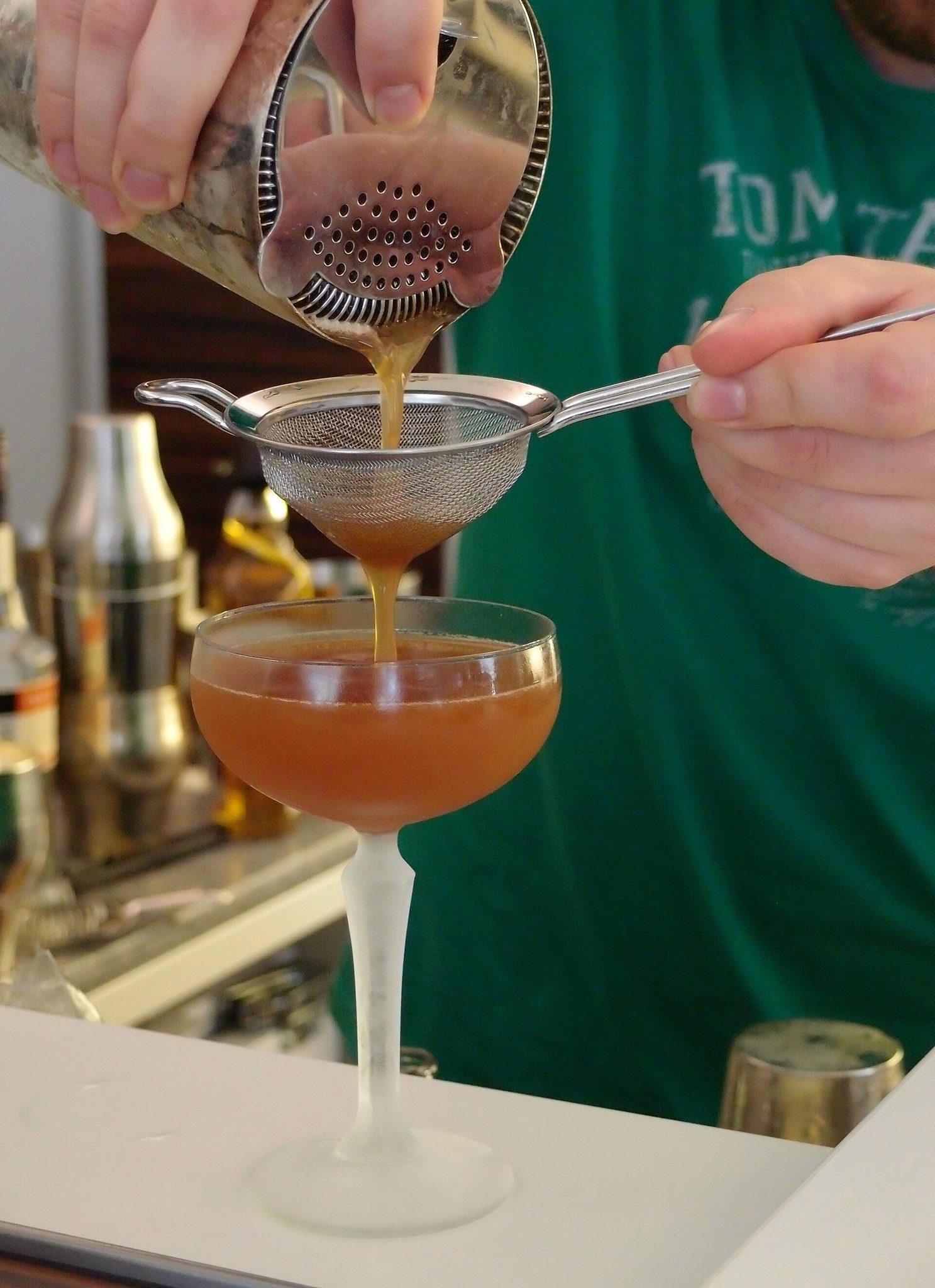
Photo: SKopp / Wikimedia Commons, CC BY 4.0
Supporting tools, reference prices and keeping them clean
Supporting tools on the bar
- Mixing glass: a thick, heavy-based glass for stirring clear cocktails such as a Martini or Negroni.
- Ice scoop and tongs: scoop ice with a scoop, never with a glass or your hands (see the step 1 lesson for why).
- Knife, board and peeler: for cutting limes and oranges and peeling zest for garnish.
- Pour spout: fitted to the bottle neck for an even pour.
Tool selection table and reference prices
| Tool | Used for | What to look for | Reference price (VND) |
|---|---|---|---|
| Boston shaker (2 steel tins) | Shaking drinks with juice, egg or milk | Tight seal, no leaks, thick steel | 150,000–450,000 |
| Cobbler shaker | Shaking, built-in strainer | Lid opens easily, even holes | 120,000–400,000 |
| Jigger | Measuring spirits and juice | Inner lines, true volume when re-measured | 50,000–200,000 |
| Bar spoon | Stirring, 5 ml measures, layering | Twisted handle, longer than the mixing glass | 40,000–180,000 |
| Hawthorne strainer | Holding back ice from the shaker | Thick spring, fits the tin | 60,000–250,000 |
| Fine strainer | Double straining | Fine mesh, sturdy frame | 40,000–150,000 |
| Muddler | Crushing fruit and herbs | Steel with plastic head, or unpainted wood | 50,000–200,000 |
These are 2026 reference prices in Vietnam and vary by region, material and brand. A home practice kit with a shaker, jigger, bar spoon, strainer and muddler usually costs about 300,000–1,000,000 VND (roughly 12–40 USD).
Cleaning and storing tools
Rinse with water right after every drink; at the end of the shift, wash with dish soap and brush the strainer spring and the fine mesh, where pulp tends to stick. Dry upside down on an airy rack; do not leave wooden muddlers soaking, or they crack and go mouldy.
What base spirits are: distillation, strength and oak ageing
A base spirit is the main alcoholic ingredient in a cocktail, and almost always a distilled spirit.
Fermentation and distillation
Yeast turns the sugar in grain, sugarcane, grapes or agave into alcohol; beer and wine stop at this stage. Distillation heats the fermented liquid so the alcohol vapour rises and condenses into a much stronger spirit. Copper pot stills (Figure 4) keep more of the raw material's aroma; continuous column stills give a purer, more neutral spirit, as with most vodka.
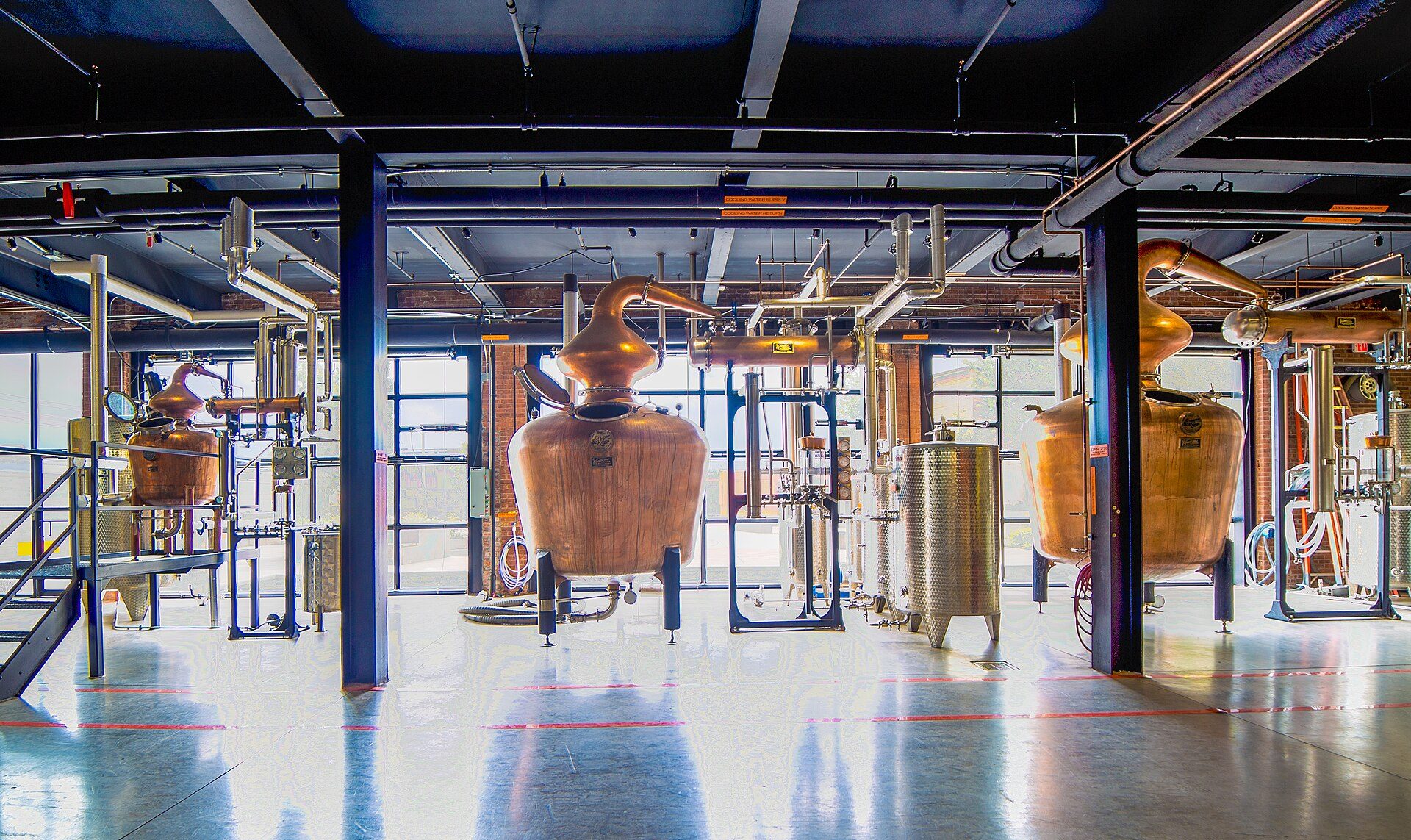
Photo: Cmyk4317 / Wikimedia Commons, CC BY-SA 4.0
Alcohol strength: % vol and proof
Labels state strength as a percentage by volume, written "% vol" or "ABV". Common base spirits sit at 37.5–40%, and some go to 45–50% or higher. American labels may also show "proof", which is exactly twice the % vol: 80 proof is 40%. This is the number you use to work out the alcohol in each drink, as in step 1.
Clear spirits and oak-aged spirits
Freshly distilled spirit is always clear as water. Gold and amber colours come from time in oak casks (Figure 5) or from caramel colouring, which is allowed in some categories. That is why spirits are roughly split into clear spirits (gin, vodka, white rum, blanco tequila) and brown spirits (whisky, brandy, gold and dark rum, aged tequila).
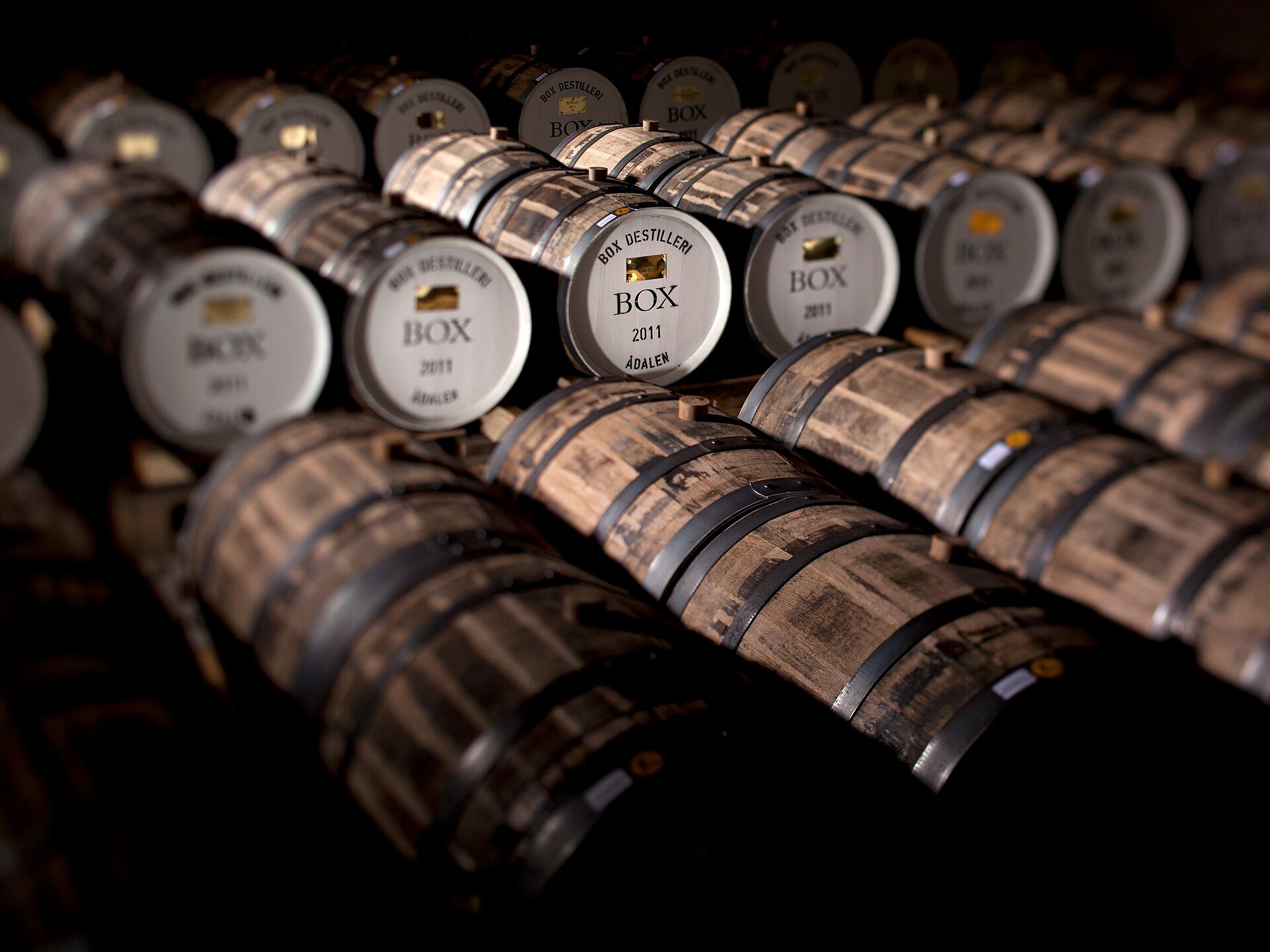
Photo: Lars Ragnå / Wikimedia Commons, CC BY-SA 3.0
The 8 base spirits a bartender must tell apart
The table below is what you need to memorise before learning recipes. Strengths are typical figures; always check the label.
| Spirit | Main raw material | Typical strength | Signature flavour | Signature cocktails |
|---|---|---|---|---|
| Gin | Grain spirit distilled with botanicals, juniper berries required | 37.5–47% | Pine, herbs, citrus peel, dry | Gin and Tonic, Negroni, Martini |
| Vodka | Grain, potato or other materials, distilled and filtered | 37.5–40% | Neutral, clean | Moscow Mule, Cosmopolitan |
| Rum | Sugarcane: molasses or fresh cane juice | 37.5–40% | White rum light, dark rum rich with caramel and molasses | Mojito, Daiquiri |
| Tequila | Blue agave, only from designated regions of Mexico | 35–40% | Vegetal, peppery, citrus | Margarita, Paloma |
| Whisky | Fermented grain (barley, corn, rye), aged in wooden casks | 40–46% | Wood, vanilla, honey, some smoky | Old Fashioned, Whisky Sour |
| Brandy | Distilled grape wine (or other fruit), oak-aged | 35–40% | Raisin, ripe fruit, wood | Sidecar |
| Liqueur | Spirit with added sugar and flavour: fruit, herbs, coffee, cream | 15–40% | Sweet, pronounced flavour | Margarita (triple sec), Espresso Martini |
| Vermouth | Fortified white wine (spirit added) infused with botanicals | 15–18% | Dry: dry, herbal; sweet: sweet, lightly bitter | Martini, Negroni, Manhattan |
Clear spirits: gin, vodka, white rum, blanco tequila
Vodka is the "quiet" base that lets fruit and syrup do the talking. Gin labelled "London Dry" is the dry style that suits a Martini or a Gin and Tonic. Mezcal is also made from agave but is often smoky; it is a separate category and should not be swapped for tequila at random.
Brown spirits: whisky, brandy, aged rum and tequila
Whisky comes in many styles by region and grain: Scotch from Scotland, bourbon from the USA made mainly from corn, and rye from rye grain with a spicier taste. The best-known brandy is Cognac, which may only carry that name when made in the Cognac region of France. Aged tequila is graded by time: blanco is barely aged, reposado rests a few months, and añejo is aged for at least a year.
Supporting spirits: liqueur, vermouth and bitters
Liqueur and vermouth are rarely the main ingredient but decide the balance: triple sec (an orange peel liqueur) in a Margarita, vermouth in a Martini and Negroni. The key difference: vermouth is wine, low in alcohol, so it spoils quickly once opened, like wine, and must not sit on the back bar like a spirit.
Taste responsibly: Learning to tell spirits apart means tasting, but only people aged 18 or over may taste, and only small amounts (a few ml), spitting or drinking water in between. Do not taste during service unless your venue allows it, and do not drive after a tasting session. Guest service still follows the step 1 rules: no alcohol for anyone under 18, never push people to drink, and remind guests who have been drinking not to drive.
Reading bottle labels and spotting counterfeit spirits
Label information to read
- Type: gin, rum, whisky and so on, plus the specific style (London Dry, blanco, single malt, VSOP).
- Strength: "% vol" or "ABV", sometimes with "proof".
- Volume: usually 700 ml, 750 ml or 1 litre. Two identical-looking bottles with different volumes give a different cost per drink.
- Age: "12 years" on a whisky is the age of the youngest spirit in the bottle. For Cognac, VS, VSOP and XO are rising minimum age grades (under the Cognac region's rules, at least 2, 4 and 10 years respectively).
- Origin, producer, importer: imported spirits sold in Vietnam carry a Vietnamese sub-label and an import stamp under current regulations.
Receiving stock: check every case
Bartenders do not choose the supplier, but they are often the ones opening the cases. When stock arrives, check in this order:
- The goods come with an invoice and documents from the supplier your venue has chosen; do not accept loose deliveries from "a friend" at unusually low prices.
- Cases are still sealed, and the batch code on the case matches the one on the bottles.
- Caps and seals are intact, not loose, with no glue marks or knife cuts.
- The stamp and Vietnamese sub-label are present; the stamp is not blurred or stuck on crookedly.
- The label print is sharp, with no spelling mistakes and no peeling edges.
- Bottles from the same batch have the same fill level and colour, with no strange sediment.
Warning signs during a shift
Once a bottle is open, be suspicious of an unusually harsh alcohol smell, or a smell or colour that differs from earlier bottles of the same product. If in doubt, stop using that bottle, label it "do not use", set it aside and tell your manager at once; do not pour it away, because it is evidence. Many venues also dispose of empty premium bottles so they cannot be collected and refilled with fake spirits.
Safety warning on fake spirits and methanol: Spirits mixed with industrial alcohol or badly distilled can contain methanol, a poison you cannot detect by sight, smell, taste or a flame test. Never use spirits of unknown origin at the bar, including "hand-carried" bottles or home-made infused liquor. If a guest who has been drinking shows signs such as headache, nausea, vomiting, abdominal pain, blurred vision, difficulty breathing, drowsiness or seizures (signs may appear late, many hours afterwards), call 115 (Vietnam's emergency number) or take them straight to the nearest medical facility, tell the medical staff what they drank and keep the bottle. Do not try to treat it yourself by inducing vomiting or giving them anything else to drink. A bartender only recognises the signs and gets help; diagnosis and treatment are for doctors.
Storing spirits and open bottles
General rules
- Store bottles upright in a cool place, away from sunlight, stoves and hot machines. High-strength spirits stored on their side for a long time can damage a cork.
- At closing, cap the pour spouts or swap them for the bottle cap to keep out insects and stop evaporation; wash pour spouts regularly.
- Write the opening date on the label or a strip of tape, and use the oldest open bottle first (first in, first out).
Storage table by type
| Type | Storage after opening | Best used within | Signs to discard |
|---|---|---|---|
| Spirits (gin, vodka, rum, tequila, whisky, brandy) | Cool room temperature, tightly closed | Many months; aroma fades as the bottle empties | Off smell, cloudiness, unusual sediment |
| Standard liqueurs (fruit, herbal) | Cool room temperature, tightly closed | As stated on the label | Heavy sugar crystals, colour change, sour smell |
| Cream liqueurs | As per label, usually refrigerated | By the after-opening date on the bottle | Curdling, separation, sour smell |
| Vermouth | Refrigerated, tightly closed | A few weeks; many bars use 1 month as the limit | Sour, flat, like spoiled wine |
Quiet bars should buy small bottles of vermouth so they can finish them in time.
Counting open bottles: 3 ways to measure and how to calculate losses
A stock count compares the liquor actually used with what was sold on the till (POS). Full bottles are easy to count; open bottles are the hard part. There are 3 common methods:
Estimating in tenths
Look at the bottle and estimate how many tenths are left; for a 700 ml bottle each tenth is 70 ml. Fast, but with a large margin of error because bottles have shoulders and necks.
Weighing the bottle
More accurate, and used by many hotels. Each bottle type has a known "empty weight" (weigh one empty bottle of the same kind, pour spout included). The formula:
Remaining volume (ml) = (weight of the open bottle − empty weight) ÷ density of the spirit.
A spirit of around 40% has a density of roughly 0.95 g/ml (lighter than water, because alcohol is lighter than water). Sugary liqueurs are heavier; weigh 100 ml once to get your own figure.
Bottle rulers or marked lines
Stick a paper ruler on a sample bottle, marking 100, 200 and 300 ml. Each bottle shape needs its own ruler.
Worked example: a one-week gin count
Your bar uses one gin in 700 ml bottles at 40%. The empty bottle with pour spout weighs 520 g. You count stock on Sunday night last week and Sunday night this week.
Count figures
| Item | Calculation | Volume (ml) |
|---|---|---|
| Opening stock: 2 full bottles | 2 × 700 | 1,400 |
| Opening stock: 1 open bottle weighing 900 g | (900 − 520) ÷ 0.95 = 380 ÷ 0.95 | 400 |
| Total opening stock | 1,400 + 400 | 1,800 |
| Received during the week: 3 bottles | 3 × 700 | 2,100 |
| Closing stock: 1 full bottle | 1 × 700 | 700 |
| Closing stock: 1 open bottle weighing 805 g | (805 − 520) ÷ 0.95 = 285 ÷ 0.95 | 300 |
| Total closing stock | 700 + 300 | 1,000 |
| Actual usage | 1,800 + 2,100 − 1,000 | 2,900 |
Compared with POS sales
- 40 Gin and Tonics × 45 ml = 1,800 ml.
- 16 Negronis × 30 ml gin = 480 ml.
- 8 Martinis × 60 ml gin = 480 ml.
- Total by recipe: 1,800 + 480 + 480 = 2,760 ml.
Loss = 2,900 − 2,760 = 140 ml, or 140 ÷ 2,900 ≈ 4.8% of usage, close to 3 Gin and Tonics (3 × 45 = 135 ml). If the venue's loss threshold were 3%, this week would be over it.
Finding the cause
- Check the jiggers in use: is one actually 50 ml instead of 45 ml? (Re-measure with water as above.)
- Ask the shift: were there remakes, spills or complimentary drinks not entered on the POS? The bar should keep a wastage log.
- Re-check the empty weight: if the pour spout type changed and nobody re-weighed the empty bottle, every open-bottle figure will be off.
Counting tells the bar whether recipes are being poured correctly; cost per drink is covered in the bar operations step.
Common mistakes with tools and base spirits
A jigger with the wrong volume
Sign: drinks are sometimes strong, sometimes weak, and stock runs short even though nobody free-pours. Cause: a cheap jigger with misprinted lines, or a mix of jigger types. Fix: re-measure every jigger with water and use one type across the bar.
Leaving vermouth on the back bar
Sign: Martinis and Negronis taste sour and flat. Cause: treating vermouth like a spirit. Fix: refrigerate, write the opening date, discard once past the venue's limit.
Receiving stock without checking seals and stamps
Sign: an odd bottle is discovered only after it has been opened for a guest. Cause: signing for the delivery in a hurry. Fix: run the 6 checks above before signing and return any suspicious bottle immediately.
Frequently asked questions
What are the basic cocktail bar tools?
The five core pieces are a shaker, jigger, bar spoon, strainer and muddler. Add a mixing glass, ice scoop, knife and board and you can make most classic cocktails.
Should a beginner buy a Boston or a cobbler shaker?
For home practice you can start with a cobbler because the strainer is built in. If you plan to work in a bar, practise with a two-tin Boston shaker, since most professional bars use one.
What is a base spirit for cocktails?
It is the main alcoholic ingredient of a drink, usually a distilled spirit at 37.5–40%: gin, vodka, rum, tequila, whisky or brandy. Liqueur and vermouth are supporting spirits used to balance flavour.
How long does vermouth last once opened?
Vermouth is a fortified wine, so it needs refrigerating after opening and is best used within a few weeks; many bars use 1 month as the limit. Discard it if it smells sour or flat.
How can a bar spot counterfeit spirits?
Accept only stock invoiced by the supplier your venue has chosen, and check the seal, stamp, sub-label, batch code and fill level of each bottle. Methanol cannot be detected by sight or smell, so a clear supply chain is the main protection.
Practice exercises and self-assessment
- Lay out the bar's tools (or your own kit) on a table, name each one and explain its use within 2 minutes.
- Re-measure every jigger with water and a digital scale, and record the results.
- Pick 8 bottles from the shelf, one per base spirit: read out the type, strength, volume, origin and age (if any), and point out the stamp and sub-label.
- Weigh 3 types of empty bottle, then calculate the remaining volume of 3 open bottles with the formula and compare with a tenths estimate.
Self-assessment criteria
- Pass: name and explain 10/10 tools correctly, and tell Hawthorne, julep and fine strainers apart.
- Pass: sort 8 bottles into the 8 base spirits and state the strength on each label correctly.
- Pass: calculate the volume of an open bottle by weighing, within 20 ml of the real amount (poured into a measuring cylinder).
- Not yet: using an unchecked jigger, leaving open vermouth on the back bar, or accepting a case without checking seals and stamps.
Once you know your tools and base spirits, the next roadmap step is Shake, stir, build & muddle techniques: you will use the same shaker, jigger, bar spoon and strainer to measure accurately, shake to the right chill, stir clear cocktails and build layered drinks.
Keep learning bartending: after tools and base spirits come shake, stir, build and muddle, 20 classic cocktails, mocktails with Vietnamese ingredients and running the bar. See the 8-step bartender roadmap.