Preventing pressure ulcers (bedsores) in someone who lies in bed for long periods comes down to five habits done every day: reposition on a schedule (usually about every 2 hours, or as the nurse instructs), use a 30-degree tilt rather than a full 90-degree side-lying position, use pressure-relieving mattresses and wedge pillows so no bony area takes weight for long, keep the skin clean and dry, and check the skin daily so you catch redness at the very start. A pressure ulcer can begin after only a few hours lying still on one spot, but most can be prevented when the carer does the basics correctly and keeps records. This lesson is written for paid carers of older people at home or in care centres, following common nursing principles; it does not replace the advice of the doctor and nurse looking after the person.
By the end of this lesson, you will be able to:
- Name the 8 bony areas most at risk in each lying and sitting position, and check the skin at least twice a day.
- Use the blanch test to tell ordinary redness from a stage 1 pressure injury, including on darker skin.
- Plan and carry out a 24-hour turning schedule with a 30-degree tilt, "floating" heels and the head of the bed at no more than 30 degrees.
- Choose air mattresses, foam overlays, seat cushions and wedge pillows, and avoid ring cushions and harmful home remedies.
- Know when to tell the nurse, when to take the person to a clinic and when to call emergency services (115 in Vietnam).
Learning elderly care properly? Personal hygiene, changing pads and pressure ulcer prevention is step 3 of the roadmap, after infection control and respectful communication. See the 8-step elderly carer roadmap to learn in the right order.
What is a pressure ulcer, and why are bedbound people at risk?
A pressure ulcer (also called a pressure injury, bedsore or sacral sore) is damage to the skin and the tissue underneath where a bony part of the body presses for a long time against a mattress, a chair or a medical device. Under pressure the small blood vessels are squeezed shut, the tissue is starved of blood and dies from the inside outwards.
Four factors that cause ulcers
- Pressure and time: the harder and longer the pressure, the higher the risk.
- Friction and shear: dragging the person across the sheet, or raising the head of the bed so they slide down, holds the skin in place while the bone moves, tearing the blood vessels underneath.
- Moisture: sweat, urine and faeces soften the skin, so it breaks down and gets infected more easily.
- General health: poor eating, dehydration, diabetes, circulation problems, stroke, dementia, loss of sensation or being unable to turn without help.
Who needs ulcer prevention from day one
Anyone who spends most of the day in bed or in a wheelchair, cannot change position alone, is incontinent or eats poorly. In hospital, nurses often use a risk score (for example the Braden scale). At home, ask the nurse or doctor how high the person's risk is and what turning schedule they recommend, then write it in the care book.
High-risk areas by position
| Position | Areas under most pressure | How to relieve it |
|---|---|---|
| Lying on the back | Sacrum and tailbone; heels; shoulder blades; back of the head; elbows | Pillow under the calves so the heels "float"; head of bed no higher than 30 degrees |
| Lying on the side | Hip bone; shoulder; outer ankle; knees; ear | 30-degree tilt with a wedge behind the back, pillow between the knees |
| Sitting up in bed or in a wheelchair | Sitting bones; sacrum; backs of the heels and feet | Pressure-relieving seat cushion, regular weight shifts, feet on the footplates |
| With medical devices | Under a nasal tube, oxygen tubing behind the ears, splints, compression stockings | Check the skin under each device at every care round; tell the nurse if it is red |
Spotting it early: skin checks and the blanch test
Catch an ulcer while it is only red and relieving pressure is usually enough for the skin to recover; wait until it is broken and weeping and it needs weeks of wound care. Skin checks are mandatory, not something you do "when there is time".
How to check the skin each day
- Check at least twice a day, ideally at the morning wash and the evening pad change, and glance at the area just lifted off the mattress at every turn.
- Use good light, with a torch if the room is dark. Look at and feel 8 areas in turn: back of the head, shoulder blades, elbows, sacrum, both hips, knees, ankles, heels.
- Compare with the skin around it: colour, temperature (warmer or hot), firmness (harder or softer), and whether the person winces or complains when you touch it.
- Write it down: date and time, location, estimated size in cm, description.
The blanch test
If you see a red patch over a bony area, press it lightly with one finger for about 3 seconds and lift off. If the skin goes pale and then turns red again, it is usually redness from recent pressure and will fade within 30–60 minutes of relieving pressure. If it stays red and does not go pale, that is a sign of a stage 1 injury: keep the person off that area and tell the nurse or doctor the same day.
Darker skin and the stages of injury
On darker skin redness is hard to see, so rely on touch: an area that is warmer or cooler, harder or boggier, or a darker purple or greyish tone than the skin around it. You do not grade ulcers to treat them, but you should know the levels so you can report clearly:
- Stage 1: skin intact, redness that does not blanch when pressed.
- Stage 2: partial loss of skin, a shallow graze or a blister.
- Stages 3–4: a deep wound showing fat, sometimes down to muscle, tendon or bone.
- Deep tissue injury: a dark purple or maroon area, skin intact or with a blood blister; usually worse than it looks.
Turning schedules and correct positioning
Repositioning is the main "medicine" for preventing ulcers. The usual interval is about every 2 hours on an ordinary mattress; with a good pressure-relieving mattress the nurse may allow longer, but that is their decision after looking at the person's skin, not the carer's.
The 30-degree tilt
Instead of rolling the person fully onto their side (90 degrees, straight onto the hip bone), tilt them only about 30 degrees: the back rests against a long wedge pillow from shoulder to buttock, so the hip does not press straight down into the mattress. Put a soft pillow between the knees and between the ankles so the bones do not rub. Check with your hand: slide it under the buttock on the lower side; if the sacrum is off the mattress, the position is right.
Head of the bed and heels
Keep the head of the bed at no more than about 30 degrees when resting, except at meals, when taking medicine, or when the doctor says the person must sit up because of breathlessness or reflux (Figure 1). Any higher and the person slides down, so the sacrum takes both pressure and shear. If the bed has a knee break, raise the knees slightly before raising the head to stop sliding. "Float" the heels: lay a pillow lengthways under the calves so the heels are clear of the mattress with the knees slightly bent, and never put a pillow just under the backs of the knees.
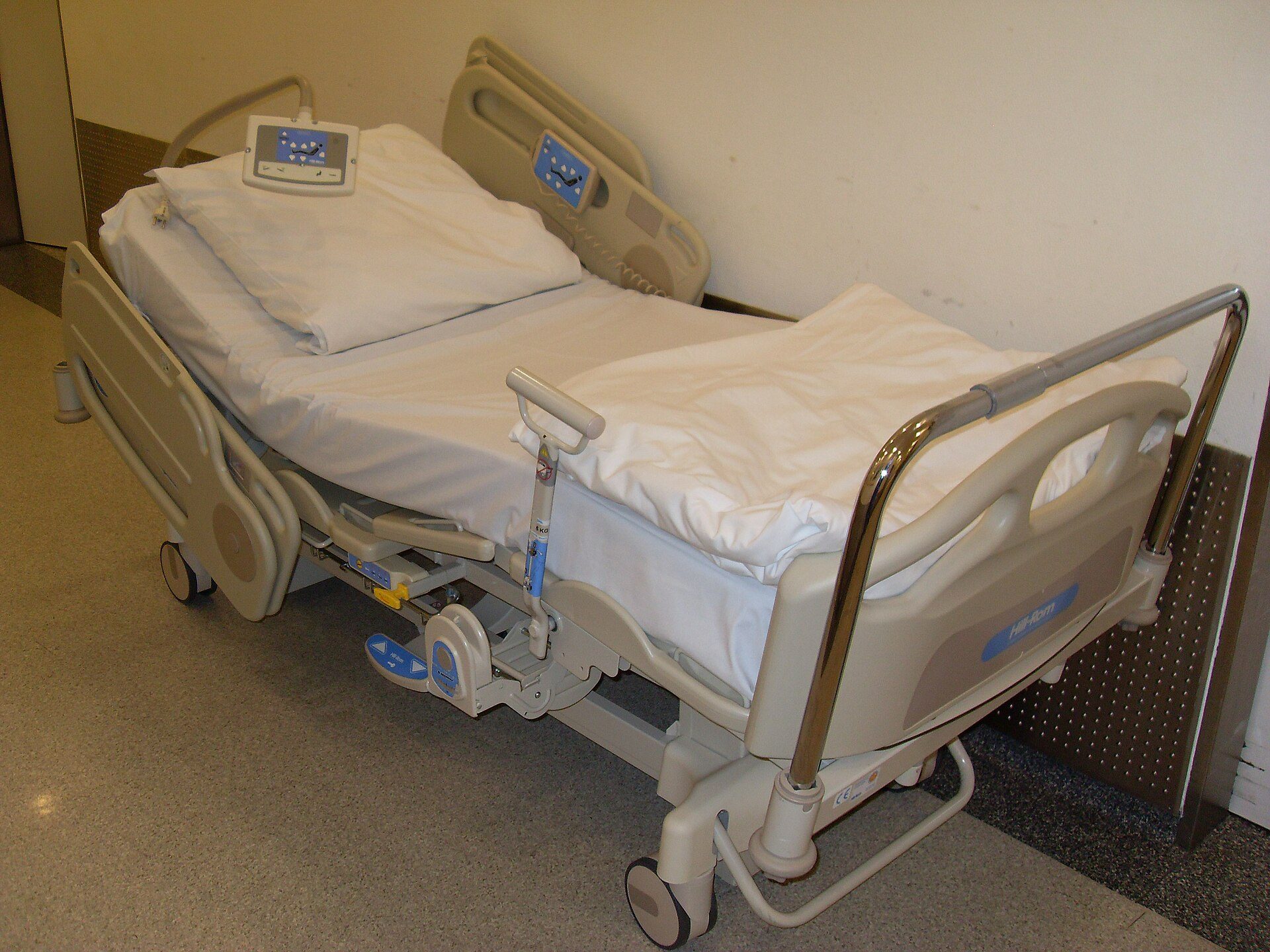
Photo: Blogotron / Wikimedia Commons, CC0
Turning without dragging
- Explain what you are about to do, even if the person is confused; lock the bed wheels and raise the bed to the carer's waist height.
- Use a draw sheet (a strong sheet under the body from shoulders to thighs); two people, one on each side, lift the sheet to move the person, never pulling on arms, legs or the bottom sheet.
- Roll the person towards you, put the wedge behind the back, pillows between knees and ankles, and make sure the ear is not folded under the head pillow.
- Smooth the sheet (a single thin layer, especially on an air mattress) and the clothes, leaving no creases, crumbs, pen caps or tubing under the body.
- Write the time and position on the turning chart at the head of the bed.
Mattresses, pillows and pressure-relieving aids
Pressure-relieving surfaces spread the load, but they do not replace turning.
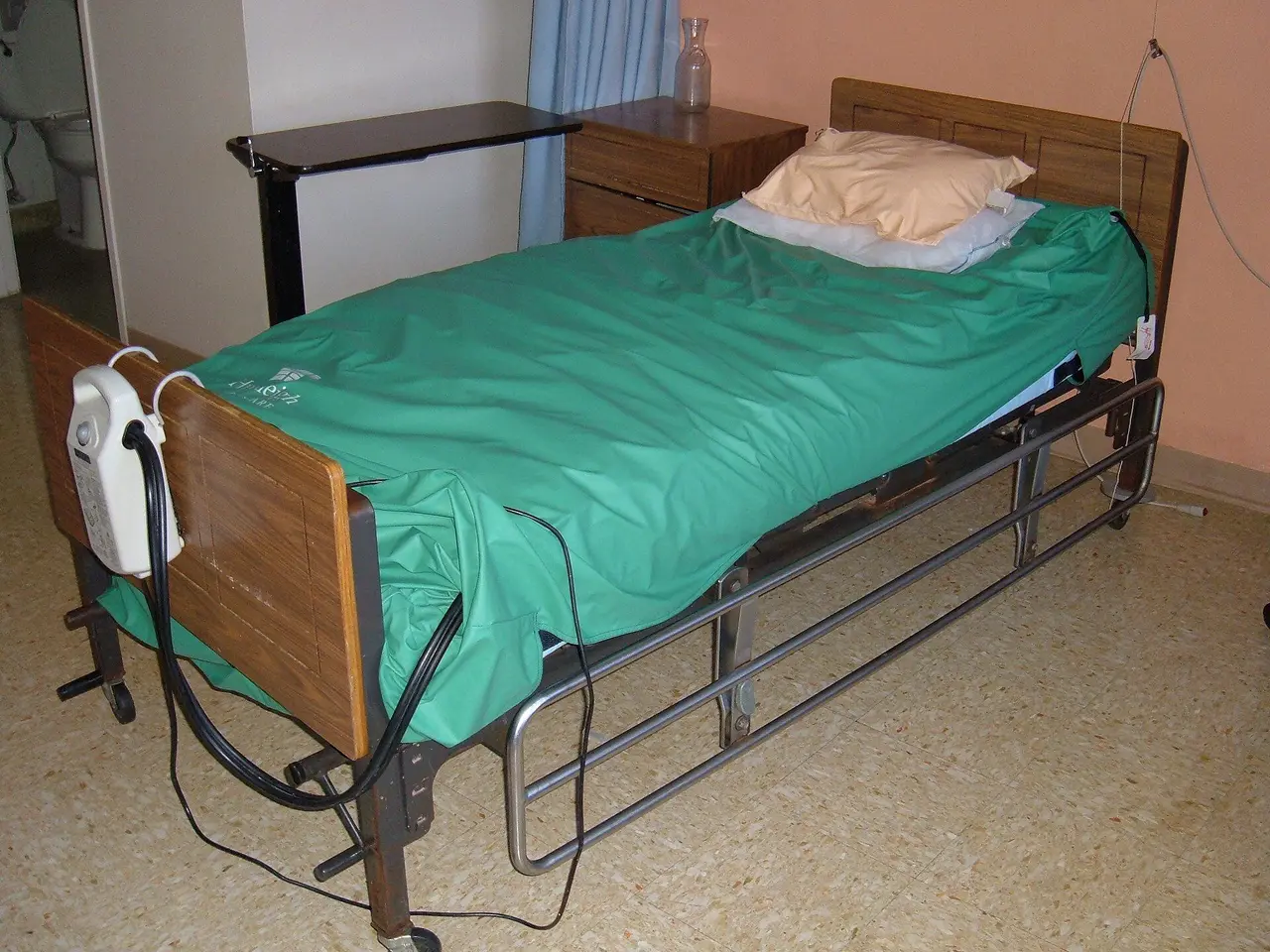
Alternating air mattresses
An alternating air mattress has many air cells; a small pump inflates and deflates them in cycles so the pressure points keep moving (Figure 2). Check every shift: the pump is running, the indicator light is normal, the hose is not kinked and the mattress has not gone flat. Test it by sliding your hand under the mattress directly beneath the sacrum: if you can feel the body touching the bed frame, the mattress is too soft or leaking.
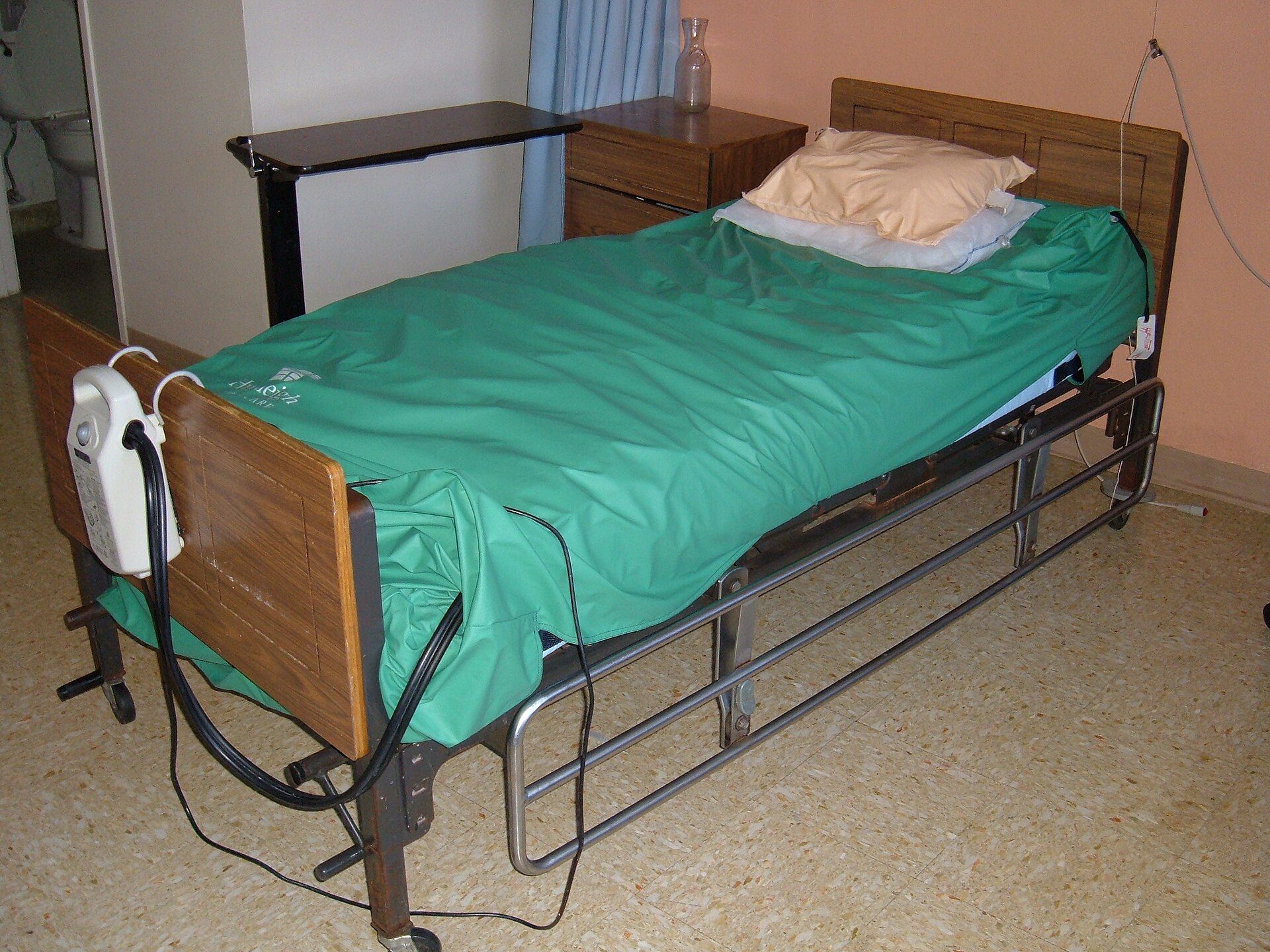
Photo: BrokenSphere / Wikimedia Commons, CC BY-SA 3.0
Foam overlays and seat cushions
A convoluted ("egg crate") foam overlay on an ordinary mattress gives moderate pressure relief, is cheap and needs no electricity (Figure 3). When the person sits in a wheelchair or a chair, they need a pressure-relieving seat cushion made of shaped foam, gel or air cells (Figure 4), sized to fit the seat. Replace foam that has sagged, flattened or no longer springs back when pressed.
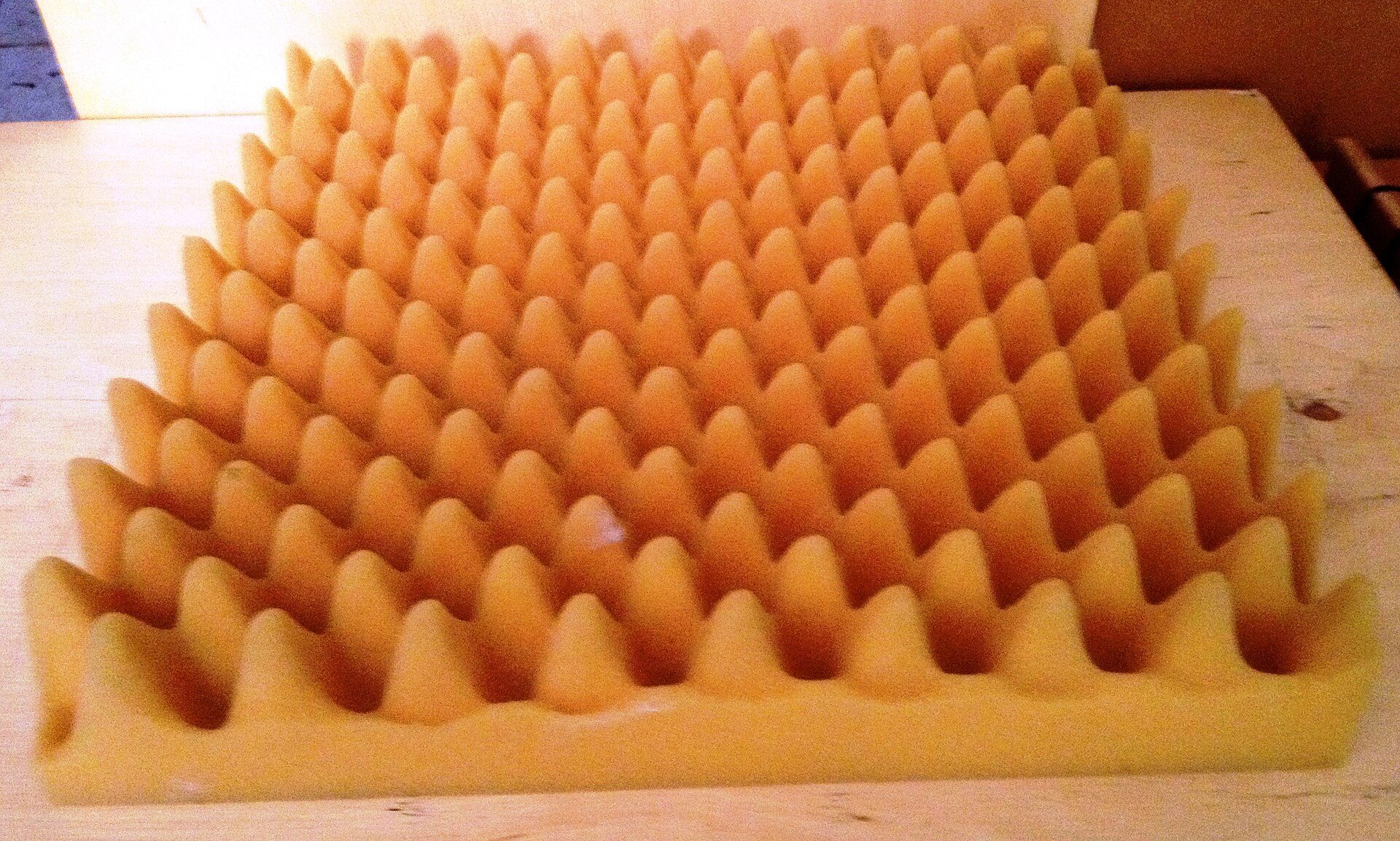
Photo: Sanchors62 / Wikimedia Commons, CC BY-SA 4.0
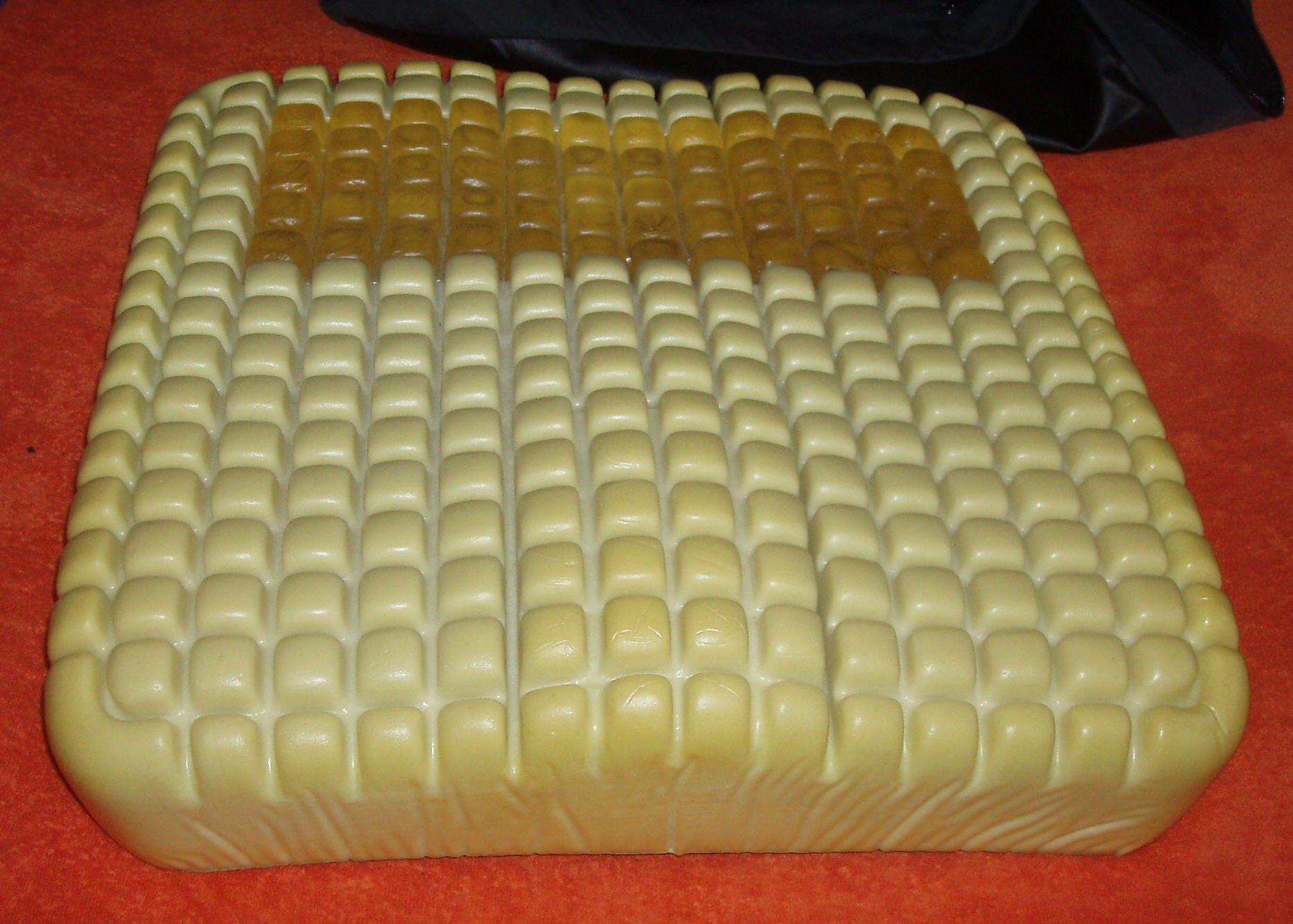
Photo: -- Xocolatl 14:44, 26 July 2007 (UTC) / Wikimedia Commons, Public domain
Choosing equipment (2026 reference prices in Vietnam, varying by area and type)
| Item | When to use it | Reference price | Notes |
|---|---|---|---|
| Alternating air mattress with pump | In bed almost all day, high risk | 900,000–3,000,000 VND | Needs constant power; check for leaks |
| Convoluted foam overlay | Moderate risk; in bed a lot but can still sit up | 300,000–800,000 VND | Replace when it sags |
| Pressure-relieving seat cushion | Hours in a wheelchair or chair | 300,000–1,200,000 VND | Front and back the right way round |
| Wedge and leg pillows | Every turning schedule | 100,000–300,000 VND each | Ordinary pillows folded double can work |
| Draw sheet or slide sheet | Person cannot shift position alone | 100,000–400,000 VND | Do not leave the person lying on a slippery slide sheet |
Things you should not use
- Ring cushions and doughnut pillows: they concentrate pressure in a ring around the area, cut off the blood supply and make ulcers worse.
- Vigorous massage over red bony areas: it further damages tissue that is already short of blood.
- Leaves or home-made ointments on broken skin: a high infection risk; open wounds are for health workers to treat.
Clean, dry skin and enough food and fluid
Damp skin and poor nutrition make ulcers form faster and heal more slowly.
Skin care with incontinence
- Check pads on a schedule and change them as soon as they are wet or soiled, not when they are "full".
- Wash with warm water and a mild cleanser, pat dry with a soft towel, do not rub hard.
- Apply a thin layer of barrier cream (zinc oxide or dimethicone type) on areas that are often damp, following the product directions or the nurse's advice.
Food and fluids
Skin needs enough protein, energy and water to stay strong and to heal. Note how much of each meal the person eats, how much they drink and whether their weight is dropping, and report it to the family and health workers. If the person has diabetes, kidney disease, heart failure or swallowing problems, their diet, fluid intake and any supplement drinks must follow the doctor's advice; the carer does not increase or reduce them on their own.
Worked example: a 24-hour plan for an 82-year-old man after a stroke
An 82-year-old man weighing 50 kg, with right-sided weakness after a stroke, comes home after 3 weeks in hospital. He cannot turn himself, wears pads and eats about half a portion per meal. The hospital nurse advised turning him about every 2 hours and checking his skin morning and evening.
24-hour turning chart
| Time | Position | Other tasks |
|---|---|---|
| 06:00 | On his back, head of bed at 30 degrees | Morning skin check, wash, pad change |
| 08:00 | 30-degree tilt to the left | After breakfast (sat up at 07:00), lower the head of the bed gradually |
| 10:00 | 30-degree tilt to the right | Check pad, give a drink |
| 12:00 | On his back | Lunch, prescribed medicines |
| 14:00 | 30-degree tilt to the left | Check pad |
| 16:00 | 30-degree tilt to the right | Sits in the wheelchair on its cushion for the time advised, then back to bed |
| 18:00 | On his back | Dinner, hand over the night shift to a family member |
| 20:00 | 30-degree tilt to the left | Evening skin check, pad change, barrier cream |
| 22:00 | 30-degree tilt to the right | Main light off, night light on |
| 00:00 | On his back | Quick pad check |
| 02:00 | 30-degree tilt to the left | Quick pad check |
| 04:00 | 30-degree tilt to the right | Quick pad check |
Check the plan: 12 turns 2 hours apart cover 24 hours (12 × 2 = 24). Each position (back, left, right) appears 4 times for 2 hours, so 8 hours per position (3 × 8 = 24). Each turn with a skin glance and pillow adjustment takes about 10 minutes, so 12 × 10 = 120 minutes of work per day, split into 6 turns on the day shift (you) and 6 on the night shift (the family).
Equipment the family buys (2026 reference prices)
| Item | Quantity × unit price | Total |
|---|---|---|
| Alternating air mattress with pump | 1 × 1,800,000 VND | 1,800,000 VND |
| Back wedges and leg pillows | 3 × 150,000 VND | 450,000 VND |
| Wheelchair pressure cushion | 1 × 600,000 VND | 600,000 VND |
| Draw sheets | 2 × 150,000 VND | 300,000 VND |
| Barrier cream | 2 tubes × 120,000 VND | 240,000 VND |
| Total | 3,390,000 VND | |
Check: 1,800,000 + 450,000 + 600,000 + 300,000 + 240,000 = 3,390,000 VND (about US$130). Pads and absorbent underpads are a daily cost, counted separately. On day 5 you notice a red area about 2 cm across on the right heel that does not blanch: you reposition the pillow so the heel floats, write it down, call the community nurse at the next scheduled visit and send a photo of the heel (with the family's consent). Two days later the redness has faded because the heel no longer touches the mattress.
When to tell the nurse, go to a clinic or call an ambulance
Carers do not treat pressure ulcers. You observe, relieve pressure, keep the skin clean and report at the right time to the right person, working alongside nurses as in Figure 5.
Tell the nurse or doctor the same day
- Redness that does not blanch, or does not fade after 30–60 minutes off pressure.
- A blister, graze or broken skin, however small.
- A dark purple, hard, hot or painful area over a bony point.
- Clearly poorer eating, weight loss, or ongoing diarrhoea keeping the skin wet.
Get a medical review soon
An existing ulcer that is getting wider or deeper, is weeping a lot, smells, has spreading redness around the edge, or has black tissue. These need a health worker to assess and treat the wound, possibly with special dressings or other procedures.
Call emergency services (115) or go to hospital now
The person has an ulcer together with a high fever, shivering, new confusion or drowsiness, fast breathing, a fast pulse, low blood pressure, or skin around the ulcer that is quickly becoming swollen, red and hot. These can be signs of a serious infection.
Safety warning: Turning and lifting with poor technique can injure your back and make the person fall out of bed. Always lock the bed wheels, raise the bed to waist height and put up the rail on the far side before tilting the person; for a heavy or stiff person, use two carers. Never pull the person by the arms or armpits. Wear gloves when touching broken skin, fluids or waste, and wash your hands before and after every care task. Do not trim, squeeze or put anything on an ulcer yourself, and never give antibiotics on your own. The air mattress pump runs on mains power: use an earthed socket, keep the cable away from wet areas and out of walkways.
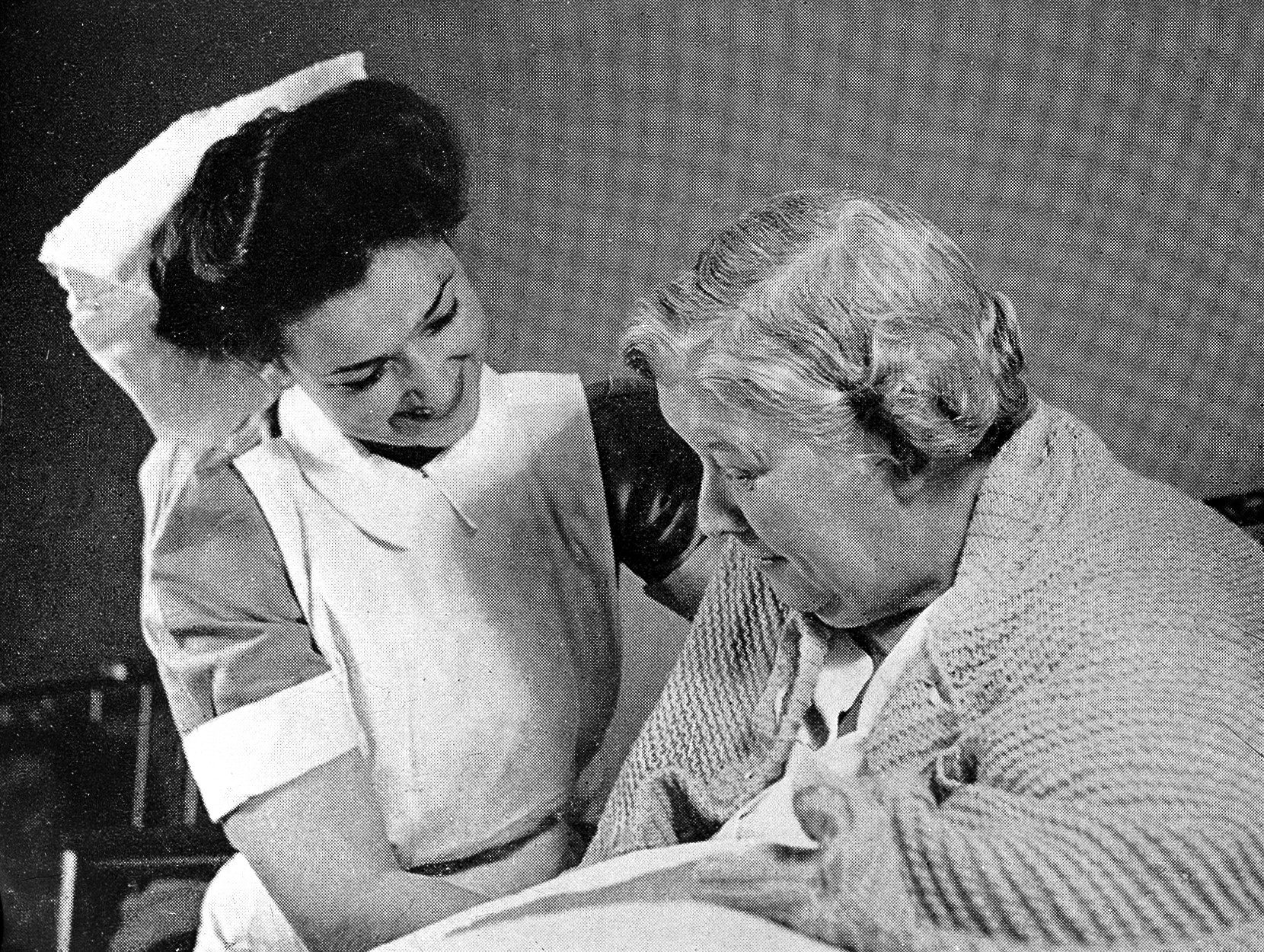
Photo: Wellcome Collection / Wikimedia Commons, CC BY 4.0
Common mistakes and how to fix them
Not turning because there is an air mattress
Sign: the person lies on their back all day and a few days later the sacrum is red. Cause: believing the mattress does the job. Fix: keep the turning schedule the nurse gave you and only lengthen it when they say so.
Head of the bed too high all day
Sign: the person slides down towards the foot of the bed; sacrum and heels go red. Cause: leaving them "half sitting, half lying" for hours to watch TV. Fix: raise the head only for meals and after meals as advised, otherwise keep it at about 30 degrees or less; raise the knees slightly before the head.
No records, no handover between shifts
Sign: nobody knows when the red patch appeared or whether it is getting bigger. Fix: a turning chart at the head of the bed, a skin log with location and size, and a spoken and written handover at every shift change.
Frequently asked questions
How often should a bedbound person be turned?
The usual interval is about every 2 hours on an ordinary mattress. The right interval depends on the skin, the type of mattress and the assessment of the nurse or doctor; if redness does not fade after turning, turn more often and tell them.
What is the best pressure ulcer mattress for an elderly person who is bedbound?
For someone in bed almost all day at high risk, an alternating air mattress with a pump is common; for moderate risk a pressure-relieving foam overlay may be enough. Choose one that fits the bed and has clear instructions, and remember it only helps: it does not replace turning.
Is redness over the tailbone a pressure ulcer?
Do the blanch test: press for 3 seconds; if the skin goes pale and then red again, it is usually pressure redness and fades when pressure is relieved. If it stays red, it is a sign of a stage 1 ulcer: keep all pressure off the area and tell the nurse the same day.
Can someone who sits in a wheelchair all day get pressure ulcers?
Yes, on the sitting bones and the sacrum. Use a pressure-relieving seat cushion, remind or help the person to shift their weight regularly (leaning, or lifting slightly if they can), and ask the nurse or rehabilitation specialist how long they may sit at a time.
Practice exercises and self-assessment
- On a practice partner (or a family member who agrees to be the model), set up a 30-degree tilt with a back wedge and pillows between the knees and ankles, then check that the sacrum is off the mattress.
- Float the heels with a pillow under the calves and look along the mattress to confirm the heels do not touch.
- Draw up a 24-hour turning chart for an older woman on an air mattress whose nurse advised turning about every 3 hours; check that the number of turns and the hours add up to 24.
Self-assessment criteria
- Pass: you name the 8 high-risk areas correctly, do the blanch test for 3 seconds and can explain both results.
- Pass: 30-degree tilt, floating heels, smooth sheet, no dragging when moving the person.
- Pass: the 24-hour chart has every turn, the hours add up, and it includes the morning and evening skin checks.
- Not yet: using a ring cushion, massaging red areas hard, or not telling the nurse about redness that does not blanch.
Turning correctly is only half the job. The next step on the roadmap is Mobility, transfers & fall prevention, where you learn to help the person sit up and transfer to a chair or wheelchair safely for both of you. You can read ahead: Fall prevention for older adults: home safety checklist and safe help.
Keep learning elderly care: after pressure ulcer prevention come moving and fall prevention, eating and swallowing problems, dementia care, first aid and a supervised placement. See the 8-step elderly carer roadmap.