Fall prevention for older adults means cutting several small risks at the same time: medicines that cause dizziness, standing up too fast, poor eyesight, slippery footwear, wet floors and trips to the toilet in the middle of the night. For a paid caregiver, this is the skill families value most, because one fall that breaks a hip can leave an older person bedridden for months. This lesson follows widely shared guidance from the World Health Organization (WHO), Vietnam's Ministry of Health and agencies such as the CDC (United States) and the NHS (United Kingdom), adapted to homes in Vietnam. It does not replace the advice of the doctor treating the person you care for.
By the end of this lesson, you will be able to:
- Name 6 groups of fall risk factors and ask the family the right questions on your first day.
- Check a home room by room and propose basic changes with reference costs that add up.
- Help an older person stand up from bed in 3 steps, and set up and coach the use of a cane or walking frame.
- Respond correctly after a fall: do not rush to pull them up, check the head and hip, and recognise when to call 115 (Vietnam's ambulance number).
- Keep a fall log to report to the family and the doctor.
Want to learn elderly care properly? See the 8-step Elderly caregiver learning path on NAMBIN — from hygiene and the limits of the role to mobility, feeding, first aid and finding work.
Why do older people fall so easily?
WHO lists falls among the leading causes of injury in older people. A fall rarely has a single cause: usually it is weak legs plus a sedative tablet, a rug with a curled edge and a dark corridor. Your job is to remove these factors one by one, not to keep the person lying still in one place.
Medicines that cause dizziness or drowsiness
Sleeping pills, sedatives, some blood pressure medicines, water tablets (diuretics), antidepressants and older allergy medicines can all cause dizziness or drowsiness; people taking 4 or more medicines a day need extra attention. You must not stop, reduce or change the timing of any medicine yourself. The right action is to note when the dizziness happens and tell the family so they can ask the doctor to review the prescription.
Postural (orthostatic) low blood pressure
This is when blood pressure drops as the person moves from lying to sitting or standing, causing blurred vision, a blackout feeling or buckling knees. It is common just after waking, after a large meal, when they have drunk too little or after a hot shower. Prevent it with the 3-step stand described below, and remind them to drink enough as the doctor advises.
Eyesight, feet and footwear
Cataracts or the wrong glasses make door sills hard to see; common guidance recommends regular eye checks, usually once a year. Backless slippers, worn-out soles and socks on tiled floors are familiar culprits. Good indoor footwear has a strap that holds the heel and a grooved rubber sole.
Slippery floors and night-time toilet trips
Glossy ceramic bathroom tiles and freshly mopped floors are where many falls happen. At night, older people often get up 1–3 times to pass urine, still unsteady, with the lights off and in a hurry. An 80-year-old man who takes a water tablet in the evening, walking in slippers along a dark corridor to a wet bathroom at 2 a.m. — that is the situation you must prevent in advance.
| Risk group | Question to ask the family on day one | What you do |
|---|---|---|
| Medicines | Which medicines, at what times? Any sleeping pills, diuretics, blood pressure drugs? | Copy the list, note dizzy times, report to the family |
| Postural low blood pressure | Have they ever fainted or felt faint when standing? | Use the 3-step stand; never let them jump up |
| Eyesight | When was the last eye check? Are the glasses right? | Clean glasses, keep them within reach, switch lights on first |
| Muscles and balance | How far can they walk alone? Do they use a cane or frame? | Walk on their weaker side, encourage activity as advised |
| Footwear and feet | What do they wear indoors? | Suggest strapped, non-slip footwear; keep toenails short |
| Home and night-time | How often do they get up at night? Where have they fallen before? | Run the home checklist, add night lights, a commode by the bed if needed |
Room-by-room home safety checklist
On your first day, spend 30–45 minutes walking through the home with a family member along the routes the older person actually uses, carrying the table below. Note and photograph each item that fails. You do not drill, fix or buy anything yourself; home changes are the family's decision.
| Room | Check | Passes when |
|---|---|---|
| Bedroom | Bed height, lighting, path | Sitting on the bed edge, feet flat on the floor with knees at about a right angle; a switch or lamp within reach; a clear path from bed to door with no cables across it |
| Bathroom and toilet | Floor, grab bars, seating | Non-slip mat or textured floor; grab bars by the toilet and shower; a shower chair with rubber feet; toiletries within reach without bending or stretching |
| Corridor | Night lighting | Motion-sensor night lights along the bed-to-bathroom route; no clutter or curled rugs |
| Kitchen | Everyday items, floor | Pots and bowls stored between hip and shoulder height; no climbing on stools; spills wiped at once |
| Living room | Chairs, rugs, obstacles | Sturdy chairs with armrests and no wheels; rugs taped down or removed; low tables out of the walkway |
| Stairs and steps | Handrails, step edges | Firm handrails, ideally on both sides; contrasting non-slip strips on step edges; good light at the top and bottom |
| Yard and entrance | Moss, water, thresholds | No moss or puddles; steps clearly marked; something to hold when stepping up or down |
The bathroom comes first
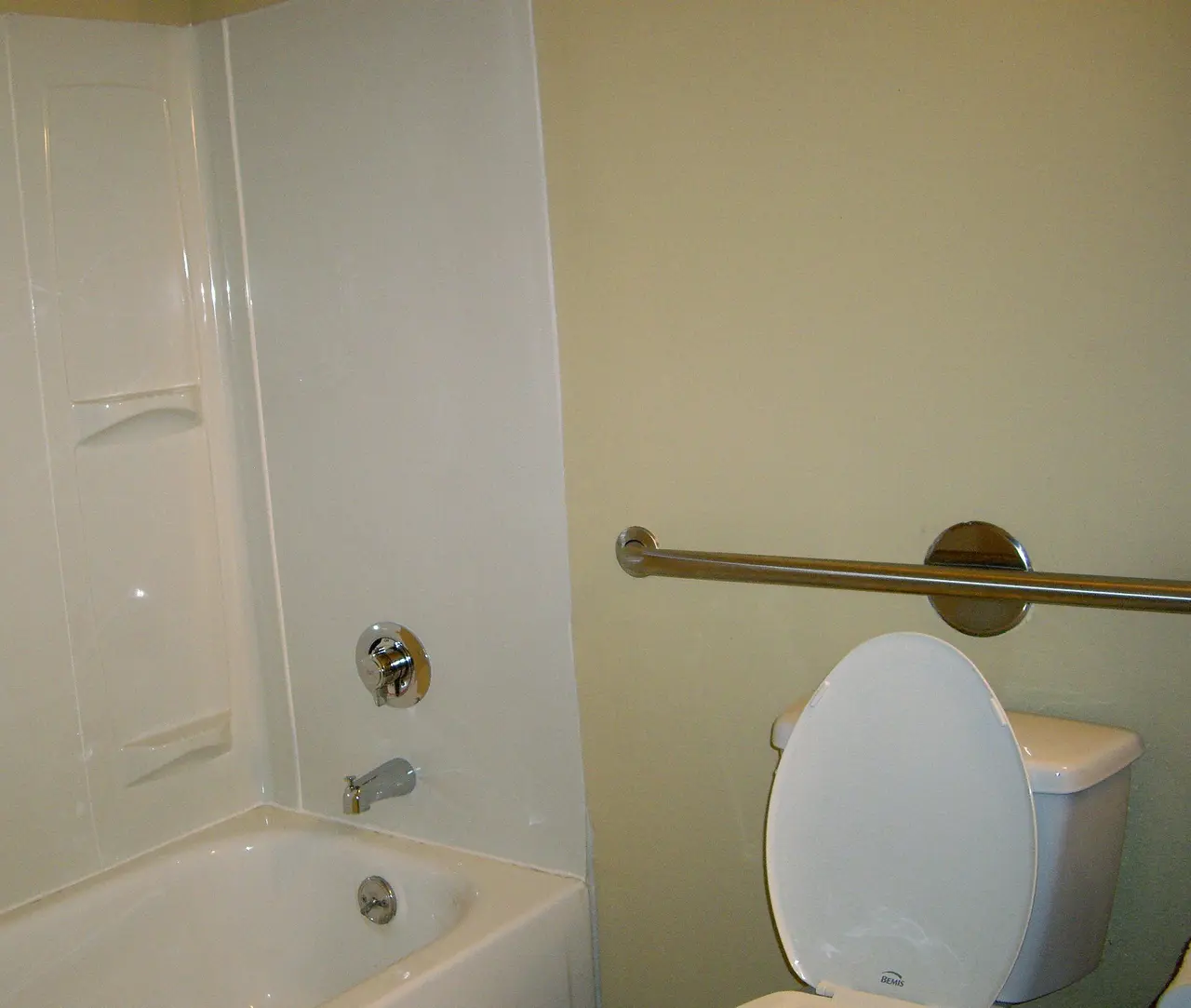
If the family can only afford to fix one place, start with the bathroom. A grab bar (Figure 1) must be screwed firmly into the wall and able to take a person's full weight; a towel rail or stick-on hook is not a grab bar and will come away when someone leans on it. A shower chair lets the person sit to wash instead of standing on a wet floor.
Photo: Gramody / Wikimedia Commons, CC BY-SA 2.0

Night lighting and toilet habits
A motion-sensor night light (Figure 4, in the cost section) switches on softly when the person steps out of bed. If they get up several times a night, discuss a bedside commode with the family, and remind them to call you before standing up.
Helping someone stand up from bed in 3 steps
The principle: give the body time to adjust to each position to avoid postural low blood pressure, and let the person do as much as they can. Before you start: bed wheels locked (if any), footwear ready, cane or frame within reach, lights on.
Step 1: from lying to sitting
- Explain what you are about to do and wait for agreement.
- The person bends both knees and rolls onto their side, facing the edge they will sit up on.
- They lower both legs over the edge while pushing up with the lower elbow and upper hand. Support at the shoulder and hip if needed; never pull on their arm.
Step 2: sit on the edge of the bed for 1–2 minutes
They sit upright with feet flat on the floor; put on footwear and glasses and ask: "Do you feel dizzy or is your vision blurred?" Have them pump their ankles up and down 10 times. If they feel dizzy, help them lie back down, write it in the log and do not force them to stand.
Step 3: stand up and stay still for a few seconds
- They shuffle forward to the edge of the bed, feet slightly back and shoulder-width apart.
- Both hands push down on the bed (not pulling on the walking frame, which can tip back), leaning forward so that "nose goes over toes".
- Count "one, two, three" and they push up to stand. You stand slightly to their weaker side, one hand at the hip and one at the shoulder or forearm.
- Stand still for 10–20 seconds, move hands to the cane or frame, ask again about dizziness, and only then start walking.
Protect your own back
Stand close, feet apart, bend your knees rather than your back. Never lift or carry the whole person on your own; if they cannot take most of their own weight, you need two people or a transfer aid, as shown by a health professional.
Using a walking frame and a cane correctly
Which cane or frame is right should be decided by a doctor or physiotherapist; your job is to set the height, check the equipment and coach correct use (see Figures 2 and 3).
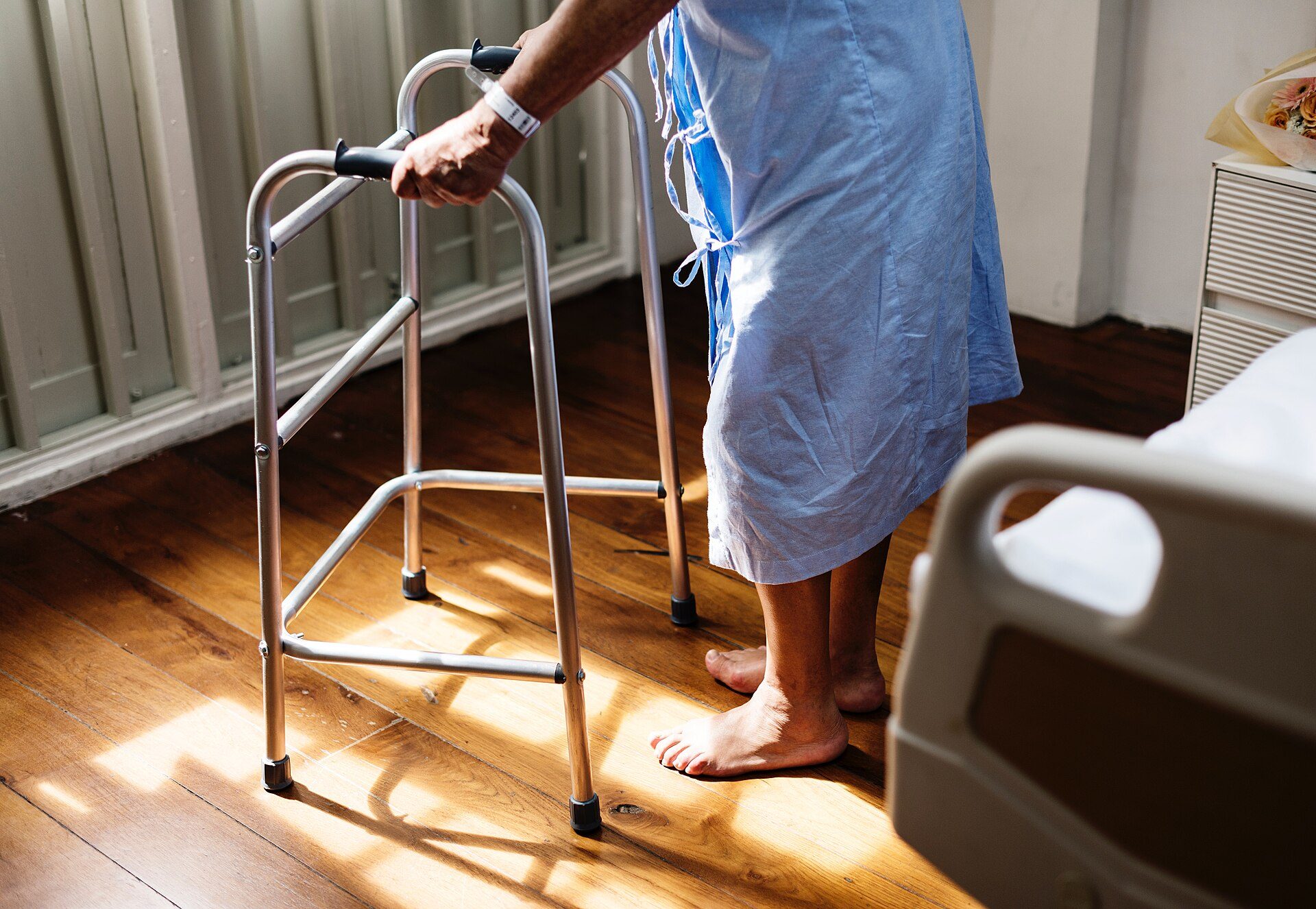
Photo: rawpixel.com / Wikimedia Commons, CC0

Setting the height
The person stands upright in their usual footwear with arms hanging relaxed. The handle of the cane or frame should be level with the crease of the wrist. When holding it, the elbow is slightly bent (about 15–30 degrees). Too high lifts the shoulders; too low makes them stoop and pitch forward.
Walking with a frame
- Push or lift the frame forward about one step, with all its feet on the floor.
- Step the weaker leg into the middle of the frame.
- Bring the stronger leg level with the weaker one.
- Repeat. Do not step too close to the front bar or let the frame get out of reach.
Using a cane and managing stairs
The cane goes in the hand on the stronger side, opposite the weaker leg; the cane and the weaker leg move together. Going up stairs: hold the handrail, step up with the stronger leg first, then the cane and weaker leg. Going down: cane and weaker leg first, stronger leg follows. Easy to remember: "up with the good, down with the bad". Stand below the person in both directions. Each morning check the rubber tips on the cane and frame: replace them if worn smooth or cracked, as they will slip on tiles.
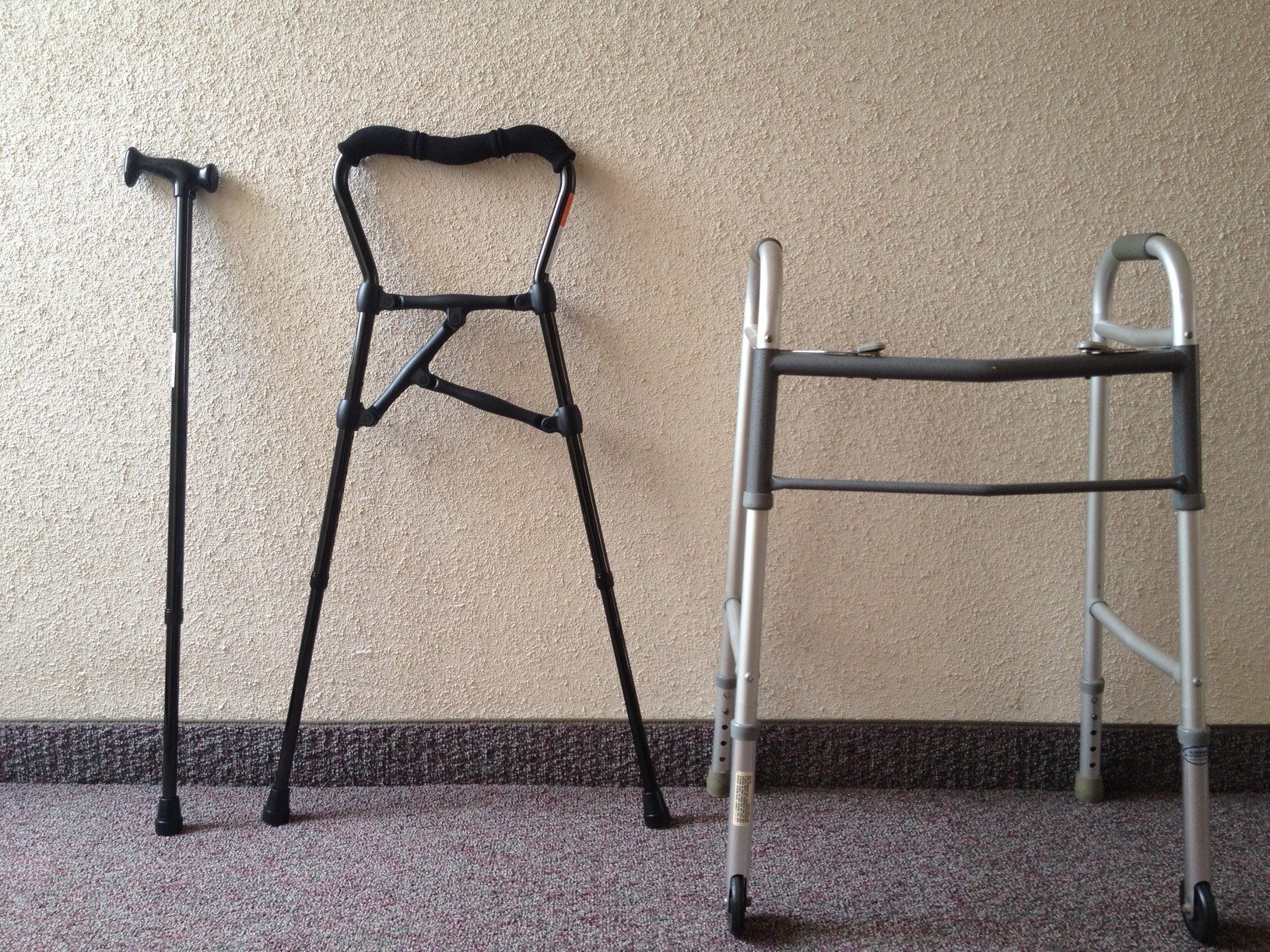
Photo: KDPetersen / Wikimedia Commons, CC BY-SA 3.0

After a fall: do not rush to pull them up
The natural reflex is to run over and pull the person up at once. Do not do it: pulling someone who has just fallen can worsen a hip fracture or spinal injury. Stay calm and follow the order below.
Step 1: a quick check where they lie
- Call their name and touch their shoulder: are they awake and able to answer? Are they breathing normally?
- Ask: "Where does it hurt?" Check the head, neck, back, hips and wrists.
- Look for bleeding or bruising on the head; a leg that looks shorter with the foot turned outwards (a sign of a possible hip fracture); more confusion than usual.
- Check whether they take anticoagulants (blood thinners). If so and they hit their head, they need a medical check even if they seem fine.
Step 2: if there are no serious signs, help them up slowly
Only when they are alert, not in much pain, can move their arms and legs and want to get up. Place a sturdy chair beside them. They roll onto their side, push up onto hands and knees, kneel, hold the seat of the chair, bring the stronger leg forward and push up to stand, then turn and sit on the chair. Guide with words and support lightly, never lift; keep watching them for the next 24 hours.
Step 3: if they cannot get up on their own
Leave them in the most comfortable position and cover them with a blanket, because lying on a cold floor for a long time can cause hypothermia. Call the family and call for an ambulance according to the signs below; give nothing to eat or drink while waiting.
Call 115 immediately if: the person is unconscious or not breathing normally; they hit their head and are vomiting, drowsy, confused, having a seizure or a severe headache; they have severe hip or thigh pain, cannot stand or bear weight, or the leg looks shorter or turned out; they have neck or back pain with numbness or weakness in the limbs; bleeding will not stop; they have chest pain or difficulty breathing; they show signs of stroke such as a drooping face, slurred speech or weakness on one side. If you suspect a neck, back or hip injury, do not move them; wait for the medical team.
When to tell the doctor even if they seem fine
Ask the family to contact the doctor the same day if: the person takes blood thinners and hit their head; they have fallen twice or more in a few months; they fell because of dizziness or fainting, or cannot remember why they fell; they walk worse or pain increases after the fall. Describe what happened; do not make the doctor's judgement yourself.
Keeping a log of falls and near-falls
A log helps the doctor find the cause and shows the family that you work carefully. Record near-falls too (stumbling but catching hold of something), because they warn of a real fall. Write straight away, exactly what you saw and what the person said.
| Column | Example entry |
|---|---|
| Date and time | 12 November, 2:10 a.m. |
| Place | Ground-floor bathroom door, floor still wet |
| What they were doing | Just got up to pass urine, wearing slippers, no cane |
| Anything unusual before | Said vision went blurry on standing; diuretic taken at 8 p.m. |
| Injuries | Sat down hard, slight bruise on left elbow, no head knock, no hip pain |
| Action taken | Checked on the spot, helped up with a chair, measured blood pressure, watched until morning |
| Who was told, when | Messaged Ms Hoa (daughter) at 6:30 a.m.; suggested asking the doctor about diuretic timing |
Review the log weekly and keep them moving
At the end of each week, read the log for patterns: the same time, the same place, after the same medicine. Three near-falls after 1 a.m. at the bathroom door are a clear reason to add a light and a grab bar there. WHO, CDC and NHS guidance all stress that regular leg-strength and balance exercise reduces falls; specific exercises should follow the advice of a doctor or rehabilitation therapist, while you accompany the person and encourage daily walking.
Basic home modification costs: a worked example
Mrs Lan, 78, lives in a 3-storey tube house (a narrow, deep townhouse common in Vietnam), and her bedroom has been moved to the ground floor. She gets up twice a night, takes blood pressure medicine and a diuretic, and nearly fell at the bathroom door last month. After the checklist, her caregiver proposed the list below to the family. Prices are 2026 reference ranges in large Vietnamese cities and vary by region and product; the "Mrs Lan" column is one specific choice within those ranges.
| Item | 2026 reference price | Mrs Lan's home | Cost |
|---|---|---|---|
| Stainless steel bathroom grab bar (screwed in) | 200,000–600,000 VND each | 2 × 350,000 VND | 700,000 VND |
| Labour to drill and fit grab bars | 150,000–300,000 VND per visit | 1 visit | 200,000 VND |
| Non-slip bathroom mat | 100,000–300,000 VND each | 2 × 150,000 VND | 300,000 VND |
| Motion-sensor night light | 80,000–250,000 VND each | 3 × 120,000 VND | 360,000 VND |
| Shower chair with rubber feet | 300,000–900,000 VND | 1 | 450,000 VND |
| Non-slip tape for stair and threshold edges | 150,000–400,000 VND | 1 roll | 250,000 VND |
| Total | 2,260,000 VND |
Adding up: 700,000 + 200,000 + 300,000 + 360,000 + 450,000 + 250,000 = 2,260,000 VND (about 90 US dollars). The three sensor lights go at the foot of the bed, mid-corridor and by the bathroom door (Figure 4). This is small compared with the cost of treating and caring for someone after a hip fracture. If the budget is tight, the priority order is: grab bars plus fitting (900,000 VND), then sensor lights (360,000 VND), then mats (300,000 VND).
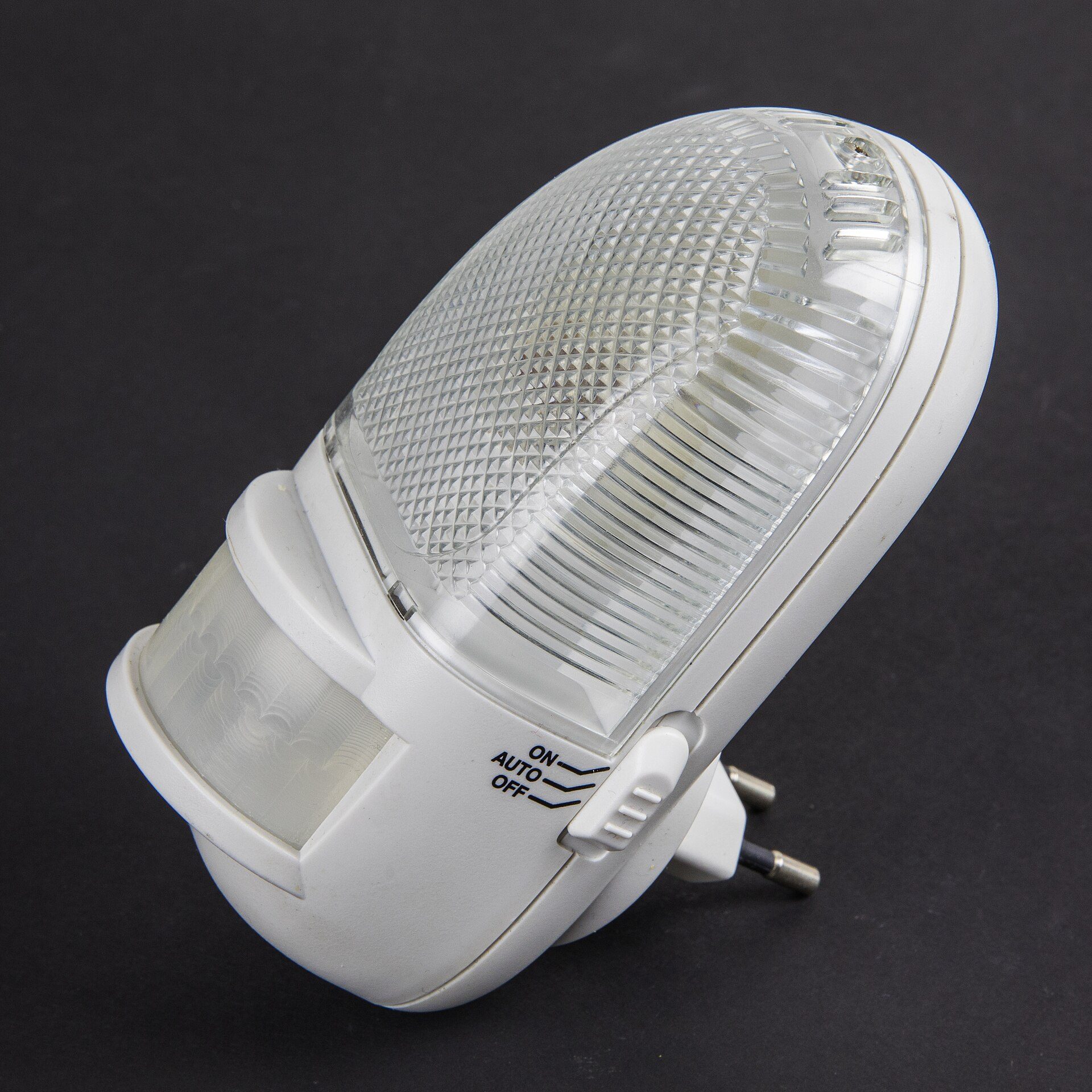
Photo: Raimond Spekking / Wikimedia Commons, CC BY-SA 4.0

Presenting the proposal and installation
Send the family a photo of each failed item, a short reason, the reference price and the priority order; do not recommend a particular shop, to avoid misunderstandings. Grab bars should be fitted by a tradesperson into solid wall, avoiding hidden pipes and cables. After fitting, test each bar with your full weight before the older person uses it.
Common caregiver mistakes
Keeping the person in bed or in a chair "for safety"
Sign: they walk less and their legs weaken over a few weeks. Cause: fear that they will fall while you are busy. Fix: schedule accompanied walks several times a day, keep the cane or frame within reach, and only restrict movement when the doctor says so.
Adjusting medicines because the person feels dizzy
Sign: skipping a blood pressure tablet "to ease the dizziness". Cause: wanting to help but going beyond the role. Fix: record dizzy times and tell the family to ask the doctor; you only help them take medicines as prescribed.
Frequently asked questions
Can a caregiver help someone up after a fall?
Only when they are alert, not in much pain, can move on their own and show none of the serious signs in the "Call 115" box. If you suspect a head, neck, back or hip injury, keep them still and warm and call an ambulance.
The person refuses to use a cane because they feel embarrassed. What should I do?
Talk respectfully and give a concrete benefit ("with the cane you can walk to the market yourself"), and ask the doctor or someone they trust to reinforce it. Do not force or criticise them.
Should I tie the person or put up high bed rails so they cannot get up?
Not on your own initiative. Tying someone or using high rails can cause worse injuries when they try to climb over, and it violates the older person's rights. Any restriction of movement must be decided by the doctor and the family.
Practice exercise and self-assessment
- Run the room-by-room checklist in your own home or a relative's, and list at least 5 failed items with fixes.
- Draw up a cost table for that home using reference prices, add the total and set priorities.
- Practise the 3-step stand with a relative playing the older person, and have a third person watch your back posture.
- Set a cane or frame to wrist-crease height and practise going up and down 3 stairs in the right order.
- Recite the signs that mean calling 115 without looking at the lesson.
Self-assessment criteria
- Pass: the checklist covers all 7 areas; the cost table adds up; the 3-step stand is done correctly, with a dizziness check in step 2, no arm pulling and your back straight.
- Pass: you can name at least 6 signs that mean calling 115 and state "do not rush to pull them up".
- Not yet: you let the person jump up, pull their arm, put the cane on the weaker side, or suggest changing medicines yourself.
The next step on the path is Feeding, swallowing difficulty & health tracking — where you learn to feed people sitting upright to prevent choking, measure blood pressure with a home monitor and keep a daily health log, building on the fall log from this lesson.
Keep learning along the path: see all 8 steps in the Elderly caregiver learning path on NAMBIN. This lesson is vocational guidance for caregivers and does not replace a doctor's diagnosis or instructions.