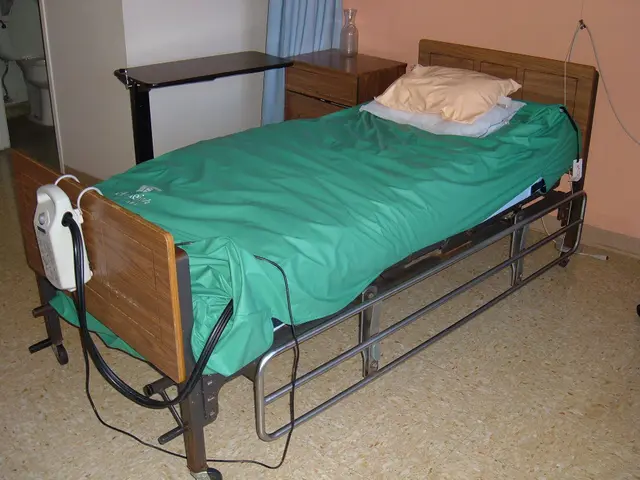
Good communication with older people starts with understanding how their body and mind have changed: hearing that loses high sounds, eyes that struggle in dim light, painful joints, slower reactions, and the fear of becoming a burden on their children. From there you speak slowly and clearly, sit at eye level, ask before every task, let the person do what they still can, and keep their private matters private. The health sections of this lesson follow general guidance from the World Health Organization (WHO) and health bodies; they do not replace the advice of the doctor or nurse looking after the person.
By the end of this lesson, you will be able to:
- Name 6 physical changes of ageing and what a carer should do differently for each one.
- Spot lasting sadness and loneliness and report it to the family, instead of thinking "that's just old age".
- Know what to watch for in people with high blood pressure, diabetes or joint problems, and when to call 115 (Vietnam's ambulance number).
- Talk with a hard-of-hearing person in 4 steps and check that they have understood.
- Protect the person's dignity and privacy during washing and dressing, and around their health, money and photos.
Learning elderly care? This is step 2, linking hygiene and infection control with the hands-on steps such as bathing, pad changes, mobility and feeding. See the 8-step elderly care roadmap to learn in the right order.
How does the body change with age?
Some 85-year-olds still go to the market on their own, while some 70-year-olds already need help to stand. Care for what the person in front of you can and cannot do, not for their age.
Hearing and sight
Age-related hearing loss usually starts with high-pitched sounds: the person hears that you are talking but cannot make out the words, especially consonants like "s" and "t", and struggles badly over a TV, a fan or traffic. According to WHO, more than a quarter of people over 60 have hearing loss that affects daily life. Eyes find close work hard, vision may look misty (cataracts), glare is uncomfortable, and seeing is very poor when moving from a bright place into a dark one.
Muscles, bones and joints
Muscle wastes away, bones become brittle (osteoporosis) and worn joint cartilage causes pain and morning stiffness. The person walks slowly, stoops and often uses a stick (Figure 1). They need more time for everything, fall more easily, and even a minor fall can break a bone; how to help and prevent falls is covered in step 4.

Photo: William Murphy / Wikimedia Commons, CC BY-SA 2.0
Thirst, eating, sleep, skin and memory
Older people feel less thirsty, so they easily drink too little, which leads to constipation, urinary infections and confusion. A weaker sense of taste makes food seem "bland". Many need to pass urine at night, sleep less and wake early. Skin is thin, bruises easily and senses heat and cold poorly. Thinking is slower, but slow does not mean confused: given enough time, the person still understands and can decide for themselves. Forgetting a lot, getting lost or a sudden change of personality is different and must be reported to the family.
| Change | What you will notice | What the carer does |
|---|---|---|
| High-frequency hearing loss | Asks you to repeat, answers off topic | Cut background noise, stand in front, speak slowly in a low voice |
| Poor sight, glare | Feels around for things, avoids dark areas | Good lighting, keep things in the usual place, write in large letters |
| Weak muscles, painful joints | Struggles to stand, winces when moving | Do not rush, wait, report when pain gets worse |
| Reduced thirst | Dry lips, dark urine | Offer drinks often, within the amount the doctor allows |
| Thin skin, poor heat sense | Bruises and skin tears from light knocks | Test water with your own wrist, handle gently |
| Slower thinking | Silent for a few seconds before answering | Ask one question, wait 5-10 seconds, do not answer for them |
The emotional side of ageing: what older people rarely say
The hardest part of the job is often not bathing or changing pads, but understanding why the person is upset, refusing or silent. "Difficult" behaviour usually has a reason, rooted in the losses they are living through.
Losing their role and fearing to be a burden
After a lifetime of caring for the family, they now need a stranger to wash and feed them. Many insist "I'll do it myself", or drink less water so they do not have to ask for help to the toilet. Help them keep a role by asking their opinion and giving small jobs they can still do, such as picking over vegetables, folding towels or explaining how to cook a dish from their home region.
Loneliness, low mood and depression
Friends of the same age pass away, children are out at work, and the person sits alone on the porch watching the street (Figure 2). Feeling down now and then is normal, but depression is not "just old age". Tell the family when the person is sad, has lost interest in things, or eats and sleeps very differently for more than 2 weeks. If they say they want to die, or "what's the point of living and troubling my children", tell the family the same day and do not leave them alone.

Photo: Adam Jones from Kelowna, BC, Canada / Wikimedia Commons, CC BY-SA 2.0
Irritability, suspicion and telling the same stories
Irritability may come from pain, hunger, tiredness, needing the toilet, or feeling they have lost control over their life. Accusing you of taking things sometimes happens because they forgot where they put them; retelling old stories is about the part of life they are proud of. Do not argue: ask what is bothering them, look for the item together, and listen to the old story as if for the first time. A sudden change in behaviour over a few days must be reported to the family, as it may come from an infection or a side effect of medicine.
Common illnesses: what a carer needs to know
As in step 1, you do not diagnose or adjust medicines; you prompt prescribed medicines, observe and report early. On your first shift, ask the family: what conditions the person has, which readings the doctor said must be reported, and who to call if something happens.
High blood pressure (hypertension)
Under common guidance from WHO and heart associations, blood pressure of 140/90 mmHg or higher measured at a clinic is classed as hypertension; each person's target is set by their doctor. It often has no symptoms, so people skip their tablets when they "feel fine". You prompt medicines on time from the pre-filled pill box, cook with little salt as instructed, and help the person stand up slowly, because some blood pressure medicines cause dizziness on changing position.
Diabetes
The person needs regular meals in the amounts the doctor advised; skipping a meal while on glucose-lowering medicine can cause low blood sugar (hypoglycaemia). Under general guidance, blood glucose below about 70 mg/dL (3.9 mmol/L) is low. Signs include shaky hands, sweating, sudden hunger, a racing heart, muddled speech and drowsiness. Ask the family for the action plan the doctor gave and follow it exactly; if the person is drowsy or cannot swallow, give nothing by mouth and call 115. Look at their feet every day: small scratches on a person with diabetes heal slowly and get infected easily.
Joint problems and osteoporosis
Wear and tear in the knees, hips and spine causes pain and makes the person reluctant to walk, and the less they walk the weaker their muscles get. Encourage gentle movement within the limits set by the doctor or physiotherapist; do not give hard massages, herbal poultices, medicinal rubbing alcohol or painkillers suggested by neighbours. Osteoporosis usually causes no pain until a bone breaks, so preventing falls matters most.
| Condition | Watch every day | Tell the family the same day | Call 115 at once |
|---|---|---|---|
| High blood pressure | Medicines on time, low-salt food, standing up slowly | Dizziness on standing, readings outside the doctor's range, missed medicines | Sudden severe headache, facial droop, weakness on one side, trouble speaking, chest pain |
| Diabetes | Regular meals, checking the feet | Scratches on the feet, unusual thirst and urination, shakiness that settled after the action plan | Drowsy, hard to wake, seizures, unable to swallow |
| Joints | Gentle movement, well-fitting shoes, clear walkways | Swollen, hot, red joint; worsening pain; refusing to walk | A fall with no way to get up, severe hip pain, a blow to the head |
Talking with a hard-of-hearing person: 4 steps
People with hearing loss are easily labelled "confused" or "difficult" when they simply cannot hear clearly.
Step 1: get their attention
Come round to the front, about an arm's length away; say their name or touch their shoulder lightly so they are not startled. Turn off the TV or radio. Stand so the light falls on your face, not with your back to a window, so they can see your lips and expression.
Step 2: check the hearing aid
If the person has a hearing aid (Figure 3), ask the family on your first shift which ear it goes in, how to switch it on and off, how to change the battery or charge it, and how to clean it. A flat battery, an aid switched off, blocked with earwax or put in the wrong ear is a common reason for "suddenly hearing badly". Remove it for bathing and hair washing, and store it in its own case at night.
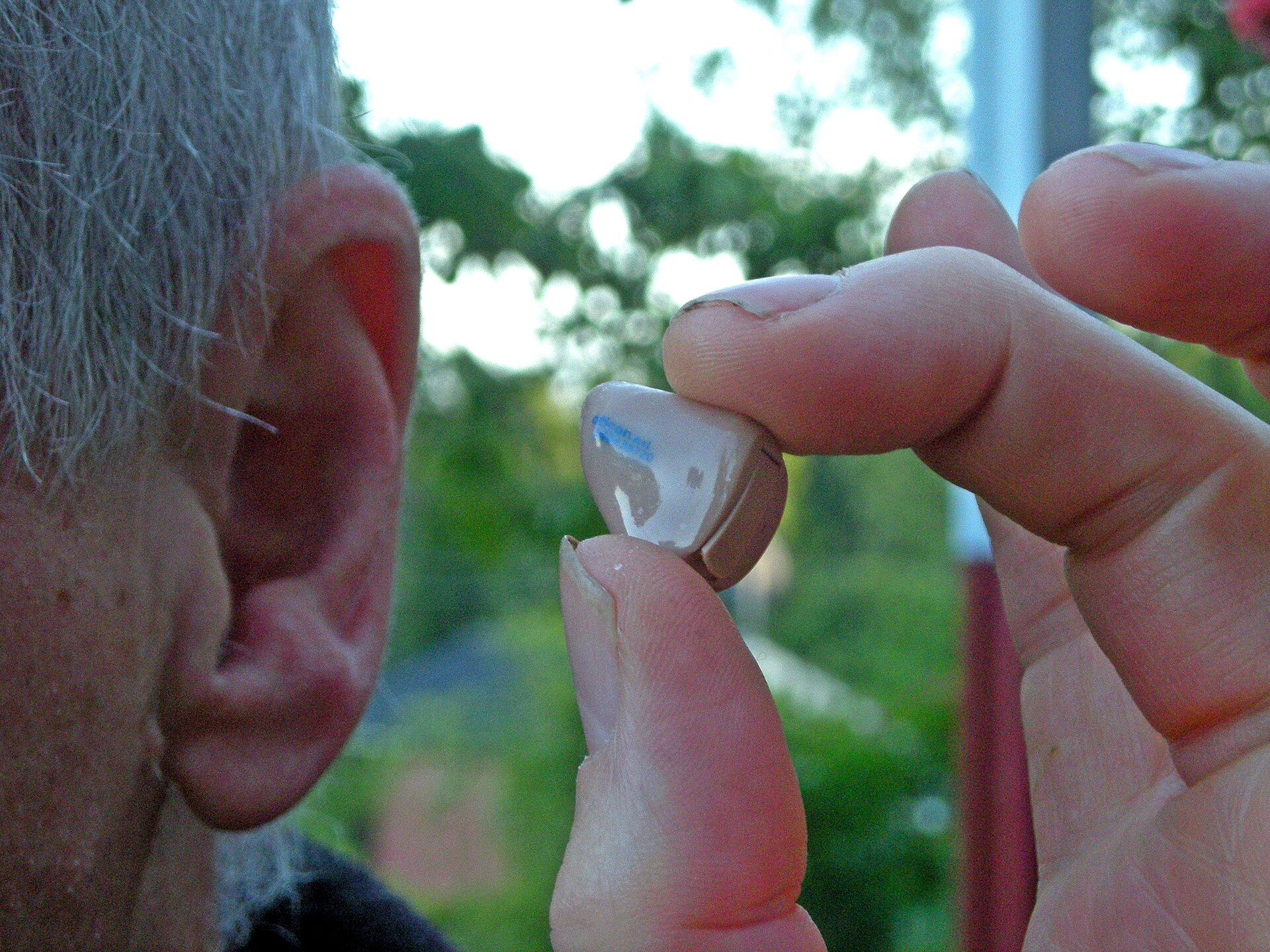
Photo: Jonas Bergsten / Wikimedia Commons, Public domain
Step 3: speak slowly and clearly, do not shout
- Moderate volume, lower pitch; shouting distorts sound, so the person still cannot hear and may think you are angry.
- Short sentences, one idea each: "Let's go and wash your face now."
- Do not cover your mouth, eat while talking or turn away mid-sentence.
- If they did not catch it, rephrase with different words instead of repeating the same sentence louder.
Step 4: check they have understood
Do not ask "Did you hear me?", because people often nod to move on; ask "Would you like porridge or rice?" and listen to the answer. Write appointment times and medicine schedules on paper in large letters. For someone with poor sight, say your name as you come in and say exactly where you put things.
Respectful communication: forms of address, eye level, asking first
Respect means treating the person as an adult with the right to decide about their own life.
Forms of address and tone of voice
In Vietnamese, the way you address someone carries respect. Ask the person and family what they like to be called: "ong" (grandfather, sir), "ba" (grandmother, madam), "cu" (for the very old), "ong Tu", "ba giao" (the teacher); refer to yourself as "chau" or "con" (grandchild, child) as the family does. Never call them "baby" or use baby talk ("good girl now"), and never address them without a respectful title. Do not discuss the person with others in front of them, even if they are hard of hearing.
Eye level and waiting
If the person is in bed or a wheelchair, sit down or crouch so your eyes are level with theirs (Figure 4); talking down from above feels like giving orders. After a question, count 5-10 seconds silently and do not answer for them.

Photo: U.S. Marine Corps photo by Lance Cpl. Alexis Ballin / Wikimedia Commons, Public domain
Ask permission and offer choices
Before touching the person, say what you are about to do and ask: "May I undo your buttons?". Offer simple choices: "Would you like a wash first or breakfast first?". Two options are easier to answer than an open question.
Let them do what they still can
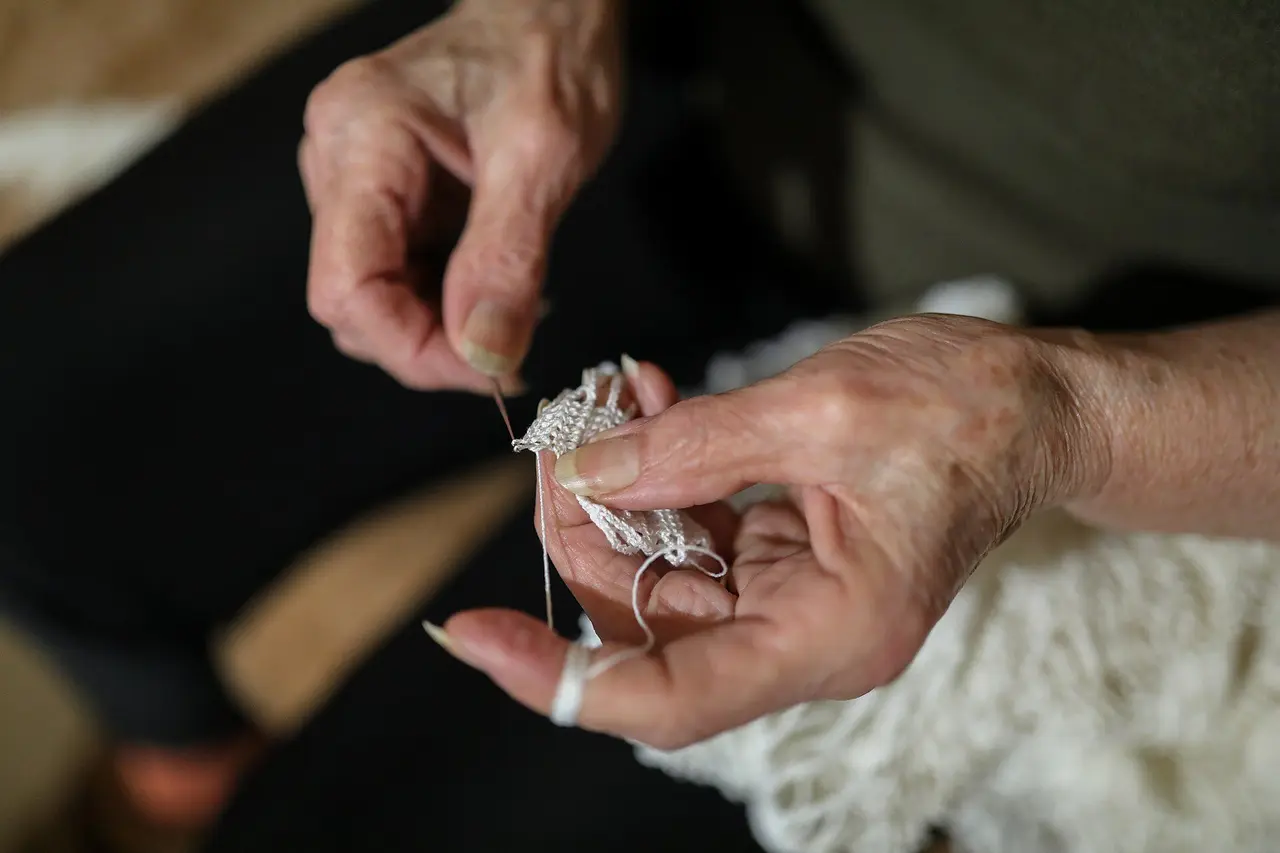
Doing everything for the person to save time is a common beginner's mistake. Five minutes for them to do up their own buttons beats 30 seconds of you doing it, because each time is practice for the hands, the mind and self-respect. Hobbies such as crochet, preparing vegetables or tending plants (Figure 5) keep the fingers supple and make the person feel useful.
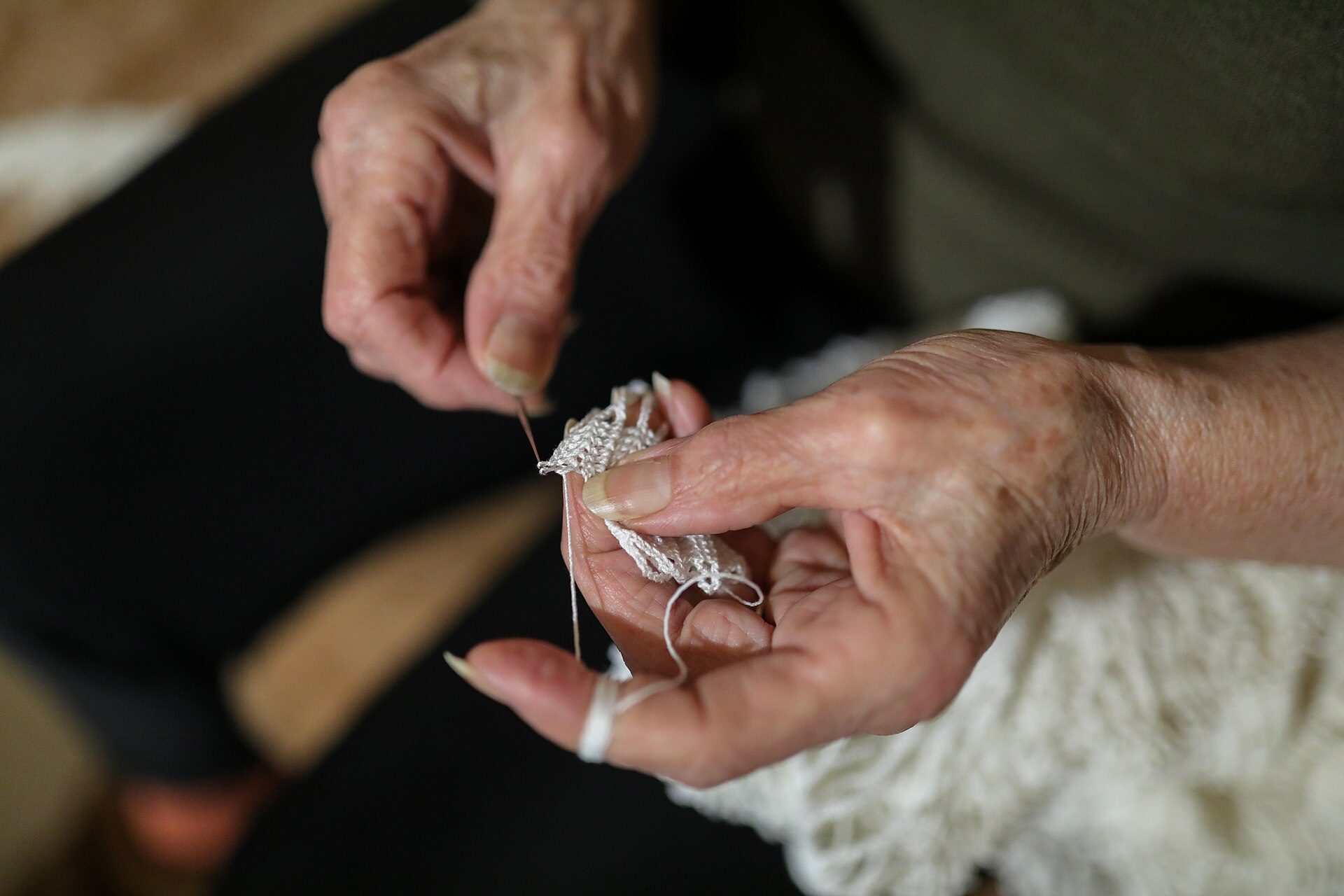
Photo: Miluša Snidová / Wikimedia Commons, CC BY-SA 4.0
| Avoid | Say instead | Why |
|---|---|---|
| "Sit still, I'll do it, it's quicker." | "You wash your face, I'll do your back." | Keeps the part they can do |
| "Eat it all up, good boy." | "Could you manage a few more spoonfuls?" | Speak as to an adult |
| "What are you saying? I can't understand." | "Could you say that again a bit slower for me?" | Avoids embarrassing them |
| "You have to have a bath." | "If you're tired, let's rest 15 minutes and then have a wash?" | Respects the right to refuse |
Protecting dignity and privacy
Vietnamese law, including the Law on the Elderly, recognises older people's right to respect and care. You enter the person's bedroom, know their illnesses, see their body and hear family matters; keeping all of that private is a basic part of professional ethics.
During washing and dressing
Knock and wait for an answer before entering. Close the door, draw the curtain and cover the parts of the body you are not washing with a towel; uncover only the area you are working on. Explain each step first and ask whether they would prefer a carer of the same sex.
Information, photos and money
Health, money and family affairs are private: do not discuss them with neighbours or in chat groups. Do not photograph or film the person for social media without their and the family's consent, and never while they are bathing, dressing or ill. Do not borrow money or accept cash or valuable gifts without the family knowing; when asked to buy something, keep the receipt.
When the person refuses
The person has the right to refuse a bath, a meal or a walk. Do not force or threaten; ask why, try again after 15-20 minutes, change how you ask or let someone else try. If they keep refusing something important, such as medicines, food or fluids, write it down and tell the family.
Safety warning: Never shout at, hit, lock in a room or tie down an older person, or give them sleeping pills or sedatives on your own to make them "easier": that is abuse and may break the law. If you see signs that the person is abused, starved or neglected, tell the responsible family member or the care home manager; if they are in danger, call 113 (police) or 115 (ambulance) in Vietnam. If the person talks about suicide or harms themselves, stay with them, remove dangerous objects and tell the family at once.
Worked example: a first morning with Mr Tu, 78
Mr Tu is 78, hard of hearing with a hearing aid in his left ear, and has high blood pressure, diabetes and knee osteoarthritis; he can still walk on his own with a stick. His daughter hires you for the morning shift from 7:00 to 11:00, which is 240 minutes.
| Time | Minutes | Task | Communication focus |
|---|---|---|---|
| 7:00-7:20 | 20 | Handover: conditions, medicines, doctor's limits, how he likes to be addressed | Ask the family, write it down |
| 7:20-7:35 | 15 | Greet, introduce yourself, check the hearing aid | Sit at eye level, TV off |
| 7:35-8:05 | 30 | Brush teeth, wash face, get dressed | He chooses his shirt and does the buttons |
| 8:05-8:45 | 40 | Breakfast, medicines from the pre-filled pill box | Sit with him, do not rush |
| 8:45-9:30 | 45 | Walk round the yard, water the plants together | Walk at his pace |
| 9:30-10:15 | 45 | Rest, drinks, large-print newspaper, chat | Listen to his old stories |
| 10:15-10:45 | 30 | Tidy the room, prepare lunch from the family's menu | Ask before moving his things |
| 10:45-11:00 | 15 | Update the log, send a report to the family | Describe facts, not judgements |
Check: 20 + 15 + 30 + 40 + 45 + 45 + 30 + 15 = 240 minutes, matching the 7:00-11:00 shift; time for him to do things himself is already built in.
At 9:50 Mr Tu says he feels "shaky and sweaty". These may be signs of low blood sugar: you do not diagnose, you follow the action plan the doctor gave the family, phone his daughter, stay with him and note the time. If he becomes drowsy or cannot swallow, call 115 at once. The end-of-shift message is short and factual: "9:50 he was shaky and sweaty, I followed the plan and called you; 10:05 he is better, still watching him."
Common mistakes and how to fix them
Shouting into a hard-of-hearing person's ear
Signs: the person winces and turns away, and the family thinks you are scolding them. Fix: cut the noise, stand in front, speak slowly in a low voice, rephrase, check the hearing aid.
Doing everything for them to save time
Signs: after a few weeks the person can no longer hold a spoon or stand up as before. Fix: allow more time for what they can still do and help only with what they truly cannot.
Assuming sadness and forgetfulness are "just old age"
Result: depression, infections or medicine side effects are missed. Fix: compare with how the person usually is, write it down and tell the family.
When to tell the family, see a doctor or call 115
Besides the condition-specific signs in the table above, tell the family the same day so the person can see a doctor if there is: low mood or changed eating and sleeping for more than 2 weeks; new forgetfulness, confusion or personality change; hearing or sight getting worse quickly, ear pain or discharge. Call 115 at once for a facial droop, weakness or numbness on one side, or sudden trouble speaking (signs of stroke); chest pain or breathlessness; drowsiness, seizures or fainting; a blow to the head in a fall; or active self-harm. When in doubt, report it.
Frequently asked questions
Older people are often irritable. What should a carer do?
Do not argue and do not take it personally. Check whether they are in pain, hungry or tired. If the irritability is new over a few days, tell the family.
How do I talk with an older person who is hard of hearing?
Follow the 4 steps above: get their attention, check the hearing aid, speak slowly and clearly, and ask back about the content. Do not shout.
What should a carer do for an older person with high blood pressure or diabetes?
Prompt prescribed medicines on time, keep meals regular, help them stand slowly, check their feet daily and keep a log. Never adjust medicines yourself based on readings.
Can a carer post photos of the person on social media?
Only with clear consent from the person and the family, and never while they are bathing, dressing, seriously ill or confused. The safest choice is not to post at all.
Practice and self-assessment
- Put a little cotton wool in both ears, turn on the TV and ask someone to read you 5 instructions; then swap roles and speak to them using the 4 steps.
- Plan a 4-hour morning shift for an imaginary older person, with minutes adding up to exactly 240, and mark which tasks they do themselves.
Self-assessment criteria
- Pass: the person playing the older adult understands all 5 instructions without you shouting; you sit at eye level and wait for answers.
- Pass: you can name at least 4 signs that need a 115 call and 4 signs to report to the family the same day.
- Pass: the shift plan adds up and includes at least 3 tasks the person does or chooses themselves.
- Not yet: you still use baby talk, discuss the person in front of them, or plan to post their photo without permission.
Once you understand the person and can talk with them, move on to the next roadmap step: Personal care, bathing, diapers and pressure sores, where asking permission, covering the body and letting the person do their share are applied to every task. Review infection control in elderly care and read ahead on preventing pressure sores in bedbound people.
Keep learning elderly care: after respectful communication come personal care and pressure sores, mobility and fall prevention, feeding and health tracking, dementia care and first aid. See the 8-step elderly care roadmap.