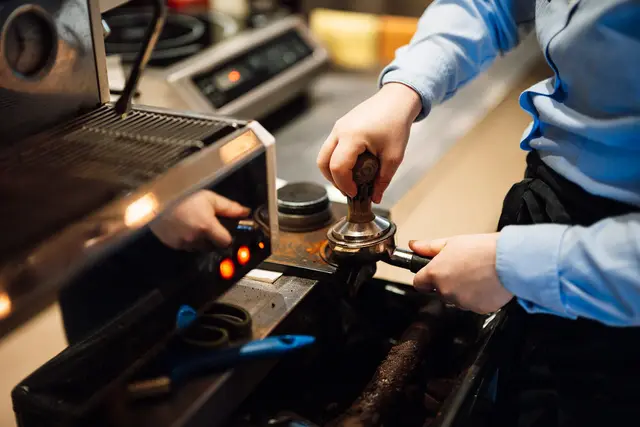
The Vietnamese coffee beans a barista handles every day come down to four names: Robusta (mostly from the Central Highlands, Dak Lak being the best known), Arabica (Cau Dat in Lam Dong and Son La in the northwest), Culi or peaberry (round single-seed beans, found in both Robusta and Arabica) and Moka (a scarce old Arabica variety grown in Cau Dat). What ends up in the cup also depends on the processing (washed, natural, honey), the roast level (light, medium, dark) and the age of the beans counted from the roast date. This lesson teaches you to recognise a bean by sight, predict its taste from the label and know whether it has rested long enough.
By the end of this lesson, you will be able to:
- Tell Robusta, Arabica and peaberry apart by bean shape, aroma and taste, and say which drinks each one suits.
- Explain how washed, natural and honey processing change acidity, sweetness and clarity in the cup.
- Recognise light, medium and dark roasts by colour, oil and smell, and match a roast level to espresso, phin and pour over.
- Read a coffee bag label, work out the age of the beans from the roast date and decide whether to use them now, let them rest or send them back.
- Write a weekly bean order for a small cafe with a two-batch rotation and a bean cost per cup that adds up.
Learning to be a barista from scratch? Coffee beans and roast levels are step 2 of the roadmap, right after bar hygiene and machine safety and before grinding and pulling espresso. See the 8-step barista roadmap to learn in the right order.
Why a barista needs to understand beans before pulling shots
Guests often ask: "Which beans do you use, and why is this cup sour and that one bitter?" A barista does not need to roast, but must be able to read beans. When a new batch arrives tasting different, someone who understands beans knows whether the problem is the coffee or their own technique.
From tree to cup: four things that decide the taste
- Species and growing region: Robusta or Arabica, and at what altitude; this decides strong and bitter versus fragrant and bright.
- Picking and processing: ripe-picked or strip-picked, dried whole or pulped first; this decides clean versus harsh.
- Roast level: light roasts are bright and acidic, dark roasts bitter and heavy.
- Bean age and storage: the part that is in the barista's hands every day.
What a coffee bean actually is
A ripe red coffee cherry usually holds two seeds with their flat sides facing each other, wrapped in skin, a sticky layer of pulp (mucilage), a papery parchment and a thin silver skin. "Green coffee" is the seed with all those layers removed, dried to about 11–12.5% moisture; roasters buy green coffee and roast it.
Vietnamese Robusta and Arabica: telling them apart by eye, nose and tongue
Vietnam is one of the largest coffee producers in the world, and most of its output is Robusta, so the familiar "Vietnamese-style" cup (strong phin coffee with condensed milk) is built on Robusta flavour. Arabica is grown in smaller amounts, in cooler highland areas.
Robusta from Dak Lak and the Central Highlands
Robusta (Coffea canephora, known to Vietnamese farmers as "ca phe voi") is grown widely in Dak Lak, Gia Lai and Lam Dong at roughly 400–800 m. The trees tolerate heat and the cherries grow in dense clusters around the branches (see Figure 1); harvest usually runs from about October to January.
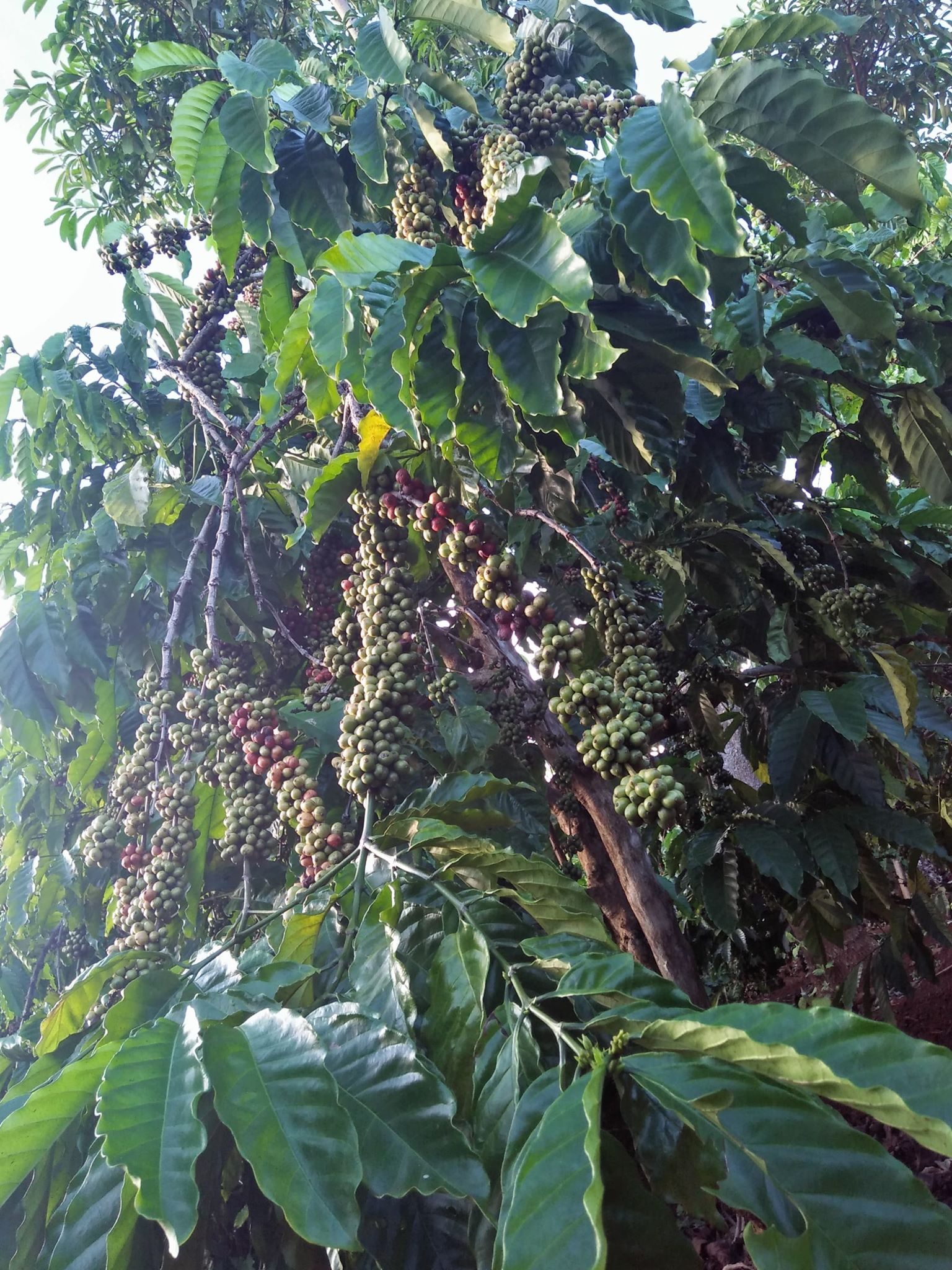
Photo: ThiênĐế98 / Wikimedia Commons, CC BY-SA 4.0
Robusta beans are small and rounder, with a straight centre cut. The taste is strong, bitter and heavy-bodied, with wood and cocoa notes and little acidity; caffeine is typically about double that of Arabica, and the crema is thick. Ripe-picked, carefully processed Robusta (often called "fine Robusta") is far sweeter and cleaner than strip-picked commercial grade.
Arabica from Cau Dat (Lam Dong) and Son La
Arabica (Coffea arabica, called "ca phe che" in Vietnam) needs a cool climate. The two regions you will meet most often:
- Cau Dat (Da Lat, Lam Dong): around 1,500 m, with big differences between day and night temperatures. Bright acidity, fruit, floral and brown sugar notes.
- Son La and other northwestern provinces: around 600–1,200 m depending on the area. Rounder, caramel sweetness, softer acidity than Cau Dat.
Arabica beans are larger and longer, oval, with an S-shaped centre cut; most Vietnamese Arabica is the Catimor hybrid. Acidity is a strength of Arabica: a pleasant orange or apple brightness, nothing like the harsh sourness of an under-extracted shot.
Culi and Moka: two names you will see on menus
Culi (peaberry) is a round single-seed bean: only one seed develops inside the cherry instead of two, so it grows round like a pea (see Figure 2). It is not a separate variety; there is Robusta peaberry and Arabica peaberry, sorted out by screening and making up only a small part of the crop. Round beans tumble evenly in the roaster and roast evenly, giving a fuller, rounder cup; Robusta peaberry is a favourite for phin coffee.
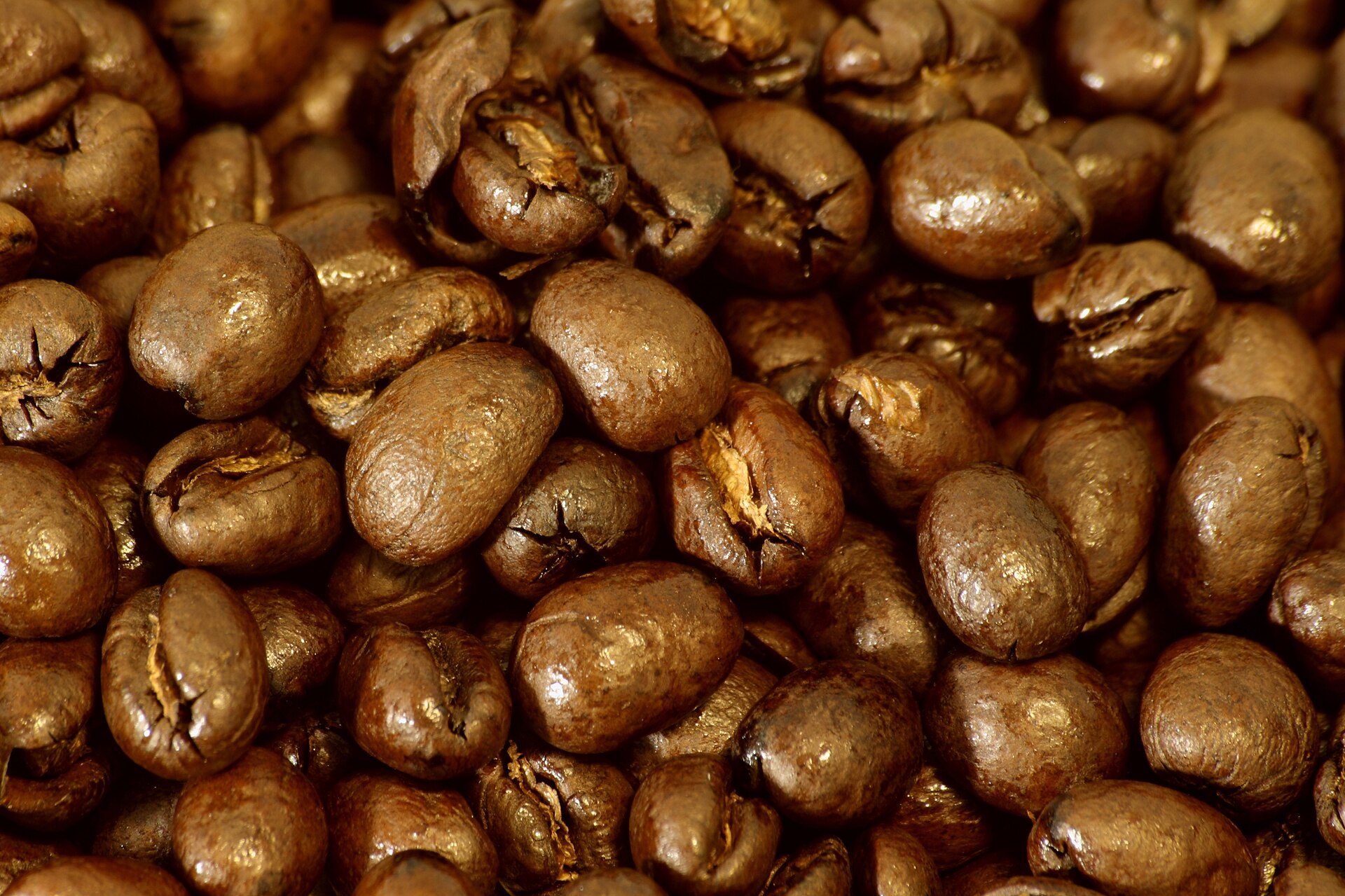
Photo: Ragesoss / Wikimedia Commons, CC BY-SA 3.0
Moka in Vietnam is the local name for an old Arabica variety (from the Bourbon line) grown in small quantities in Cau Dat. Yields are low, so the beans are rare and expensive; the taste is fragrant, gently acidic and sweet. Do not confuse it with a "mocha" on the menu (espresso, milk and chocolate) or a moka pot.
Quick comparison of the four beans
| Bean | Shape | Main flavours | Best for | Roasted price (reference) |
|---|---|---|---|---|
| Commercial Robusta | Small, round, straight cut | Bitter, strong, wood, cocoa, low acidity | Phin, iced milk coffee, bac xiu | 220,000–380,000 VND/kg |
| Fine Robusta (ripe-picked, honey) | As above, more even colour | Strong but sweet, clean, less harsh | Espresso blends, premium phin | 350,000–550,000 VND/kg |
| Arabica from Cau Dat, Son La | Large, oval, S-shaped cut | Bright, fruit, floral, caramel | Espresso, pour over, cold brew | 400,000–900,000 VND/kg |
| Peaberry (Robusta or Arabica) | Round, single seed | Fuller and rounder than flat beans of the same lot | Strong phin, espresso | 280,000–450,000 VND/kg (Robusta peaberry) |
| Cau Dat Moka | Smaller than Catimor, oval | Fragrant, gentle acidity, sweet | Hand brewing, premium drinks | 700,000–1,500,000 VND/kg |
Green coffee prices move with the harvest and the world market; ask your roaster for a fresh price with every order.
Washed, natural and honey processing: where the flavour comes from
Processing is how the farm removes the fruit and dries the seeds after picking. Same farm, same variety, different processing, and the cup already tastes different. Labels usually say natural, washed or honey.
Natural (dry) process: drying the whole cherry
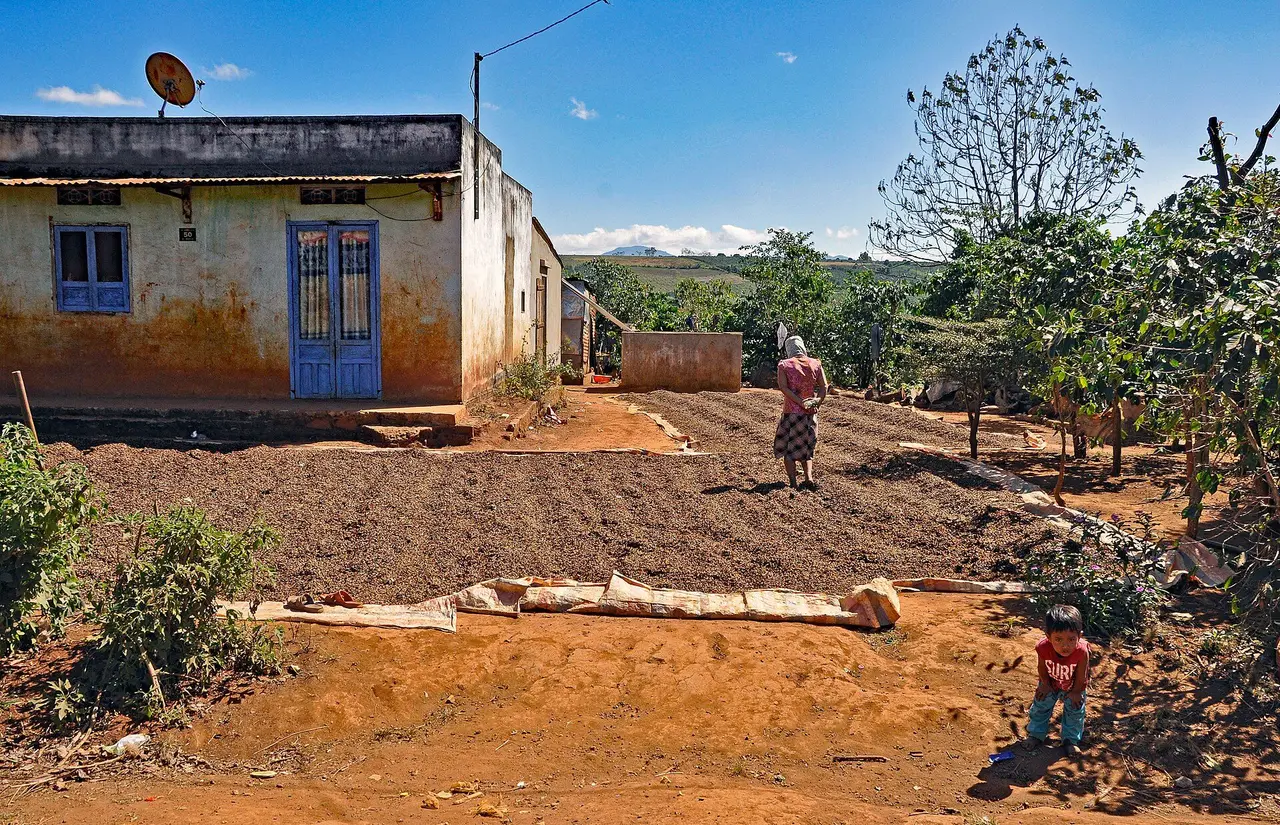
Whole cherries are dried on patios, tarpaulins or raised beds for about 2–4 weeks depending on the sun, then the dried husk is hulled off. This is the common method for Robusta in the Central Highlands (see Figure 3).
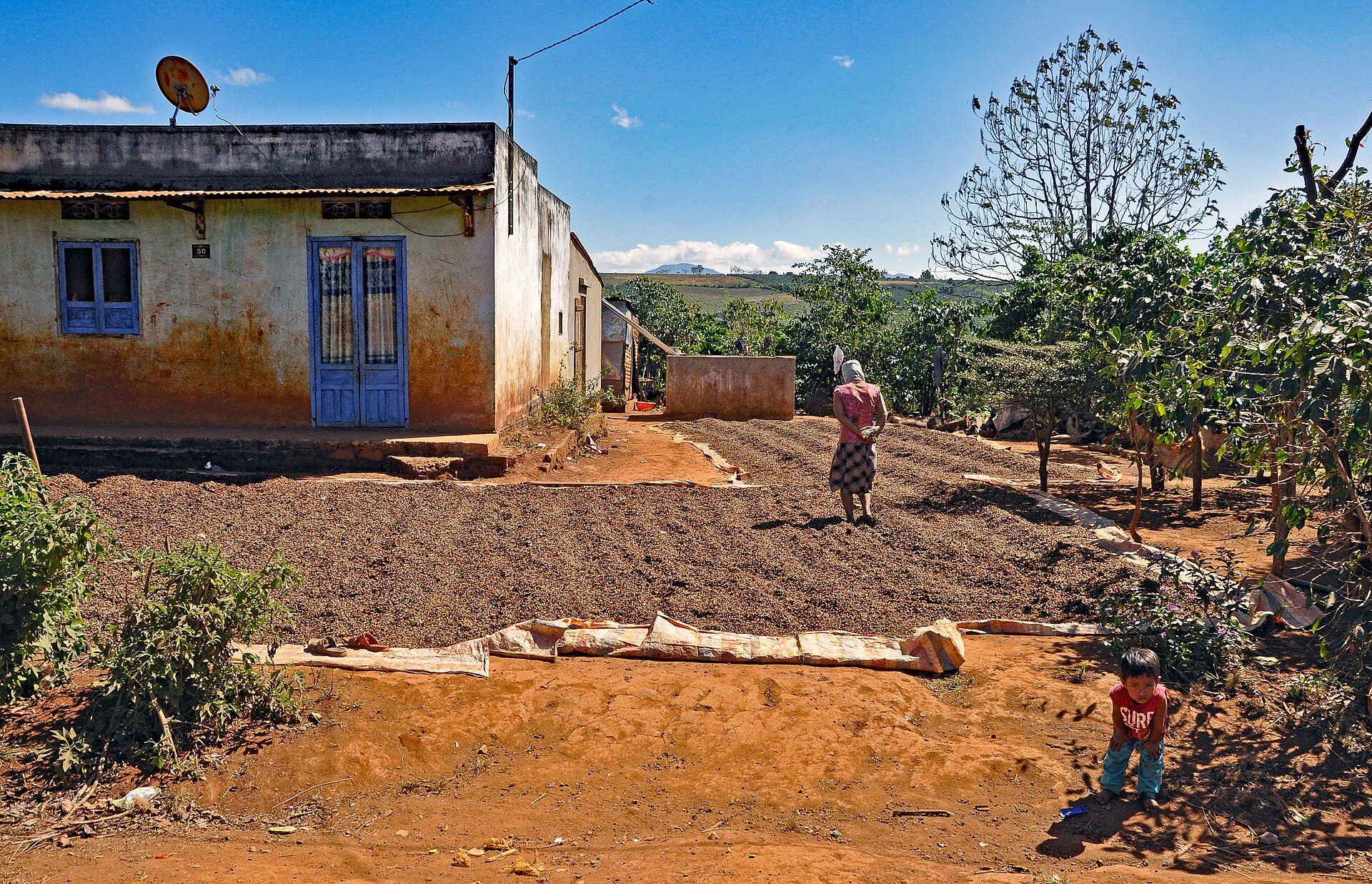
Photo: P. Hughes / Wikimedia Commons, CC BY 4.0
Taste: sweet, heavy-bodied, ripe fruit. Risk: dried on bare earth, rained on or not turned, the beans over-ferment or go mouldy, which is why commercial Robusta often tastes "dirty" and harsh.
Washed (wet) process: pulp, ferment, rinse
The skin is pulped off right after picking, the beans soak in tanks so the mucilage ferments and loosens (usually about 12–48 hours), then they are rinsed and dried. It costs water and labour, so it is mostly used for Arabica and carefully made Robusta lots.
Taste: clean, clear, distinct acidity, easy to pick out the character of the region; less sweetness and body than natural.
Honey: in between
The skin is pulped off but the beans are not washed; some or all of the sticky, honey-like mucilage stays on while they dry (there is no honey involved). Little mucilage is called yellow honey, more is red honey, almost all of it is black honey. The cup is sweeter than washed and cleaner than natural.
Figure 4 shows two stages side by side: ripe red cherries drying whole on the right, and pulped beans drying on the left.
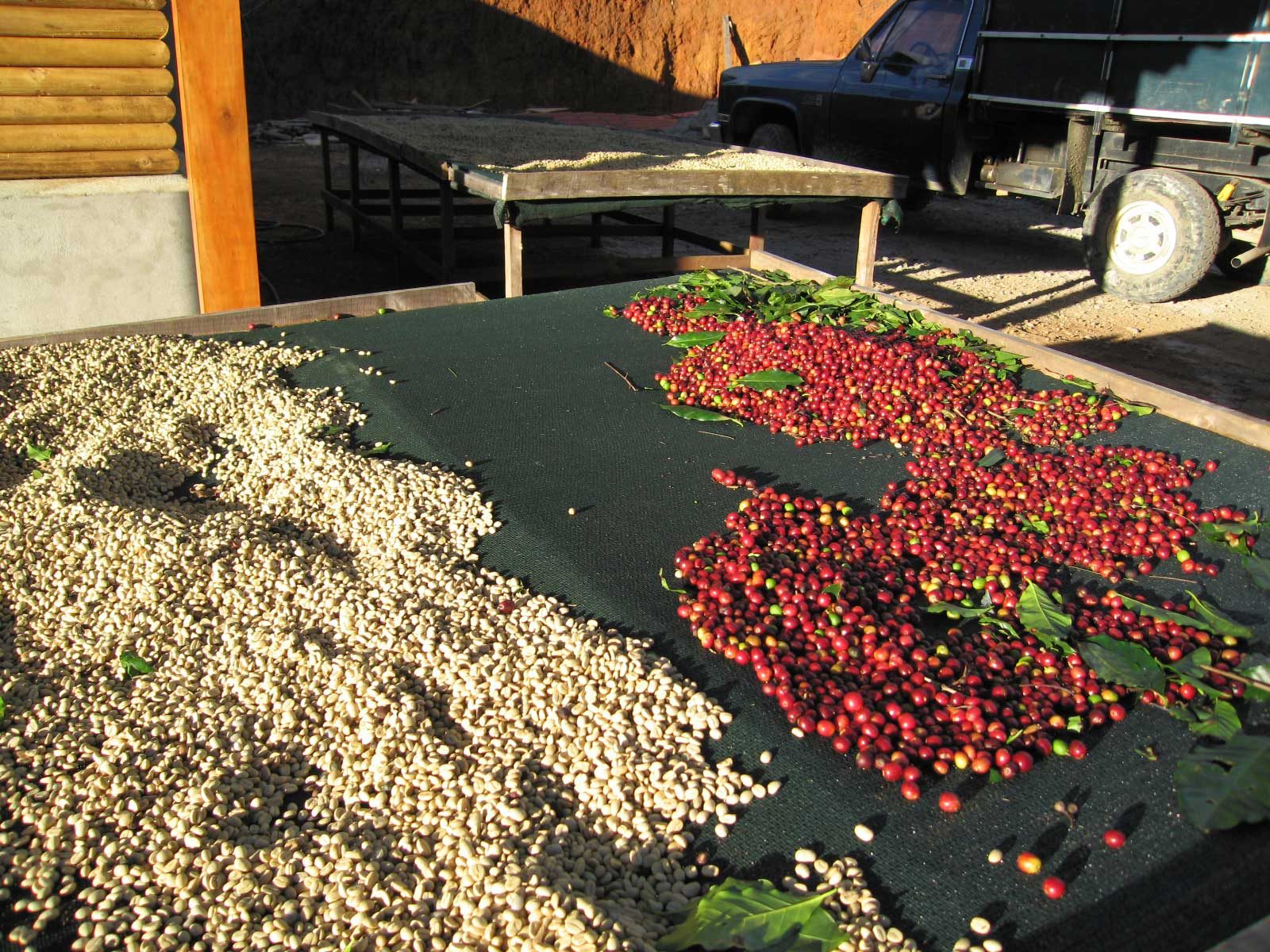
Photo: Tarrazu at en.wikipedia / Wikimedia Commons, Public domain
Ripe picking and defects: what the label does not say
Unripe cherries, insect-damaged, broken and black beans make the cup harsh and pungent. Tip: pour 100 g of roasted beans onto a white plate and pick out unusually pale beans (unripe), scorched beans and broken ones. A good lot has only a few defects.
Light, medium and dark roasts: look at the colour, listen for the crack, predict the taste
Roasting heats green coffee for about 9–16 minutes in a drum. The beans turn from green to yellow, brown and then dark brown; acidity falls while bitterness and smokiness rise.
First crack, second crack and weight loss
During roasting the beans pop in two waves. First crack is moisture bursting out, sounding like popcorn; light roasts stop just after it. Second crack is a faster, quieter crackle as oil starts to reach the surface; dark roasts stop at its start or beyond. The longer the roast, the lighter the beans: weight loss runs from about 11–13% for light roasts to 16–20% for very dark ones.
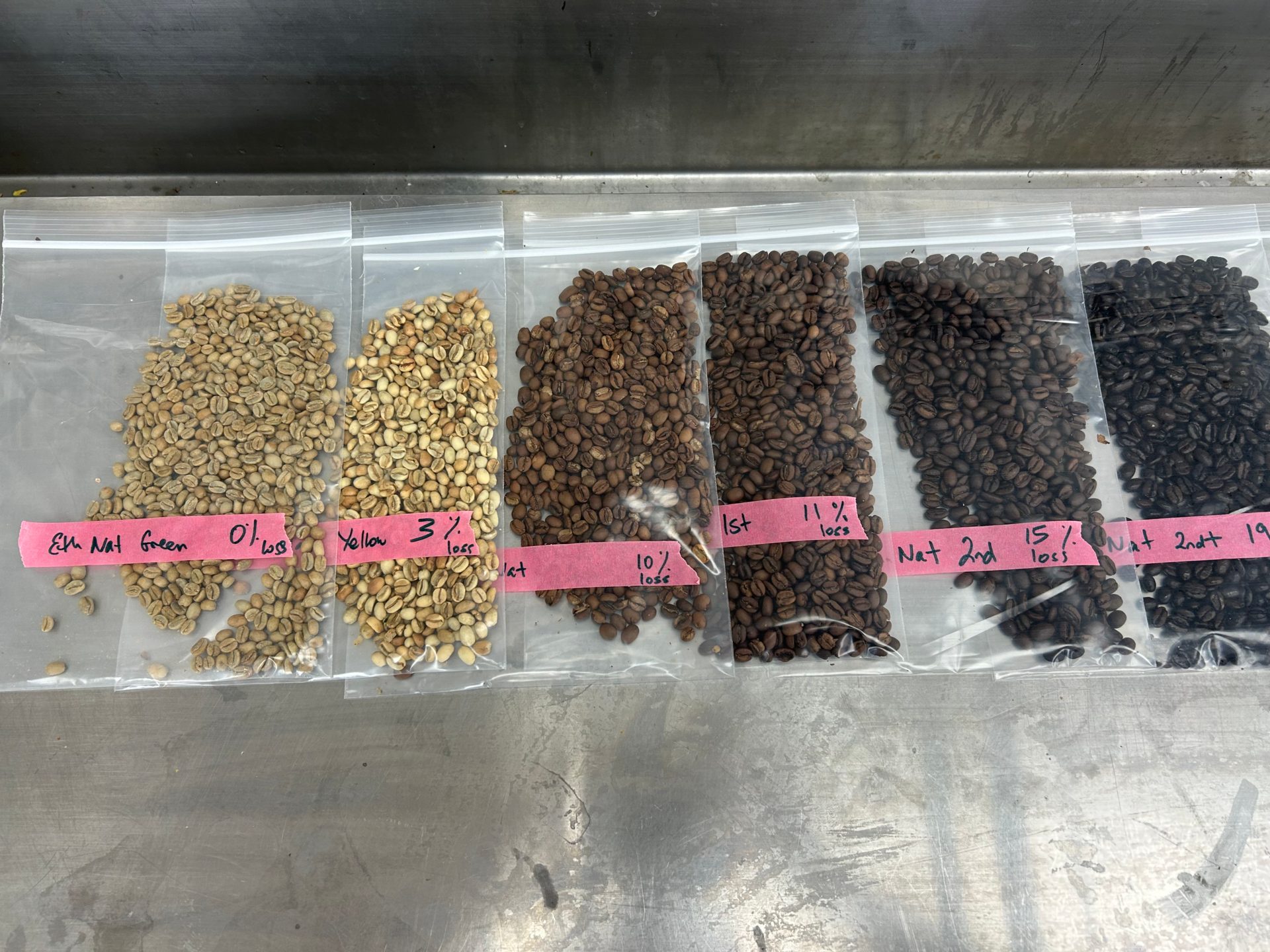
Photo: Nachotacl / Wikimedia Commons, CC BY-SA 4.0
In Figure 5, the second bag is still raw; the fourth bag (first crack) is light-roast territory; the fifth is a dark roast; the last is very dark.
Which roast for which drink
| Roast | Colour and surface | Taste | Best for | Brewing notes |
|---|---|---|---|---|
| Light | Cinnamon brown, dry, no oil | Bright, fruit, floral, light body | Pour over, Arabica cold brew | Hard beans; grind finer, use hotter water |
| Medium | Milk-chocolate brown, dry or a few oil spots | Balanced acidity and sweetness, caramel, nutty | Espresso, latte, cold brew | Easiest for beginners to dial in |
| Dark | Dark brown, clearly oily | Bitter, smoky, dark cocoa, low acidity | Phin, iced milk coffee, bac xiu | Extracts fast, turns harsh easily; use slightly cooler water |
There is no single "right" roast for every cafe: iced phin coffee with condensed milk needs a dark roast to stand up to the milk, while pour over needs a light roast to keep the character of the origin.
Traditional Vietnamese roasting and reading the ingredients
Many traditional roasters coat the beans with butter, sugar, salt or rice wine for shine and aroma. That is a style, not a mistake, but such beans burn easily, mask the real taste and dirty the grinder faster. Some cheap ground coffee is even mixed with roasted soybeans or corn. Always read the ingredients; "rang moc" (plain roast) means nothing was added.
Reading the bag label, the roast date and resting time
The lines a label should have
- Species and variety: Robusta, Arabica, peaberry, Catimor, Bourbon and so on.
- Region and altitude: higher farms usually mean brighter acidity.
- Processing: natural, washed, honey.
- Roast level: light, medium, dark, or "espresso roast", "phin roast".
- Roast date: the most important line. Many retail bags in Vietnam show only a production date and best-before date; when ordering for a cafe, ask for the roast date on every bag.
- Ingredients: whether butter, sugar or flavouring was added.
How long should beans rest (degassing)
Freshly roasted beans release a lot of CO₂: brew them right away and the phin bubbles, espresso spurts and the taste is sharp and unstable. Reference resting times:
| Brew method | Start using after | Best window | Aroma drops clearly after |
|---|---|---|---|
| Espresso | 7 days | 7–21 days | About 5–6 weeks |
| Phin | 3 days | 3–14 days | About 4–6 weeks |
| Pour over, cold brew | 3–5 days | 5–21 days | About 5–6 weeks |
Dark roasts degas and lose aroma faster than light roasts, so use them earlier in these windows; a particular lot may differ by a few days.
What the one-way valve does
The small round valve on the bag lets CO₂ out but does not let air in. Thanks to the valve, the bag can be sealed right after roasting without bursting, and the beans are less exposed to oxygen. The valve only works while the bag is sealed: once opened, press the air out and close the zip.
Storing beans at the bar
- Keep bags somewhere dry, cool and dark, away from the machine and sunlight; oxygen, heat, light and moisture are the enemies.
- Do not keep beans in daily use in the fridge: moisture condenses on them every time they come out.
- Grind just before brewing; pre-ground coffee loses aroma very quickly.
- Use bags with the older roast date first, and write the opening date on each bag.
Food safety and health note: Beans or ground coffee that are damp, clumped, show mould spots or smell odd go in the bin, without a test brew: mould can produce toxins that re-roasting does not remove. Robusta is high in caffeine; for guests who are pregnant, have heart, blood pressure or stomach conditions, insomnia, or take medication, suggest a smaller cup, Arabica or decaf and advise them to ask their doctor; you do not advise in place of a doctor. If a guest has a racing heart, dizziness or difficulty breathing after drinking, have them sit down and drink water; if it is severe or does not ease, call emergency services (115 in Vietnam).
Worked example: a weekly bean order for a cafe selling 110 cups a day
Ms Hanh's cafe in Da Nang sells 60 espresso-based drinks and 50 phin coffees a day, seven days a week. You have been asked to write the weekly bean order.
Step 1: daily bean use
- Espresso: 60 cups × 18 g = 1,080 g.
- Morning dial-in and discarded shots: about 120 g a day (from last week's dial-in log).
- Total espresso beans: 1,080 + 120 = 1,200 g a day.
- Phin: 50 cups × 25 g = 1,250 g a day.
- Total per day: 1,200 + 1,250 = 2,450 g; per week: 2,450 × 7 = 17,150 g, or 17.15 kg.
Step 2: choose beans for each drink
Espresso: a blend of 70% honey-processed Dak Lak Robusta and 30% Cau Dat Arabica, medium roast. Phin: 100% Dak Lak Robusta, dark roast. Per week:
- Espresso beans: 1,200 g × 7 = 8,400 g, split into 8.4 × 70% = 5.88 kg honey Robusta and 8.4 × 30% = 2.52 kg Arabica.
- Phin beans: 1,250 g × 7 = 8.75 kg dark-roast Robusta.
- Check: 5.88 + 2.52 + 8.75 = 17.15 kg, matching Step 1.
Step 3: cost and bean cost per cup
| Bean | Quantity | Unit price | Amount |
|---|---|---|---|
| Honey Dak Lak Robusta, medium (espresso) | 5.88 kg | 400,000 VND/kg | 2,352,000 VND |
| Cau Dat Arabica, medium (espresso) | 2.52 kg | 700,000 VND/kg | 1,764,000 VND |
| Dak Lak Robusta, dark (phin) | 8.75 kg | 300,000 VND/kg | 2,625,000 VND |
| Total | 17.15 kg | 6,741,000 VND |
- Espresso beans: 2,352,000 + 1,764,000 = 4,116,000 VND for 8,400 g, or 490 VND/g. One 18 g shot: 18 × 490 = 8,820 VND of beans.
- Phin beans: 300,000 VND/kg = 300 VND/g. One 25 g cup: 25 × 300 = 7,500 VND of beans.
- Weekly total: 4,116,000 + 2,625,000 = 6,741,000 VND (about US$260), matching Table 4.
The 490 VND/g already includes the 120 g of daily waste; cutting dial-in waste lowers your cost directly.
Step 4: a two-batch rotation so the beans are always the right age
Espresso beans need at least 7 days of rest (Table 3), so the cafe keeps two batches: one in use, one resting.
- Batch A is roasted on day 1, rests in sealed valve bags and is used from day 8 to day 14. Bean age in use: 7–13 days, inside the 7–21 day window.
- Batch B is roasted on day 8 and used from day 15 to day 21; one new batch every week.
- Phin beans need only 3 days: roasted on day 1, used from day 4 to day 10, aged 3–9 days, inside the 3–14 day window.
- Order 1 kg bags: the cafe uses 1.2 kg of espresso beans a day, so an opened bag is finished the same day.
Common mistakes when choosing and storing beans
Using beans roasted yesterday for espresso
Sign: shots spurt, taste sharp and vary from shot to shot. Cause: too much CO₂ left in the beans. Fix: keep the two-batch rotation from the example.
Filling the grinder hopper for the whole day
Sign: afternoon shots are flat with thin crema. Cause: beans in the hopper warm up and sit in the air for hours. Fix: load only 2–3 hours' worth at a time.
Mixing a new batch into the old one
Sign: the taste drifts right after you have dialled in. Cause: two batches of different ages mixed in the hopper. Fix: finish the old batch, clean the hopper, then load the new one.
Frequently asked questions
How do I tell Arabica and Robusta beans apart by eye?
Arabica is larger and oval with an S-shaped cut. Robusta is smaller and rounder with a straight cut. Peaberry is fully round with no flat face. In dark roasts the colour hardly helps, so shape and centre cut are the surest signs.
What is Culi (peaberry) coffee, and is it better than regular beans?
Culi is a round single-seed bean found in both Robusta and Arabica. It roasts evenly, so it often tastes fuller and rounder, but peaberry from a strip-picked lot can still be harsh.
How long after roasting can I use coffee beans?
For espresso after about 7 days, best at 7–21 days; for phin after about 3 days, best at 3–14 days (Table 3). Whole beans in a sealed valve bag keep their aroma well for about 4–6 weeks.
Which roast suits phin coffee?
Most cafes use dark-roasted Robusta or a Robusta-heavy blend to stand up to condensed milk; black phin coffee can use a medium-roast Arabica. Ratios and dripping times are covered in the lesson on Vietnamese phin coffee ratios.
Should I keep coffee beans in the fridge?
Not beans in daily use. For long storage, divide them into small vacuum-sealed bags in the freezer, and let a bag reach room temperature before opening it.
Practice and self-assessment
- Take 100 g each of Robusta, Arabica and peaberry; pour them onto a white plate, note shape, colour and oil, and count the defects.
- Brew all three with the same phin recipe and write three words describing each cup.
- Read the labels of three bags, work out each bag's age today and decide whether it goes to espresso or phin.
- Write a one-week bean order for an imaginary cafe selling 80 cups a day, following the four steps of the example.
Self-assessment criteria
- Pass: you name Robusta, Arabica and peaberry correctly at least 9 times out of 10 when someone else mixes the samples.
- Pass: you can taste the difference between a Robusta and an Arabica cup and describe it in concrete words (wood, cocoa, orange), not just "good" or "bad".
- Pass: grams and money match across every step; espresso beans are used at 7–21 days old.
- Not yet: you use beans that have not rested long enough, skip the opening date on bags, or mix batches in the hopper.
Now that you understand beans, move on to the next step of the roadmap: Grinding & pulling espresso (dial-in), where you will use what you just learned to adjust the grind for bean type, roast level and bean age. Read ahead in the lesson how to pull an espresso shot and dial in.
Keep learning to be a barista: after coffee beans come grinding and pulling espresso, milk steaming and latte art, phin coffee, cold brew and pour over, peak-hour bar flow and a 100-cup trial shift project. See the 8-step barista roadmap.