Pulling a proper espresso starts with an easy recipe: 18 g of ground coffee in, about 36 g of liquid coffee out (a 1:2 ratio), in 25–30 seconds. But those numbers are only a starting point. Every batch of beans, and every hot or humid day, needs a different grind setting — the process baristas call dial-in. This lesson teaches you to pull a shot correctly, step by step, to read sour and bitter flavours so you know what to change, and to dial in on your own every morning before the café opens.
By the end of this lesson, you will be able to:
- Pull a double espresso of 18 g → 36 g in 25–30 seconds, within ±1 g and ±2 seconds.
- Choose a ristretto, espresso or lungo ratio to suit the beans and the drinks on your menu.
- Dial in a new batch of beans in no more than 4–5 test shots by changing only one variable at a time.
- Recognise under-extraction, over-extraction and channeling from colour, flow and taste.
Want to learn the barista trade properly? See the 8-step Barista roadmap on NAMBIN: espresso is step 3, after bar hygiene and bean knowledge, and before milk steaming and latte art.
What espresso is and why extraction must be "right"
Espresso is coffee brewed by forcing hot water at roughly 90–96°C through a bed of finely ground, tightly packed coffee at a pressure of about 9 bar (nine times atmospheric pressure). In around half a minute, the water pulls out a small amount of very concentrated coffee, topped with a golden-brown foam called crema. Espresso is the base of a latte, a cappuccino and an americano — if the shot is bad, every milk drink made with it is bad too.
Three numbers to memorise: dose, yield and time
The dose is the number of grams of ground coffee in the filter basket, usually 18 g for a double basket. The yield is the number of grams of liquid coffee in the cup. Weigh it on a digital scale rather than reading the millilitre lines, because crema distorts the volume. The time runs from the moment you press the brew button to the moment you stop. The brew ratio is yield divided by dose: 36 ÷ 18 = 2, which is called a 1:2 ratio.
Under-extraction and over-extraction
Just as with Vietnamese phin coffee, the sour compounds dissolve first, the sweet ones in the middle and the bitter, astringent ones last. A shot that runs too fast (under about 20 seconds) only picks up the sour, salty, thin part — that is under-extraction. A shot that runs too slowly (over about 35 seconds) also drags out the harsh, drying bitterness — that is over-extraction. The 25–30 second window is the safe zone to start tasting and fine-tuning.
How do Vietnamese beans affect this?
Cafés in Vietnam often use blends containing Robusta to boost body and crema. Dark-roasted Robusta extracts quickly and turns bitter easily, so it is usually pulled at a shorter ratio (1:1.5–1:2). Medium-roast Arabica from highland growing areas such as Cau Dat (Lam Dong) or Son La is fragrant with a clean acidity, and is pulled at 1:2–1:2.5 to get enough sweetness. Read more in the "Vietnamese coffee beans and roast levels" step of the Barista roadmap.
Equipment you need before pulling a shot
You cannot dial in by eye. A scale and a timer are compulsory; without them, every adjustment is just a guess. Figure 1 shows a basic espresso kit laid out on a counter.
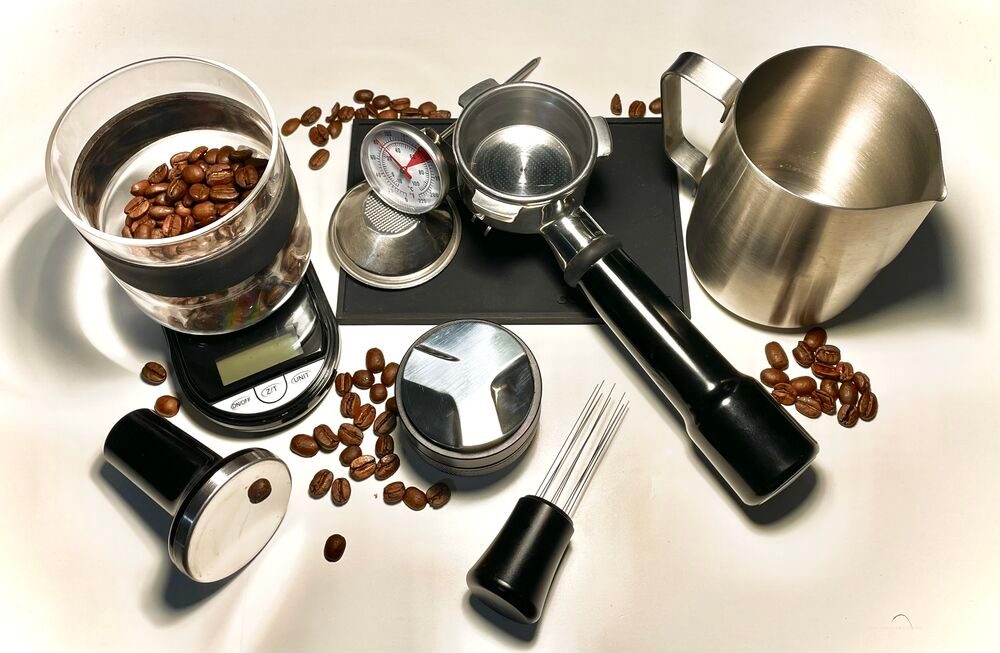
Photo: TheHolyCessna553 / Wikimedia Commons, CC0
The machine and the grinder
An espresso machine keeps the water at a stable temperature and creates about 9 bar of pressure at the group head. The grinder must be a burr grinder with fine step adjustments; a blade grinder produces uneven grounds and makes dial-in impossible. In a café, the grinder normally sits right next to the machine so that coffee is ground fresh for each shot.
Hand tools
- A portafilter and an 18 g double basket — the dose must match the basket size printed on the basket.
- A distribution tool: a WDT needle tool or a levelling tool.
- A tamper that fits the basket snugly (usually 58 mm on commercial machines) and a rubber tamping mat.
- A digital scale with 0.1 g resolution and a built-in timer, clean dry cloths and a knock box.
Beans and roast date
Espresso uses beans that have rested for about 7–21 days after roasting. Beans that are too fresh still hold a lot of gas, so the shot spurts and foams and is hard to stabilise; beans that are too old have lost their aroma and give thin crema. Grind just before brewing — never pre-grind for the whole shift.
Pulling an espresso step by step
Every shot goes through exactly the same sequence. If you use the same order and the same hand pressure each time, then when the flavour drifts you know the cause lies in the beans or the grind, not in your hands.
- Flush the group head for 2–3 seconds to clear old grounds and stabilise the temperature.
- Wipe the basket dry with a dry cloth; a wet basket makes water channel unevenly from the very start.
- Weigh the dose: put the portafilter on the scale, tare it, and grind exactly 18.0 g (±0.1 g).
- Distribute: stir evenly with the WDT tool and tap gently so the bed is level, with no thick or thin spots.
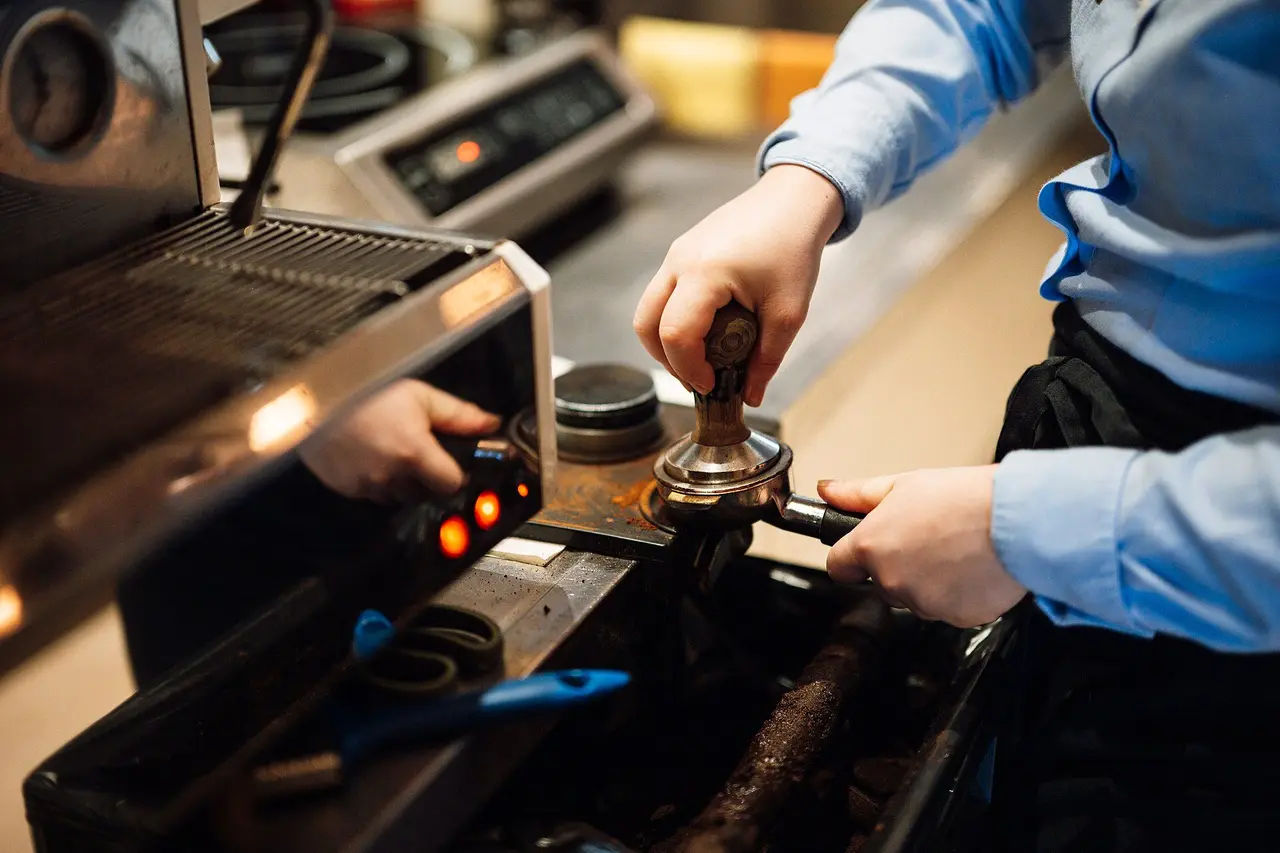
- Tamp: rest the portafilter on the mat, keep your elbow straight above the tamper and press straight down until the coffee no longer compresses. Do not twist, and do not knock the side of the portafilter after tamping.
- Lock in and brew immediately, within a few seconds; leaving the coffee sitting against the hot group head scorches the surface of the puck.
- Put the cup on the scale, tare it, and start the timer at the same moment you press the brew button.
- Stop the shot when the scale reaches about 34–35 g (another 1–2 g will drip after you stop), and note the time.
- Taste right away after a gentle stir, then remove the portafilter, knock out the puck and flush the group head.
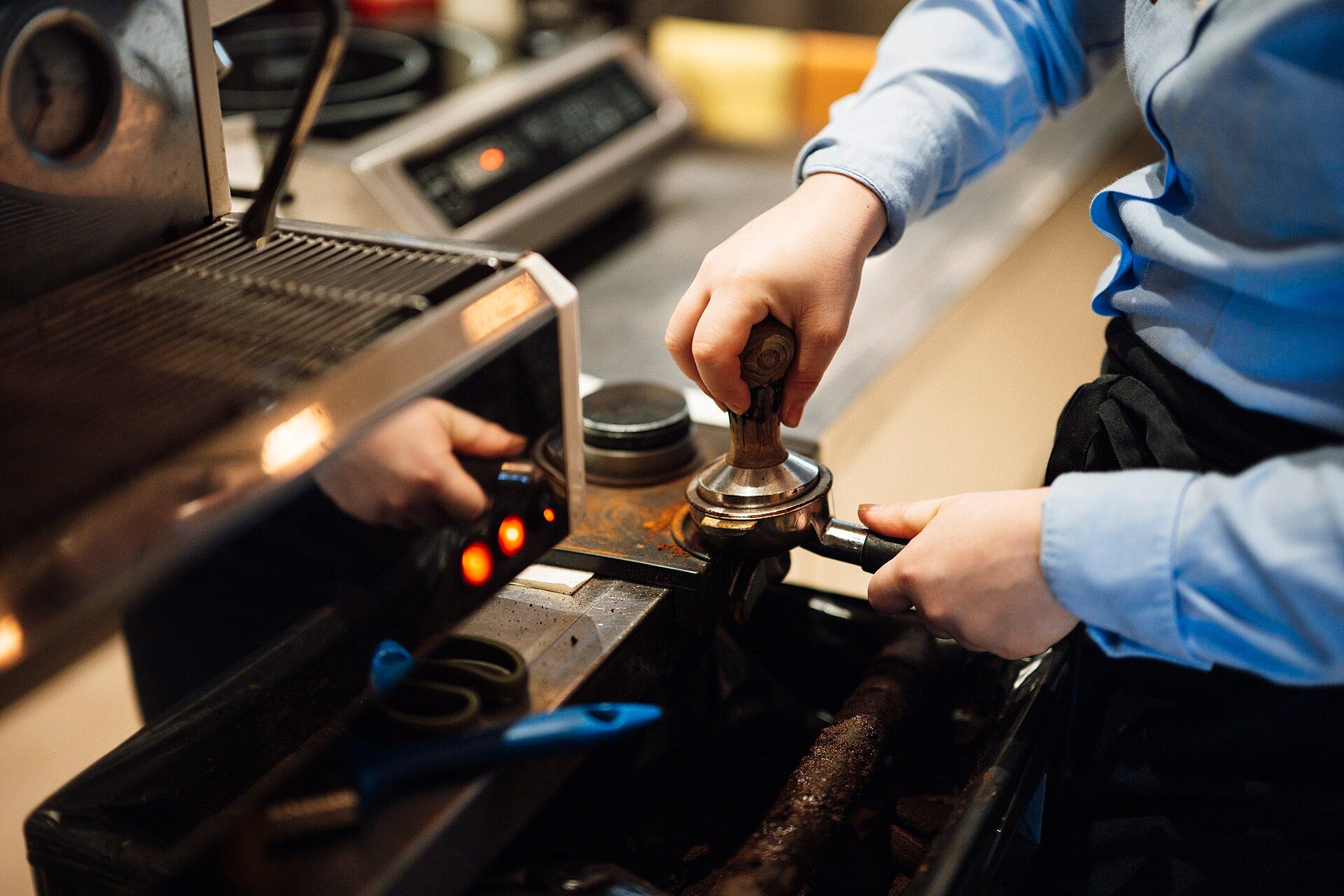
Photo: Shixart1985 / Wikimedia Commons, CC BY 2.0
How hard should you tamp?
Many books say 15 kg or 20 kg, but what matters is that you tamp until the coffee stops compressing and the surface is flat. Once the bed is fully compressed, pressing harder hardly changes the flow rate at all. Do not use tamping pressure to make a shot faster or slower — adjust the grind instead. Figure 2 shows the posture: straight wrist, shoulder above the tamper.
Reading the flow
A good shot starts dripping after about 5–8 seconds, then runs as a thin stream like a mouse's tail, dark brown gradually turning golden. When the stream turns pale yellow and watery ("blonding"), most of the good part has already come out. A bottomless (naked) portafilter, as in Figure 3, lets you see the underside of the basket: the flow should gather in the centre, with no sideways spurts.
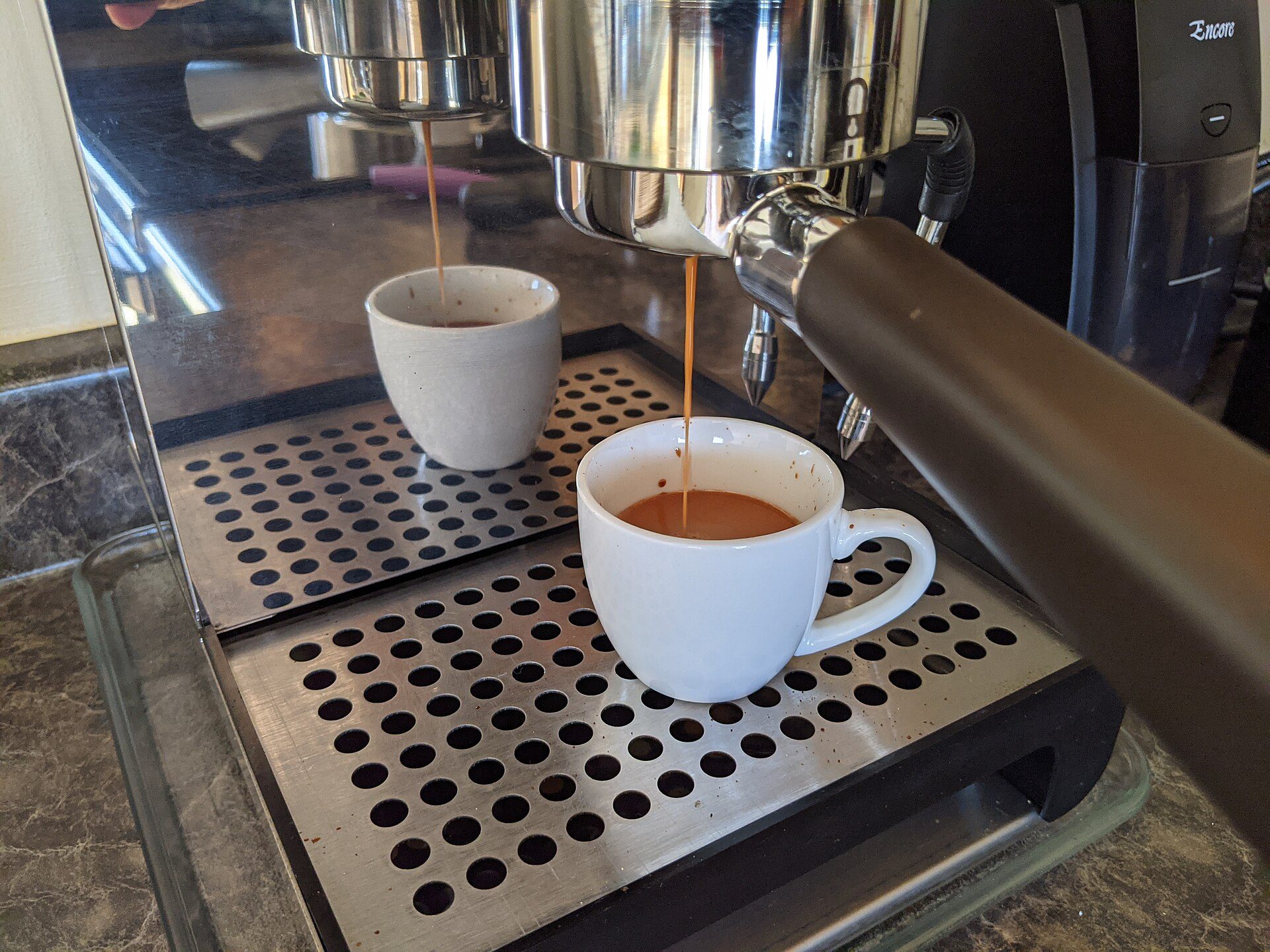
Photo: massage-techniques / Wikimedia Commons, CC BY-SA 2.0
Safety warning: the group head, portafilter and steam wand are all above 90°C. Never remove the portafilter while a shot is running or immediately after stopping it — hot water under pressure can spray out and scald you. Wipe the counter and spills with a dry cloth, and never touch the machine's switches or power socket with wet hands. If the machine leaks, gives you a shock or shows abnormal pressure, switch it off, unplug it and call a technician; never open the casing or the boiler yourself.
Brew ratio table and how to read the taste
A 1:2 ratio is the "default" in most modern cafés, but it is not a law. The table below lists common extraction styles, with reference figures for an 18 g double basket.
| Style | Dose | Yield | Ratio | Time | Taste and use |
|---|---|---|---|---|---|
| Ristretto | 18 g | 18–27 g | 1:1–1:1.5 | 20–25 seconds | Intense and syrupy; Robusta-heavy blends, condensed-milk drinks |
| Espresso | 18 g | 36 g | 1:2 | 25–30 seconds | Balanced; lattes, cappuccinos, drinking straight |
| Lungo | 18 g | 45–54 g | 1:2.5–1:3 | 30–40 seconds | Lighter and aromatic; light-roast Arabica |
Sour, salty, thin: under-extracted
A sharp sourness on the tip of the tongue, a slightly salty edge, a short finish and pale, thin crema. Usually comes with a time under 22 seconds. The first fix: grind finer. If the time is already right and the shot is still sour, increase the yield to 38–40 g.
Harsh bitterness, dry mouth: over-extracted
Lingering bitterness, astringency like over-steeped tea, dark crema with brown-black spots. Usually comes with a time over 33 seconds. The fix: grind coarser, or cut the yield to 32–34 g.
Sour and bitter at once: channeling
Channeling happens when water finds a "shortcut" through a loose or cracked spot in the coffee bed, rushes through there and bypasses the rest. The result is a shot that is both under-extracted (sour) and over-extracted (bitter) at the same time. Signs on a bottomless portafilter: sideways spurts and early pale spots in one corner. The spent puck has small holes in it. The fix: distribute carefully with a WDT tool, tamp level, and dry the basket.
What dial-in is and how to do it
Dial-in is the process of adjusting the recipe to suit the batch of beans and that day's conditions. It is usually done every morning before opening and whenever you open a new bag. The golden rule: keep dose and yield fixed and change only the grind, one step at a time, then taste.
The order of adjustments
- Adjust the grind until the time falls within 25–30 seconds.
- Taste. If it is still sour despite the right time, increase the yield by 2 g; if it is bitter, reduce it by 2 g.
- Only when those two steps are not enough should you change the dose (±0.5–1 g) — and remember the dose must suit the basket size.
Why dial in every day?
Beans age every day after roasting, lose gas and run faster. Humidity changes too: Ho Chi Minh City in the rainy season is different from the dry season, and Hanoi's damp spring is different from its dry autumn, so the grounds absorb moisture differently. A grinder that heats up after the morning rush also changes the grind. That is why yesterday's recipe is no guarantee for today.
Keep a dial-in log
Write one line for every test shot: time of day, roast date, grind setting, dose, yield, time and tasting notes. After a few weeks you will see patterns — for example, beans on day 15 usually need one step finer than on day 8. The log also means the next shift does not have to dial in from scratch.
Worked example: dialing in a new batch at 6 a.m.
Tuan is the morning-shift barista at a specialty café in Da Nang. The café has just received a blend of 70% Cau Dat Arabica and 30% Robusta, roasted 8 days ago, bought at 400,000 VND per kilogram (2026 reference; roughly 16 US dollars). Target recipe: 18 g → 36 g in 25–30 seconds.
Three test shots
| Shot | Grind setting | Dose | Yield | Time | Taste | Decision |
|---|---|---|---|---|---|---|
| 1 | 12 | 18.0 g | 36 g | 18 seconds | Sharply sour, thin | Go 2 steps finer |
| 2 | 10 | 18.0 g | 36 g | 23 seconds | Slightly sour, short finish | Go 1 step finer |
| 3 | 9 | 18.0 g | 36 g | 28 seconds | Sweet, chocolate, clean acidity | Lock the recipe |
Checking with milk and counting the waste
Tuan makes one latte with shot 3 to make sure the coffee still comes through the milk. Coffee used for dial-in: 3 test shots + 1 latte shot = 4 shots × 18 g = 72 g, or 72 × 400 = 28,800 VND (just over 1 US dollar). That is tiny compared with selling a whole morning of sour drinks to customers who then never come back.
Re-adjusting in the afternoon
At 2 p.m., after the rush, the shot runs 33 seconds and tastes a little bitter: the grinder has warmed up and the air is more humid. Tuan coarsens the grind to setting 10, the shot comes back to 29 seconds and the balance returns. He records both adjustments in the log so the afternoon shift knows.
Common mistakes when pulling espresso
Changing several things at once
Sign: you change grind, dose and yield in one go, the shot tastes different and you do not know why. Cause: impatience. Fix: change one variable at a time and log it.
Measuring by millilitre lines instead of weight
Sign: two shots that are "both 60 ml" taste completely different. Cause: thicker or thinner crema distorts the volume by as much as 30–40%. Fix: always weigh the yield in grams.
Spilled grounds and a dirty basket
Sign: the shot runs unevenly and tastes burnt. Cause: grounds on the basket rim break the gasket seal, and the basket still holds oily residue from the previous shot. Fix: wipe the rim clean before locking in, flush the group head and wipe the basket after every shot, and backflush at the end of the day following the machine's instructions.
Letting the shot sit on the counter
Sign: lattes taste bitter and flat. Cause: espresso loses its crema and aroma after about 30–60 seconds. Fix: steam the milk first or at the same time, and pour as soon as the shot is done.
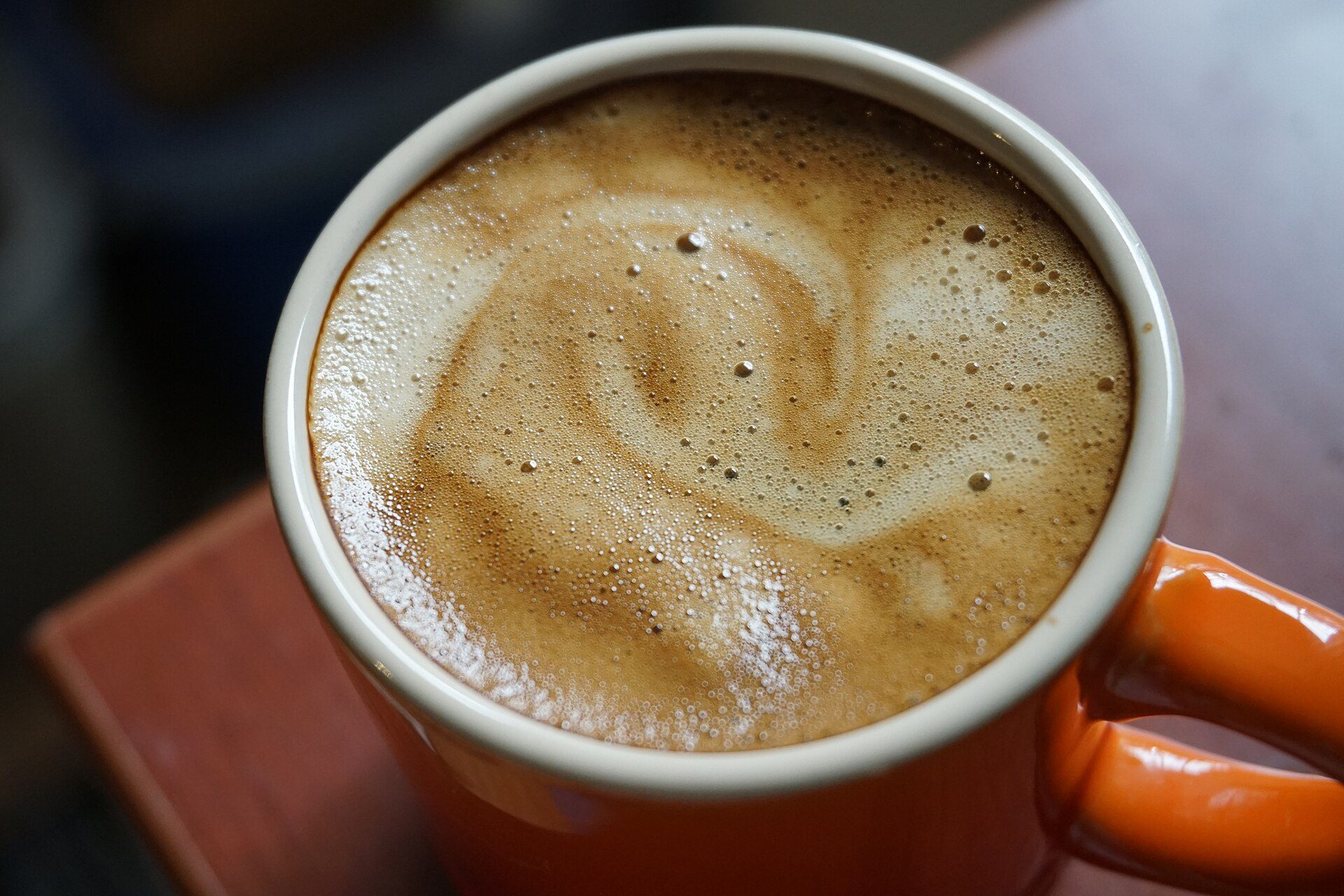
Photo: HSwaff / Wikimedia Commons, CC BY-SA 4.0
Frequently asked questions
Is the 1:2 ratio always right?
No. 1:2 is a good starting point for most blends. Dark-roasted, Robusta-heavy blends often taste better at 1:1.5; light-roast Arabica may need 1:2.5. Let the taste decide.
Should I use a 7–9 g single shot?
A single basket is harder to extract evenly than a double. Most cafés pull a double and split it when a single is needed.
Does thick crema mean good espresso?
Not necessarily. Robusta and freshly roasted beans give thick crema even when the shot tastes bitter. Crema is a useful hint; the taste on your tongue is the final test.
How long does it take to get good at dial-in?
Most learners pull consistent shots after about 200–300 logged shots, which is 2–4 weeks of real bar work. Dialing in quickly (in 3–4 shots) usually takes a few months.
Practice exercises and pass criteria
- Pull 10 shots in a row at 18 g → 36 g and record the time of each.
- Deliberately grind 2 steps coarser, then 2 steps finer than the standard recipe; taste and note the flavour.
- Pull the same dose at three ratios — 1:1.5, 1:2 and 1:2.5; taste each straight and with milk, then choose the ratio that suits your menu.
- Dial in a new bag of beans yourself, filling in every column of the log as in Tuan's example.
Pass / not yet
- Pass: 8 out of 10 shots fall within 25–30 seconds with a yield of 36 g ±1 g.
- Pass: you dial in new beans in no more than 5 shots and correctly explain that sour means under-extracted and bitter means over-extracted.
- Not yet: you work without a scale, change several variables at once, or remove the portafilter while the machine is brewing.
A consistent espresso shot is the foundation for the next step of the roadmap: milk steaming and basic latte art. If your café sells a lot of traditional drinks, also read the lessons on making phin coffee and on barista pay in the 8-step Barista roadmap.