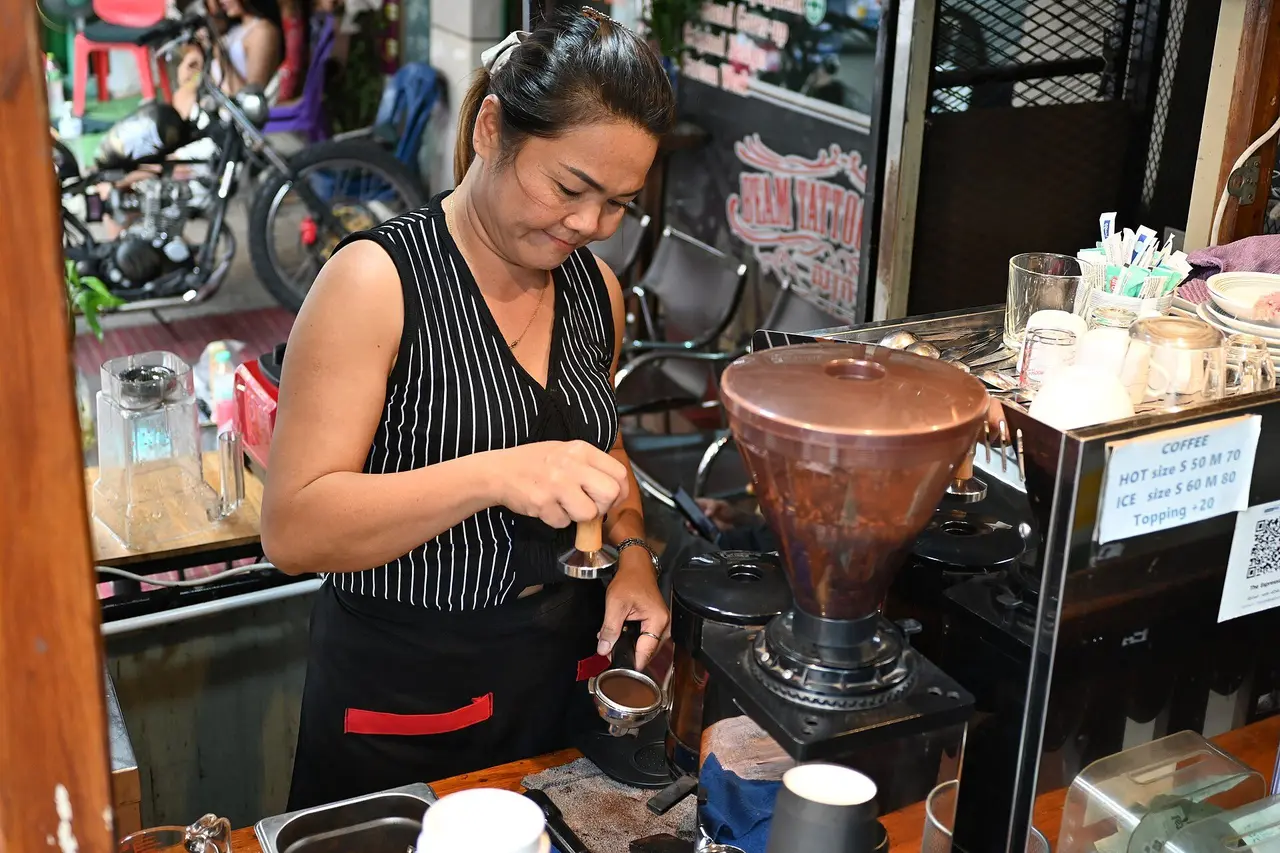
Keeping a coffee bar hygienic comes down to four fixed habits every shift: wash your hands at the right moments, use color-coded cloths so each cloth has one job, keep fresh milk cold at below about 5°C, and open and close the bar with a timed checklist. At the same time a barista must stay safe around the three hazards of an espresso machine: steam at the milk wand, boiling water at the hot water tap, and high-power electricity. This is the first lesson for anyone new behind the bar, before learning to pull espresso or pour latte art.
By the end of this lesson, you will be able to:
- Wash your hands at the 6 required moments behind the bar and keep good personal hygiene while making drinks.
- Use a 4-color cloth system so the steam wand cloth never mixes with the counter or floor cloth.
- Store fresh milk, ice and opened ingredients at the right temperature, with date labels and first in, first out.
- Work safely with the steam wand, hot water tap, portafilter and machine electrics, and give first aid for a minor burn.
- Run a 30-minute opening and 45-minute closing checklist and work out the cost of cleaning supplies per cup.
Just starting as a barista? Bar hygiene and machine safety are step 1 of the roadmap, before coffee beans, espresso extraction and milk steaming. See the 8-step barista roadmap to learn in the right order.
Why baristas learn hygiene and safety first
The bar is where drinks go straight into a customer's mouth without further cooking. Fresh milk, ice, syrups and cream are all places where bacteria grow quickly when warm. A bac xiu (Vietnamese milk coffee) made with milk that sat on the counter all afternoon can upset a customer's stomach, and that customer will not come back, however good the coffee is.
Three groups of risk at the bar
- Food: milk, ice and ingredients contaminated by dirty hands or cloths, wrong temperatures or expired stock.
- Heat: steam at the milk wand is hotter than 100°C; hot water from the machine, the portafilter and the group head stay hot all shift.
- Electrical and mechanical: espresso machines, grinders and blenders draw high power right next to water; grinder burrs and fruit knives.
What customers see
The bar usually faces the customers. A dirty cloth draped over the machine, a steam wand crusted with yellow milk, or a hand that took money and then scooped ice are noticed immediately and judged as the standard of the whole shop. A clean, tidy bar is free advertising.
Personal hygiene and hand washing at the bar
A barista's hands touch cups, ice, milk, straws, money and a phone in the same shift. Washing at the right moments is the cheapest and most effective way to keep drinks safe.
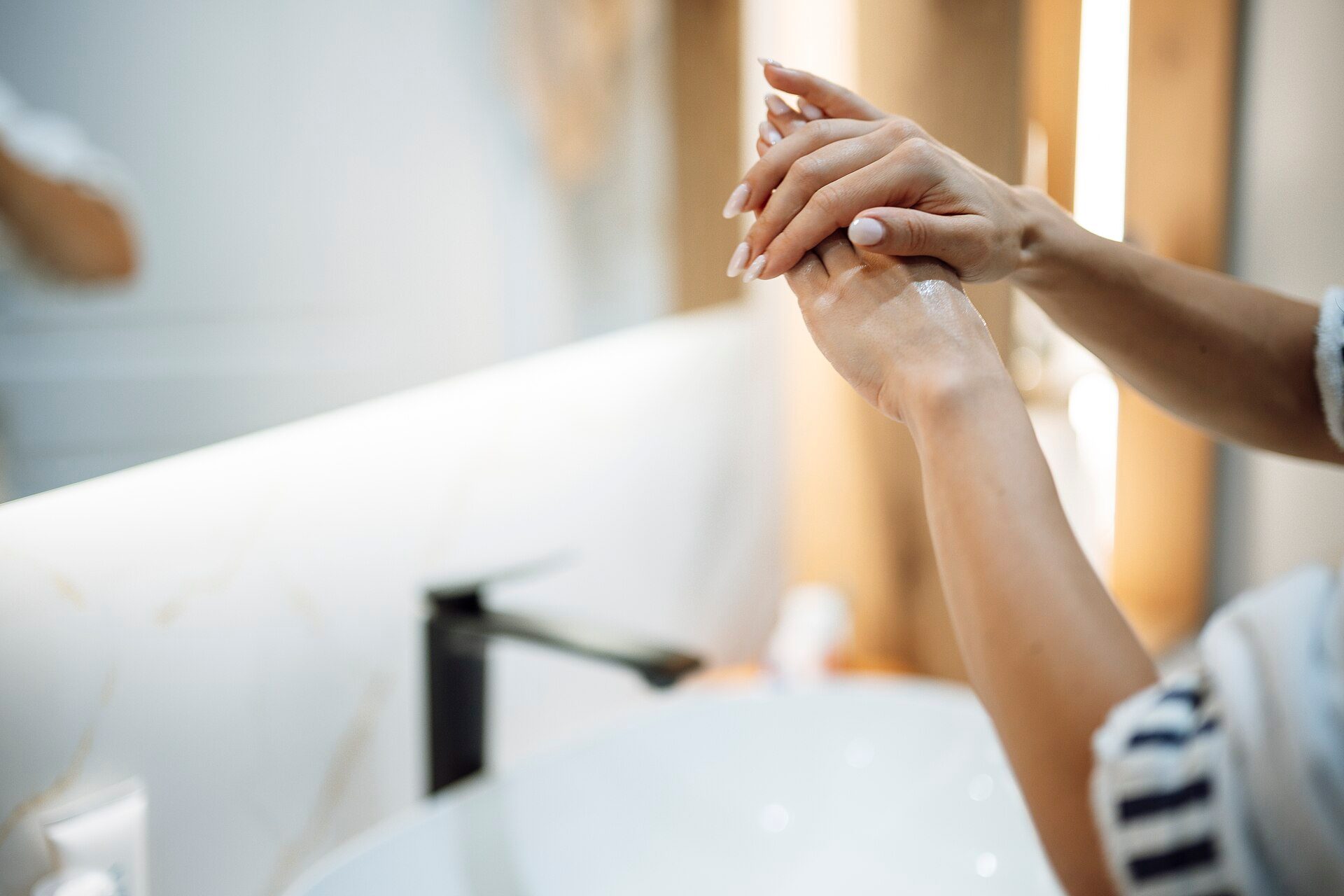
Photo: Shixart1985 / Wikimedia Commons, CC BY 2.0
The 6 moments you must wash your hands
- At the start of the shift, before touching any equipment.
- After using the toilet.
- After handling money or a phone, emptying bins or mopping.
- After touching your face or hair, coughing or sneezing.
- After handling eggs, unwashed fruit, or milk cartons that are dirty outside.
- When you come back to the bar after a break.
How: wet your hands, lather with soap for at least 20 seconds, covering palms, backs, between fingers, fingertips and nails (see Figure 1), rinse with clean water and dry with a paper towel. Never wipe your hands on your apron.
Clothing and habits
- Tie long hair back and wear a cap or headband if the shop requires it; keep nails short, with no chipped polish.
- Take off rings and bracelets while making drinks; cover any cut on your hands and wear a glove.
- Diarrhoea, vomiting or fever: tell the manager and stay off the bar.
- Never taste from a stirring spoon and then stir a customer's drink with it.
Color-coded cloths and surface cleaning
One cloth used on the steam wand, then the counter, then the drip tray is the fastest way to spread bacteria from old milk across the whole bar. Color-coding lets everyone on shift see at a glance which cloth is for which job.
Suggested color system
| Cloth color | Use only for | Never use for | Change |
|---|---|---|---|
| Green | Wiping the steam wand (its own clean, damp cloth) | Counter, hands, cups | Every 1–2 hours or when dirty |
| Blue | Counter, machine body, portafilters, measuring trays | Steam wand, floor | Every 2 hours |
| White | Drying washed glasses and cups | Spills, dirty surfaces | When damp |
| Red | Bins, knock box, floor, dirty areas | Anything that touches drinks | End of shift |
There is no single mandatory color standard; what matters is that the whole shop uses the same system and posts the chart at the bar. Used cloths go into a separate basket, are hot-washed and fully dried; a cloth that smells sour is thrown out.
Surface cleaner
Clean the counter in two steps: wipe away grounds and spills with detergent, then wipe with a disinfectant approved for food-contact surfaces, mixed at the label ratio and left for the label contact time. Never spray chemicals on the counter while cups, ice or open ingredients are next to it.
Storing fresh milk, ice and ingredients
Fresh milk is the most perishable ingredient at the bar. The general food safety rule is keep cold food cold, at about 1–5°C, and minimise the time milk spends at room temperature.
Fresh milk and cream
- Keep milk on an inside shelf of the fridge, not in the door: the door is the warmest spot because it is opened constantly (see Figure 2).
- Keep a thermometer in the fridge, check it and log it at least twice a shift.
- Bring only a short-term amount of milk to the bar and return it to the fridge as soon as you pour into the pitcher.
- Write the opening date and time on opened cartons and use within the after-opening time on the pack; never top up an old carton with new milk.
- Leftover steamed milk is thrown away, not refrigerated for re-steaming.
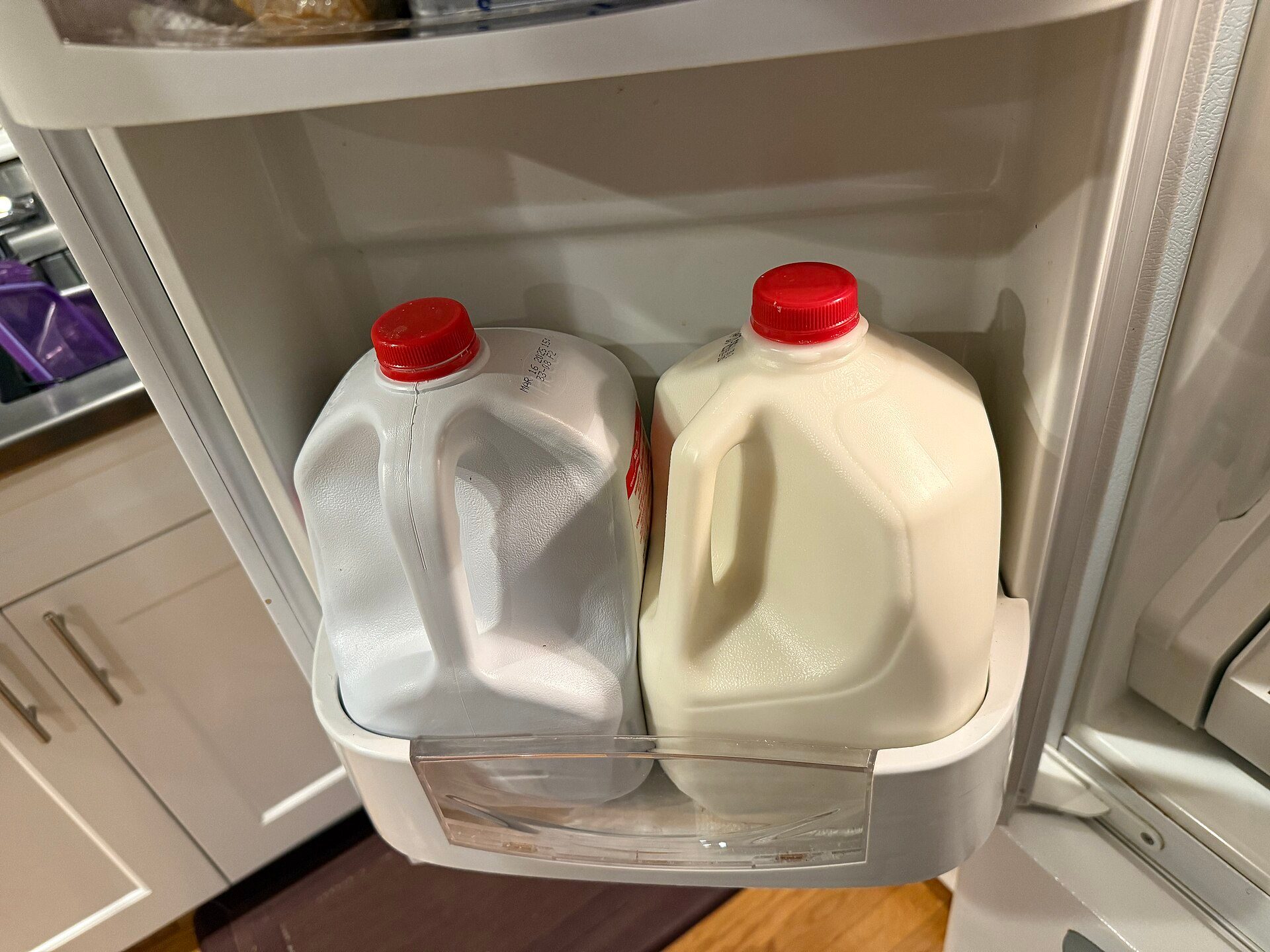
Photo: ArnoldReinhold / Wikimedia Commons, CC BY 4.0
Ice
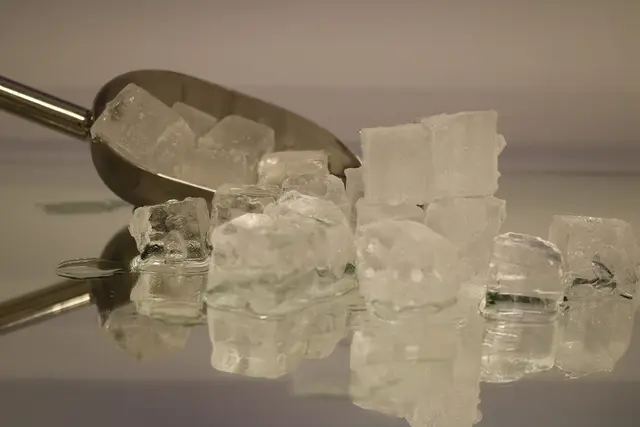
Ice goes straight into the glass, so treat it as food. Use clean ice from a reliable supplier, a lidded ice bin, and a scoop with a handle kept outside the bin or in its own holder. Never scoop ice with a glass: if a glass breaks in the ice bin, the whole bin must be emptied. Never chill bottles, milk cartons or fruit in the ice that goes into drinks.
Opened ingredients
Syrups, condensed milk, powders and pre-cut fruit all get a label with the name and opening date. Store first in, first out: older stock at the front, new stock at the back. Pre-cut fruit goes in a sealed box in the fridge and is used the same day. Storing cold brew concentrate is covered in detail in how to make cold brew.
Espresso machine safety: steam, boiling water, electricity
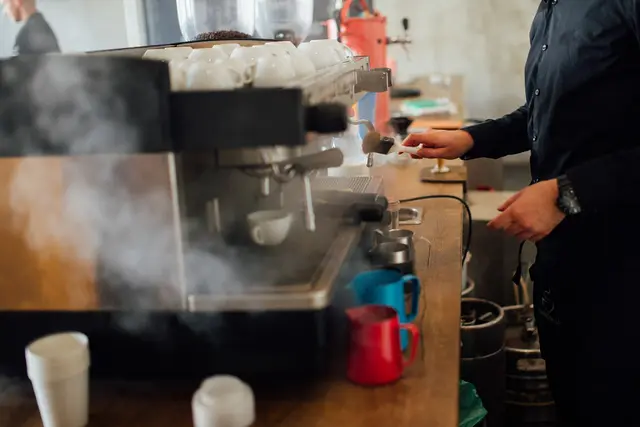
A professional espresso machine has a boiler holding hot water and steam under pressure. Most bar accidents are steam and water burns during a rush. Look at Figure 3 to see the hot spots on a machine.
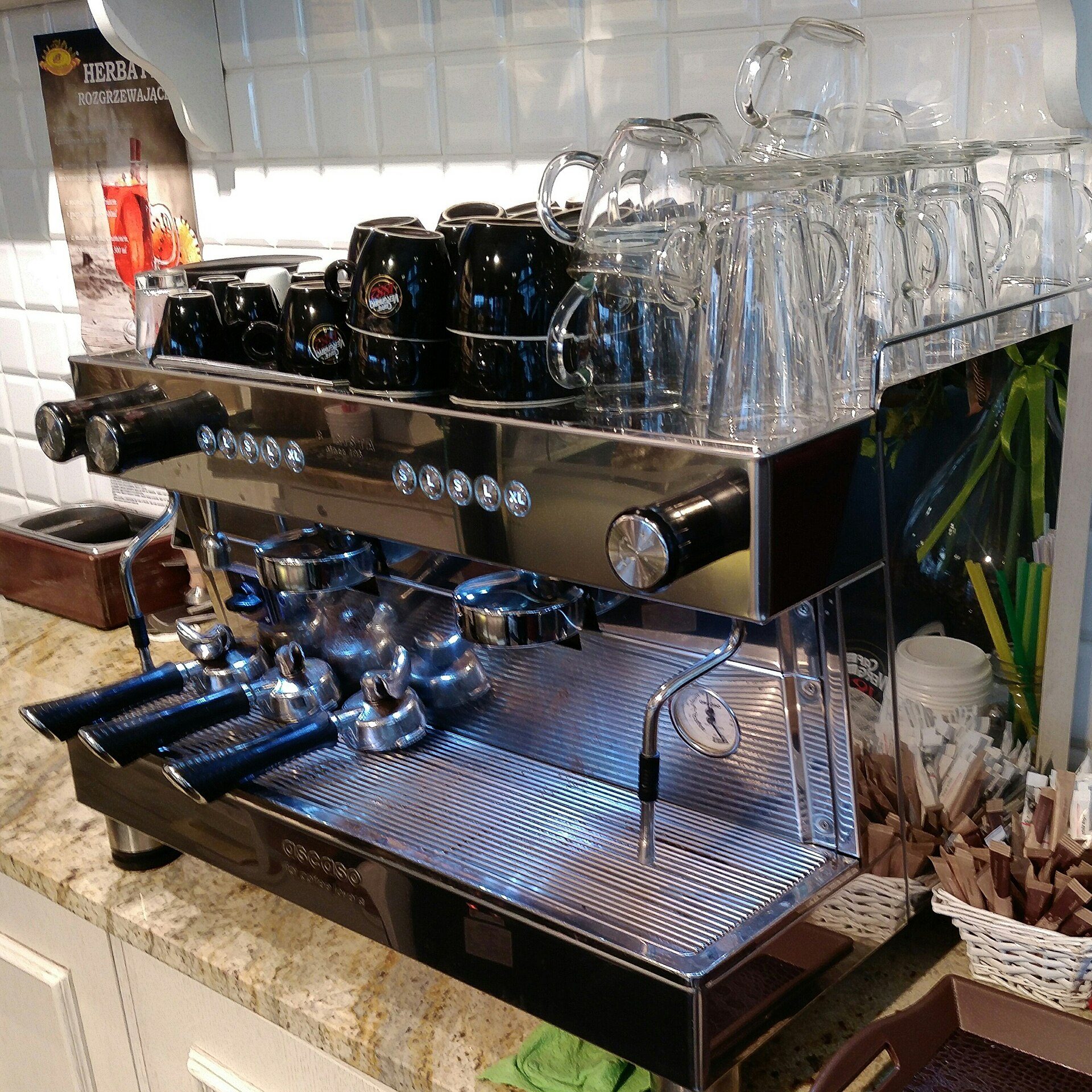
Photo: MichalPL / Wikimedia Commons, CC BY-SA 4.0
Steam wand and hot water tap
- Purge the wand for 1–2 seconds before steaming, pointing it into a cloth or the drip tray, never toward a person.
- Open the steam only once the tip is submerged in milk; lifting the pitcher away while the steam is on sprays hot milk onto your hand.
- After steaming, wipe the wand with the green cloth straight away and purge again to clear milk from inside; the full technique is in how to steam milk for latte art.
- Hot water tap: put the jug under it first, then open; never put your hand directly under the tap.
Portafilter and group head
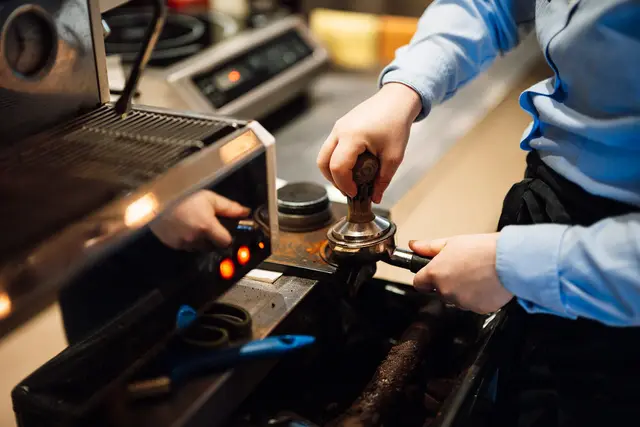
Hold the portafilter only by the handle, never the metal. Knock out the puck with one firm tap on the knock box bar, not on the machine edge. Removing the portafilter straight after a shot can spray hot water and grounds, so unlock it slowly and keep your face and hands away from below the group head.
Machine and grinder electrics
Professional espresso machines often draw several kW; read the rating plate. The machine needs its own socket and circuit breaker installed by an electrician, with earthing, and the cable must not run through standing water. Never open the casing or adjust the safety valve or boiler pressure yourself; that is a technician's job. With grinders, never put a hand or spoon into the hopper or outlet while the grinder is plugged in.
Safety warning: Steam and water from an espresso machine burn in an instant. Never point the steam wand at anyone, never open steam with the tip out of the milk, and never touch the group head or wand with bare hands. For a burn, hold the area under cool (not iced) running water for about 20 minutes, take off rings and bracelets before swelling starts, do not apply toothpaste, fish sauce or cooking oil, do not burst blisters, and cover with clean gauze. Get medical help straight away or call 115 (Vietnam's emergency number) if the burn is bigger than the palm, on the face, hands or a joint, has large blisters, or the skin looks white or charred. If the machine smells of burning, the cable is hot, there are sparks or a tingle: switch off the breaker, stop using it and call a technician; do not repair it yourself. Mop wet floors around the bar at once to avoid slipping while carrying hot drinks.
Opening and closing the bar every day
A timed checklist keeps the morning shift from skipping steps when customers arrive early, and the evening shift from cutting cleaning short to get home. Deeper maintenance such as descaling and replacing group gaskets belongs to the operations and machine maintenance step later in the roadmap.
Opening (about 30 minutes)
- Wash hands, put on an apron, tie hair back (2 minutes).
- Switch on the espresso machine and grinder at once so they heat up; check the fridge temperature and log it (3 minutes).
- Mix the surface cleaner, put the 4-color cloths in their places (3 minutes).
- Once the machine is hot, flush the group heads, purge the wand, lock the portafilters in to heat evenly (3 minutes).
- Check the ice bin is clean, fill with ice, put the scoop in its holder (4 minutes).
- Check use-by dates and labels on milk, syrups and fruit; arrange first in, first out (5 minutes).
- Pull test shots and dial in the first shot of the day (10 minutes).
Closing (about 45 minutes)
- Backflush each group with a blind basket and clean water or machine cleaning powder as the maker instructs (10 minutes).
- Remove portafilters and baskets, soak in cleaning solution, scrub the group gasket with a group brush (8 minutes, see Figure 4).
- Clean the steam wand: wipe, soak the tip if your shop does, purge (3 minutes).
- Empty and wash the drip tray and knock box (5 minutes).
- Grinder: brush out the outlet, store leftover beans in a sealed container (5 minutes).
- Wash milk pitchers, shakers, spoons and measuring tools (6 minutes).
- Seal ingredients, label them, put them in the fridge, log the closing fridge temperature (4 minutes).
- Wipe the counter, mop the floor, empty bins, switch off as the shop instructs (4 minutes).
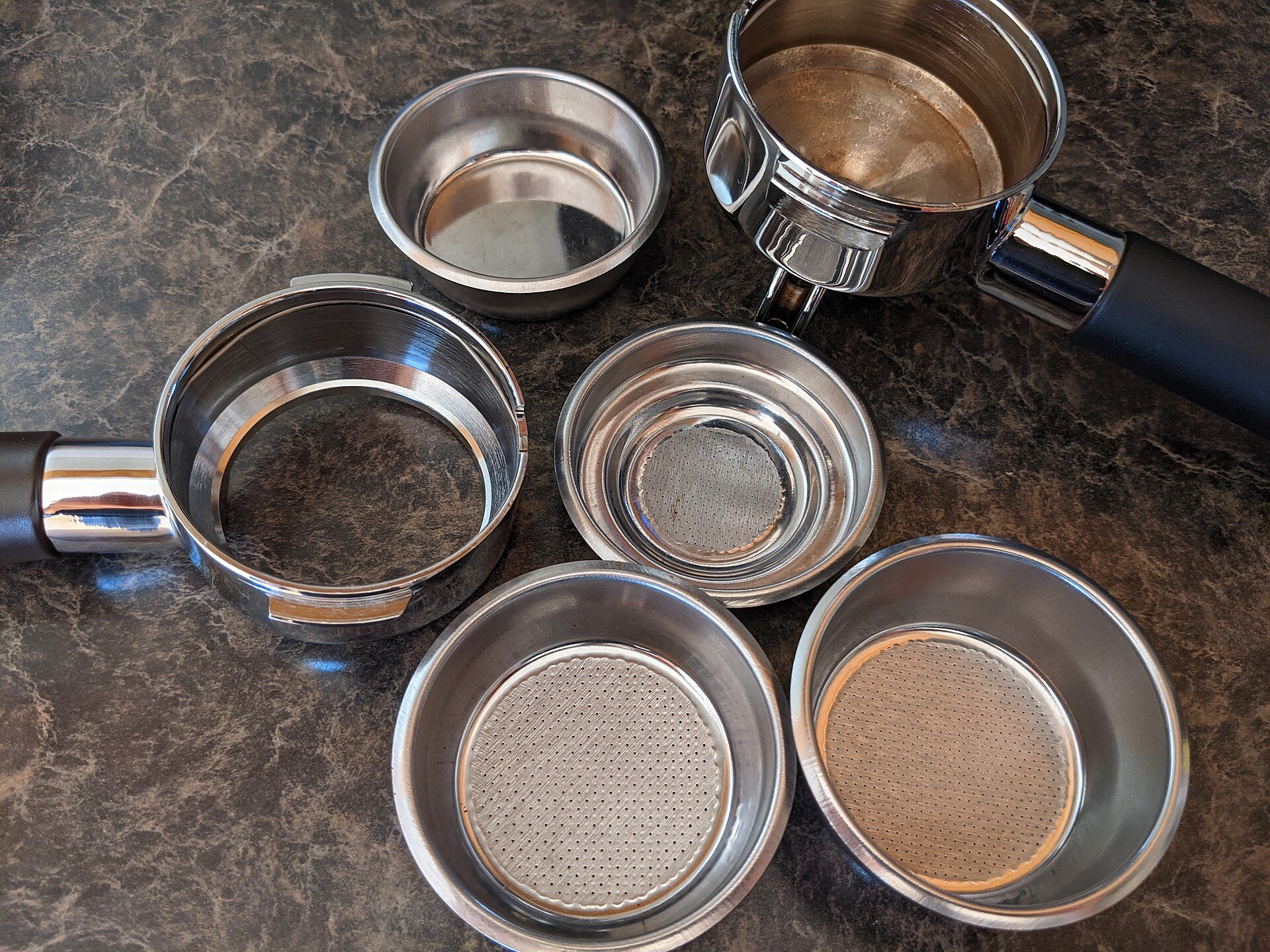
Photo: massage-techniques / Wikimedia Commons, CC BY-SA 2.0
Worked example: a shop selling 150 cups a day
Lan's cafe in an office district sells an average of 150 cups a day, opens 30 days a month and has 2 baristas per shift. She wants to know the time and cost of hygiene to include in her cost of goods and staff rota. Unit prices are 2026 reference figures and vary by area and supplier.
Time
- Opening: 2 + 3 + 3 + 3 + 4 + 5 + 10 = 30 minutes.
- Closing: 10 + 8 + 3 + 5 + 5 + 6 + 4 + 4 = 45 minutes.
- 75 minutes a day in total, so the morning shift starts 30 minutes before opening and the evening shift includes 45 minutes after closing.
Monthly cleaning supplies
| Item | Quantity × unit price | Total |
|---|---|---|
| Group head cleaning powder | 1 tub × 300,000 VND | 300,000 VND |
| Milk wand cleaner | 1 bottle × 250,000 VND | 250,000 VND |
| 4-color cloths (replacements) | 12 cloths × 25,000 VND | 300,000 VND |
| Hand soap | 2 bottles × 60,000 VND | 120,000 VND |
| Equipment detergent | 2 jugs × 80,000 VND | 160,000 VND |
| Date labels, temperature log | 1 set × 50,000 VND | 50,000 VND |
| Total per month | 1,180,000 VND | |
Check: 300,000 + 250,000 + 300,000 + 120,000 + 160,000 + 50,000 = 1,180,000 VND (about US$46). Cups per month: 150 × 30 = 4,500, so hygiene costs about 1,180,000 ÷ 4,500 ≈ 262 VND per cup. It is small next to the price of a drink, but Lan still puts it in her cost of goods so nobody "saves money" by skipping steps.
Common bar mistakes and how to fix them
Steam wand crusted with yellow milk
Sign: a hard crust on the tip, steamed milk smells odd. Cause: not wiping and purging straight after each use. Fix: wipe and purge every time, and soak the tip at the end of the day if your shop uses a dedicated cleaner.
Milk left on the counter all session
Sign: the carton feels warm, milk splits quickly when steamed and tastes slightly sour. Cause: not putting it back during a rush. Fix: keep only a short-term amount out and return it immediately; a carton that has been warm for a long time is thrown away.
One cloth for everything
Sign: a cloth over the shoulder, used on the wand and then the counter. Cause: no color system or not enough cloths. Fix: enough 4-color cloths for the whole shift and a color chart at the bar.
Skipping the backflush because it is late
Sign: next morning's espresso tastes harsh and bitter, the group head flows unevenly. Cause: coffee oil build-up in the group head. Fix: make backflushing the first step of the closing checklist.
Frequently asked questions
How often should a coffee machine be cleaned?
Daily: flush the group after every shot, wipe the wand after every milk, backflush and soak portafilters at the end of the day. Descaling and gasket replacement are done periodically according to the maker's instructions and your water hardness.
How long can fresh milk stay out of the fridge?
As short as possible. Many food safety guides advise not leaving perishable food at room temperature for more than about 2 hours, less in hot weather. At the bar, the safe approach is to pour what you need and put it back straight away.
Do I need food safety paperwork to open a cafe?
Vietnam has food safety requirements for drinks businesses, and what is needed can vary by size and locality. Ask the local food safety or health authority about the current paperwork and training required.
Do I need to see a doctor for a minor steam burn on my hand?
A small red patch without blisters, cooled correctly, usually heals on its own. See a doctor for large blisters, a large burn, burns on the face or joints, increasing pain, oozing, spreading redness or fever.
Practice tasks and self-assessment
- Do the opening checklist on 3 consecutive days, timing and recording each step.
- Mark where the 4-color cloths go on your bar and ask the manager to check it.
- Log the fridge temperature twice a shift for a week; flag any reading above 5°C and find the cause.
- Practise purging, steaming, wiping and purging the wand 10 times under supervision without ever pointing it at anyone.
Self-assessment criteria
- Pass: opening is done in about 30 minutes with no checklist step skipped.
- Pass: the temperature log is complete, the fridge stays below about 5°C, and every opened milk has a date label.
- Pass: the green cloth is used only on the steam wand all shift.
- Not yet: leaving milk out for long, scooping ice with a glass, skipping the backflush, or opening the steam with the tip out of the milk.
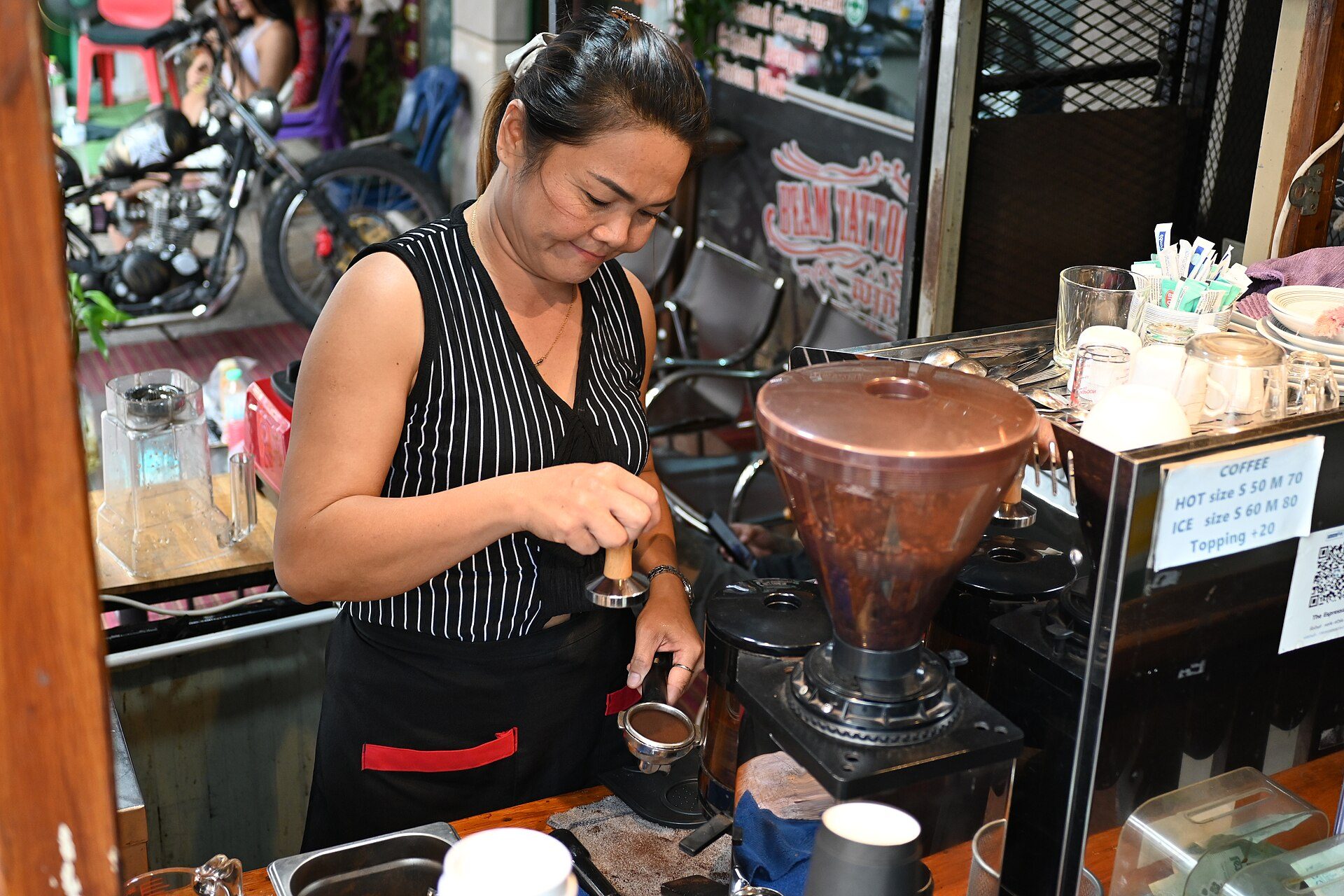
Photo: PattayaPatrol / Wikimedia Commons, CC BY-SA 4.0
Once your bar is clean and you handle the machine safely, the next roadmap step is Vietnamese coffee beans & roast levels: you learn to tell Robusta from Arabica, understand processing methods and read roast levels to choose beans for each drink.
Keep learning to be a barista: after hygiene and safety come beans and roast levels, espresso extraction, milk steaming, phin and cold brew, running the bar at peak hours and applying for jobs. See the 8-step barista roadmap.