Facebook's advertising policy is Meta's set of Advertising Standards that decides which content is prohibited outright, which content can only run when certain conditions are met, and on top of that every ad still has to comply with Vietnam's advertising law. Beginners often think "if it gets rejected I'll change a few words and it'll pass", but every rejection is recorded in your account quality, and for cosmetics, supplements and health services an ad that slips past Meta's review can still break Vietnamese law. This lesson is the first step of the roadmap: learn to read the policies and review your own content before you spend a single dong of budget.
By the end of this lesson, you will be able to:
- Tell apart the three layers of rules: Community Standards, Meta's Advertising Standards and Vietnamese advertising law.
- Place a product into the prohibited, restricted or normal group, and know which documents to prepare.
- Spot the 4 copywriting mistakes that get ads rejected most often: asserting personal attributes, before-and-after images, absolute promises and mismatched landing pages.
- Rewrite a non-compliant cosmetics ad into a compliant one using a 10-question checklist.
- Handle a rejected ad without making your account look riskier.
Learning Facebook advertising properly? Policies and industry rules are step 1 of the roadmap, before Business Manager, the Pixel, targeting, ad creative and budget optimisation. See the Facebook ads specialist roadmap to learn in the right order.
What layers make up Facebook's ad policy?
An ad on Facebook, Instagram or Messenger has to pass three layers. Understanding them means you will not be surprised when an ad that "looks normal" is rejected, or when an approved ad still gets a fine from the authorities.
Layer 1: Community Standards
These are the general rules for all content on the platform, including ordinary posts: no violence, no hate, no scams, no adult content. An ad that breaks this layer will almost certainly be rejected, and the page or account may be restricted.
Layer 2: Meta's Advertising Standards
This layer is stricter than for ordinary posts because ads are pushed to people who do not follow your page. Meta divides it into prohibited content (cannot run under any circumstances) and restricted content (can run if conditions are met on audience age, country, licences, or prior written permission, and as long as no results are promised). Meta reviews the images, video, text on images, headline, description, landing page and targeting.
Layer 3: Vietnamese law
Vietnam's Advertising Law and the separate regulations for each sector (food, cosmetics, medicines, medical services, alcohol and so on) apply to social media ads just as they do to newspapers and television. Meta's review does not check whether you hold an advertising content approval. Passing Meta's review does not mean the ad is legal.

Photo: Shixart1985 / Wikimedia Commons, CC BY 2.0
Prohibited content and restricted content
The full list is on Meta's Advertising Standards pages and is updated often. The table summarises the groups beginners meet most in the Vietnamese market; always re-read the official pages before taking on a new industry.
| Group | Common examples | Status on Meta | Notes for Vietnam |
|---|---|---|---|
| Illegal and counterfeit goods | Brand knock-offs, tobacco, e-cigarettes, weapons, illegal drugs | Prohibited | Many of these are banned from trade or from advertising |
| Scams and clickbait | Get-rich-quick, celebrity impersonation, fake buttons | Prohibited | Can lead to administrative or criminal liability |
| Supplements and weight loss | Skin-whitening pills, slimming, height-growth products | Restricted: 18+ only, no before-and-after images, no promised results | Usually need advertising content approval first |
| Cosmetics and aesthetics | Serums, sunscreen, spas, filler injections | Cosmetics can run; cosmetic procedures restricted to 18+ | No drug-like claims; invasive services need a licensed facility |
| Medicines and health services | Medicines, clinics, dental care | Restricted, many types need Meta's prior permission | Prescription drugs may not be advertised to the public |
| Finance and crypto | Consumer loans, insurance, crypto exchanges | Restricted, with a special ad category | Only licensed providers may advertise financial services |
| Alcohol and gambling | Beer, wine, betting | Restricted by age and country | Spirits of 15% alcohol or more may not be advertised; online gambling is banned |
What "restricted" means in practice
Restricted does not mean "allowed if you are clever about it". It means you must meet the conditions: a minimum age of 18, only permitted countries, a business licence for that sector, sometimes an application to Meta in advance, and no promised results. Miss one condition and the ad is rejected or taken down after it has started running.
Special ad categories
Ads about credit, employment, housing, or social issues and politics must declare the category when the campaign is created, and some targeting options are locked. Targeting in these cases is covered in the lesson on Facebook ads targeting; here you only need to remember that declaring the wrong category is itself a policy violation.
The 4 copywriting mistakes that get ads rejected most
Most rejected ads from small Vietnamese shops are not selling banned products; they are rejected because of how they are written. These four mistakes account for most of them.
Mistake 1: asserting the viewer's personal attributes
Meta prohibits ads that assert or imply knowledge of a viewer's personal attributes: health, weight, skin condition, finances, religion, sexual orientation. "Do you have melasma?", "Belly fat after giving birth?" or "Bad credit? You can still borrow" are all likely to be rejected. Write about the product instead of the viewer: "A moisturiser for dull skin", "A workout plan for new mothers".
Mistake 2: before-and-after and shocking images
For weight loss, health and cosmetic products, Meta does not allow before-and-after comparisons, zoomed-in images of skin, belly fat or scales, or unlikely results. Replace them with real product photos, the product in use, and real customers describing how it feels without promising results.
Mistake 3: absolute promises and "the best"
"100% cured", "works in 7 days" or "money back if your skin isn't whiter" are promises of results that both Meta and Vietnamese law are likely to treat as misleading. Vietnamese advertising law also forbids words like "the most", "the only", "the best" or "number one" unless you hold legitimate evidence to back them up.
Mistake 4: a landing page that does not match the ad
The ad says 199,000 VND (about US$8) but the landing page says 299,000 VND; the "Buy now" button leads to a different product; the page has no seller information or does not load. Meta reviews the landing page too, and a poor page experience drags the whole account down.
Vietnamese rules by industry
This section only covers the general principles an advertiser needs to know. Laws on advertising, food, cosmetics and pharmaceuticals change over time, so before taking on a client in a sensitive industry, ask for their documents and check the current regulations on the authorities' official portals.
Health supplements
Health supplements (called "functional foods" or "health protection foods" in Vietnam) are not medicines and may not be advertised as curing disease. Ads for this group usually need an advertising content approval from the competent health authority before publishing, the ad that runs must match the approved version, and it must carry the mandatory statement that the product is not a medicine and does not replace medicines for treating disease. Capsules like those in Figure 2 are the most closely scrutinised group, both on Meta and offline.
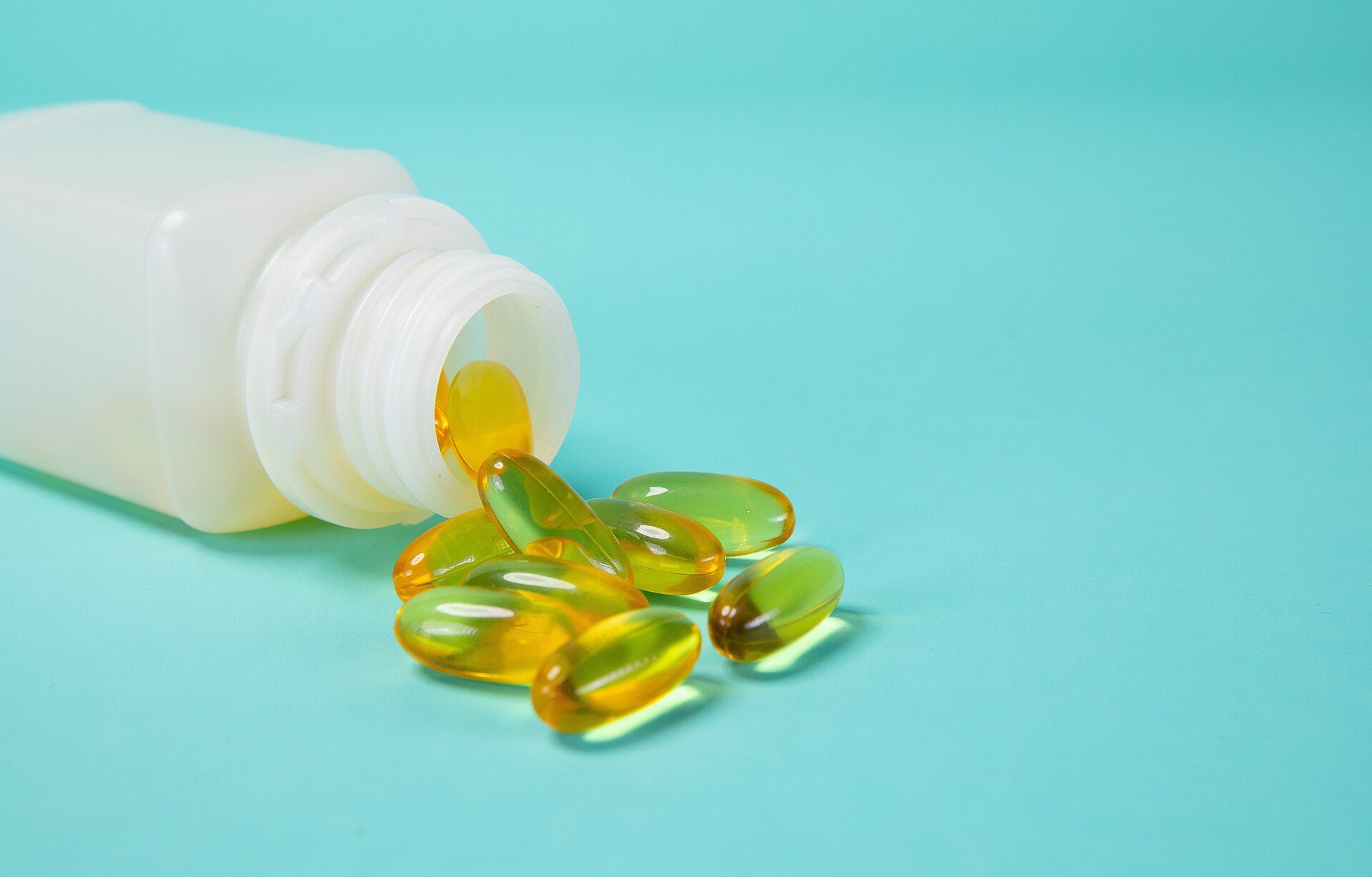
Photo: Jernej Furman from Slovenia / Wikimedia Commons, CC BY 2.0
Cosmetics
Cosmetics must be notified to the authorities as required before sale, and the advertised benefits must match the notification file. Cosmetics may not be advertised as treating disease: avoid "treats acne", "treats melasma", "cures dermatitis" or "stem cell regeneration". Use cosmetic benefits such as cleansing, moisturising, sun protection and helping skin look smoother, plus "results vary from person to person".
Medicines, clinics, spas and aesthetics
- Medicines: prescription drugs may not be advertised to the public; advertising over-the-counter drugs needs content approval as required (see Figure 3).
- Clinics and dental practices: only advertise services within the scope of the operating licence, and never promise a cure.
- Spas: do not advertise invasive services (injections, surgery, therapeutic laser) unless the facility holds a medical licence for that service.
- Many product groups may not use the image or name of doctors, pharmacists or medical facilities to recommend them.

Photo: User:Mattes / Wikimedia Commons, Public domain
Alcohol, tobacco and children
Tobacco advertising is banned; alcohol of 15% or more may not be advertised, while beer and lighter drinks can be advertised only under conditions and never to under-18s. Nutrition products for young children have their own bans or restrictions on advertising. If a client is in one of these sectors, ask detailed questions and read the regulations before accepting the job.
Legal note: this lesson only sets out general principles and is not legal advice. Penalties, application files for content approval and the list of products that may not be advertised are set by the regulations in force and can change. An agency or freelancer running ads for a client may also share liability, so keep copies of the documents the client provides and the content the client approved.
A self-review routine before you hit publish
The best habit for an ads specialist is to review every ad as a strict reviewer would, and take notes as in Figure 4. Five minutes per ad is much cheaper than a restricted account.
A 10-question checklist for every ad
- Is the product prohibited, restricted or normal on Meta?
- Does the sector need a licence, product notification or content approval in Vietnam? Do you have a copy?
- Does the copy assert the viewer's personal attributes?
- Are there before-and-after images, zoomed-in body images or shocking pictures?
- Does it promise results, percentages or a time to recovery?
- Does it use "the best", "number one" or "the only" without evidence?
- Does it use the name of doctors, celebrities or the press without permission?
- Are the music, images and video licensed or self-produced?
- Do the price, promotion and product name match the landing page?
- Are the targeted age and countries within the conditions for a restricted sector?

Photo: Shixart1985 / Wikimedia Commons, CC BY 2.0
Rewriting risky lines into safer ones
| Likely to be rejected | Why | Safer wording |
|---|---|---|
| "Struggling with melasma for years?" | Asserts the viewer's skin condition | "A moisturiser for dull, uneven-looking skin" |
| "Clears acne for good in 7 days" | A cosmetic claiming to treat disease, with a time promise | "Removes excess oil and helps skin look clearer" |
| "Lose 5 kg in 2 weeks" | Promises a weight-loss result | "Meal ideas for people who want to eat more regularly" |
| "Recommended by dermatologists" | Uses the name of medical professionals | "Ingredients listed on the pack, check before you buy" |
| "Cheapest on the market" | "-est" claim without evidence | "199,000 VND, free delivery in the inner city" |
Worked example: fixing a rejected serum ad
An online cosmetics shop in Da Nang sells a serum for oily skin and has a valid cosmetic product notification. Its first ad was rejected within a few hours. The old copy read: "Do you have hidden acne and cystic acne? This serum clears acne for good in 7 days, 100% guaranteed, the best on the market. Recommended by dermatologists." The image showed two halves of a face, before and after, and the landing page showed a different price from the ad.
Step 1: list the problems against the checklist
| Detail | Checklist question | Problem group |
|---|---|---|
| "Do you have hidden acne and cystic acne?" | Question 3 | Meta: personal attributes |
| Before-and-after face image | Question 4 | Meta: before-and-after |
| Landing page price differs from the ad | Question 9 | Meta: landing page |
| "Clears acne for good" | Question 5 | Vietnam: cosmetic claiming to treat disease |
| "In 7 days, 100% guaranteed" | Question 5 | Vietnam: misleading promise |
| "The best on the market" | Question 6 | Vietnam: "-est" claim |
| "Recommended by dermatologists" | Question 7 | Vietnam: name of medical professionals |
That is 7 problems in total: 3 mainly against Meta's policy and 4 mainly against Vietnamese law, 3 + 4 = 7. Fixing only the 3 Meta problems might get the ad approved, but the other 4 are still enough for the shop to be fined if someone files a complaint.
Step 2: rewrite the ad
New copy: "Serum for oily skin: light texture, removes excess oil, helps skin look clearer. Full ingredients on the label. 249,000 VND, nationwide delivery. Results vary from person to person." The image becomes a 15-second video of the serum being applied to the back of a hand in natural light. The landing page price is corrected to 249,000 VND to match, and the shop name, address, phone number and return policy are added.
Step 3: resubmit and keep a record
Do not create a new ad identical to the old one. Edit the rejected ad and resubmit it, or, if you are sure it does not violate any policy, request another review. Meta says most ads are reviewed within 24 hours, though it can take longer. Log the date, the rejection reason, what you changed and the review result, so the team does not repeat the mistake.
What to do when an ad is rejected
A rejected ad is different from a disabled account. Rejected ads are an everyday event; you just need to handle them properly.
Read the reason and fix the right thing
Open Account Quality in Business Suite or Ads Manager, read the policy named, and compare it with the 10-question checklist. Fix the actual violation rather than swapping a few words to "trick" the review; circumventing the review system is a serious violation in itself.
When to request another review
Only when you believe the review was wrong, for example a cookbook flagged as a weight-loss product. Write a short, polite and truthful explanation. If many ads keep getting rejected, stop and review everything before running more, because a high rejection rate can lead to account restrictions. For what to do once an account has been disabled, see the lesson on a disabled Facebook ad account.
Common beginner mistakes
Believing "if others can run it, so can I"
Symptom: copying a competitor's ad. Cause: not realising that ad may simply not have been caught yet, or that the competitor holds licences and approvals you do not. Fix: borrow only the idea, and review your own version against the checklist.
Disguising words with symbols
Symptom: writing "tr.eats a.cne" or "sl.imming". Cause: trying to get past the review. Fix: drop it completely. Deliberately dodging the review counts as circumventing the system, a higher risk of account bans than the original mistake.
Taking sensitive-industry clients without checking documents
Symptom: running ads for supplements or clinics on the client's word alone. Cause: feeling awkward about asking. Fix: send the list of required documents with your quote, and do not run anything until it is complete.
Frequently asked questions
Do Facebook ad policies apply to ordinary posts?
Ordinary posts are governed by the Community Standards. When you boost a post, it must also pass the Advertising Standards, which is why a perfectly normal post can be rejected once you boost it.
Can I advertise health supplements on Facebook?
Yes, if you meet the conditions: target people aged 18 and over, promise no results, use no before-and-after images, claim no cure, and in Vietnam you usually need an advertising content approval and the mandatory disclaimer.
How long does a re-review of a rejected ad take?
Usually within 24 hours, sometimes longer at peak times. While you wait, do not create lots of copies of the rejected ad.
Can a cosmetic say "treats acne"?
Better not. Cosmetics may not be advertised as treating disease. Describe cosmetic benefits such as cleansing, moisturising and helping skin look smoother, in line with the product notification file.
Practice exercises and self-assessment
- Pick 5 ads you see on Facebook today (cosmetics, supplements, a course, finance, a restaurant). Score each against the 10-question checklist.
- Rewrite the 2 worst ads into compliant versions that still sell.
- List the documents you would ask for when taking on a supplement client and a dental clinic client.
Self-assessment criteria
- Pass: you correctly place all 5 products as prohibited, restricted or normal.
- Pass: your rewrites no longer assert personal attributes, promise results, use "the best" or show before-and-after images.
- Pass: your document list separates the business licence, the product notification and the advertising content approval.
- Not yet: using symbols to dodge the review, keeping before-and-after images "because they work", or planning to run ads before the client has the documents.
With the rules in hand, move on to the next step of the roadmap: Business Manager, accounts and payment, where you set up a secure workspace, assign permissions and attach payment methods properly so your ad accounts last.
Keep learning Facebook advertising: after policies come Business Manager, the Pixel and Conversions API, targeting, ad creative, campaign structure, reading the numbers and a small-budget project. See the Facebook ads specialist roadmap.