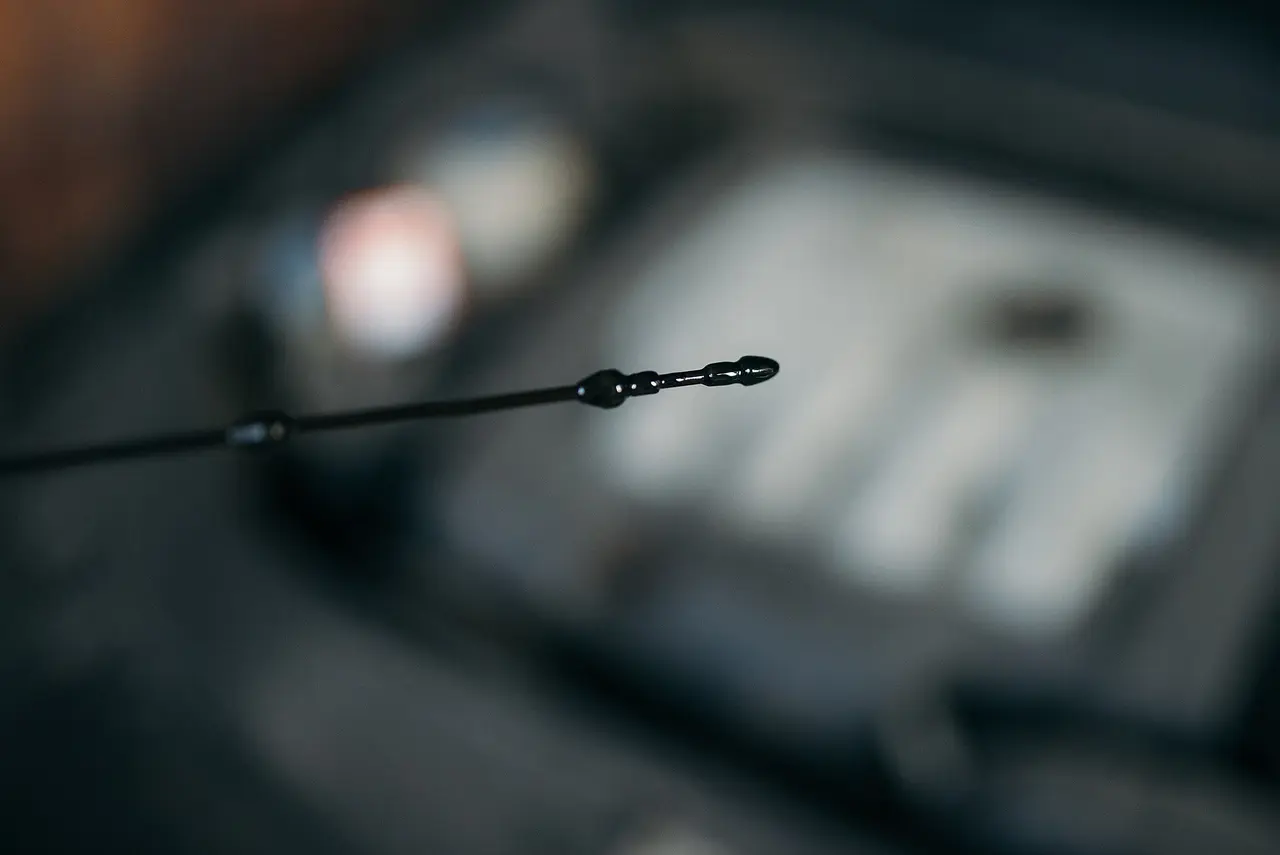
Routine car servicing means changing oil, filters and fluids and inspecting the car at set mileage points (or time intervals, whichever comes first), usually grouped into minor, intermediate and major services. In Vietnam many manufacturers use a 5,000 km cycle, but not all of them do — the exact intervals are always in the service book for each make and model year. This lesson helps you read a service book, know what each service level includes, follow the right checklist when a car comes into the workshop, and give the customer a clear quote.
By the end of this lesson, you will be able to:
- Work out which service level a car is due for from its mileage, its age and the manufacturer's service book.
- List typical intervals for the 9 key items: engine oil, oil filter, air filter, cabin filter, brake fluid, coolant, spark plugs, tyres and battery.
- Run a check-in and inspection checklist when a car arrives, without missing items.
- Build a service quote whose line items add up correctly, and compare independent garage and dealer prices.
- Work safely with the lift, hot oil and a pressurised cooling system.
Learning car repair properly? Routine servicing by mileage is step 3 of the roadmap — after workshop safety and car systems and tools. See the 8-step auto mechanic roadmap to learn in the right order.
Why service by mileage
Engine oil, filters and fluids all degrade with distance and with time. Oil loses viscosity and additives; filters clog; brake fluid absorbs moisture, which lowers its boiling point; coolant loses its corrosion protection. Servicing on schedule is far cheaper than repairing an engine, gearbox or brake system that failed through neglect.
Kilometres or months: whichever comes first
The service book gives both, for example "5,000 km or 6 months". A car that is rarely driven (2,000 km in 6 months) still needs an oil change on time, because oil oxidises and absorbs moisture even while the car sits still. A ride-hailing car covering 10,000 km a month is almost always serviced by mileage.
Severe operating conditions
Many manufacturers publish a separate schedule for "severe conditions": dusty roads, long traffic jams, repeated short trips, heavy loads, towing, flooded areas. Most city cars in Vietnam, especially ride-hailing and taxi cars, fall into this group, so some items need changing earlier than the normal schedule. Ask the customer how the car is used before advising.
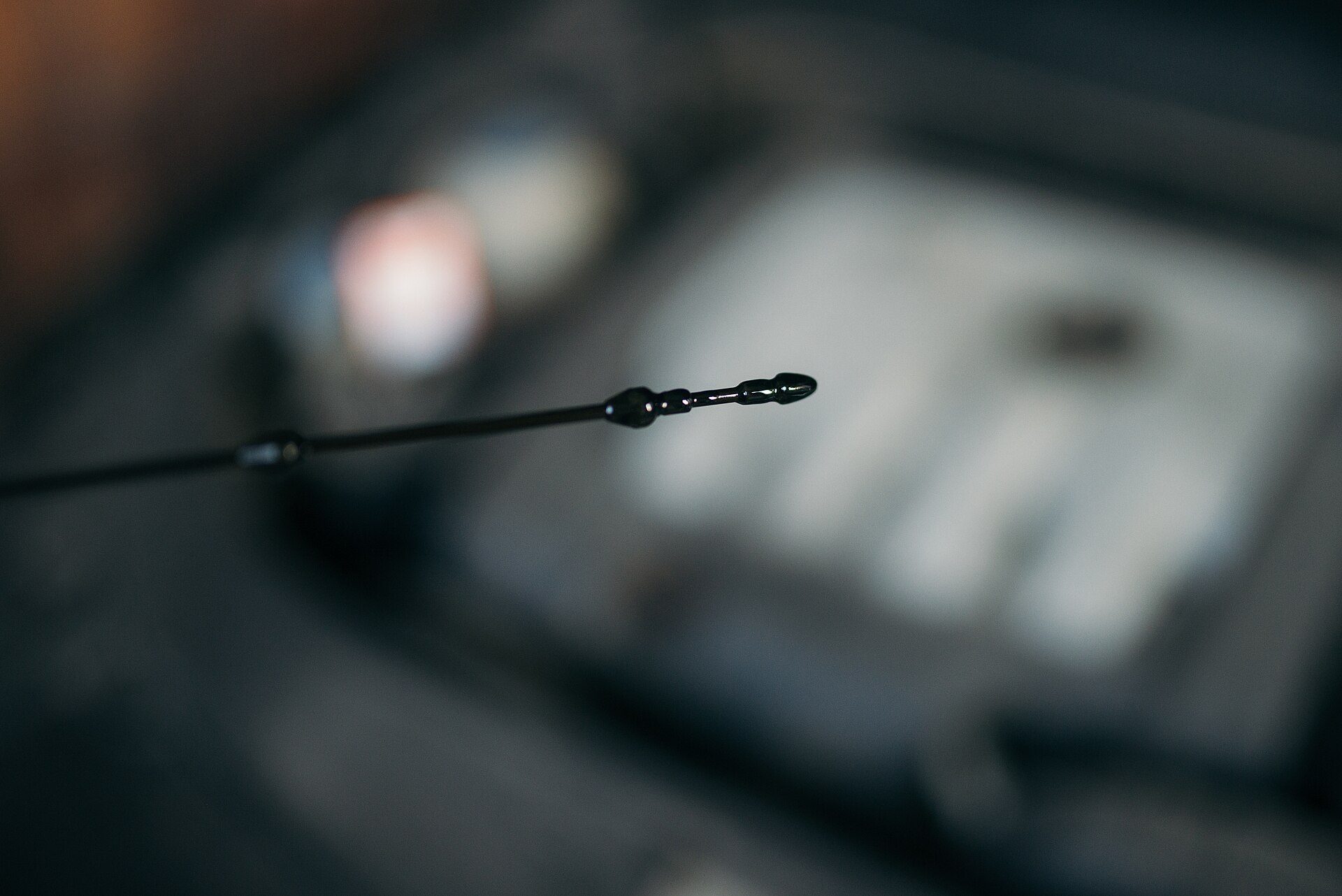
Photo: Shixart1985 / Wikimedia Commons, CC BY 2.0

Service levels: minor, intermediate and major
The table below shows a common framework used by many mainstream brands in Vietnam on a 5,000 km cycle. Some brands use a 10,000 km or 15,000 km cycle, and some group the levels differently. Always check the service book or manufacturer data for that exact model year before telling the customer.
| Level | Example mileage | Main work |
|---|---|---|
| Minor | 5,000 – 15,000 – 25,000 – 35,000… | Oil change, clean the air filter, general check of fluid levels, tyres and lights |
| Intermediate | 10,000 – 30,000 – 50,000 – 70,000… | Minor + replace oil filter, clean cabin filter, rotate tyres, inspect brakes and underbody |
| Upper intermediate | 20,000 – 60,000 – 100,000… | Intermediate + replace cabin filter, closer check of brake fluid, battery and drive belts |
| Major | 40,000 – 80,000 – 120,000… | Upper intermediate + replace engine air filter, brake fluid, standard spark plugs, plus book items such as gearbox oil, fuel filter and coolant |
The first check on a new car
Many brands include a first check at about 1,000 km or 1 month (with free labour at the dealer), mainly for leaks, re-tightening and fluid levels. Cars under warranty should be serviced on schedule with invoices and service book entries kept — for many brands that is a condition of the warranty.
Cars past 100,000 km
The cycle repeats as above, but "one-off" items start to appear: the timing belt (on engines that use one), shock absorbers, the water pump, a second battery, a second set of tyres. Help the customer plan these costs ahead so they do not all land at once.
Service items and typical intervals
The intervals below are common ranges for petrol passenger cars; the manufacturer's book always takes priority. See Figure 2 to picture the fluid reservoirs you will check in the engine bay.
| Item | Check | Replace (reference) |
|---|---|---|
| Engine oil | Every visit | 5,000–10,000 km or 6–12 months, depending on oil type and the book |
| Oil filter | — | Every oil change or every other one, per the book |
| Engine air filter | Clean every 5,000–10,000 km | 20,000–40,000 km, sooner on dusty roads |
| Cabin air filter | Clean every 5,000–10,000 km | 10,000–20,000 km or about 1 year |
| Brake fluid | Level and colour every visit | About 2 years or 40,000 km |
| Coolant | Level with the engine cold | 40,000 km / 2 years for standard coolant; "long-life" coolant can go 100,000 km or more for the first change |
| Spark plugs | At major services | Standard plugs 20,000–40,000 km; iridium or platinum 80,000–100,000 km |
| Tyres | Pressure and wear every visit | Rotate about every 10,000 km; replace when tread reaches the wear indicator or the tyre is old and cracked |
| Battery | Voltage, terminals, tester every visit | Usually 2–4 years depending on use |
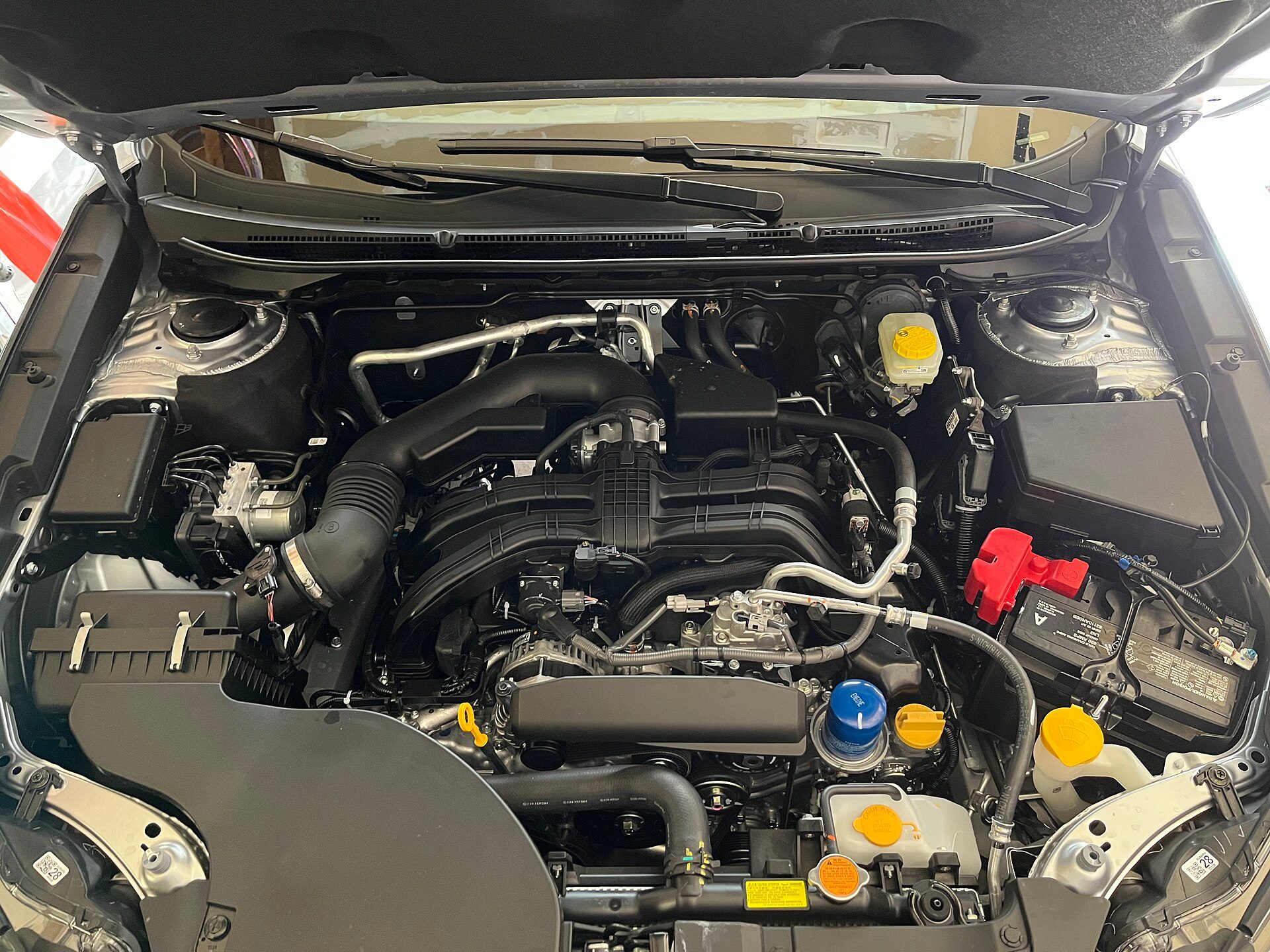
Photo: Colin Venable / Wikimedia Commons, CC0

Engine oil and oil filter
Use the viscosity grade (for example 0W-20 or 5W-30) and specification given in the book, in the right quantity. Replace the drain plug washer every time and tighten the plug with a torque wrench to the manufacturer's figure. For the oil filter (Figure 3), smear fresh oil on the rubber seal, screw it on by hand until the seal touches, then add about 3/4 of a turn or follow the instructions printed on the filter.
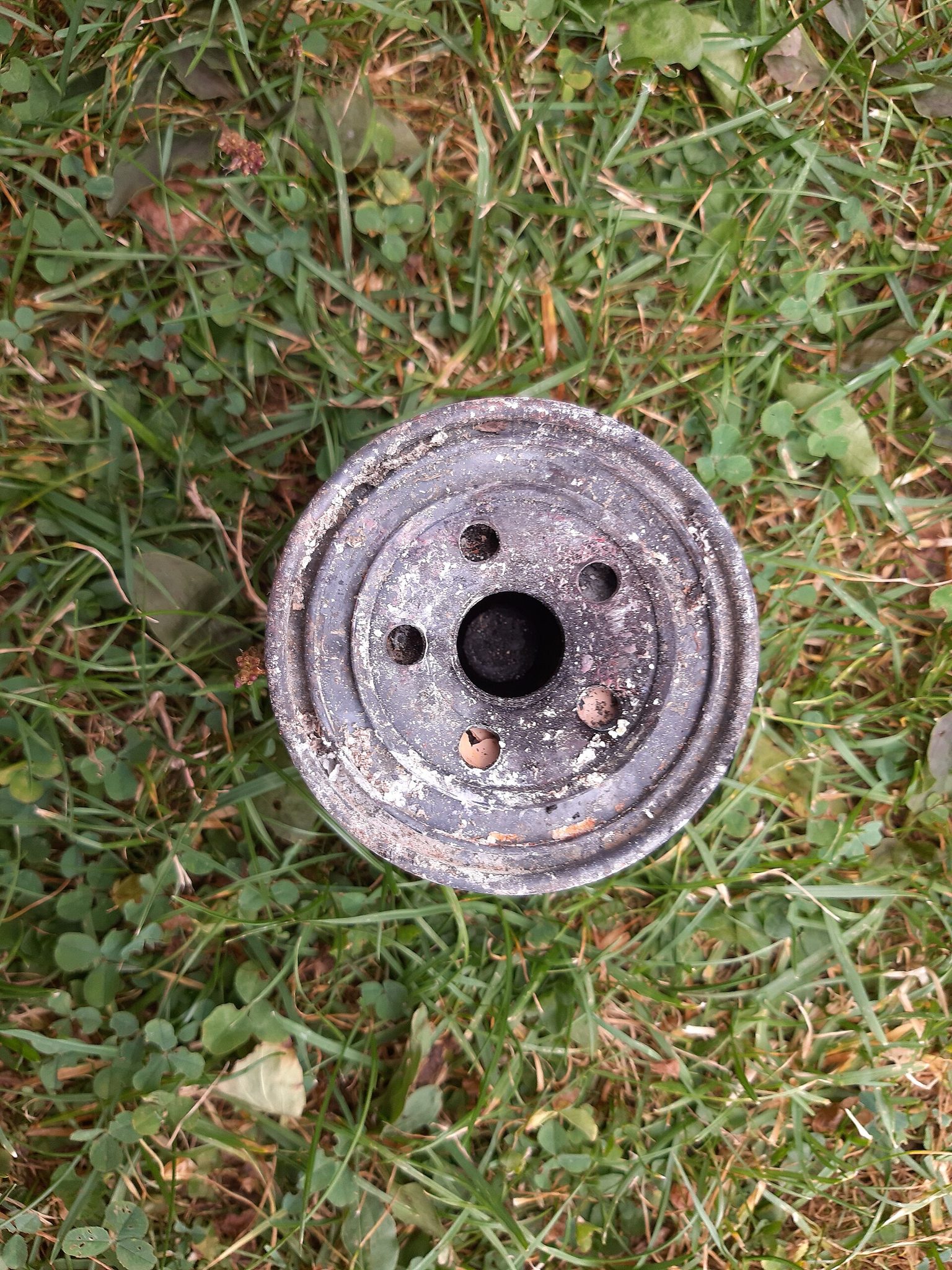
Photo: 01x07x2022000 / Wikimedia Commons, CC0

Engine air filter and cabin filter
A clogged engine air filter makes the car sluggish and thirsty. A clogged cabin filter (Figure 4) gives weak airflow, bad smells and windows that fog easily. In dusty cities many garages replace the cabin filter every 10,000 km, and customers notice the difference straight away.
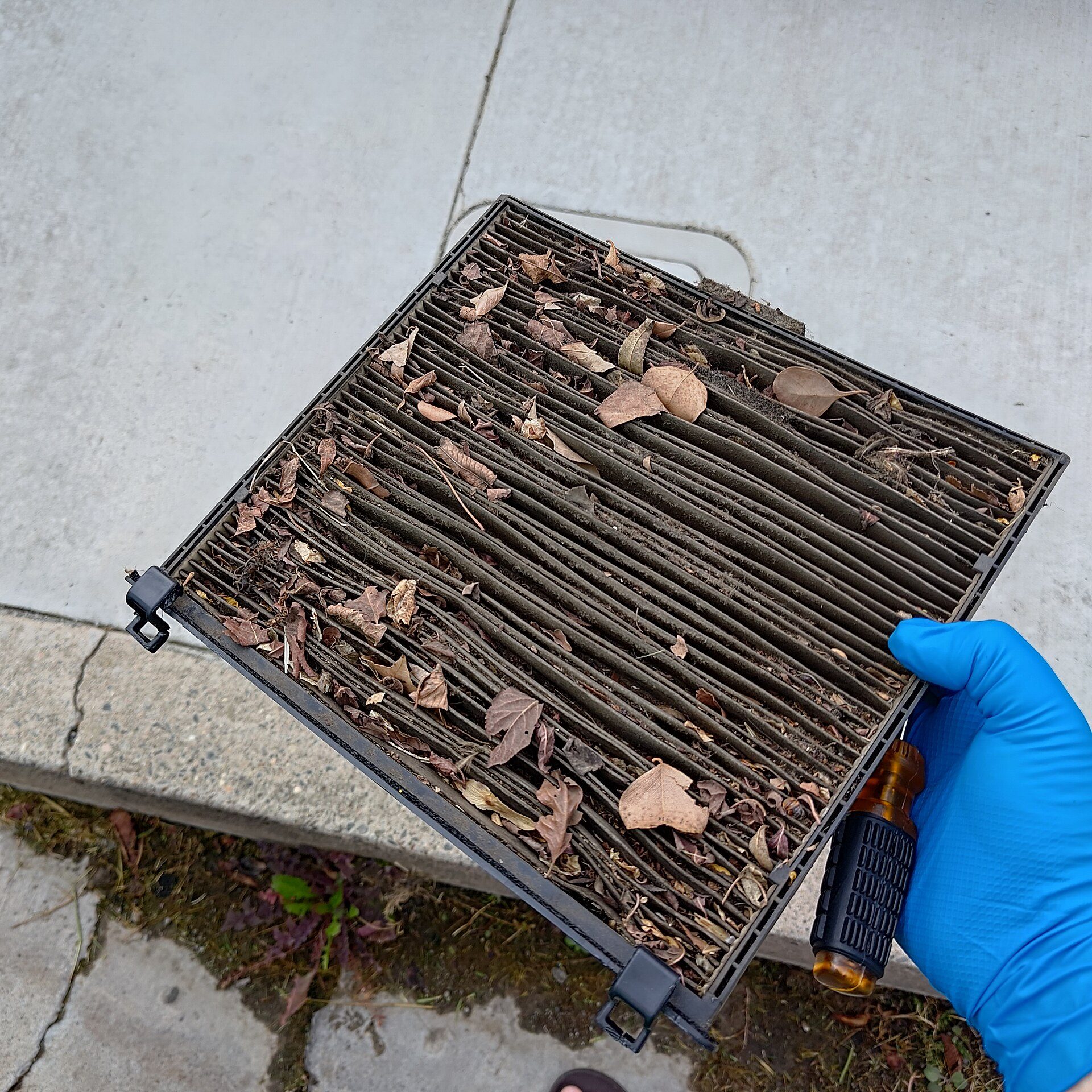
Photo: UnifiedFunctionality / Wikimedia Commons, CC BY-SA 4.0

Brake fluid, coolant, spark plugs, tyres and battery
Brake fluid (Figure 5) absorbs moisture over time, so change it by age as well as mileage, using the DOT grade marked on the reservoir cap. Use the manufacturer's type of pre-mixed coolant, never plain water for long. Fit spark plugs with the correct part number and torque them with the engine cold. Inflate tyres to the pressure on the door-pillar label and rotate them following the manufacturer's pattern. Measure the battery's resting voltage, run a tester and clean the terminals.
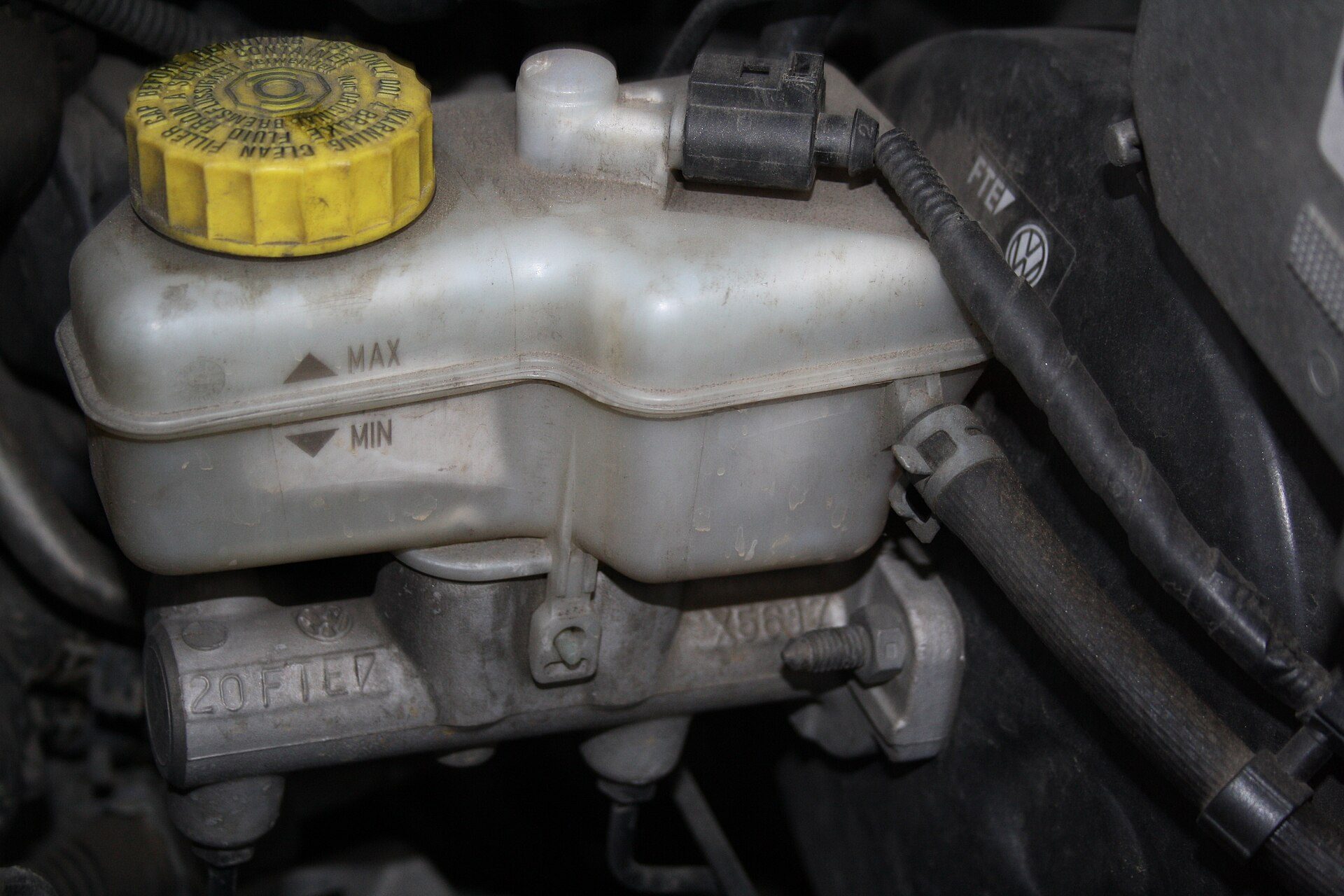
Photo: Frettie / Wikimedia Commons, CC BY 3.0

The technician's checklist when a car arrives
A checklist stops you missing items and gives you readings to record on the repair order. Many dealers use an inspection sheet with several dozen points; below is a shortened version for beginners.
Vehicle check-in
- Record the odometer reading, number plate and VIN; check the service book or history to see what was done last time.
- Start the engine and look at the dashboard warning lights (check engine, ABS, airbag, tyre pressure).
- Walk around the car: note existing scratches and dents; fit seat, steering-wheel and floor covers.
- Ask the customer about symptoms and how the car is used (dusty roads, ride-hailing, short trips).
Engine bay checks (engine cold)
- Engine oil level and colour; coolant level in the expansion tank; brake fluid level; washer fluid.
- Drive belts: cracks, glazing, squeal; coolant and oil hoses: swelling or leaks.
- Battery: resting voltage (about 12.4–12.7V is normal), terminals, tester result.
- Engine air filter and cabin filter: clean them or recommend replacement.
Underbody and wheel checks (on the lift)
- Engine and gearbox oil leaks; CV joint boots; ball joints and control-arm bushes; exhaust.
- Brake pad thickness, disc surface; brake lines.
- Tyres: pressure, tread depth, uneven wear (a hint of wheel misalignment), bulges and cracks.
Finishing and handover
- Run the engine and check for leaks at the drain plug and oil filter; check the oil level again after running for 1–2 minutes and letting it settle.
- Tighten wheel nuts with a torque wrench to the specified figure; reset the service reminder.
- Fill in the service book: date, mileage, work done and the next service due; road-test if brakes were worked on.
Worked example: a 1.5L sedan at 40,000 km
Ms Hoa brings in her B-segment sedan with a 1.5L petrol engine, 39,800 km on the odometer, 2 years and 3 months old, used mostly in the city. The service book uses a 5,000 km cycle, and 40,000 km is a major service. Prices below are 2026 reference figures for an independent garage in Vietnam and vary by region and parts (1,000 VND is roughly 4 US cents, so 100,000 VND is about 4 USD).
Read the book and inspect first
- Book: last service at 35,000 km; brake fluid has never been changed (over 2 years) → change it this time.
- The car uses long-life coolant, and the book gives a much higher first-change interval → check level and colour only, no change.
- The factory spark plugs are the standard type, and the book says replace at 40,000 km → replace.
- Battery: resting voltage 12.5V, tester shows about 70% health → no replacement yet, note it for the next visit.
- Tyres: tread still good and wearing evenly → rotate and balance.
The quote
| Item | Reference cost |
|---|---|
| Synthetic engine oil, 4 litres | 800,000 VND |
| Oil filter | 120,000 VND |
| Engine air filter | 250,000 VND |
| Cabin air filter | 200,000 VND |
| Brake fluid with labour and bleeding | 350,000 VND |
| Standard spark plugs: 4 × 120,000 VND | 480,000 VND |
| Tyre rotation and wheel balancing | 200,000 VND |
| Service labour and general inspection | 500,000 VND |
| Total | 2,900,000 VND (about 116 USD) |
Check the sum: 800 + 120 + 250 + 200 + 350 + 480 + 200 + 500 = 2,900 thousand VND. If you replaced the coolant "just to be safe", the customer would pay a few hundred thousand more for something the book does not require. On the other hand, if you skipped the brake fluid because "it is not due until 40,000 km", the car is already past the 2-year time limit. Reading the book correctly means nothing extra and nothing missed.
Reference service costs: independent garage vs dealer
These are 2026 reference ranges in Vietnam for mainstream B–C segment cars; they vary by region, brand and whether parts are genuine or aftermarket. Large SUVs, luxury cars and diesels usually cost more.
| Level | Independent garage | Franchised dealer |
|---|---|---|
| Minor | 500,000–900,000 VND | 700,000–1,300,000 VND |
| Intermediate | 900,000–1,600,000 VND | 1,200,000–2,200,000 VND |
| Upper intermediate | 1,500,000–2,500,000 VND | 2,000,000–3,500,000 VND |
| Major | 2,500,000–5,000,000 VND | 3,500,000–7,000,000 VND |
Why dealers usually cost more
Dealers use genuine parts and oil, have the manufacturer's diagnostic tools and software updates, and follow the factory procedure — important while the car is under warranty. Independent garages are more flexible, charge less for labour and let customers choose parts. A good technician anywhere follows the manufacturer's book and records everything so the customer keeps their warranty rights.
Safety during servicing: lift, hot oil, radiator cap
Servicing is repeated every day, so accidents usually come from complacency. Figure 6 shows a car raised on a lift — the position you will work in most often.
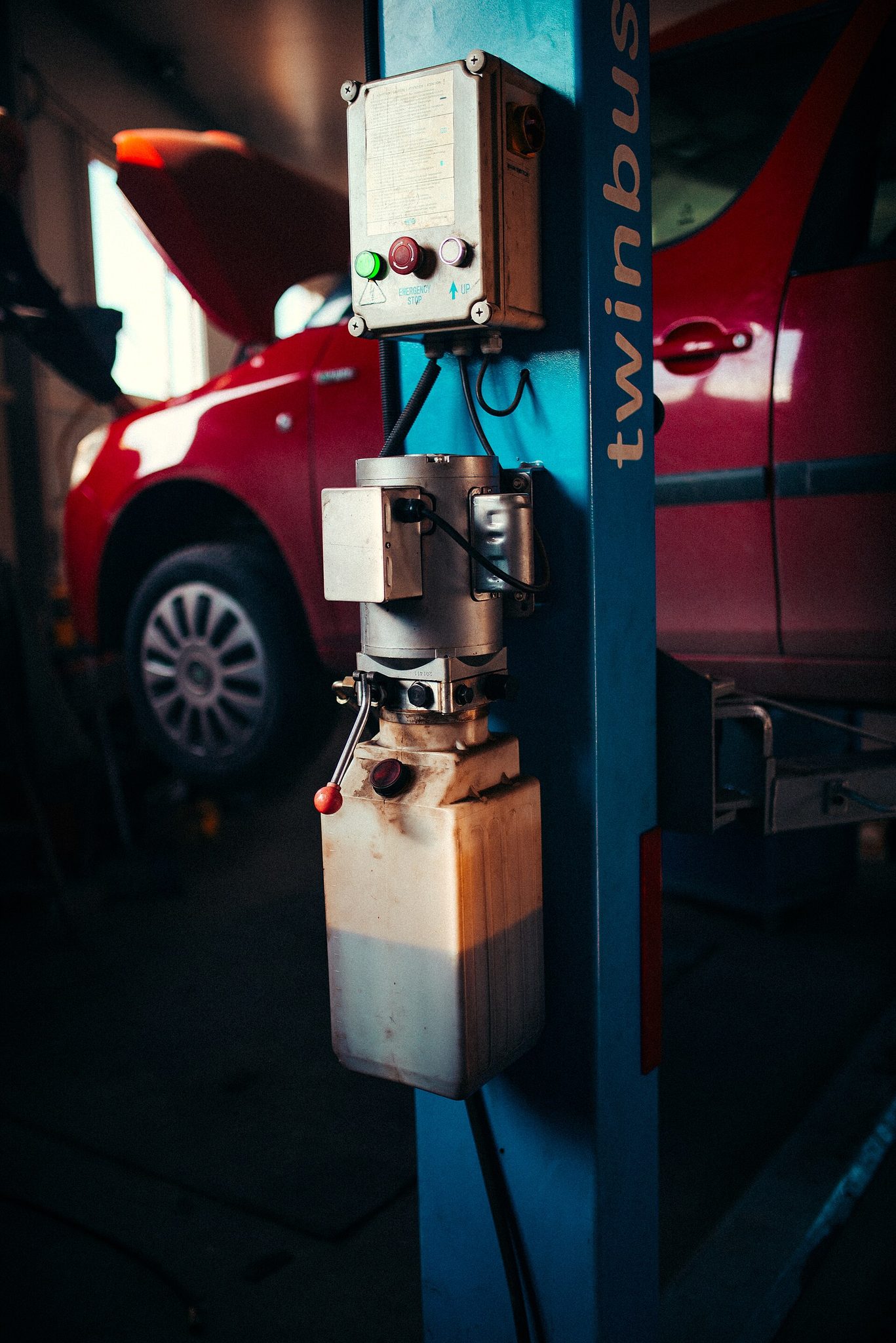
Photo: Shixart1985 / Wikimedia Commons, CC BY 2.0

Safety warning: place the lift arms on the lifting points given in the manufacturer's data; raise the car about 10–15 cm off the ground, rock it gently to confirm it is stable, then raise it fully and lower it onto the safety locks. Never go under a car supported only by a jack — always use axle stands and wheel chocks. Never open the radiator cap or coolant expansion tank while the engine is hot: the system is pressurised, and coolant above 100°C can spray out and cause serious burns; wait until the engine is completely cold, cover the cap with a thick rag and open it slowly. Freshly drained engine oil can be very hot — wear gloves and stay out of the oil stream. Brake fluid damages paint and irritates eyes and skin — wear glasses and gloves. Collect waste oil, old filters and oily rags in separate containers for a licensed handler; never pour them down the drain.
Daily safety habits
- Check the lift at the start of each shift: safety locks, cables, hydraulic leaks; never exceed the lift's rated capacity.
- Remove the key or switch off the keyless start system when working underneath, and hang a warning tag on the steering wheel.
- Wipe up spilled oil on the floor immediately to prevent slips.
Common mistakes new technicians make
Applying one schedule to every car
Symptom: customers pay for items that were not due, or overdue items are missed. Cause: not checking the manufacturer's book. Fix: always open the book or manufacturer data and note the basis for each line on the quote.
Overfilling oil or using the wrong grade
Symptom: oil above the MAX mark, smoke, oil consumption, warning lights. Cause: pouring in the whole can without checking the dipstick, or using a grade "out of habit". Fix: fill to the capacity in the book and recheck the dipstick after running the engine.
Tightening drain plugs and wheel nuts with an impact gun
Symptom: stripped sump threads, warped brake discs, nuts that are hard to remove next time. Cause: over-tightening. Fix: use a torque wrench set to the manufacturer's figure.
Frequently asked questions
How many kilometres between car services?
Many mainstream brands in Vietnam use 5,000 km or 6 months; some use 10,000 km or 15,000 km. The exact interval is in the car's service book.
Does a car that is rarely driven still need servicing?
Yes. Engine oil, brake fluid and coolant degrade with time; a rarely used car is still serviced by months, and its battery tends to weaken faster than on a car driven regularly.
Will servicing at an independent garage void the warranty?
It depends on each manufacturer's policy. The general principle: the right items at the right intervals, parts that meet the specification, invoices kept and the service book filled in. Customers should read the warranty terms in the book or ask the dealer.
How long does a major service take?
Usually about 2–4 hours if no extra repairs come up; a minor service about 45–90 minutes. If extra work is found, tell the customer before doing it.
Practice exercises and self-assessment
- Read the service books of 2 cars from different brands and build a mileage – level – items table for 0–80,000 km.
- Under a senior technician's supervision, carry out a complete minor service: oil change, checklist inspection, service book entry.
- Write a quote for an imaginary car at 20,000 km following Ms Hoa's example, with the basis for each item.
Self-assessment criteria
- Pass: you identify the right service level from the book; your checklist misses nothing; every line of the quote adds up.
- Pass: you use the correct lifting points and safety locks; you torque the drain plug and wheel nuts with a torque wrench; there are no leaks after starting the engine.
- Not yet: you open the radiator cap on a hot engine, go under a car before the lift is locked or with only a jack, or replace items without a basis.
Once you can service cars confidently, you are ready for the next step of the roadmap: Brakes, suspension, steering & alignment — replacing pads, bleeding brakes, inspecting the underbody and reading alignment results. See the 8-step auto mechanic roadmap.