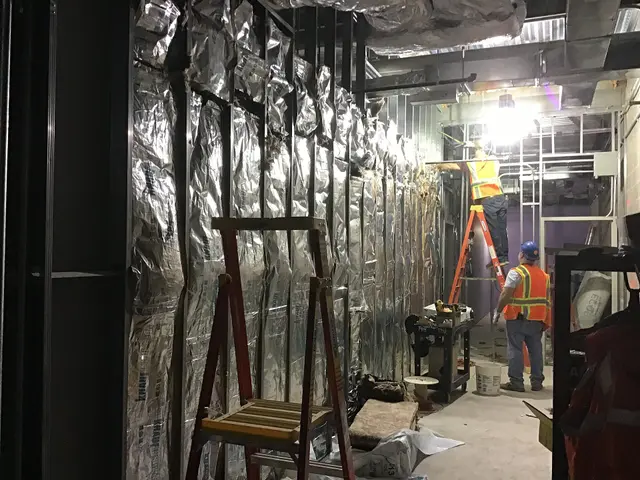
Air conditioner installation safety revolves around three hazards: 220 V power and charged capacitors inside the unit, high-pressure refrigerant that can cause cold burns (and fire, in the case of R32), and falls when hanging outdoor units off balconies and the walls of tall buildings. New technicians usually get hurt not from lack of skill but from believing "switched off at the remote means no power", undoing flare nuts while the system still holds refrigerant, or stepping outside the railing without clipping on a harness. This is the first lesson of the AC technician path, written the way a senior technician briefs an apprentice before their first installation, with a safety checklist to use on site.
By the end of this lesson, you will be able to:
- Isolate power at the right point and confirm the unit is dead with a voltage tester and meter before touching the indoor or outdoor unit.
- Recognise capacitors and inverter boards that can still be charged, and wait for them to discharge properly.
- Wear gloves and glasses around refrigerant lines, and explain why R32 is flammable and how to ventilate.
- Use a full-body harness, choose an anchor point and work as a pair when hanging an outdoor unit.
- Run a 5-minute safety checklist before every installation, cleaning or repair job.
Just starting out as an AC technician? Electrical, refrigerant and working-at-height safety is step 1 of the roadmap, before the refrigeration cycle, installation and charging. See the 8-step AC and refrigeration technician roadmap to learn in the right order.
Three main hazards when installing and repairing air conditioners
Installing a wall-mounted split unit looks simple: drill the wall, hang the indoor unit, place the outdoor unit, connect the pipes, vacuum and test run. But in that one job you handle mains electricity, work with high-pressure refrigerant and often have to go out onto the face of a building.
Electricity: 220 V and stored charge
Household air conditioners in Vietnam run on 220 V, 50 Hz and should have their own breaker. The outdoor unit contains compressor and fan capacitors; inverter units have a power board with high-voltage DC filter capacitors. These capacitors hold charge after the power is cut, and touching them can give you a shock even with the breaker off.
Refrigerant: pressure, cold burns, fire
The refrigerant in the system is under high pressure. Liquid refrigerant escaping evaporates very fast and pulls heat out of skin and eyes, causing cold burns in an instant. R32, the common refrigerant in newer units sold in Vietnam, is also flammable, an extra hazard that technicians used to old R22 tend to ignore.
Height: falls and dropped objects
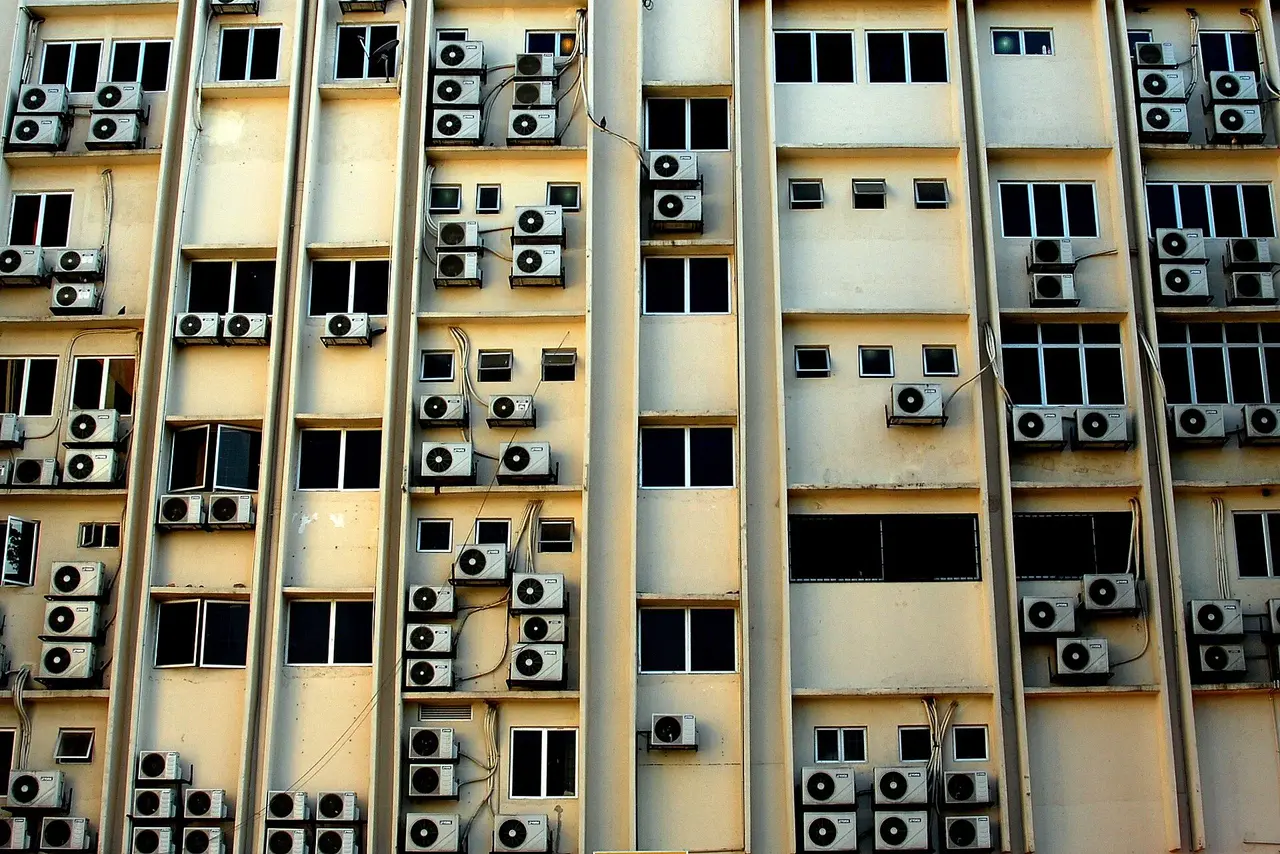
Outdoor units usually sit on balconies, loggias, building faces or roofs (Figure 1). A fall from the second floor up can be fatal. Objects dropped from height, such as spanners, drill bits or anchor bolts, can also seriously injure people below.
Electrical safety: isolate and test before touching
Rule number one: switching off with the remote is not isolating the power. The remote only puts the unit on standby; the control board is still live.
Isolating at the right point
- Switch off with the remote and wait for the unit to stop completely.
- Switch off the dedicated air conditioner breaker. If there is none, switch off the circuit breaker for that branch, or unplug the unit if it is on a socket.
- Tape the breaker or hang a "Work in progress, do not switch on" sign on it and tell the homeowner. Lock the breaker box cover if possible.
- Prove your voltage tester or meter on a live socket to be sure it works.
- Test at the terminal blocks of the indoor and outdoor units: only disconnect wires once there is no voltage.
Some homes feed power to the outdoor unit, others to the indoor unit; ceiling cassettes and multi-split systems may be fed from another panel. Do not guess; test at both ends.
Capacitors and inverter boards
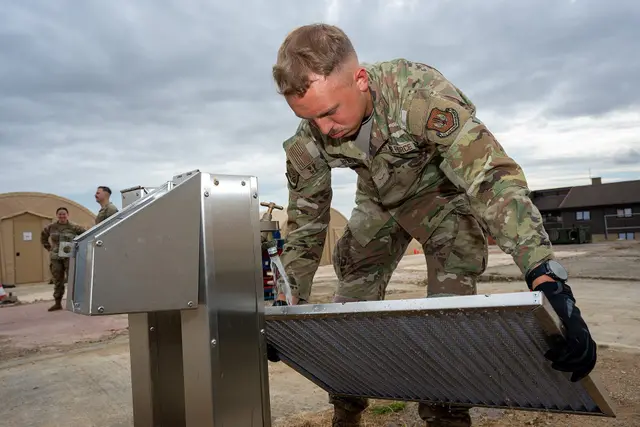
After isolating, wait a few minutes for capacitors to discharge as the manufacturer specifies. On an inverter board, measure across the large DC filter capacitor with your meter on the DC range, and only touch it once the voltage is close to 0 V. Never short a capacitor with a screwdriver to discharge it quickly: the spark damages the capacitor and can throw metal into your eyes. Diagnosing boards comes in later steps; at step 1 just remember that capacitors may still be charged (see Figure 2).
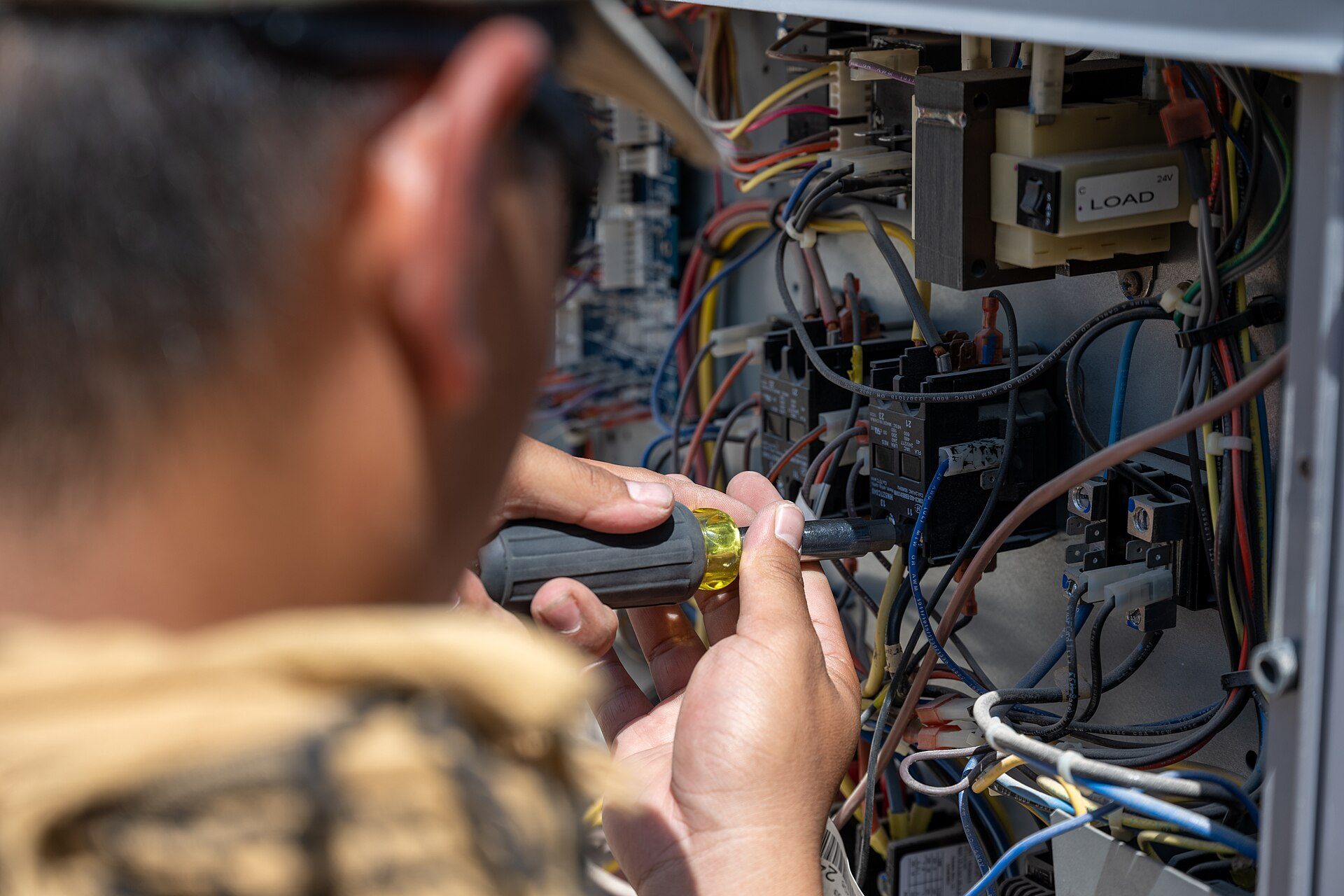
Photo: U.S. Air Force AFCENT by Airman 1st Class Derrick Bole / Wikimedia Commons, Public domain
Supply cable, earthing and sockets
Check that the supply cable size matches the unit as the manufacturer specifies and that an earth wire is connected to the casing. Do not join cables outdoors with tape alone and never run an air conditioner from an extension lead. Wrong or loose supply connections are a common cause of burnt terminal blocks and short circuits.
Refrigerant safety and the flammability of R32
At step 1 you do not need to know how to charge refrigerant, but you must know how to work near it safely: wear protective gear, keep refrigerant off your body and create no ignition sources around R32.
Gloves and glasses when opening valves and lines
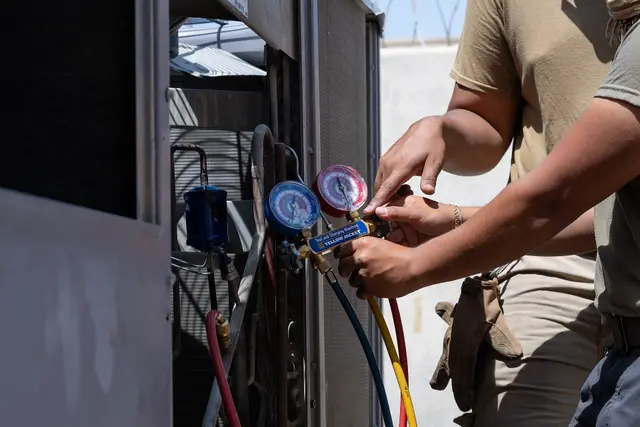
Whenever you open a valve, undo a flare nut or connect gauge hoses, wear safety glasses and gloves (Figure 3). Liquid refrigerant in the eye can cause serious injury; on the skin it causes cold burns that are just like heat burns. Never point a charging hose or open pipe at your own face or anyone else's. Do not undo flare nuts or cut pipes while the system still holds refrigerant: it must first be pumped down into the outdoor unit or recovered into a cylinder, which you will learn in later steps.
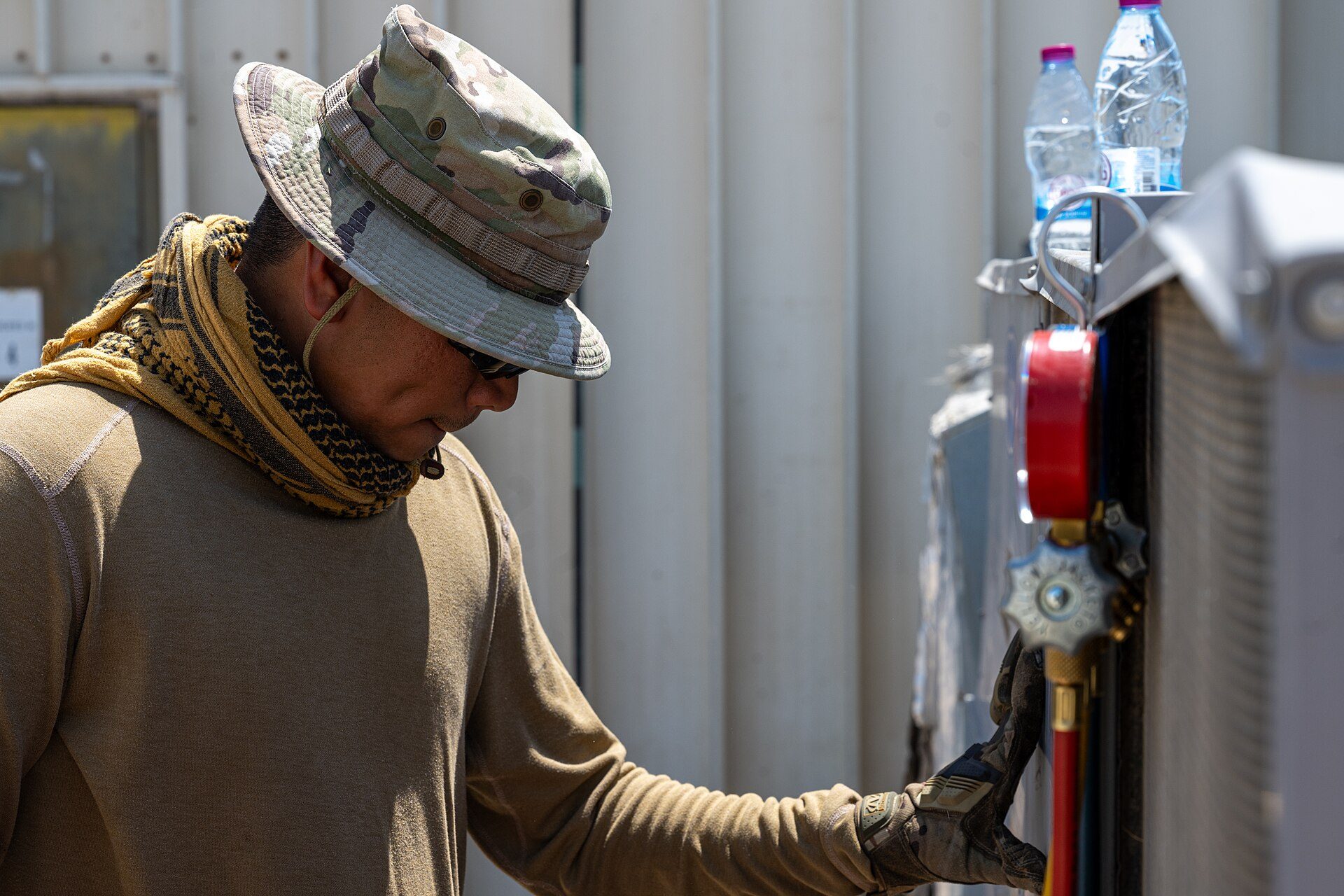
Photo: U.S. Air Force AFCENT by Airman 1st Class Derrick Bole / Wikimedia Commons, Public domain
How flammable is R32?
R32 is classed A2L: low toxicity, flammable but slow-burning and harder to ignite than fuel gas. It will only ignite if enough leaks into an enclosed space and meets a flame or electrical spark. R32 is heavier than air, so it collects near the floor and in corners. When it burns, R32 can produce toxic fluorine compounds, so an R32 leak combined with a flame is far more dangerous than simply "losing gas".
Ventilation and no ignition sources
- Open windows and doors when working on an R32 system indoors; a fan blowing outwards helps.
- No smoking, no gas stove, no torch and no brazing while the system still holds R32.
- Before brazing, recover all refrigerant and purge the pipes with nitrogen; the procedure is in Recharging AC refrigerant: measure, find the leak, then charge.
- Keep a small fire extinguisher in your tool bag when working with R32.
Transporting and storing cylinders
Keep cylinders upright and strapped down on the vehicle, never in a motorbike box under strong sun, never near heat. R32 uses its own valves and fittings as the manufacturer specifies; do not use unknown cylinders or decant refrigerant between cylinders without the right equipment and training.
| Refrigerant | Usually found in | Flammable? | Safety notes |
|---|---|---|---|
| R22 | Older units | Not under normal conditions | Still causes cold burns and suffocation in closed rooms |
| R410A | Earlier inverter units | Not under normal conditions | Higher pressure than R22; tools must be rated for it |
| R32 | Most newer units | Mildly flammable (A2L) | Ventilate, no flames, recover before brazing |
Working at height when hanging outdoor units
Hanging an outdoor unit off a balcony or wall is the most dangerous part of the trade. Many fatal accidents happen when technicians stand outside the railing or climb through windows without a harness.
Full-body harness and anchor points
Use a full-body harness (shoulder straps, leg straps, back D-ring) instead of an old-style waist belt (Figure 4). Clip onto a solid anchor: a concrete column or beam, or a properly installed anchor point. Never clip onto a thin stainless railing, a water pipe, a window frame or an old outdoor unit bracket. Keep the lanyard short and anchor at or above shoulder height so that any fall is as short as possible.
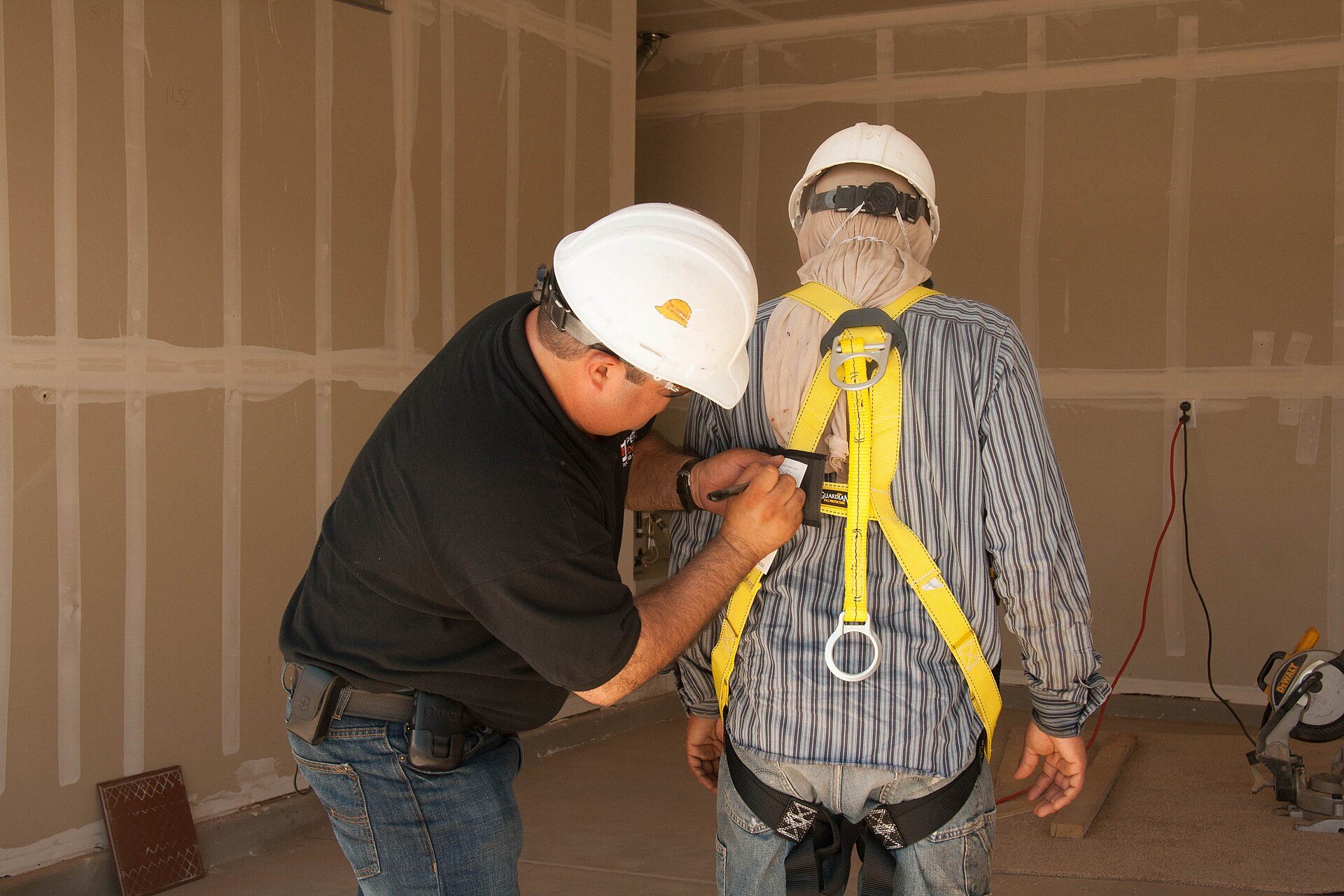
Photo: National Institute for Occupational Safety and Health (NIOSH) from USA / Wikimedia Commons, Public domain
Work in pairs, tie off tools, check the weather
- Always work in pairs when hanging an outdoor unit: one outside, one inside holding the line, passing tools and ready to call for help.
- Tie tools on with lanyards and cordon off or warn security below; never drop things down.
- A 9,000–12,000 BTU outdoor unit usually weighs about 25–40 kg depending on the brand: lift it with a rope, never carry it out over the railing alone.
- Do not work in rain, strong wind or thunderstorms, or at height when tired, suffering from the heat or after drinking.
Brackets and ladders
Bolt outdoor unit brackets into concrete or solid walls with correctly sized expansion anchors, never into hollow bricks or cladding. Replace rusty old brackets instead of reusing them. Use an A-frame ladder of the right height with both locks fully open, never stand on the top step, and never stand on plastic or swivel chairs.
Worked example: installing a 12,000 BTU R32 unit on the 5th floor of an apartment block
Situation: Lam, a first-month apprentice, goes with Phuc, a senior technician, to install a 12,000 BTU wall-mounted R32 unit in a 5th-floor apartment. The outdoor unit hangs on the outside wall of the loggia, about 1.2 m outside the railing. The building requires installation work to be registered with the management office.
The 5-minute on-site safety checklist
- Check the location: the loggia has a concrete column to use as an anchor; the outer wall is concrete and can take a bracket.
- Check the weather: dry, light wind, OK to work. Ask security to cordon off the yard below.
- Power: the flat has a dedicated AC breaker; switch it off, tape it "Installing", prove the tester on a live socket and then test the terminals.
- Refrigerant: new unit, refrigerant held in the outdoor unit; open the loggia and room doors before opening valves; small extinguisher beside the tool bag.
- Height: Lam wears a full-body harness, Phuc checks it and clips it to the column; tools are tied on; the outdoor unit is raised by rope with two people.
An apprentice's personal safety kit (2026 reference prices in Vietnam, varying by area and type)
| Item | Quantity | Low (VND) | High (VND) |
|---|---|---|---|
| Full-body harness with hook lanyard | 1 set | 400,000 | 900,000 |
| Hard hat with chin strap | 1 | 80,000 | 200,000 |
| Safety glasses | 1 | 40,000 | 120,000 |
| Cold- and cut-resistant gloves | 1 pair | 60,000 | 150,000 |
| Voltage tester and multimeter | 1 set | 300,000 | 900,000 |
| Non-slip shoes | 1 pair | 250,000 | 600,000 |
| Small fire extinguisher | 1 | 150,000 | 350,000 |
| Total | 1,280,000 | 3,220,000 | |
Check: low 400,000 + 80,000 + 40,000 + 60,000 + 300,000 + 250,000 + 150,000 = 1,280,000 VND; high 900,000 + 200,000 + 120,000 + 150,000 + 900,000 + 600,000 + 350,000 = 3,220,000 VND (roughly 50–125 USD). Many shops and companies supply this kit; if you buy your own, prioritise the full-body harness and test instruments.
What happened on the job
Testing at the indoor unit terminals, Lam found voltage even though the breaker labelled "air conditioner" was off. The breaker had been mislabelled with the next room's circuit. Because he tested for dead, Lam did not touch a live wire. Phuc noted it down so the homeowner could have the panel labels corrected.
First aid and when to see a doctor
Safety warning: Always switch off the breaker and test for dead before touching the indoor or outdoor unit, and wait for capacitors to discharge. Do not undo flare nuts or cut pipes while the system holds refrigerant; no flames, no torch and no brazing while the system holds R32. Going outside a railing or onto a wall means a full-body harness clipped to a solid anchor and a second person present. For electric shock: cut the power first, never touch the victim with bare hands, call 115 (Vietnam's emergency medical number). If you smell burning or see smoke or sparks at the terminals, cut the power immediately and never use water on an electrical fire.
Cold burns from refrigerant
Move away from the gas, remove gloves, watches and rings from the affected area if they are not stuck to the skin. Rewarm gently with lukewarm (not hot) water; do not rub and do not use a flame. Refrigerant in the eye: rinse with clean water continuously for at least 15 minutes and see an eye doctor immediately. Skin that is white, numb or blistered needs a medical facility.
Breathing refrigerant in a closed room
A large leak in a closed room displaces oxygen, causing dizziness, nausea and fainting. Move the person to fresh air, open all doors and call 115 for breathing difficulty or drowsiness. Do not operate light switches in a room with a suspected large R32 leak.
Electric shock and falls
Anyone who has had an electric shock should see a doctor even if they feel fine, because heart rhythm problems can appear later. If someone falls from height, do not move them if a spinal injury is possible; call 115, keep them warm and monitor their breathing.
Common mistakes by new technicians
Trusting the breaker label or the homeowner
Sign: switching off the breaker marked "air conditioner" and disconnecting wires straight away. Cause: trusting the label. Fix: always prove the tester on a live source, then test at the unit terminals.
Clipping the harness to the railing or a water pipe
Sign: clipping to whatever is nearest to save time. Cause: not checking anchors first. Fix: choose the anchor during the 5-minute checklist and have the senior technician approve it.
Treating R32 like R22
Sign: smoking while venting, torching pipes before recovering refrigerant. Cause: habits from non-flammable refrigerants. Fix: treat every newer unit as R32 until you have read the label; no flames, ventilate.
No glasses when opening valves
Sign: glasses left in the tool bag. Cause: thinking you are only opening it "a little". Fix: put your glasses on before you pick up the hex key.
Frequently asked questions
Can R32 refrigerant explode?
R32 is mildly flammable (A2L) and only ignites if enough leaks into an enclosed space and meets a flame or spark. Ventilation, no ignition sources and recovering refrigerant before brazing are enough to work safely. Explosions usually come from bad practice, such as brazing pipes that still contain refrigerant or using oxygen for pressure testing.
Do you need a safety harness to install an air conditioner?
Yes, every time you go outside a railing, onto a wall or anywhere with a risk of falling from height. Use a full-body harness clipped to a solid anchor, with a second person present. Employers must provide working-at-height safety training under current Vietnamese regulations; ask your workplace and check the official documents.
Is switching off with the remote enough to start work?
No. The remote only puts the unit on standby and the board is still live. Switch off the breaker or unplug the unit, then test for dead at the terminals.
Can homeowners clean their air conditioner safely themselves?
Homeowners can rinse the filters once the power is off; outdoor units at height and anything involving refrigerant should be left to a technician. See How to clean an air conditioner at home.
Practice tasks and self-assessment
- On an air conditioner at home or in class: find the breaker, switch it off, prove the tester on a live socket and test at the indoor unit terminals. Record the results.
- Read the outdoor unit labels on 3 different units and note the refrigerant type, factory charge and voltage.
- Put on a full-body harness under a senior technician's guidance, have it checked, and point out 2 acceptable and 2 unacceptable anchor points on a balcony.
- Write a 5-minute safety checklist for cleaning an outdoor unit on the 3rd floor.
Self-assessment criteria
- Pass: you prove the tester on a live source before testing the unit, and test at both the indoor and outdoor units.
- Pass: you read the refrigerant type correctly from the label and can name 3 things never to do with an R32 unit.
- Pass: you wear the harness correctly (leg and shoulder straps snug, back D-ring centred) and choose a proper anchor.
- Not yet: you touch the terminals after only switching off with the remote, or plan to go outside the railing without a harness.
Once you have the safety basics, move on to the next roadmap step: The refrigeration cycle and reading pressure gauges, where you learn how the compressor, condenser, expansion device and evaporator work together and how to read gauges for R22, R410A and R32.
Keep learning AC and refrigeration: after safety come the refrigeration cycle, installing wall-mounted units, vacuuming and charging, cleaning and servicing, and diagnosing inverter boards. See the 8-step AC and refrigeration technician roadmap.