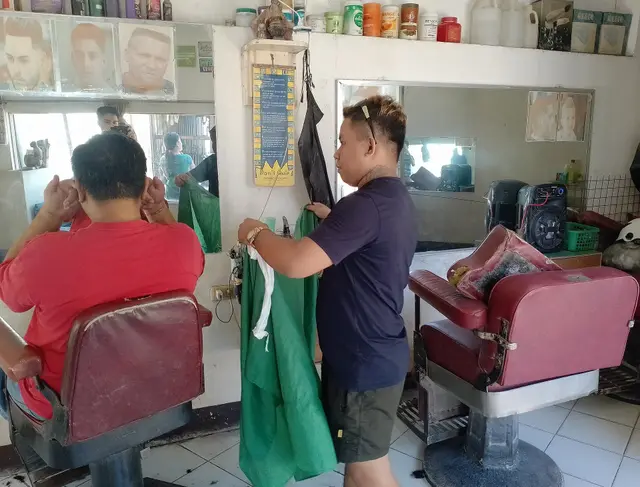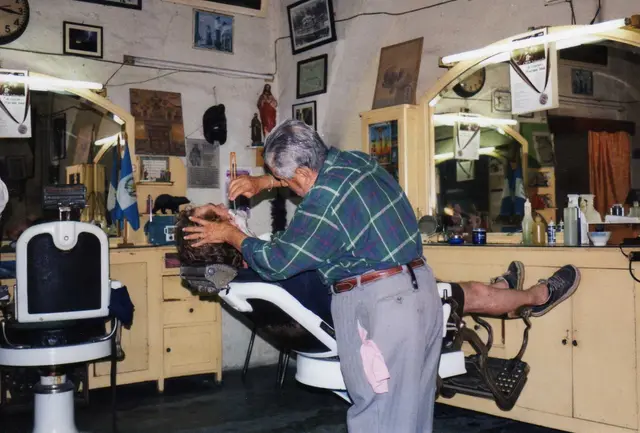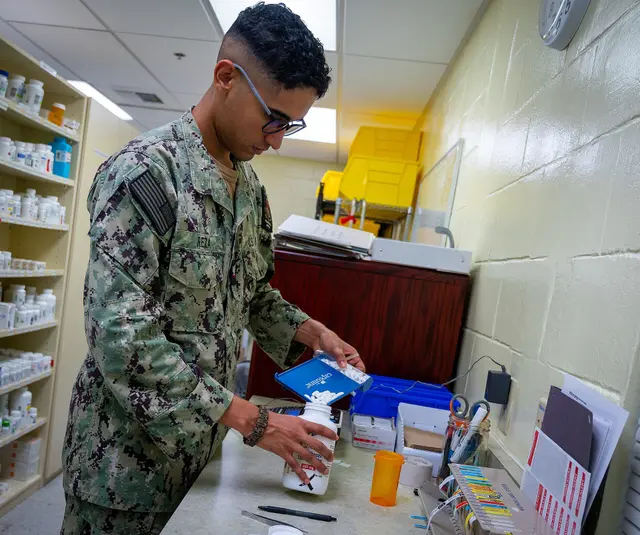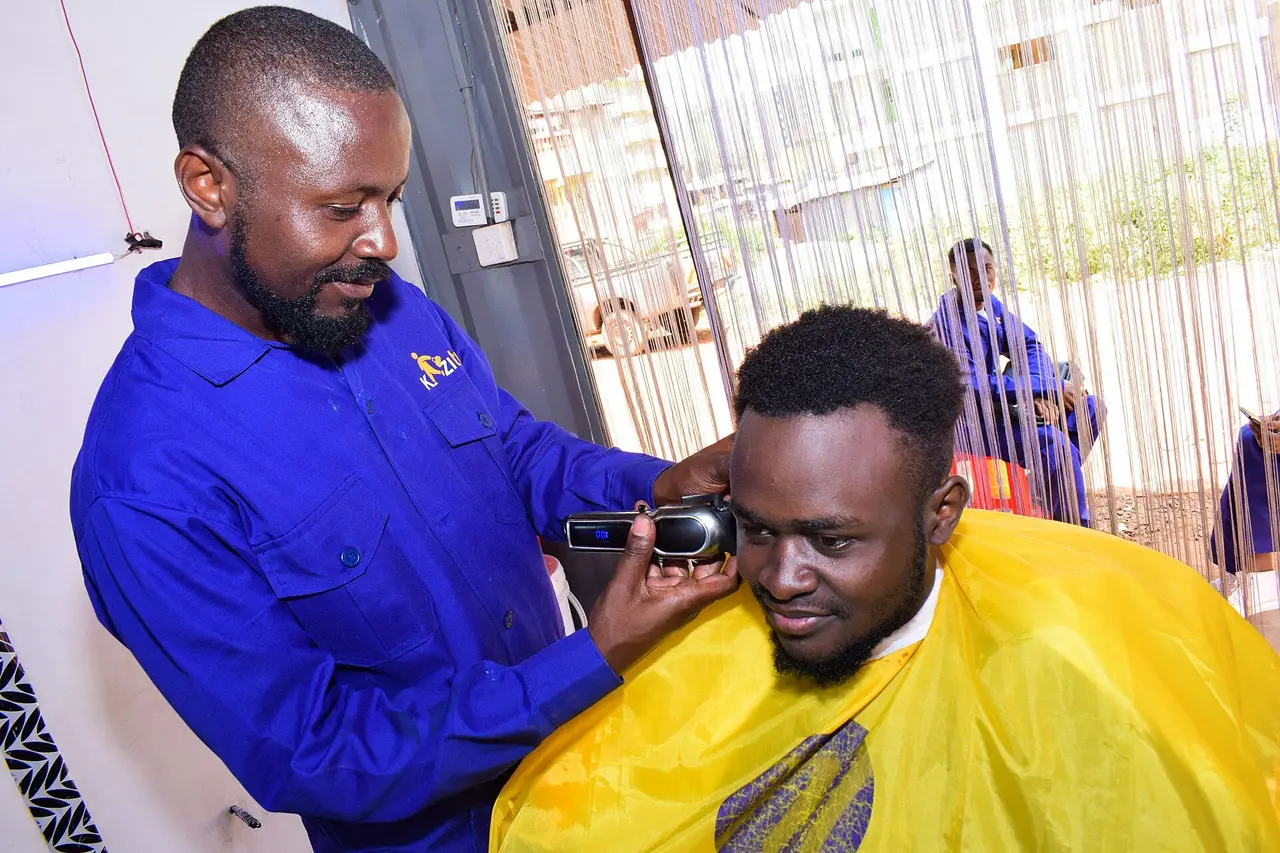
The right way to clean hair clippers is in three levels: after every client you brush out the hair, disinfect the blade and guards, then oil; at the end of the day you take the blade off and clean it thoroughly; once a week you check the blade, cord and battery. Combs, scissors, towels and capes must also be clean for every client, and razor blades are used once and then go into a sharps container. This is the first lesson a new barber should read, because a shop that cuts well but spreads scalp fungus or makes clients bleed with dirty tools loses customers faster than a shop that cuts badly.
By the end of this lesson, you will be able to:
- Tell cleaning, disinfecting and single-use items apart, and know which group each barbering tool belongs to.
- Clean clippers at three levels (after each client, end of day, weekly) in a measurable time.
- Check the scalp and face before cutting, and know which areas must not be shaved and when to refuse or postpone a service.
- Handle a small nick safely for the client and for yourself.
- Use opening, between-client and closing checklists, and work out the cost of hygiene supplies for one barber chair.
Just starting barbering? Tool hygiene and client safety are step 1 of the roadmap, before reading head shapes, scissor-over-comb or fades. See the 8-step barber roadmap to learn in the right order.
Why tool hygiene is the first step in barbering
Clippers, combs, scissors and razors touch the scalp, neck and face of dozens of people every day. One clipper blade carrying hair, dandruff or blood from the previous client is enough to move bacteria or fungus to the next one. Clients cannot see germs, but they can see whether you brush the blade, change the neck strip and open a new razor blade, and that is why they come back.
What can spread through barbering tools
- Scalp and skin fungus: scaly patches and patchy hair loss; fungal spores cling to combs, clipper blades and neck dusters for a long time.
- Folliculitis and impetigo: pus spots on the neck or chin; bacteria spread through shared towels and undisinfected blades.
- Head lice: they move onto combs, capes and towels used for the next client.
- Bloodborne infections such as hepatitis B and hepatitis C: a risk when a razor blade or clipper blade with blood on it is used on someone else. This is why razor blades are single use.
Cleaning, disinfecting and single use: the difference
Cleaning removes cut hair, dandruff, oil and dust with a brush, water and soap. Disinfecting uses a tool disinfectant or alcohol to sharply reduce microorganisms on a surface that is already clean. Disinfectant works poorly on a surface still covered in hair and oil, so always clean first. Single-use items (razor blades, neck strips, gloves, gauze) are thrown away after use, never "disinfected and reused".
Barbers do not have autoclaves like a clinic, so the safest rule is: anything that can break the skin is single use, and anything reusable is cleaned and then disinfected for the full contact time printed on the disinfectant label.
Sorting barbering tools by how they are treated
Before learning the routine, know which group each tool belongs to. The table shows a common way men's barbershops sort their tools; if your shop has stricter rules, follow the shop.
| Tool | Group | Treatment | When |
|---|---|---|---|
| Razor blade | Single use | Load a new blade in front of the client, drop it in a sharps container after use | Every client |
| Neck strips, gloves, gauze | Single use | Into a lidded bin | Every client |
| Clipper and trimmer blades and guards | Reusable | Brush out hair, disinfect, let dry, oil | Every client; blade off for a deep clean at the end of the day |
| Combs, hair clips | Reusable | Wash with soap, immerse in disinfectant for the stated time, let dry | Every client (rotate several sets) |
| Cutting and thinning scissors | Reusable | Wipe off hair, wipe blades with alcohol or disinfectant | Every client |
| Razor handle (blade holder) | Reusable | Clean and disinfect | Every client |
| Towels, capes | Reusable | Hot-wash and fully dry towels; shake out, wipe and regularly wash capes | Towels: every client; capes: shake every client, wash daily |
| Chair, headrest, counter | Surface | Brush off hair, wipe with surface cleaner | Every client; thorough wipe at the end of the day |
A practical tip: keep at least 3 sets of combs so one is soaking, one is drying and one is ready. Running out of combs is the most common reason barbers skip the soak when the shop is busy.
Cleaning clippers at three levels
The clipper is the most used tool and the most neglected. Splitting the job into three levels means you never have to take the machine apart during a rush, yet it stays clean, smooth and long-lasting.
Level 1: after every client (2–3 minutes)
- Switch off and remove the guard. Never clean the blade while the clipper is running or charging.
- Brush all hair off the blade face and out of the gap between the two blades; tap the head gently on a paper towel to drop loose clippings.
- Spray or wipe disinfectant on the blade, leave it for the contact time on the label, then let it air-dry or dry it with a clean paper towel.
- Guards full of hair or dandruff get washed in soapy water, dried and disinfected; clean guards just get wiped with disinfectant.
- Put 2–3 drops of blade oil on the teeth, run the clipper a few seconds to spread it, and wipe off the excess.
Cleaning between clients while cutting fades is covered briefly in how to do a fade haircut; here you add the end-of-day and weekly levels.
Level 2: end of day (10–15 minutes per machine)
- Unplug, remove the blade as the maker instructs (usually two screws or a release lever). Take a photo of the blade position the first time you do it.
- Brush out hair packed in the blade housing and around the drive lever; do not blast compressed air into the body, which pushes hair deeper.
- Clean the detached blade in blade wash or tool disinfectant, soaking only the metal blade, never the body, motor or battery.
- Dry completely, refit in the correct position, oil, and run it to check the sound is even.
- Store the clipper somewhere dry with a lid or its own drawer, away from dirty combs and damp towels.
Level 3: weekly (technical check)
- Blade alignment and gap: the moving blade must not stick out past the fixed blade, or it can cut the skin. Beginners should not try zero-gapping a blade until a senior barber has shown them.
- Teeth: chipped or broken teeth mean a new blade, because they scratch the skin.
- Cord, charger, battery: no cracked insulation, no kinks at the plug; no swollen battery; only the clipper's own charger.
Cleaning combs, scissors, razors, towels and capes
A clean clipper with a dirty comb still spreads infection. Each tool has its own routine, but the rule is always: clean first, disinfect second, dry before storing.
Combs and clips
Pull all hair from the teeth, wash in soapy water, rinse, then immerse the comb completely in a jar of disinfectant at the concentration and time on the label. Change the solution daily, or sooner if it is cloudy or has hair floating in it. Take combs out with tongs or clean hands and let them drain on a clean towel. Throw away cracked or broken combs: cracks hold dirt and cannot be disinfected.
Scissors
Wipe hair off the blades with a paper towel, wipe blades and handles with alcohol or disinfectant, and let them dry. Do not leave scissors soaking for long, which can rust the pivot. At the end of the day put a drop of oil on the pivot, open and close a few times, and wipe clean.
Razors and blades
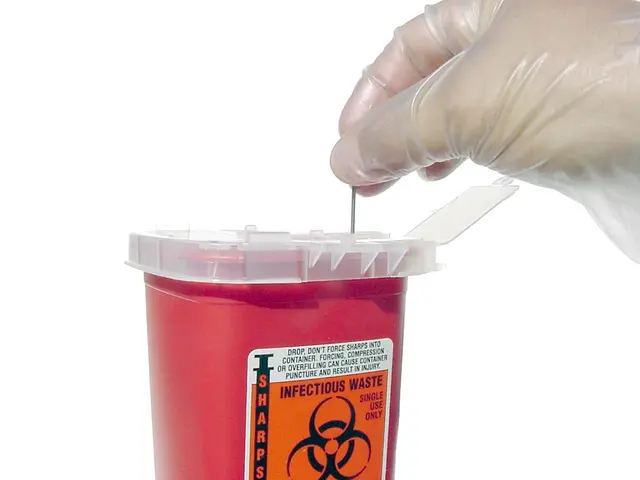
Razor blades are single use: open a new blade in front of the client, and after use drop it in a lidded sharps container (see Figure 1), never the ordinary bin, where it can cut whoever empties it. Clean and disinfect the blade holder after every client. The full shave routine (hot towel, lather, shaving order) is in how to give a straight razor shave.
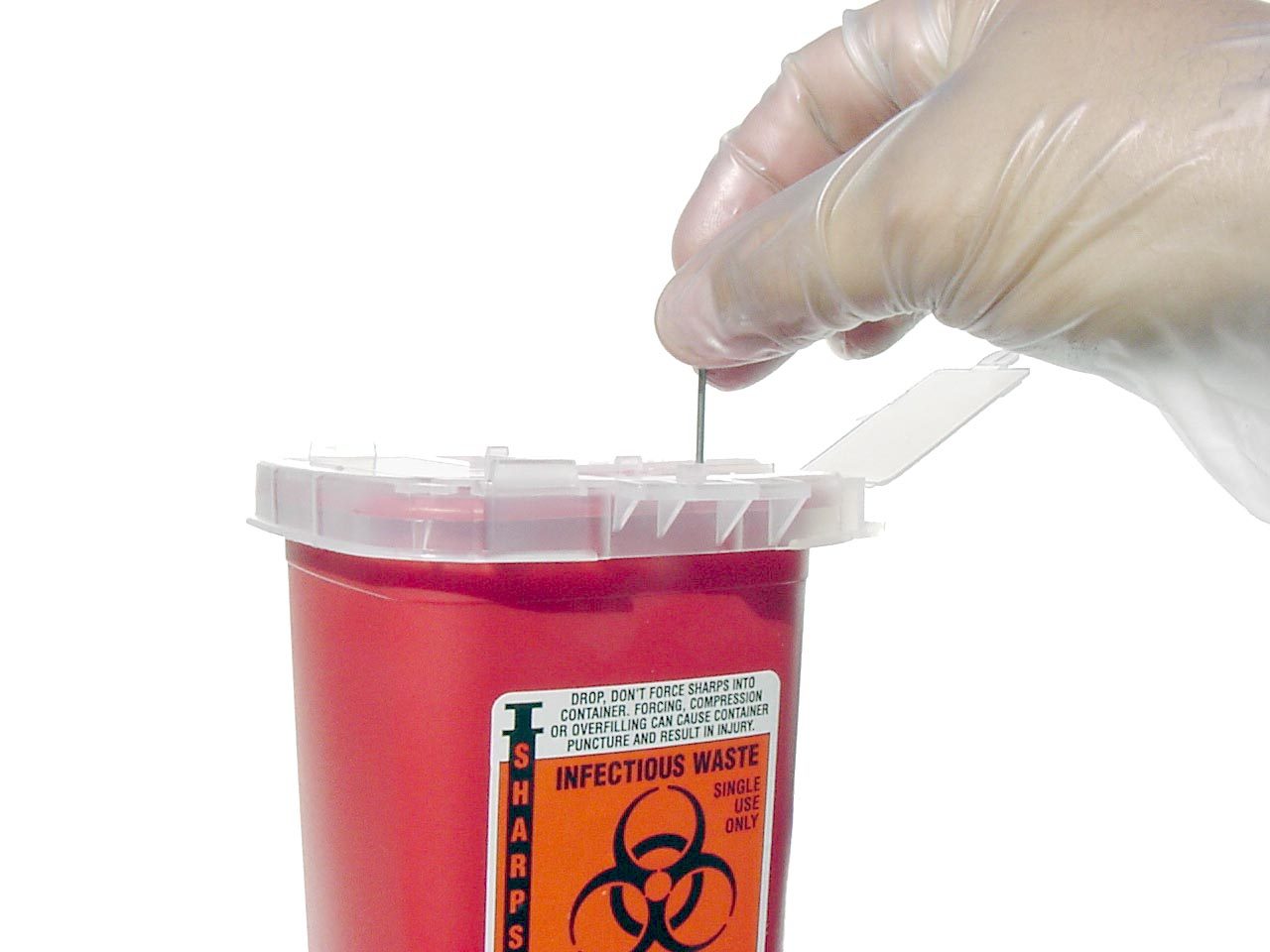
Photo: Photographed by William Rafti of the William Rafti Institute. / Wikimedia Commons, CC BY 2.5
Towels and capes
One clean towel per client. Used towels go into a lidded basket, are washed hot with detergent, then sun-dried or tumble-dried completely before folding. Keep clean towels on their own shelf, away from the wash basins and hair bin (see Figure 2). The cape never touches the client's neck directly: always wrap a neck strip or neck towel first, shake the cape out after every client and wash it daily.
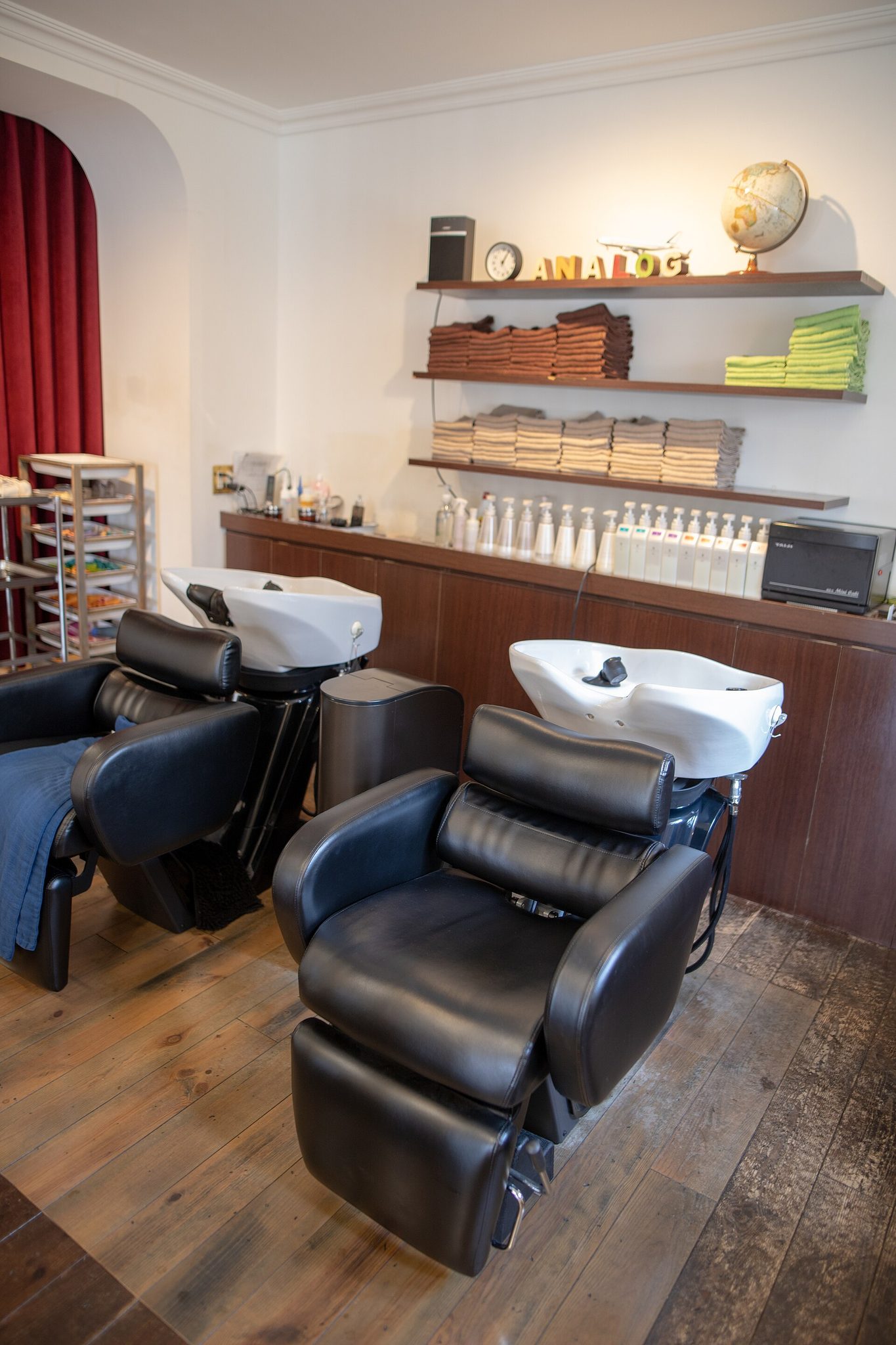
Photo: whity / Wikimedia Commons, CC BY 2.0
Client safety: check the scalp before cutting
Before you put the towel on, look over the scalp, neck and face for about 30 seconds. You do not diagnose disease, but you are responsible for not making the skin worse and not carrying it to another client.
What to do for each skin condition
| What you see | What to do | Why |
|---|---|---|
| Red, swollen spots or pus spots on the neck or chin | Do not shave that area; trim with a guarded clipper only, without pressing the blade | The blade breaks spots and spreads infection |
| Scaly patches, patchy hair loss, suspected fungus | Politely suggest postponing and seeing a dermatologist; if you still cut, use a separate tool set and disinfect thoroughly | Fungal spores cling to tools and reach the next client |
| Lice or nits in the hair | Postpone the service, telling the client privately and kindly | Spread by combs, towels and capes |
| Open wounds, stitches, peeling sunburn | Avoid the area or postpone until healed | Bleeding, stinging, infection |
| Raised moles, skin tags | Ask where they are, work around them, never shave over them | Easy to nick and bleed |
| Drunk client who cannot sit still | No razor work; rebook if very drunk | Sudden movement causes cuts |
How to tell the client without embarrassing them
Never say "you have fungus" or "your head is dirty". Say it privately: "This patch looks a bit red and flaky, and I don't want a close shave to irritate it. Today I'll keep it neat with a guard, and it might be worth having a dermatologist take a look." Clients are usually grateful that you noticed.
When to suggest seeing a doctor
Suggest a dermatologist when you see spreading bald patches, thick scaling, heavy itching, pus spots in several places, or a wound that will not heal. You only observe and suggest; you do not prescribe or apply medicine.
Handling small nicks and electrical safety
Even careful beginners can nick the skin when shaving the neckline, trimming sideburns or using a trimmer close to the skin. What matters is staying calm, keeping it clean and making sure no blood reaches another client.
Safety warning: Blood can carry bloodborne infections. When a client bleeds, put on disposable gloves before touching the cut, press with clean single-use gauze, and never share an alum block or styptic towel between clients. Tools with blood on them must be cleaned and disinfected before reuse; a blade with blood goes straight into the sharps container. If you cut yourself, wash the wound under running water with soap, cover it, and see a health worker if the cut is deep or involved someone else's blood. Never use a clipper with a cracked cord, never charge from a wet socket near the wash basin, and never hold the machine with wet hands.
Five steps for a small nick
- Stop, tell the client calmly, do not hide it.
- Put on gloves and press clean gauze on the cut for a few minutes until the bleeding stops.
- Use a single-use styptic product if the shop has one, following the pack instructions.
- Bag gauze and gloves with blood separately and tie the bag; disinfect the tools you just used.
- Record it in the shop incident log: where, which tool and why, so you learn from it.
When the client needs medical care
A deep cut, bleeding that has not stopped after about 10 minutes of steady pressure, or a client who feels faint, has trouble breathing or develops a spreading rash after a product: stop the service and take the client to the nearest clinic or call 115, Vietnam's emergency number.
Setting up clean and dirty zones at the chair
The fastest way to stay hygienic when busy is to arrange your station so clean and dirty tools never meet.
Three zones on the counter
- Clean zone: a tray or drawer of disinfected combs, scissors and guards, opened only when a new client sits down.
- In-use zone: the tools for the current client.
- Dirty zone: a lidded tray or box for used tools waiting to be cleaned; a lidded basket for dirty towels; a lidded bin.
Hand washing
Wash your hands with soap or use hand sanitiser before every client, after touching problem skin, after emptying bins and after using the toilet. A client who sees you wash your hands before touching them trusts you more than any advertising could achieve.

Photo: m-louis .® from Osaka, Japan / Wikimedia Commons, CC BY-SA 2.0
Worked example: hygiene cost for one chair at 20 clients a day
Tuan runs a one-chair barbershop in a residential area, averaging 20 clients a day, 8 of whom get a razor neckline or face shave. He wants to know the daily money and time spent on hygiene so he can build it into his prices. The unit prices are 2026 reference figures and vary by area and supplier.
One day of supplies
| Item | Quantity × unit price | Total |
|---|---|---|
| Neck strips | 20 wraps × 200 VND | 4,000 VND |
| Razor blades (snapped in half, one half per client) | 4 blades × 1,500 VND | 6,000 VND |
| Disposable gloves for shave clients | 8 pairs × 1,000 VND | 8,000 VND |
| Disinfectant spray for blades and scissors | 20 uses × 300 VND | 6,000 VND |
| Comb soak solution (changed once a day) | 1 jar × 10,000 VND | 10,000 VND |
| Towel washing and drying | 20 towels × 1,000 VND | 20,000 VND |
| Blade oil | 1 day × 2,000 VND | 2,000 VND |
| Total per day | 56,000 VND | |
Reading the result
- Check the sum: 4,000 + 6,000 + 8,000 + 6,000 + 10,000 + 20,000 + 2,000 = 56,000 VND (about US$2.20).
- Per client: 56,000 ÷ 20 = 2,800 VND. Against a reference haircut price of 60,000–150,000 VND (by area and shop), hygiene is only about 2–5% of the price.
- A 26-day month: 56,000 × 26 = 1,456,000 VND.
- Time: level 1 about 3 minutes × 20 clients = 60 minutes, level 2 about 15 minutes × 2 machines (clipper and trimmer) = 30 minutes, 90 minutes a day in total.
Tuan's conclusion: skimping on hygiene supplies saves a few hundred dong per client but can cost him his regulars.
Common hygiene mistakes
Spraying disinfectant on a blade still full of hair
Sign: hair and dirty oil still on the blade after spraying. Cause: skipping the brush to save time. Fix: always brush the blade first, spray second, and wait the full contact time on the label instead of wiping straight away.
Hot, screeching clippers that pull hair
Sign: clients complain of pulling, the machine gets hot after a few clients. Cause: no oil, hair jammed in the blade housing, a dull blade. Fix: oil after every disinfection, do level 2 every evening, replace the blade when the teeth are worn.
Reusing a razor blade "because it is still sharp"
Sign: one blade for several clients in a day. Cause: saving a few thousand dong. Fix: a new blade for every client, opened in front of them; this rule has no exceptions.
Opening, between-client and closing checklist
Print this and stick it next to the mirror. After 2–3 weeks of doing it every day it becomes a reflex.
Opening
- Mix a fresh comb soak and write the time on the jar.
- Check clippers: clean, oiled blade, full battery, no cracked cord.
- Enough new blades, neck strips, gloves, gauze; sharps container not full.
- Clean, dry towels on the shelf; dirty towel basket empty.
Between clients
- Wash hands; sweep hair; shake the cape; new neck strip.
- Clipper level 1; used combs to the dirty zone, clean combs out; wipe scissors.
- Look at the new client's scalp, neck and face before starting.
Closing
- Clipper and trimmer level 2; combs and scissors disinfected and drying.
- Empty and wash the soak jar; dirty towels to the wash; wipe chair, mirror and floor.
- Log any incidents; every Monday add level 3.
Frequently asked questions
Can I clean clippers with alcohol?
70% alcohol is commonly used to wipe clean metal blades, but it strips oil, so oil the blade again afterwards. Disinfectants made for barbering tools often include lubricant and rust protection. Whatever you use, brush the hair out first and follow the label.
How often should I replace a clipper blade?
There is no fixed number; it depends on client volume and maintenance. Replace it when teeth are chipped or broken, when it still pulls after cleaning and oiling, or when it rusts.
What is the right way to clean a barber's razor?
A new blade for every client, disposed of in a sharps container; the blade holder is cleaned, disinfected and dried after every client. Fixed-blade straight razors are hard to disinfect safely between clients, so many shops use only replaceable-blade razors for services.
Do I need a hygiene permit to open a barbershop?
Business registration and hygiene requirements can vary by business type and locality in Vietnam. Ask the business registration office and the local health authority where you plan to open for the current requirements, rather than relying on word of mouth.
Practice tasks and self-assessment
- Time yourself doing level 1 clipper cleaning five times in a row; record each time.
- Remove a clipper blade (with a senior barber supervising), clean it at level 2, refit it and test it.
- Arrange your station into clean, in-use and dirty zones; take a photo and ask a senior barber for feedback.
Self-assessment criteria
- Pass: level 1 done within 3 minutes with every step: brush, disinfect for the full time, oil.
- Pass: after level 2, the clipper runs smoothly, the housing is free of hair and the blade is correctly seated.
- Pass: dirty and clean combs never share a tray.
- Not yet: reusing a razor blade, spraying disinfectant on a hairy blade, or skipping the scalp check.
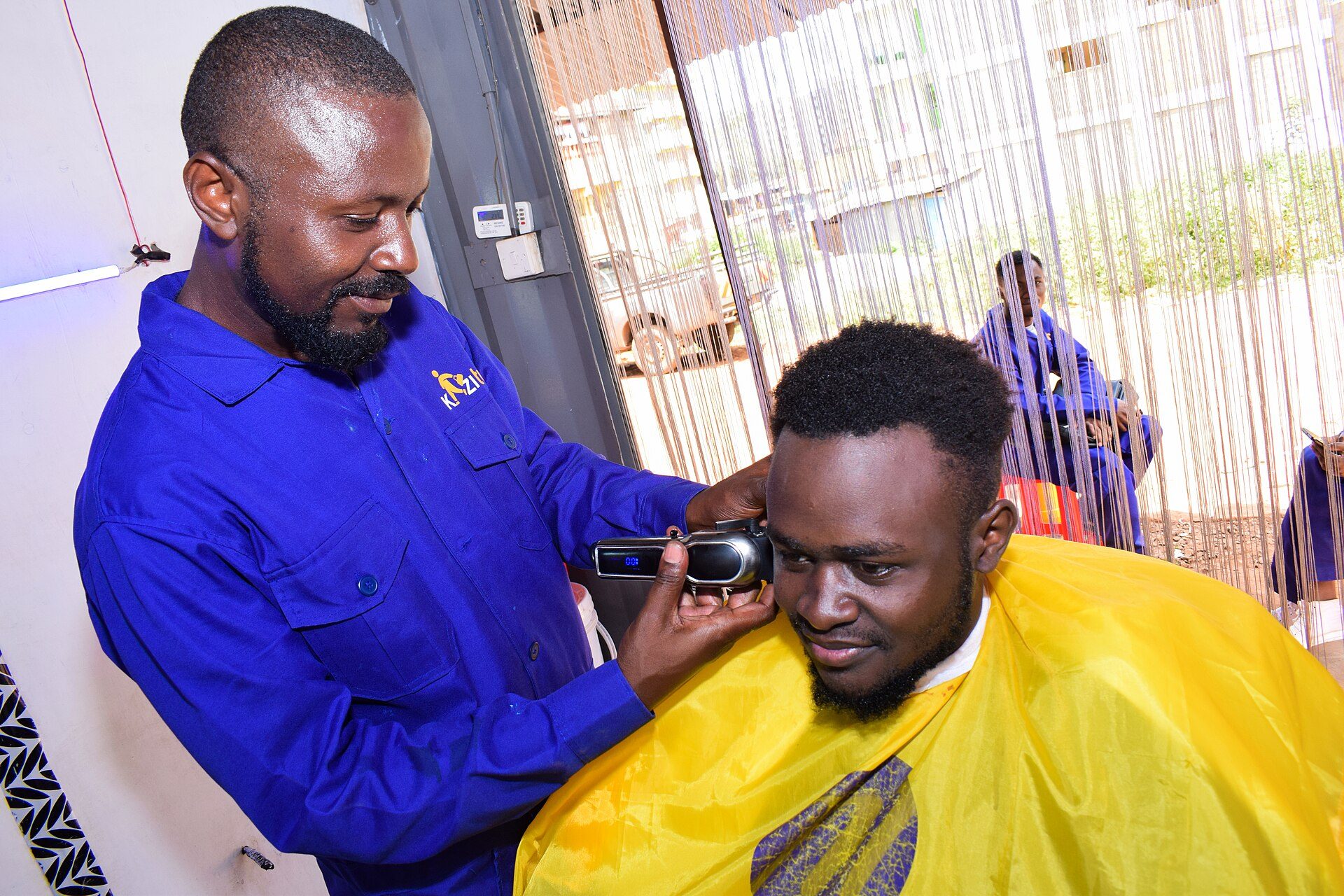
Photo: Lebu Ayiga / Wikimedia Commons, CC BY-SA 4.0
Once your tools are clean and you can read a client's scalp, move on to the next roadmap step: Head shape, face & style advice, where you learn to read head shape, crowns and face shape to suggest a style that suits each client.
Keep learning barbering: after hygiene and safety come head shapes, scissor-over-comb, clipper fades, popular men's styles, shaves and opening your own shop. See the 8-step barber roadmap.