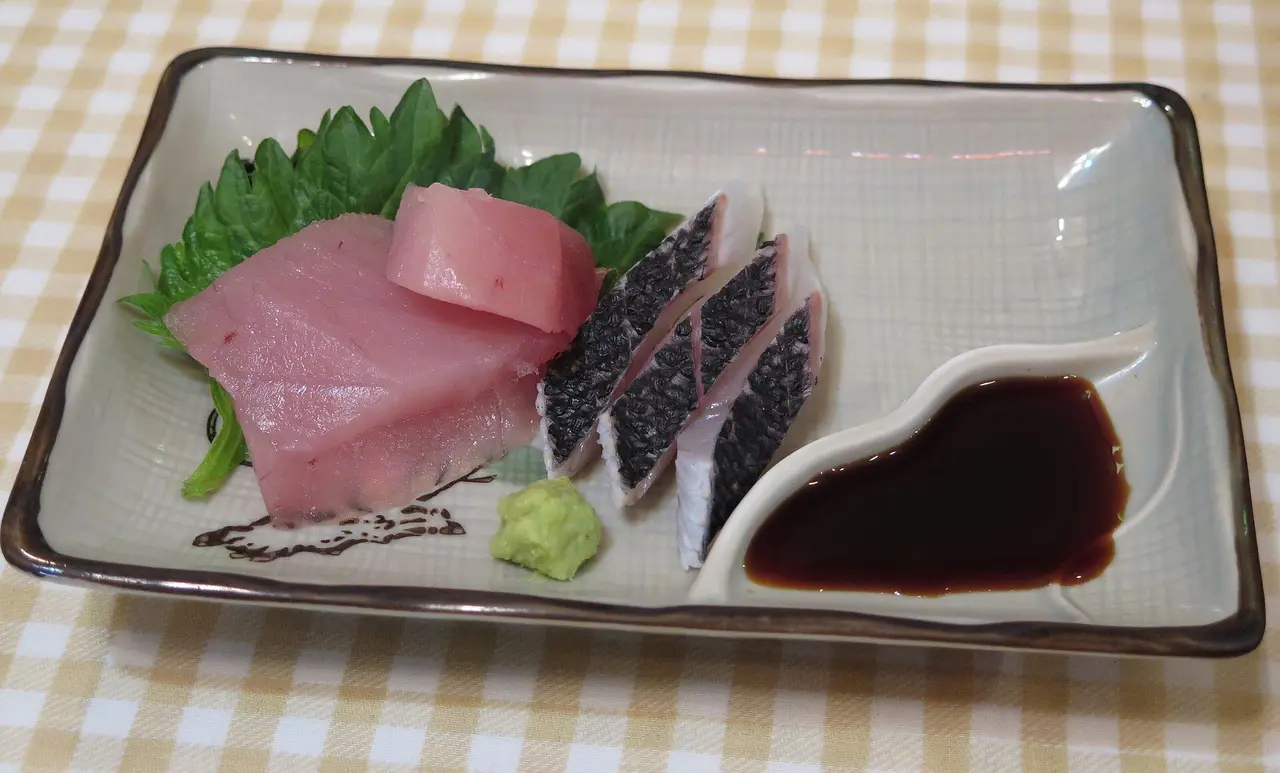
Safe sashimi fish is sea fish from a supplier with clear paperwork, frozen cold enough and long enough to kill parasites (many international codes use -20°C for 7 days, or -35°C for a shorter time), thawed in the fridge and held at 0–4°C without a break until it is sliced, on a board and knife used only for raw food. Nothing in the kitchen, not wasabi, vinegar or lime, replaces choosing the right fish and keeping it at the right temperature. This is the first lesson of the Asian cuisine roadmap, because a single case of food poisoning or an allergic shock can close a whole restaurant.
By the end of this lesson, you will be able to:
- Check a fish delivery: paperwork, temperature, eyes, gills, smell and firmness, and decide whether to accept or reject it.
- Explain why fish eaten raw must be frozen to kill parasites, and why a domestic freezer is usually not enough.
- Thaw and hold fish at 0–4°C, log fridge temperatures every shift, and keep separate boards and knives for raw food.
- Ask about and handle allergies to seafood, peanuts, sesame, soy and wheat in Asian dishes.
- Work out how many sashimi portions a fish loin yields and the cost per portion, with figures that add up.
Starting out in Chinese, Japanese or Korean cooking? Food safety and raw seafood are step 1 of the 8-step roadmap, before Asian knives, wok cooking, dim sum, sushi and Korean dishes. See the 8-step Asian cuisine cook roadmap to learn in the right order.
Why is raw seafood the riskiest dish in an Asian kitchen?
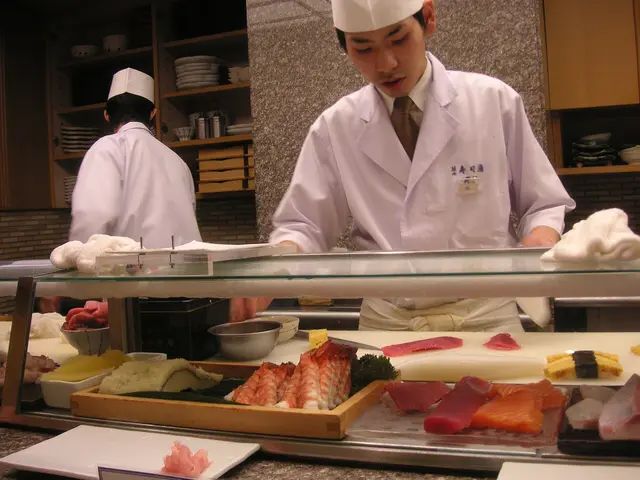
Cooked food has a "safety net": high enough heat kills most bacteria and parasites. Sashimi, nigiri, raw fish salads, raw oysters and Korean soy-marinated raw prawns have no such net. Whatever is in the fish goes straight into the guest (Figure 1).
Three main hazards
- Parasites: sea fish can carry Anisakis roundworm larvae, causing severe stomach pain and vomiting; freshwater fish can carry liver flukes and other flukes.
- Bacteria: multiply fast when fish is warm; raw oysters and clams can carry Vibrio bacteria, especially dangerous for people with liver disease or weak immunity.
- Histamine (scombroid poisoning): tuna, mackerel and scad left warm produce histamine, causing a flushed face, itching and headaches. Histamine is not destroyed by freezing or cooking; only unbroken cold holding prevents it.
Never serve freshwater fish raw
Raw fish salads made with grass carp, common carp or silver carp are a well-known source of liver flukes in Vietnam. In professional Japanese and Korean kitchens, raw fish means sea fish or farmed salmon from controlled supply chains. Freshwater fish is always cooked.
Wasabi, vinegar and lime do not "sterilise" fish
Many people believe a dab of wasabi or a squeeze of lime kills bacteria and parasites. It does not: the amount and contact time are far too small. The vinegar in sushi rice slows bacteria in the rice (see how to make sushi rice and store it safely); it does not clean the fish on top.
Choosing sashimi-grade fish: paperwork first, then your eyes
"Sashimi grade" or "sushi grade" is a trade term, not a single standard certification. Suppliers use it to say the fish was selected and handled for eating raw. You still have to check the paperwork and the fish.
Documents to ask the supplier for
- Species, origin, wild-caught or farmed.
- Whether the fish was frozen to kill parasites: temperature, duration, freezing date (or the basis for any exemption the supplier claims).
- Processing date, use-by date and storage conditions.
- Invoice and traceability documents, kept per batch.
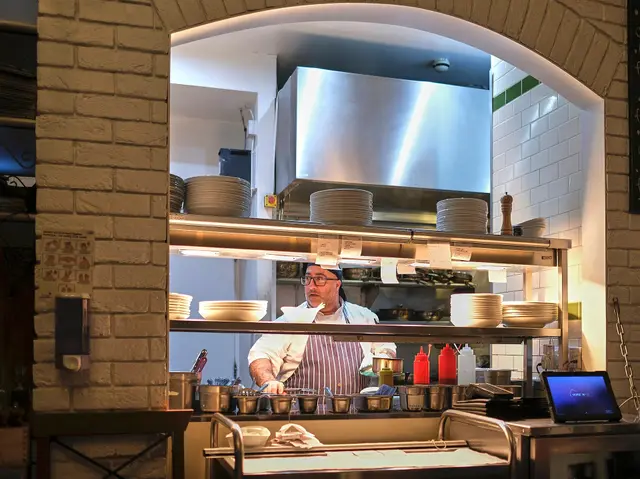
Ocean tuna is often deep-frozen right after catch and auctioned frozen solid (Figure 2). Some tuna species and farmed salmon raised on compound feed may be exempt from freezing under certain foreign codes, but as a beginner, treat all raw fish as needing a freezing confirmation unless the head chef has an approved procedure of their own.
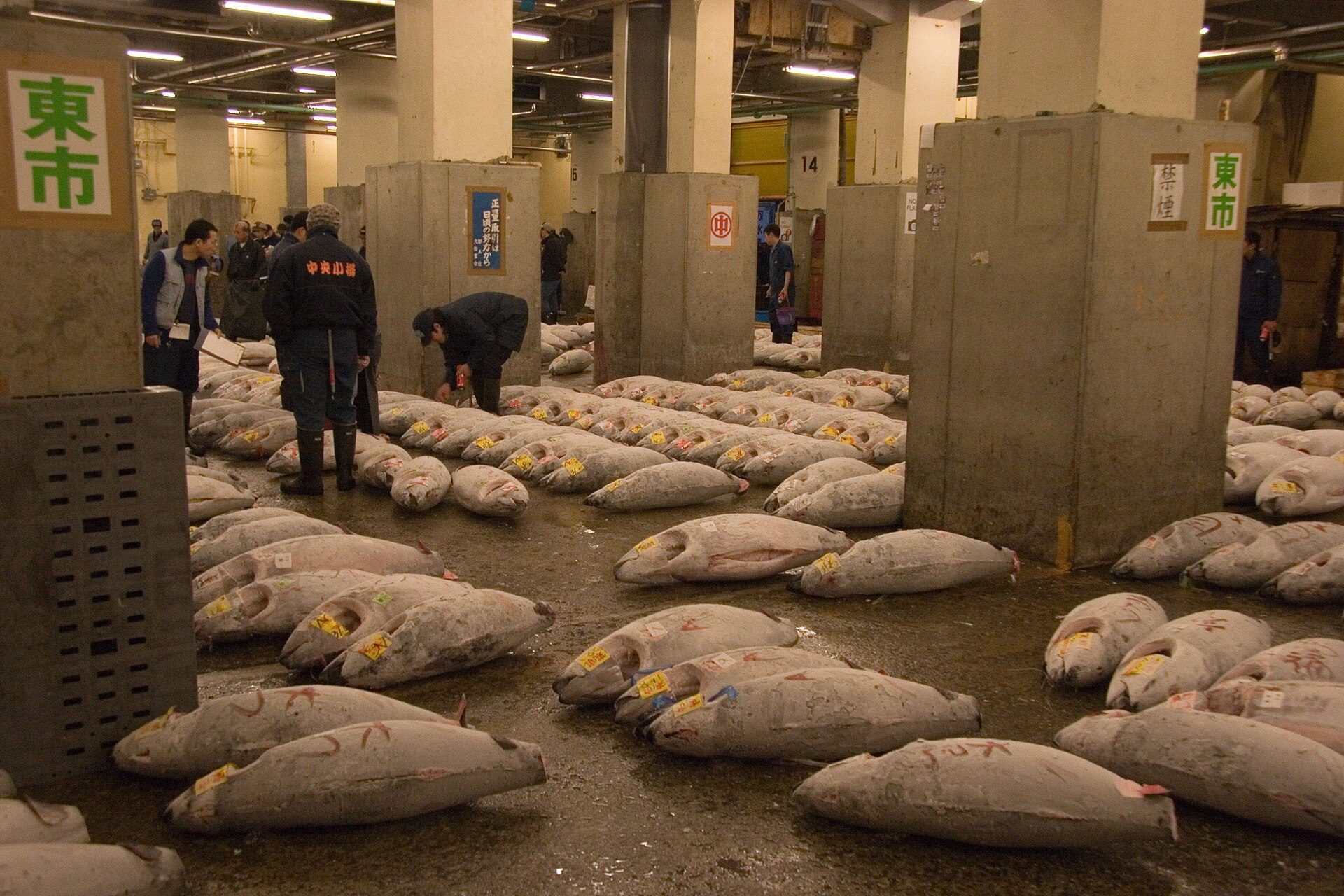
Photo: KimonBerlin / Wikimedia Commons, CC BY-SA 2.0
Checking freshness with your senses
| Part | Acceptable | Reject |
|---|---|---|
| Eyes (whole fish) | Clear, bulging, bright | Cloudy, sunken, filmy |
| Gills | Bright red, moist | Brown, grey, slimy, smelly |
| Flesh, loin | Glossy, firm, springs back when pressed | Soft, keeps the dent, gaping, weeping |
| Smell | Mild sea smell | Strong fishy, ammonia or sour |
| Temperature on arrival | Fresh fish 0–4°C; frozen fish hard, about -18°C or colder | Fresh fish above 5°C; frozen fish soft, signs of thawing and refreezing |
| Packaging | Sealed, clearly labelled, no thick ice build-up | Torn, swollen, lots of ice crystals (a sign of refreezing) |
When to send it back
One "reject" item is enough to send the fish back; record it in the receiving log with the measured temperature and tell the head chef. Never accept it "to cook later": fish that has built up histamine still causes poisoning when cooked.
Freezing to kill parasites: the numbers to remember
Freezing cold enough for long enough kills parasite larvae. This is a technical step, not "putting it in the freezer to be safe".
Commonly used benchmarks
| Method | Temperature | Minimum time (reference) | Notes |
|---|---|---|---|
| Deep freezer | -20°C or colder | 7 days (total time at that temperature) | Benchmark from the US FDA Food Code |
| Blast freeze then hold | -35°C until solid, held at -35°C | 15 hours | Needs blast-freezing equipment |
| Blast freeze then hold | -35°C until solid, held at -20°C | 24 hours | Needs blast-freezing equipment |
These figures are references from widely used foreign codes. In Vietnam, follow the current rules of the food safety authorities and your restaurant's food safety plan; if unsure, ask the head chef or the local authority.
Why an ordinary freezer is usually not enough
Domestic freezers and many counter freezers only reach about -18°C, and get warmer with frequent opening. A thick block of fish freezes slowly from the outside in. So a small sushi counter should buy fish already frozen to the right procedure by the supplier, with written confirmation, rather than freezing fresh fish itself.
Thawing correctly
- Move the fish, still in its vacuum bag, from the freezer to a 0–4°C fridge, on a tray with a rack so meltwater drains away.
- It usually takes from a few hours to overnight depending on thickness; plan a day ahead.
- If you are in a hurry, submerge the sealed bag in cold water and change the water often; never use warm water or leave it at room temperature.
- Never refreeze thawed fish for serving raw.
Holding below 4°C: the cold chain at the sushi counter
Bacteria multiply fastest in the "danger zone", commonly given as about 5–60°C. Raw fish must stay below 4°C at every stage except the few minutes while you slice and shape it.
Fridges and display cases
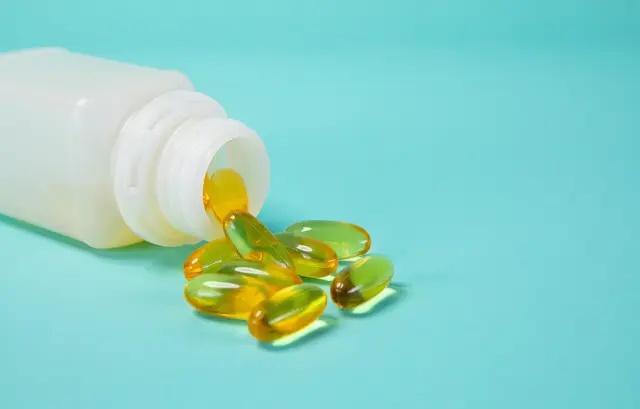
- Set the fish fridge to 0–4°C and keep a separate thermometer inside (Figure 3); do not rely only on the display on the door.
- Lay fish on flake ice in a container with drainage holes, cover with wrap, and never let it sit in meltwater.
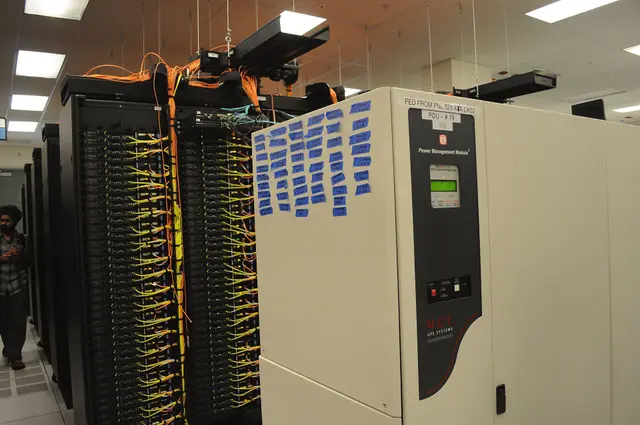
- The counter display case (Figure 4) only holds what you will use in a few hours; it is not storage.
- Raw food goes on lower shelves, cooked and ready-to-eat food above, so drips from raw fish cannot fall onto them.
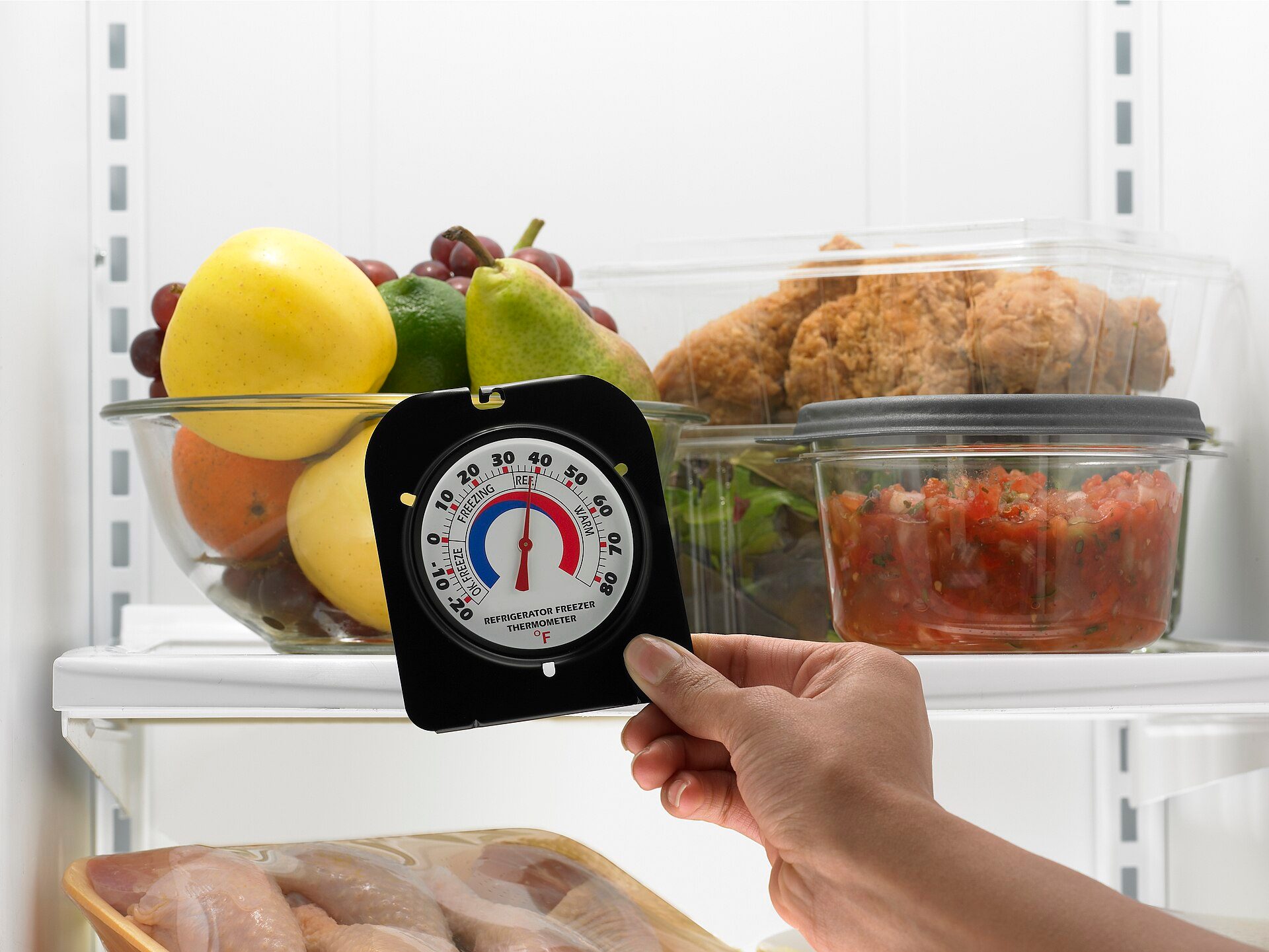
Photo: USDAgov / Wikimedia Commons, Public domain
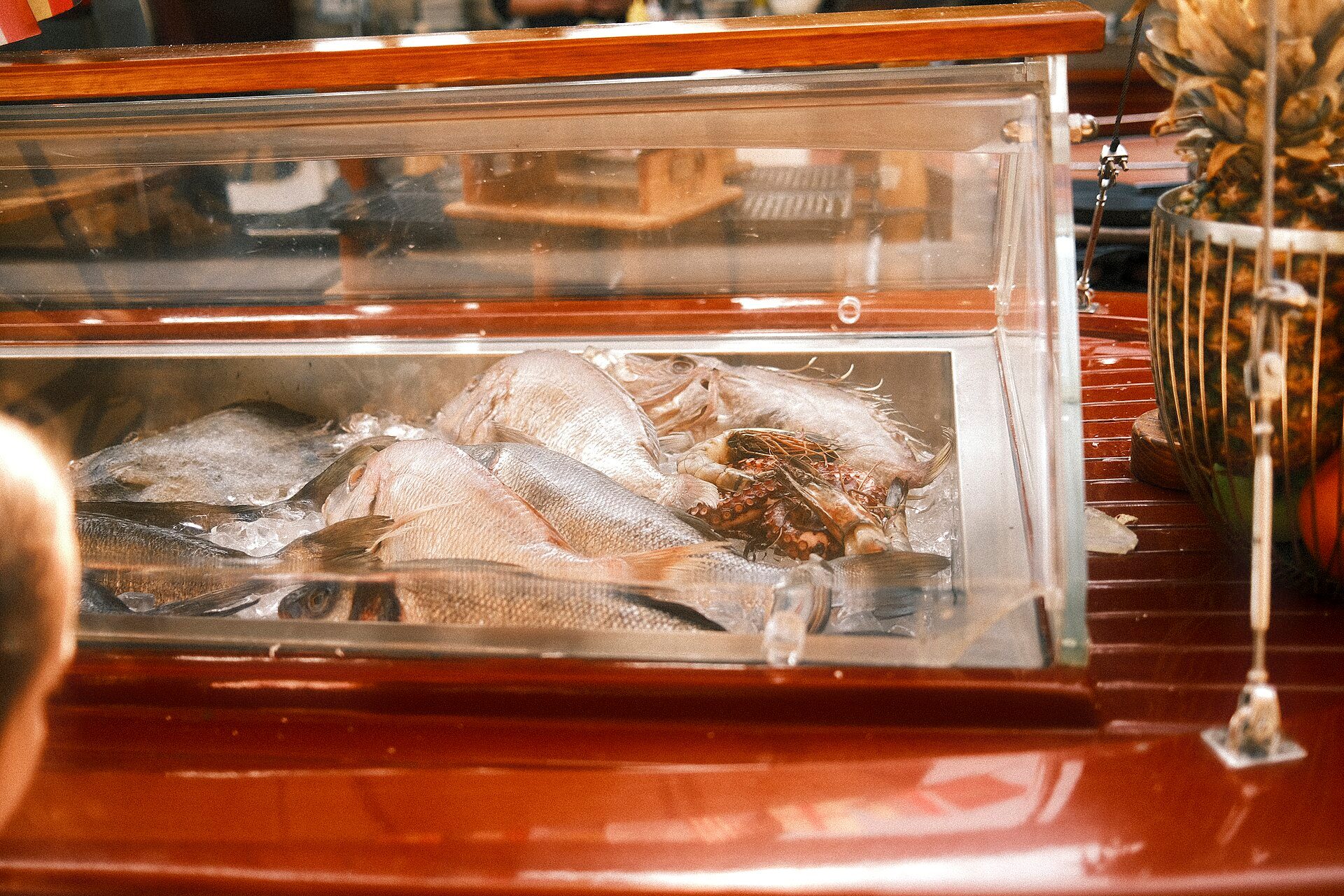
Photo: Shixart1985 / Wikimedia Commons, CC BY 2.0
A temperature log every shift
Record each fridge at the start, middle and end of the shift, signed by whoever checks. If a fridge goes above 5°C, move the fish to another unit, tell the head chef and assess how long the batch was at that temperature. The log is your evidence when inspectors visit, and the tool that warns you a fridge is about to fail.
Time out of the fridge
Take out only what you will slice for one round of orders. Sliced fish not yet used is wrapped and returned to the fridge at once. During a rush, "leaving some out to be quick" is the most common mistake.
Separate boards and knives, and hand hygiene
Cross-contamination is when bacteria from raw food, hands or dirty tools reach ready-to-eat food. With sashimi, the fish itself is the ready-to-eat food, so it must be protected from everything else.
Zoning and colour coding
- Use a board and knife only for raw fish, never for raw meat, unwashed vegetables or other cooked food. Many kitchens use a blue board for seafood (Figure 5); follow your kitchen's colour code.
- A separate knife cloth, changed often; never wipe a sashimi knife on the towel at your waist.
- At the end of the shift, wash boards and knives with hot water and detergent, sanitise them as your kitchen specifies and let them dry.
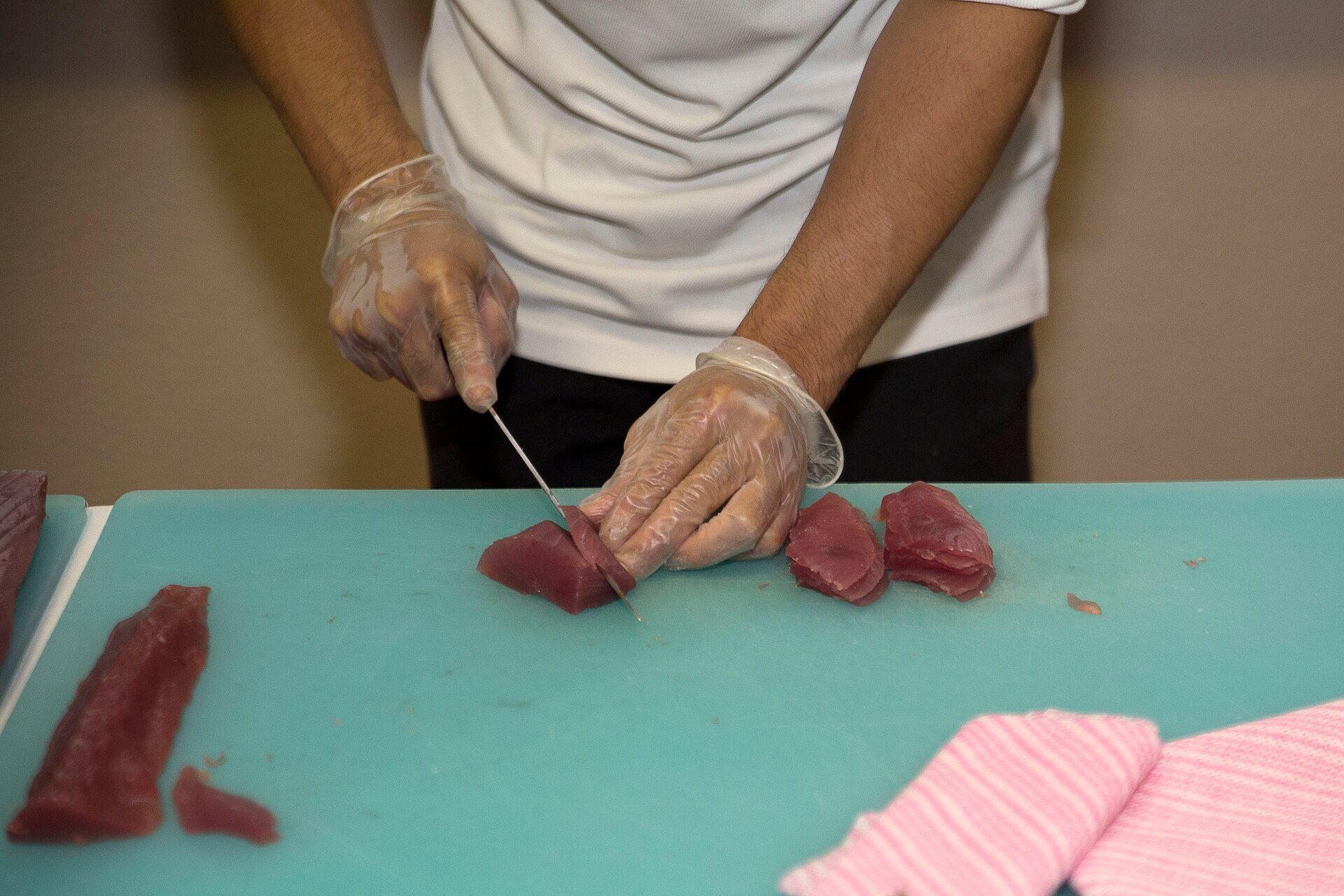
Photo: Cpl. Jessica Collins / Wikimedia Commons, Public domain
Hands, gloves and staff health
Wash hands with soap for at least 20 seconds before the shift and after using the toilet, touching a phone, money, rubbish or other raw food. Disposable gloves must be changed when torn or when switching tasks; dirty gloves are worse than clean hands. Anyone with diarrhoea, vomiting, fever or an open wound on the hands must not prepare raw dishes; tell the manager and switch tasks.
Safety warning: A sashimi knife (yanagiba) is very sharp and long: always lay it parallel to the board edge with the blade facing inward, never leave it in a sink full of water, and never try to catch a falling knife. A guest with swelling of the lips, tongue or throat, difficulty breathing or a rash all over after eating may be in anaphylactic shock: call emergency services (115 in Vietnam) at once and do not let them leave alone. A guest with severe stomach pain or vomiting after raw food needs medical attention; record the dish, fish batch and serving time and report to the manager.
Food allergies in Asian dishes: seafood, peanuts, sesame
Asian cooking uses many common allergens, and many are hidden in sauces. One drop of the wrong sauce can trigger a severe reaction.
Common allergens in Chinese, Japanese and Korean kitchens
| Group | Hidden in | Notes |
|---|---|---|
| Fish | Dashi (bonito flakes, katsuobushi), fish sauce, fish-based sauces | A guest allergic to fish may not react to shellfish, but always ask |
| Crustaceans, molluscs | Oyster sauce, dried shrimp, XO sauce, kimchi with shrimp paste or oyster | Oyster sauce is made from oysters |
| Peanuts | Satay sauce, dipping sauces, peanut oil, Sichuan dishes | Shared frying oil spreads it |
| Sesame | Sesame oil, roasted sesame sauce, toppings on Korean rice, kimbap | Very common in Korean and Japanese food |
| Soy, wheat | Soy sauce (often contains wheat), miso, bean pastes, tempura batter | Guests avoiding gluten need a suitable soy sauce |
| Egg | Tamagoyaki rolled omelette, Japanese mayonnaise | Check rolls with sauce |
What to do when a guest reports an allergy
- The server writes it clearly on the order ticket and tells the kitchen in person, not just with an abbreviation.
- The kitchen checks the recipe and the label of every sauce, and says honestly if it cannot guarantee the dish.
- The dish is made with a clean, separate board, knife, pan and oil, after washing hands and changing gloves.
- It is carried out by the person who took the information, who confirms with the guest again.
Worked example: receiving and portioning a 6 kg salmon loin
A small sushi counter receives a morning box of fresh salmon loins weighing 6 kg (with the supplier's parasite-freezing confirmation) and a 2 kg bag of fresh tiger prawns.
Checks on arrival
- Salmon: core 2°C, glossy orange flesh, springs back, mild smell, clear label: accept.
- Prawns: 9°C, all the ice in the box has melted: reject, log "prawns 2 kg, 9°C, ice melted, returned at 7:40".
Working out sashimi portions
- After skinning and removing the belly and tail for cooked dishes, assume a 75% sashimi yield: 6 x 0.75 = 4.5 kg.
- About 15 g per slice: 4,500 / 15 = 300 slices.
- 5 slices per sashimi portion: 300 / 5 = 60 portions.
Reference cost (2026, varies by region and supplier)
| Item | Calculation | Result |
|---|---|---|
| Fish cost | 6 kg x 450,000 VND | 2,700,000 VND |
| Sashimi portions | 6 x 0.75 x 1,000 / 15 / 5 | 60 portions |
| Fish cost per portion (sashimi only) | 2,700,000 / 60 | 45,000 VND |
Check: 60 portions x 45,000 = 2,700,000 VND (about 105 USD), matching the fish cost. The belly and tail (1.5 kg) go into cooked dishes, so the real sashimi cost is lower; 45,000 VND per portion is a safe figure for pricing. The fish is split into 3 boxes by shift, 20 portions each, and only one box at a time goes to the counter; each box is labelled with its opening time and used the same day.
Common mistakes and how to fix them
Buying fresh fish at the market for sashimi
Symptom: fish that looks "sparkling fresh" but has no freezing paperwork or clear species. Cause: saving money, trusting your eyes. Fix: use market fish only for cooked dishes; buy fish for raw service from suppliers with paperwork.
Thawing at room temperature to be ready for opening
Symptom: a loin left on the bench since morning. Cause: no planning. Fix: schedule fridge thawing the night before and write it on the prep board.
One board for everything
Symptom: slicing raw beef for bulgogi, a quick wipe, then cutting sashimi. Fix: separate boards and knives for raw fish, kept in their own area.
No fridge temperature log
Symptom: a fridge fails overnight and in the morning nobody knows how long the fish was warm. Fix: log temperatures three times a shift; a batch with an unknown temperature history is not used raw.
Frequently asked questions
What does sashimi-grade fish mean?
It is a trade term for fish selected and handled for eating raw, not a single standard certification. You still need to ask for freezing and origin paperwork and check temperature and freshness on arrival.
How long must fish be frozen to kill parasites?
Common foreign benchmarks are -20°C or colder for 7 days, or blast freezing at -35°C until solid and holding for 15 to 24 hours depending on the holding temperature. A typical -18°C freezer cannot guarantee this.
Is raw salmon safe to eat?
It is safer when it comes from a supplier with clear farming, freezing or parasite controls and is held at 0–4°C without a break. Salmon of unknown origin, or left warm, is not.
How long can sashimi fish stay in the fridge?
It depends on the species, packaging and supplier's instructions; many kitchens use thawed fish the same day or within a very short window. Record the thawing date and time, follow the head chef's rules and throw it out when in doubt.
Why ask guests about peanut and sesame allergies in Japanese and Korean food?
Because sesame, sesame oil, peanuts, wheat-containing soy sauce and fish-based dashi are hidden in many sauces, rolls and side dishes. A guest with a severe allergy can react to a tiny amount.
Practice exercises and self-assessment
- Draft a receiving log with: date and time, supplier, item, measured temperature, sensory check, accept or reject, signature.
- Set up a fridge log three times a shift and fill it in for 7 days at your workplace or at home.
- List the allergens in 5 Asian dishes you cook often, including those in each sauce.
- Redo the example with an 8 kg loin, 70% yield, 16 g slices and 5 slices per portion.
Self-assessment criteria
- Pass: you can state the freezing benchmarks and why a -18°C freezer is not enough, and explain the limits of wasabi and vinegar.
- Pass: your temperature log covers 7 days with no gaps, and you know what to do if a fridge goes above 5°C.
- Pass: your exercise figures add up: 8 x 0.70 = 5.6 kg; 5,600 / 16 = 350 slices; 350 / 5 = 70 portions.
- Not yet: you use fish without paperwork for raw dishes, thaw at room temperature, or share boards.
Once raw seafood safety is second nature, move on to the next step of the roadmap: Asian knives, ingredients & core seasonings, where you learn to use a Chinese cleaver and a yanagiba, make dashi and Chinese bone stock, and store soy sauce, miso and gochujang.
Keep learning Asian cooking: after food safety come knives and core seasonings, wok cooking, dim sum, sushi and sashimi, kimchi and Korean BBQ, and a 30-serving counter project. See the 8-step Asian cuisine cook roadmap.