In Vietnam, a smart home installation costs roughly 8–20 million VND (about 320–800 USD) for a basic apartment package using Wi-Fi devices, 25–50 million VND for a two- or three-bedroom apartment on Zigbee with a hub, and 60–150 million VND for a three- or four-storey townhouse (2026 reference prices; they vary by region, brand and number of devices). Most of the money goes on devices such as switches, curtains and locks; installation and setup labour is usually only about 10–20%. This lesson helps new installers understand where each cost comes from, why Zigbee costs more than Wi-Fi up front, and how to write a quote a homeowner can read and understand.
By the end of this lesson, you will be able to:
- Name the device groups in a smart home package and the reference price range for each.
- Explain to a customer the cost difference between a Wi-Fi system and a Zigbee system, and when the extra is worth paying.
- Build a line-by-line estimate for a two-bedroom apartment in which every multiplication and total adds up.
- Survey the four points that prevent surprise costs before quoting: neutral wires, Wi-Fi signal, doors and curtains.
Want to take on smart home installations? Package pricing and finding clients is the final step of the roadmap, after electrical safety, connection protocols, installing switches, curtains, locks and sensors, and a practice apartment fit-out. See the 8-step smart home installer roadmap to know what to learn first and what comes next.
What is in a smart home package?
A "smart home" is not a single product with a fixed price. It is the sum of many devices connected to one phone app, plus installation labour and the work of setting up automations. When a customer asks "how much?", the installer has to ask back "what do you want to control?".
Four main device groups
- Lighting and sockets: touch switches that replace mechanical switches, smart plugs, smart bulbs.
- Curtains and doors: curtain motors with tracks, fingerprint and keypad locks, gate motors.
- Sensors and security: door, motion, smoke and water-leak sensors; sirens.
- Air conditioner and TV control: infrared (IR) blasters that learn commands from the old remotes.
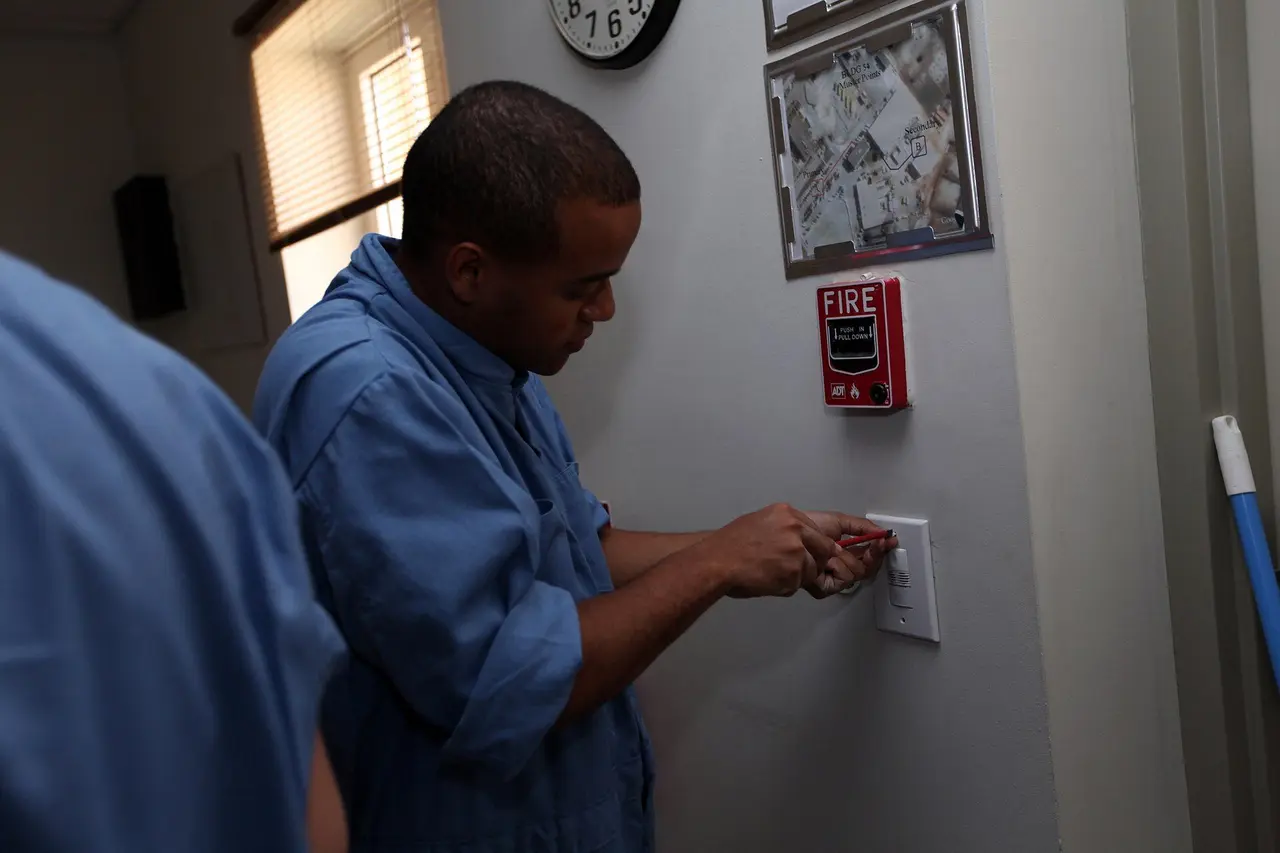
Figure 1 shows an electrician finishing the installation of a motion-sensor light switch — the kind of job that takes the most labour hours in a smart home project.
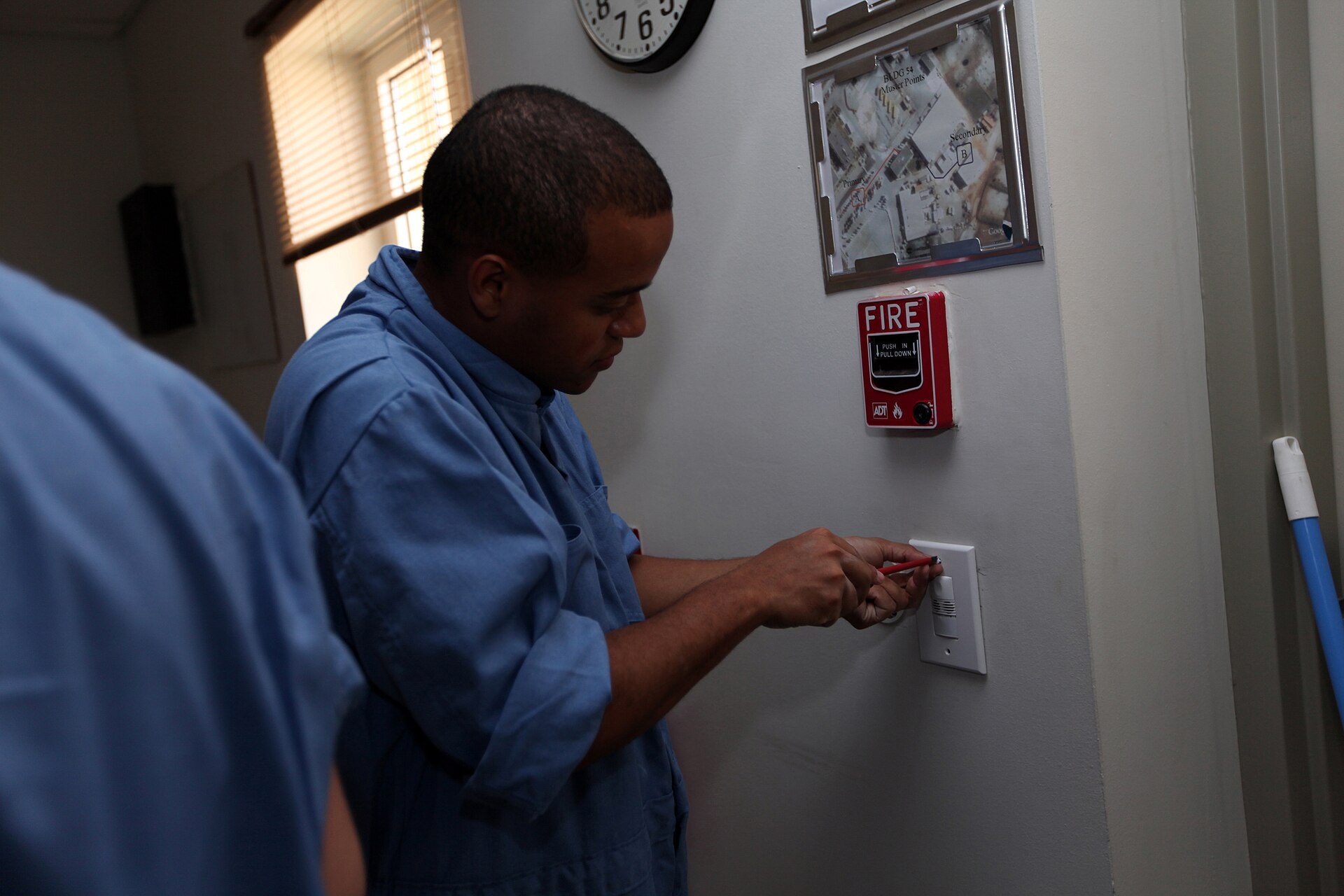
Photo: Sgt. Amber Blanchard / Wikimedia Commons, Public domain
Hubs, gateways and apps
Wi-Fi devices connect directly to the home router. Zigbee or BLE Mesh devices need a central unit (a hub or gateway) to talk to the router. The ecosystem app (Tuya, Lumi, Xiaomi, Aqara and others common in Vietnam) is where the household switches things on and off and runs automations; some systems also support Apple Home, Google Home or the Matter standard.
Plug-and-play devices versus wired devices
Smart plugs (Figure 2), bulbs and IR blasters simply plug in and work, with almost no labour. Switches, curtains, locks and gate motors have to be wired or drilled and need a skilled installer. Packages with many plug-and-play devices have low labour costs.
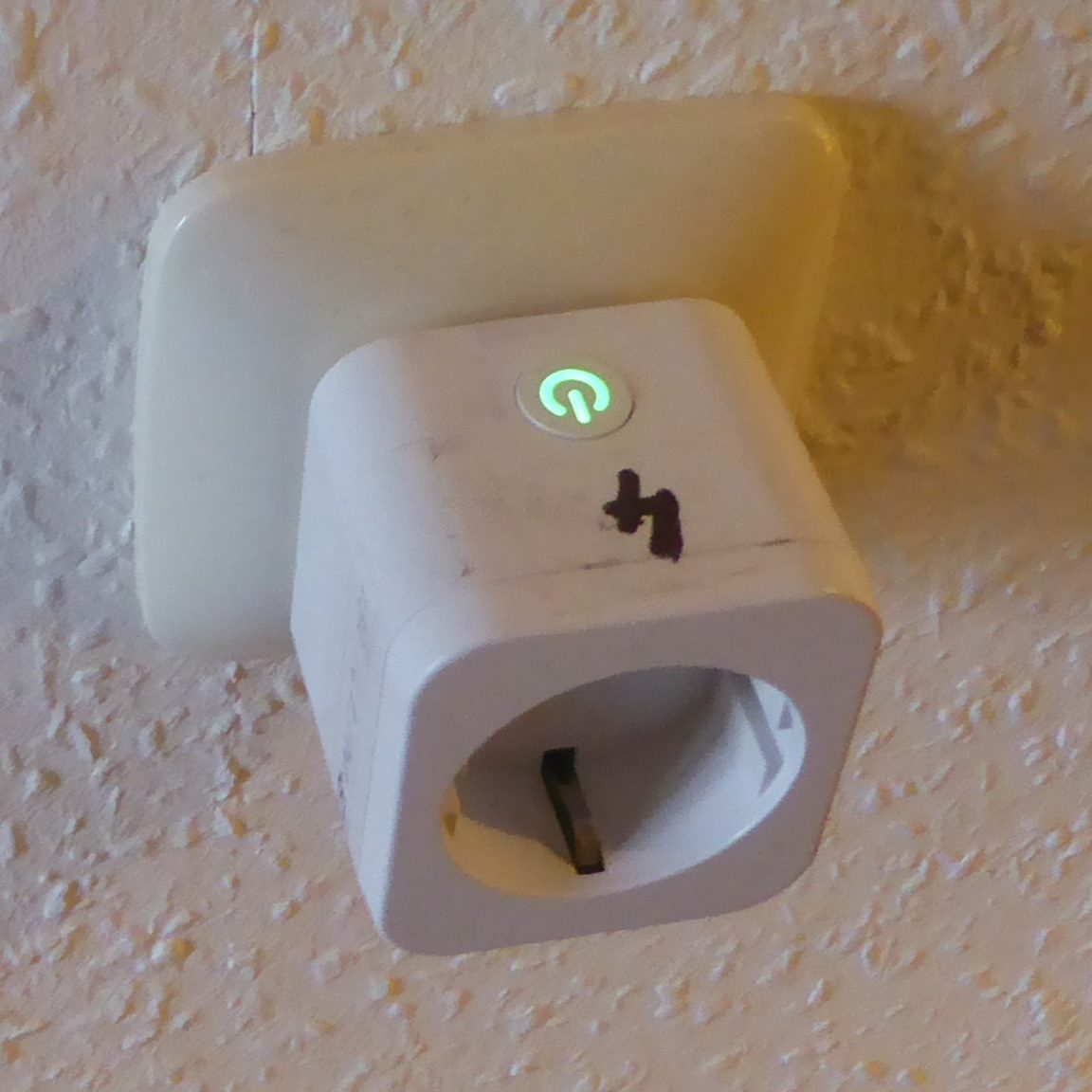
Photo: Markus Bärlocher / Wikimedia Commons, CC0
Reference device and labour prices for 2026
The prices below are common ranges in the Vietnamese market in 2026, split into two segments: mainstream (Tuya-based and mid-range brands) and premium (glass-panel, designer or major brands). Real prices vary by brand, dealer and area; always take a dealer quote at the time of the job.
| Item | Mainstream | Premium | Installation (reference) |
|---|---|---|---|
| Wi-Fi touch switch (1–4 gang) | 250,000–600,000 VND | — | 50,000–150,000 VND each |
| Zigbee touch switch (1–4 gang) | 350,000–900,000 VND | 1–3 million VND | 50,000–150,000 VND each |
| Zigbee hub | 500,000–1.5 million VND | 2–5 million VND | Included in setup |
| Smart plug | 150,000–500,000 VND | — | Almost none |
| Infrared (IR) blaster | 250,000–700,000 VND | — | 30,000–80,000 VND |
| Door or motion sensor | 200,000–600,000 VND | — | 30,000–80,000 VND |
| Curtain motor and track (one window) | 3–8 million VND | 8–15 million VND | 300,000–800,000 VND per set |
| Fingerprint or keypad lock | 3–8 million VND | 8–20 million VND (face recognition) | 300,000 VND–1 million VND |
| Mesh router, 2–3 units | 2–6 million VND | — | Included in setup |
| Hub setup, automations, training the household | — | 500,000 VND–2 million VND per project | |
Switches: the biggest line item
A two-bedroom apartment usually has 6–10 switch positions; a four-storey townhouse has 20–35. A difference of 200,000 VND per switch across 30 switches is already 6 million VND, so the choice of switch range is the biggest pricing decision. Multi-gang switches cost more than single-gang ones, but one can replace a whole cluster of mechanical switches in a single wall box.
Curtains and locks: expensive per unit
One motorised curtain or one fingerprint lock can cost as much as ten switches. Curtain prices depend on track length, fabric weight and motor; lock prices depend on the door type (wood, aluminium, steel), the lock body and the features. Figure 6 later in this lesson shows an electronic keypad lock fitted to a door.
Labour: per device or per package
Installers usually charge per device (switches, sensors), per set (curtains, locks), plus one general setup fee for the hub, router, automations and training. Some companies quote "all-inclusive" prices; if you do, still show labour as separate lines so the customer can compare.
Wi-Fi or Zigbee: where does the cost difference come from?
This is the question customers ask most. The short answer: Wi-Fi is cheaper to buy; Zigbee costs a bit more but is more stable once a home has many devices.
| Criterion | Wi-Fi system | Zigbee system |
|---|---|---|
| Central unit | Not needed, connects straight to the router | Needs a hub, about 500,000–1.5 million VND (mainstream) |
| Switch price | About 100,000–300,000 VND cheaper per switch | Higher |
| Battery sensors | Fewer options, drain batteries faster | Battery-efficient, many types |
| With many devices | A home router can be overloaded once there are several dozen devices | Its own mesh network; mains-powered devices act as repeaters |
| When the internet is down | Most control goes through the brand's cloud and may stop | Many hubs run automations locally (depends on the brand; check first) |
| Best for | Small apartments, about 15 devices or fewer, low budgets | Two-bedroom apartments and up, townhouses |
Hidden costs of Zigbee: the hub and the skill
Zigbee is a low-power radio standard, and every device contains a small module like the one in Figure 3. Because it cannot talk to the router directly, a Zigbee system always needs a hub, and the installer has to know how to place mains-powered devices so the signal spreads evenly. In return, devices repeat the signal for each other, so the more devices a home has, the stronger the network becomes.
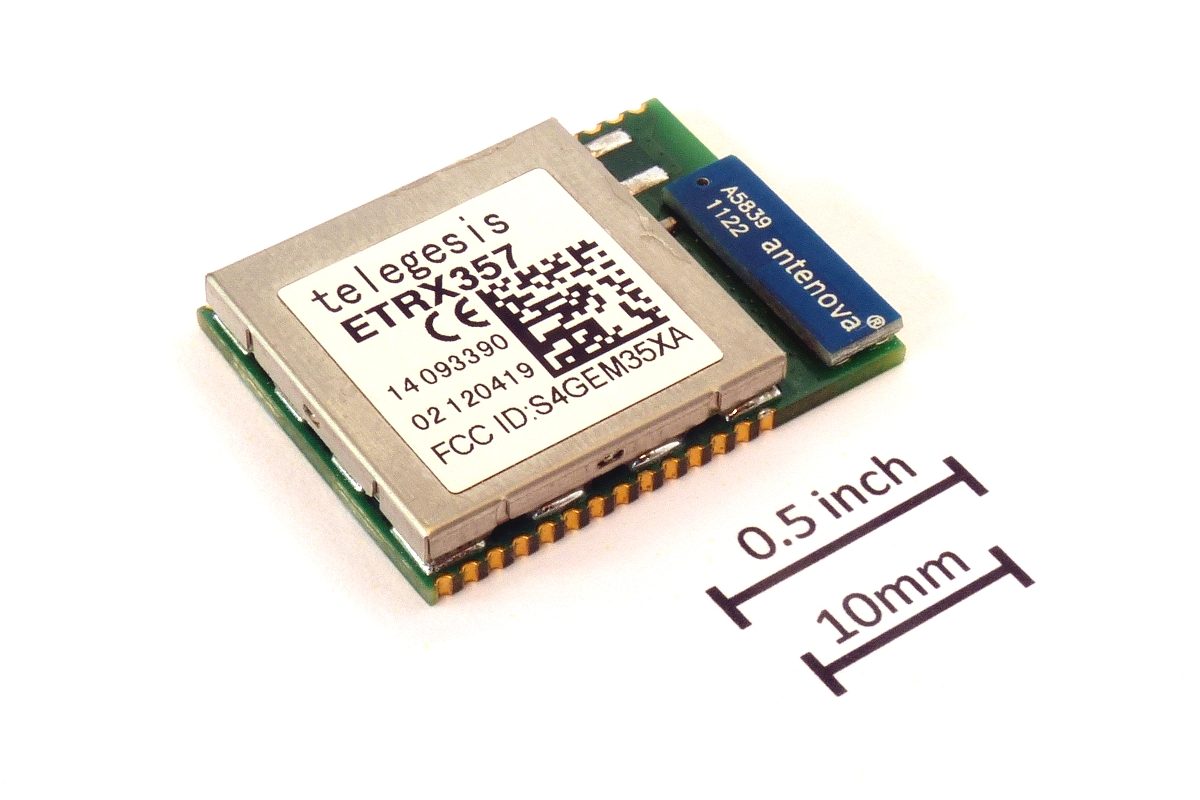
Photo: AutolycusQ / Wikimedia Commons, CC BY-SA 3.0
Hidden costs of Wi-Fi: the router and stability
A Wi-Fi system is cheap to buy, but each device takes a connection on the router. In a home using the router supplied by the internet provider, 30–40 devices (including phones, TVs and cameras) can easily cause dropouts. A mesh router at 2–6 million VND is often needed, which narrows the gap with Zigbee.
Matter and the long term
Matter is a shared standard that lets devices from different brands run in the same app. Matter-compatible devices usually cost a little more and are not yet available for every device type. For customers who want a long-lasting system, state in the quote which device supports which standard, so future expansion does not mean replacing the whole system. Figure 4 shows a Zigbee bulb — an easy device to add later.
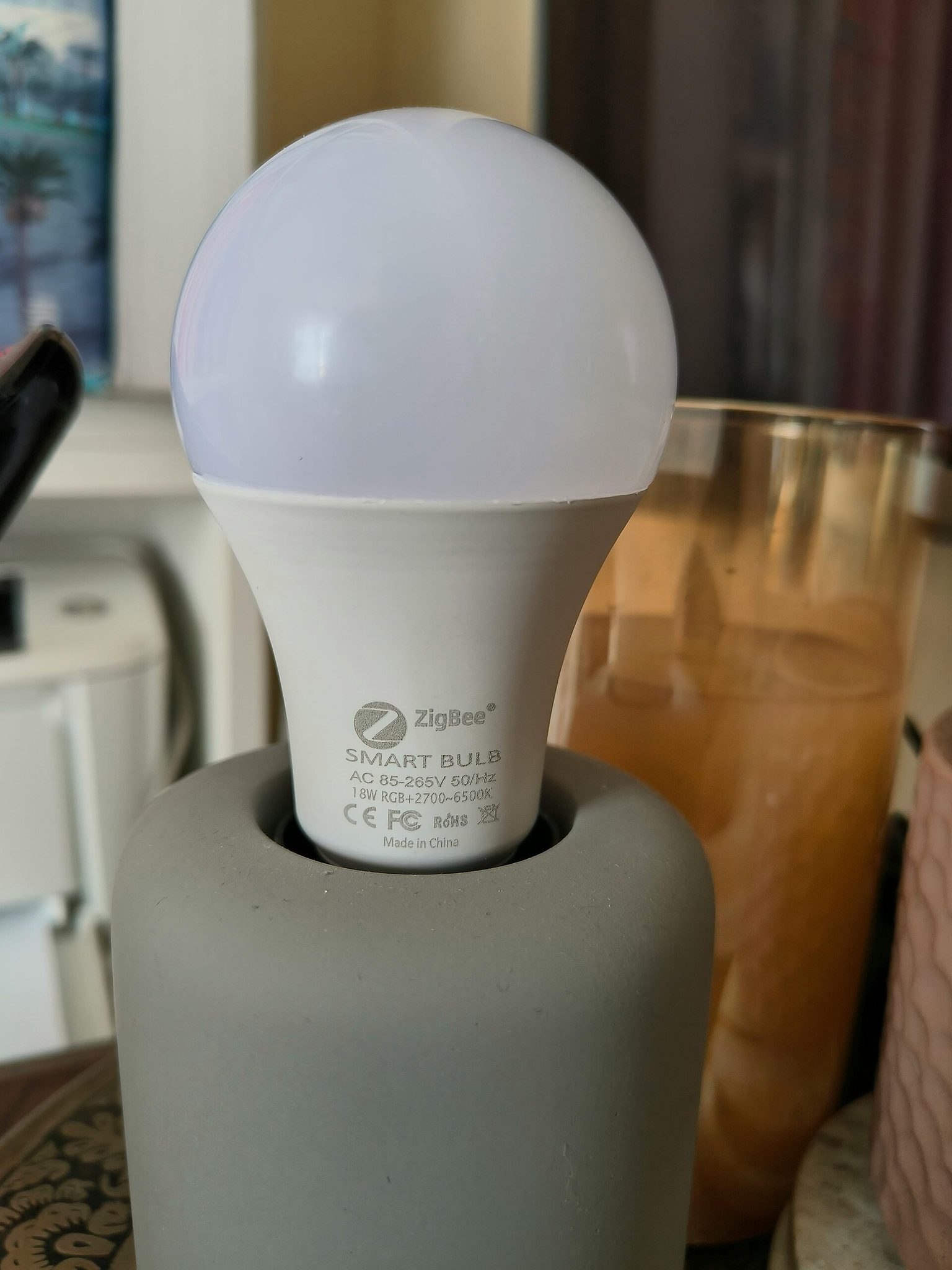
Photo: Danielrosehill / Wikimedia Commons, CC BY 4.0
Reference package prices for apartments and townhouses
The table below includes mainstream devices and labour, at 2026 reference prices that vary by area and brand. Use it to agree a budget range at the first meeting; the final figure always comes from a detailed quote after the survey.
| Package | Scope | Main devices | Reference total |
|---|---|---|---|
| Basic (Wi-Fi) | 1–2 bedroom apartment | 4–8 switches, 1–2 IR blasters, 1–2 smart plugs, 2 sensors | 8–20 million VND |
| Standard (Zigbee) | 2–3 bedroom apartment | Hub, 8–12 switches, 1 curtain, fingerprint lock, 4–6 sensors, IR, mesh router | 25–50 million VND |
| Townhouse | 3–4 storey house | Hub, 20–35 switches, 2–4 curtains, lock, sensors, 3-unit mesh, optional gate motor | 60–150 million VND |
| Premium | Villas, large apartments | Glass-panel devices, central touch screens, audio, integrated security | 150 million VND and up |
Apartments
Apartments in Vietnamese condominium buildings usually already have a neutral wire in the switch boxes, thin walls and easy coverage, so installation is quick, 1–2 days. The hardest part is the front door lock: check the building's rules and whether the door is a fire door before proposing anything.
Multi-storey townhouses
Townhouses (the narrow "nha pho" common in Vietnamese cities) have concrete floors and thick walls that weaken the signal between floors, so they almost always need mesh Wi-Fi and repeating devices on every floor. Older houses often lack a neutral wire in the switch boxes, which means extra wiring or switches that do not need a neutral, adding to the cost.
Upgrading in stages
Customers without the full budget can do the living room and front door first and the other rooms later. In that case, choose the system (Wi-Fi or Zigbee, and which brand) at the start, so devices bought later still run in the same app.
Worked example: quoting a 70 m² two-bedroom apartment
Ms Lan owns a 70 m² two-bedroom apartment in a new building. She wants to switch lights from her phone, have the living-room curtain open at 6:30 a.m., a fingerprint lock on the front door, an alert if the door opens while nobody is home, and to turn off the air conditioner remotely. Installer Minh finds a neutral wire in the switch boxes, the provider's router in a corner of the living room and a weak signal in the far bedroom. He proposes the Zigbee package below (2026 reference prices).
Devices
| Device | Quantity × unit price | Amount |
|---|---|---|
| Zigbee hub | 1 × 1,200,000 VND | 1,200,000 VND |
| Zigbee touch switch | 8 × 650,000 VND | 5,200,000 VND |
| Living-room curtain motor and track (3.2 m) | 1 × 6,500,000 VND | 6,500,000 VND |
| Front-door fingerprint lock | 1 × 6,000,000 VND | 6,000,000 VND |
| Door sensor | 2 × 300,000 VND | 600,000 VND |
| Motion sensor | 2 × 400,000 VND | 800,000 VND |
| IR blaster | 2 × 450,000 VND | 900,000 VND |
| Mesh router, 2 units | 1 × 3,000,000 VND | 3,000,000 VND |
| Devices subtotal | 24,200,000 VND | |
Check: 1,200,000 + 5,200,000 + 6,500,000 + 6,000,000 + 600,000 + 800,000 + 900,000 + 3,000,000 = 24,200,000 VND.
Installation and setup
| Labour item | Quantity × unit price | Amount |
|---|---|---|
| Install switches | 8 × 100,000 VND | 800,000 VND |
| Install curtain | 1 × 600,000 VND | 600,000 VND |
| Install lock | 1 × 500,000 VND | 500,000 VND |
| Install sensors and IR blasters (2 + 2 + 2) | 6 × 50,000 VND | 300,000 VND |
| Hub and router setup, 5 automations, training | 1 × 1,500,000 VND | 1,500,000 VND |
| Labour subtotal | 3,700,000 VND | |
Check: 800,000 + 600,000 + 500,000 + 300,000 + 1,500,000 = 3,700,000 VND. Quote total: 24,200,000 + 3,700,000 = 27,900,000 VND (about 1,100 USD), with labour at about 13%. Minh adds a 10% contingency line (2,790,000 VND) for extras such as replacing a wall-box plate, so Ms Lan should budget at most 30,690,000 VND.
A Wi-Fi option for comparison
Switching to Wi-Fi switches at 400,000 VND each and dropping the hub: the switches become 8 × 400,000 = 3,200,000 VND (2,000,000 cheaper), and there is no hub (1,200,000 cheaper). Devices fall to 24,200,000 − 2,000,000 − 1,200,000 = 21,000,000 VND; plus 3,700,000 labour that is 24,700,000 VND, or 3,200,000 VND cheaper. Minh explains that with 16 devices in this apartment (right at the edge of what he recommends for Wi-Fi), a Wi-Fi system would still work, but if she adds more battery sensors and devices later, Zigbee will hold up better. Ms Lan chooses Zigbee.
How should an installer quote transparently?
A good quote earns the customer's trust and protects you from losing money on surprises. The standard process is survey first, then quote line by line.
Survey four points before quoting
- Neutral wire (N) in every switch box: if present, use switches that need a neutral, which are more stable; if not, add wiring or use no-neutral switches. The article on smart switches without a neutral wire (in Vietnamese, electrician career) explains the wiring and the common faults.
- Wi-Fi signal: measure it with a phone in every room; a provider's router (Figure 5) placed in a corner rarely covers the whole home.
- Doors: material, thickness, type of the existing lock body, and whether the door is a fire door under the building's rules.
- Curtains: track length, whether there is a socket near the end of the track, heavy or light fabric.
What a clear quote contains
- One line per device: name, model, quantity, unit price, amount, brand and protocol.
- One line per labour item, with setup and training listed separately.
- Device warranty (from the manufacturer) and installation warranty (from you), with the conditions.
- A contingency line and the items not included (new wiring, wall repairs, repainting).
- A handover commitment: the app administrator account in the homeowner's name, a device list and recovery codes.
Quote warning signs
A quote that just says "complete smart home, 30 million" with no list; no brands or models; no warranty; the installer keeping the admin account. If customers see these, they should ask for a detailed quote — and you should never write a quote like that.
Safety warning: replacing switches and installing curtain motors means working on 220V mains, the standard household supply in Vietnam. Always switch off the breaker for that circuit, then use a voltage tester or multimeter to check both live and neutral before touching anything; put a "work in progress" sign on the distribution board. Check the maximum load printed on each smart switch: never run water heaters, air conditioners or electric cookers through an ordinary touch switch — use a high-load switch with the right rating or keep their own breaker. A fingerprint lock must keep a mechanical backup key and a way to power it in an emergency when the battery is flat; show the whole household how to open the door from inside without power, especially on escape routes. Never work on the building's main distribution board yourself; anything outside the apartment must go through building management.
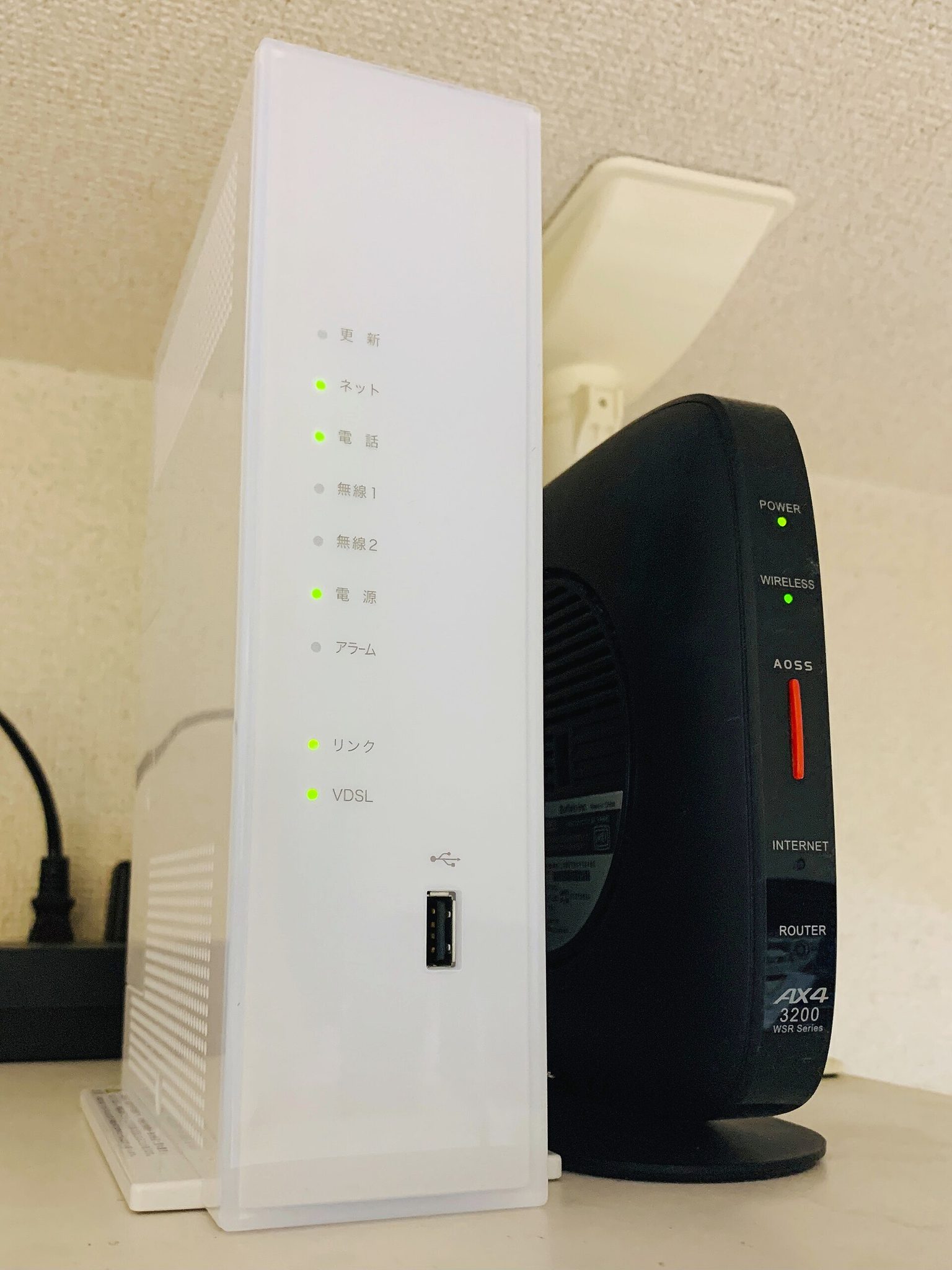
Photo: Project Kei / Wikimedia Commons, CC BY-SA 4.0
Extra costs that are often forgotten
Most disputes between installers and customers come from items that were not in the original quote. Spell them out from the start.
Lock replacement, wiring and wall repairs
A fingerprint lock with a different lock body from the old one means re-cutting the door leaf; narrow aluminium doors need special locks. Homes without a neutral wire need new cable pulled through conduit or surface trunking. Quote these separately after the survey; do not hide them in the switch price. Figure 6 shows an electronic keypad lock with a long handle plate, a type that usually needs the door cut to match the lock body.
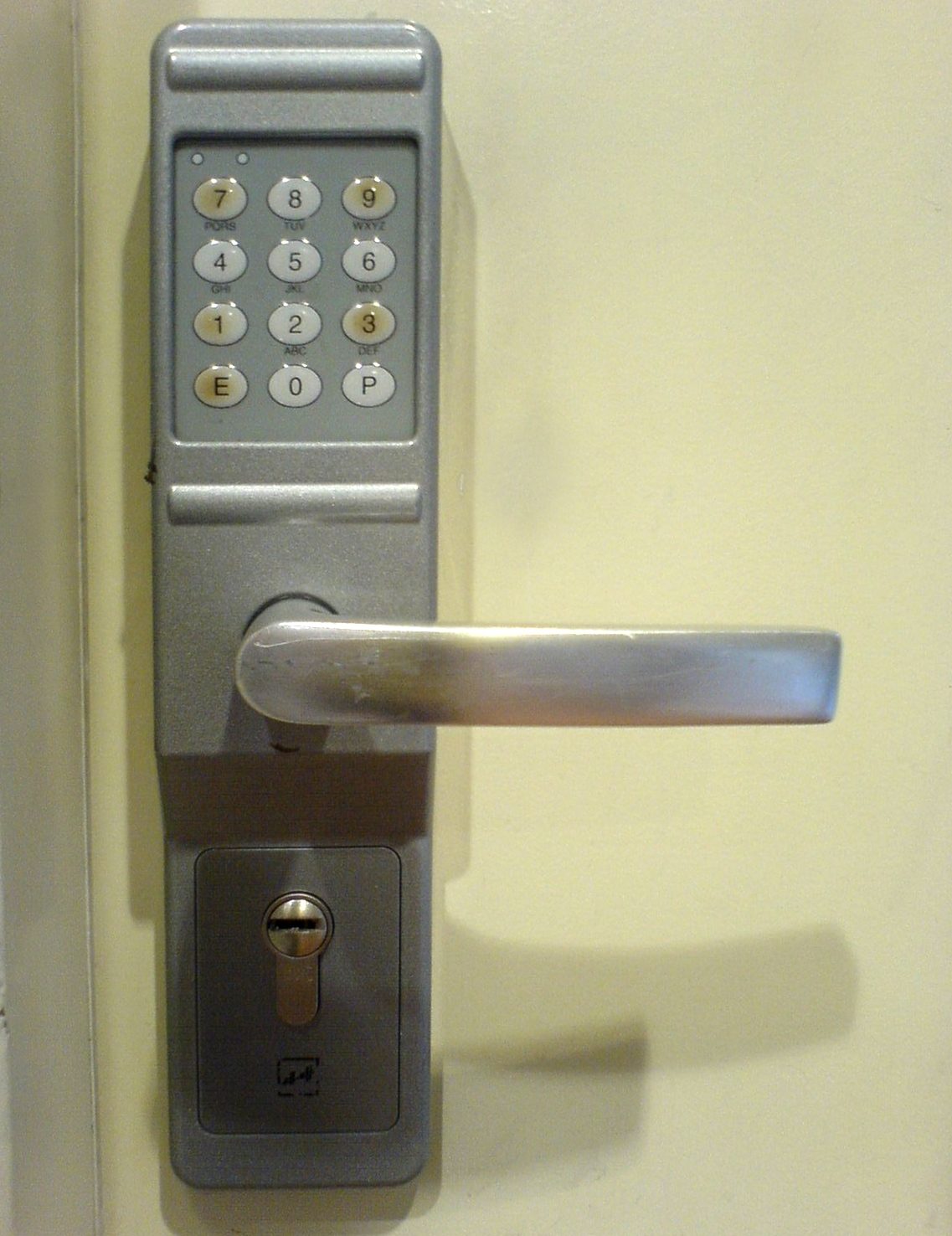
Photo: User:Mattes —Restored by ZooFari / Wikimedia Commons, CC BY-SA 3.0
Maintenance and support plans
Smart home devices need firmware updates, sensor battery changes and reconnection whenever the Wi-Fi password changes. Many installers sell a yearly support plan or charge per call-out; state the fee clearly so the customer is not surprised.
Changing provider or router
If a customer changes the router without telling you, every Wi-Fi device loses its connection. Advise customers to keep the same Wi-Fi name and password on a new router, or to call you to reconfigure, and put this in the handover guide.
Frequently asked questions
How much does a smart home cost for a two-bedroom apartment?
As a 2026 reference in Vietnam: about 15–20 million VND with Wi-Fi switches and a few basic devices only, or 25–35 million VND with a Zigbee hub, a curtain and a fingerprint lock as in the example above. The real price depends on the number of switches, the brand and the door type.
Does the whole house need rewiring?
Usually not. Smart switches fit into the existing wall boxes. Extra wiring is only needed when a box has no neutral and the customer wants switches that require one, or when a socket is needed for a curtain motor.
Can I still switch the lights on if the internet is down?
Touch switches still work by hand as normal. Remote control from a phone needs the internet; some Zigbee hubs keep running automations inside the home when the connection drops, but check this for each brand before promising it to a customer.
How should a new installer price labour without losing money?
Record the real time each task takes on your first few projects (switches, curtains, locks, setup), multiply by the hourly rate you want, and add travel costs. Compare the result with common labour rates in your area and adjust.
Practice tasks and self-assessment
- Survey a friend's apartment or house: count the switch positions, check for neutral wires (with the power off), measure Wi-Fi signal in every room and measure the curtain track length.
- Write two quotes, Wi-Fi and Zigbee, for the same home using Minh's format, with a device table, a labour table and contingency.
- Present the quote to someone non-technical in 10 minutes and write down the questions they ask.
Self-assessment criteria
- Pass: every line has quantity, unit price and amount; the totals add up by hand; there are lines for warranty, contingency, exclusions and handing the account over to the homeowner.
- Pass: your listener can explain back why Zigbee costs more than Wi-Fi and which package suits their home.
- Not yet: an all-inclusive quote with no list, skipping the neutral-wire or Wi-Fi check, or checking wires before switching off the breaker.
This is the final step of the roadmap. To review, retake the quiz on protocols and electrical safety, wire a switch with and without a neutral on a practice board, and rebuild the five automations from the apartment fit-out step. To keep growing, standardise your own basic and advanced package quote templates with your warranty policy, photograph every project before and after for your portfolio, and build relationships with interior contractors and device dealers for a steady flow of clients.
Learn smart home installation from the start: electrical safety, Wi-Fi, Zigbee and Matter, touch switches, curtains, fingerprint locks, sensors, automations and troubleshooting. See the 8-step smart home installer roadmap to track your progress.