Proper presentation for a restaurant server has two parts that go together: hygiene (clean hands, short nails, tidy hair, a clean uniform, and holding glasses, plates and cutlery in the right places without touching anything the guest eats or drinks from) and the way you stand, walk, speak and handle accidents so guests feel at ease. Guests never see the kitchen, so they judge the cleanliness of the whole restaurant by the server: one thumb dipped in a soup bowl or one hair on a plate is enough to make them never come back. This is the first lesson of the restaurant server roadmap, written for people in their first week on the job, with a pre-shift self-check you can use straight away.
By the end of this lesson, you will be able to:
- Prepare your uniform, hair, nails, shoes and service kit to score at least 90/100 on the pre-shift self-check.
- Hold glasses, cups, plates, bowls and cutlery in the right places, without touching rims, the centre of plates or the parts of cutlery that go into the mouth.
- Name the moments in a service shift when you must wash your hands and what to do if you touch something dirty.
- Prevent slips, breakages and hotpot burns, and know what to do when a glass breaks or a guest is burned.
- Know which food safety papers and health checks a restaurant may ask for and how to ask about them.
New to restaurant service? This is step 1 of the roadmap: food hygiene, safety and presentation, before table setting, tray carrying and taking orders. See the 8-step restaurant server roadmap to learn in the right order.
Why servers need food safety training too
Many people think food safety is the kitchen's job. In reality, a dish that leaves the kitchen clean can still get dirty on its way to the table: a server's hand touches money and then a plate of fresh herbs, a glass is polished with the table cloth, cutlery is held by the blades. The server is the last person to touch the food before the guest eats it.
Where servers contaminate food
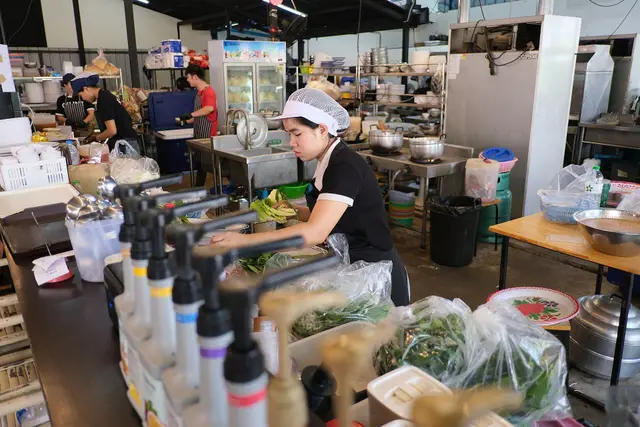
- Hands: touching money, phones, door handles or bins, then ready-to-eat items such as fresh herbs, ice, lime wedges or bread.
- Thumbs: dipping into a soup bowl or touching food when carrying a full plate.
- Hair, nails and sweat falling into food when leaning over a table.
- Cloths: one cloth used for wiping tables, glasses and plates.
Presentation is what guests see first
Before they eat, guests see you: whether your uniform is creased or stained, whether you lean on the wall looking at your phone, whether you smile and greet them as they walk in. A neat server who moves quietly and speaks clearly makes guests believe the whole restaurant is just as clean.
Uniform, hair, nails and service kit before your shift
Arrive 15 minutes early to change, check yourself in the mirror, wash your hands and get your assignment. At the start of the shift the shift manager or team leader often does a quick presentation check of the whole team.
Uniform and shoes
- Shirt, trousers, apron: clean, pressed, odour-free, no missing buttons. Bring a spare for long shifts or hotpot and grill restaurants where grease gets everywhere.
- Shoes: closed toe, non-slip soles, clean; you are on your feet all shift, so choose a pair that fits.
- Name badge: worn in the right place and straight.
Hair, nails and body odour
- Long hair tied back or in a bun, never loose enough to touch your shoulders when you lean over a table; men keep hair short and shave.
- Nails short and clean; many restaurants ban bright polish and false nails.
- No strong perfume: it overpowers the smell of the food and bothers guests. Keep your breath fresh and avoid raw garlic and onion before a shift.
- Small jewellery only, or none, according to restaurant rules.
Service kit on you
A pen, an order pad or handheld order device, a bottle opener if issued, and a clean folded service cloth. Your personal phone stays in your locker or wherever the rules say, never in your hand on the floor.
Handwashing during service: when and how
Servers do not cook, but they touch glasses, plates, napkins, ice, limes and fresh herbs all the time. Washing your hands at the right moments is the most important thing you do to keep food clean.
When you must wash your hands
- At the start of the shift, after breaks and after eating.
- After using the toilet (Figure 1), sneezing, coughing, blowing your nose, or touching your face or hair.
- After clearing tables, handling dirty dishes, scraping leftovers or taking out rubbish.
- After handling money, cards, phones or menus that have passed through many hands.
- Before picking up ice, lime, fresh herbs, bread or any ready-to-eat food.
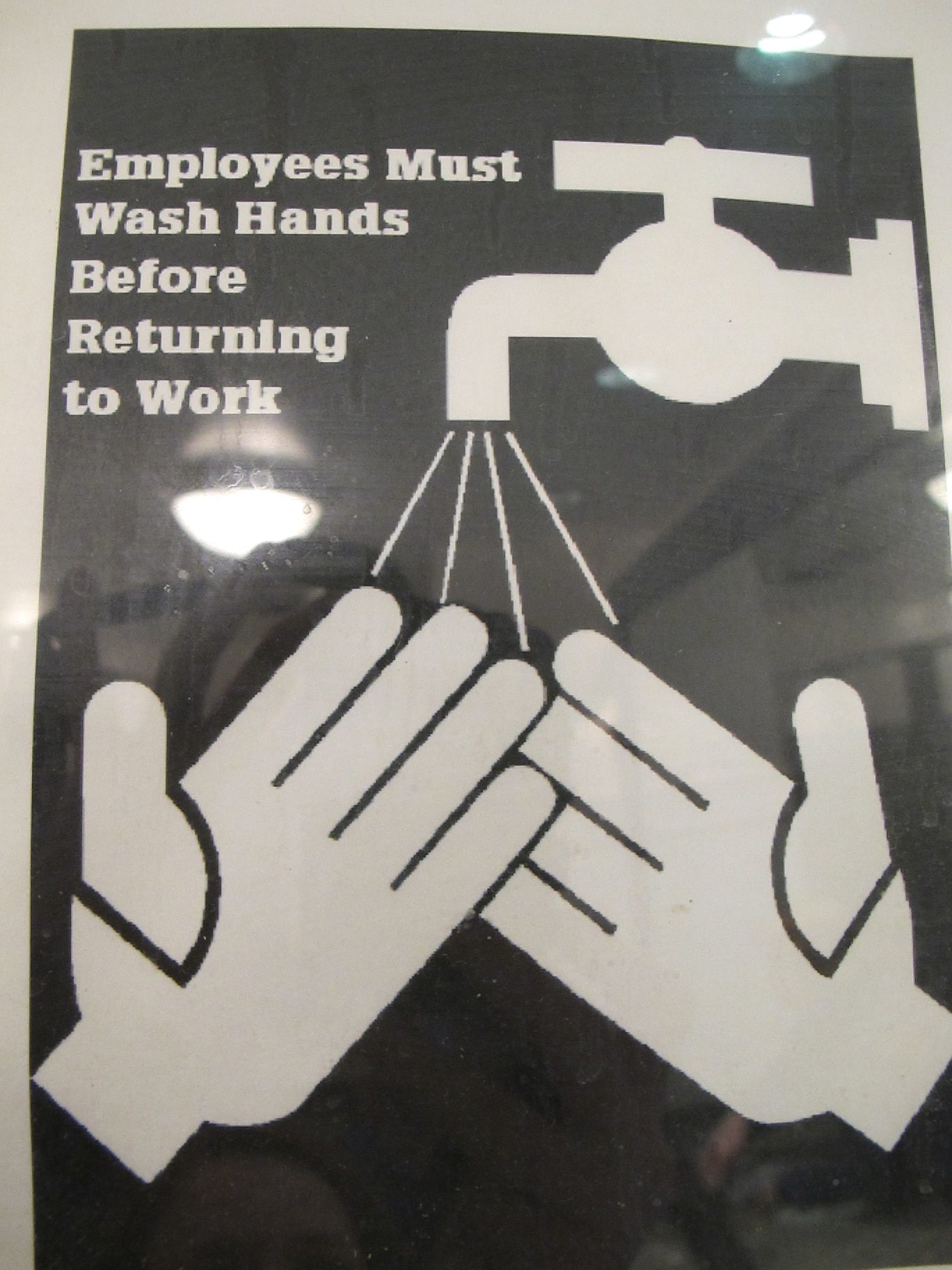
Photo: Sterilgutassistentin / Wikimedia Commons, CC BY-SA 3.0
Washing properly
Wet your hands, take soap, rub the palms, backs of hands, between the fingers, thumbs, fingertips and wrists for at least 20 seconds, rinse and dry with a paper towel. The whole routine takes about 40–60 seconds. Hand sanitiser is for hands with no visible dirt; it does not replace washing after clearing tables or using the toilet.
Service cloths: one cloth, one job
The table-wiping cloth, the glass-polishing cloth and the service cloth over your arm are three different things. Never polish glasses with a table cloth, and never wipe sweat with your service cloth. A damp, smelly cloth gets changed at once.
Holding glasses, plates and cutlery in the right places
The general rule: touch only the parts the guest's mouth and food never touch. Guests watch how you hold things, and they notice more than you think.
Glasses and cups
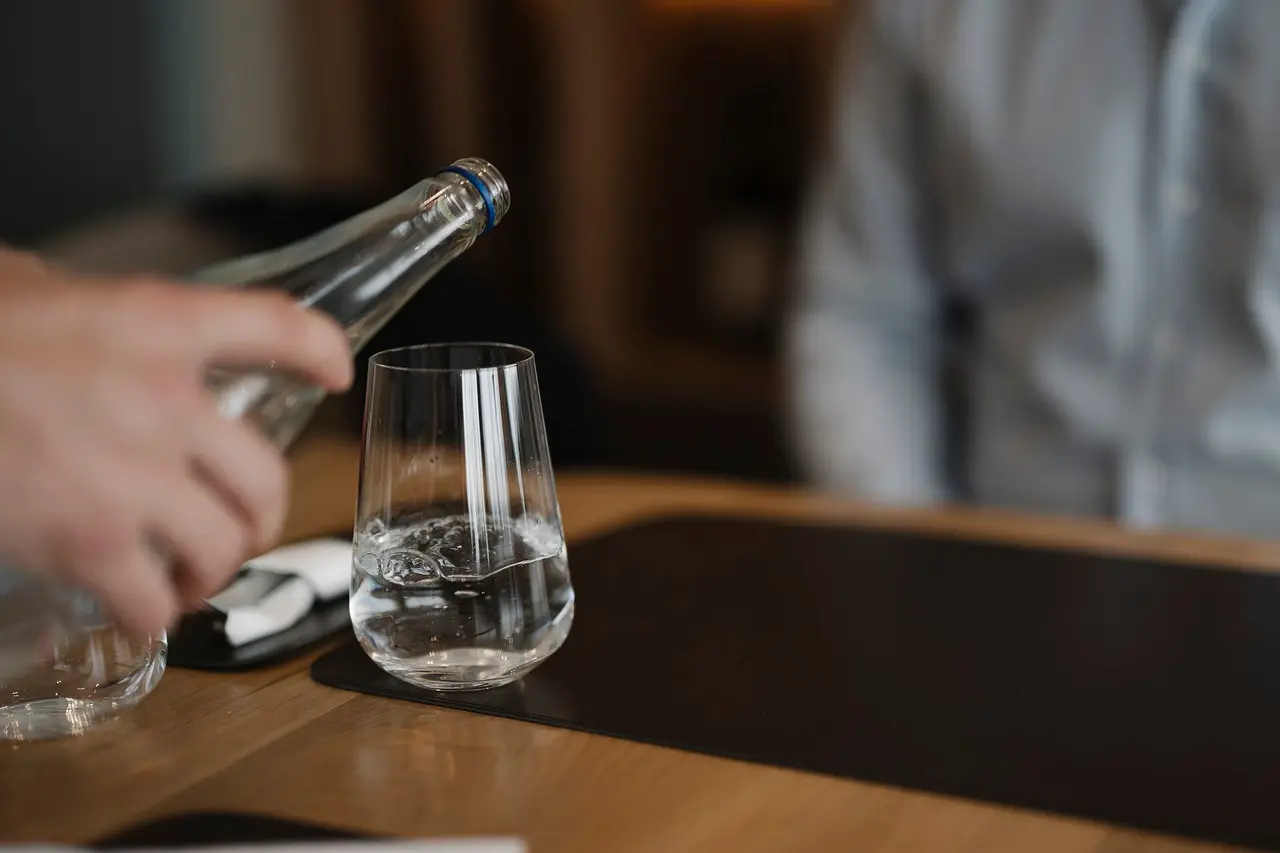
- Stemmed glasses: hold by the stem. Tumblers: hold low on the body, a few centimetres below the rim.
- Never put your fingers inside glasses to carry several at once; use a tray.
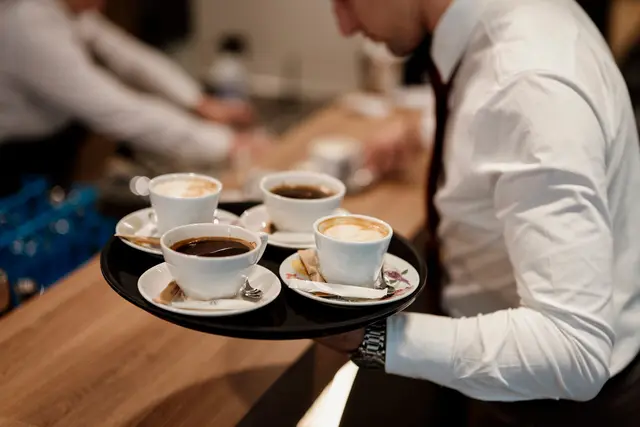
- Coffee and tea cups: hold by the handle and the saucer.
- When pouring, keep the bottle neck from touching the glass rim (Figure 2).
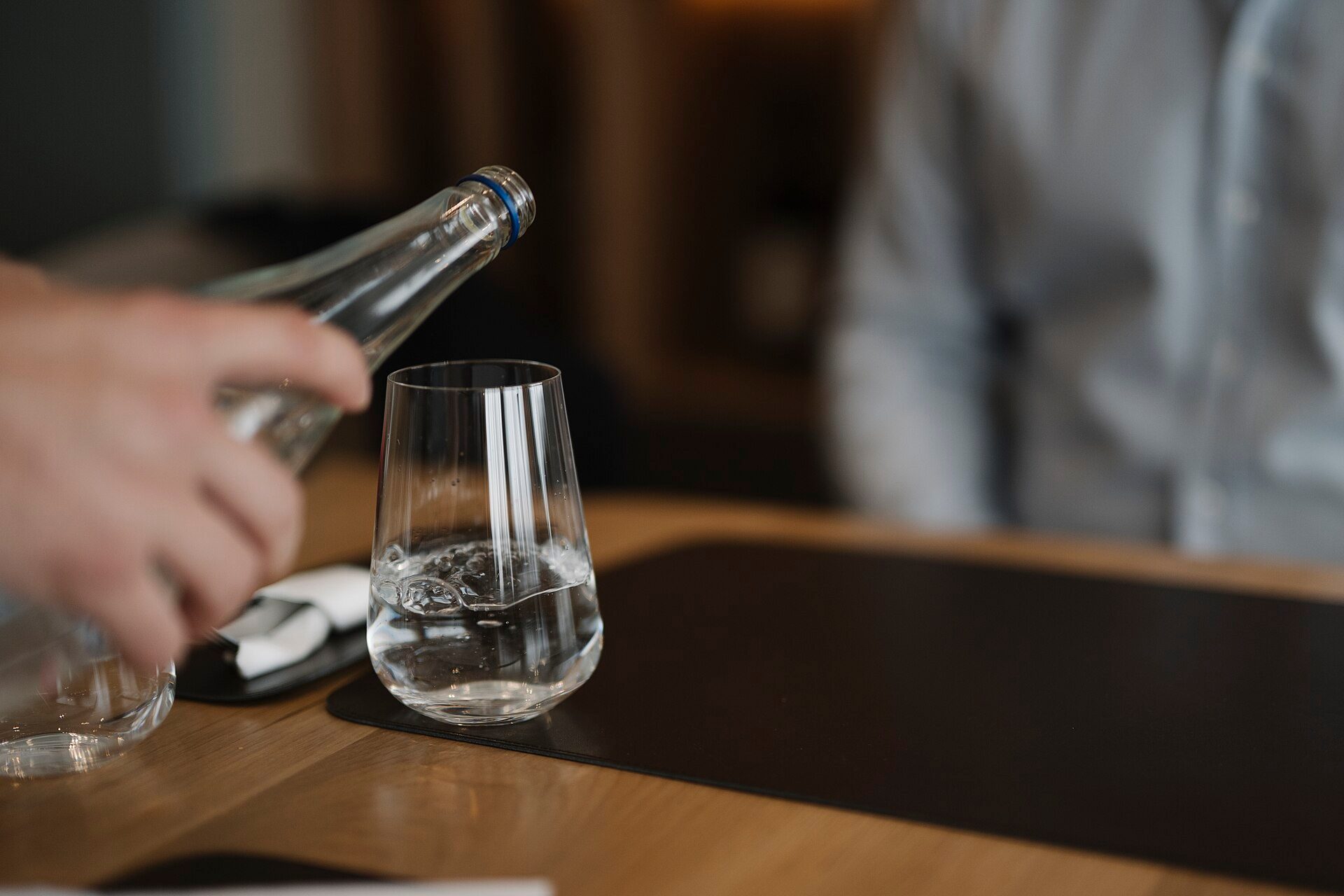
Photo: Shixart1985 / Wikimedia Commons, CC BY 2.0
Plates and bowls
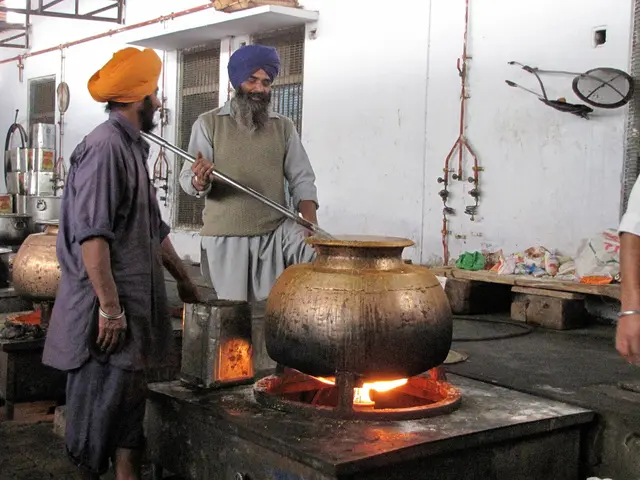
Hold plates by the rim with your thumb on the edge, never reaching into the centre where the food is (Figure 3). Hold soup and broth bowls by the base or on an underplate, never with a thumb hooked over the rim. For hot plates, use a dry cloth and tell the guest "hot plate".
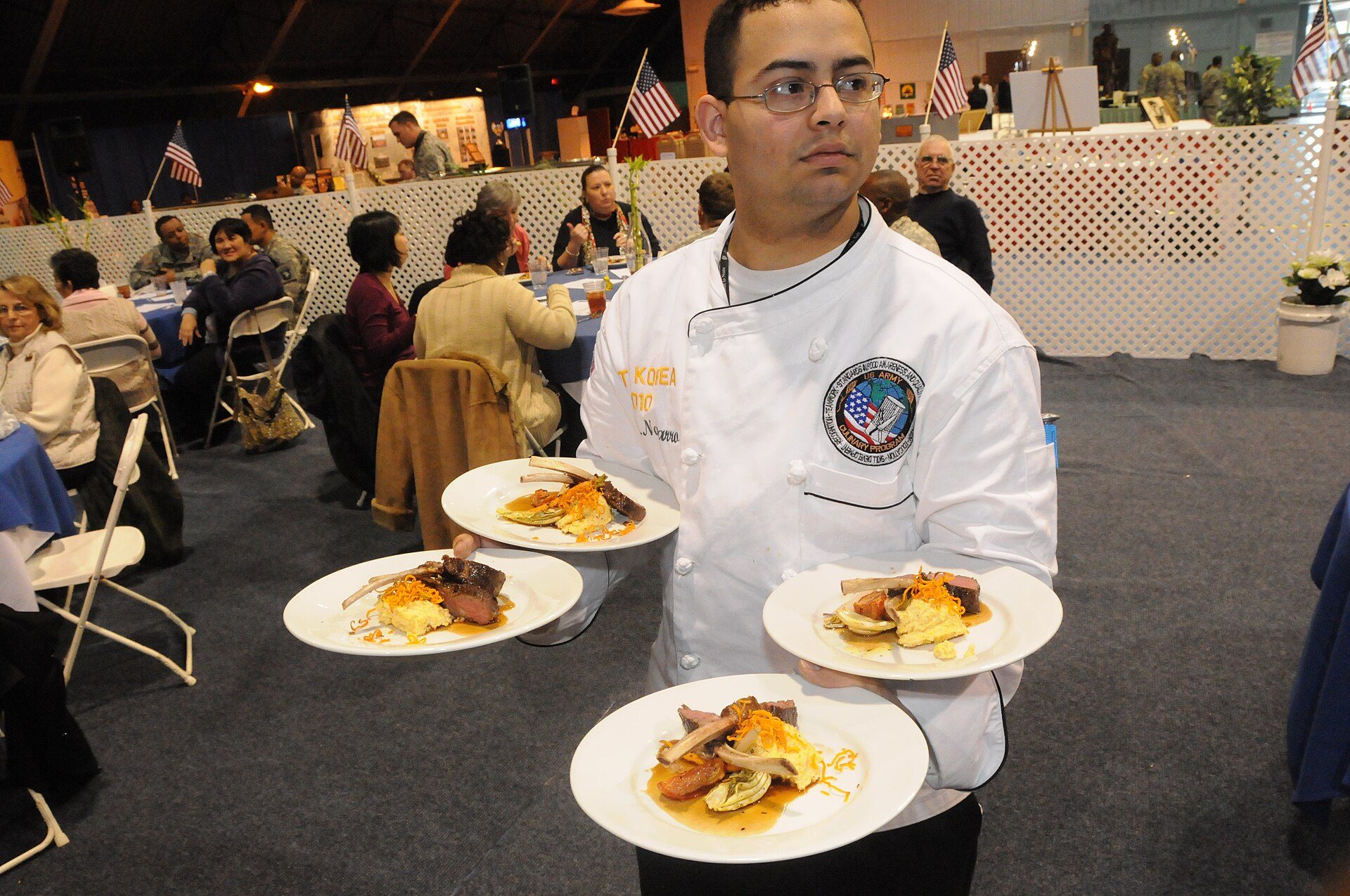
Photo: US Army Africa / Wikimedia Commons, CC BY 2.0
Knives, forks, spoons and chopsticks
Hold them by the handle, never touching blades, fork tines, the bowl of a spoon or chopstick tips. Polished cutlery goes on a tray or in a napkin, never carried in a fistful by the business end. If a spoon or chopsticks fall on the floor, replace them at once; never wipe and put them back. You will learn how to lay glasses and cutlery for each type of table in the table-setting step.
Preventing slips, breakages and hotpot burns
At peak hours the dining room is crowded, the floor gets wet, glasses and plates are everywhere and hotpots boil on the tables. Accidents happen when people rush.
Slips and collisions
- Water, ice or oil on the floor: wipe it at once, or put out a wet-floor sign and call someone to mop; never just step over it.
- Keep to the right, never run; at the kitchen door, call out "coming out" or "going in" as the restaurant agrees.
- Do not carry more than you can handle, and never carry anything that blocks your view.
Broken glasses and plates
- Apologise to the guests and invite them to step back or change seats if they are close.
- Never pick up broken pieces with bare hands: use a broom and dustpan, and wipe up tiny shards with a damp cloth or thick paper.
- Put the pieces in a box or thick bag marked "broken glass", never in a thin rubbish bag.
- If it broke near food, ice or a glass rack, throw out all food, ice and glasses nearby because they may hold splinters.
Hotpots and tabletop burners
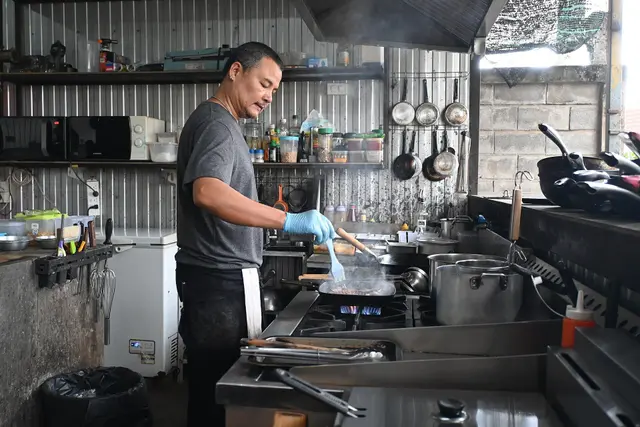
Boiling hotpots and induction, alcohol or mini gas burners on the table are the most common source of burns in the dining room (Figure 4). Place the pot on the burner before turning it on, top up broth with a jug or kettle rather than lifting a boiling pot, turn handles inward, and ask families with young children to seat them away from the burner.
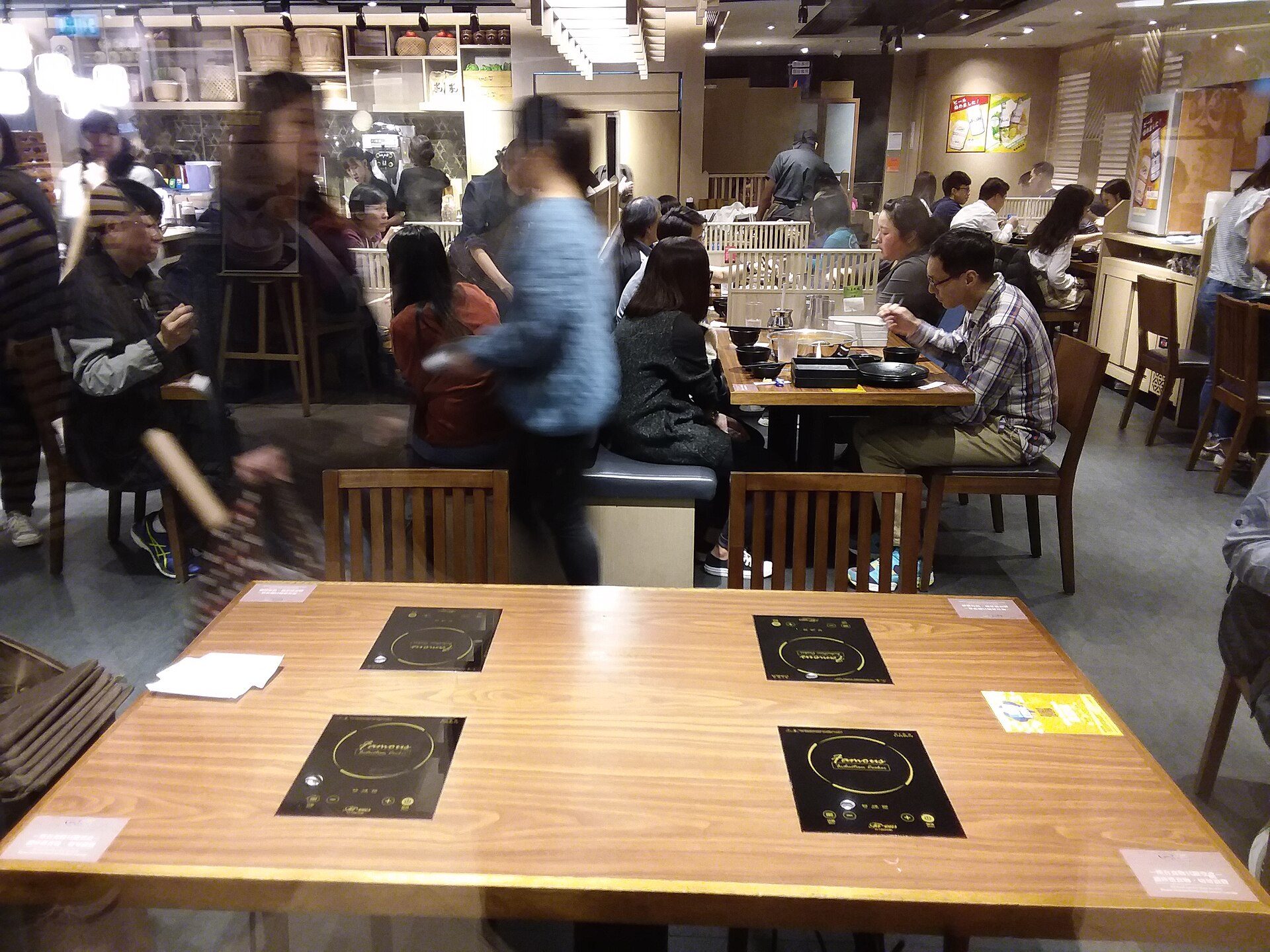
Photo: Buaismoo / Wikimedia Commons, CC BY-SA 4.0
Safety warning: Never carry a boiling hotpot over guests' heads; switch off and let it cool a little before clearing. With alcohol burners and mini gas stoves, never refill fuel while the flame is lit, keep gas canisters away from heat, and if you smell gas, switch off, ventilate and tell the manager. If a guest or you get burned: cool the burn under cool running water (not ice) for about 20 minutes, remove rings and watches near the burn, and never apply toothpaste or grease. Large burns, burns to the face, burns on young children, large blisters, or deep cuts from broken glass need 115 (Vietnam's emergency number) or a medical facility immediately. This lesson does not replace a doctor.
Food safety papers and health checks
Many restaurants in Vietnam require servers, like kitchen staff, to have confirmed food safety knowledge and a health certificate. The rules for these papers have changed several times and vary by type of business, so this lesson gives only the principles.
Confirmation of food safety knowledge
This usually means attending training and being confirmed as having the knowledge. Many restaurants train new staff themselves or send them on a course. When you start, ask whether the restaurant requires it, what you need to submit and by when.
Health check
Many employers require a health certificate at hiring and regular check-ups afterwards. Ask where to go and who pays. If you have diarrhoea, vomiting, fever or an open wound on your hand, tell the manager before your shift so you can switch tasks or stay home.
Note: NAMBIN does not quote document numbers or fees because the rules may have changed. Ask the restaurant manager or the local food safety authority and read the current regulations.
Worked example: Minh's pre-shift presentation self-check
Minh, 20, works the evening shift as a server at a hotpot restaurant with about 30 tables. The manager uses a 10-item self-check worth 100 points; you need at least 90 to go on the floor, and anything under 90 must be fixed before opening.
The checklist and the result
| Item | Max points | Minh's score |
|---|---|---|
| Uniform clean, pressed, odour-free | 15 | 15 |
| Hair tidy, shaved | 10 | 10 |
| Nails short and clean | 10 | 0 |
| No strong perfume, jewellery within rules | 10 | 10 |
| Breath and body odour | 10 | 10 |
| Closed, non-slip, clean shoes | 10 | 10 |
| Name badge, pen, order pad | 5 | 0 |
| Hands washed before going on the floor | 15 | 15 |
| Phone stored in the right place | 5 | 5 |
| Clean, neatly folded service cloth | 10 | 10 |
| Total | 100 | 85 |
Check the maximum: 15 + 10 + 10 + 10 + 10 + 10 + 5 + 15 + 5 + 10 = 100. Minh's score: 15 + 10 + 0 + 10 + 10 + 10 + 0 + 15 + 5 + 10 = 85, below the 90 mark.
Fixing it and re-checking
Minh trims his nails with the clipper from his locker, washes his hands again, borrows a pen and picks up an order pad from the counter: about 5 minutes. Re-check: 85 + 10 + 5 = 100 points. His lesson: get the kit ready and trim nails the night before, so the first 15 minutes of the shift go to setting tables, not running around borrowing a pen.
Common beginner mistakes and how to fix them
Thumb inside the bowl
Sign: carrying a full bowl of soup with a thumb hooked over the rim and into the broth. Cause: fear of dropping it. Fix: use an underplate or tray, hold the bowl by its base, and do not overfill.
Holding glasses by the rim
Sign: clearing or setting glasses by pinching the rim. Cause: convenience, carrying several at once. Fix: hold by the stem or low on the body, and use a tray for several.
Handling ready-to-eat food straight after clearing
Sign: you clear dirty bowls, then fetch ice and limes for another table. Cause: rushing. Fix: wash your hands after clearing, or at least sanitise if there is no visible dirt; at busy times split the jobs between clearing and serving food.
Leaning on the wall with your phone
Sign: during a quiet spell you stand in a corner on your phone. Cause: thinking nobody is watching. Fix: quiet time is for polishing glasses, checking condiments and watching what tables need; the phone stays in your locker.
Frequently asked questions
What does presentation for a restaurant server include?
Appearance (uniform, hair, nails, shoes, body odour), hygiene (washing hands at the right moments, holding glassware and plates correctly, the right cloth for each job) and behaviour (standing straight, moving quietly, greeting guests, speaking clearly, no phone on the floor).
Do servers need a food safety knowledge certificate?
It depends on the type of business and current rules in Vietnam; many restaurants require servers to be trained and health-checked too. Ask the manager when you start so you prepare the right papers.
Can servers wear nail polish?
Each restaurant sets its own rules. Many allow only short, clean nails with pale polish or none, and no false nails because they can come off into food.
What should I do if I break a glass in front of guests?
Stay calm and apologise, ask guests to step back, clear it with a broom and dustpan, throw away food and ice near the break, and tell the manager. Never pick it up with bare hands.
Practice and self-assessment
- Score yourself on Minh's 10-item checklist for 3 shifts in a row and record the score each day.
- Practise holding a stemmed glass, a tumbler, a cup and a full soup bowl in front of a mirror; photograph your hands to check fingers stay off rims and out of bowls.
- Write down the moments in your shift when you must wash your hands and tick each wash during a real shift.
- Ask your manager for the restaurant's procedure for broken glass, wet floors and burns, and copy it down.
Self-assessment criteria
- Pass: 3 shifts in a row scoring 90 points or more.
- Pass: not once does a finger touch a glass rim, the centre of a plate, the inside of a bowl or the mouth end of cutlery.
- Pass: you can describe how to handle broken glass and give first aid for burns in the right order.
- Not yet: handling ready-to-eat food after clearing without washing, or carrying a boiling hotpot over guests.
Once presentation is second nature you will need to carry trays and several plates through a busy room; read How to carry a serving tray without spilling: 3 plates and clearing. The next step of the roadmap is Table setting & pre-opening prep, where you learn to set Vietnamese, Western and round banquet tables, fold napkins, polish glasses and take part in the pre-shift briefing.
Keep learning restaurant service: after presentation come table setting, tray carrying, taking orders on the POS, recommending dishes and upselling, handling allergies and complaints, then running a section in a busy shift. See the 8-step restaurant server roadmap.