Opening a small eatery in Vietnam usually involves 5 things: registering a household business, meeting food safety conditions (a certificate or a signed commitment depending on size and type), health checks and food safety knowledge for the people who cook, declaring and paying household business tax, and fire safety. The specific rules change over time and differ by locality, and household business tax policy in particular is being reformed, so this lesson only sets out firm principles and the order of work. The most important point: ask the right authorities and read the current regulations before you sign a lease.
By the end of this lesson, you will be able to:
- List the 5 groups of procedures for a small eatery and know which authority to ask about each.
- Check a property before leasing it using 6 legal and safety questions.
- Prepare basic food safety conditions: a one-way kitchen, traceable ingredients, staff health.
- Plan 5 weeks from the first enquiry to opening day and budget the set-up costs with figures that add up.
- Spot common legal risks: using the pavement, selling alcohol, pouring grease into drains, keeping no invoices.
Want to open your own eatery? The legal basics are step 1 of the roadmap, before choosing a location, building a menu, laying out the kitchen and selling on delivery apps. See the 8-step roadmap for opening and running a small eatery to work in the right order.
Why sort out the paperwork before the menu?
Many people do it backwards: lease a property, renovate, buy stoves, then ask about paperwork. Only then do they find that a house in a narrow alley struggles to meet fire safety requirements, or that the apartment building does not allow food businesses on the ground floor, and the deposit and renovation money are gone. Handling procedures first lets you rule out unsuitable properties early and calculate fixed costs correctly.
The risks of trading without proper papers
An eatery that is unregistered or does not meet food safety or fire requirements may be warned, fined or suspended during an inspection, and will struggle to list on delivery apps, which usually ask for business documents. If a customer gets food poisoning, an eatery with no records of ingredient sources and staff health will find it very hard to defend itself.
General rule: ask the right place, keep evidence
Each locality may handle applications differently, especially after the recent reorganisation of administrative units. Go to the one-stop desk of the ward or commune People's Committee where the eatery will be, and ask where to file, what documents are needed and how long it takes. Write down the department, the date you asked, and read the regulations on the public services portal or the websites of the tax, health and police authorities.
Registering a household business for an eatery
A small eatery owned by one person or a family usually registers as a household business ("ho kinh doanh"). It is simpler than a company and suits a small, single-location shop.
What the application usually includes
- A household business registration form on the current template, with the business name, address, line of business (food and beverage service) and capital.
- A copy of the owner's ID (citizen identity card), and of family members if they register together.
- Documents for the business premises, such as the lease, if the receiving office requires them.
Also ask: can you apply online, what is the fee, how long does processing take, where do you collect the result. Do not trust "all-inclusive" prices found online until you have asked the receiving office itself.
Cases that may not need registration
Current rules exempt some groups from household business registration, such as street vendors, snack sellers, mobile traders or low-income services; the "low-income" threshold is set by each locality. An eatery with fixed seating that trades daily usually does not fall into these groups. Even without registration, you must still meet food safety and tax obligations.
Does selling online from a home kitchen need registration?
Selling food online or taking orders through apps is still a business. Ask the ward about registering a household business at your home address and ask the tax office about tax declaration for platform sales, as platforms increasingly require documents and share revenue data with the tax authority.
Food safety: certificate or commitment?
Food service businesses must meet food safety conditions. Depending on size and type, an eatery may need a certificate of eligibility for food safety, or may only need to sign a food safety commitment with the local authority. Ask the ward or commune, or the local health authority, which category your eatery falls into.
Basic conditions in the kitchen and serving area
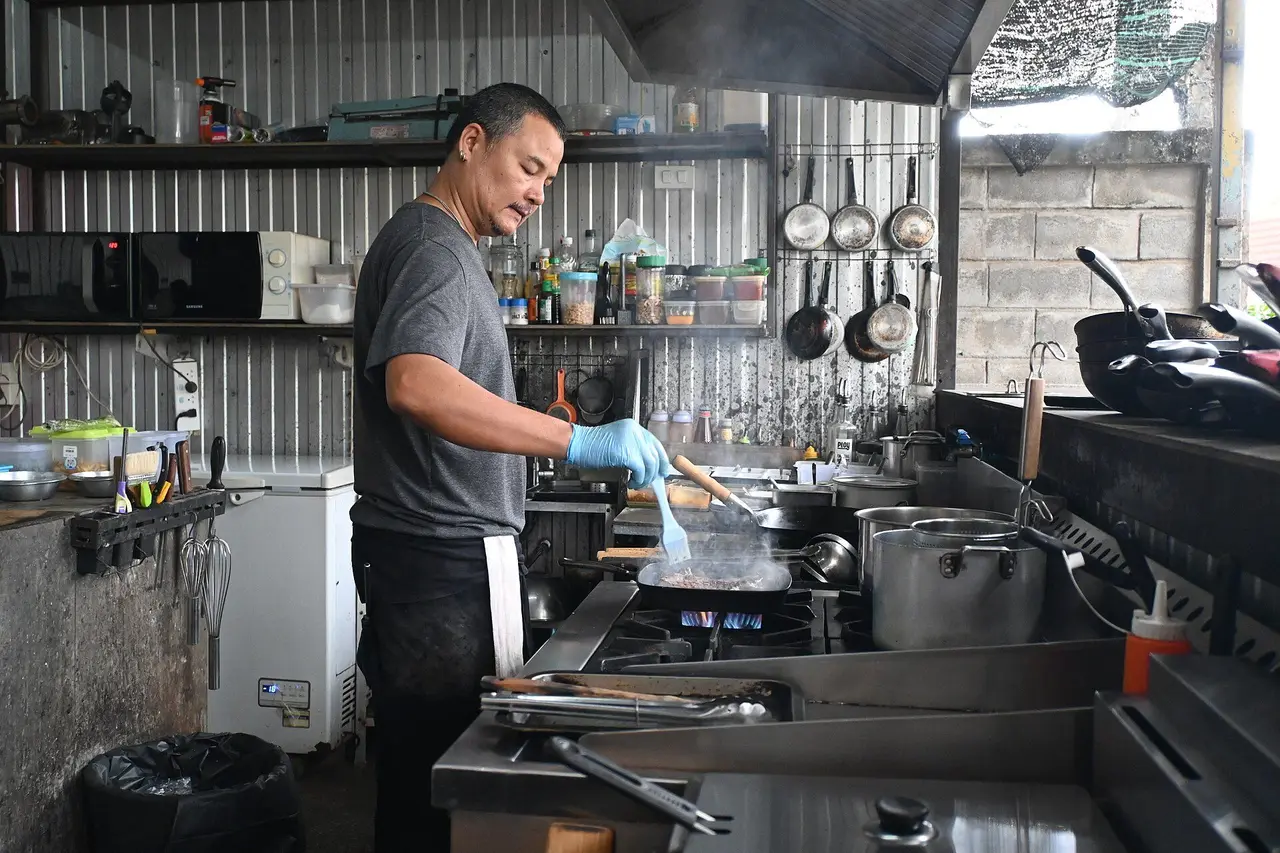
- One-way kitchen: raw ingredients come in, are prepped, cooked, plated and served in one direction without doubling back; raw and cooked areas are separate.
- Clean water for cooking and washing; a handwashing point with soap for staff.
- Separate tools: separate boards and knives for raw and cooked food; fridges and chillers with thermometers, food covered.
- Lidded bins emptied daily; measures against rats, cockroaches and flies.
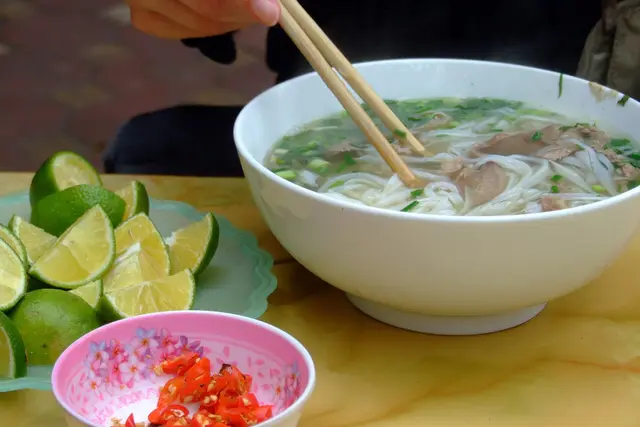
- Workwear: aprons, hairnets, gloves when handling cooked food (Figure 1).
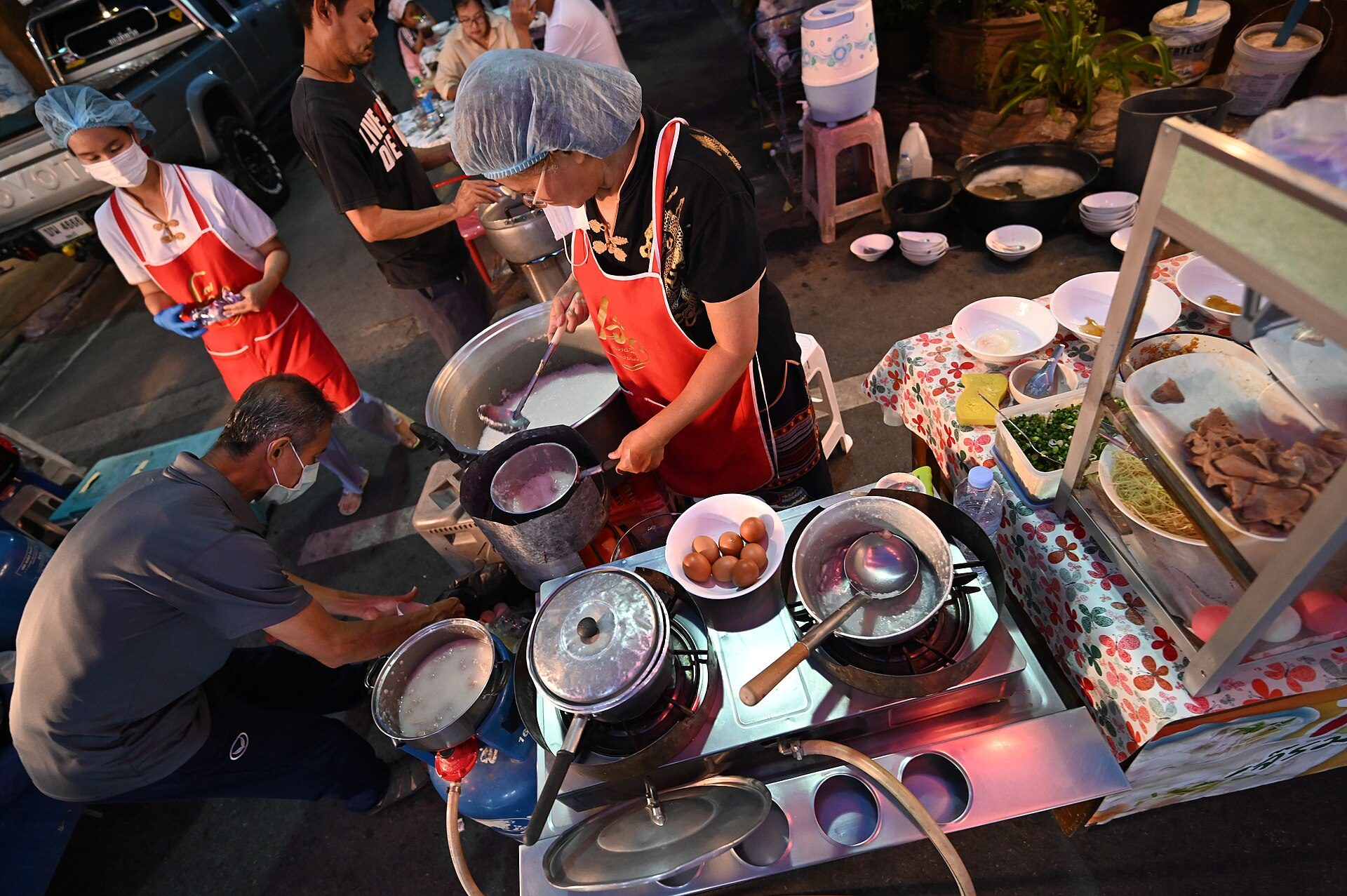
Photo: PattayaPatrol / Wikimedia Commons, CC BY-SA 4.0
Health and knowledge of food handlers
People who cook and plate food usually need a health check and food safety knowledge (through training or a knowledge confirmation in the form the locality uses). Anyone with diarrhoea, fever or an infected skin wound on the hands should not work in the kitchen. Keep each person's health certificate in the eatery's records.
Traceable ingredients
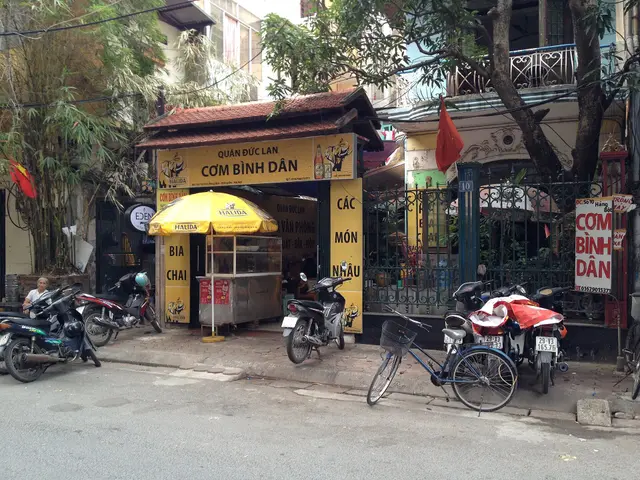
Choose vegetable, meat and fish suppliers with a clear address, and keep invoices or delivery notes (Figure 2). Log purchases daily: item, quantity, supplier. During an inspection or after a customer complaint, this log proves you use traceable ingredients.
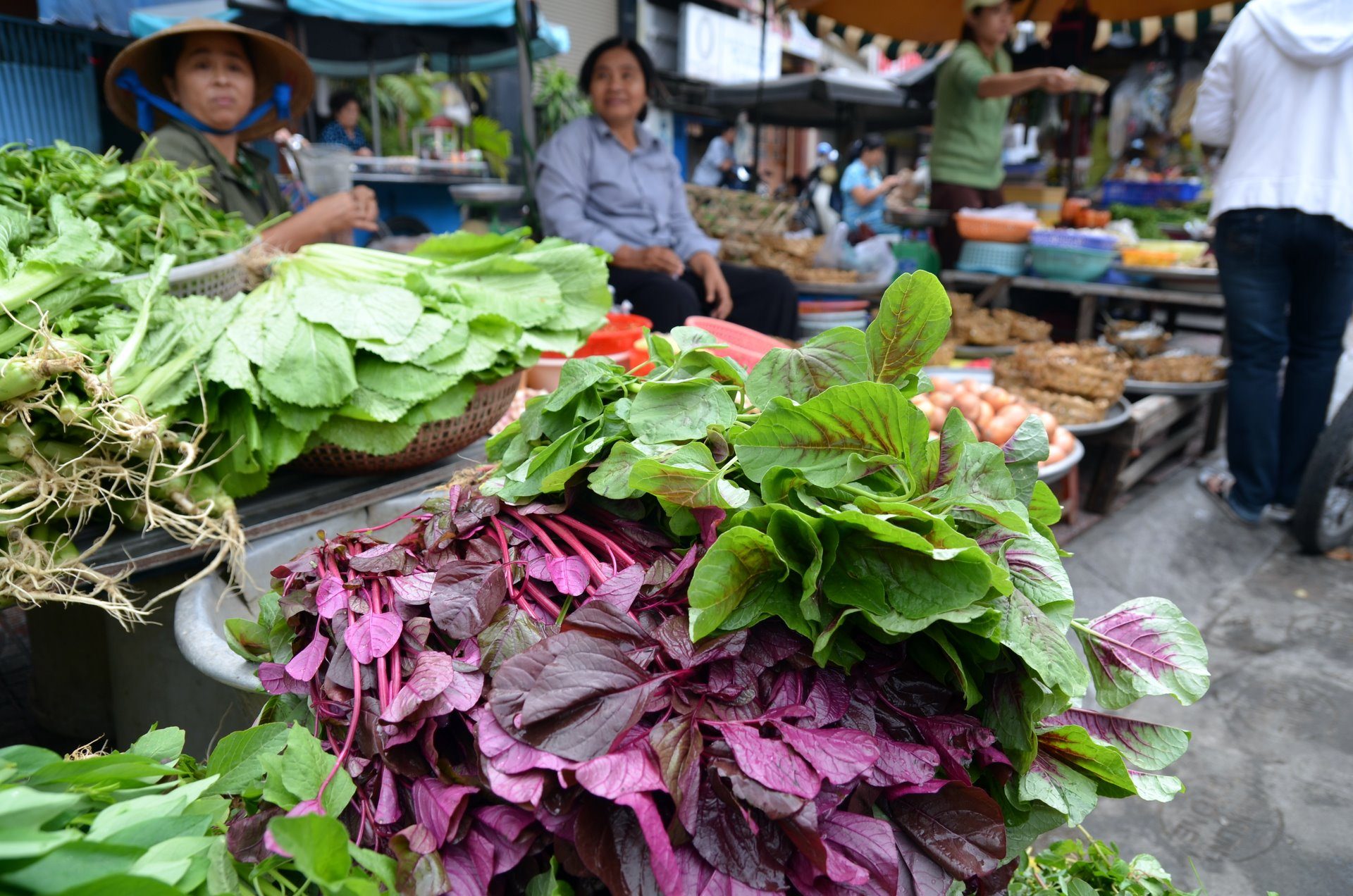
Photo: Takeaway / Wikimedia Commons, CC BY-SA 3.0
Household business tax: know the principles, ask the tax office
Household businesses owe tax based on revenue, usually value added tax and personal income tax calculated on revenue, plus fees and charges as regulated. The calculation method and the revenue threshold below which no tax is due are set by the current regulations.
A policy in transition
Most small eateries used to pay presumptive tax: the tax office set an estimated revenue and a fixed tax amount. The new policy moves household businesses to self-declaration based on actual revenue, phasing out presumptive tax, with requirements on e-invoices and bookkeeping for some groups. Because the details are still being guided and adjusted, do not rely on old articles or word of mouth; ask the tax office that manages your area directly.
Questions to take to the tax office
- Which method does my eatery declare under, is the period monthly, quarterly or yearly, and what is the deadline?
- What is the current revenue threshold below which no tax is due, and is it per year or per period?
- Do I need e-invoices or a cash register connected to the tax authority?
- How is revenue from delivery apps declared, and does the platform withhold tax on my behalf?
- Which books and documents must I keep, and for how long?
Bookkeeping habits from day one
Whatever the method, record revenue every day (cash, bank transfer, each app), keep purchase invoices and separate the eatery's bank account from household money. Clean books make tax declarations correct and give you the data to read profit and loss in the last step of the roadmap.
Fire prevention and gas and electrical safety
An eatery kitchen has gas, hot oil, open flames and high-power appliances in a small space, so the fire risk is much higher than in an ordinary home. Specific fire requirements depend on floor area, number of floors, location and type of business.
Ask the fire authority before signing a lease
Contact the ward or commune police or the area fire and rescue police, and ask which category your eatery falls into: whether you need a fire safety file, an appraisal, or only self-equipping and self-checking. A house in a narrow alley with a single exit and people living upstairs is the case to ask about most carefully.
Minimum equipment to have
- Suitable fire extinguishers at the exit, near the kitchen but not right next to the flames; a fire blanket by the stove (Figure 3).
- Gas cylinders in a ventilated place, valves and hoses within their service life, leaks checked with soapy water.
- Separate wiring and circuit breakers for stoves and freezers, installed by a qualified electrician.
- Extractor hoods and ducts cleaned of grease regularly; exits kept clear of stored items.
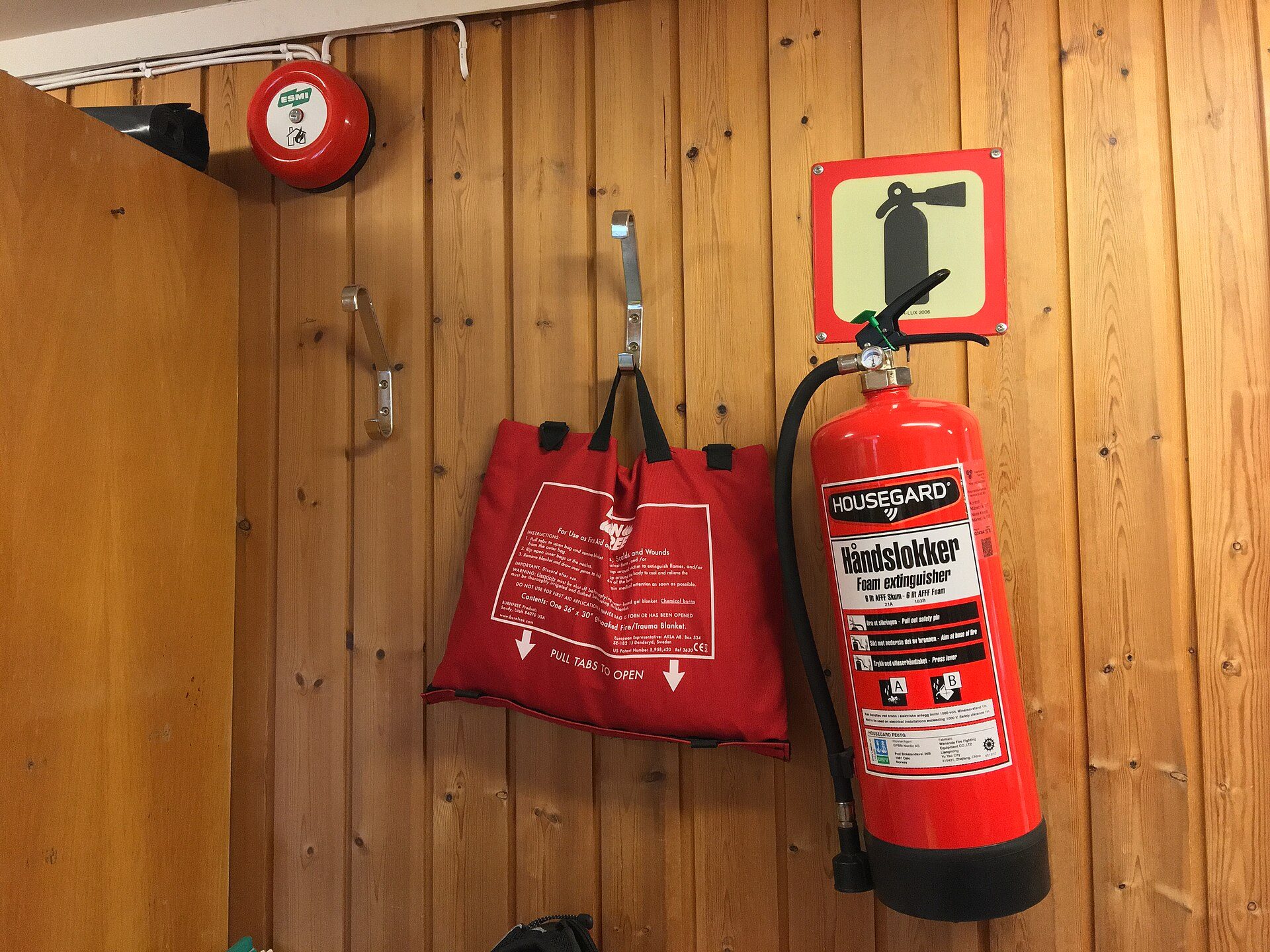
Photo: Wolfmann / Wikimedia Commons, CC BY-SA 4.0
Gas and fire safety warning: Never keep a gas cylinder in a closed cabinet, under the stairs or next to a lit stove. If you smell gas: close the valve, do not touch electrical switches, do not light a flame, open the doors and call your gas supplier. If a pan of oil catches fire: turn off the heat, cover it with a lid or a fire blanket, and never throw water on it. If fire spreads or there is a major gas leak: cut the power if it is safe, evacuate everyone and call 114 (Vietnam's fire emergency number). Train every staff member to use the extinguisher from day one.
Other procedures that often get forgotten
Beyond the 4 main groups, small eateries often run into rules tied to how they actually sell.
Pavements, signs, waste and wastewater
Putting tables on the pavement or roadway is only allowed where the locality permits it, within the set area and hours; many places enforce this strictly. Shop signs have rules on size and position. Waste and grease must not go down the drain: fit a grease trap to the sink and arrange waste collection with the local sanitation service.
Selling alcohol and playing music
If you sell alcohol for customers to drink on the premises, ask the relevant authority what licence is needed; home-brewed rice liquor has its own rules too. Loud music or karaoke that disturbs neighbours can be fined as noise. For a new small eatery, a simple concept means fewer procedures.
Staff and the lease
When hiring staff, agree clearly on pay, hours and probation; for long-term workers, ask about labour contracts and insurance as required. The lease should state that the premises are for a food business and that the landlord will provide property documents if needed.
Worked example: Hoa opens a 25 m² beef noodle shop
Hoa plans a 25 m² bun bo (beef noodle soup) shop on the ground floor of a townhouse, for dine-in and delivery apps, with 3 people: Hoa as head cook, 1 kitchen helper and 1 server. She does the paperwork first and only then signs the lease.
Step 1: 6 questions before signing the lease
- Ward: can a food service household business be registered at this address, and where do I file?
- Ward or health authority: at this size, do I need a food safety certificate or a commitment?
- Fire authority: the premises have one exit and people live upstairs; what equipment and documents are needed?
- Tax office: how do I declare tax, and do I need e-invoices?
- Ward: may I put tables on the pavement, and within what area and hours?
- Landlord: will you state food business use in the lease and provide house documents when needed?
Step 2: a 5-week plan to opening day
| Week | Main tasks | Result needed |
|---|---|---|
| 1 | Ask the ward, tax office and fire authority the 6 questions | Written answers, decision to lease or not |
| 2 | Sign the lease, file the household business application | Application receipt |
| 3 | Convert to a one-way kitchen, health checks, food safety training | Health certificates for 3 people |
| 4 | Food safety file, fire equipment, choose suppliers | File submitted or commitment signed, purchase log |
| 5 | Register for tax as instructed, soft launch for friends, open | Revenue log for the first day |
Actual timing depends on processing times in each locality; if papers are not ready, Hoa moves the opening date rather than opening early.
Step 3: set-up costs (2026 reference, varies by region)
| Item | Quantity × unit price | Amount |
|---|---|---|
| Health checks | 3 people × 300,000 VND | 900,000 VND |
| Fire extinguishers | 2 × 350,000 VND | 700,000 VND |
| Fire blanket | 1 × 150,000 VND | 150,000 VND |
| Pedal bins with lids | 2 × 200,000 VND | 400,000 VND |
| First aid box | 1 × 200,000 VND | 200,000 VND |
| Aprons, hairnets, gloves | 3 sets × 150,000 VND | 450,000 VND |
| Total | 2,800,000 VND | |
Check: 900,000 + 700,000 + 150,000 + 400,000 + 200,000 + 450,000 = 2,800,000 VND (about US$110). The table excludes government fees (ask when filing) and kitchen renovation; health check and equipment prices vary by provider, roughly 200,000–400,000 VND per health check.
Common mistakes when doing the paperwork
Signing the lease before asking about papers
Sign: you have paid 3 months' deposit and renovated, then learn the premises struggle to meet fire requirements. Fix: ask the 6 questions above before paying a deposit, and add a clause returning the deposit if permits cannot be obtained because of the premises.
Trusting an "all-inclusive" agent without understanding the file
Sign: you paid someone to handle it but do not know which papers the eatery has or when they expire. Fix: even with an agent, keep copies of every document, note expiry dates and check on the public services portal where possible.
Keeping no invoices and no books
Sign: buying at the market without receipts, revenue kept only in your head. Fix: keep a purchase log and a daily revenue log; pay suppliers by bank transfer so there is a transaction trail.
Practice tasks and self-assessment
- Pick a real property you are considering, ask all 6 questions from the example and record the answers, the department and the date.
- Draw a one-way kitchen plan for your eatery: delivery door, prep, cooking, plating, washing, waste.
- Build a set-up cost table using the template, with your staff numbers and local reference prices.
Self-assessment criteria
- Pass: you have recorded answers to all 6 questions, with sources (which authority answered, on what date).
- Pass: your kitchen plan has no backward path between raw and cooked areas.
- Pass: your cost table adds up and states which costs are not included.
- Not yet: you plan to sign a lease before asking about fire safety and business registration, or you use tax figures from an old article.
Frequently asked questions
What papers does a small eatery need in Vietnam?
Usually household business registration, a food safety certificate or commitment depending on category, health certificates and food safety knowledge for food handlers, tax registration and declaration, and fire safety requirements. Get the exact list from the ward or commune People's Committee where the eatery will be.
Does a small eatery need a food safety certificate?
It depends on size and type: some need a certificate, others only a signed commitment. Either way, the kitchen, clean water, staff health and ingredient traceability conditions must be met.
How is household business tax calculated for an eatery?
Household businesses pay tax on revenue under current regulations; policy is shifting from presumptive tax to self-declaration of actual revenue. Ask the local tax office about the declaration method, revenue threshold and e-invoices before opening.
Do I need to register to run an eatery from home?
If you sell regularly, have seating or take orders steadily through apps, you usually need to register a household business. Only some cases, such as street vending, snacks or low income under the locality's threshold, may be exempt.
With the paperwork clear, move on to the next step of the roadmap: Concept, location & capital budget, where you survey customers and competitors, compare rent with revenue and draw up a capital budget. Read ahead in How much it costs to open a small restaurant in Vietnam: 30 m² budget and How to price a dish: food cost %, portion specs and a pho example.
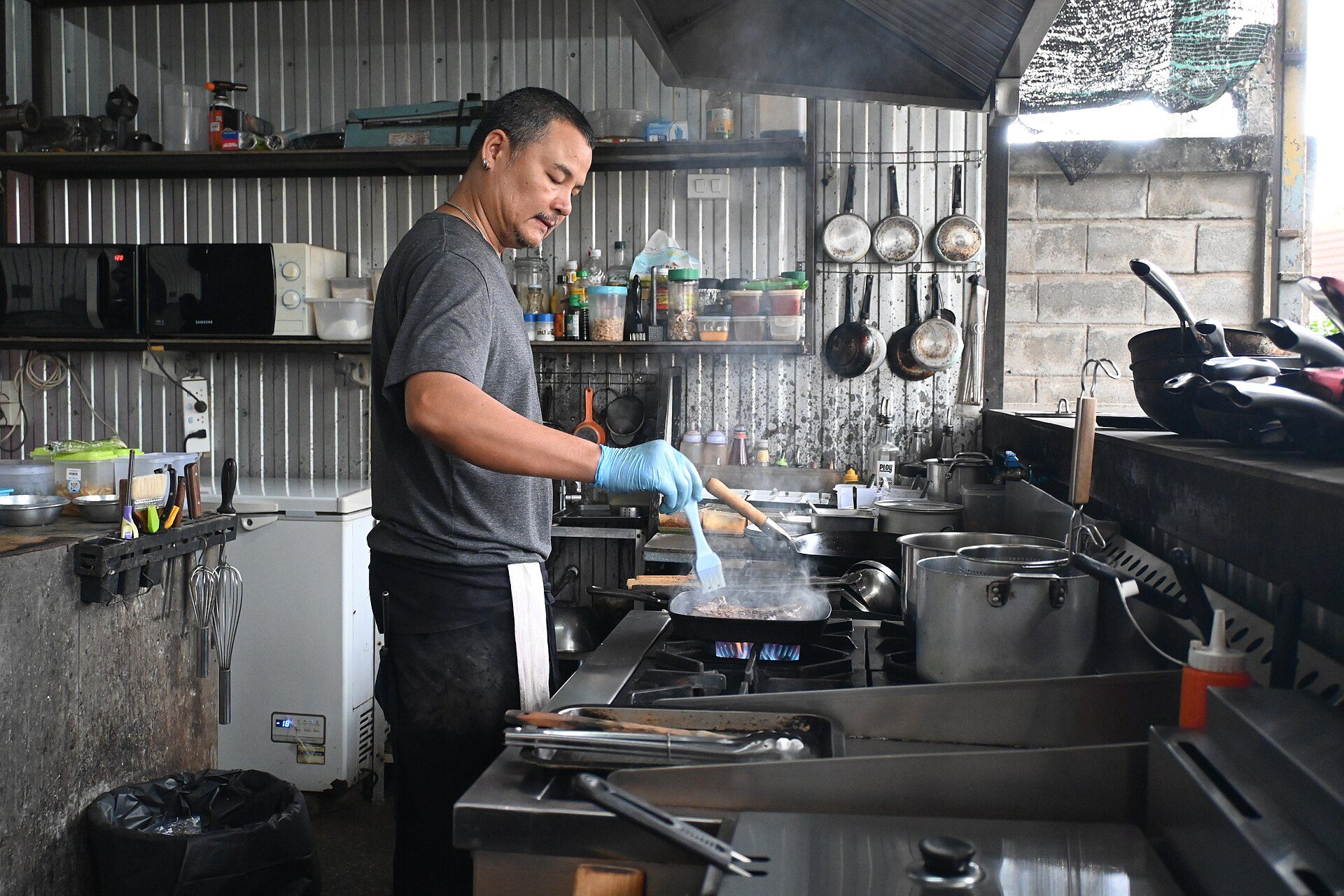
Photo: PattayaPatrol / Wikimedia Commons, CC BY-SA 4.0
Keep learning how to open an eatery: after the legal basics come location and capital budgeting, menu and food cost, kitchen layout, staff management and selling on delivery apps. See the 8-step roadmap for opening and running a small eatery.