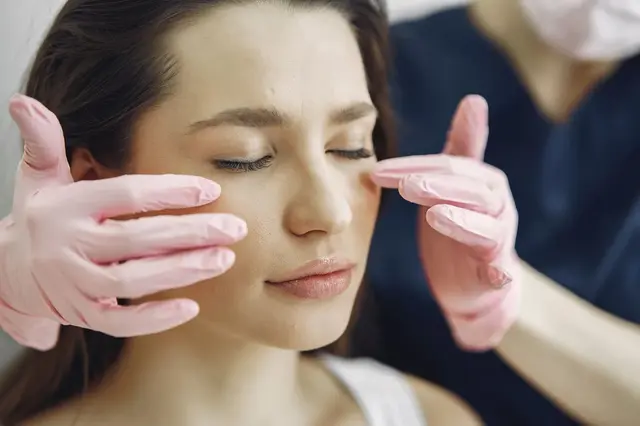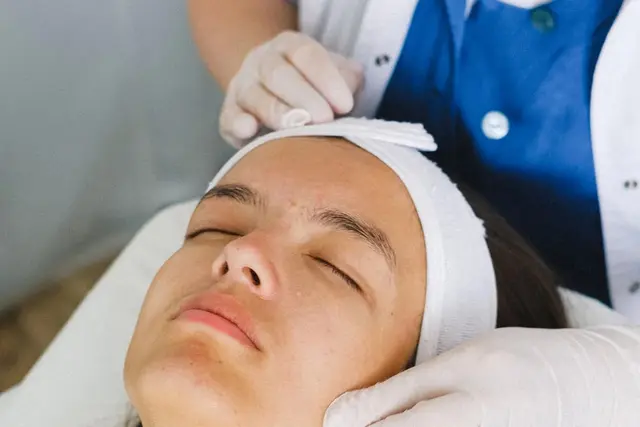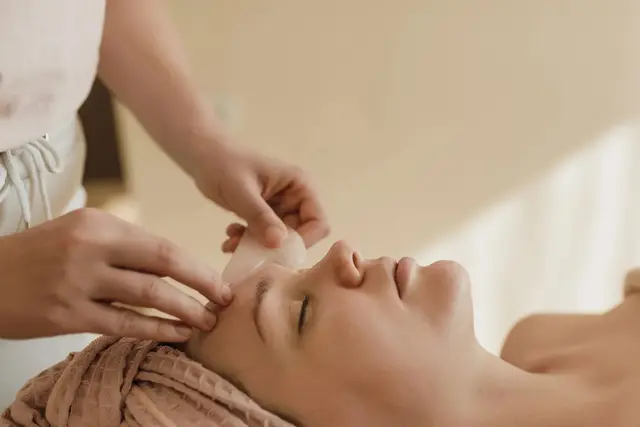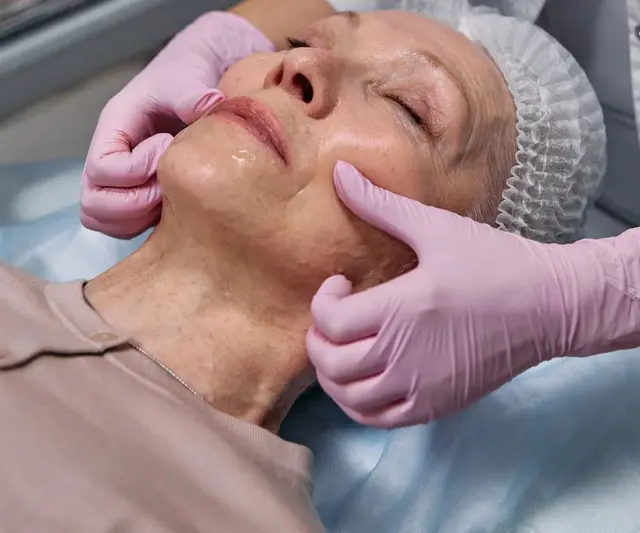
Permanent makeup contraindications are health conditions that mean a client cannot be treated right now: you refuse, you postpone, or you wait for a doctor's opinion first. The most common groups are pregnancy or breastfeeding, an active skin condition in the treatment area, and a bleeding disorder or anticoagulant medication. Alongside these sit the artist's own limits: no injections, no prescription anaesthetics, no diagnosing or prescribing, and work only at premises that meet current regulations. This is step 2 of the roadmap, with a screening form, refusal scripts and a worked example of consulting 6 clients in one morning, set in Vietnam.
By the end of this lesson, you will be able to:
- Tell apart the work a permanent makeup technician may do from work that belongs to doctors and licensed medical facilities.
- Screen clients at 3 levels: refuse, postpone, or require a written doctor's opinion.
- Run a consultation of about 18 minutes and take a signed consent form only when the client truly understands the risks.
- Turn a client down politely, with a reason and a clear next step.
- Recognise the signs that mean you stop the session, send the client to a doctor or call 115 (Vietnam's ambulance number).
Learning permanent makeup properly? This is step 2 of the roadmap: legal limits, contraindications and consent, after infection control and before skin structure and pigments. See the 8-step permanent makeup artist roadmap to learn in the right order.
Why legal limits and contraindications come before you pick up a machine
Step 1 taught you to keep needles, pigment and the work station clean. Step 2 answers a different question: should this person be treated at all, and are you allowed to do it? A beautiful brow job is still a failed job if the client is on blood thinners, bleeds heavily, pushes the pigment out and ends up with a scar.
Permanent makeup injures the skin
The needle carries pigment through the epidermis into the layer below, so the skin is punctured many times, weeps fluid and may bleed (see Figure 1). Any procedure that breaks the skin carries a risk of infection, allergy and scarring, so the artist has to know when a client's body cannot cope with that injury. Infection control is covered in Infection control in permanent makeup: single-use needles, sharps.
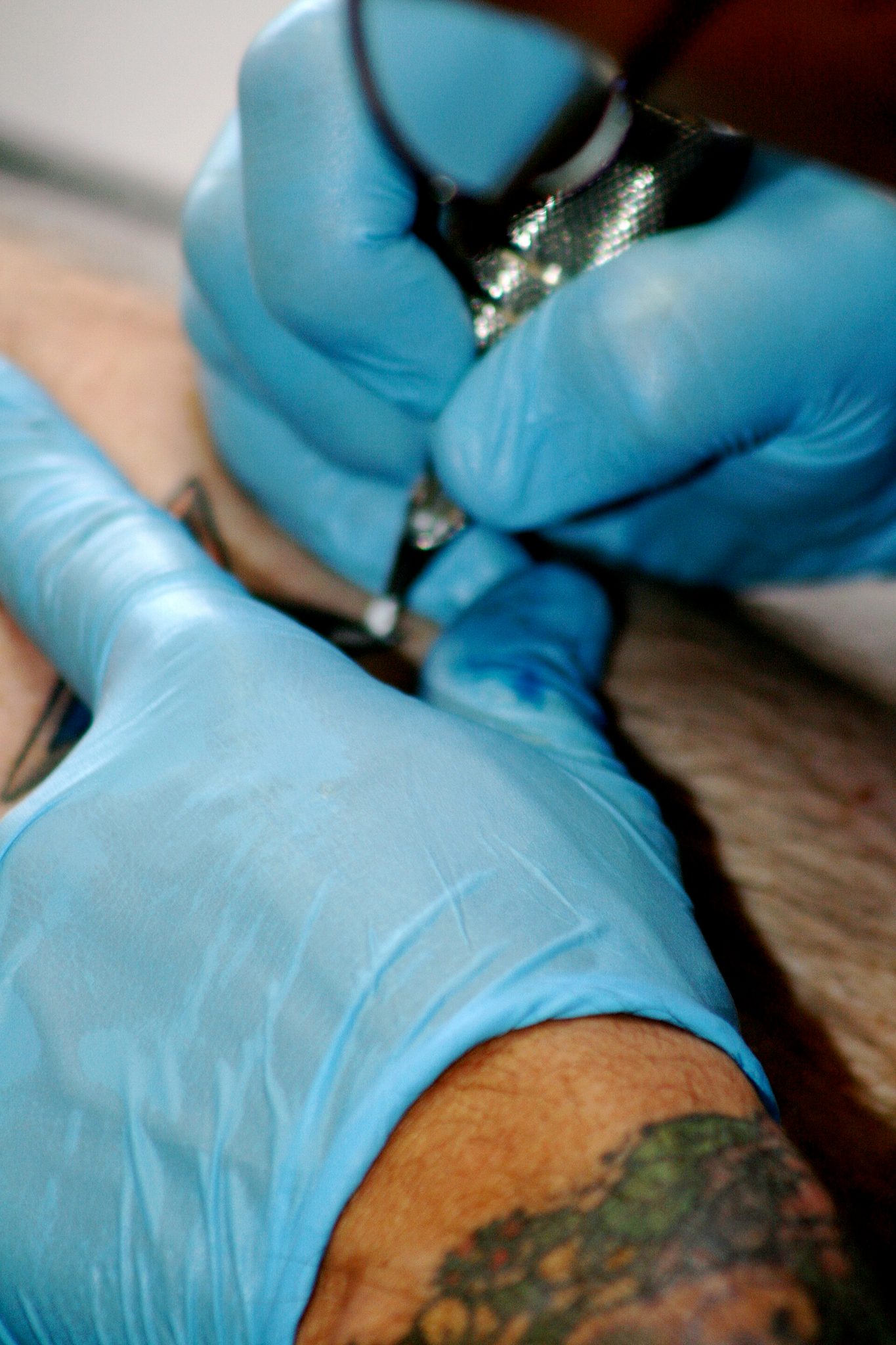
Photo: Giovanni Gallucci from Plano, Texas ('burb of Dallas), USA / Wikimedia Commons, CC BY 2.0
What happens when you skip this step
Clients can end up with infection, scarring, patchy colour or a lasting allergy. The business faces complaints and may be fined or suspended if it breaks the rules; in serious cases the person who did the work can be held legally responsible. This lesson is not legal advice; it shows you where the safe zone is and when to ask someone with authority.
Legal limits: what a permanent makeup technician must not do
The principle: technicians do the cosmetic work following the premises' procedures; examination, treatment, injections and prescription drugs belong to doctors and licensed medical facilities. If something sits in a grey area, the default is not to do it until you have a clear answer.
No injections, no prescription anaesthetics
An anaesthetic is a drug. Injecting anaesthetic, or injecting anything at all, is a medical procedure. For numbing creams applied to the skin, use only the product the premises supplies, which is authorised for sale, used as labelled and within the procedure the premises has approved. Do not buy prescription anaesthetics yourself or unlabelled "hand-carried" imports, do not mix your own, and do not increase the amount or the numbing time. This lesson deliberately names no drugs and gives no doses: that is the job of doctors and pharmacists.
No diagnosing, no prescribing
You may observe and record ("brow area red, with flaking"), but you do not name a disease and you do not give clients antibiotics, antivirals or medicated creams. When something looks wrong: stop, record it, tell your manager and direct the client to a doctor.
No promises beyond the truth
Avoid claims such as "100% painless", "completely safe", "medical standard" or "colour that lasts forever". Do not post before and after photos unless the client has agreed in writing. Over-promising is the most common source of complaints.
Premises need the licences required by current rules
The rules on cosmetic services in Vietnam have changed several times, so this lesson only gives principles. A permanent makeup business needs business registration for the right line of business, must meet hygiene, safety and fire prevention conditions, and may have to notify or obtain permission from the health authority before operating. Services that use injected anaesthetic, cutting or surgical intervention fall under medical examination and treatment, which needs a medical facility licence and practitioners with the right practising certificates. If you are unsure, ask the provincial Department of Health or your local health authority directly, not the machine seller or a social media group. The spa article Opening a spa in Vietnam: licences, procedures and small spa costs covers the line between an ordinary spa and medical aesthetics.
| Task | Technician at compliant premises | Only a doctor / licensed medical facility |
|---|---|---|
| Consultation, reading the health form, brow mapping | Yes | Not needed |
| Brows, lips, liner with single-use needles | Yes, after training and with supervision | When injected anaesthetic or other intervention is involved |
| Applying a topical numbing cream | Only authorised products, as labelled, within procedure | Any prescription anaesthetic |
| Injecting anaesthetic, lip filler, eyelid surgery | No | Yes |
| Diagnosing skin disease, prescribing antibiotics or antivirals | No | Yes |
| Treating infection or severe allergy after treatment | No, only stop and refer | Yes |
Contraindications at 3 levels: refuse, postpone, doctor's opinion
There is no single contraindication list used everywhere; each training provider and pigment maker has its own. The table below gathers the common groups. If your premises' list is stricter, follow it.
Level 1: refuse
Do not treat and do not book a date until the situation changes: pregnancy, breastfeeding, current chemotherapy or radiotherapy, being drunk, being pressured by someone else, or expectations that cannot be met. Many premises only accept clients aged 18 and over, because minors cannot fully sign consent on their own; follow your premises' policy and current law.
Level 2: postpone
Temporary conditions that clear up: inflamed acne, eczema, scrapes or sunburn in the treatment area (see Figure 2); fever or flu; red eyes when liner is planned; a recent peel, laser or cosmetic injection near the area; currently taking or recently stopping oral retinoid acne medication. How long to wait is set by the client's doctor or by premises policy, never by the technician.
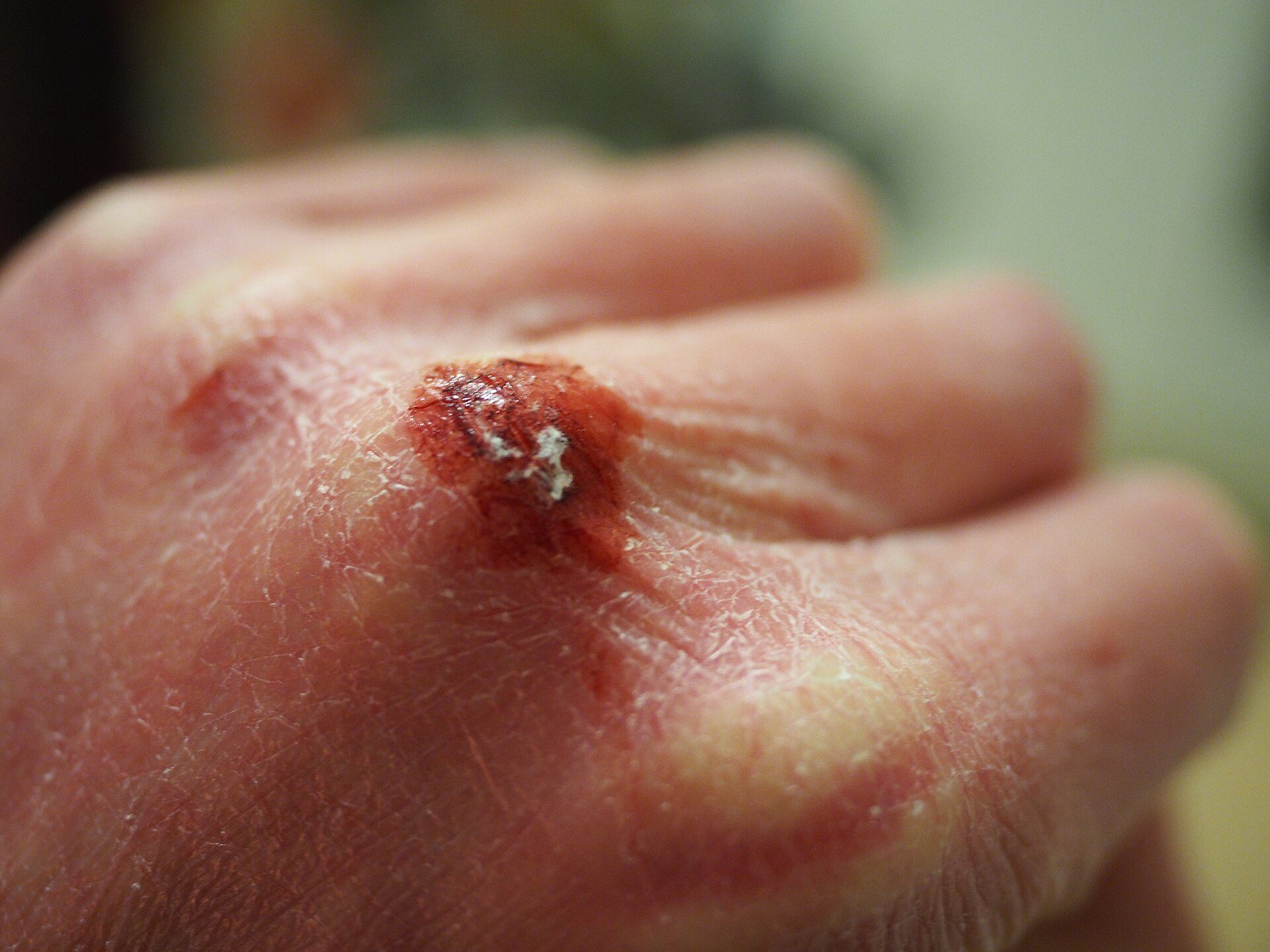
Photo: JIP / Wikimedia Commons, CC BY-SA 4.0
Level 3: written doctor's opinion required
Conditions or medicines that cause heavy bleeding, slow healing or easy infection: bleeding disorders, anticoagulant or antiplatelet medication, diabetes, autoimmune disease, weakened immunity, a history of keloid scars, heart disease under treatment, recurrent cold sores when lips are planned, and a history of allergy to pigment or numbing cream. Treat only when the treating doctor states clearly in writing that the procedure is acceptable; a verbal account or a text message is not enough.
Never: advise a client to stop blood thinners, diabetes medication or any other treatment "for a few days so it is easier to work". Stopping medication the wrong way can cause serious complications. Changing medication is the treating doctor's decision.
| Client's condition | Level | Why | What the technician does |
|---|---|---|---|
| Pregnant or breastfeeding | Refuse | Not enough evidence on the safety of pigments and numbing creams; infection is harder to treat | Offer to reconnect after the client has asked her doctor |
| Active skin condition in the area | Postpone | Skin already damaged, infects easily, colour heals unevenly | Refer to a dermatologist |
| Bleeding disorder, anticoagulants | Doctor | Bleeding pushes pigment out, bruising, scarring | Never suggest stopping; wait for a doctor's letter |
| Diabetes, weakened immunity, autoimmune disease | Doctor | Slow healing, easy infection | Refuse if the condition is not stable |
| History of keloid scars | Doctor | Needle marks can become keloids | Usually refuse without a specialist's opinion |
| Recurrent cold sores (lip work) | Doctor | Lip injury can trigger an outbreak | Never hand out medication |
| Fever, red eyes, recent peel or laser nearby | Postpone | Body or skin not stable yet | Rebook per premises policy |
| Drunk, pressured, unrealistic expectations | Refuse | Cannot give informed consent | Decline politely, take no deposit |
The health form and the pre-treatment consultation
The health form is a screening tool, not paperwork. The client fills it in, you read it together, ask about every "yes" and write your decision on the form.
What the health form should cover
- Name, year of birth, phone number, emergency contact.
- Current conditions: heart disease, diabetes, bleeding disorders, skin disease, autoimmune disease, keloids, hepatitis.
- Current medication, especially anticoagulants, oral acne medication and immunosuppressants.
- Allergies: pigment, metals, latex gloves, numbing cream, cosmetics.
- Pregnancy, breastfeeding.
- Recent procedures in the area: old permanent makeup, injections, peels, laser, eye surgery.
- What the client wants, with reference photos.
An 18-minute consultation
- Greet the client and explain what the consultation is for: 2 minutes.
- Read the form together, ask about every "yes" and every blank: 5 minutes.
- Look at the skin in good light and note its condition: 3 minutes.
- Explain the procedure, risks, healing timeline, aftercare and touch-up: 5 minutes.
- Client reads and signs the consent form and asks any last questions: 3 minutes.
Total: 2 + 5 + 3 + 5 + 3 = 18 minutes. Brow mapping is a separate step, done only after the client has passed screening.
The consent form: informed consent, not a box to tick
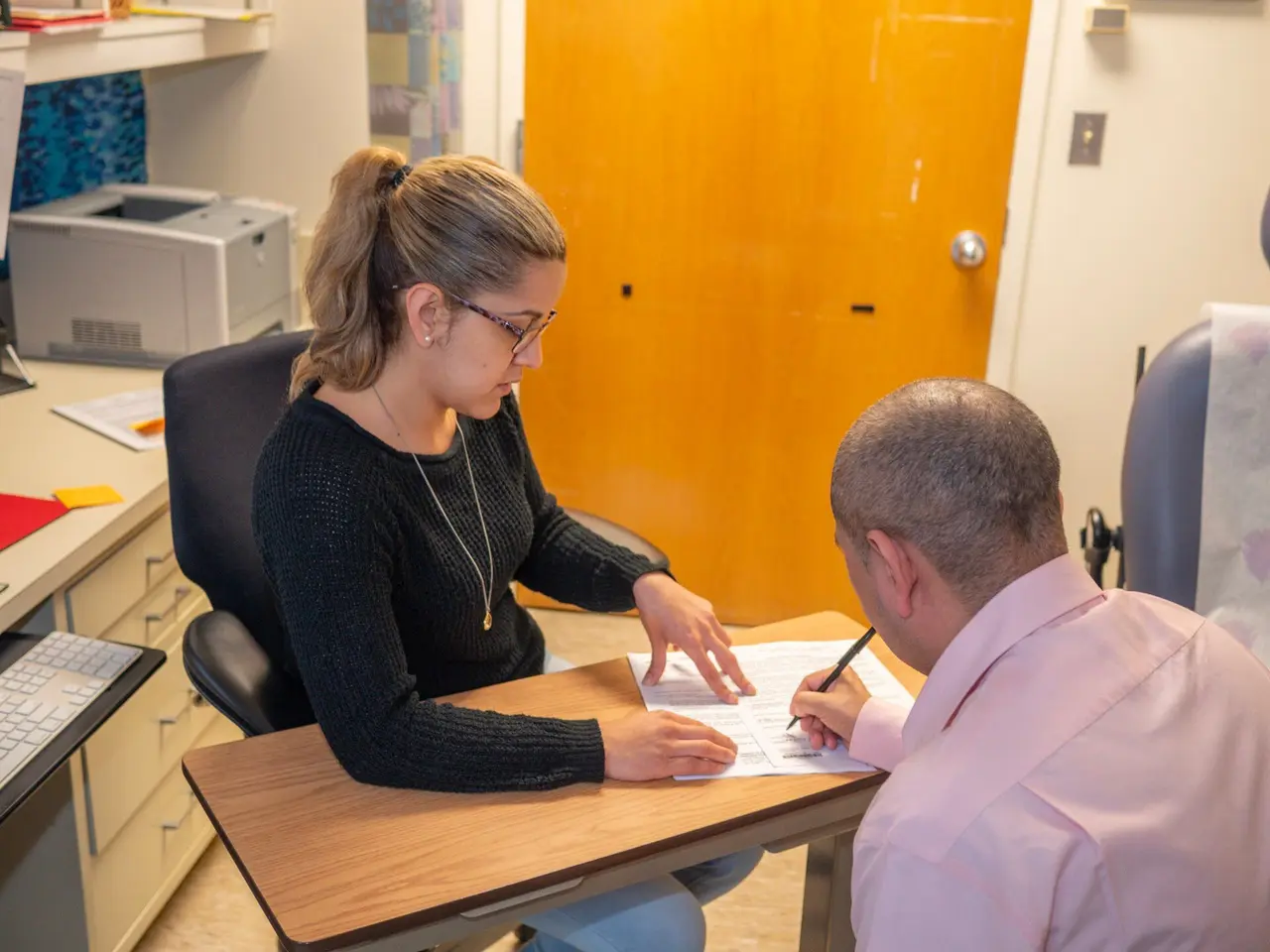
The consent form shows that the client was given an explanation and made her own decision. It only counts if the client can read it, understands it and signs while alert and unhurried (see Figure 3).
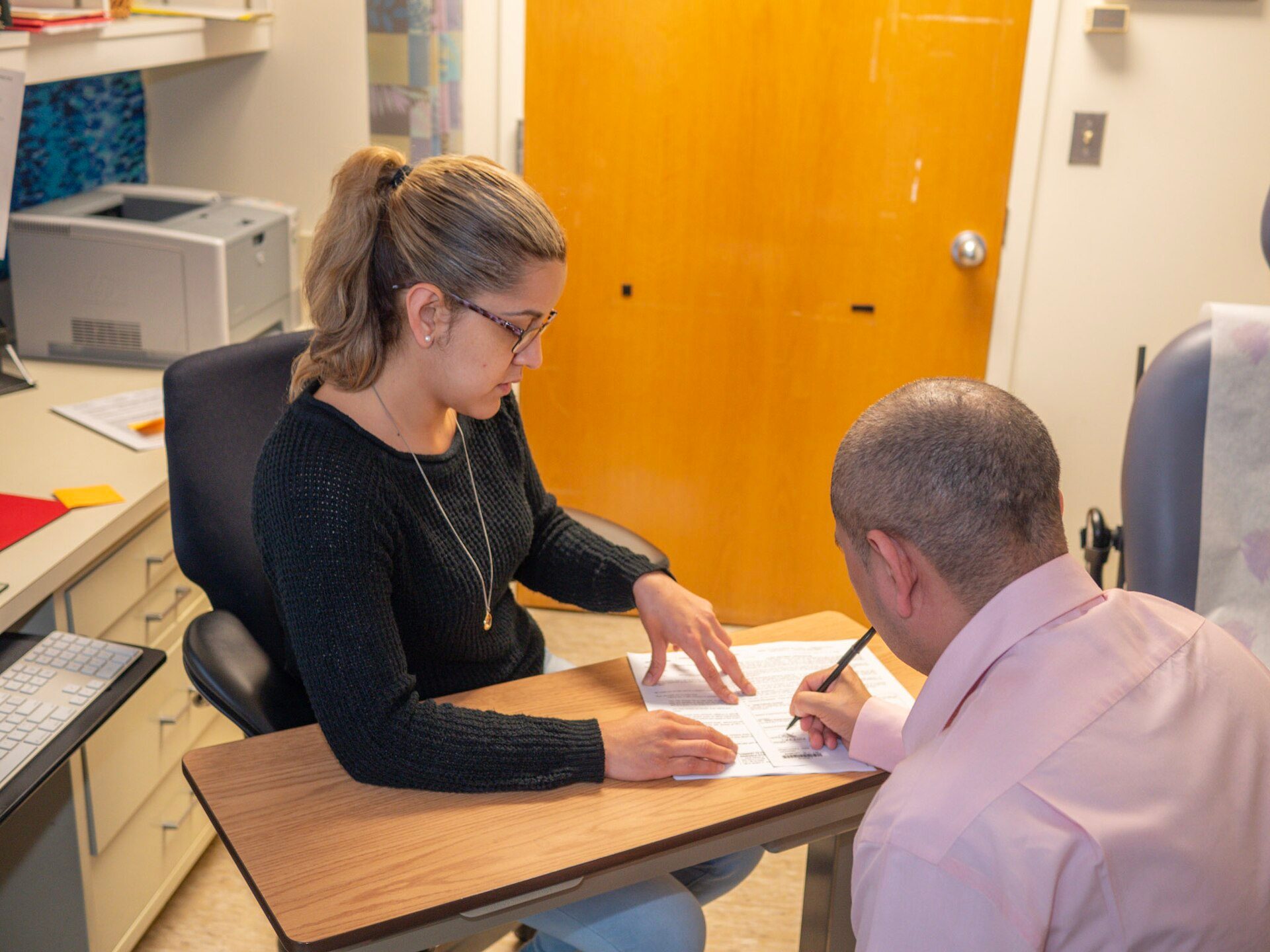
Photo: NIAID / Wikimedia Commons, CC BY 2.0
Minimum content of the form
- The service, area, colour and shape agreed.
- Common risks (swelling, redness, flaking, uneven colour, need for touch-up) and less common ones (allergy, infection, scarring).
- Long-lasting results; removing or correcting later is harder and costlier than doing it new.
- Aftercare instructions and signs that need a doctor.
- Client confirms she has declared her health and medication truthfully.
- Consent to photos for the record, with a separate box if the premises wants to use photos in advertising.
- Signatures of client and technician, date and time.
Consent is not a shield
A signature does not remove the premises' responsibility. If hygiene was broken or a client who should have been refused was treated, the form does not cover that mistake.
Keep client records private
Health forms and face photos are sensitive information. Keep them in a locked cabinet or software with access control, never photograph them into a group chat, and follow current personal data protection rules.
Worked example: screening 6 brow clients in one morning
A studio has 6 clients booked for brows on a Saturday morning, each with a 200,000 VND deposit. The brow price is 2,500,000 VND per client (about USD 95), including one touch-up (2026 reference, varies by region and premises, usually about 1.5 to 5 million VND). The technician consults each client using the 18-minute process.
| Client | Key information from the form | Level | Decision |
|---|---|---|---|
| A, 28 | Healthy, no medication, normal brow skin | No contraindication | Treat |
| B, 31 | 3 months pregnant | Refuse | No treatment, deposit held until she decides |
| C, 47 | Takes prescribed anticoagulants for a heart condition, no doctor's letter | Doctor | Not yet, client asks her treating doctor |
| D, 23 | Inflamed acne and flaking at the brow heads | Postpone | Refer to a dermatologist, rebook later |
| E, 39 | Brows done 3 years ago, evenly faded, no conditions | No contraindication | Treat |
| F, 52 | Stable diabetes, letter from treating doctor clearly approving brows | Doctor, letter provided | Treat, watch healing more closely |
Adding up the morning
- Treated: A, E, F = 3. Not treated: B, C, D = 3. Check: 3 + 3 = 6, matching the bookings.
- Consultation time: 6 × 18 = 108 minutes, or 1 hour 48 minutes, including clients who were not treated.
- Revenue: 3 × 2,500,000 = 7,500,000 VND.
- Deposits held for clients not treated: 3 × 200,000 = 600,000 VND, moved to a new booking or refunded under the policy announced in advance.
The lesson
Half the morning's bookings were "lost". But treating client C without a doctor's opinion risks heavy bleeding, pigment loss, repeated corrections and a complaint; one complaint spreading online usually costs more clients than 3 postponed bookings.
How to refuse a client and still keep her
Refusing is a professional skill, not a failed sale: a calm voice, a reason based on the client's health and always a next step.
Scripts you can use
- Pregnant client: "We don't treat during pregnancy or breastfeeding, to keep you and the baby safe. When you're ready and have asked your doctor, I'll give you a priority booking."
- Client on anticoagulants: "Your medication is important, please don't stop it yourself. Could you ask your treating doctor? If the doctor approves it in writing, I'll do your brows."
- Client with inflamed acne at the brows: "The skin here is inflamed, so treating now risks infection and uneven colour. Please see a dermatologist, and we'll rebook when the skin has settled."
When you are pressured, or the client says "my doctor said it's fine"
If you are pushed to work outside your scope, such as injecting or using numbing products of unknown origin, you have the right to refuse; record it and tell the person in charge of professional standards. If the client says a doctor has approved, thank her and ask for the paperwork: a verbal account is not a substitute for a written note (see Figure 4).

Photo: Rhoda Baer (Photographer) / Wikimedia Commons, Public domain
Safety and when the client must see a doctor
Even with careful screening, unexpected reactions can happen.
Safety warning: Permanent makeup needles come into contact with blood and body fluids: use single-use needles and cartridges, fresh gloves for each client, and put needles in a sharps container. Never use prescription anaesthetics, never inject. If during a session the client has trouble breathing, rapid swelling of the lips, tongue or face, a rash spreading over the body, dizziness or fainting: stop immediately, call 115, and stay with the client until medical staff arrive. Do not give the client any medicine to swallow or apply.
Signs to stop the session
- Heavy bleeding that gentle pressure with sterile gauze does not stop.
- Rapid swelling or an itchy rash spreading after numbing cream or pigment is applied.
- During eyeliner work: sharp eye pain, constant watering, blurred vision.
Signs after treatment that need a doctor
- Swelling, redness, heat or pain that keeps increasing after 2 to 3 days, pus, a bad smell or fever.
- Clusters of blisters on the lips after lip work; red, painful eyes after eyeliner.
- Itching, lumps or swelling in the area that last for weeks.
The technician records it, informs the manager and directs the client to a dermatologist, an eye doctor or the nearest medical facility. How to brief clients on day-by-day aftercare for lips is in How long does lip blush take to show its colour?.
Common mistakes trainees make with legal limits and contraindications
Filling in the health form for show
Sign: many blank boxes, no decision written down. Cause: treating the form as paperwork and rushing on busy days. Fix: never start a session until the form has been read with the client and marked "cleared", "postpone" or "awaiting doctor's opinion".
Buying "hand-carried" numbing cream because it is stronger
Sign: a tube with no Vietnamese label, left on longer than directed. Cause: clients complain of pain, a colleague recommends it. Fix: use only what the premises supplies under its approved procedure; if a client cannot tolerate the pain, say so honestly and consider postponing.
Working at clients' homes or non-compliant places
Sign: "weekend side jobs" in clients' homes or rented rooms. Cause: wanting extra income. Fix: work only at compliant premises with a sharps container, a hand-washing point and client records; anywhere else, neither hygiene nor legal protection is assured.
Frequently asked questions
What licences does a permanent makeup business need in Vietnam?
At minimum, business registration for the right line of business and meeting hygiene, safety and fire prevention conditions; depending on how the work is done, notification to or permission from the health authority may also be required. The rules change over time, so ask the provincial Department of Health or your local health authority first.
Can a pregnant woman get her brows done?
Most premises do not treat clients who are pregnant or breastfeeding, because there is not enough evidence on the safety of pigments and numbing creams, and because of the infection risk. The client should wait and ask her obstetrician.
Can someone on blood thinners have permanent makeup?
Only if the treating doctor clearly approves it in writing. A technician never advises stopping medication.
Can a permanent makeup technician use anaesthetic?
No injected anaesthetic and no prescription anaesthetics. Topical numbing cream is limited to products the premises supplies, authorised for sale, used as labelled and within procedure.
Practice exercises and self-assessment
- Draft a one-page health form for brow work covering the 7 groups above.
- Draft a consent form with the 7 minimum items, read it to someone outside the trade and ask what they understood.
- Role-play 3 consultations: a pregnant client, a client on anticoagulants, a client with inflamed acne at the brows. Time each one.
Self-assessment criteria
- Pass: you assign the right level to all 8 rows of the contraindication table without looking.
- Pass: each role-played consultation takes 15 to 20 minutes, and the "client" can repeat the main risks and the touch-up schedule.
- Pass: your refusal gives a health reason and a clear next step.
- Not yet: you suggest stopping medication, name an anaesthetic or a dose, or start work with unasked blanks on the form.
Once you know clearly what you may and may not do, move on to the next step of the roadmap: Skin structure, pigments & reactions, where you learn the layers of the skin, needle depth, why brows turn blue or red and how to patch test for pigment allergy.
Keep learning permanent makeup: after legal limits and contraindications come skin structure and pigments, brow mapping, brows on synthetic skin, lips and liner, and 20 supervised cases. See the 8-step permanent makeup artist roadmap.