Ms Mai, 29, with combination skin, books a facial and tells you in advance: “Exfoliate really thoroughly for me, I've got lots of blackheads on my nose and my cheeks feel rough.” On the form she writes that she uses a serum bought online that “treats acne and fades dark spots”, applies it every night, and last week scrubbed her face at home with coarse salt. Which type of exfoliant do you choose, how long do you leave it on, and should you exfoliate today at all?
Short answer: facial exfoliation is the step most likely to cause irritation in a basic facial, so the most important decision is not “which product to use” but “do I exfoliate today, and how gently”. You need to know what the client is applying (especially exfoliating acids and retinoids) and whether the skin is currently red, peeling, stinging or has inflamed acne, and only then choose one suitable type of exfoliant: a fine scrub, an enzyme, or a spa AHA/BHA. Do not combine several exfoliation methods in one session, set a timer for exactly the time in the instructions, and stop immediately if the client's stinging keeps increasing. For Ms Mai: no chemical exfoliation today until you know what is in the serum; if her skin is not red or stinging, you might use only a gentle enzyme, or skip exfoliation completely and rebook.
This lesson focuses specifically on the exfoliation step in a spa facial treatment. The 8-step facial procedure, masks, extractions, full-body scrubs and dealing with redness and stinging after a facial each have their own lessons on NAMBIN. This lesson does not cover high-strength peels, microneedling or microdermabrasion machines — those are procedures that require medically qualified, specially trained staff. Nor does it replace a dermatologist's advice. By the end of this lesson, you will be able to choose the right type of exfoliant for each skin type, decide when to adjust or skip the step, carry out the procedure safely with patch testing, and handle reactions.
What facial exfoliation is and why it so easily damages skin
The outermost layer of the skin (the stratum corneum) is made up of dead cells that shed naturally every day. When shedding slows down, the skin surface looks dull and rough, moisturisers do not absorb evenly, and pores clog more easily. Exfoliation helps remove some of the old cells loosely attached to the surface.
The problem is that this same layer is the skin's protective barrier. Remove a little and the skin is smoother; remove too much and the skin becomes dehydrated, red, stings when cream is applied, or even becomes raw and grazed. At the spa, skin damage is usually caused not by a “fake” product but by:
Layering exfoliation on exfoliation: the client already uses acids or retinoids at home, then at the spa gets a scrub followed by a mask containing acid.
Scrubbing hard and for too long because the client wants it “really clean”, or because the therapist thinks pink skin means “it's working”.
Ignoring the product's timing instructions, leaving an enzyme or acid on the skin longer while doing something else.
Not asking thoroughly: the client has just had facial waxing, sun exposure or laser treatment, but nobody asked.
That is why a skilled therapist at this step is one who knows when to skip exfoliation and can explain to the client why.
Four common types of exfoliation at the spa
Physical exfoliation with granules (scrub)
A cream or gel containing small particles, moved gently with the fingers so the particles roll away dead cells. Pros: easy to understand, and the client “can feel it working”. Cons: easy to overdo, especially with large or sharp-edged particles. From trade experience, choose products with fine, evenly rounded particles; avoid using coarse materials on the face such as coarse salt, granulated sugar or crushed fruit shells, as they easily scratch the skin.
Gommage (peel-off rubbing cream)
A cream applied in a thin layer and left to set, then rubbed lightly with the fingertips so it rolls into crumbs that carry dead cells away. You need to hold the skin taut with your other hand while rubbing; use short, light movements and do not drag the skin up and down, especially on the cheeks and near the eyes.
Enzyme exfoliation
Products containing enzymes (for example papain from papaya, bromelain from pineapple) help loosen the bonds between surface cells. Usually no rubbing is needed: apply a thin layer, leave it for exactly the stated time, then wipe it off. Some enzyme products are designed to be activated with warmth (a warm towel or warm steam) — only do this when the product instructions clearly say so. Enzymes are often considered a gentler option for dry or easily reddened skin, but gentle does not mean non-irritating: you must still ask about allergies (for example to papaya or pineapple) and patch test first.
Chemical exfoliation: spa-grade AHA, BHA and PHA
AHA (e.g. glycolic, lactic or mandelic acid): water-soluble, works on the skin surface, often used for dull, rough skin.
BHA (salicylic acid): oil-soluble, can penetrate into pores, often chosen for oily skin and blackheads.
PHA (e.g. gluconolactone): a larger molecule, usually promoted as gentler.
Acid products can make the skin more sensitive to sunlight for the following days, so always remind the client to use sun protection. At the spa, therapists only use chemical exfoliants supplied by the spa and that they have been trained on, following the manufacturer's instructions on timing, how to remove them and whether a neutraliser is needed. Do not mix your own, do not extend the time on your own initiative, and do not bring in outside products. High-strength peels that cause heavy peeling belong to doctors or licensed facilities, not to this lesson.
Quick comparison table (for reference)
Type | How it works | Often suits | Be careful with | Time on skin (reference) |
|---|---|---|---|---|
Fine scrub | Light friction by hand | Oily skin, normal non-sensitive skin | Thin or red skin, inflamed acne; coarse, sharp particles | About 1–2 minutes of gentle circles |
Gommage | Cream sets, then is rubbed off lightly | Normal and combination skin | Dragging the skin while rubbing; thin cheek skin, around the eyes | According to product instructions |
Enzyme | Loosens bonds between surface cells, no rubbing | Dry skin, easily reddened skin (after a patch test) | Ingredient allergies; leaving it on too long | According to instructions, usually a few minutes up to about 10 minutes |
Spa AHA/BHA/PHA | Acid dissolves the bonds | Dull, rough skin (AHA); oily skin, blackheads (BHA) | Clients using retinoids or acids at home; darker skin prone to pigmentation; after sun exposure, waxing or laser | Exactly the number of minutes in the instructions, with a timer |
The times in the table are only for orientation. The instructions printed on the product your spa uses always take priority over this table.
Before exfoliating: ask carefully, look carefully, decide whether to proceed or skip
Questions to ask
Even if the client has filled in a health form, before the exfoliation step you still ask again verbally and briefly:
“In the last few weeks, have you been using any acne cream, anti-ageing cream, acid serum or retinol? Do you remember the name, or do you have a photo of the bottle?”
“Are you taking any acne medication or anything prescribed by a dermatologist?”
“Recently, have you had any facial waxing, shaving, laser, peel, microneedling or injections?”
“Have you been out in the sun a lot in the last few days, or had a sunburnt face?”
“When did you last exfoliate at home, and with what?”
“Have you ever been allergic to cosmetics, aspirin, papaya, pineapple or any ingredient?” — the aspirin question is because many guidelines advise caution with salicylic acid in people allergic to aspirin; for clients with this history, do not use BHA and inform the manager.
“Are you pregnant or breastfeeding?” — if so, follow spa policy only and do not use chemical exfoliants without a doctor's advice.
Examine the skin under bright light
After a double cleanse, examine the skin under a magnifying lamp or good light. Note: oily areas, dry flaky areas, blackheads, inflamed spots, red areas, visible capillaries, grazes, darker patches or post-acne marks. Gently press a little on the cheek: thin, shiny, tight skin that reddens quickly when touched is a sign that you should choose a very gentle exfoliation or skip it.
Darker skin, or skin that easily leaves marks after acne, needs a gentler touch, because strong irritation in this skin type easily leaves long-lasting dark marks. This is why “exfoliating hard to brighten” often backfires.
Proceed – adjust – skip exfoliation table (for reference)
Situation | Decision | Notes |
|---|---|---|
Healthy skin, no active ingredients, last exfoliation was a long time ago | Proceed, choose the type according to skin type | Still patch test with a new product or a new client |
Using retinoids (tretinoin, adapalene, retinol…) or acid serums at home | Skip exfoliation on the treated areas | Do not advise the client to stop medication yourself; suggest asking the prescribing doctor |
Taking isotretinoin, or stopped only recently | Do not exfoliate | Many guidelines advise waiting at least about 6 months after stopping (reference); ask the treating doctor |
Scattered inflamed spots or pustules | Avoid acne areas; no scrubs | Widespread, extensive inflamed acne: advise seeing a dermatologist |
Red, peeling, stinging skin; recent sunburn | Skip exfoliation | Gentle cleansing, soothing and hydration only |
Just waxed or shaved facial hair | Do not exfoliate the freshly waxed area in the same session | Usually wait at least 24–48 hours (reference) |
Recent laser, peel, microneedling or cosmetic injections | Skip exfoliation | Follow the waiting period the doctor advised |
Cold sores (lip herpes), open wounds, infection, fungal skin infection, flaring eczema | Do not work on that area; consider postponing the whole session | Advise seeing a doctor |
Client used a coarse scrub at home in the last few days | Skip, or only a very gentle enzyme after a patch test | Explain, and advise a sensible frequency |
The table is only a reference framework so that new therapists do not miss anything. Spa policy and the client's doctor's advice always come first.
Preparing tools and products
The chosen exfoliant, taken out into a small clean bowl with a separate spatula or stick; never put your fingers or a used brush into the jar.
A clean fan brush or flat brush (for enzyme or acid gels), cotton pads, cotton buds, facial sponges or small clean face cloths, a bowl of warm water and a bowl of cool water.
Headband, chest towel, and damp cotton pads to cover the eyes if the product instructions require it.
A timer placed where you can see it.
Nitrile gloves: many spas require gloves when applying acid products and when working on acne-prone skin; follow the rules of your workplace.
Soothing product, moisturiser, sunscreen and clean cool water for a quick rinse if the client feels stinging.
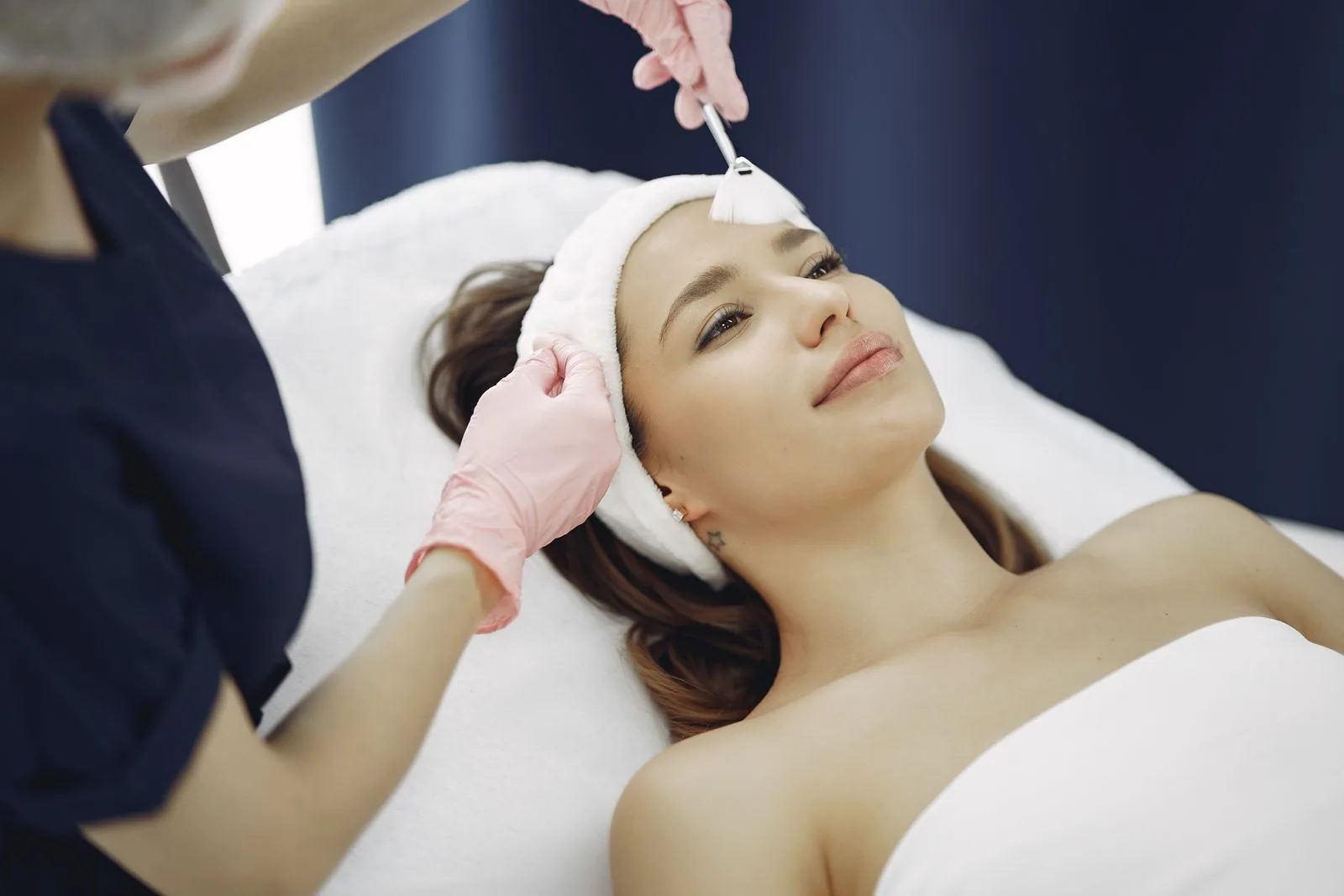
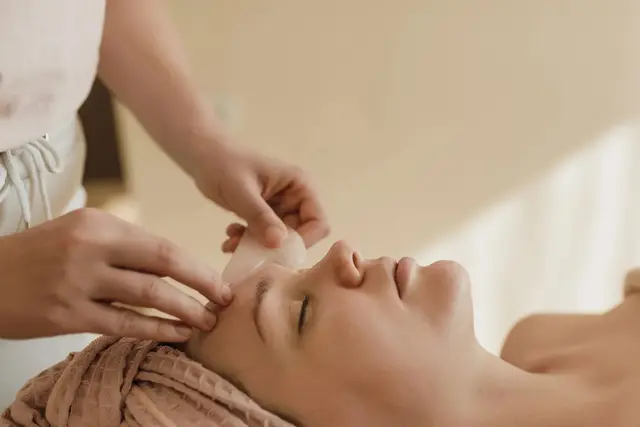
Figure 1. Using a clean brush and gloved hands to apply the product in a thin layer, starting from the forehead and keeping away from the eye area (Photo: Gustavo Fring, Pexels)
The exfoliation procedure within a facial treatment (for reference)
Exfoliation comes after the double cleanse and skin analysis, before softening and massage, as in the basic facial procedure. The whole section below usually takes about 5–12 minutes depending on the type of exfoliant (reference).
Step 1: Cleanse and pat dry gently
The skin must be free of make-up, sunscreen and excess oil for the product to work evenly. With acid products, many instructions require the skin to be dry before application; damp skin can make the product spread unevenly. Pat lightly with a clean towel; do not rub.

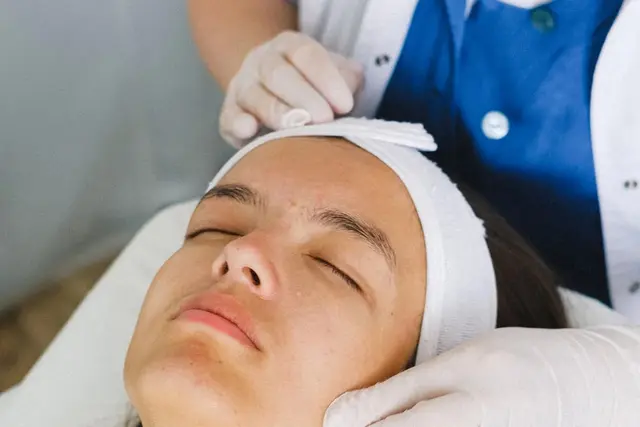
Figure 2. The gloved therapist cleans and gently pats the client's face dry with soft cotton before applying the exfoliant (Photo: Gustavo Fring, Pexels)
Step 2: Protect sensitive areas
Identify the areas to avoid: around the eyes (inside the bony eye socket), the eyelids, the lips, the corners of the nose, grazes and inflamed spots. If needed, apply a thin layer of moisturiser or protective balm to the corners of the nose and mouth according to spa procedure. Tell the client: “I'm going to apply the exfoliant now; you may feel slight warmth or a light tingle. If the stinging gets stronger, tell me straight away and I'll remove it immediately.”
Step 3: Patch test on a small area
For first-time clients, new products or sensitive skin, apply a small amount at the corner of the jaw or behind the ear, wait a few minutes and ask how it feels. If there is clear redness, itching or increasing stinging: do not use that product, and record it on the form. Note: a spot test only detects reactions that happen quickly. Contact allergy can appear later, after one to two days, so for clients with a history of cosmetic allergies many spas book a separate test appointment beforehand.
Step 4: Apply and work each type correctly
Fine scrub: take an amount from pea-sized to the size of a small coin and lightly dampen your fingertips. Make small circles with your middle and ring fingers, using only enough pressure for the particles to roll on the skin, moving from the chin, around the nose, up to the forehead and out to both cheeks. Focus more on the oily T-zone, go very lightly on the cheeks, and do not scrub around the eyes. Total time about 1–2 minutes (reference).
Gommage: apply a thin, even layer and wait for it to set according to the instructions. Hold the skin taut with one hand and rub lightly with the other in short sections in one direction; wipe away the crumbs immediately with damp cotton so they don't get into the eyes.
Enzyme: use a brush to apply a thin, even layer, avoiding the eyes and lips. Start the timer as soon as you have finished the last area. Only add warmth if the instructions allow it.
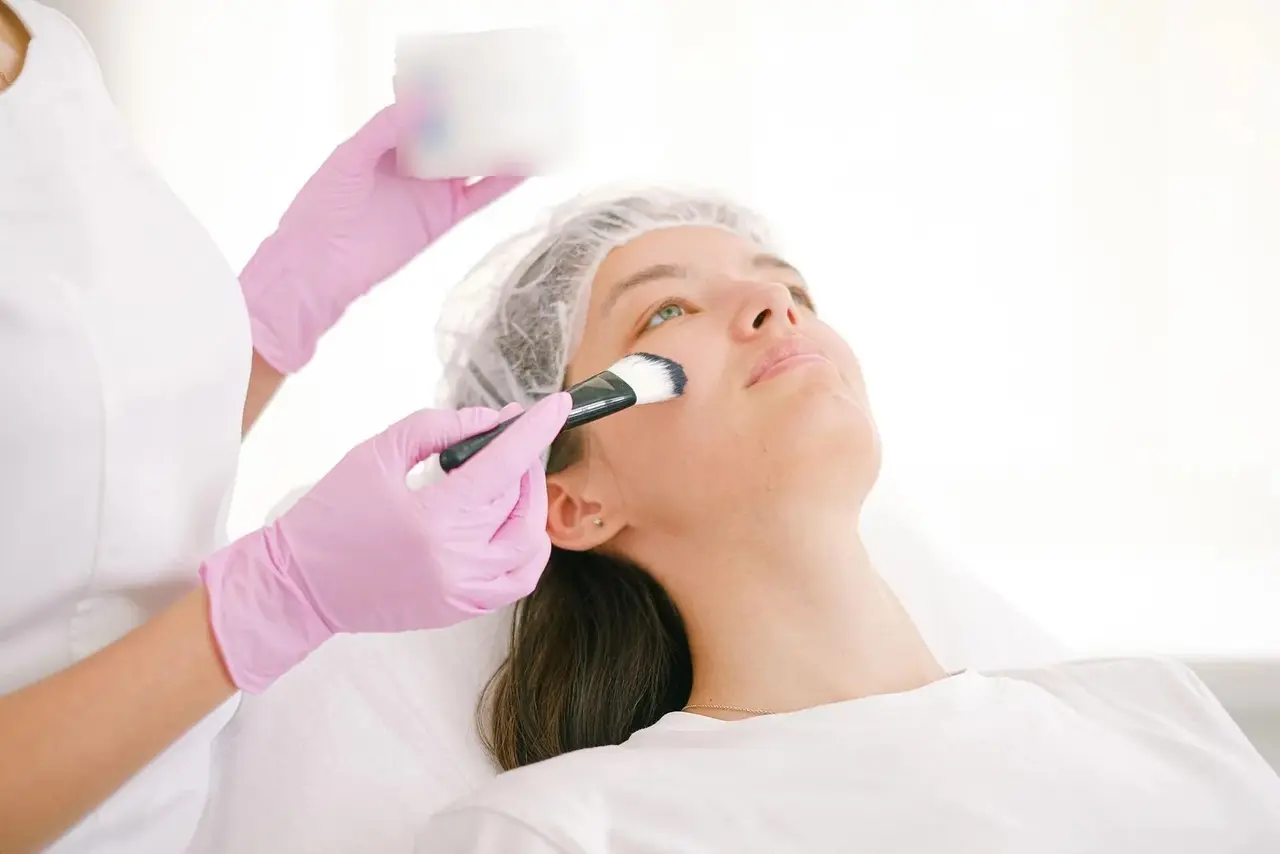
Spa AHA/BHA/PHA: wearing gloves, brush on a thin layer in a fixed order (for example forehead → nose → chin → cheeks), thicker and oilier skin first, thinner skin last. Apply quickly and evenly; do not layer it several times unless the instructions require it. When working near the eyes, ask the client to close them; if the product requires it, place damp cotton pads over the eyes. Start the timer.
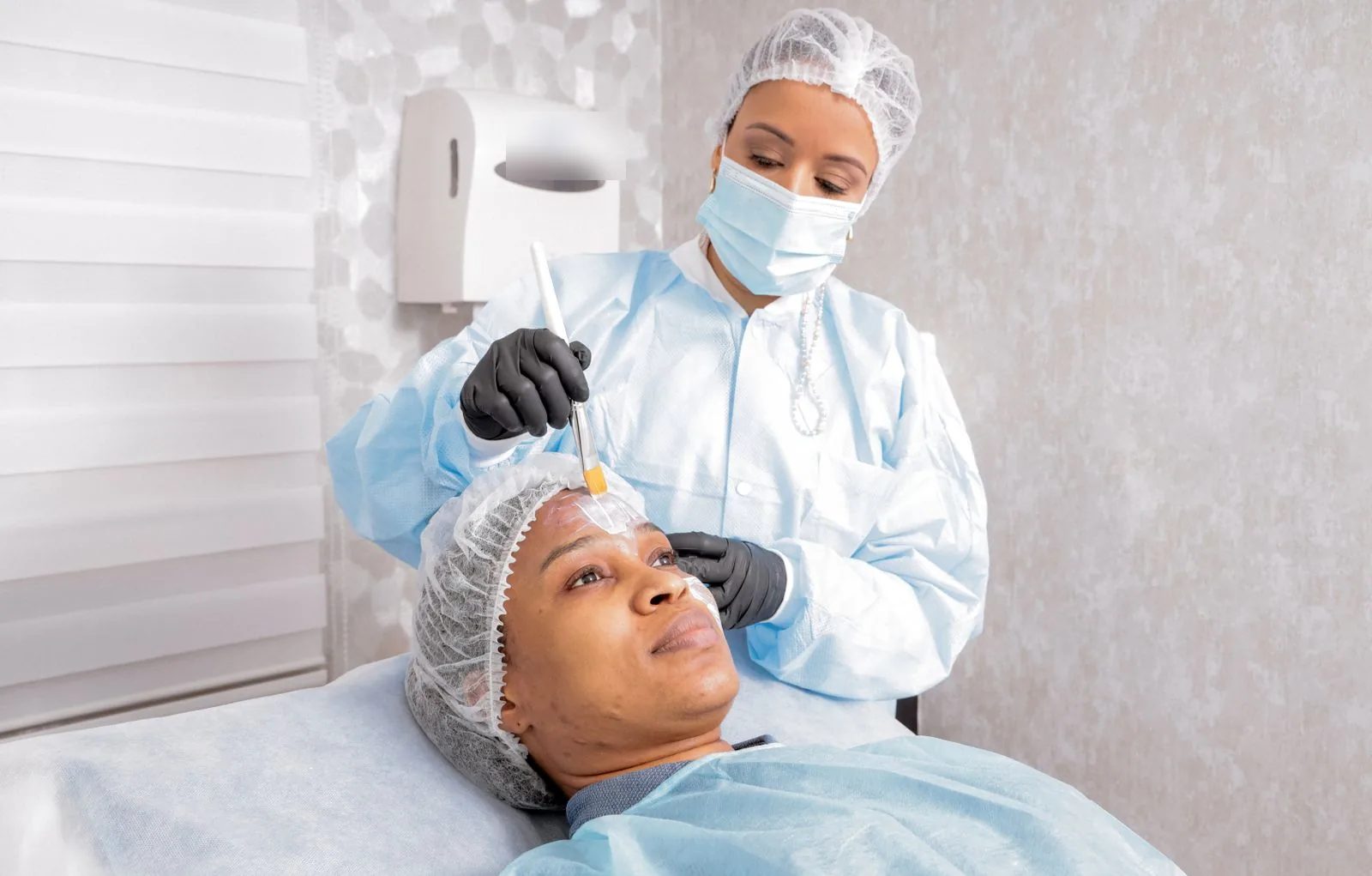
Figure 3. Applying gel to the forehead with a flat brush and gloved hands; the forehead and nose are usually done first, the thinner cheek skin afterwards (Photo: Omar Medina, Pexels)
Step 5: Monitor the client the whole time the product is on the skin
Do not leave the room or do anything else while the exfoliant is on the client's face. About every minute, ask the client on a 0–10 scale: “How does it feel right now, out of 10?” and watch the skin colour. A slight, steady, low-level tingle can occur with enzymes or acids. Signs that you must remove it immediately:
The client says the stinging is increasing, feels a burning heat, or rates the sensation at about 5–6 or higher (reference; each spa has its own rules).
Redness spreading quickly, uneven red patches, a rash or swelling.
A white, frosted-looking patch appears on the skin when using acid — this is a sign the product is working deeper than appropriate for a spa facial; remove it, rinse with cool water and inform the manager.
Step 6: Remove the product completely
Scrubs and gommage: wipe off with a sponge or cotton dampened with warm water, working from the centre outwards, with several passes until no particles remain at the hairline, eyebrows or sides of the nose. Enzymes and acids: follow the instructions exactly — some products only need rinsing with water, others require the accompanying neutraliser. Wipe off any product left at the edges of the face, under the chin and at the hairline, because these are places where delayed stinging often occurs.
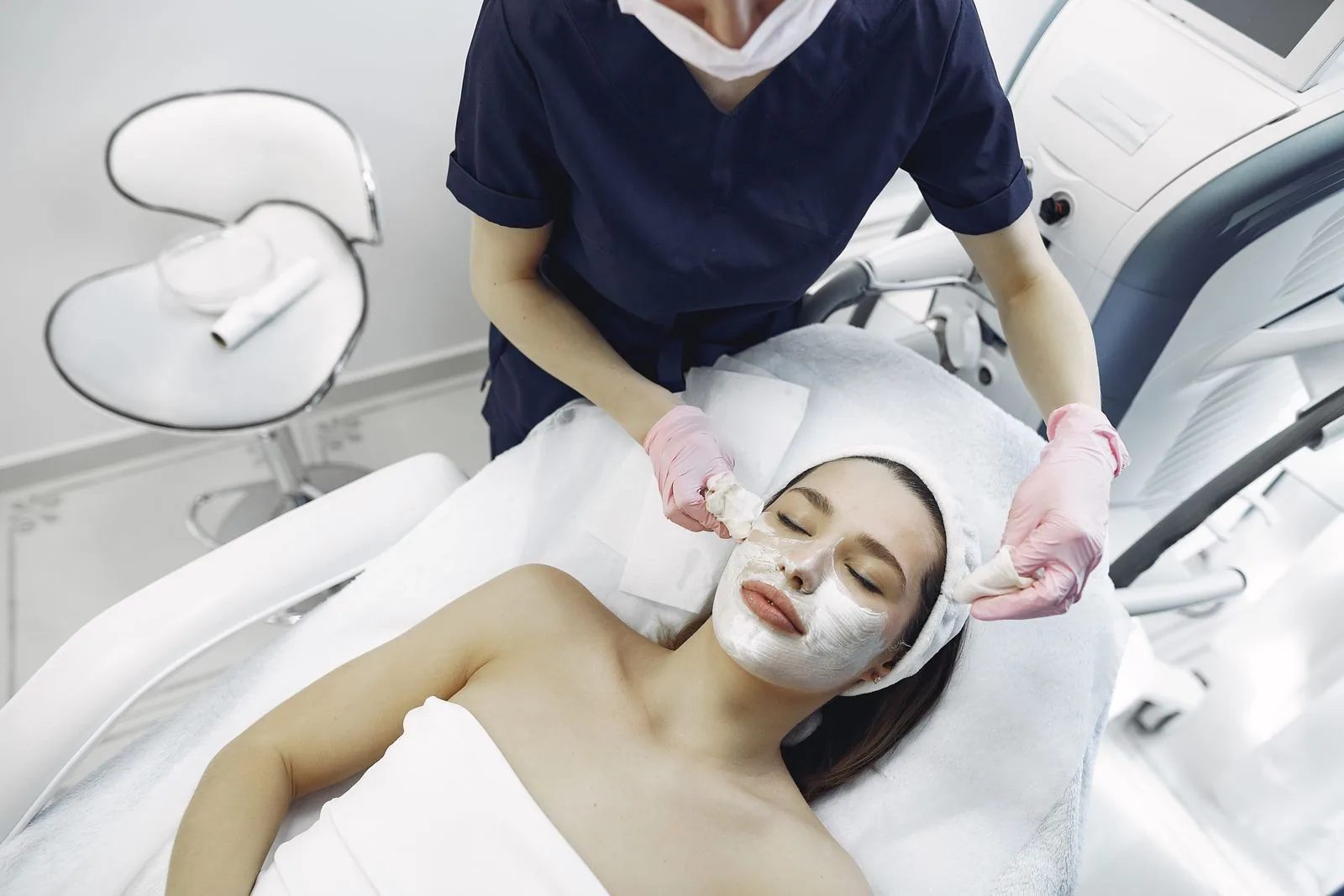
Figure 4. Removing the product with a damp sponge from the centre outwards, with several passes out to the hairline and under the chin (Photo: Gustavo Fring, Pexels)
Step 7: Soothe and continue the treatment gently
After exfoliation the skin is more sensitive than usual. Prioritise soothing and hydration. After chemical exfoliation, from trade experience, do not use long hot steaming, do not massage vigorously, and do not apply another mask containing acids or strong actives in the same session. Finish with moisturiser, and sunscreen if it is daytime.
Step 8: Complete the form
Record: the type of exfoliant, the product name, the time on the skin, areas avoided, the highest sensation score the client reported, the reaction after removal (slight pinkness, how long it took to fade), and the advice you gave. Next time, reading the form will tell you whether to keep, reduce or change the exfoliation method.
Common incidents and first response
Incident | First response | When a doctor or emergency services are needed |
|---|---|---|
Increasing stinging, spreading redness while the product is still on the skin | Remove immediately, rinse with plenty of clean cool water, apply a cool towel; do not apply any further active products | Stinging and redness that do not ease after rinsing, blistering, weeping: advise seeing a dermatologist |
Product gets into the eye | Do not rub; rinse the eye with plenty of gently running clean water | Still stinging, red, or blurred vision: see an eye doctor immediately |
Grazing from a scrub | Stop scrubbing, rinse gently, do not apply products containing fragrance or acids | Large grazes, weeping, signs of infection: advise seeing a doctor |
Itchy rash, swollen eyelids, swollen lips | Stop, rinse thoroughly, monitor closely | Difficulty breathing or swallowing, rapid facial swelling, faintness: call 115 immediately |
Client goes home and a few days later has peeling or dark marks | Ask in detail, advise stopping active products, moisturising and using sunscreen | Pain, weeping, spreading, or long-lasting dark marks: advise seeing a dermatologist |
Every incident must be recorded on the form and reported to the manager during the same shift. Do not diagnose, do not promise “it'll be gone tomorrow”, and do not prescribe medication to the client.
Real-life scenario: Ms Mai and her “acne and dark spot” serum
Back to the client from the start of the lesson. You ask Ms Mai to show you a photo of the serum bottle on her phone. The ingredient list includes “salicylic acid” and “glycolic acid”, and she applies it every night. Last week she also scrubbed with coarse salt.
Your safe decision: no chemical exfoliation and no scrub today. Her skin is already being exfoliated daily by the serum, plus the coarse salt; her cheeks already turn slightly pink when touched. You explain:
“The serum you're using already contains two exfoliating acids, and you apply it every night. If I exfoliate again today your skin is likely to sting, and over time it can also develop dark marks more easily. I'll deep-clean your nose area and put on a soothing, hydrating mask for your cheeks — does that sound OK? At home, please stop the salt scrub for now, and ask a doctor or pharmacist how to use the serum properly.”
Ms Mai is a little disappointed but agrees. You record on the form: “Combination skin, dehydrated cheeks, slightly pink when touched. Uses salicylic + glycolic serum every night, self-exfoliates with coarse salt. Exfoliation skipped this session. Suggested asking a doctor/pharmacist about the serum. Ask again next time before choosing an exfoliation method.” A session with “one step fewer” after which the client goes home with calm, non-stinging skin usually keeps that client far longer than a thorough exfoliation that leaves her face red for three days.
Hygiene after each client
Discard any leftover product in the bowl; never pour it back into the jar.
Put single-use cotton and sponges in the correct bin; towels and headbands go in the laundry basket.
Wash brushes, bowls and spatulas with soap and water, let them dry, then disinfect according to spa procedure.
Wipe the trolley top, the lamp arm and machine buttons with the disinfectant supplied by the spa, for the full contact time stated on the label.
Close jar lids tightly and check the period-after-opening date; if a product has changed colour, smell or separated, inform the manager and stop using it.
Aftercare advice for the client
For one to two days the skin may be slightly sensitive; use a gentle cleanser and moisturiser.
Use sunscreen every day and cover up in the sun, especially after acid treatments.
Pause exfoliation, acid products and retinoids at home for a few days (according to spa guidance; clients on prescription medication should ask their doctor, not stop or increase it themselves).
No hot steam, no rubbing the face and no picking at peeling skin for a few days.
If redness, stinging or itching does not ease or gets worse, contact the spa and see a dermatologist; for difficulty breathing or rapid facial swelling, call 115.
Spa exfoliation is usually scheduled according to the facial cycle, for example about once every 2–4 weeks (reference); the therapist decides again each time based on the skin's condition that day.
Facial exfoliation safety checklist
☐ Asked again verbally about: oral medication, topical creams, acid serums, retinoids, recent services (waxing, laser, peels, injections), sun exposure, allergies, pregnancy.
☐ Examined the skin after cleansing and noted the areas to avoid.
☐ Chose only one type of exfoliation for the session; no combining scrub + acid + acid mask.
☐ Patch tested on a small area for new clients, new products and sensitive skin.
☐ Took product out into a bowl with a clean tool, never fingers in the jar.
☐ Avoided the eye area, lips, corners of the nose, inflamed spots and grazes.
☐ Set a timer, never left the client while the product was on the skin, asked about sensation on the scale.
☐ Knew the signs for immediate removal and had clean cool water ready.
☐ Cleaned the edges of the face, the hairline and under the chin.
☐ After chemical exfoliation: no long hot steaming, no vigorous massage, no extra strong actives.
☐ Advised the client on sun protection and the signs that require a doctor.
☐ Completed the form in full: product, time, reaction, advice given.
Frequently asked questions
How often should the face be exfoliated?
There is no figure that is right for everyone. At the spa, exfoliation usually accompanies scheduled facials, for example about once every 2–4 weeks (reference), and the therapist decides again each time. Clients who use acids or retinoids at home may not need any extra exfoliation at the spa.
Can sensitive skin be exfoliated?
Possibly, if the skin is currently stable and not red or stinging, and you choose a very gentle method such as a mild enzyme or a PHA that has been patch tested, for a short time. If the skin is red, peeling or stinging, or the client has a skin condition under treatment, skip exfoliation and advise the client to consult a dermatologist.
Does exfoliation cure blackheads?
Exfoliation, especially with BHA, can help keep the skin surface clearer and reduce clogging, but it is not a treatment. A therapist should not promise “your acne will be gone”. Extensive inflamed acne, cystic acne or persistent acne needs to be examined by a dermatologist.
Is it a problem if the client's skin turns pink after exfoliation?
Slight, even pinkness that fades in a short time, with no stinging, is common after exfoliation. Red patches, increasing stinging, a rash or swelling are signs of irritation: rinse with cool water, soothe, record it on the form, inform the manager, and advise seeing a doctor if it does not settle.
Should I use both a scrub and an AHA in the same session to get it “cleaner”?
No. Combining several exfoliation methods is a common cause of stinging and grazed skin. Choose the one method best suited to the skin's condition that day, use it for the right time, then move on to soothing and hydration.
Practice exercises
Read the labels of your spa's exfoliants: for each facial exfoliant the spa uses, write down in your notebook: which type it is (scrub, gommage, enzyme, acid), the main exfoliating ingredient, the time on the skin, how to remove it, whether it needs neutralising, whether the eyes must be covered, and the period after opening.
Practise hand pressure with a fine scrub on your forearm: make circles for 1 minute with the pressure you think is enough, and ask your practice partner to rate the sensation 0–10. Goal: the particles roll, but the skin does not turn red.
Practise even, quick brush application on a mannequin or your practice partner's face (using moisturiser instead of exfoliant): apply in a fixed order within a short time, without touching the eye area or lips. The instructor checks the thickness and evenness of the layer.
Consultation role-play: one person plays a client who “uses an acid serum every night and wants a really thorough exfoliation”; the other practises asking for the product name, explaining why exfoliation is being skipped and proposing an alternative, in a gentle tone and without diagnosing.
Writing the form: using the Ms Mai scenario, write the form notes yourself in your spa's format, then compare with your practice partner.
Self-assessment criteria: you asked all the questions about actives and recent services; you chose one type of exfoliant and can explain why; no product went inside the eye area or on the lips; you set a timer and asked about sensation; you know when to remove the product immediately; you completed the form in full.