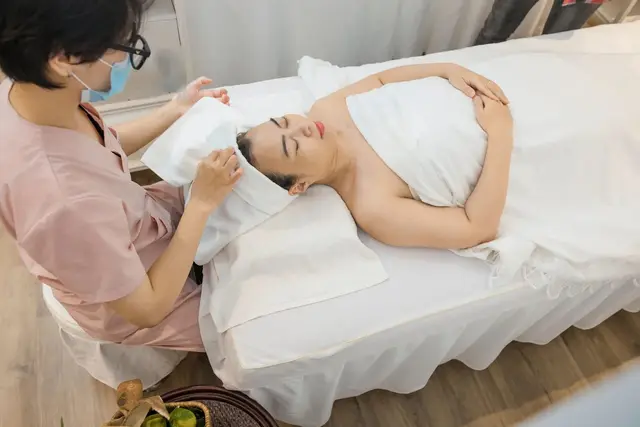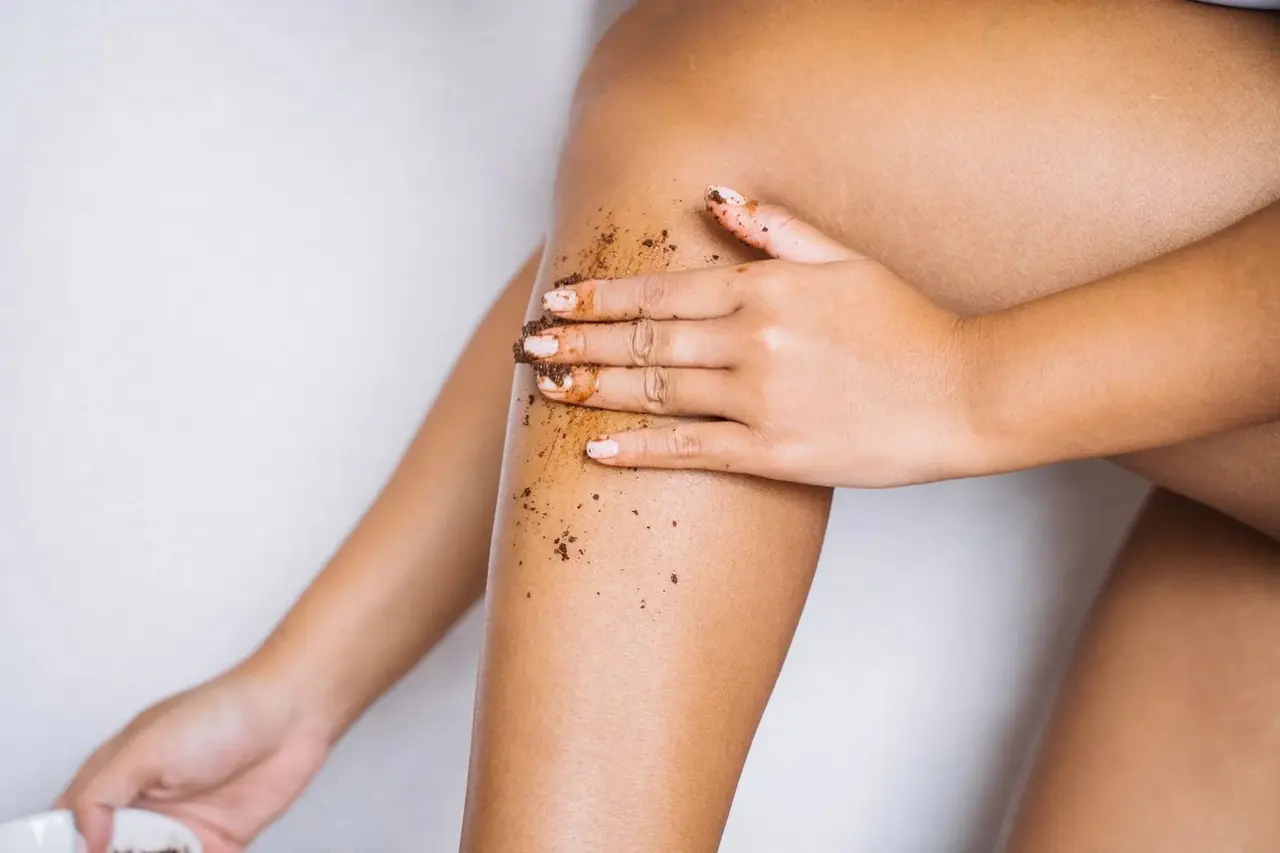
“Scrub hard for me, please, my skin is really thick, get it all clean.” Therapists who do full-body exfoliation (body scrubs) hear this all the time. Because the service looks simple, many people get it wrong: rubbing salt on a client's freshly shaved legs, scrubbing over a raised mole, letting the client walk alone into a shower room with an oily floor, or dipping their hands straight into a jar of product shared for the whole day.
By the end of this lesson, you will be able to: (1) choose the product group that suits the client's skin; (2) check the skin, run a reaction test and identify the areas you must avoid; (3) carry out the full 45-minute procedure with the right pressure and direction for each body area; (4) rinse thoroughly, moisturize, keep wet floors safe and give the client aftercare advice.
What a body scrub is and what it is not
A body scrub uses granules (mechanical exfoliation) or mild active ingredients (chemical exfoliation) to help the layer of old, dead skin cells come away more easily, so the skin feels smoother and absorbs moisturizer better. It is ordinary skin care, not a treatment. Do not tell clients “after the scrub your skin will be whiter”, “it detoxes through the skin” or “it cures folliculitis”. Say instead: “I'll clean away the dry outer layer of skin, then moisturize so your skin feels softer.” If a client has a lot of back acne, itching or long-lasting scaling, advise them to see a dermatologist.
The first rule: full-body exfoliating products are not for the face. Facial skin is thinner and more sensitive, and body granules are usually far too coarse; facials have their own products and procedures.
Groups of full-body exfoliating products
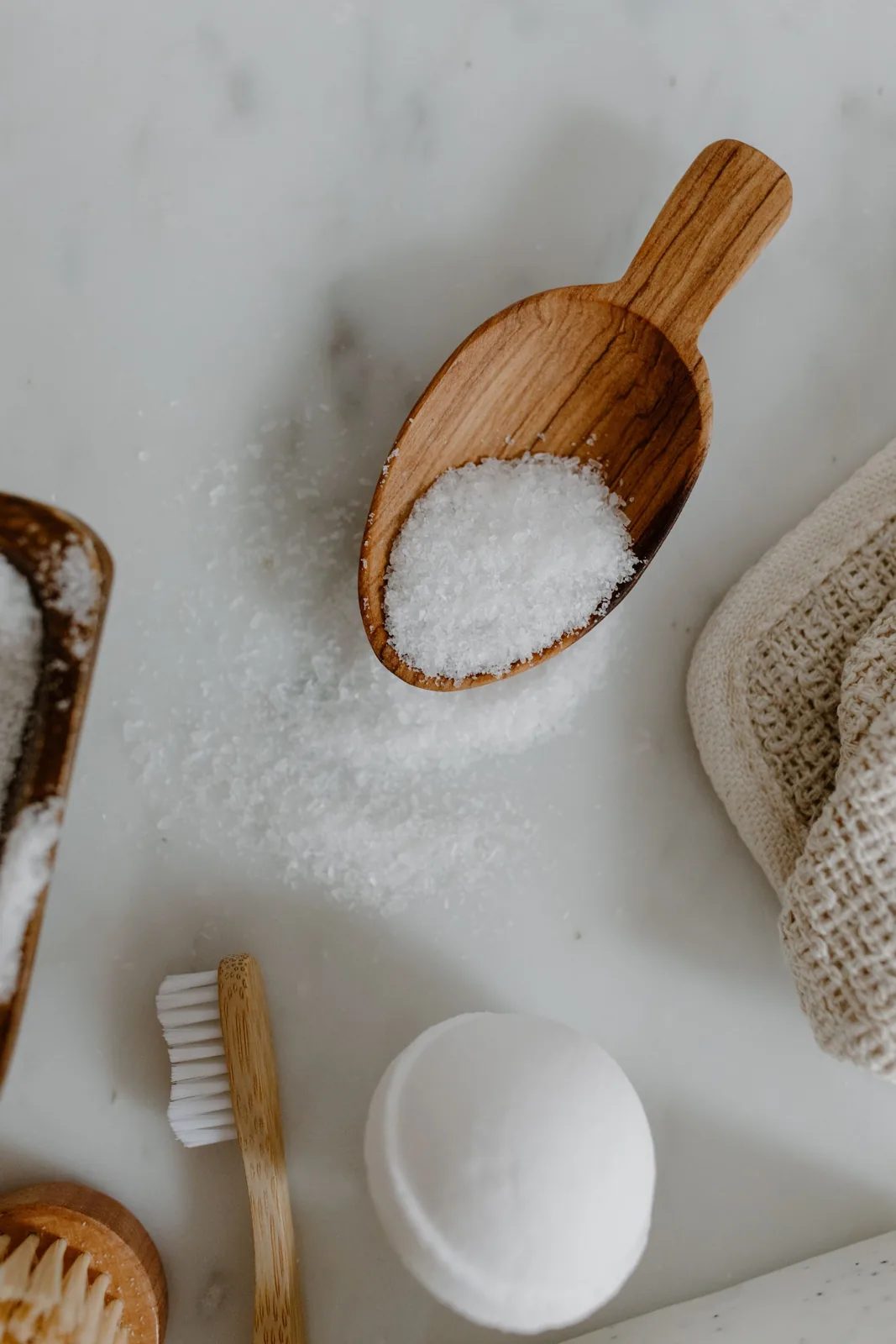
Figure 1. Coarse white salt in a wooden spoon, next to a wooden-handled brush and a textured towel on a stone surface. Salt crystals are hard and sharp-edged, so use them only on healthy skin that is not scratched or freshly shaved. (Photo: Tara Winstead, Pexels)
Always read the product label: ingredients, directions, how long it stays on the skin, and warnings.
Mechanical exfoliants (with granules)
Salt: hard, sharp-edged crystals, usually mixed with oil. It scrubs noticeably but easily stings on tiny scratches and on freshly shaved or freshly waxed skin.
Sugar: gradually dissolves in warm water, so it is usually gentler than salt of the same grain size; a good choice for first-time clients.
Coffee: coarse, uneven grounds; the dark color clings to nail edges, skin folds, towels and floor grooves, so rinsing takes longer.
Fine synthetic beads or finely ground plant particles: gels and creams with small, even granules; gentle, suitable for thin skin, dry skin and older clients. Read the ingredients to avoid tiny plastic microbeads that do not break down easily.
Mild chemical exfoliants (enzymes, low-concentration AHAs)
This group loosens the bonds between dead skin cells, so no hard scrubbing is needed: apply to the skin, leave for exactly the time stated on the label, then wipe off thoroughly.
It may tingle or feel slightly warm; if it clearly burns or turns red, wipe it off immediately.
AHAs can make the skin more sensitive to sun in the following days, so advise the client to cover up and use sunscreen.
Do not combine with strong granular scrubbing on the same area in the same session unless the spa procedure and the label allow it. Never mix your own products or raise the concentration yourself.
Before you start: health form, skin check and reaction test
What to ask on the health form
Besides the general questions, also ask:
Has any area recently been shaved, waxed, lasered or peeled, and how long ago?
Are you using any topical or oral medication that affects the skin (for example retinoid acne treatments or topical corticosteroids), or being treated for a skin condition?
Any allergy to fragrance, essential oils, nut oils or coffee?
Any recent sunbathing or sunburn?
Pregnancy, diabetes, reduced skin sensation, a new tattoo or a surgical scar?
If the client is on a specialist skin medication and you are not sure whether you can proceed, postpone and advise them to ask the doctor treating them.
Look over the whole body before scrubbing
Once the client has changed and is draped with towels, uncover one area at a time under good light and say beforehand: “I'm just going to look over the skin on your back.” You do not diagnose disease; you recognize unusual signs and decide whether to go ahead, avoid the area, postpone or recommend a doctor.
What you see or the client tells you | Decision | What to do |
|---|---|---|
Scratches, cuts, burns, blisters, unhealed surgical wounds | Avoid the area | Do not scrub or apply product there; if there are many, postpone |
Red, burning or peeling skin from sunburn | Postpone that area or the whole session | Rebook once the redness and peeling have gone |
Areas recently shaved or waxed, especially within the last 1–2 days (guideline, follow spa policy) | Avoid the area | You can do other areas; explain the reason clearly to the client |
Raised moles, skin tags, warts, small lumps on the skin | Avoid, scrub around them | Do not scrub over them; if a mole changes color or bleeds, advise a medical check |
Inflamed spots, pustules, red swollen follicles on the back or chest | Avoid that area | Do not scrub to “pop the spots”; if there is a lot of inflamed acne, recommend a dermatologist |
Flaring eczema, psoriasis plaques, rashes, itchy hives | Postpone or avoid the area | Advise the client to ask a doctor; never use granules on affected skin |
Suspected fungal infection, scabies, spreading blisters | Postpone | May spread by contact; clean the bed and towels thoroughly |
New tattoo; area recently lasered, peeled or given cosmetic injections | Avoid the area | Wait until the tattoo studio or treatment clinic says it is fine |
Bulging, twisted veins on the legs | Caution | Very light pressure, no hard scrubbing over that area |
Pregnancy | Caution | Side-lying or reclined position, no strongly scented products, watch for slippery floors; follow spa policy |
Diabetes, reduced skin sensation | High caution | Fine granules, light pressure, check the feet carefully; if there are ulcers, skip that area and recommend a doctor |
Fever, fatigue, dizziness | Postpone | Rebook when the client is well |
This table tells you when to stop; it is not medical advice. If in doubt, choose the safer option.
Reaction test (patch test)
Quick test before the session: apply a little product to the inner forearm without scrubbing, wait a few minutes, then wipe off. If there is clear redness, itching or burning, do not use it. This only detects immediate irritation; it does not rule out delayed allergic reactions.
Test 1–2 days ahead (guideline): for clients with a history of allergies, very sensitive skin, or for chemical exfoliants; follow the test instructions on the label if there are any.
Preparing the room, bed and products
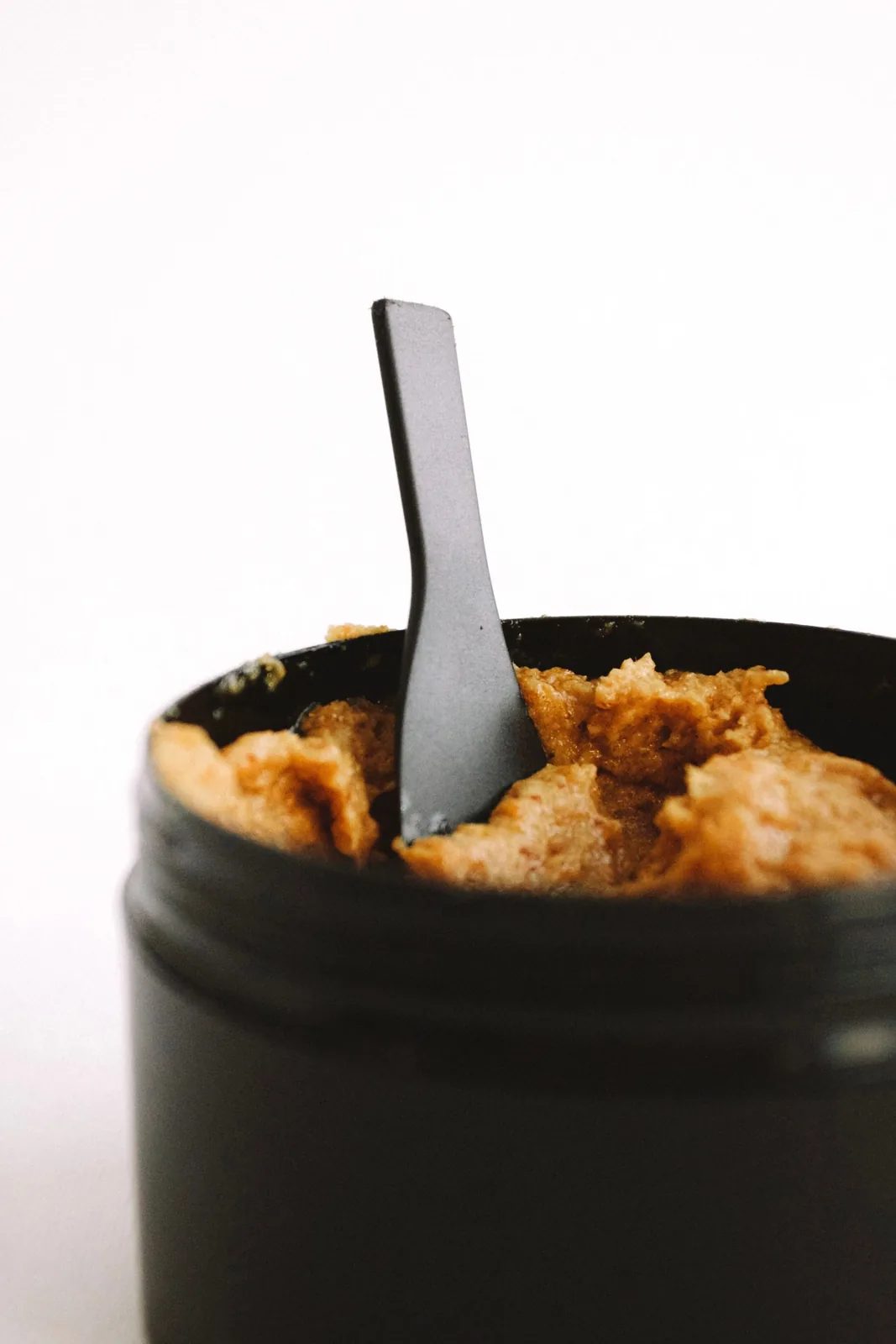
Figure 2. A jar of thick exfoliating paste with a spatula already in it. Take product out into a separate bowl for each client with a clean spatula; never dip your hands into a shared jar. (Photo: Anastasiia Lopushynska, Pexels)
Room and bed
Keep the room warm enough: with damp, uncovered skin, clients get cold quickly; have warm towels or a thin blanket ready.
Cover the bed with a waterproof sheet or a dedicated scrub liner towel, then a clean towel on top.
Have enough towels to uncover only the area you are working on; the chest and intimate areas always stay covered.
Small clean bowls, spatulas, warm damp towels, dry towels, moisturizer, a bag for dirty towels, a lidded bin.
Walkways and shower room: preventing slips and falls
This is the most underestimated risk: oil, salt and coffee grounds dropped on tiled floors create a very slippery layer.
Anti-slip mats next to the bed and in the shower room; clean slippers with grippy soles placed exactly where the client steps down.
Wipe up any granules on the floor immediately; never let the client walk barefoot on an oily floor.
Support the client when getting off the bed and going into the shower area, especially older or pregnant clients.
Fit a strainer on the floor drain so granules and grounds do not wash into the pipes.
Dispensing products hygienically
Wash your hands; wear gloves if the spa requires it or if you have scratches on your hands.
Use a clean spatula to take just enough into the client's own bowl; close the jar straight away and do not let water splash into it.
If you need more, take it with a clean spatula; throw away any leftover, never put it back in the jar.
Wash and disinfect spatulas and bowls like any other shared tools.
Using more product does not make the skin cleaner; it only makes the floor more slippery and the rinse longer.
The 45-minute procedure
Each spa divides the time differently, but never skip the skin check, the thorough rinse or the moisturizing.
Minutes (guideline) | Task |
|---|---|
0–5 | Confirm the health form, check the skin, quick-test the product, ask about pressure |
5–7 | Dampen the skin with a warm damp towel (if the product requires damp skin) |
7–19 | Back of the body: backs of both legs, back, shoulders |
19–21 | Wipe off roughly, turn the client over, adjust the drape |
21–31 | Front of the body: fronts of both legs, both arms, abdomen (if the client agrees) |
31–39 | Rinse in the shower or wipe clean with warm towels |
39–45 | Pat dry, moisturize, give aftercare advice, help the client sit up |
Pressure and direction: general principles
Use a flat palm with fingers together, making small circles. Do not rake with your fingertips and never use your nails.
Light to medium pressure: the granules do the exfoliating, your hand just guides them; pressing hard only makes the skin red and sore.
On the arms and legs, work gradually from the far end toward the body (ankle up to thigh), then use long strokes to spread evenly. This is a habit for smooth, continuous movement; do not explain it as “pushing out toxins”.
Do not keep scrubbing one spot until it turns red. Ask about pressure at the start and when changing areas; if the client says it stings, reduce pressure, switch to a gentler product or stop on that area.
Pressure and precautions by area (guideline)
Area | Suggested pressure | Notes |
|---|---|---|
Heels, knees, elbows | Medium | Thick skin, can be worked more thoroughly; avoid cracked heels |
Calves, backs of thighs | Light to medium | Avoid bulging veins and the hollow behind the knee |
Front of the shins | Light | Thin skin directly over bone, stings easily; often a shaved area |
Inner thighs | Very light | Thin skin close to the intimate area; keep the drape secure |
Back | Light to medium | Do not press on the spine; avoid inflamed spots and raised moles |
Shoulders, back of the neck | Light | Do not scrub the hairline; keep granules out of the hair |
Outer upper arms | Light to medium | May have bumpy follicles; do not scrub until red |
Inner arms, armpits | Very light or skip | Thin skin; armpits are often freshly shaved, so they are usually skipped |
Abdomen | Very light | Only with the client's consent; not on pregnant clients unless spa policy allows it |
Chest, face, mucous membranes, intimate areas | Do not work | Never use body scrub on these areas |
Step 1. Confirm and prepare the client (about 5 minutes)
The client lies face down, fully draped. Confirm the form, check the skin and quick-test the product. Say: “I'll do the back first and then turn you over; if anywhere stings, tell me straight away.”
Step 2. Dampen the skin (about 2 minutes)
Many granular products spread more evenly and feel gentler on slightly damp skin. Wipe the back of the body with a well-wrung warm damp towel, testing it on your own wrist first. If the label says to use on dry skin, skip this step.
Step 3. Back of the body: backs of the legs (about 6 minutes)
Uncover one leg. Put product into your palm and spread it between both hands before placing them on the skin. Work the heel thoroughly (avoiding cracks), make small circles on the calf, go very lightly over the back of the knee, up the back of the thigh, then use long strokes to spread the granules. Re-drape and do the other leg.
Step 4. Back of the body: back and shoulders (about 6 minutes)
Fold the towel down to the waist. Make small circles on both sides of the spine from the lower back up to the shoulders and out to the sides of the ribs; do not press on the spine. When you meet a raised mole or an inflamed spot, lift your hand and go around it. Use light pressure on the shoulders and back of the neck and keep the granules away from the hairline.
Example: you notice a large, raised mole with an irregular edge. Go around it, and after the session say: “I avoided the mole on your back. If it's new or has changed, it would be a good idea to have a dermatologist look at it.” Do not say “this mole is dangerous”.
Step 5. Wipe off and turn over (about 2 minutes)
Remove excess granules from the back of the body with a damp towel. Keep the drape high and invite the client to turn onto their back; change the liner towel if there are a lot of granules so the client does not lie on them.
Step 6. Front of the body: legs, arms and abdomen (about 10 minutes)
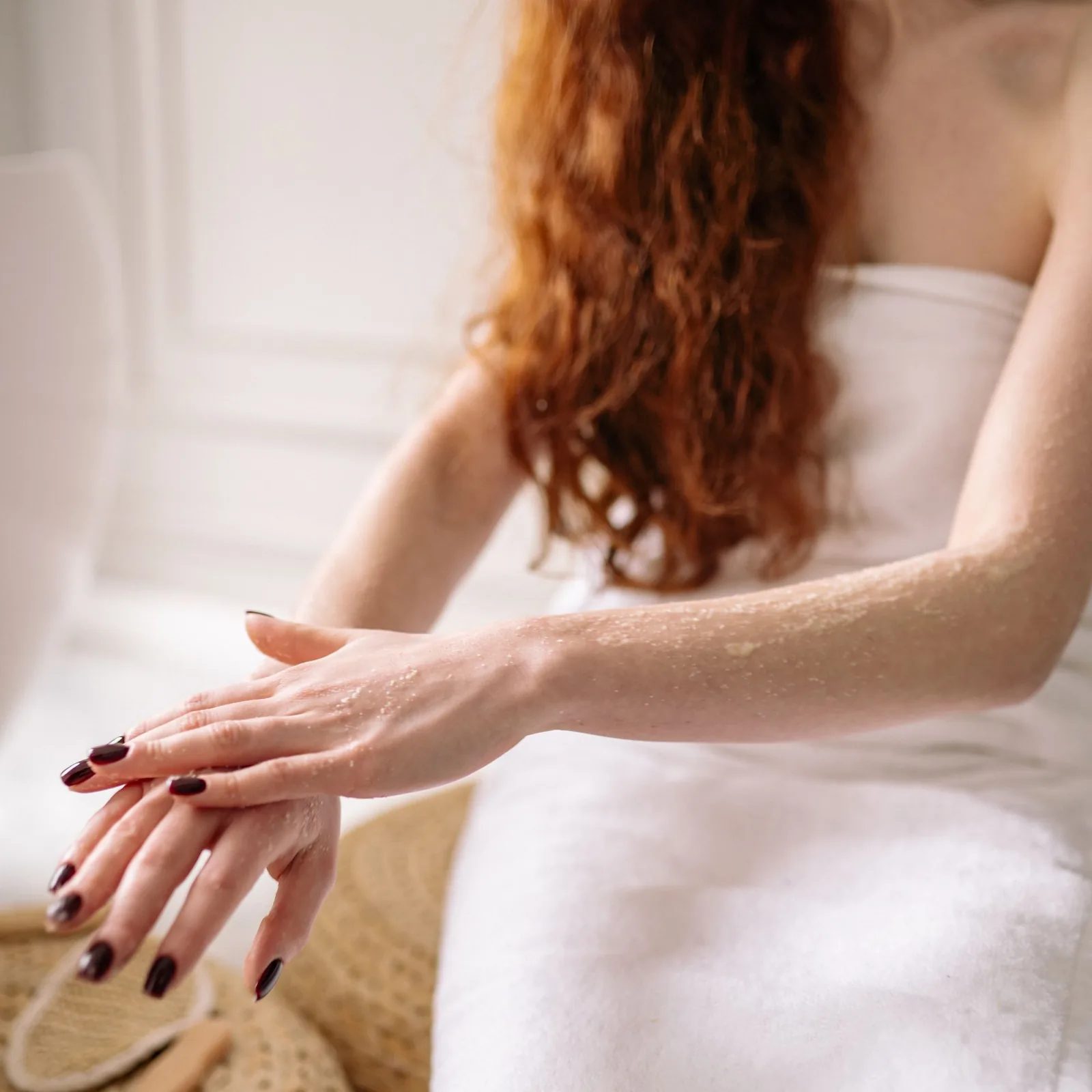
Figure 3. Exfoliating granules on the forearm and back of the hand. On the arms, make gentle circles with a flat palm; the inner arm and armpit have thin skin, so work very lightly or skip them. (Photo: Yan Krukau, Pexels)
Front of the legs: from the top of the foot up to the front of the thigh. The shins have thin skin and are often freshly shaved, so check again and work lightly; work the knees more thoroughly.
Arms: support the client's wrist and work from the back of the hand up to the elbow and outer upper arm; very light on the inner arm.
Abdomen: only if the client agrees; fine granules, very light pressure, chest fully covered.
Do not scrub the face, front of the neck, chest, intimate areas or mucous membranes.
Step 7. Rinse or wipe clean (about 8 minutes)
Shower rinse: help the client off the bed, wrap them in a towel, put grippy slippers on them and walk them to the shower area. Set the water to a comfortable warm temperature beforehand and test it on your wrist. Say: “The floor is still slippery, so please step slowly and hold the handrail.” Remind them to rinse skin folds, between the toes and behind the knees well; no extra scrubbing with loofahs or bath mitts.
Wiping at the bed: use several warm damp towels, wipe each area in the order you worked, folding to a clean side after each pass, until no granules can be felt.
Check again for leftover granules and clearly red areas; on red, sore areas do not apply scented products, and note it on the form.
Step 8. Moisturize and finish (about 6 minutes)
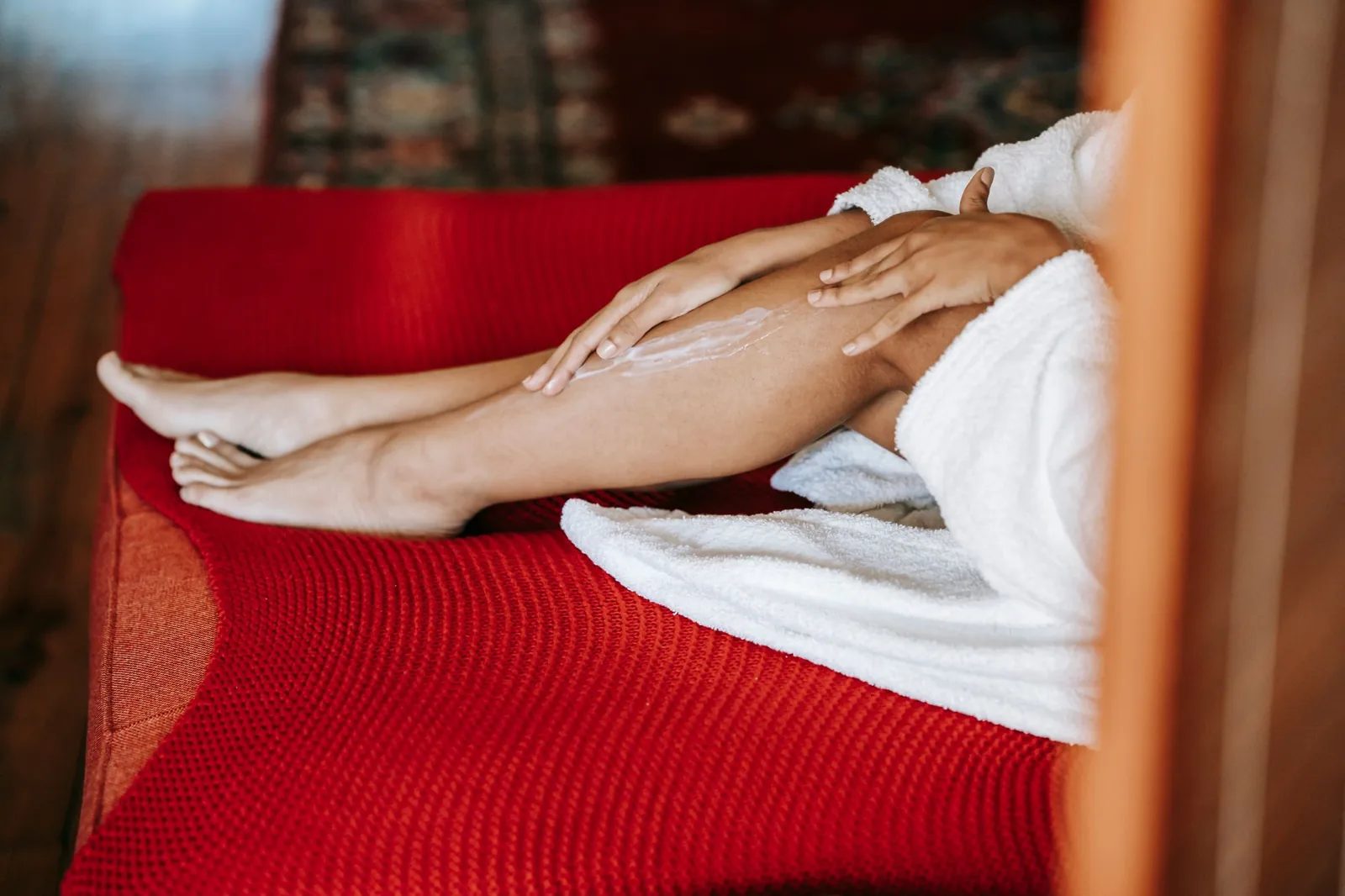
Figure 4. Apply moisturizer in thin streaks on the leg, then massage it in evenly. After exfoliation, moisturizing keeps the skin from feeling dry and tight; on red or sore skin, choose an unscented cream or skip that area. (Photo: Sora Shimazaki, Pexels)
Pat dry gently; do not rub with the towel. Apply a thin layer of a cream or oil you have already checked for allergies, using long strokes.
Wipe moisturizer off the soles of the feet so the client does not slip.
Invite the client to sit up slowly; standing up quickly after lying down for a long time and a warm shower can cause dizziness.
Cleaning up after the session
Put towels and liners into the dirty-laundry bag straight away; launder towels with oil or coffee grounds on them according to spa policy.
Wipe down the bed, bowls and tools; disinfect for the full contact time stated on the label.
Mop the treatment room and shower room floors until all oil and granules are gone; put out a warning sign if the floor is not yet dry; empty the drain strainer.
Communicating with the client during the session
Example: the client says “Scrub harder, my skin is thick.” You work the heels and elbows more thoroughly and keep medium pressure on the back and legs: “Scrubbing thin skin hard can leave it red and sore for days, so I'll keep this pressure for you.”
Another example: a male client shaved his legs this morning. You skip the shins and work the back and arms thoroughly: “Scrubbing freshly shaved skin will sting and can easily irritate it; next time leave a few days (guideline) before having your legs done.”
A third example: the client says “It stings a bit.” Stop and look at the skin; if it is clearly red, wipe it clean with a cool damp towel, do not continue on that area and note it on the form.
Aftercare advice for the client
On the day of the treatment, avoid sunbathing and very hot saunas; when going out, cover up and use sunscreen, especially after products containing AHAs.
Do not scrub again with bath mitts, loofahs or other exfoliating products for a few days (guideline); do not shave or wax the exfoliated areas on the same day.
Moisturize regularly at home.
Frequency: for normal skin, many spas suggest about once every 1–2 weeks; less often for dry or sensitive skin (guideline).
If redness, itching or a rash lasts, tell the spa and see a doctor if needed.
Record on file: the product, the test result, areas avoided and why, the pressure level, and any skin reaction.
Safety checklist
Health form completed: recent shaving/waxing, laser, peels, topical and oral medication, allergies, pregnancy, diabetes, sunburn.
Skin checked area by area under good light before scrubbing.
Product quick-tested; for clients with a history of allergies, tested in advance or an unscented product chosen.
Areas to avoid identified: wounds, raised moles, inflamed spots, freshly shaved/waxed skin, sunburn, affected skin.
No body scrub on the face, chest, nipples, intimate areas or mucous membranes.
Product taken with a clean spatula into a separate bowl; no hands in the jar, no leftovers poured back.
Scrubbing with a flat palm, light to medium pressure, pressure checked when changing areas.
Anti-slip mats, grippy slippers, floor free of granules and oil; client supported when moving; water and warm towels temperature-tested.
Granules rinsed or wiped off, skin folds checked, moisturizer applied, cream wiped off the soles of the feet.
Advice given on sun avoidance and not scrubbing again, and the client record completed.
Frequently asked questions
What if the client wants their face exfoliated with the body product?
Do not do it. Body granules are too coarse for facial skin. Explain why and suggest a facial service with dedicated products.
Can a client who waxed their legs yesterday have a scrub?
Do not scrub freshly waxed areas, because the skin is easily irritated. Do the other areas and book the legs for a few days later (guideline, follow spa policy). If the client wants both services, the scrub is usually scheduled a few days before the wax.
Does a body scrub whiten skin, reduce stretch marks or clear folliculitis?
Do not promise any of these. A body scrub only makes the skin surface smoother and helps it absorb moisturizer better. Clients worried about skin tone, stretch marks or follicles should ask a dermatologist.
Can pregnant clients have a scrub?
Many spas accept them under their own rules: side-lying with supporting pillows, gentle products without strong scents, light pressure, no abdomen, and extra attention to slippery floors. For high-risk pregnancies or any unusual symptoms, suggest the client asks her doctor first.
Practice exercises
Make a table of the exfoliating products at your spa: group, granule size, scent, label warnings, and whether they are used on dry or damp skin.
Quick-test two products on your own forearm and note how it feels and how red it gets after a few minutes.
Scrub a classmate's forearm at three pressure levels; your classmate tells you which is comfortable and which stings.
Role-play with scenario cards (freshly shaved legs, sunburned shoulders, raised mole on the back, inflamed acne on the chest, pregnant client, client who wants their face scrubbed): state your decision and the sentence you would use to explain it.
Do the full 45 minutes on a classmate (with consent and healthy skin), with one person keeping time and another checking the floor and walkways.
Self-assessment criteria — you pass when:
You never scrub an area before checking the skin and asking about shaving, waxing and sunburn.
You never dip your hands into a shared product jar or pour leftovers back into it.
You never scrub the face, chest, intimate areas, raised moles or wounds; the floor is free of granules and oil and the client is supported when moving.
You never use any phrase promising whiter skin, detoxing or curing disease when talking with the client.
After this lesson, you can add the body scrub to the services in the “Delivering a complete client treatment” step, for example pairing a scrub before a body massage once you have practiced the “60-minute relaxing body massage” step.