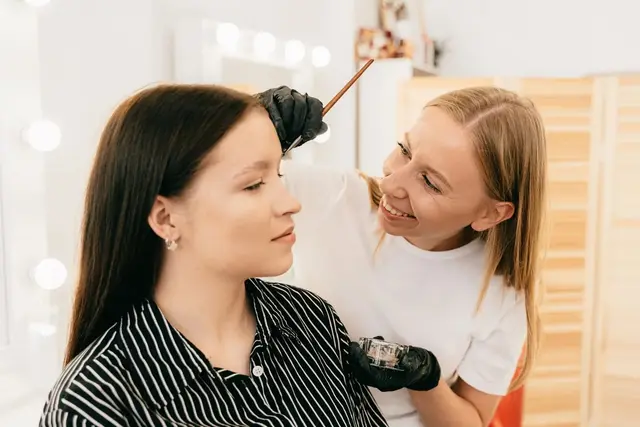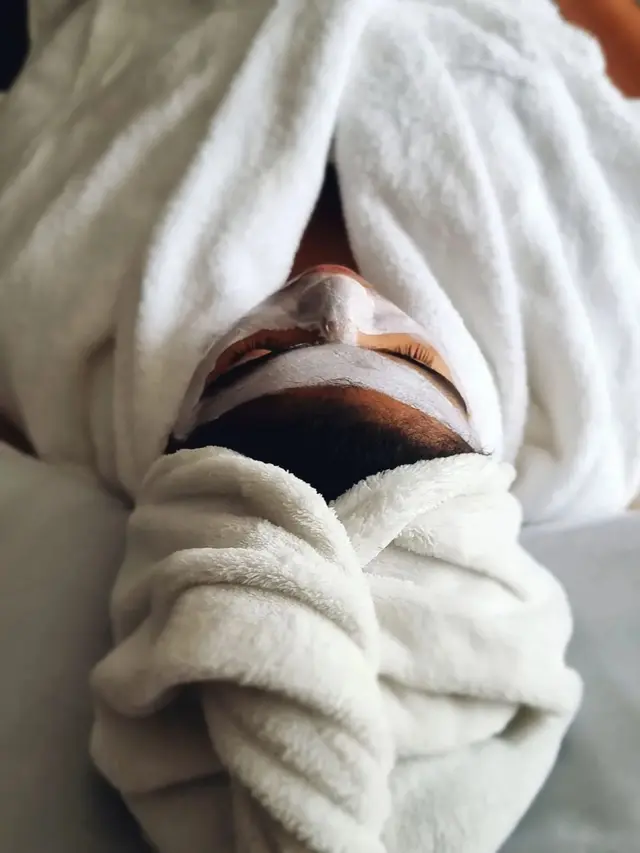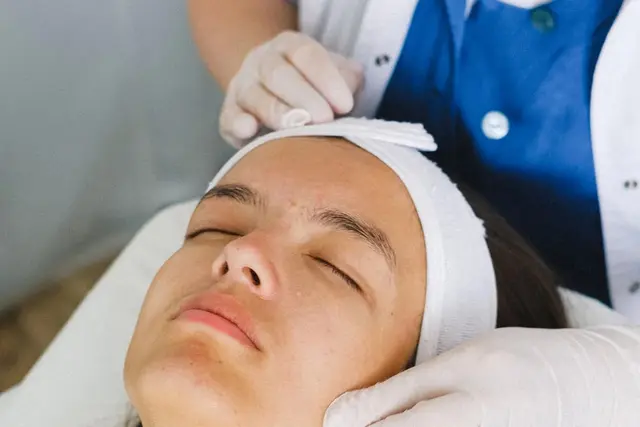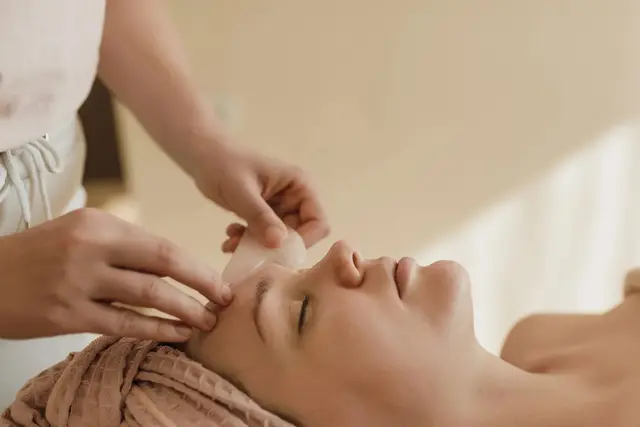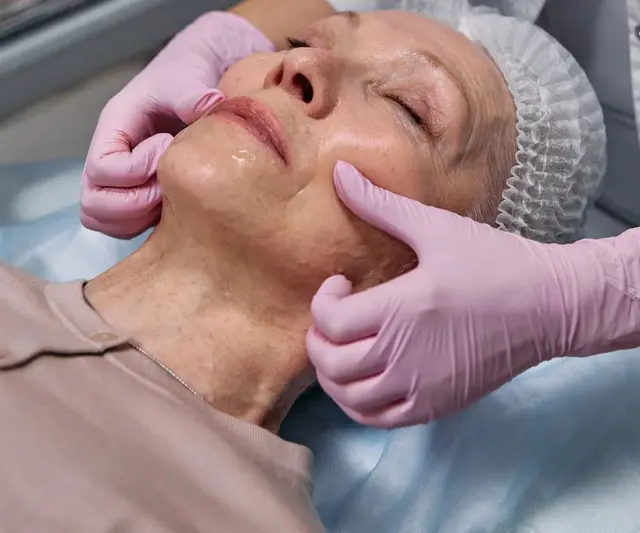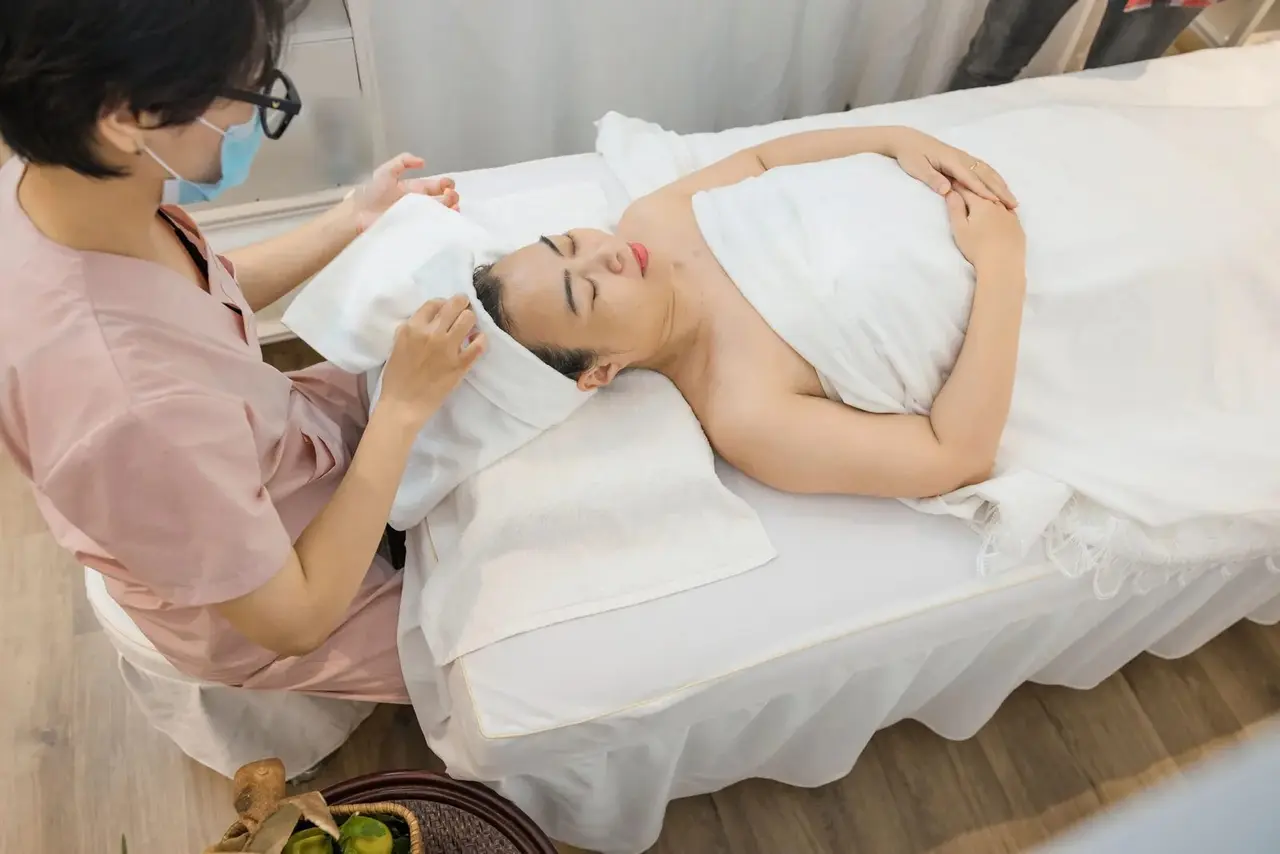
Ms Ha, 34, is having her first 60-minute facial package with exfoliation and a mask. At the mask step she says quietly: “Why are both my cheeks burning so much?” Looking closely, the therapist sees that both cheeks are much redder than the forehead, with a few small bumps on the chin. Should the therapist finish the treatment, apply some soothing cream, or stop?
The short answer: stop immediately. Remove all the product on the skin, rinse again with clean cool water, apply a cool compress with a clean towel, do not apply any new product, observe the client on site, inform the manager and write down the name of the product just used. Most cases of mild redness and mild burning will gradually settle. But if the client has difficulty breathing, swollen lips, swollen eyelids, feels faint, or a red rash spreads quickly over the whole body, it is an emergency: call 115 (the emergency number in Vietnam) straight away, do not wait to see what happens.
By the end of this lesson, you will be able to tell normal reactions from abnormal reactions after facials, exfoliation, waxing, massage with essential oils and hot stones; give the correct first response; talk to the client; keep records; and know when the client must be referred to a dermatologist or a medical facility. Spa therapists do not diagnose diseases or prescribe medication. Everything below is first response and recognition of the signs that require referral; it does not replace a doctor’s opinion.
Why a client’s skin may be red, burning or rashy after a spa session
“Red skin” can have very different causes, so the way to handle it differs too:
Transient reaction: facial massage, extractions, steaming and waxing bring blood to the skin; the skin is evenly pink, not painful, and fades gradually.
Irritation from a product: exfoliating acids (AHA, BHA), retinol, alcohol, fragrance, insufficiently diluted essential oils, too many layers applied. The client feels stinging or burning immediately or very quickly, with redness exactly where the product was applied.
Allergy to a specific ingredient (fragrance, preservatives, essential oils, rosin in wax, latex in gloves): itching, red rash, tiny bumps, sometimes spreading beyond the treated area or appearing later (reference). The most severe form is anaphylaxis, which is life-threatening.
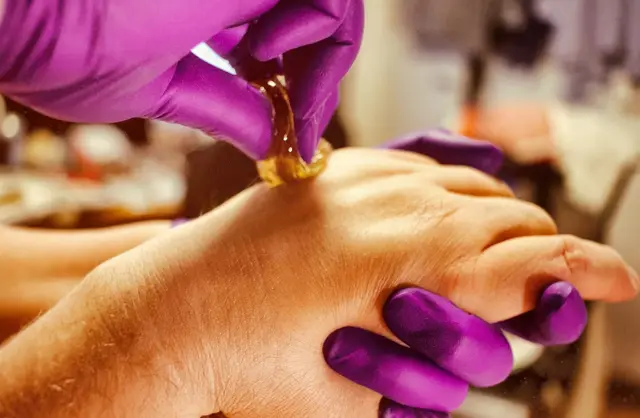
Thermal burns from wax, hot stones or hot towels; skin injury from waxing that lifts the skin or rubbing too hard; folliculitis and infection after waxing or extractions.
Pre-existing skin problems being aggravated: dermatitis, eczema, inflamed acne, sunburn, a recent peel or laser treatment, use of retinoid medication.
You do not need to (and must not) decide for yourself what illness the client has. Your job is to recognise the severity, give a safe first response and refer at the right time.
Quick recognition table: signs, common causes and what to do (reference)
The table below is guidance to help therapists orient themselves; it is not a diagnostic table. When you are unsure between two rows, act according to the more serious one.
Signs on the skin and how the client feels | Often seen after | Possibly | What the therapist does (reference) |
|---|---|---|---|
Pink or mild, even redness, warm, not painful, not very itchy, fading gradually | Facial massage, steaming, extractions, waxing | Transient reaction | Cool gently, do not apply strong products, advise sun protection, observe |
Stinging or burning as soon as the product is applied; redness exactly where the product is | Exfoliation, masks, acid serums, essential oils | Irritation from a product | Stop immediately, remove the product completely, rinse with cool water, apply a cool compress, record the product name |
Itching, red rash, tiny bumps, possibly spreading beyond the treated area, sometimes appearing later | New products, fragrance, essential oils, latex gloves | Possibly an allergy | Stop the product, cool the skin, advise the client to see a dermatologist, do not apply any medication yourself |
Raised welts (like mosquito bites, hives), very itchy | Any product, sometimes for no clear reason | Hives (urticaria) | Stop the treatment, stay with the client, watch closely for serious signs; if it spreads quickly or comes with breathing difficulty, call 115 |
Swollen lips, tongue or eyelids; difficulty breathing, wheezing, hoarse voice; faintness, sweating; rash all over the body | Anything | Anaphylaxis (emergency) | Call 115 immediately, put the client in a position where breathing is easy, do not give medication at random, do not leave the client alone |
Deep redness, burning pain, blisters, pale white skin where heat touched | Hot wax, hot stones, heat packs, hot towels | Thermal burn | Cool under gently running cool water, do not pop blisters, cover with a clean dressing, take the client to a medical facility |
Grazed skin, thin patches of skin lifted off, weeping or bleeding slightly | Waxing (especially the face), hard scrubbing during exfoliation | Skin injury | Stop working on that area, keep it clean, cover with a clean non-stick dressing; if large or deep, see a doctor |
Small red bumps around hair follicles, sometimes with a pus head, appearing after a day or two | Waxing, shaving | Folliculitis | Keep clean, wear loose clothing, do not squeeze; if it spreads, is very painful or there is fever, see a doctor |
Skin that is swollen, hot, red and increasingly painful after a few days, with pus, possibly fever | Extractions, grazes after waxing | Possible infection | Advise the client to see a doctor straight away; do not squeeze it or apply leaves or home remedies |
Note: time frames such as “a few hours” or “a day or two” are for reference; everyone is different. What matters is the trend: a reaction that is gradually settling is a good sign; a reaction that is getting worse or spreading is a sign to refer.
Emergency signs: call 115 immediately, do not wait
Anaphylaxis is rare but can happen very quickly, even with a product the client “has used many times”. Call 115 immediately if the client has any of the following signs during or after the session:
Difficulty breathing, wheezing, a tight feeling in the throat, sudden hoarseness.
Rapid swelling of the lips, tongue, eyelids or face.
Faintness, severe dizziness, sweating, pale skin, drowsiness, fainting.
A red rash or hives spreading quickly over many parts of the body, with nausea, vomiting or abdominal pain.
While waiting for the ambulance:
Stop everything and do not apply anything else to the skin. Call the manager or a colleague to help; one person calls 115, one person stays with the client.
If the client is struggling to breathe, let them sit up or half-sit, half-lie so breathing is easier. If the client is faint, pale or about to pass out, lay them flat on their back; if they are not struggling to breathe, you may raise their legs. Do not make the client stand up or walk around.
If the client carries an adrenaline auto-injector prescribed by a doctor (because they have had anaphylaxis before), help them take it out so they can use it themselves as their doctor instructed. The therapist must not give the client any medication of the spa’s or their own.
Loosen tight clothing, cover the client with a towel to keep them warm, talk to them calmly and monitor their breathing continuously.
If the client stops breathing and does not respond: someone trained in first aid starts CPR following the instructions of the 115 operator.
Keep the product that was just used (including the packaging) to show the medical staff.
The spa should post the number 115 and the spa’s full address at reception and in the treatment rooms.
First response at the spa when the client’s skin is red, burning or rashy (no emergency signs)
When the client has only a local reaction with no whole-body signs, follow this sequence.
Step 1: Stop immediately and ask how the client feels
As soon as the client complains of heat, burning or itching, or you see the skin change colour unusually: stop working and stop the product. Do not try to finish the treatment “so the client doesn’t waste their money”. Ask the client specific questions:
“Is it burning, stinging or itchy? On a scale of 1 to 10, how bad is it?”
“Do you feel any difficulty breathing, tightness in your throat or dizziness?”
“Have you ever had an allergy to cosmetics, medication, food or latex before?”
The questions about breathing difficulty and dizziness must be asked every time, even when the client only complains of mild burning.
Step 2: Remove all product from the skin
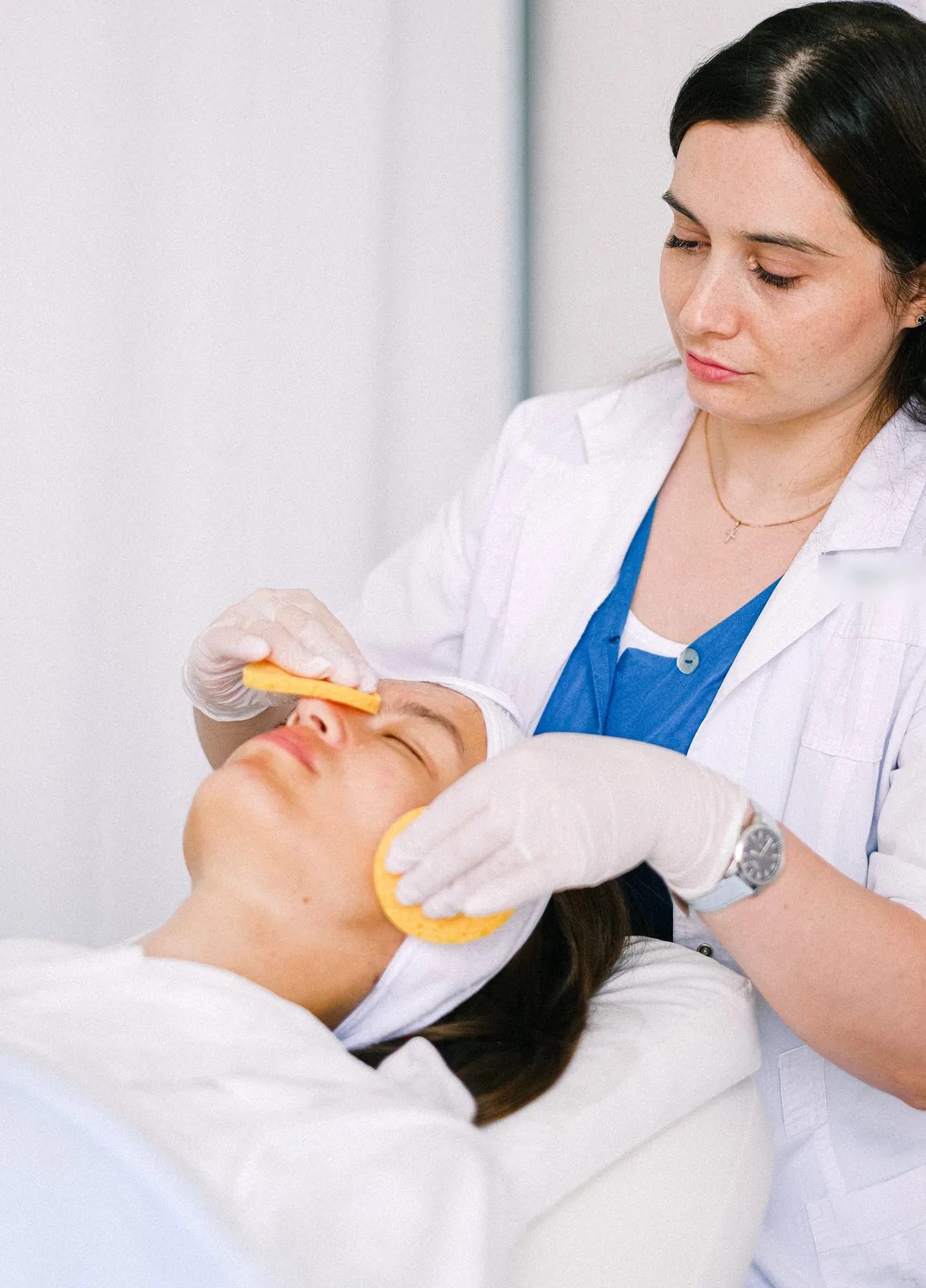
Put on clean gloves. Remove any product remaining on the skin with facial sponges or cotton pads moistened with clean water, blotting and wiping gently in one direction, without rubbing. Then rinse the area with plenty of clean, cool water (not ice cold, not warm).
A clay mask that has dried: moisten it to soften it first, then remove it; do not pick at it.
Products containing acids (chemical exfoliants): rinse thoroughly with plenty of cool water; follow the manufacturer’s “neutralising” or “removal” instructions exactly if there are any.
Massage oil containing essential oils: wipe off as much oil as possible; you may use a little unscented carrier oil to dilute what remains, then wash with a gentle, fragrance-free cleanser and cool water (reference).
If product gets into the eyes: have the client tilt their head and gently rinse the eye with plenty of clean water; do not rub and do not put any drops in. If the eye still stings, is red or painful, or vision is blurred after rinsing, take the client to an eye doctor.
Step 3: Cool the skin correctly
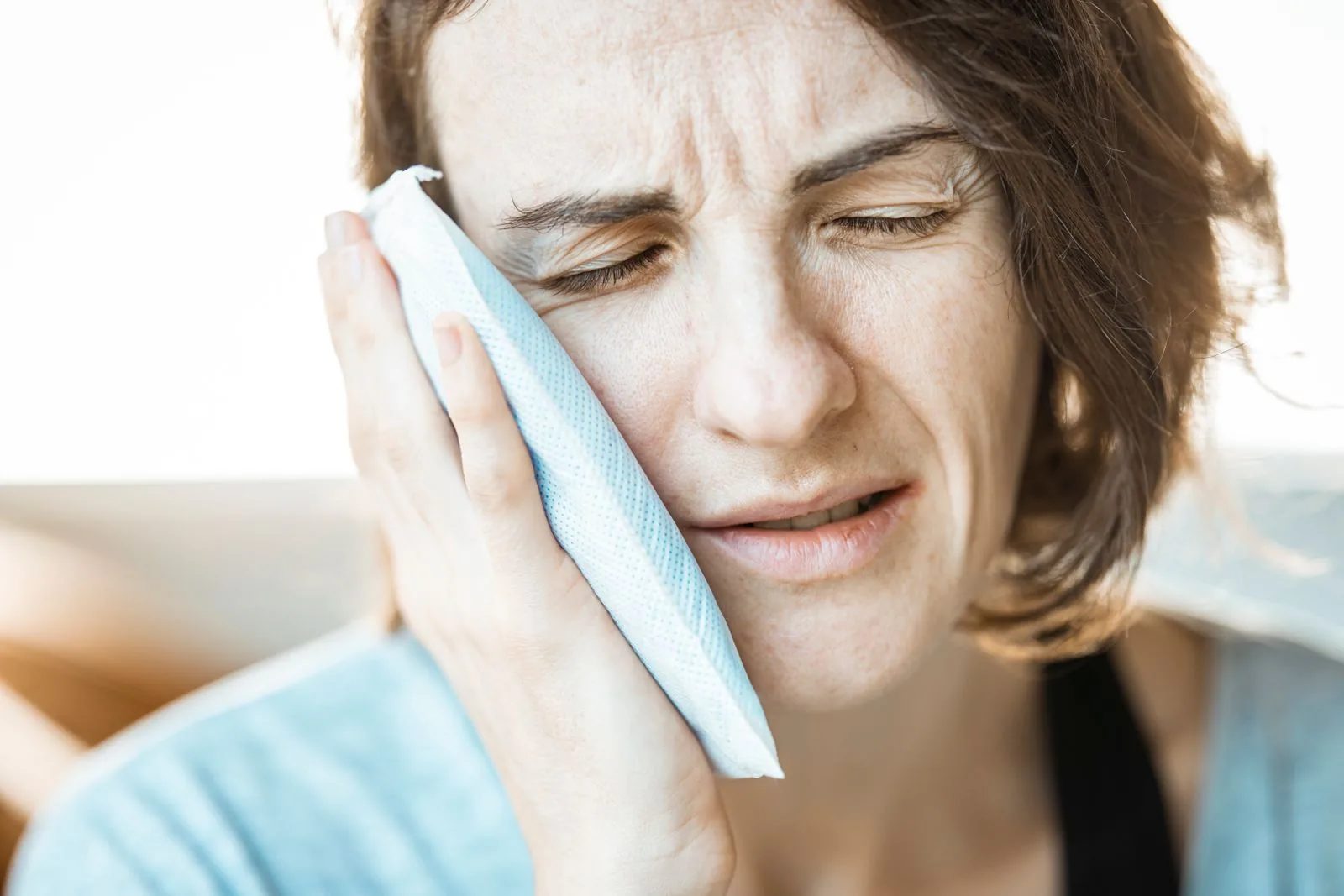
Red, burning skin caused by a product or massage: place a clean towel soaked in cool water and wrung out on the area. Change the towel when it warms up. Do this for about 10–15 minutes (reference), asking how the client feels.
Thermal burns (wax, hot stones, hot packs): hold the burnt area under gently running cool water for about 20 minutes (reference, according to common burn first aid guidelines). Remove rings and bracelets near the burn before swelling starts. Then cover with a clean non-stick dressing and take the client to a medical facility if the burn has blisters, is large, is on the face or genital area, or is very painful.
Do not put ice directly on the skin; if you use a cold pack, it must be wrapped in a clean cloth and applied in short spells.
Do not apply toothpaste, fish sauce, medicated oil, egg white, grease or any folk remedy to burning or burnt skin.
Blisters: do not pop or peel them.
Step 4: Do not apply new products, do not give medication
Many therapists want the client to settle quickly, so they apply soothing cream or aloe vera gel, or hand out antihistamines. When you do not yet know which ingredient the client is reacting to, every new product adds another risk.
Use only clean cool water and clean towels.
If the spa has its own procedure allowing a specific soothing gel, use it only when the manager agrees, the client has used that product before without problems, and it is recorded.
Do not give oral medication and do not apply corticosteroid or antibiotic creams. Medication is a doctor’s job.
Step 5: Observe the client at the spa
Invite the client to lie or sit and rest comfortably, keep them warm and offer water. Observe the client for at least about 20–30 minutes (reference) before letting them leave, or longer if the spa’s rules require. During this time:
Watch the red area: is it fading, staying the same or spreading?
Ask again about the burning or itching: is it decreasing or increasing?
Ask again about breathing difficulty and dizziness.
Take photos of the skin if the client agrees, for comparison and for a doctor to see if needed. Photos are kept only in the spa’s records, never posted online.
Do not let the client ride a motorbike home alone if they feel faint, tired or their eyes are affected; call a family member or a ride for them.
Step 6: Inform the manager, set the product aside and keep records
Inform the shift manager straight away; do not hide anything. Set aside the product that was used and record the product name, batch number and expiry date from the packaging. If several clients react to the same batch, the manager should stop using that batch and contact the supplier. How to complete the record is covered in a separate section below.
Talking to the client when their skin reacts
The client is in discomfort and worried. The way you speak decides whether they will follow your instructions.
Acknowledge how the client feels: “I understand it’s burning and you’re worried. I’m stopping right now to take care of it.”
Do not blame: avoid saying “It’s because your skin is too sensitive” or “You didn’t tell me beforehand”. Whatever the cause, the priority right now is to deal with it.
Do not promise what you are not sure of: do not say “It’ll be gone by tomorrow” or “It’s fine, everyone gets this”. Say: “Mild redness usually settles gradually, but if it gets worse, please see a dermatologist and let us know.”
Do not decide on compensation or refunds yourself: that is the manager’s job according to spa policy. Just say: “I’ve informed the manager and she will talk to you.”
Handling complaints is covered in a separate NAMBIN lesson; here the priority is the client’s safety first.
Advising the client on monitoring and caring for their skin at home
Before the client leaves, give them the advice verbally and, if possible, send a summary message they can read again:
Keep the skin clean and cool: wash with cool water and a gentle cleanser; do not rub or use rough towels.
Pause strong products until the redness has gone: exfoliants, acid products, retinol, peel-off masks, products with alcohol or lots of fragrance. Ask a doctor if the client is using prescription topical medication.
Avoid heat: no steam rooms, no very hot showers, and limit exercise that causes heavy sweating while the skin is still red (reference).
Cover up in the sun: wear a wide-brimmed hat and a face mask, stay in the shade. Use a sunscreen the client’s skin is already used to; do not try a new one now. Inflamed skin exposed to the sun may be left with dark marks.
Do not scratch, squeeze, pick off scabs or pop blisters, and do not apply leaves, lemon, fresh turmeric or any folk remedy to the skin.
After waxing: wear loose, breathable clothing over the waxed area; keep it clean; avoid swimming pools, hot tubs and steam rooms for about a day (reference).
Make clear when the client needs to see a doctor immediately without waiting for an appointment: difficulty breathing, swollen lips or eyes, faintness; spreading redness; blisters; weeping or pus; swelling, heat and pain that keep increasing; fever; eye pain or blurred vision.
The spa should call the client the next day to check on them and record what the client reports.
When to refer the client to a dermatologist or medical facility
Situation | Level | Where to refer (reference) |
|---|---|---|
Difficulty breathing, swollen lips, tongue or eyelids, faintness, rash all over the body | Emergency | Call 115 immediately |
Burns with blisters, large burns, burns on the face or genital area | Needs immediate medical attention | Nearest medical facility |
Chemicals or product in the eye, still painful, red or blurry after rinsing | Needs immediate medical attention | Eye doctor, medical facility |
Swelling, heat, redness and pain increasing, pus, spreading red streaks, fever | Needs medical attention soon | Doctor, medical facility |
Itchy rash or redness not improving or getting worse after a day or two (reference) | Should see a doctor | Dermatologist |
The client suspects an allergy and wants to know what they are allergic to | Should see a doctor | Dermatologist (patch testing may be done) |
Mild redness, fading, not very itchy, not painful | Monitor | Monitor at home, follow-up call the next day |
When the client goes to see a doctor, advise them to take the product or a photo of the packaging showing the ingredients and photos of their skin. The spa can proactively send the client the names and ingredients of the products used during the session.
Prevention: reducing the risk of skin reactions
Ask thoroughly before the session
The health questionnaire has its own lesson; for the risk of skin reactions, make sure to ask the following:
Have you ever had an allergy to cosmetics, fragrance, essential oils, medication, latex or food? Have you ever had anaphylaxis?
Do you currently have dermatitis, eczema, psoriasis, a lot of inflamed acne, sensitive skin, or any grazed or sunburnt areas?
Are you using topical or oral acne medication (especially retinoids such as tretinoin or isotretinoin), skin-thinning medication, or have you recently had a peel, laser or microneedling?
Clients taking oral isotretinoin: no waxing and no strong exfoliation; many references advise waiting for some time after stopping the medication (commonly cited as about 6 months, reference). The client should ask their treating doctor before having these services.
Test on a small area first
For clients with a history of allergy, sensitive skin, or a new product, the spa can test the product on a small area of skin first (for example the inner forearm or behind the ear), following the manufacturer’s instructions exactly on the amount to apply and the waiting time. Note:
A negative test does not guarantee that the client will not react, especially when the product is applied to the face or a large area.
Record the test result on the client record (date, product, site, result).
For waxing: always test the wax temperature on your own wrist and on a small area of the client’s skin before spreading the wax.
During the treatment
Use little product and few layers, with the contact time stated in the instructions; do not combine several strong active ingredients in one session.
Essential oils are always diluted in a carrier oil at the ratio set by the spa; never apply undiluted essential oils to the skin.
Control heat: wax, hot stones and hot towels must all be tested first, and ask the client frequently.
Ask how the client feels at every step with a new product: “Does it feel cool, warm or burning?”
Clients with a latex allergy: use latex-free gloves (for example nitrile gloves).
Real-life scenarios
Scenario 1 – Burning during a mask. A female client with combination skin, first visit. After an acid gel exfoliation step, the client complains of burning on both cheeks during the mask. The therapist stops, removes the mask completely, rinses with plenty of cool water and applies a cool towel for 15 minutes. When asked, the client says she uses a retinoid acne cream at night but did not put it on the form because she “thought it wasn’t relevant”. The skin fades after 30 minutes of observation. The therapist advises the client to pause strong products and ask the doctor who prescribed the acne cream before having an exfoliation service next time; she records the incident and the spa updates its health questionnaire to ask more clearly about topical medication.
Scenario 2 – An itchy rash the next day. A client calls to say that after a body massage with essential oils, she woke up the next morning with an itchy red rash on her back. The receptionist does not advise her to apply anything, but asks: any difficulty breathing or facial swelling (no); is the rash spreading quickly. The receptionist advises the client to see a dermatologist, sends her the names of the carrier oil and essential oils used, and informs the manager. The therapist records on the client file: do not use this essential oil next time, only an unscented carrier oil for this client.
Keeping records after an incident
An incident record protects both the client and the spa and helps prevent repetition. Write it the same day:
Time: when the treatment started, when the client began to react.
The service and step in progress when the reaction occurred.
Products used: name, batch number, expiry date, amount used, contact time on the skin.
Signs: location, colour, size, what the client reported feeling; whether or not there were whole-body signs.
What was done, at what time and by whom; whether 115 was called or the client was referred to a medical facility.
The client’s condition when leaving the spa and the advice given to them.
Note for next time: “Do not use product X for this client.” This note must be placed where anyone opening the client’s file sees it immediately.
Record events objectively, exactly as seen and done. Do not write speculation such as “the client is allergic because of a weak constitution”.
Safety checklist when a client’s skin reacts after treatment
☐ Stop working and stop the product as soon as the client complains of burning or itching or the skin changes colour unusually
☐ Ask immediately: any difficulty breathing, tight throat, swollen lips or eyes, dizziness
☐ Emergency signs: call 115, do not leave the client alone, keep the product
☐ Put on clean gloves, remove all product, rinse with plenty of cool water, do not rub
☐ Cool with a clean towel soaked in cool water; for thermal burns, hold under gently running cool water
☐ No ice directly on the skin, no folk remedies, no popping blisters
☐ Do not apply new products, do not give medication
☐ Observe the client at the spa before letting them leave; do not let a faint client drive themselves
☐ Give home care advice and the signs that require a doctor; make a follow-up call the next day
☐ Inform the manager, set the product aside, record the batch number, complete the incident record
☐ Note “do not use product X” on the client’s file
Frequently asked questions
Is red skin after a facial always an allergy?
No. Pink or mildly red skin that is even in colour, not painful, not very itchy and fades after the session is usually a transient reaction to massage, steaming or extractions. Pay closer attention when the skin burns, stings, itches, develops a rash, or the redness spreads or does not decrease; if the client is worried or the reaction lasts, they should see a dermatologist to find out the cause.
Should I apply soothing cream or aloe vera gel straight away?
Not on your own initiative. When you do not yet know which ingredient the client is reacting to, every extra product is a new risk, and aloe vera gel itself can cause irritation in some people. Prioritise cool water and clean towels; only use a specific soothing product when the spa has a procedure for it, the manager agrees and the client has used that product before without problems.
The client tested the product on her arm with no problem, so why did her face react?
Facial skin is thinner and more sensitive than the skin on the arm, and it usually receives several layers of product, with steaming and massage making it more permeable. Testing on a small area reduces the risk but does not rule it out completely. That is why you still have to ask how the client feels at every step and stop as soon as they feel burning.
Practice exercises
Classifying scenarios: take the quick recognition table above and cover the “What the therapist does” column. One person reads out the signs, the other states the level (monitor, should see a doctor, see a doctor immediately, call 115) and what to do. Swap roles.
Anaphylaxis drill: the whole shift runs one drill together. One person playing a client during a mask says “I’m finding it hard to breathe, my lips are numb”. Time from the moment the client speaks until “115 is called” and the spa’s address is read out correctly. Who keeps the product, who stays with the client and who goes out to meet the ambulance must be clearly assigned.
Practising product removal and cool compresses: on a practice partner, apply a layer of clay mask and let it dry. Practise moistening it, removing the mask completely with damp sponges without rubbing, rinsing with cool water and applying a cool towel. Your partner gives feedback on any moments when the skin felt pulled or rubbed.
Writing an incident record: based on scenario 1 above, each person writes a complete incident record covering every item. Compare with each other and find where information is missing or where speculation was written instead of facts.