A washing machine that will not spin almost always has one of five causes: the load has bunched up on one side and the machine is out of balance, water is not draining because the filter, drain pump or drain hose is blocked, the lid switch or door lock is not confirming that the door is shut, the belt or clutch of a top-loader has failed, and only last of all the motor or control board. Modern machines are designed to refuse to spin whenever a safety condition is not met, so most "won't spin" jobs are the machine protecting itself rather than a serious fault. This lesson shows you how to check in the same order a technician follows in a customer's home in Vietnam: from easy to hard, from free to expensive, measuring and writing things down as you go.
By the end of this lesson, you will be able to:
- Tell "won't spin because there is still water" apart from "won't spin even though the water has drained" within 2 minutes of looking.
- Unplug the machine, drain standing water safely, and clean the drain pump filter of a front-loader or the drain valve of a top-loader.
- Check the lid switch, door lock, drive belt and clutch in order, using a multimeter.
- Read the common groups of error codes for imbalance, draining and the door on the brands most often seen in Vietnam.
- Quote the customer from a reference price range and know when to send them to the manufacturer's service centre instead.
Want to learn home appliance repair properly? Repairing top- and front-load washers is step 3 of the roadmap, after electrical safety and testing components. See the 8-step home appliance repair roadmap to learn in the right order.
Why does a washing machine refuse to spin?
Spinning is the stage where the drum turns fast: typically 700–1,400 rpm on a front-loader and roughly 600–800 rpm on a top-loader. At these speeds, a single wet duvet bunched on one side creates enough centrifugal force to make the machine shake and "walk" across the floor. So the control board only allows a spin when three conditions are met: the water has almost all drained, the door or lid is closed and locked, and the load in the drum is reasonably balanced. If any condition fails, the machine stops, beeps, shows an error code, or keeps cycling between draining and slow tumbling.
Two types of machine, two ways of draining
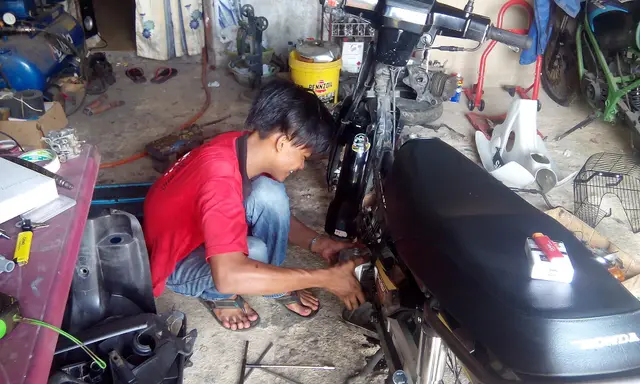
On a front-loader (Figure 1) the drum sits lower than the drain hose outlet, so an electric drain pump has to push the water up and out. In front of the pump is a debris filter behind a small hatch at the bottom corner of the front panel. Many common top-loaders sold in Vietnam drain by gravity instead, through a drain valve at the bottom of the tub; the valve is pulled open by a small drain motor or a solenoid. Some newer top-loaders also use a pump. On any "won't drain" job, your first task is to find out whether the machine uses a valve or a pump.
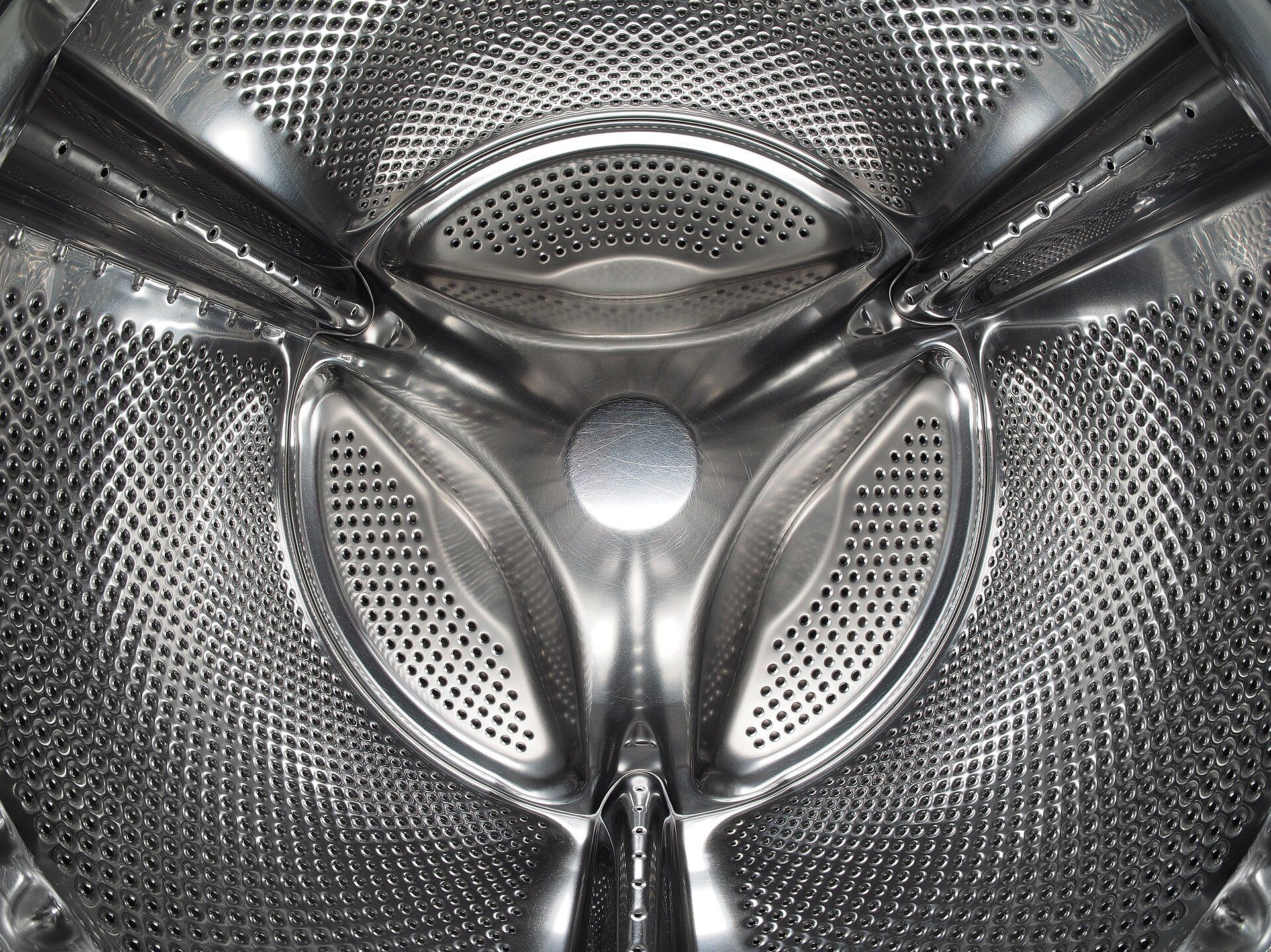
Photo: Petar Milošević / Wikimedia Commons, CC BY-SA 4.0
Top-loaders: the drive belt and the clutch
A belt-driven top-loader transmits power from the motor through a belt to a clutch unit (technicians in Vietnam often call it the "gearbox"). During washing, the clutch only lets the pulsator at the bottom of the drum rock back and forth; during spinning, it locks the whole drum so it turns in one direction. If the belt is slack, slipping or broken, or the clutch's shift lever is stuck, you will hear the motor humming while the drum stays still or turns very slowly. Direct-drive (inverter) machines have no belt, so this branch only applies to belt-driven models.
How the board detects imbalance
Top-loaders usually have a balance switch: if the drum tilts too far it hits a lever and cuts the spin. Front-loaders and inverter machines measure fluctuations in motor speed as the drum starts to turn; when they detect an uneven load, the board tumbles slowly a few times to redistribute the clothes, and after several failed attempts it shows an error or spins at low speed. That is why customers so often say "it keeps turning and stopping and never spins".
Safety before you touch the machine
A washing machine combines 220V mains electricity and water, and it usually stands in a damp bathroom or on a balcony. Before you remove any cover, you must cut the power and deal with the water left in the drum.
Safety warning: pull the plug out of the socket (do not just press the power button) before opening the filter hatch, removing panels or testing parts. The washer's socket should be protected by a residual current device (RCD/RCBO); if you feel a tingle when touching the cabinet there is current leakage, so stop and check the earth connection. A front-loader that has just washed on a hot programme may still hold water at 40–60°C: wait for it to cool before draining. Opening the pump filter always lets water out — lay down towels, use a shallow tray and drain slowly so water cannot reach sockets or switchboards. Never bridge the door switch or door lock "to make it spin": a drum spinning at high speed with the door open can cause serious injury, especially to small children.
Tools to bring
- Multimeter (resistance, continuity and AC voltage ranges) and a voltage tester screwdriver.
- Flat, Phillips and Torx (T20–T30) screwdrivers, long-nose pliers, hose clamp pliers.
- Shallow tray, bucket, towels, torch, rubber gloves, a thin hook for fishing out debris; a phone to photograph wiring before you unplug anything.
Draining standing water the right way
Front-loader: open the small hatch at the bottom, pull out the emergency drain tube (the small rubber tube next to the filter), remove its plug and let the water run into the tray; when the tray is full, plug the tube, empty the tray and continue. Only unscrew the filter once the water is out. Top-loader: lower the end of the drain hose below the base of the machine (into a bucket or a floor drain); if the drain valve is fully closed, scoop some water out of the drum before tilting the machine.
A step-by-step check: 5 steps from easy to hard
The table below is the order a technician follows in the customer's home. Each step rules out one group of causes; do not jump to dismantling the machine before finishing the cheaper steps.
| Step | What to check | Suspicious signs | Time |
|---|---|---|---|
| 1 | Load in the drum, feet, levelling | Only a duvet, rug or 1–2 heavy items; machine not level, walks when spinning | 5 min |
| 2 | Water left in the drum after draining | Clothes still under water, drain error shown | 5 min |
| 3 | Pump filter, drain hose, drain valve | Lint, coins, hairpins; kinked hose; valve does not open | 15–30 min |
| 4 | Lid switch, door lock | Lock symbol not lit, door error code, no "click" of the lock | 15–20 min |
| 5 | Belt, clutch, motor, control board | Motor runs but drum does not turn, burning smell, machine unresponsive | 30–60 min |
Step 1: unbalanced load and an uneven floor
Open the machine and look inside. A single duvet, a rug or two pairs of wet jeans bunched on one side is the most common cause of all. Spread the load evenly around the drum, add a few bath towels to balance it, then run a spin-only programme. Put a spirit level on top of the machine: all four feet of a front-loader must touch the floor; on a top-loader, check whether any of the four drum suspension rods has slipped out or broken.
Step 2: is there still water, or has it drained?
This is the most important branching question. If the clothes are still under water after the drain cycle, go on to Step 3 (the drain path). If the water has gone but the machine still will not spin, skip Step 3 and go to Steps 4 and 5. On a front-loader with an emergency drain tube, you can quickly measure how much water is left by catching it in a jug marked in litres.
Step 3: pump filter, drain hose, drain valve
Front-loader: once the standing water is out, turn the filter anticlockwise and remove it. Inside you will usually find hair, lint, coins, hairpins or buttons — Figure 2 shows the foreign-object trap (debris filter) of a washing machine. Rinse the filter, shine a torch into the pump chamber and turn the impeller with a finger: it should spin freely, with a slight magnetic "cogging" that is normal; if it is jammed solid there is debris inside or the pump has failed. Refit the filter tightly and check that the seal does not leak.
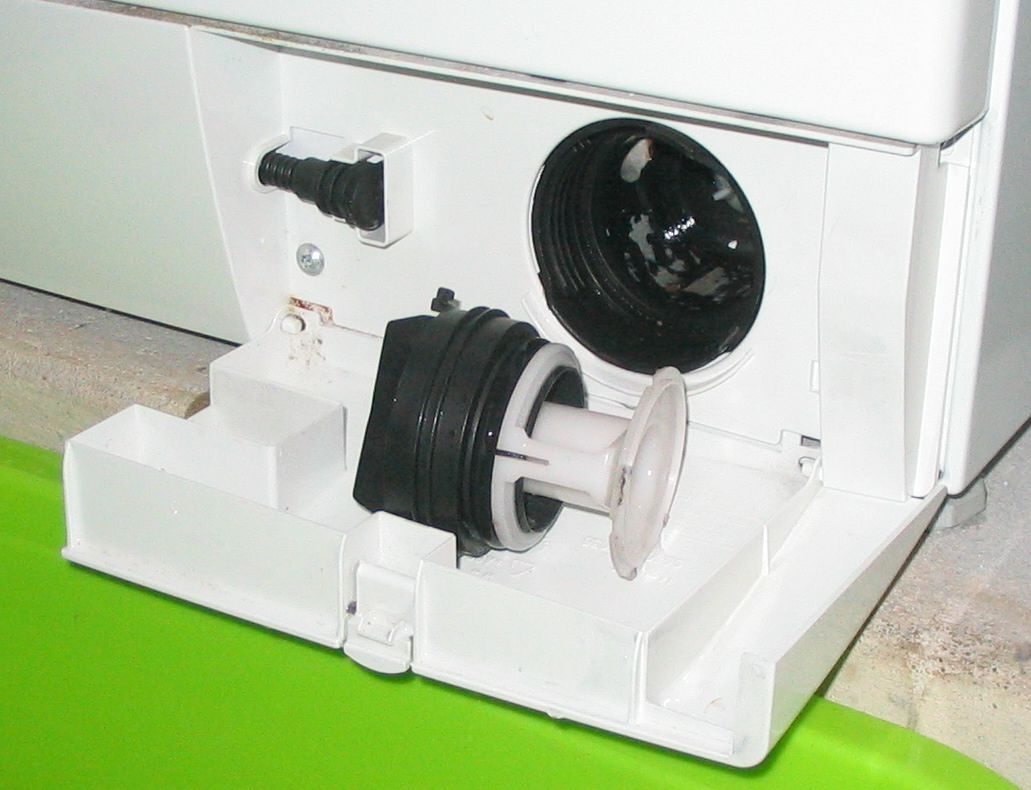
Photo: 1-1111 / Wikimedia Commons, CC BY-SA 3.0
Drain hose: check whether the hose behind the machine is kinked, crushed by a cabinet, or pushed too far into the standpipe (which can siphon water back). On a front-loader the hose outlet is often placed somewhere around 60–100 cm above the floor, but follow the machine's manual. Undo the clamp and blow through the hose or use a soft cleaning rod to check for sludge and lint.
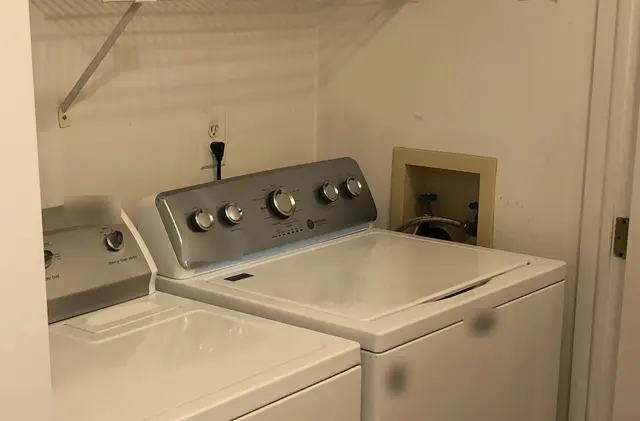
Drain pump and drain valve: if the filter is clean and the machine still will not drain, measure the resistance of the pump coil (Figure 3 shows the pump assembly of a washing machine). Common synchronous drain pumps usually read somewhere from a few tens to a few hundred ohms across the coil; a reading of 0 Ω (shorted) or infinity (open) means the pump is dead. Look up the exact figure for the pump's part number. On a top-loader, watch the drain valve at the bottom: when the board calls for a drain, the drain motor must pull its cable and open the valve. If you hear no buzz and the valve stays shut, check for 220V at the drain motor, then check the valve's rubber seal for trapped debris.
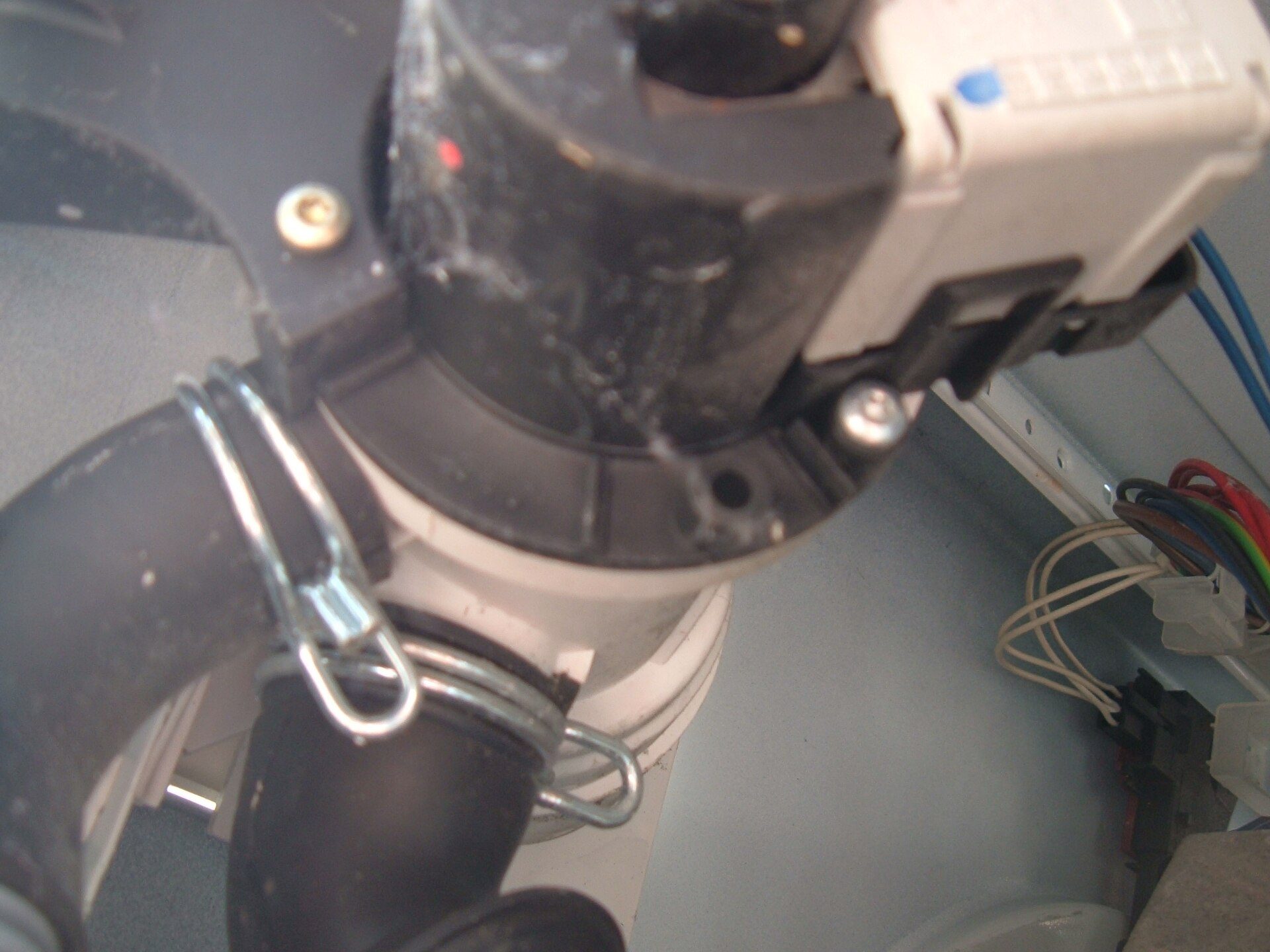
Photo: No machine-readable author provided. Poo~commonswiki assumed (based on copyright claims). / Wikimedia Commons, Public domain
Step 4: lid switch and door lock
A top-loader has a lid switch (or a lid lock on newer models): closing the lid should give a "click". A front-loader has an electric door lock: when a cycle starts you hear the lock engage and the padlock symbol lights up. If the machine washes and drains normally but shows a door error or simply stops when it should spin, check whether the hook on the door is broken, whether a sagging hinge stops the hook entering its slot, and whether clothing is caught in the lid. Unplug the machine, remove the door lock and test its contacts for continuity using the wiring diagram on the back of the machine. Door locks have a thermal delay, so after the machine stops you often have to wait 1–3 minutes before the door opens: that is normal, not a fault.
Step 5: belt, clutch, motor and control board
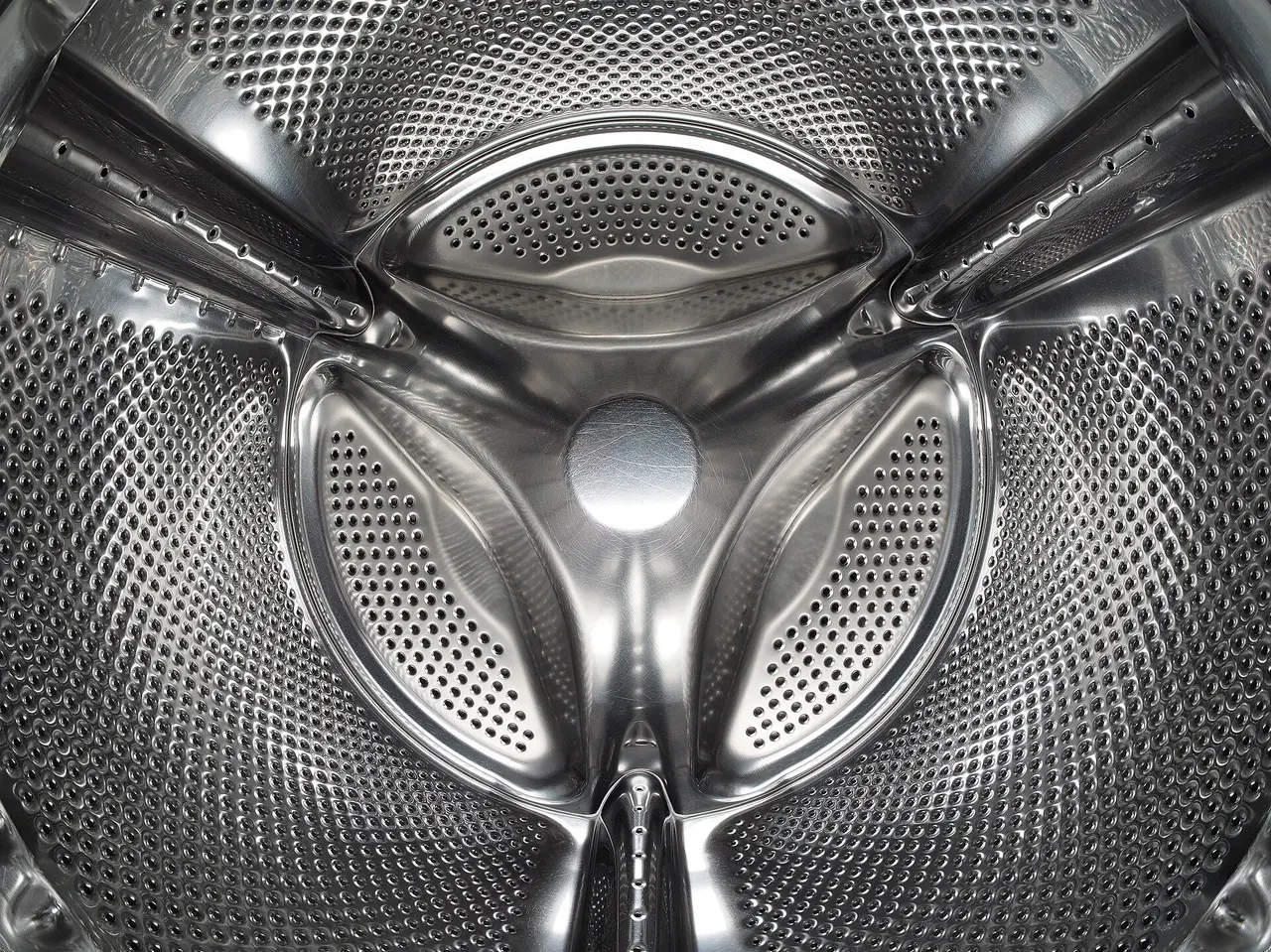
If the water has drained and the door is locked but the drum still will not spin up: unplug the machine, tilt the top-loader backwards (with someone holding it) and look at the belt underneath (Figure 4). A belt that is slack, glazed, cracked at the ribs or off the pulley must be replaced with the correct part. Pressed in the middle, the belt should deflect only about 1–1.5 cm. If the belt is good and the motor runs but the drum does not turn during the spin, suspect the clutch: a stuck shift lever, or a broken or worn wrap spring. Replacing a clutch needs a puller and removal of the drum, so it is best done in a workshop or by an experienced technician.
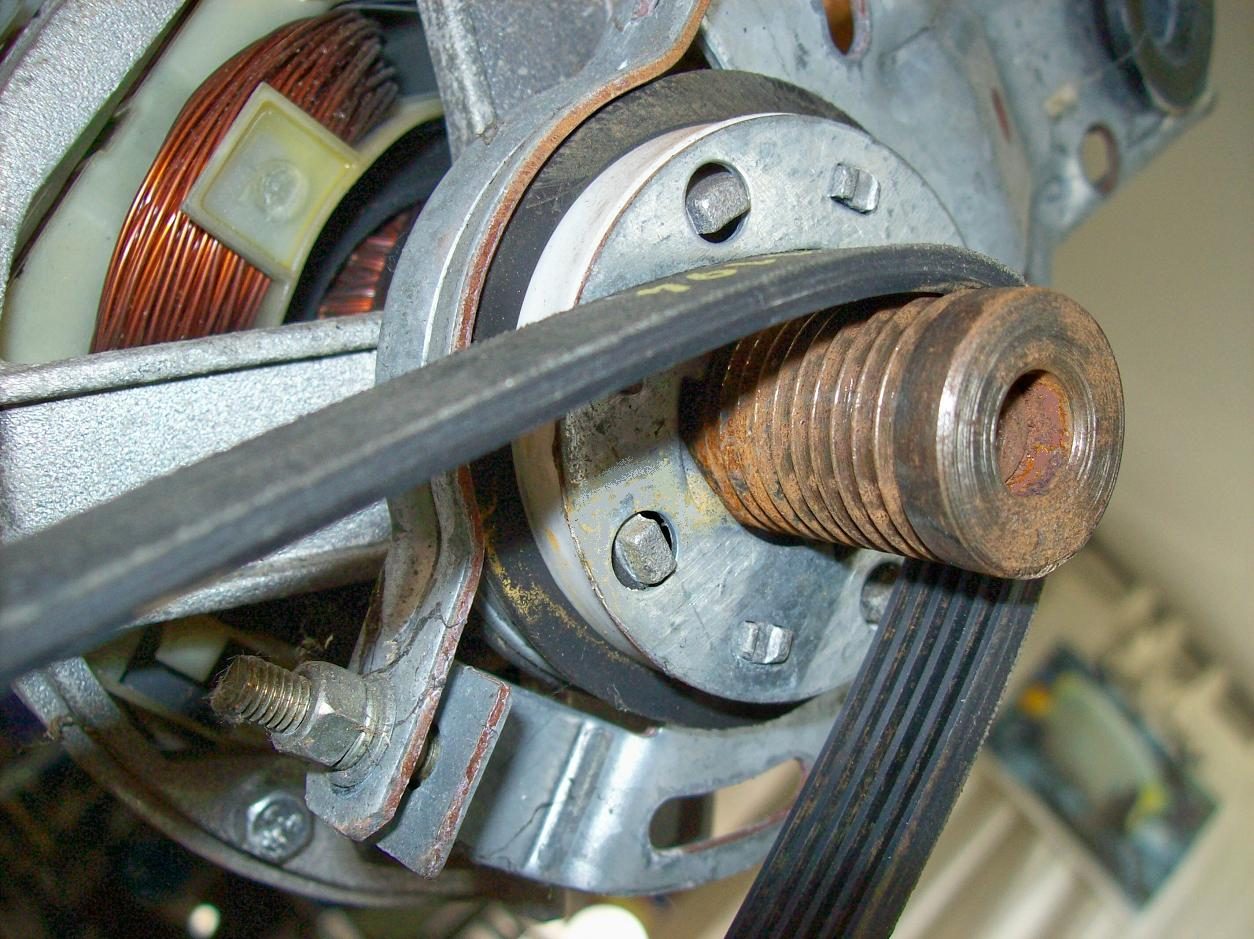
Photo: Ulfbastel / Wikimedia Commons, Public domain
The motor and control board are the last branch. If the motor smells burnt or hums without turning, check its run capacitor (top-loaders use capacitor-start motors) and compare the measured capacitance with the value printed on it. Only suspect the board once every input and output component has measured correctly; inverter and power boards carry high voltages, so do not attempt board repair until you have reached that step of the training.
Common error codes for spin, drain and door faults
Most machines show an error code when they cannot spin. Codes differ by brand and model, so the table below only lists groups of codes technicians see often, to point you in the right direction; always check the user manual or the manufacturer's official support page for the exact model.
| Fault group | Common codes (reference only) | Check first |
|---|---|---|
| Unbalanced load | UE, UB, Ub (some LG and Samsung models); U13 (some Panasonic top-loaders); E3 (some Toshiba top-loaders) | Step 1: redistribute the load, level the machine, check suspension rods |
| Not draining or draining slowly | OE (LG); 5E, 5C, SE (Samsung); E20, E21 (Electrolux); U11 (Panasonic); E1 (Toshiba) | Step 3: pump filter, drain hose, pump or drain valve |
| Door or lid not locked | dE (LG); DE, DC, LE (Samsung); E40, E41 (Electrolux); U12 (Panasonic); E2 (Toshiba) | Step 4: lid, door hook, door lock, connector |
How to read an error code correctly
Write down the code and the model from the label on the back. Unplug for 5–10 minutes, then run a spin-only programme to see whether the error comes back. If it repeats at the same stage, follow the matching branch in the table; if several different codes appear at random, suspect a loose connector, wiring chewed by rats, or a damp control board.
What if there is no error code?
Watch exactly when the machine stops: stopping as soon as draining begins points to the drain branch; draining, turning a few times and then stopping points to balance or the lid; the motor running while the drum stays still points to the belt or clutch.
Worked example: an 8 kg front-loader with a drain error that won't spin
Ms Mai, who lives in an apartment in Ho Chi Minh City, calls a technician: her 8 kg front-loader finishes washing with the clothes still under water, beeps and shows a drain error. She has a small child who likes to post toys into the machine. The technician works as follows (reference prices for 2026, which vary by region; 100,000 VND is roughly 4 USD).
Step-by-step diagnosis
- Ask the customer, note the error code and model, unplug the machine and wait for the water to cool: 10 minutes.
- Lay towels and drain the standing water through the emergency tube into a tray: about 9 litres collected, taking 15 minutes.
- Unscrew the pump filter: a coin, two hairpins and a small toy wheel are stuck there, and the impeller is jammed. Remove the debris, rinse the filter and turn the impeller, which now spins freely: 20 minutes.
- Measure the pump coil: the reading falls within the range in the documentation for that pump part number → the pump is fine and does not need replacing.
- Refit the filter, plug in and run a drain-and-spin programme with a small load: the machine drains completely, spins normally and the filter does not leak: 15 minutes.
Total time on site: 10 + 15 + 20 + 15 = 60 minutes.
Quote and advice to the customer
| Item | Reference cost |
|---|---|
| Call-out and inspection within the city | 50,000 VND |
| Drain standing water, clean the filter and pump chamber | 150,000 VND |
| Total | 200,000 VND (about 8 USD) |
If the technician had heard "drain error" and simply fitted a new pump, the customer would have paid around 450,000–1,200,000 VND while the real cause was still debris. Advise the customer to empty pockets before washing, clean the pump filter roughly every 1–2 months, and switch on the child lock on the control panel if the machine has one.
Common mistakes new technicians make
Replacing the pump before opening the filter
Symptom: the new pump hums but still does not drain. Cause: debris stuck in the pump chamber or a kinked drain hose. Fix: always clean the filter, turn the impeller and check the hose before measuring or replacing the pump.
Bridging the door lock to test the spin
Symptom: the machine spins while the technician is there, but the door can now open while the drum is turning. Cause: wanting a "quick test". Fix: never bridge it; test the door lock with a meter and replace it with the correct part.
Ignoring an unbalanced load
Symptom: the pump and belt have been removed before anyone notices the customer was washing a single duvet. Fix: Step 1 is always to look inside the drum.
When to call a technician, and reference prices
Users can safely do Step 1 themselves and clean the pump filter following the manual. Removing panels and testing or replacing parts should be left to a technician with the right tools. If the machine is still under warranty, call the manufacturer's service centre first, because opening it yourself may void the warranty.
Price guide for a washing machine that won't spin (2026 reference)
| Job | Price range (labour plus common parts) |
|---|---|
| Home inspection fee | 50,000–150,000 VND |
| Clean pump filter, clear drain hose | 150,000–300,000 VND |
| Replace front-loader drain pump | 450,000–1,200,000 VND |
| Replace top-loader drain motor / drain valve | 350,000–800,000 VND |
| Replace drive belt | 200,000–450,000 VND |
| Replace lid switch or door lock | 300,000–800,000 VND |
| Replace top-loader clutch unit | 600,000–1,500,000 VND |
| Repair or replace control board | 800,000–3,500,000 VND |
Prices vary by brand, model, genuine versus compatible parts, and region within Vietnam. When the repair would cost more than about half the price of a comparable new machine, or the machine is more than 8–10 years old, present the customer with both options: repair or replace.
Signs to stop immediately and call a technician
- A burning smell, smoke or sparks under the machine, or the circuit breaker trips when it is switched on.
- A tingle when touching the cabinet, or a voltage tester lights up on the metal casing.
- The drum knocks violently, there is metal-on-metal noise, or a suspension rod or spring is broken.
- Water keeps leaking from under the machine even though the filter is screwed tight.
Frequently asked questions
My washing machine keeps turning and stopping and never spins. What is wrong?
Usually an unbalanced load: the machine is trying to redistribute the clothes and gives up after a few attempts. Spread the load evenly, add a few towels if you are washing a single large item, and check the machine is level. If it does the same with an empty drum, check the suspension rods or shock absorbers.
The machine drains normally but still will not spin?
If the water has gone, the drain path is ruled out; check the lid switch or door lock, then the belt and clutch (on a top-loader) or the motor. Listen carefully: the motor running while the drum stays still almost always means the belt or the clutch.
Is it safe to clean the drain pump filter myself?
Yes, if you unplug the machine, wait for the water to cool, drain the standing water slowly into a tray and put towels down. Follow the manual for your model; if the filter is stuck, do not force it with pliers, because the filter cap breaks easily.
How much does it cost to fix a washing machine that won't spin?
For reference in Vietnam in 2026: a simple job such as cleaning the filter costs about 150,000–300,000 VND (about 6–12 USD); replacing a drain pump or door lock runs from a few hundred thousand to about 1.2 million VND; a clutch or control board can cost from 600,000 up to 3.5 million VND depending on the machine.
Practice exercises and self-assessment
- On a front-loader, drain the standing water through the emergency tube, remove and clean the pump filter, and refit it without leaks.
- On a belt-driven top-loader, tilt the machine safely, measure the belt deflection and photograph the position of the clutch.
- Look up the imbalance, drain and door codes in the manuals of 2 different models and build a comparison table.
- Write a repair sheet for an imaginary job following Ms Mai's example: fault description, steps, time and quote.
Self-assessment criteria
- Pass: you always unplug and drain the standing water before opening the filter; you identify "still has water" versus "already drained" within 2 minutes.
- Pass: your repair sheet includes the error code, model, correctly added times and a quote whose total matches.
- Not yet: you replace the pump or board without cleaning the filter and measuring; you bridge the door lock; you let water run into a socket.
Once you can diagnose washing machines confidently, you are ready for the next step of the roadmap: Repairing standard and inverter fridges, followed by Sourcing spare parts & pricing repairs so that your quotes become more accurate. See the 8-step home appliance repair roadmap.