Massage contraindications are health conditions in which a massage therapist must not massage, or may only work while avoiding the affected area or once the client has a doctor's advice: a client with a fever, an open wound or contagious skin condition, a suspected blood clot (one calf swollen, warm, red and painful), recent surgery, or pregnancy when the therapist is not trained for it and the client has no guidance from a doctor. Hygiene goes hand in hand with contraindications: wash your hands before and after every client, use a clean set of linen for each client, and wipe down the table and tools after every session. And one boundary to remember from day one: relaxation massage does not replace medical treatment; physiotherapy and rehabilitation are the work of licensed health professionals. This is the first lesson to read when you start learning the trade, with a screening table, a between-client hygiene routine and a worked example of a 4-client shift where the times add up.
By the end of this lesson, you will be able to:
- Tell apart 3 groups of contraindications: do not massage, massage but avoid the area, doctor's advice needed first.
- Run a health intake before a session in about 5–10 minutes and decide whether to proceed, adapt or decline.
- Wash your hands in 6 steps, change linen and clean the table and tools between clients in about 15 minutes.
- Explain clearly to clients what massage can and cannot do, without promising to cure anything.
- Recognise the signs that mean a client should see a doctor or that you should call an ambulance (115 in Vietnam).
Starting out in massage therapy? Hygiene, contraindications and legal limits are step 1 of the roadmap, before anatomy, pressure, Swedish massage and acupressure. See the 8-step massage therapist roadmap to learn in the right order.
What are massage contraindications?
Massage increases local blood flow and works on muscles, skin and soft tissue. For a healthy person that means relaxation. For someone with certain health problems, the same effect can make a condition worse, pass an infection to the therapist and the next client, or mask an illness that needs a doctor. Contraindications are the list of situations where you stop and think before you put your hands on a client.
Group 1: do not massage (whole body)
The client has a fever, an acute illness (flu, diarrhoea, vomiting), is drunk or under the influence of drugs, may have a deep vein thrombosis, or shows signs of a spreading infection. In these cases you postpone the session until the client is well, or advise them to see a doctor.
Group 2: massage but avoid the area (local)
Open wounds, burns, surgical scars that have not fully healed, rashes, fungal infections, pustules, bruises, prominent varicose veins, fresh injuries such as a hot, swollen sprain. You can still work other areas if the client is well overall, but do not touch or press deeply on that area.
Group 3: doctor's advice needed first
Pregnancy, recent surgery, cancer treatment, heart disease, uncontrolled high blood pressure, diabetes with complications, severe osteoporosis, blood-thinning medication, back pain with numbness or weakness in the limbs. With this group, a new therapist should politely decline and advise the client to ask their treating doctor; once the client has that advice, a manager or experienced therapist decides how to proceed.
Quick whole-body screening table
| Condition | What you ask or see | What a new therapist does |
|---|---|---|
| Fever, acute illness | Hot, tired, coughing, runny nose; client says they have a fever | Postpone, rebook |
| Suspected deep vein thrombosis | One calf swollen, warm, red, tender to touch | No massage, advise seeing a doctor straight away |
| Wounds, contagious skin conditions | Scrapes, surgical scars, red rash, fungus, pustules | Avoid the area; postpone if widespread |
| Recent surgery | Client mentions an operation, dressings or stitches | Doctor's advice needed; never work on the incision |
| Pregnancy | Client says she is or may be pregnant | Only a therapist trained in pregnancy massage, with a doctor's guidance |
| Blood thinners, osteoporosis | Blood-thinning medication, bruises easily, older client | Ask the doctor; if allowed, light pressure only |
| Varicose veins | Twisting, raised veins on the legs | No deep pressure on that area |
| Alcohol, just eaten | Smell of alcohol; a large meal just now | Postpone or wait |
This table is a minimum screen for beginners, not a complete medical list. When in doubt, the rule of the trade is: do not massage, and ask someone qualified.
The health intake form and pre-session consultation
Nobody remembers every contraindication while welcoming a client. That is why every serious spa uses a health intake form (consultation form), which the client fills in or the therapist asks and records, and which the client signs before the first session.
Questions to ask
- Do you have a fever, feel unwell or are you ill today?
- Are you pregnant, or have you had surgery or an injury in the last few months?
- Do you have heart disease, blood pressure problems, diabetes, cancer, a blood disorder, or take any regular medication?
- Is any area painful, swollen or wounded, or is there anywhere you do not want touched?
- Do you prefer light, medium or firm pressure, and are you allergic to any oils or essential oils?
Look before you start
Once the client is on the table, take a quick look at the areas you will work on: scrapes, rashes, fungus or bruises on the skin; legs swollen unevenly or veins standing out. If something looks unusual, ask the client again, note it on the form and avoid the area. If you suspect a fever, you can take a temperature with a non-contact thermometer (Figure 1) where the spa has that procedure.
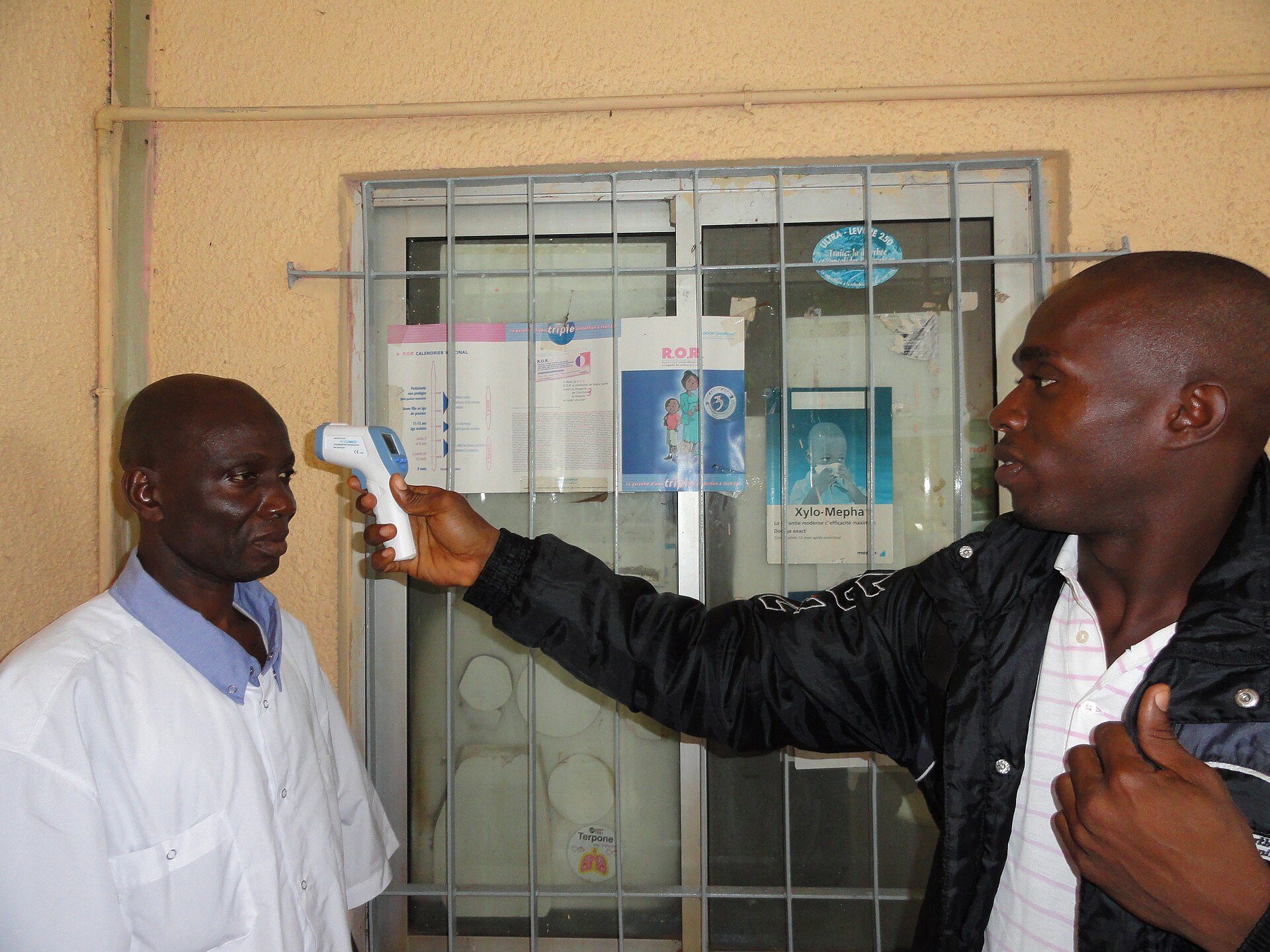
Photo: CDC Global / Wikimedia Commons, CC BY 2.0
Recording and storing the form
Record the date, the answers, the areas to avoid, the pressure chosen and the client's signature. When the client returns, ask again: "Has anything changed with your health since last time?" Health information on the form is private: keep it in a locked cabinet or password-protected software, and never photograph it and send it to a group chat. The lesson on neck and shoulder massage includes an extra screening table specific to the neck.
Hygiene for hands, towels, table and tools
A therapist's hands touch the skin of dozens of people every week. If they are not clean, you carry fungi and bacteria from one client to the next, and you can catch them yourself. Good hygiene is also something clients see and remember: fresh linen, white towels, no hair on the table.
Six-step hand washing
Wash with soap and clean water before each client, after each client, after using the toilet, eating, or touching money or a phone. Wet your hands, apply soap, then rub in 6 steps: palms, backs of hands, between the fingers, backs of the fingers, thumbs, fingertips and nails (Figure 2), about 40–60 seconds in total; rinse and dry with a paper towel or single-use towel. Keep nails short and take off rings and bracelets while working, since they trap dirt and can scratch the client's skin.
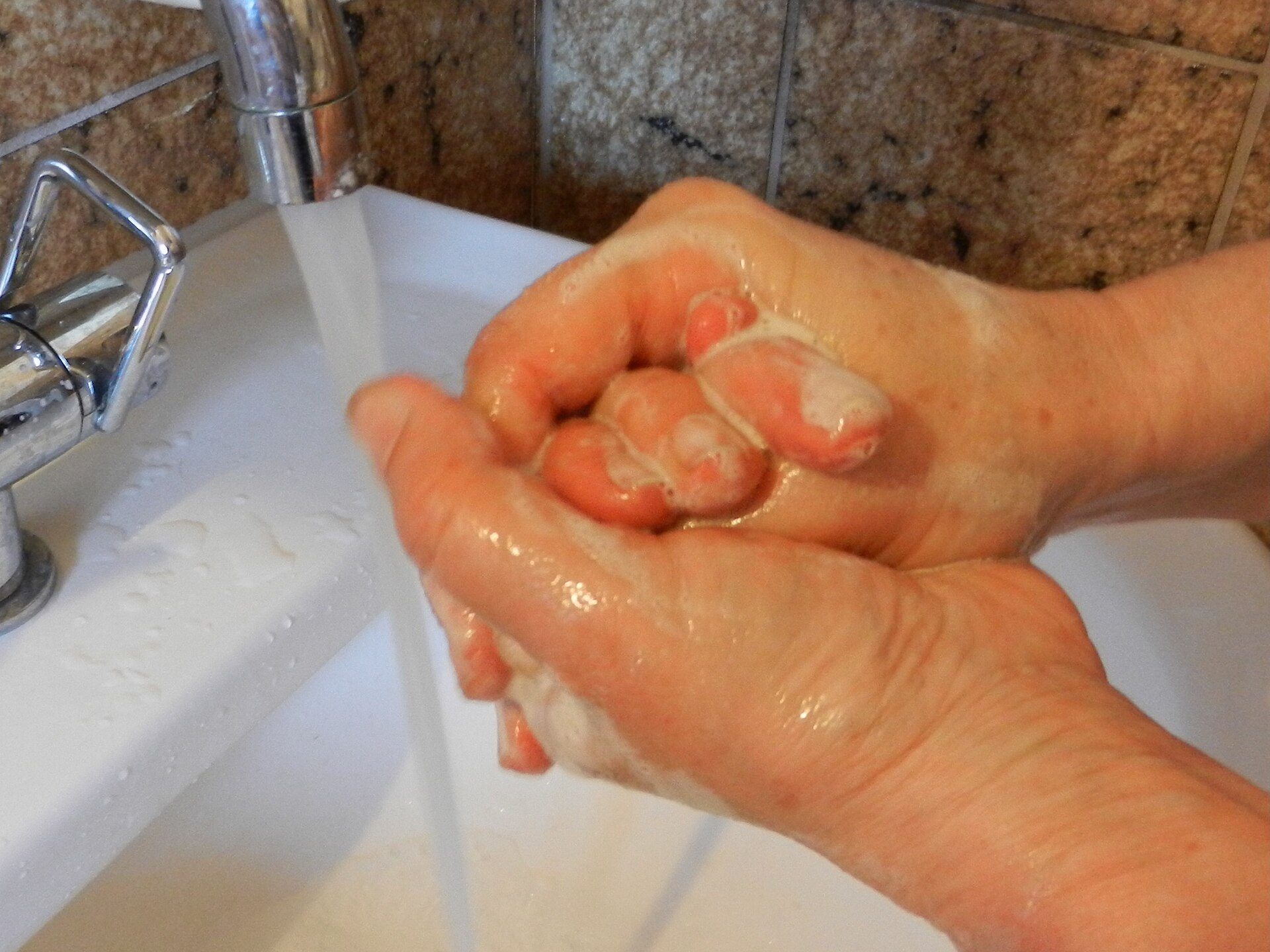
Photo: Beat Ruest / Wikimedia Commons, CC BY-SA 4.0
Towels, sheets and face cradle
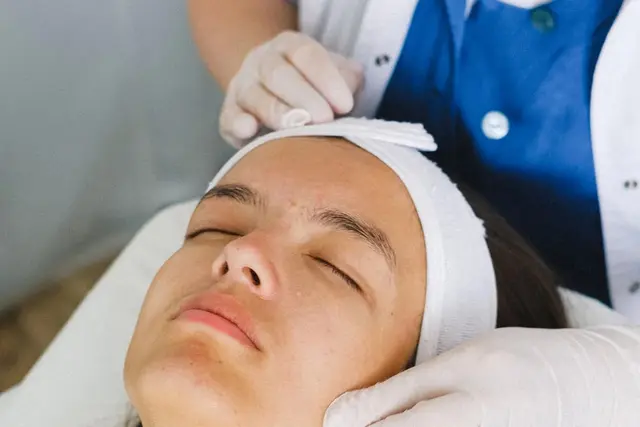
- A clean set for every client: a sheet over the table, large towels for draping the body, a small towel or cover for the face cradle (Figure 3).
- Put used towels straight into a lidded basket, never on the floor, never near clean towels, and do not hug them against your body as you carry them.
- Oily towels are washed separately in hot water according to the laundry team's instructions; only fold and store towels once fully dry, as damp towels go mouldy and smell.
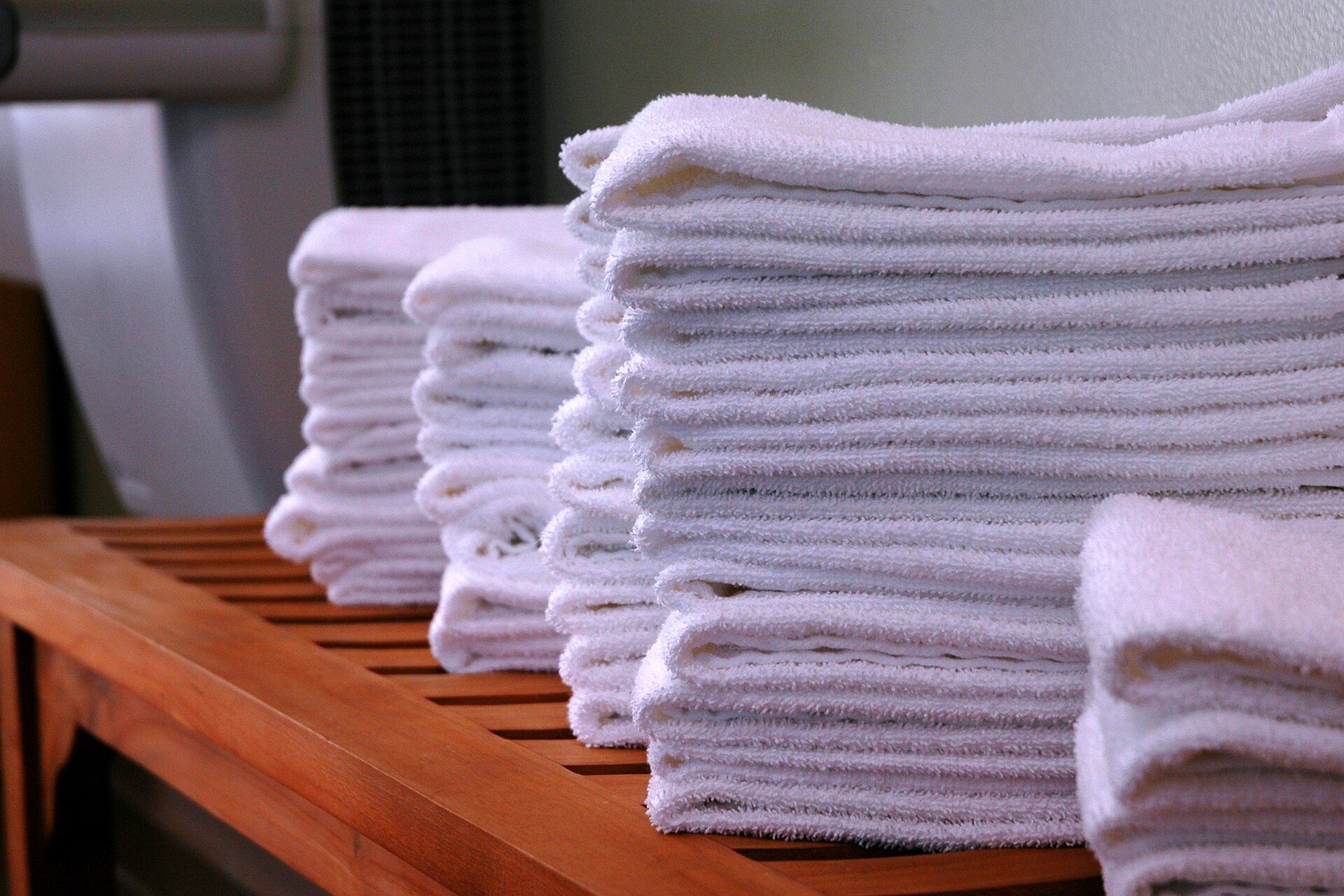
Photo: Brandon.wiggins / Wikimedia Commons, CC BY-SA 3.0
Table, massage oil and tools
After each client, strip all linen, wipe the table surface, face cradle and armrests with a surface disinfectant exactly as the label says (correct dilution, enough contact time), then let it dry. Pour massage oil into a small bowl or use a pump bottle; never dip a hand that has touched a client into the shared oil bottle. Hot stones and hand tools are washed and disinfected after every client.
Between-client cleaning table
| Task | Time | Pass when |
|---|---|---|
| Strip linen into the used-linen basket | 3 minutes | No towel touches the floor |
| Disinfect table, face cradle, tools | 5 minutes | Table dry, no oil streaks |
| Lay fresh linen, replace oil bowl | 4 minutes | Sheet smooth, no hair |
| Six-step hand wash, air the room | 3 minutes | Clean hands, no smell in the room |
| Total | 15 minutes | |
Check: 3 + 5 + 4 + 3 = 15 minutes. When booking, always leave these 15 minutes between two clients instead of scheduling them back to back.
Legal limits and professional boundaries in massage
Beginners often skip this part, but it is the part that keeps you out of the most trouble. There are three boundaries to remember.
Relaxation massage is not medical treatment
A massage therapist does not diagnose, does not prescribe, and does not promise to "cure" a herniated disc, spinal degeneration, stroke or any other illness. You can say "massage helps you relax, eases muscle tension and makes you feel better"; you do not say "massage cures disease". For a client under medical treatment, massage is only a complement when the doctor agrees, never a substitute for follow-up visits and medication.
Physiotherapy is a health profession
Physiotherapy, rehabilitation, and therapeutic massage and acupressure in medical facilities are carried out by people with medical training and a practising certificate or licence under Vietnam's law on medical examination and treatment. A basic vocational certificate in massage qualifies you to work as a therapist in spas, hotels and wellness centres; it does not make you a health practitioner. Never introduce yourself as a "doctor" or "physiotherapist" without that qualification.
Massage businesses are a conditional business line
Running a massage business in Vietnam requires meeting the conditions set by current regulations (business registration, public security, fire safety, requirements on the person in charge and on facilities). Rules can change; when applying for a job or opening your own place, ask the owner about licences and check current regulations with the local authorities rather than relying on online rumours.
Ethical boundaries with clients
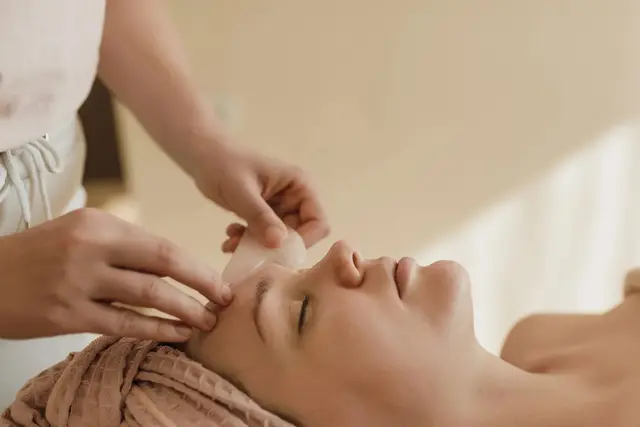
Always drape with towels and uncover only the area you are working on (Figure 4); never touch intimate areas; ask before working a new area such as the abdomen, upper chest or inner thigh; the client may ask you to stop at any time. Refuse any request for illegal services and report it to the manager. If a client harasses you, you have the right to end the session and leave the room.
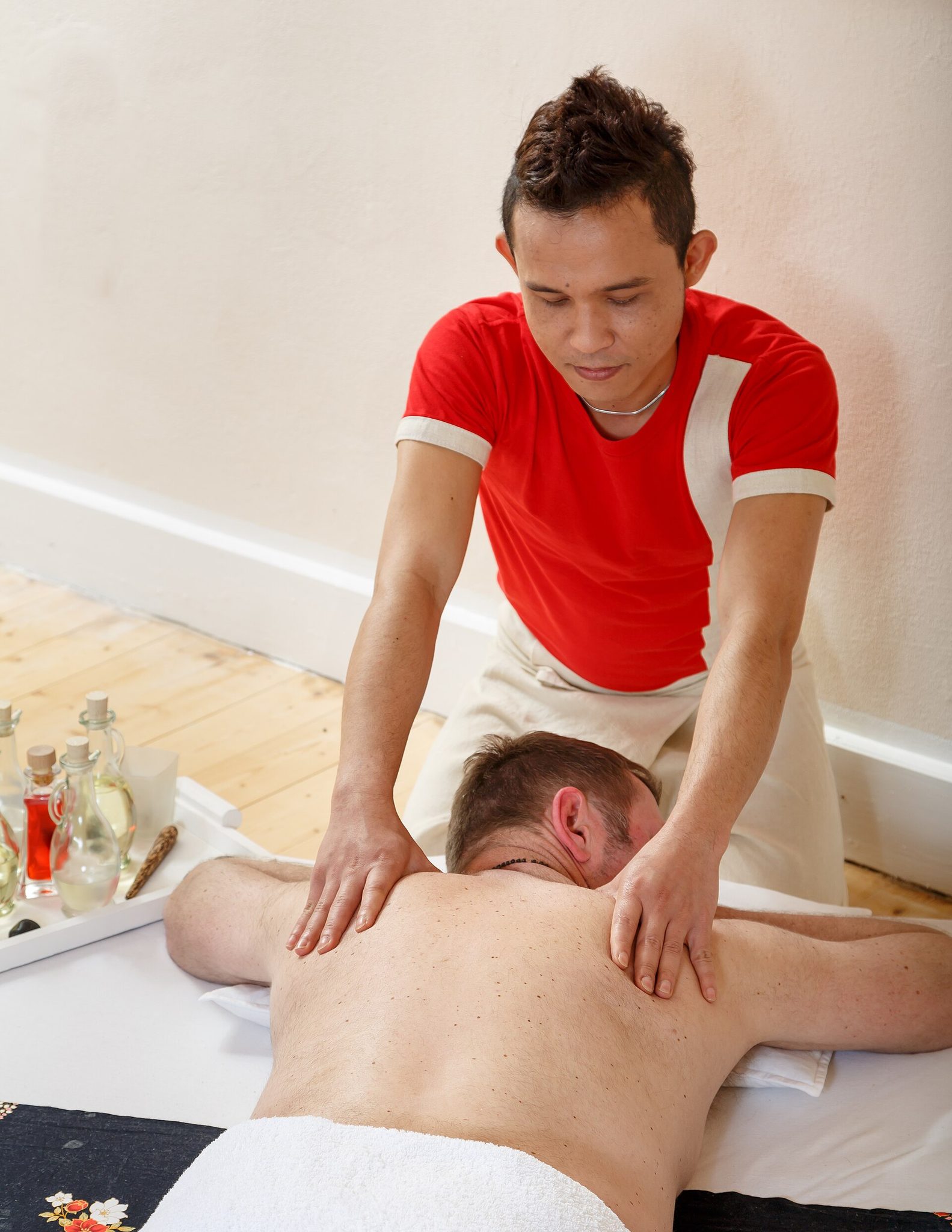
Photo: CEphoto, Uwe Aranas / Wikimedia Commons, CC BY-SA 3.0
Worked example: an afternoon shift with 4 booked clients
Ha is a new therapist at a spa in Ho Chi Minh City, on the 14:00–18:00 shift (240 minutes). Four clients are booked, each for a 60-minute session. Ha runs a consultation before each one.
Client by client
- Client 1 (woman, 35, office worker): healthy, just a tired back. Consultation 10 minutes, massage 60 minutes, room turnaround 15 minutes.
- Client 2 (man, 58): just back from a long-haul flight; his left calf is swollen, warm and more painful than the right. Ha suspects a blood clot, does not massage, explains gently and advises him to see a doctor today, and asks the manager to waive the fee. Consultation 10 minutes, form notes 5 minutes.
- Client 3 (woman, 5 months pregnant): the spa has no therapist trained in pregnancy massage. Ha apologises and suggests she ask her obstetrician and choose a place offering suitable services. Consultation 10 minutes, form notes 5 minutes.
- Client 4 (man, 45): healthy, with varicose veins on his right lower leg. Ha does a full-body massage, using only light strokes and no deep pressure over the raised veins. Consultation 10 minutes, massage 60 minutes, room turnaround 15 minutes.
Time table
| Client | Consultation | Massage | Notes / turnaround | Total |
|---|---|---|---|---|
| 1 | 10 | 60 | 15 | 85 |
| 2 | 10 | 0 | 5 | 15 |
| 3 | 10 | 0 | 5 | 15 |
| 4 | 10 | 60 | 15 | 85 |
| Total (minutes) | 200 | |||
Check: 85 + 15 + 15 + 85 = 200 minutes; the shift is 240 minutes, leaving 40 minutes for breaks, restocking towels and paperwork. Linen used: 2 clients massaged × 4 items (1 sheet, 2 large towels, 1 face cradle cover) = 8 items sent to the laundry.
The lesson from this shift
Two of the four clients did not get a massage, and that is the right result, not lost business. Had client 2 received firm calf massage with a clot present, the risk would have been serious. A good manager will recognise a therapist who knows when to say no.
When to send a client to a doctor or call an ambulance
Safety warning: Do not massage, and advise the client to see a doctor soon, if there is: a swollen, warm, red, painful calf on one side; back or neck pain with numbness or weakness in the arms or legs; pain after an accident or fall; fever; a new lump; pain that keeps increasing even at rest. Stop the session immediately and call an ambulance (115 in Vietnam) if the client has chest pain, sudden shortness of breath, a drooping face, slurred speech, weakness on one side, fainting or confusion; alert the manager and stay with the client until help arrives. This lesson does not replace a doctor's advice.
How to tell a client without frightening them
Keep it short and calm, and do not diagnose: "Your left calf is more swollen and warmer than the right. In this situation I'm not allowed to massage, and it would be best to see a doctor today to be safe." Do not say "you have a blood clot", because you are not qualified to make that call.
Protecting yourself
Cover any cuts or scratches on your hands and wear gloves; do not touch skin that looks fungal or infected. If you are ill, feverish or coughing, take time off and tell your manager rather than pushing through.
Common mistakes new therapists make
Skipping the form for regulars
Sign: not asking about health when a client returns. Cause: assuming nothing has changed for a regular. Fix: every visit, ask "has anything changed with your health since last time?"
Sharing towels, dipping into the oil bottle
Sign: reusing the previous client's "still clean" towel when short; sediment in the shared oil bottle. Cause: rushing. Fix: prepare enough linen sets at the start of the shift and use a separate oil bowl per client.
Promising cures to keep clients
Sign: saying "10 sessions and your disc will be fixed". Cause: wanting to sell packages. Fix: talk only about relaxation and easing muscle tension; advise clients to follow up with their doctor.
Being afraid to decline
Sign: noticing something wrong but carrying on because the client insists. Cause: fear of losing the client or being blamed. Fix: use the spa's standard wording, inform the manager, record it on the form.
Frequently asked questions
Can you get a massage with a fever?
No. A fever means the body is fighting an illness; massage can make the client feel worse and the therapist may catch it. Rebook once the client has fully recovered.
Can pregnant women have a massage?
Only with guidance from their obstetrician and from a therapist specifically trained in pregnancy massage, with its own positions and areas to avoid. A new therapist without that training should not do it.
Can massage cure a herniated disc?
Relaxation massage does not cure disease. People with a herniated disc, especially with numbness or weakness in the limbs, need assessment by a doctor and a physiotherapist; massage is only given when the doctor agrees.
Is massage safe with high blood pressure?
Blood pressure that is well controlled with medication usually allows gentle massage; uncontrolled high blood pressure, or dizziness and headache on the day, means no massage and advice to see a doctor.
How long after surgery can you have a massage?
There is no single figure for every operation. Let the surgeon decide; always avoid the incision area until the doctor allows it.
Practice exercises and self-assessment
- Role-play a consultation with 5 family members or friends: use the form, record the answers, decide to proceed, avoid an area or postpone.
- Time your six-step hand wash 5 times and ask someone to watch whether you skip a step.
- Time a table turnaround between two clients using the 4-task table, aiming for 15 minutes.
- Write 3 polite ways to decline for 3 situations: a client with a fever, a suspected blood clot, a pregnant client.
Self-assessment criteria
- Pass: 5 of 5 consultations cover all 5 question groups and have the client's signature.
- Pass: all 6 hand-washing steps, 40–60 seconds, all 5 times.
- Pass: table turned around in 15 minutes, no used towel on the floor, no hair on the sheet.
- Not yet: promising a cure, skipping the form, or massaging a client with any sign listed in the safety warning.
Once hygiene and contraindications are second nature, move on to the next step of the roadmap: Muscles, bones & areas to avoid, where you learn the main muscle groups, the major joints and the points on the body never to press hard.
Keep learning massage therapy: after safety come basic anatomy, posture and pressure, Swedish massage, acupressure, deep tissue and hot stones, then 30 supervised sessions with consultation forms. See the 8-step massage therapist roadmap.