A proper neck and shoulder massage is a session of about 20-30 minutes: screen the client's health form for contraindications, warm up with effleurage, knead the upper trapezius and levator scapulae, work along both sides of the spine (never pressing on the vertebrae), hold each tight spot for 30-60 seconds at a pressure the client rates about 4-6 out of 10, then finish with effleurage and simple stretches for home. The front of the neck (where the carotid artery runs), the hollow above the collarbone and the spinous processes must never be pressed hard; a client with neck pain plus numbness or weakness in the arm, pain after an accident, or fever with a stiff neck should not be massaged but advised to see a doctor. This lesson is written the way a senior therapist coaches a trainee, focusing only on the neck and shoulders, with a worked example of a 30-minute session whose timings add up.
By the end of this lesson, you will be able to:
- Locate on a real person the upper trapezius, levator scapulae, sternocleidomastoid and 4 commonly used neck and shoulder acupressure points.
- Screen for contraindications and recognise 6 warning signs that mean you stop and refer the client to a doctor.
- Perform a 30-minute neck and shoulder routine in the right order and timing.
- Adjust pressure using the client's 0-10 pain scale and record it before and after the session.
- Teach clients 3 neck and shoulder stretches for home and a sensible massage schedule.
Learning massage therapy properly? Deep tissue and neck and shoulder tension relief is step 6 of the roadmap, after hygiene and contraindications, anatomy, posture and pressure, Swedish massage and acupressure. See the 8-step massage therapist roadmap to learn in the right order.
Why do the neck and shoulders ache so often?
Most spa clients with neck and shoulder aches are office workers, drivers and online sellers who look down at phones for hours. Understanding the mechanism helps you work the right places instead of squeezing the whole area evenly.
Forward head posture
An adult head weighs about 4.5-5.5 kg. When you look down at a screen, the head moves forward of the shoulders, and the muscles at the back of the neck and shoulders must contract continuously to stop it dropping. Hours of this every day leave muscles tired and stiff, with tight spots that feel like knots or bands and send pain outward when pressed.
The muscles you will work most
- Trapezius (Figure 1): a large diamond-shaped muscle from the base of the skull down the neck and upper back and out to the shoulder. The upper part is where clients point and say "this is the worst".
- Levator scapulae: from the upper neck vertebrae to the top corner of the shoulder blade, tight in people who shrug a lot or hold the phone with the shoulder.
- Suboccipitals: small muscles just below the base of the skull; when tight they give a heavy-head feeling.
- Rhomboids: between the spine and the inner edge of the shoulder blade, tired in clients who slouch.
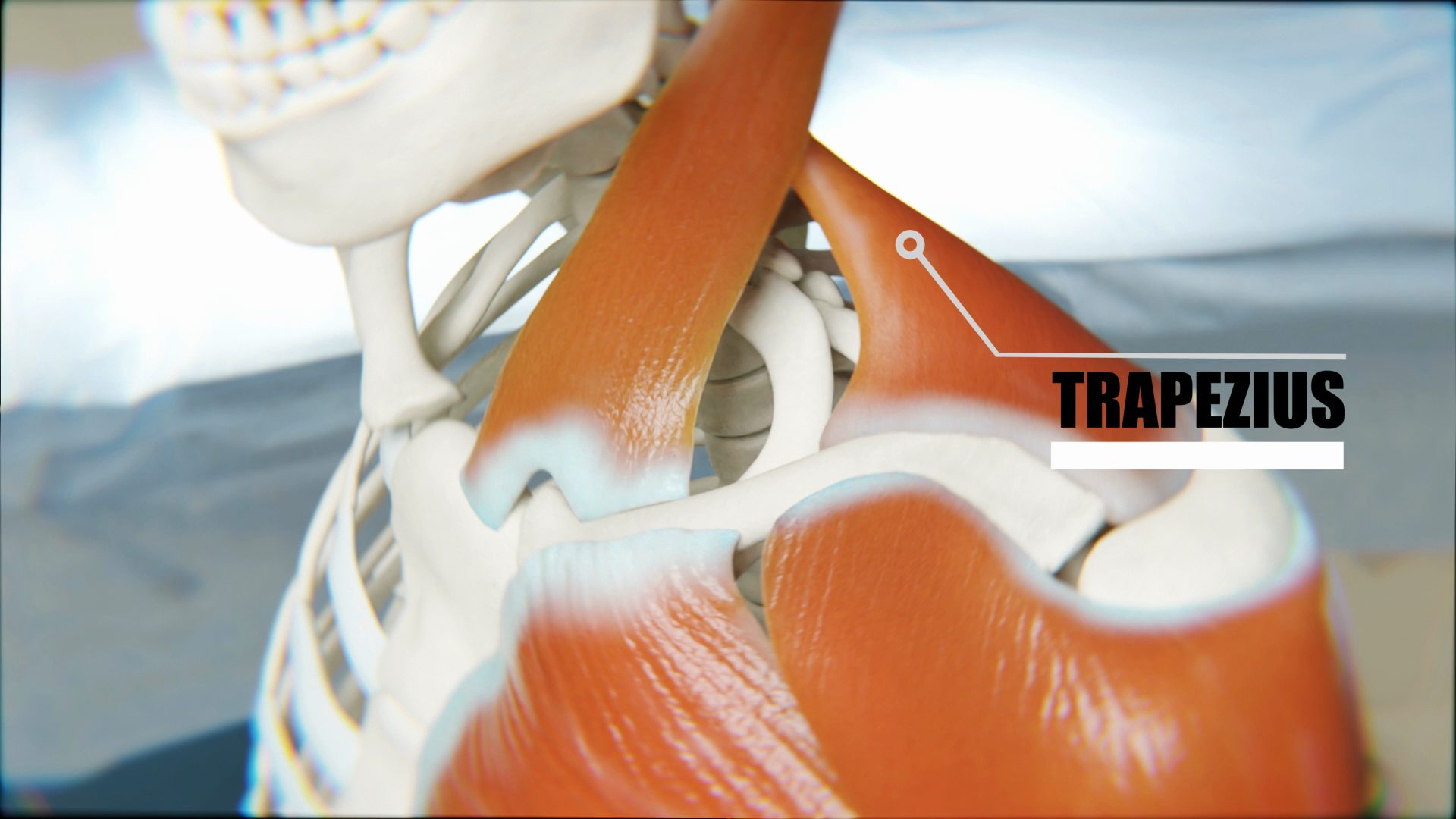
Photo: DrJanaOfficial / Wikimedia Commons, CC BY 4.0
Muscle pain versus pain from disease
Muscle pain is usually a dull ache that worsens with long sitting and eases with light movement, warmth and massage. Pain from spinal, nerve or blood vessel problems may spread down the arm, with numbness, weakness, dizziness or a severe headache. Massage therapists do not diagnose; your job is to recognise unusual signs, stop, and advise the client to see a doctor.
Contraindications and when to refer to a doctor
The neck contains major blood vessels, the nerves running to the arms and the spinal cord inside the spinal canal. Careful screening before the session is the most important part of a neck and shoulder massage.
Safety warning: Do not massage, and advise the client to see a doctor, if they have: neck pain spreading into the arm with numbness, tingling or weakness; neck pain after a traffic accident, fall or sports injury; fever with a stiff neck, or severe pain when bringing the chin to the chest; a sudden severe headache, dizziness, blurred vision, slurred speech or a drooping face (call 115, Vietnam's emergency number, at once); pain that keeps increasing even at rest, or unexplained weight loss; recent neck or shoulder surgery. Postpone, or work only very lightly with a doctor's approval, for uncontrolled high blood pressure, severe osteoporosis, blood clots, anticoagulant medication, pregnancy or heart disease. Do not massage over inflamed skin, wounds or rashes. Relaxation massage does not replace medical treatment or physiotherapy; never crack the neck or manipulate the spine.
Quick screening table
| Client answers "yes" to | What to do |
|---|---|
| Numbness or weakness in the arm, pain spreading into the fingers | No neck massage; advise a spine or neurology specialist |
| Pain after an accident or fall in recent weeks | No massage; see a doctor and get imaging if prescribed first |
| High blood pressure, anticoagulant medication | Ask whether it is controlled and whether the doctor allows massage; if so, light pressure, no deep work |
| Pregnancy | Only with a specially trained therapist and the doctor's approval; seated or side-lying |
| Dull ache from long sitting, none of the signs above | Massage is fine; record the pain level before the session |
Record the form and respect your scope
Record the answers, the client's signature and their 0-10 pain level before the session. When a client asks "do I have degeneration in my neck?", answer honestly: you cannot diagnose it, and a doctor's examination will tell them. Saying this does not lose the client; it makes them trust you more.
Areas of the neck to avoid
You covered this in the anatomy step, but for the neck each area deserves a specific reminder, because one mistake can cause dizziness, fainting or nerve injury.
The front of the neck and the carotid artery
The sternocleidomastoid runs diagonally from behind the ear down to the breastbone and collarbone (Figure 2). Inside and beneath it lie the carotid artery and jugular vein. Do not press deeply or knead hard on the front of the neck or the triangle inside the sternocleidomastoid; pressure on the carotid sinus can slow the heart, drop blood pressure and cause fainting. At the front of the neck use only very light strokes, or skip it.
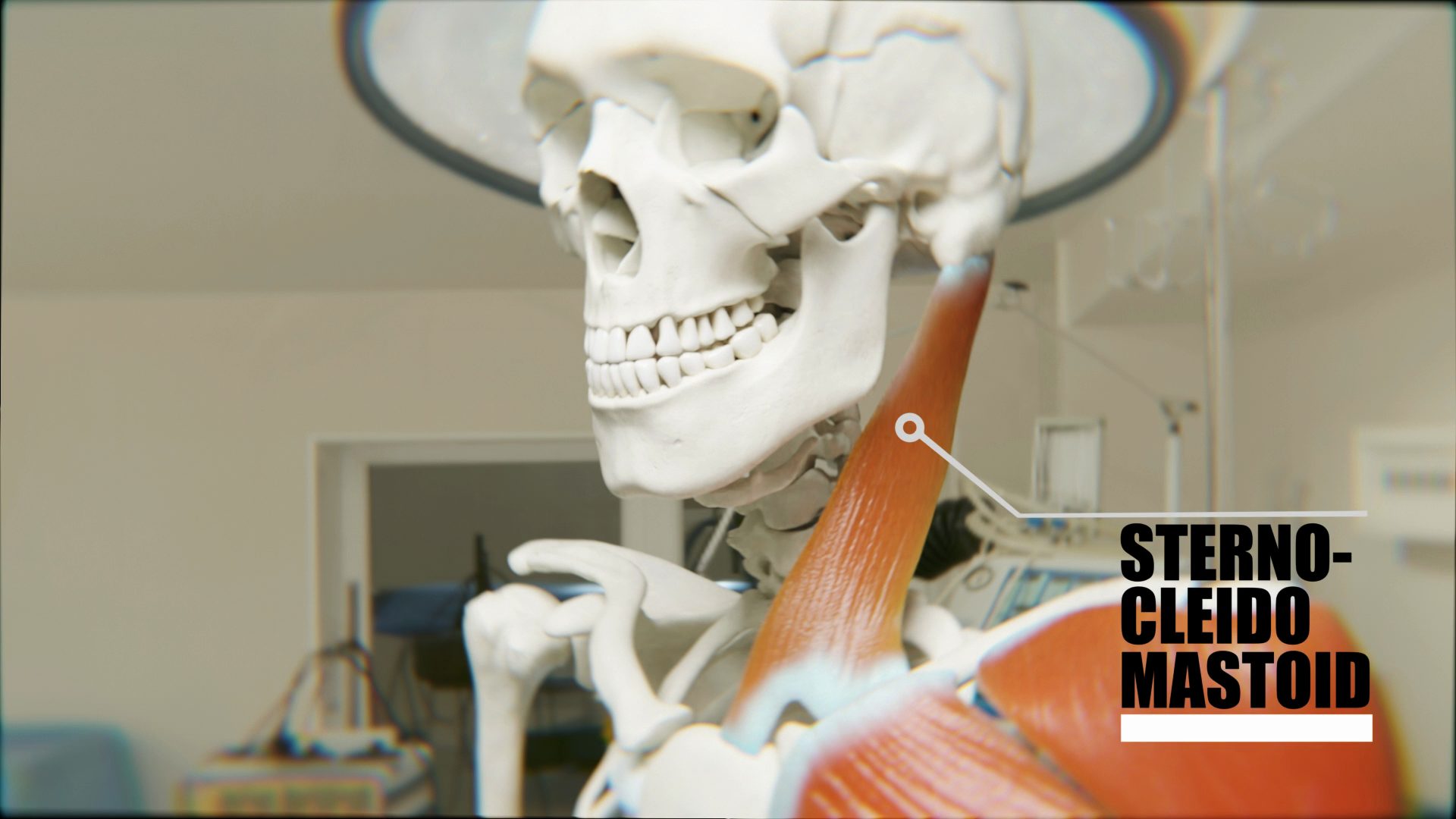
Photo: DrJanaOfficial / Wikimedia Commons, CC BY 4.0
Vertebrae and spinous processes
The spinous processes of the neck and upper back vertebrae feel like small bony bumps down the middle of the back. Never press your thumb straight onto bone; place pressure on the muscles either side, about 1-2 finger widths from the midline. Pressing on bone hurts and does nothing to relax muscle.
The hollow above the collarbone and the base of the skull
The hollow above the collarbone contains the brachial plexus and blood vessels going to the arm: never hook your fingers deep into it. At the base of the skull, work lightly with the fingertips and do not press hard into the centre of the nape. If the client feels numbness running down the arm or becomes dizzy when you press somewhere, stop at once and note it on the form.
No cracking, no forceful rotation
Gentle traction while the client relaxes is fine. Cracking the neck or suddenly rotating it to the end of its range is manipulation, carries a risk of damaging blood vessels and nerves, and is outside a massage therapist's scope.
Preparing for a neck and shoulder session
Client positions
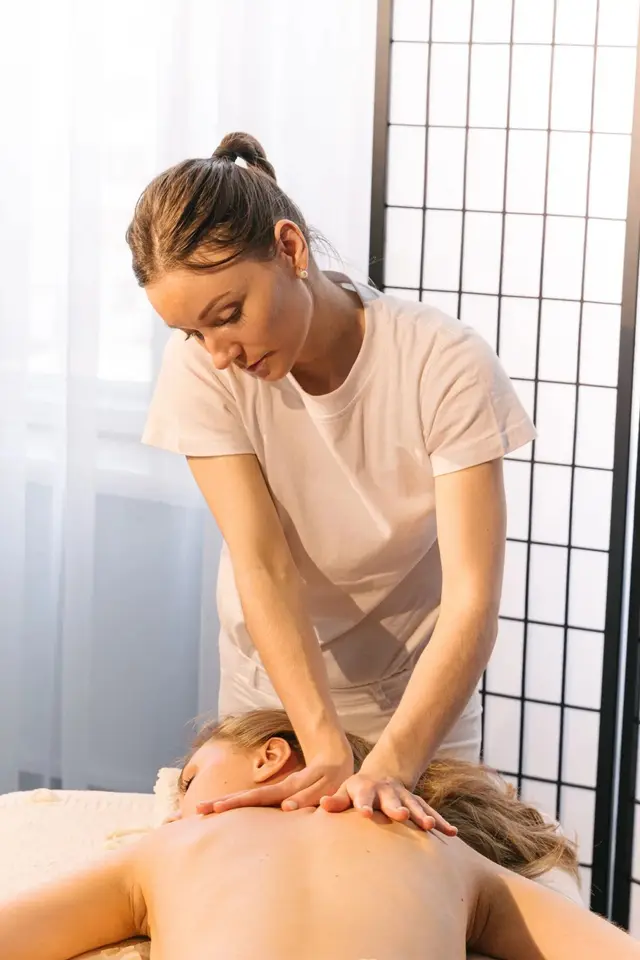
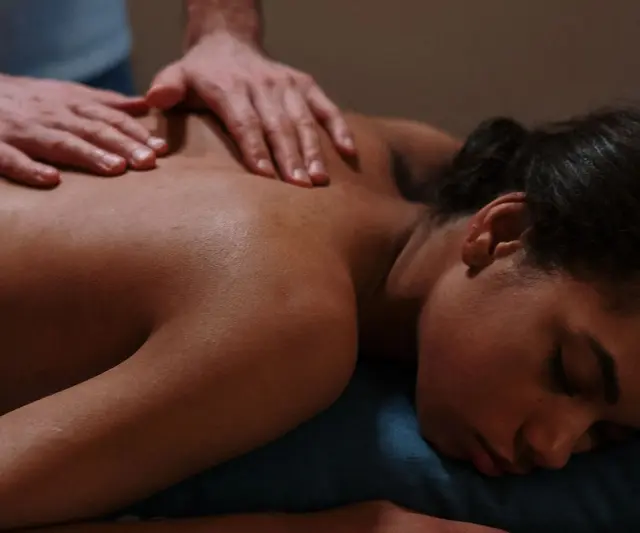
- Prone with a face hole or face cushion: best for the shoulders, upper back and rhomboids (Figure 4). Chin slightly tucked, neck straight, head not turned to one side for long.
- Supine: for the suboccipital area and gentle neck traction, with the client's head resting in your hands.
- Seated in a massage chair or on a chair with a backrest: for pregnant clients with approval, clients who cannot lie prone, or a 15-minute office session.
Equipment and room
Unscented or lightly scented massage oil or cream (ask about allergies first), drape towels, a chest pillow for prone work, a warm room and no fan blowing on the nape. Short nails and warm hands. If the spa uses hot stones on the shoulders: always use a towel layer, test the temperature on the inside of your own forearm, never place stones on the front of the neck, and do not use them on clients with reduced skin sensation or diabetes without a doctor's approval.
Pain scale and pressure
Explain the 0-10 scale: 0 is no pain, 10 is the worst pain imaginable. The target when holding tight spots is about 4-6, "good pain". Above 7, or if the client holds their breath, tenses the shoulders or grimaces, reduce pressure at once. Check again each time you change technique.
A 30-minute neck and shoulder routine
If you need to review the 5 basic stroke families (effleurage, petrissage, friction, tapotement, vibration), see the spa career lesson what Swedish massage is (in Vietnamese). Here we go deep on the neck and shoulders only.
| Part | Position | Main technique | Time |
|---|---|---|---|
| 1. Warm-up | Prone | Effleurage over upper back, shoulders and back of neck | 5 minutes |
| 2. Upper trapezius, levator scapulae | Prone | Kneading, stripping along the fibres | 6 minutes |
| 3. Beside the spine, rhomboids | Prone | Thumb circles, stripping along the inner edge of the shoulder blade | 6 minutes |
| 4. Tight spots and acupressure points | Prone | Sustained pressure 30-60 seconds per point | 5 minutes |
| 5. Suboccipitals, gentle traction | Supine | Fingertip circles, gentle neck stretch | 5 minutes |
| 6. Finish | Supine to seated | Effleurage, teach stretches | 3 minutes |
| Total | 30 minutes | ||
Parts 1-2: warm-up and kneading the upper trapezius
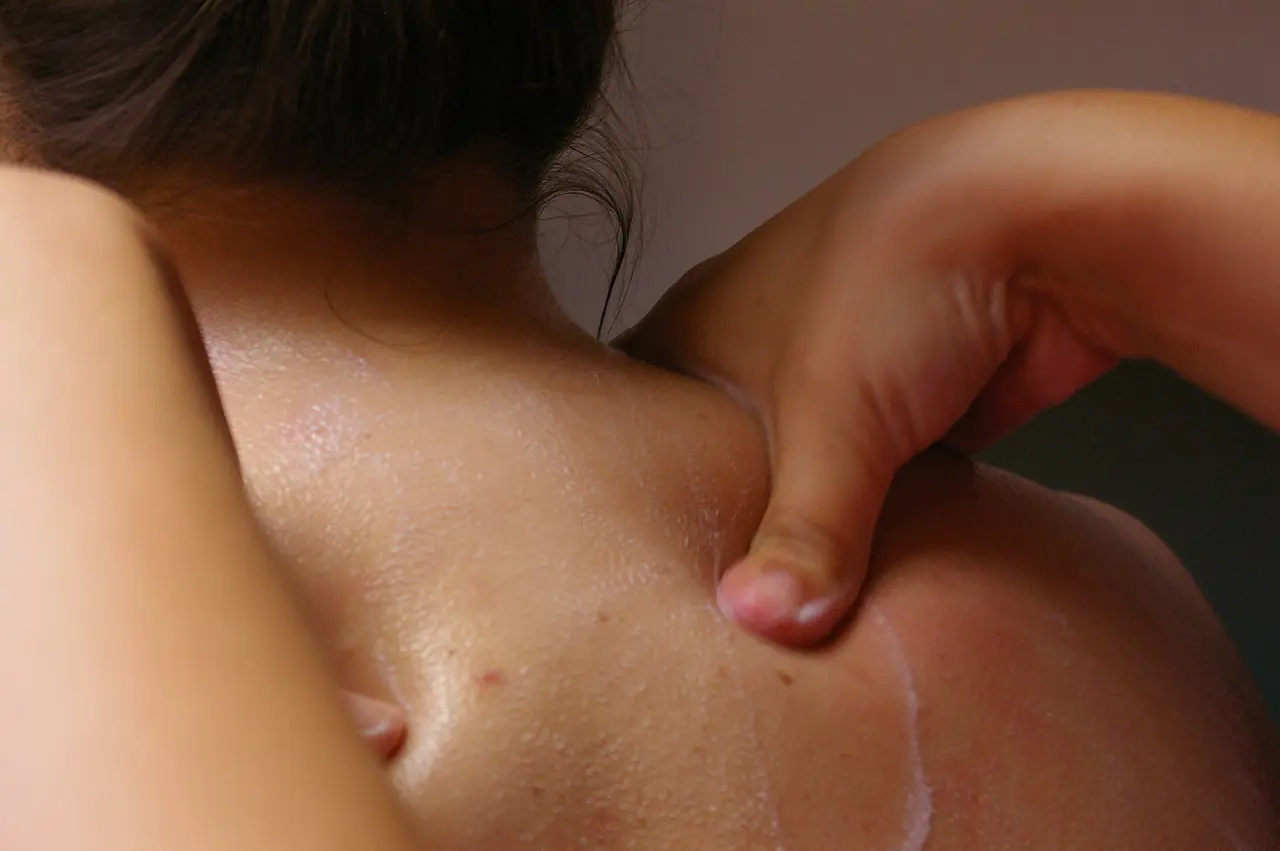
Apply oil and stroke from the middle of the upper back up to the shoulders, around the shoulder tip and back, with light to moderate pressure, slowly, for about 5 minutes so the muscles warm and the client gets used to your hands. Then knead the upper trapezius between the neck and the shoulder tip: lift the muscle between your thumb and fingers, squeeze and release rhythmically, building pressure gradually (Figure 3). Strip with the thumb along the fibres from neck to shoulder, slowly as in deep tissue work: the deeper you go, the slower you move.
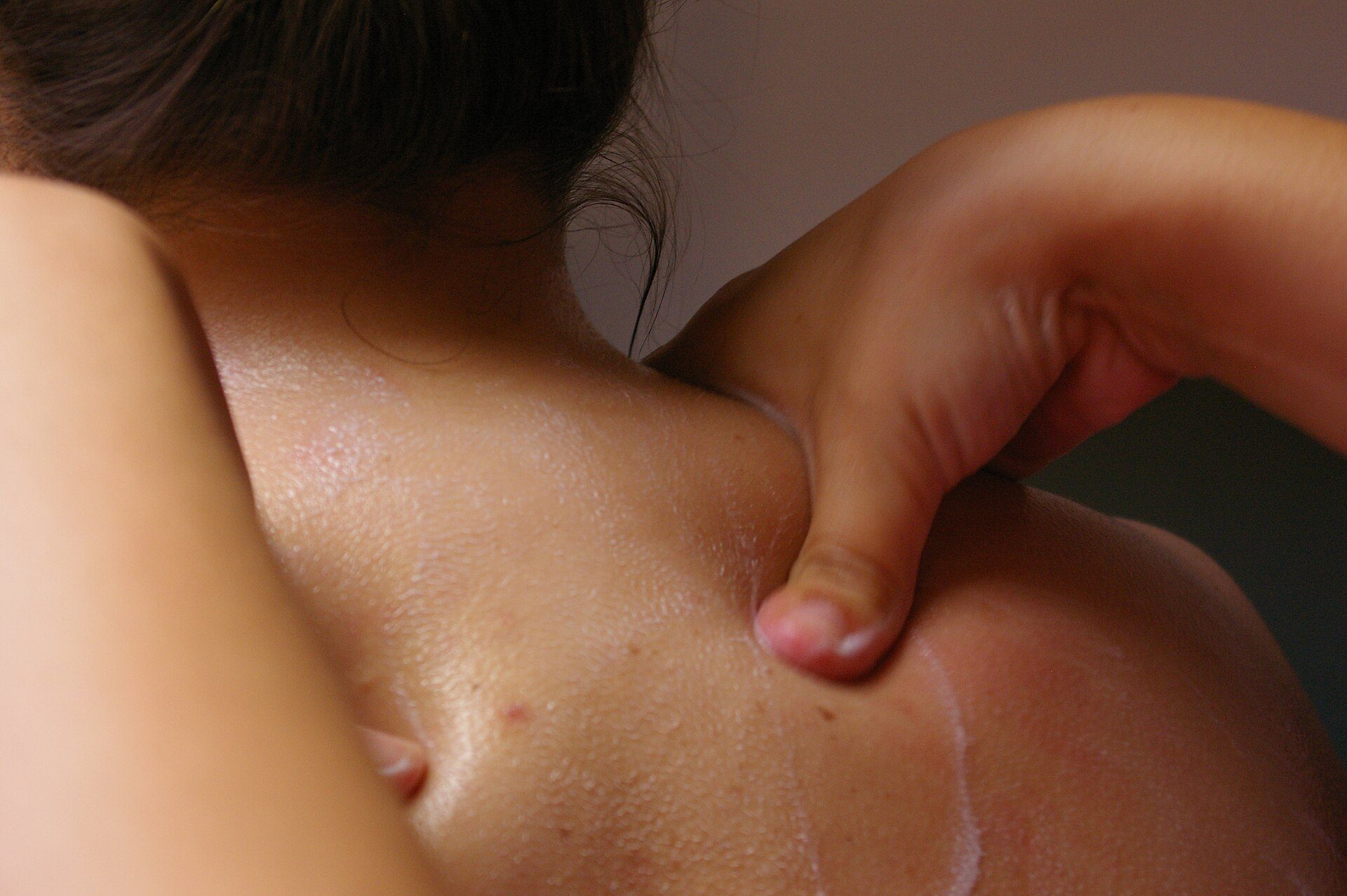
Photo: gaelx / Wikimedia Commons, CC BY-SA 2.0
Part 3: beside the spine and the rhomboids
Place both thumbs either side of the spine, about 1-2 finger widths from the midline, and make small circles from shoulder-blade level up to the base of the neck. Place the client's hand on their back (if comfortable) so the inner edge of the shoulder blade lifts, and strip along that edge. Slouching office workers often ache here but can rarely reach it themselves.
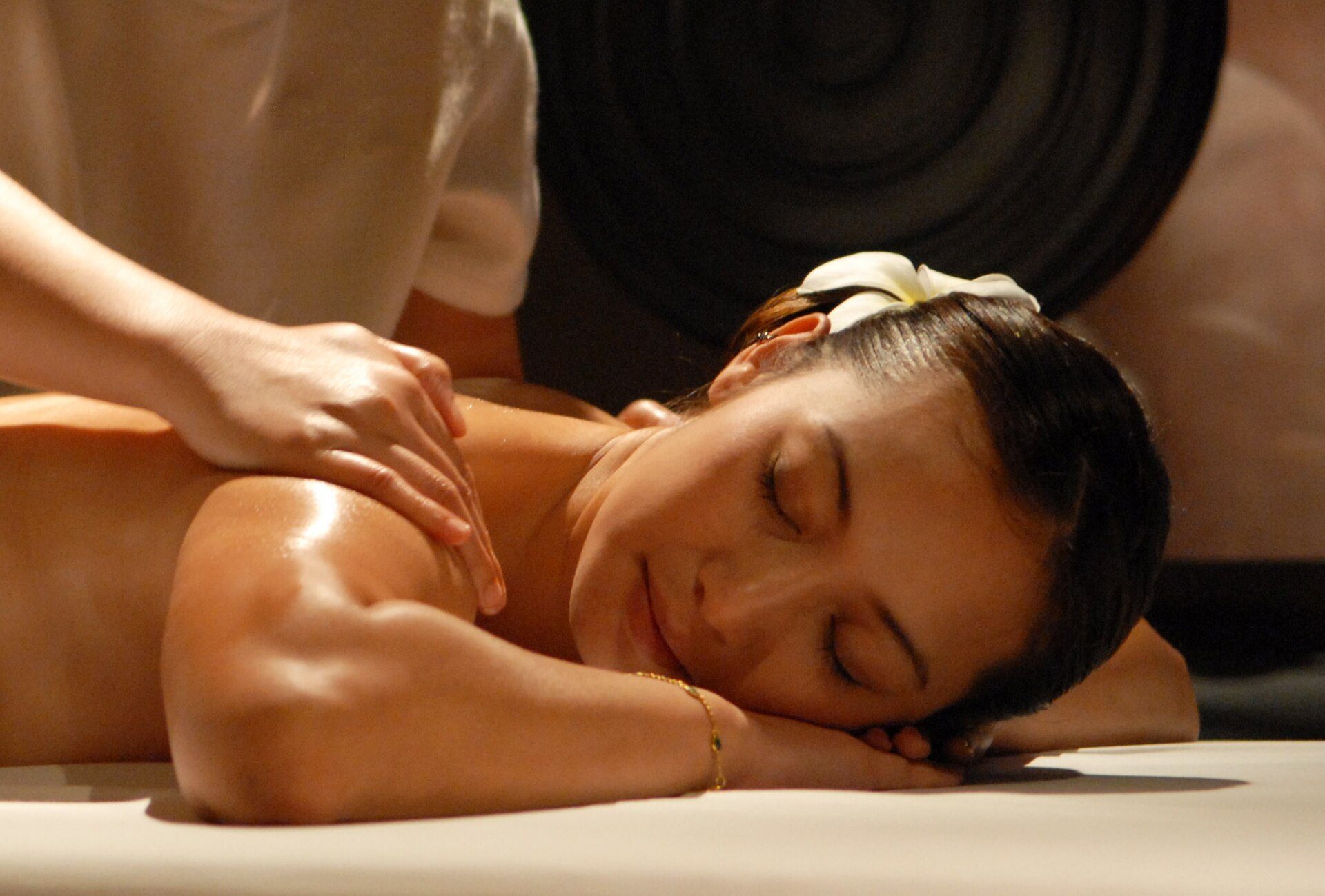
Photo: IQP / Wikimedia Commons, CC BY-SA 3.0
Part 4: tight spots and neck and shoulder acupressure points
Feel for tight spots: firm knots or bands that send pain outward when pressed. Hold with the thumb or fingertips, increasing pressure slowly until the client rates it 4-6, hold 30-60 seconds until they feel the pain ease, then release slowly. In traditional Chinese medicine, these neck and shoulder points are commonly used as landmarks for acupressure:
- Feng Chi (GB20, "Phong tri" in Vietnamese): the two hollows at the base of the skull, between the sternocleidomastoid and trapezius; work lightly with the fingertips, usually with the client supine.
- Jian Jing (GB21, "Kien tinh"): the highest point of the shoulder, about midway between the spinous process of the 7th neck vertebra and the shoulder tip; avoid strong pressure in pregnancy.
- Tian Zong (SI11, "Thien tong"): the centre of the hollow below the spine of the shoulder blade, often tender with a spreading ache.
- Jian Zhong Shu (SI15, "Kien trung du"): about 2 cun lateral to the spinous process of the 7th neck vertebra (2 cun equals the width of two of the client's own thumbs).
Here the points are landmarks for relaxing acupressure, not treatment for disease. Work each point at most 2-3 times per session.
Parts 5-6: suboccipitals, gentle traction and finish
With the client supine, cradle the head in both palms. Place your fingertips under the base of the skull and let the weight of the head sink onto them for 30-60 seconds, then make small circles. For traction, one hand supports the head while the other holds the shoulder; tilt the head gently to the side until a moderate stretch is felt, hold 20-30 seconds, then switch sides; no rotation, no jerking. Finish with light effleurage, help the client sit up slowly, offer water, ask the pain level again and record it.
Worked example: a 30-minute session for an office worker
Client: a 32-year-old female accountant who sits at a computer about 9 hours a day. Neck and shoulder ache for 2 weeks, worst at the end of the day; no arm numbness, no injury, no fever, normal blood pressure at her last check-up, not pregnant. Pain before the session: 6/10.
How the session ran
- 0-5 minutes: warming effleurage; she says the right shoulder feels heavier than the left.
- 5-11 minutes: kneading the upper trapezius and levator scapulae; the right shoulder has 2 tight bands.
- 11-17 minutes: circles beside the spine, stripping along the right shoulder blade's inner edge.
- 17-22 minutes: holding 2 tight spots on the right upper trapezius, plus Jian Jing and Tian Zong on both sides; she rates pressure 5/10, easing to 3/10 after 45 seconds.
- 22-27 minutes: supine, suboccipital work, side-tilt stretch twice per side × 30 seconds.
- 27-30 minutes: finishing effleurage, teaching 3 home stretches.
Time check: 5 + 6 + 6 + 5 + 5 + 3 = 30 minutes, matching the routine table. Pain after the session: 3/10, down 3 points. The form records the areas, techniques, pressure and feedback, and suggests 1 session a week for 4 weeks with home exercises, reassessing at session 4; if there is no improvement or arm numbness appears, she should see a doctor.
A case you must decline
A 45-year-old man has had neck pain for a month, spreading down his left arm with numbness in the thumb. This may involve a nerve root in the neck: do not massage the neck, explain why, advise a specialist and note it on the form. If he wants to relax, you can offer a gentle foot or lower back massage, avoiding the neck and shoulders.
Teaching clients neck and shoulder stretches for home
Massage eases tension for a few days; daily habits decide whether the muscles tighten again. Teach clients 3 simple stretches, done slowly and without pain (Figure 5).
3 basic stretches
- Side tilt for the upper trapezius: sit upright, hold the edge of the chair with the right hand, tilt the left ear towards the left shoulder until the right side feels a stretch, hold 20-30 seconds, switch sides, 2-3 times.
- Chin tuck: sit upright, draw the chin straight back as if making a "double chin", hold 5 seconds, repeat 10 times; this brings the head back over the shoulders.
- Doorway chest stretch: forearms on a door frame at shoulder height, step one foot forward until the front of the chest stretches, hold 20-30 seconds.
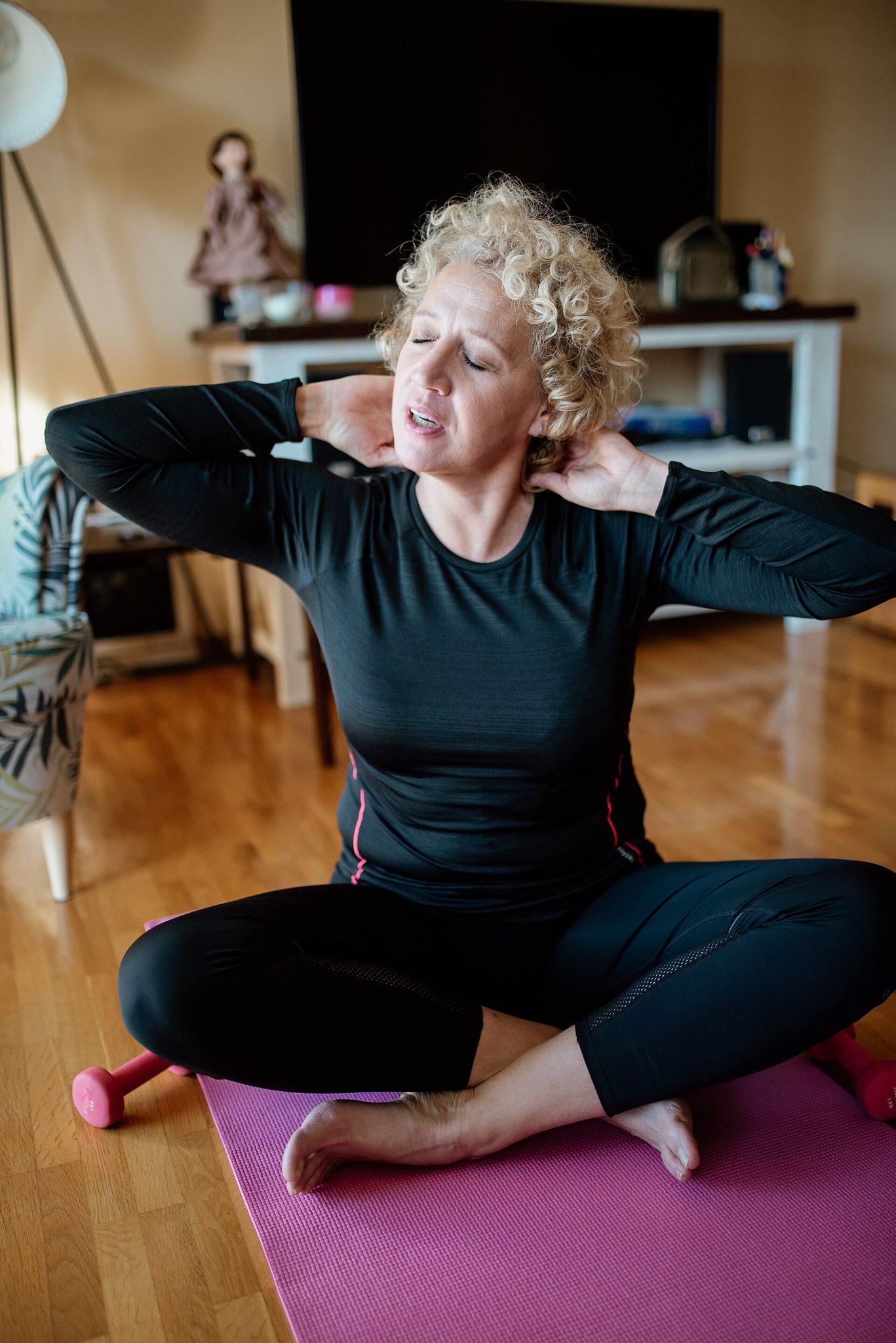
Photo: Shixart1985 / Wikimedia Commons, CC BY 2.0
Work habits
Screen at eye level, sit back against the chair, get up and walk every 30-60 minutes, and do not hold the phone between ear and shoulder. Suggest, do not lecture.
When to stop exercising
If a stretch causes sharp pain, numbness running into the arm or dizziness, stop and see a doctor. A correct stretch feels like tension, not pain.
Common mistakes in neck and shoulder massage
The harder the better
Sign: the client tenses the shoulders and holds their breath, and is bruised or sorer the next day. Cause: believing it only works if it hurts a lot. Fix: stay at 4-6/10, build pressure slowly, check with the client often.
Pressing on bone and the front of the neck
Sign: the client feels dizzy or nauseous, or complains of sharp pain on bone. Cause: not palpating anatomical landmarks before pressing. Fix: locate the spinous processes, sternocleidomastoid and the hollow above the collarbone at the start of each session; place pressure on the muscles either side.
Staying too long on one spot
Sign: the area is red and sore for days. Cause: holding for minutes or repeating too often. Fix: 30-60 seconds per point, at most 2-3 times per session.
Skipping screening because the client is "just stiff"
Sign: you do not know whether the client has arm numbness, recently fell off a motorbike or takes anticoagulants. Cause: rushing or feeling awkward asking. Fix: complete the full form at every first session and ask about changes at later ones.
Practice exercises and self-assessment
- On a classmate, locate and mark with an eyeliner pencil: the 7th neck vertebra's spinous process, upper trapezius, levator scapulae, sternocleidomastoid, Jian Jing and Tian Zong.
- Perform the 30-minute routine with someone timing each part, recording pain before and after.
- Role play: a classmate plays a client with neck pain and arm numbness; practise declining and referring them to a doctor.
Self-assessment criteria
- Pass: you locate all 6 landmarks and points correctly, within one finger width.
- Pass: each part is within 1 minute of the table, 30 minutes in total; the client never rates pressure above 6.
- Pass: you complete the screening form and decline correctly when there are signs that need a doctor.
- Not yet: pressing the front of the neck, pressing on bone, cracking the neck, or skipping screening.
Frequently asked questions
How can I massage a family member's neck and shoulders at home to relieve aches?
Warm up with stroking, gently squeeze the shoulder muscle between the neck and the shoulder tip, make circles either side of the spine, never press the front of the neck or crack it, for about 10-15 minutes. The person should only feel "good pain"; if pain comes with arm numbness, stop and see a doctor.
Which neck and shoulder acupressure points are commonly used?
Feng Chi, Jian Jing, Tian Zong and Jian Zhong Shu are common landmarks for relaxing acupressure. Hold each for 30-60 seconds at moderate pressure; avoid strong pressure on Jian Jing during pregnancy.
How long should a neck and shoulder massage last?
A session focused on the neck and shoulders usually lasts 20-30 minutes; 1-2 sessions a week while the ache is strong, then less often. Working one area too long or too hard easily causes soreness and bruising.
Should I crack my neck to relieve stiffness?
No. Cracking or forcefully rotating the neck is manipulation that risks damaging blood vessels and nerves, and it is outside a massage therapist's scope. Only gentle traction while the client relaxes.
Can you massage neck and shoulder pain that comes with arm numbness?
The neck should not be massaged before a medical examination. Numbness or weakness in the arm may involve nerves in the cervical spine and needs a doctor's assessment first.
Once the neck and shoulder routine is solid, move on to the next roadmap step: Practice: 30 sessions with consultation forms, where you work on real clients under supervision, recording health forms, pressure and areas worked, and asking for feedback after every session. The spa lesson on client consultation and health forms (in Vietnamese) is a good reference for the form.
Keep learning massage therapy: after neck and shoulder tension relief come 30 supervised practice sessions with consultation forms and the basic vocational certificate for spa jobs. See the 8-step massage therapist roadmap.