The most effective way to save battery in an electric car is to keep a moderate, steady speed on the expressway, run the air conditioning on auto at around 25–26°C, pre-cool the cabin before unplugging, keep the tyres at the correct pressure and let regenerative braking do the work instead of the brake pedal. For charging, most of the time you only need to keep the battery between 20% and 80%, and charge to 100% just before a long trip, following the recommendation in your car's owner's manual. This lesson explains why real-world range is usually shorter than the published figure, how to work out your own range from consumption in kWh/100 km, and a worked example of a 200 km trip driven two different ways, with figures that add up.
By the end of this lesson, you will be able to:
- Read the kWh/100 km consumption on the car's display and calculate how far you can still go on the current charge.
- Explain to an owner why high speed, air conditioning and under-inflated tyres cut range, with illustrative figures.
- Plan charging around the 20–80% window for daily driving and know when a full charge makes sense.
- Calculate the energy, driving time and electricity cost of a 200 km trip for two driving styles.
- Recognise signs of an abnormal drop in range that call for a workshop check of the battery, brakes and tyres.
Training as an EV technician? Understanding how a high-voltage battery drains and charges is the foundation of step 3 of the roadmap, "High-voltage battery, BMS and insulation testing". A good technician must be able to answer the question customers ask most: "Why doesn't my car get the advertised range?" See the 8-step EV technician roadmap.
How real-world range differs from the published figure
Published range is measured on a test bench over a standard cycle, with speed, temperature and load fixed in advance. On real roads the car faces heat, traffic jams, expressways, a full load of passengers and luggage, so the real figure is usually lower.
Range test standards
Manufacturers may quote different standards: NEDC (the old European cycle, which tends to give high numbers), WLTP (closer to real life) or EPA (United States, usually the lowest). Compare two cars only on the same standard, and when advising a customer, say clearly which standard a figure comes from.
Consumption in kWh/100 km is the number that matters
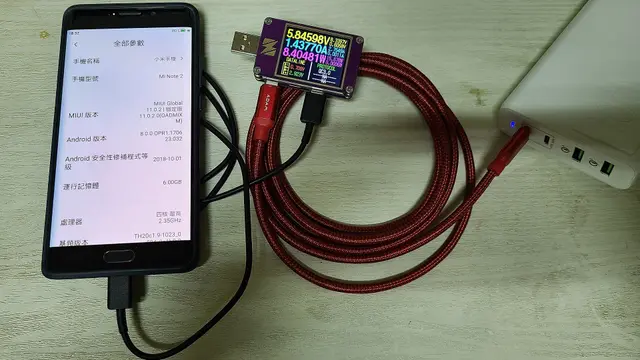
Petrol cars use litres per 100 km; electric cars use kWh per 100 km (some show Wh/km, and 150 Wh/km equals 15 kWh/100 km). The instrument cluster or central screen usually has a page with trip and long-term average consumption (Figure 1). As a rough guide, a small EV in town typically uses about 11–15 kWh/100 km, and a C- to D-segment SUV about 15–22 kWh/100 km depending on speed, weather and driving style.
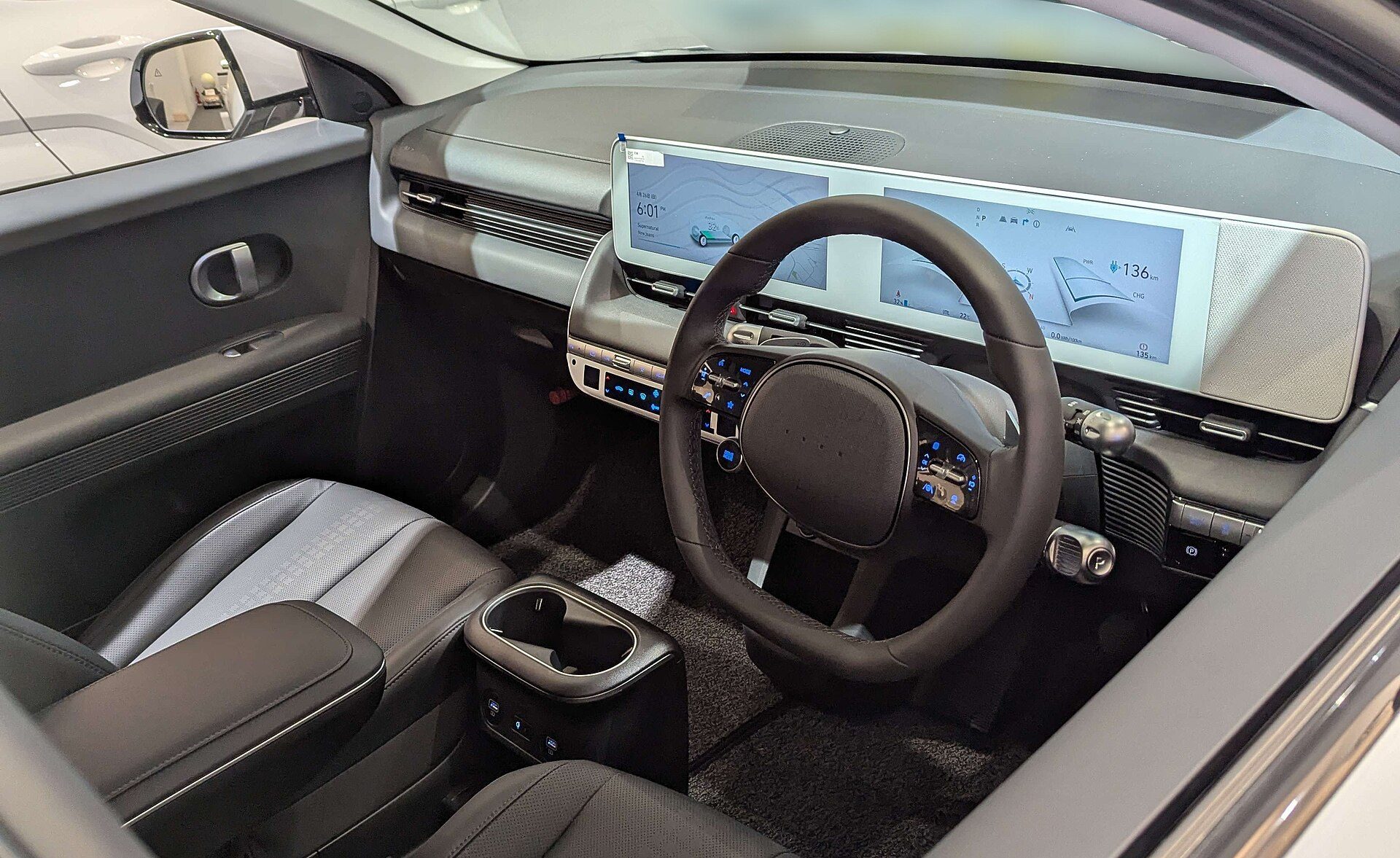
Photo: Kalmarle / Wikimedia Commons, CC BY-SA 4.0
The formula for working out range yourself
Range (km) = usable battery energy (kWh) ÷ consumption (kWh/100 km) × 100. Usable energy is the battery's usable capacity multiplied by the share of the battery you plan to use. For example, with 60 kWh usable, going from 80% down to 20% uses 60% of the battery, or 36 kWh; at 18 kWh/100 km that gives 36 ÷ 18 × 100 = 200 km. The range estimate on the dashboard works in a similar way but is based on the stretch you have just driven, so before getting on the expressway, recalculate using expressway consumption.
Speed: the biggest battery drain on the expressway
At low speed, energy goes mostly into tyre rolling resistance and auxiliary systems. As speed rises, air resistance grows with the square of speed, and the power needed to overcome it grows with the cube. That is why 120 km/h uses far more battery than 90 km/h, much more than the feeling of "just a bit faster" suggests.
Illustrative table: speed and range
The table below uses illustrative figures for a C-segment electric SUV with 60 kWh usable, in mild weather with light air conditioning. Every car is different; the point is to see the trend.
| Steady speed | Consumption (kWh/100 km) | Range on 100% (60 kWh) | Range using 80% → 20% (36 kWh) |
|---|---|---|---|
| 60 km/h | 13 | ≈ 462 km | ≈ 277 km |
| 80 km/h | 15 | 400 km | 240 km |
| 100 km/h | 18 | ≈ 333 km | 200 km |
| 120 km/h | 22 | ≈ 273 km | ≈ 164 km |
Going from 80 to 120 km/h, consumption rises from 15 to 22 kWh/100 km, an increase of about 47%, while range over the same battery window falls from 240 to about 164 km. Always obey the maximum and minimum speed signs on the expressway; driving too slowly there is dangerous too.
Keep a steady throttle and read the road ahead
Hard acceleration followed by sharp braking turns part of the energy into heat in the brake pads. Look 10–15 seconds ahead and lift off early when you see a red light, so the car slows down through regenerative braking. On the expressway, cruise control holds a steadier speed than a human foot.
Regenerative braking and one-pedal driving
When you lift off the accelerator, the motor works as a generator, feeding some energy back into the battery and slowing the car. A high regeneration level (many cars call it one-pedal mode) suits dense city traffic and long downhill mountain roads. When the battery is nearly full or very cold, the system may reduce regeneration to protect the battery, and the car will coast more than usual.
Air conditioning and the Vietnamese heat
In Vietnam the air conditioning runs almost all year round, and an electric car's A/C compressor is powered by the high-voltage battery itself.
How much power the air conditioning uses
As a general reference, when you first get into a sweltering car the A/C may draw about 1–3 kW to cool down quickly; once the cabin is cool, it usually needs about 0.5–1.5 kW depending on the sun and the set temperature. The key point is that the A/C costs energy per hour, not per kilometre. In a one-hour traffic jam covering 20 km, a 1 kW A/C uses 1 kWh, equivalent to an extra 5 kWh/100 km; at 100 km/h on the expressway, the same 1 kWh adds only 1 kWh/100 km.
Pre-cool before unplugging
Many cars let you start the A/C remotely from an app or set a pre-conditioning timer. Run it for 10–15 minutes before leaving while the car is still plugged in, and the energy for the initial cool-down comes from the grid, so the battery leaves the charger at the same percentage.
Sensible settings
- Auto mode at about 25–26°C with auto fan; going 1–2°C lower costs extra energy and few people notice the difference.
- When driving alone, use the driver-only or front-row-only mode if the car has one.
- Park in the shade and use a windscreen sunshade; a cooler cabin means less work for the A/C.
Charging 20–80%: why, and when to charge to full
Charging within 20–80% helps a lithium-ion battery last longer and saves time at fast chargers. This is a general rule; each manufacturer has its own recommendation by battery type, and your car's owner's manual always has the final say.
The charging curve: fast in the middle, slow at the end
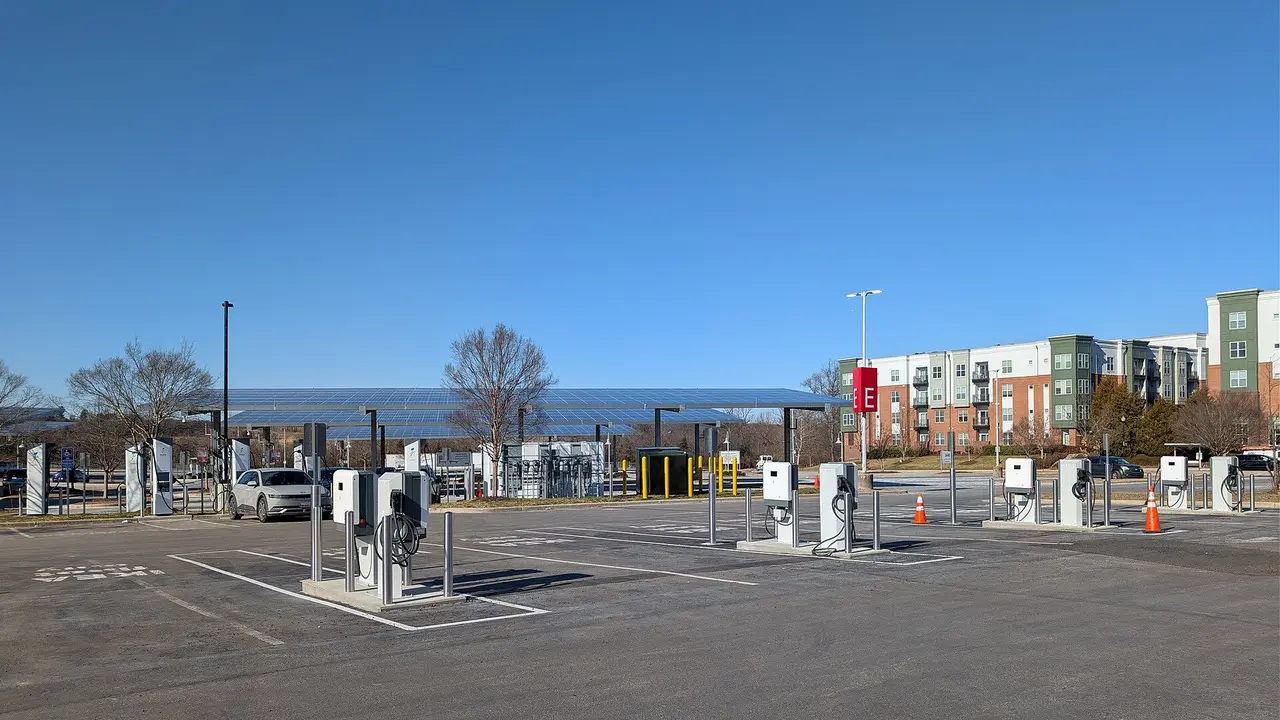
A DC fast charger (the CCS2 connector is common in Vietnam, see Figure 2) only delivers high power while the battery is low to medium. Above about 80%, the battery management system (BMS) reduces the current so no cell exceeds its voltage limit, so the last 20% can take about as long as going from 20 to 80%. An illustrative example with 60 kWh usable: 20 → 80% needs 36 kWh, which at an average of about 70 kW takes about 31 minutes; 80 → 100% needs only 12 kWh, but with power dropping to about 20 kW it takes about 36 minutes.
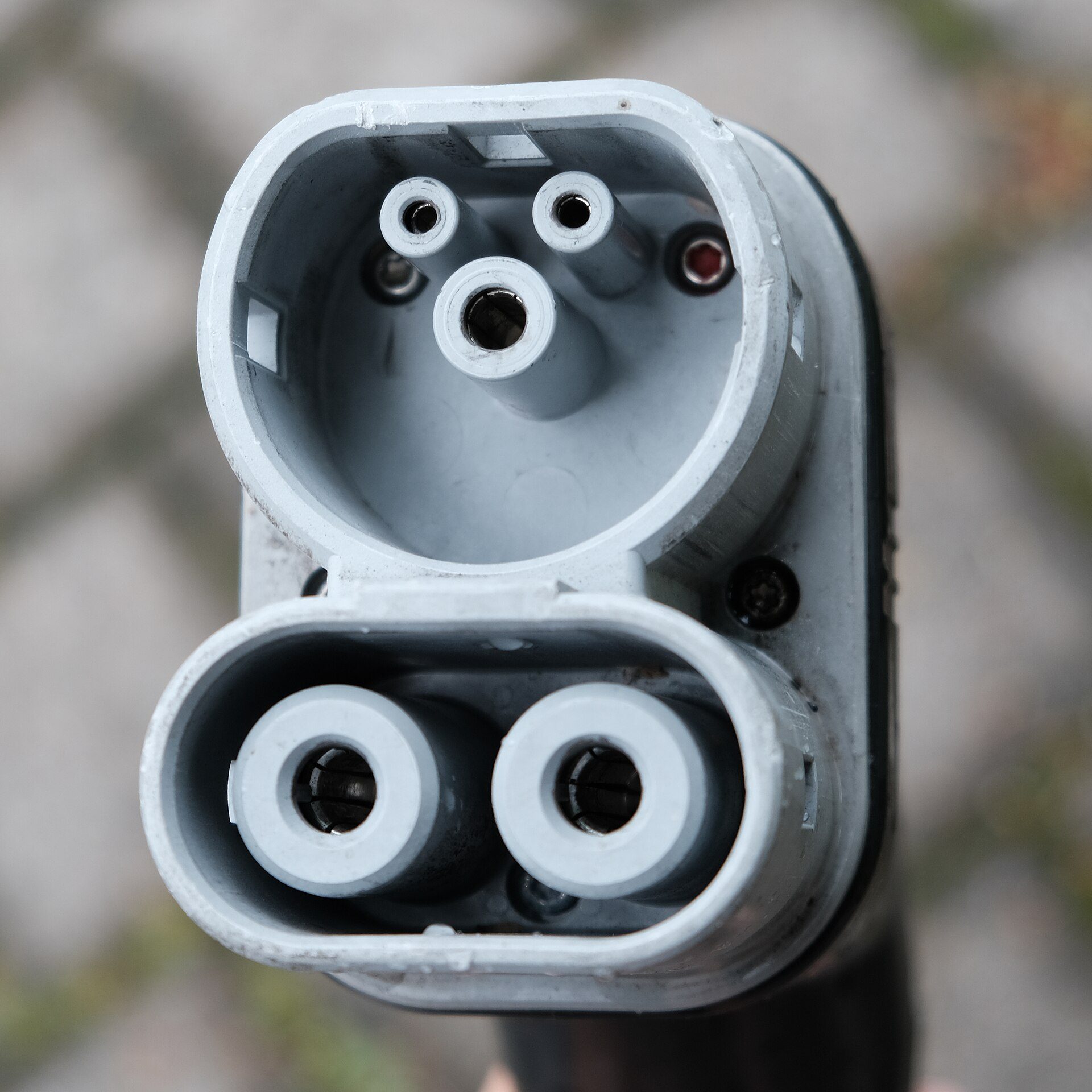
Photo: Danilo Bargen / Wikimedia Commons, CC BY-SA 4.0
Why batteries dislike sitting full or empty
Lithium-ion batteries age faster when they sit for a long time at a very high state of charge, especially when hot, and when they are run down too far. Charging to 100% and driving off straight away is fine; leaving the car at 100% in the sun for a whole week is not. On the other hand, regularly dropping below about 10% makes the BMS limit power and makes it easier to get stranded.
LFP and NMC batteries differ on full charges
- NMC/NCA batteries (nickel-based): the usual advice is to charge to about 80–90% for daily use and only to 100% for long trips.
- LFP batteries (lithium iron phosphate): tolerate full charges better; many manufacturers recommend charging to 100% periodically (for example weekly) so the BMS can recalibrate the percentage display.
Home AC charging is still the cheap, gentle option
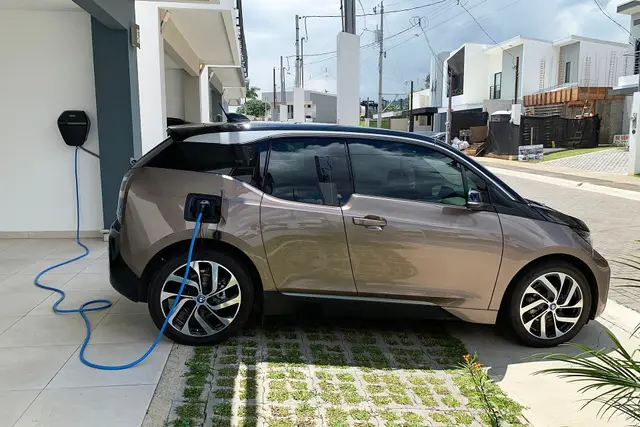
Slow AC charging overnight (Figure 3) heats the battery less than DC fast charging, and the electricity is usually cheaper than at public stations. Set an 80% charge limit in the car or app, and in the morning you have enough for the day. How to choose the charger, cable and residual-current protection for a home installation is covered in the lesson on installing a home EV charger.
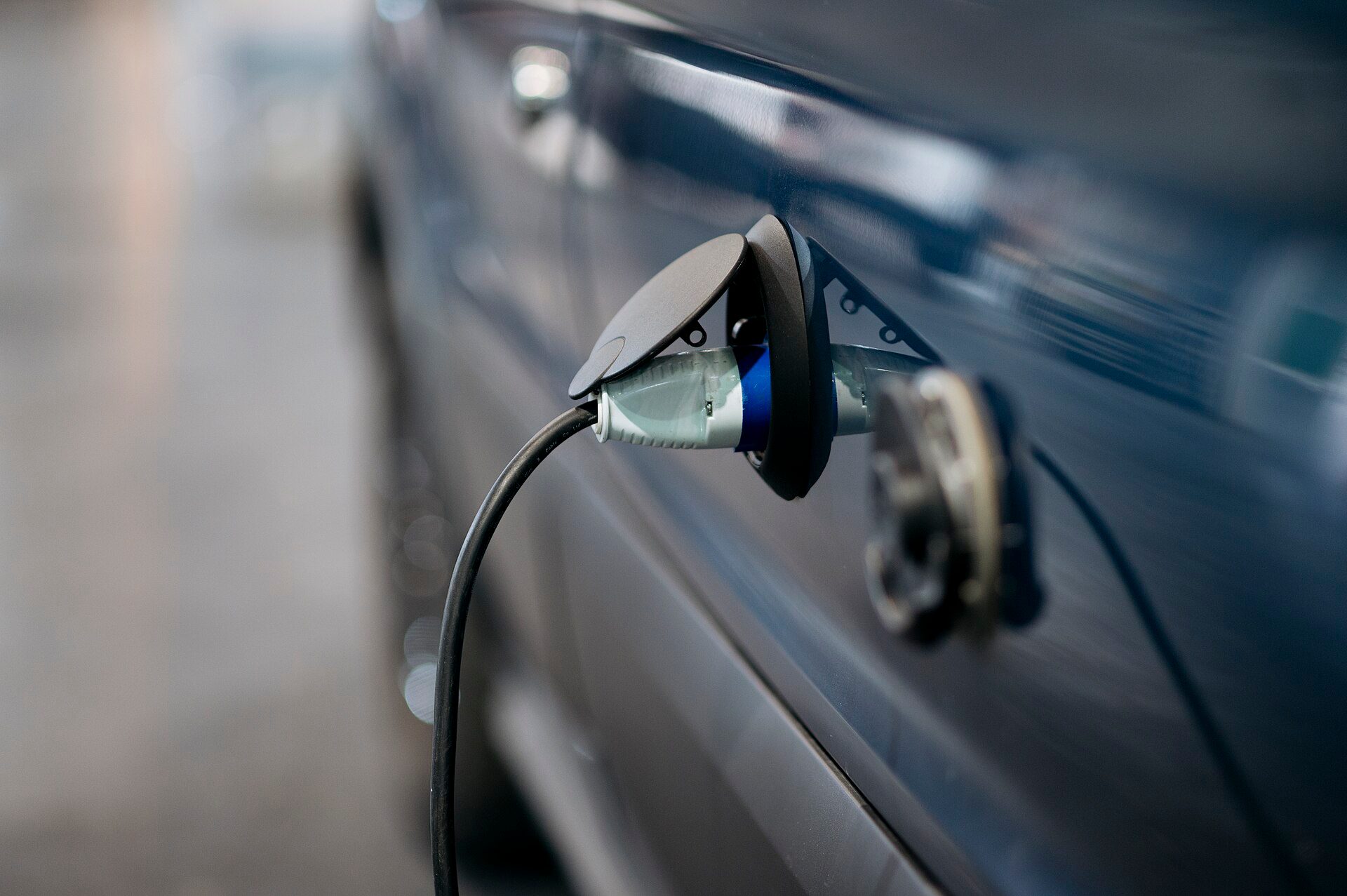
Photo: Shixart1985 / Wikimedia Commons, CC BY 2.0
Small habits that add up to tens of kilometres
Each habit below saves only a few percent, but together they can be worth tens of kilometres per charge.
Correct tyre pressure
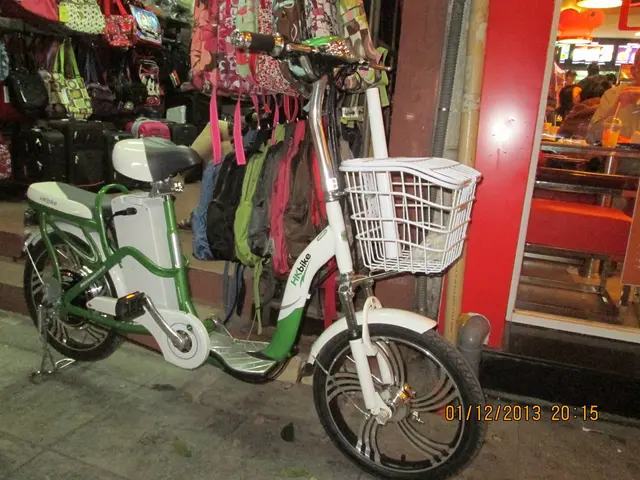
Under-inflated tyres increase rolling resistance, making the car sluggish and thirstier while wearing the tyre shoulders faster. Check pressure with cold tyres about every 2 weeks, using the figures on the sticker in the driver's door frame or in the owner's manual (Figure 4). An electric car is heavier than a petrol car of the same size because of the battery pack, so do not lower the pressure yourself for a "softer" ride.
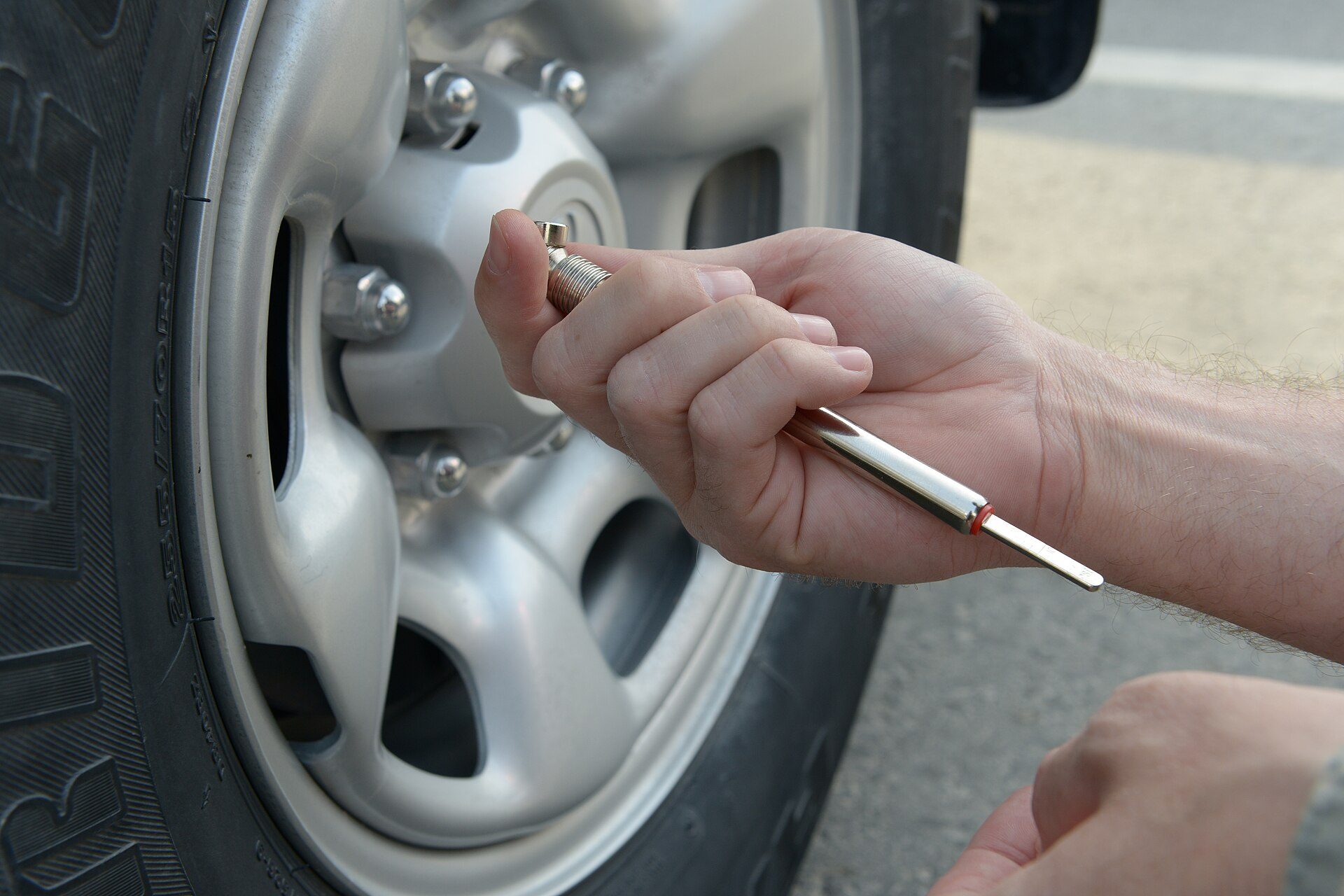
Photo: SrA Hannah Landeros / Wikimedia Commons, Public domain
Drive modes, load and aerodynamics
- Eco mode or its equivalent limits power and softens the accelerator, which suits city driving.
- Remove unnecessary heavy items from the boot; take off roof bars and roof boxes when not in use, as they add noticeable drag on the expressway.
- Above 70–80 km/h, closing the windows and using the A/C usually costs less than driving with the windows open.
Plan the trip and charging stops
Before a long trip, pick 2 charging stations along the way: a main one and a backup, in case the main station is full or out of order. Aim to arrive at a charger with about 15–20% left, not 5%.
Worked example: a 200 km trip home, two driving styles
Mr Hung has a C-segment electric SUV with 60 kWh usable and sets off with 90% charge for a 200 km trip to his home town, mostly on the expressway, in 35°C sunshine, with 4 people on board. He wants to know which way of driving leaves enough battery to get around the village without stopping at a charger.
Step 1: figures for the two driving styles
- Style A: 110 km/h on the expressway (100 km/h average for the whole trip), A/C at 20°C on high fan, tyres about 10% under the specified pressure. Consumption read on the display after the trip: 21 kWh/100 km.
- Style B: 90 km/h (80 km/h average for the whole trip), A/C on auto at 26°C, cabin pre-cooled for 10 minutes before unplugging, tyres at the correct pressure, Eco mode. Consumption: 16 kWh/100 km.
Step 2: energy used and battery left on arrival
- Style A: 200 km × 21 ÷ 100 = 42 kWh. 42 ÷ 60 = 70% of the battery. Arrives with 90 − 70 = 20%.
- Style B: 200 km × 16 ÷ 100 = 32 kWh. 32 ÷ 60 ≈ 53.3% of the battery. Arrives with 90 − 53.3 ≈ 36.7%, rounded to 37%.
- Difference: 42 − 32 = 10 kWh, so style B saves 10 ÷ 42 ≈ 24% of the energy.
Step 3: time and electricity cost (2026 reference in Vietnam, depends on tariff and station operator)
| Item | Style A | Style B |
|---|---|---|
| Energy used | 42 kWh | 32 kWh |
| Battery left on arrival (starting at 90%) | 20% | ≈ 37% |
| Driving time (200 km ÷ average speed) | 120 minutes | 150 minutes |
| Electricity cost charging at home, assuming 3,000 VND/kWh | 126,000 VND | 96,000 VND |
| Electricity cost at a public charger, assuming 4,000 VND/kWh | 168,000 VND | 128,000 VND |
Check: 42 × 3,000 = 126,000 VND (about US$5); 32 × 3,000 = 96,000 VND; 42 × 4,000 = 168,000 VND; 32 × 4,000 = 128,000 VND. Time: 200 ÷ 100 × 60 = 120 minutes and 200 ÷ 80 × 60 = 150 minutes. Style B takes 30 minutes longer but arrives with about 37% instead of 20%, enough to get around for a few days and drive back to the nearest charger without worry. Actual electricity prices depend on Vietnam's tiered household tariff and each station's price, plus charging losses (the energy drawn from the grid is usually a few percent up to about 10% more than what goes into the battery).
Step 4: choosing a plan
If there is nowhere to charge in his home town, Mr Hung should choose style B. If he is in a hurry, he can drive style A but should stop at a fast charger around the halfway point: he arrives there with about 55% (having used 21 kWh, or 35%), charges for 10–15 minutes at about 70 kW to add 12–17 kWh (20–29%), and reaches home with about 40–49% instead of 20%.
Safety when charging and using an electric car
Saving battery must never come at the expense of safety. An electric car's high-voltage battery runs at hundreds of volts, and only trained technicians with insulated tools may work on it.
Safety warning: Do not use charging cables or connectors that are cracked, scorched or wet; do not charge through an extension lead or an ordinary socket that cannot handle the load. Never open the battery cover, touch the orange (high-voltage) cables or remove high-voltage components yourself. If the car has just driven through deep flood water, taken a hard hit underneath, or there is a burning smell, smoke or an unusual hissing from under the car: stop in an open area, get everyone well away, call the fire service on 114 (Vietnam) and the manufacturer's service centre, and do not plug it in again. Do not use the touchscreen to change energy-saving settings while driving; stop safely first.
Safe habits at the charging station
Park in the right position so the cable is not stretched, push the connector in until it locks, and unplug using the app or the button on the car; never yank the connector while it is still locked.
When range drops abnormally: take the car to the workshop
A lithium-ion battery loses capacity gradually with age and charge cycles; that is normal. But if range falls quickly over a short period with no change in driving, a technician needs to investigate rather than just telling the owner to "drive slower".
Signs that need checking
- Average consumption rises clearly (for example from 16 to 20 kWh/100 km) over a few weeks on the same routes.
- The battery percentage drops unusually fast or jumps, or the car shows battery faults, battery temperature warnings or power limits.
- DC fast charging keeps cutting out or delivers unusually low power even though the battery is neither hot nor full.
- The car coasts poorly with low regeneration and the wheel rims are hot after driving: suspect binding brakes.
What the technician checks
In the workshop, the technician uses a diagnostic tool to read battery state of health (SOH), voltage differences between cells, BMS fault history and battery temperature; tests insulation if there is a warning; and checks for binding brakes, wheel alignment and tyre pressure. If the cause is driving style (speed, A/C), the owner simply needs advice. Measurements on the high-voltage battery are only carried out following the manufacturer's isolation procedure, with rated insulated gloves and tools.
Common mistakes when trying to save battery
Switching the A/C off completely at midday
Sign: the driver gets tired and drowsy. Cause: thinking the A/C is the main culprit. Fix: keep the A/C on auto at 25–26°C; dropping your expressway speed by 10–20 km/h saves more than switching off the A/C, and keeps you safe.
Always charging to 100% and leaving the car parked
Sign: the car sits at 100% in the sun for a week. Cause: fear of running short. Fix: set the charge limit the manufacturer recommends and charge to full only before a long trip; if the car will be parked for a long time, keep it at about 50–60%.
Frequently asked questions
At what speed does an electric car use the least battery?
Consumption is usually lowest at a steady 50–80 km/h without constant stopping. On the expressway, driving steadily at the lower end of the permitted range saves a lot compared with driving at the limit.
How much battery does the A/C use in an electric car?
Roughly 0.5–1.5 kW to maintain temperature, more during the initial cool-down. In city traffic jams the A/C makes up a large share of total energy use; on the expressway its share is much smaller than air resistance.
Should I charge my electric car to 100% every day?
With NMC batteries, a limit of about 80–90% is usually advised for daily driving. With LFP batteries, many manufacturers allow or recommend periodic full charges. Always follow your own car's owner's manual.
Does frequent DC fast charging harm the battery?
Fast charging heats the battery more, and doing it often may age the battery faster than slow charging, depending on the car and its cooling system. Prefer AC charging at home or at work and use fast charging for long trips or when you are in a hurry.
Practice exercises and self-assessment
- Record the kWh/100 km consumption on 3 trips: rush-hour city driving, quiet city driving and expressway driving. Note the outside temperature and the A/C set temperature as well.
- Using your car's usable battery capacity (from the owner's manual), calculate the range in the 80% → 20% window for each type of trip.
- Plan a 250 km trip: starting charge, main and backup chargers, expected battery level on reaching the charger and on arrival.
Self-assessment criteria
- Pass: your range and battery-level calculations match the formula and state the consumption you assumed.
- Pass: your trip plan always reaches a charger with at least about 15% left and includes a backup station.
- Pass: you can explain the roles of speed, A/C, tyres and the charging curve without inventing numbers.
- Not yet: you advise owners to switch off the A/C at midday, open high-voltage parts yourself, or answer vaguely that "this car's battery is bad".
Once you understand how the battery drains and charges, the next step of the roadmap is Electric motor, inverter and reduction gear, where you learn how the motor turns electrical energy into traction and feeds energy back during regenerative braking, which is where the next energy losses after the battery happen.
Keep learning to be an EV technician: after the high-voltage battery and BMS come the motor and inverter, AC and DC charging, the 12V system and thermal management, then an internship in an EV service workshop. See the 8-step EV technician roadmap.