Food safety in a bubble tea shop starts with five habits: only buy creamer, syrups, tapioca pearls and tea with full labels that are within their expiry date; keep fresh milk, cream, cheese foam and cut fruit in the chiller and take out only what you need; use ice from a clean source and scoop it with a dedicated scoop; write the opening date on every opened pack and bottle; and make sure drink makers have the food safety knowledge the rules require. One cup of milk tea passes through 6–10 different ingredients, and a single spoiled one, such as milk left in the sun all morning or ice kept in a dirty bin, is enough to give a customer stomach trouble. This is the first lesson a trainee drink maker should read, before brewing tea or cooking pearls.
By the end of this lesson, you will be able to:
- Check the labels on creamer, syrups, pearls and tea, and refuse ingredients of unknown origin.
- Organise the chiller and dry store by temperature and first-in, first-out, and label opening dates.
- Handle ice, ice bins and scoops correctly, and clean drink-making tools at the start and end of each shift.
- Plan pearl and cheese foam batches so nothing is used past its time.
- Know which food safety documents to ask about when applying for a job or opening a stall, and where to check current rules.
Just starting out as a bubble tea maker? Food safety and ingredient sourcing are step 1 of the roadmap, before brewing base teas, cooking pearls or building recipes. See the 8-step bubble tea and beverage roadmap to learn in the right order.
Why food safety is the first step in drink making
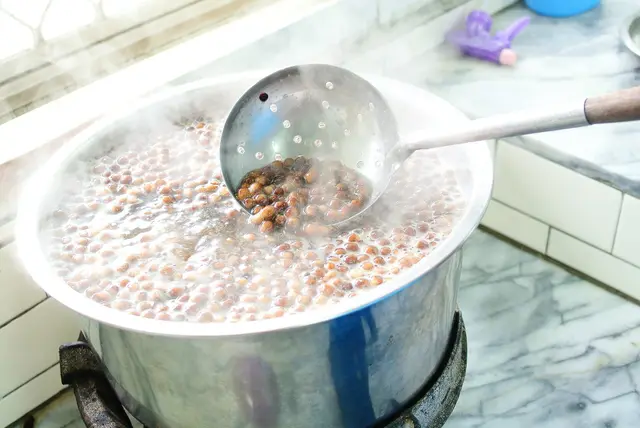
Bubble tea shops in Vietnam sell a lot of cups every day, mostly to students and office workers, and more and more orders go out through delivery apps (Figure 1). Cold, sweet, milky drinks are an environment where bacteria grow fast if kept at the wrong temperature. One case of customers with upset stomachs posted on social media can empty a shop faster than any bad recipe.
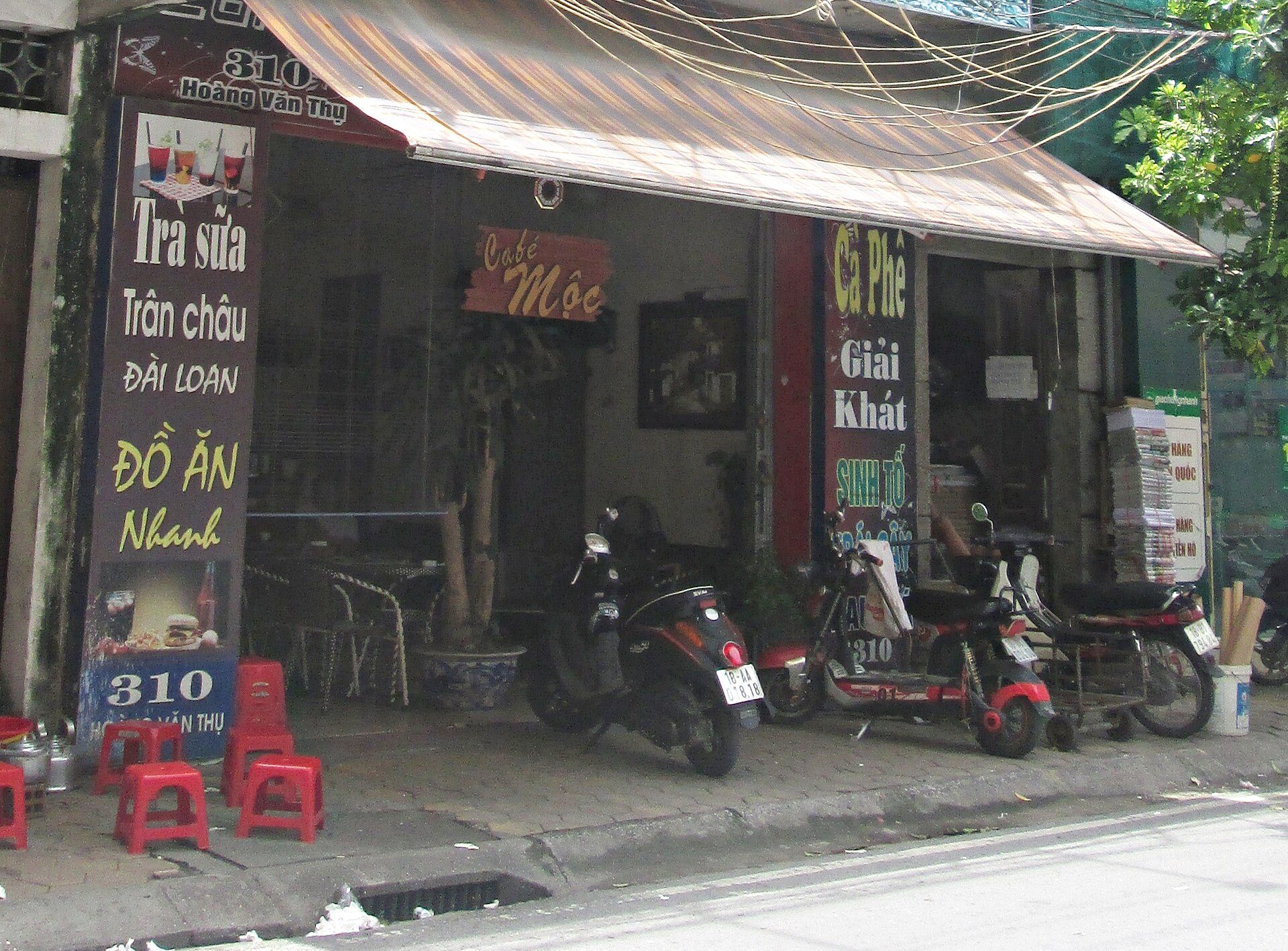
Photo: TaiwaneseWaveVN / Wikimedia Commons, CC BY-SA 4.0
The ingredients most likely to cause trouble
- Fresh milk, fresh cream, cheese foam, milk foam: rich in protein and fat, they spoil quickly at room temperature.
- Cut fruit and juices: once cut, fruit loses its protective skin and picks up bacteria from knives, boards and hands.
- Cooked pearls and jellies: past their time they turn hard and sour, and are no longer safe.
- Ice: customers assume ice is "fine", but dirty ice or a dirty ice bin is a common source of contamination.
- Ingredients of unknown origin: loose creamer, syrups and pearls with no label, unknown ingredients and no expiry date.
The drink maker's responsibility
You are the last person to touch the cup before the customer does. The owner chooses suppliers, but you are the one who sees the bulging milk carton, the mouldy syrup bottle, the pearls left from yesterday. A good drink maker throws away a doubtful ingredient instead of "using it up so it doesn't go to waste".
Choosing traceable ingredients: read the label before you buy
Packaged food sold in Vietnam must carry a label with mandatory information, and imported goods need a Vietnamese sub-label. A drink maker does not need to know the law by heart, but must be able to read a label and spot suspicious goods.
What a label should show
- Product name, ingredients, net weight or volume.
- Name and address of the manufacturer or importer and distributor; country of origin.
- Production date and expiry date (or "best before").
- Storage and usage instructions; allergy warnings where relevant.
Goods-in checklist
| Ingredient | Check on delivery | Refuse when |
|---|---|---|
| Milk powder, non-dairy creamer | Full label, expiry date, intact bag | Torn bag, lumps, damp, odd smell, no label |
| Syrups, fruit jams, sauces | Sealed cap, expiry date | Bulging cap, leaks, mould film, fizzing fermentation |
| Dry pearls, jellies | Label, expiry date, sealed bag | Loose goods hand-bagged with no label |
| Dry tea | Label, origin, sealed bag | Damp, mouldy, sharp smell, odd colour |
| Fresh milk, fresh cream | Expiry date, chilled delivery, cartons still cold | Bulging or dented cartons, delivered warm, expired |
| Fresh fruit | Fresh, unbruised, known source | Crushed, leaking, mouldy |
Keep invoices and delivery notes
Keep invoices and delivery notes from every supplier, and note batch numbers where available. If something goes wrong, or when inspectors visit, this is the evidence that the shop uses traceable ingredients. Buy from suppliers that issue invoices and have a real address, not from unknown sellers over online messages.
Storage: chiller, dry store and opening dates
The general rule is: cold things stay cold, dry things stay dry, and opened packs carry a date label. How long a product lasts after opening always follows its own packaging instructions; if your shop's rule is stricter, follow the shop.
The chiller: check with a thermometer
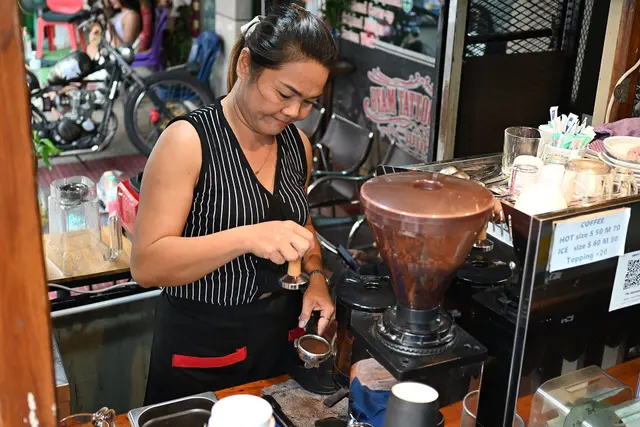
A chiller holding milk, cream and fruit should stay at about 0–5°C. Keep a thermometer inside (Figure 2) and record the temperature at the start, middle and end of each shift; the number on the control panel is not always right. An overfilled chiller opened constantly warms up, so keep only a few hours' worth of stock in the counter fridge.
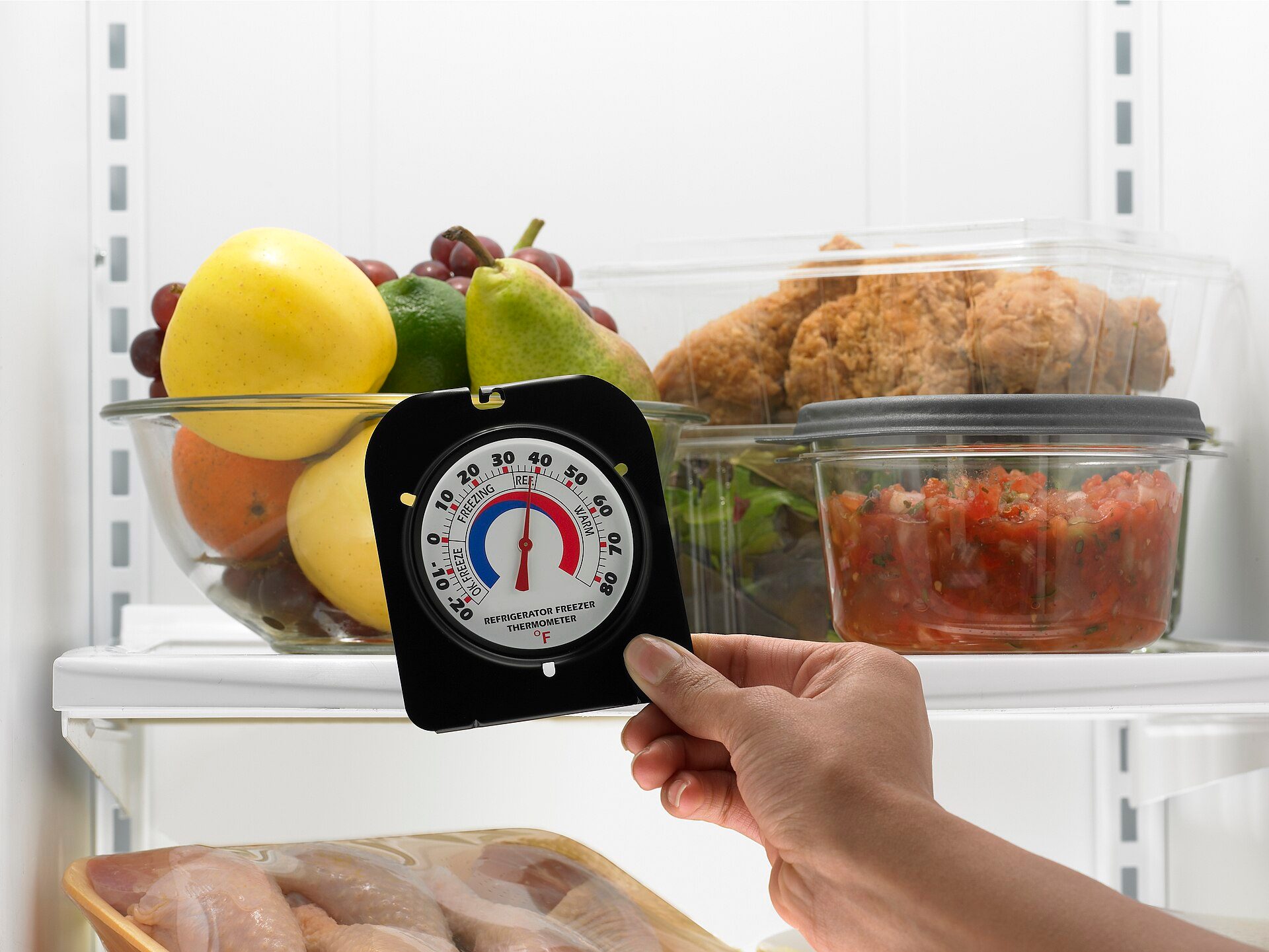
Photo: USDAgov / Wikimedia Commons, Public domain
Opening-date labels and first in, first out
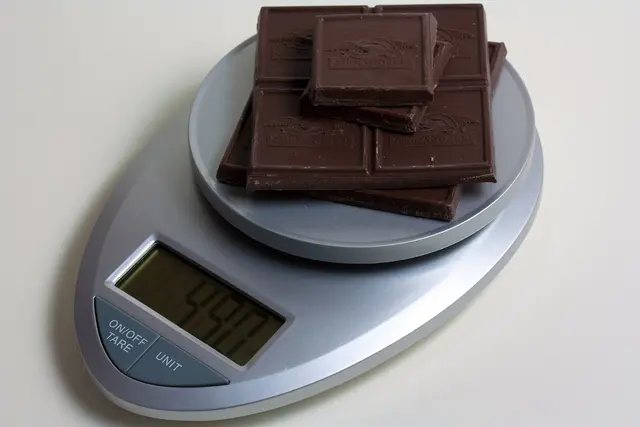
- Every milk carton, syrup bottle, powder bag or topping tub gets a label with the date and time it was opened and who opened it (Figure 3).
- House-made items (cheese foam, milk foam, sugar syrup, brewed tea): write when it was made and when it must be thrown away.
- New deliveries go to the back, older stock to the front so it is used first.
- Never top up an old batch with a new one in the same tub; finish it, wash the tub, then fill with the new batch.
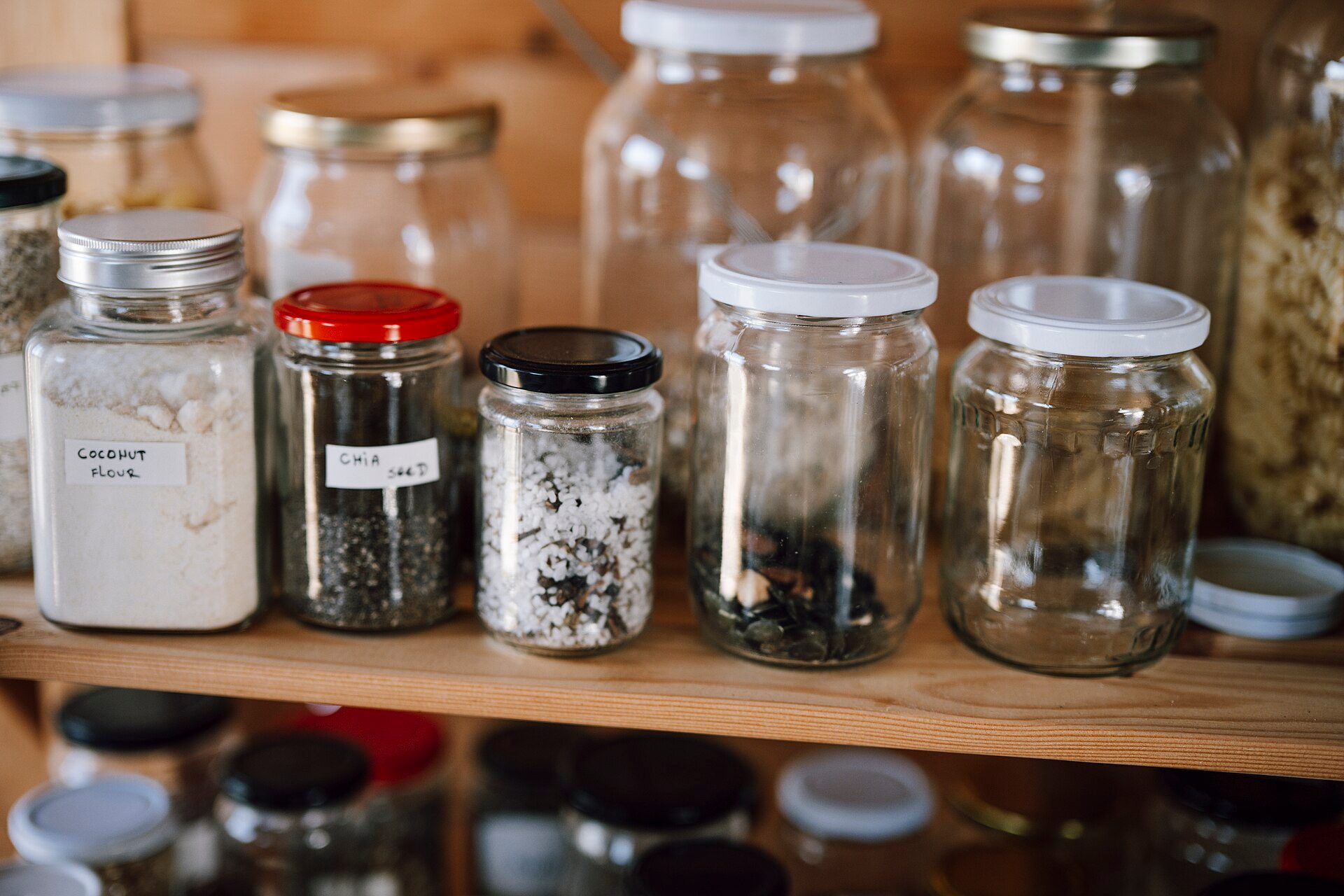
Photo: Shixart1985 / Wikimedia Commons, CC BY 2.0
The dry store
Keep powders, tea, dry pearls and sugar on shelves off the floor and away from walls, in a dry place out of direct sun, and never next to cleaning chemicals. Opened bags must be clipped shut or emptied into lidded containers, to keep out ants, cockroaches, rats and the humidity that makes powder clump.
Clean ice and cleaning drink-making tools
Ice goes into almost every cup, so one dirty ice bin can affect a hundred customers in a day.
Managing ice
- Buy ice from a producer with proper paperwork, or use an ice machine with a maintained water filter.
- The ice bin has a lid and holds only ice for drinks; never chill milk bottles, fruit or cans in it.
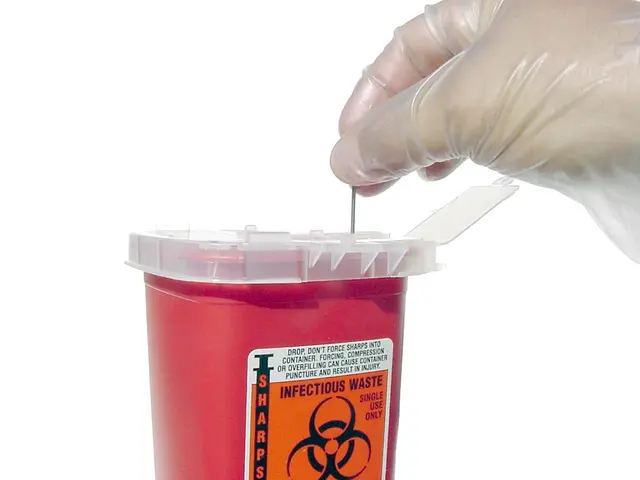
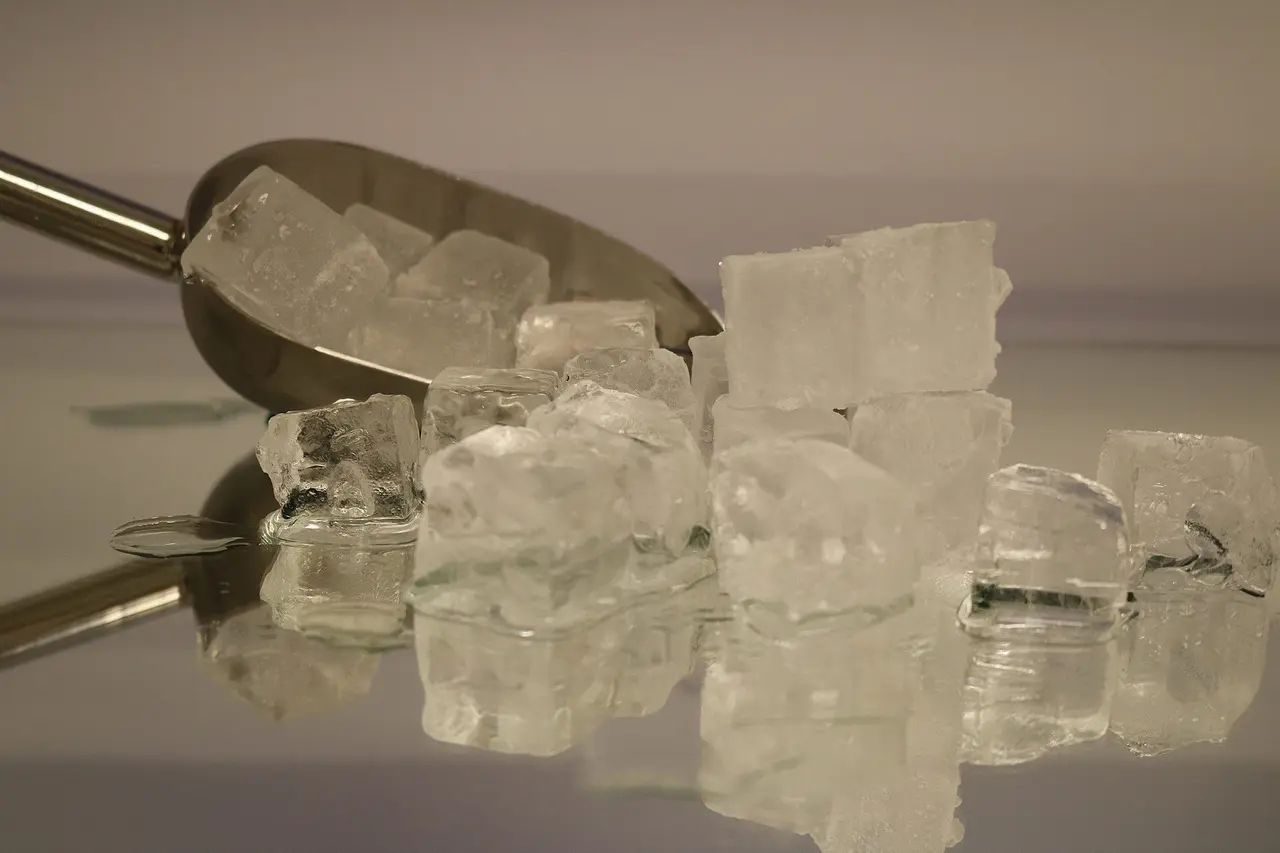
- Scoop ice with a dedicated scoop (Figure 4) kept in a holder outside the bin; never use a cup or your hands.
- At the end of the day, discard leftover ice, then wash and dry the bin.
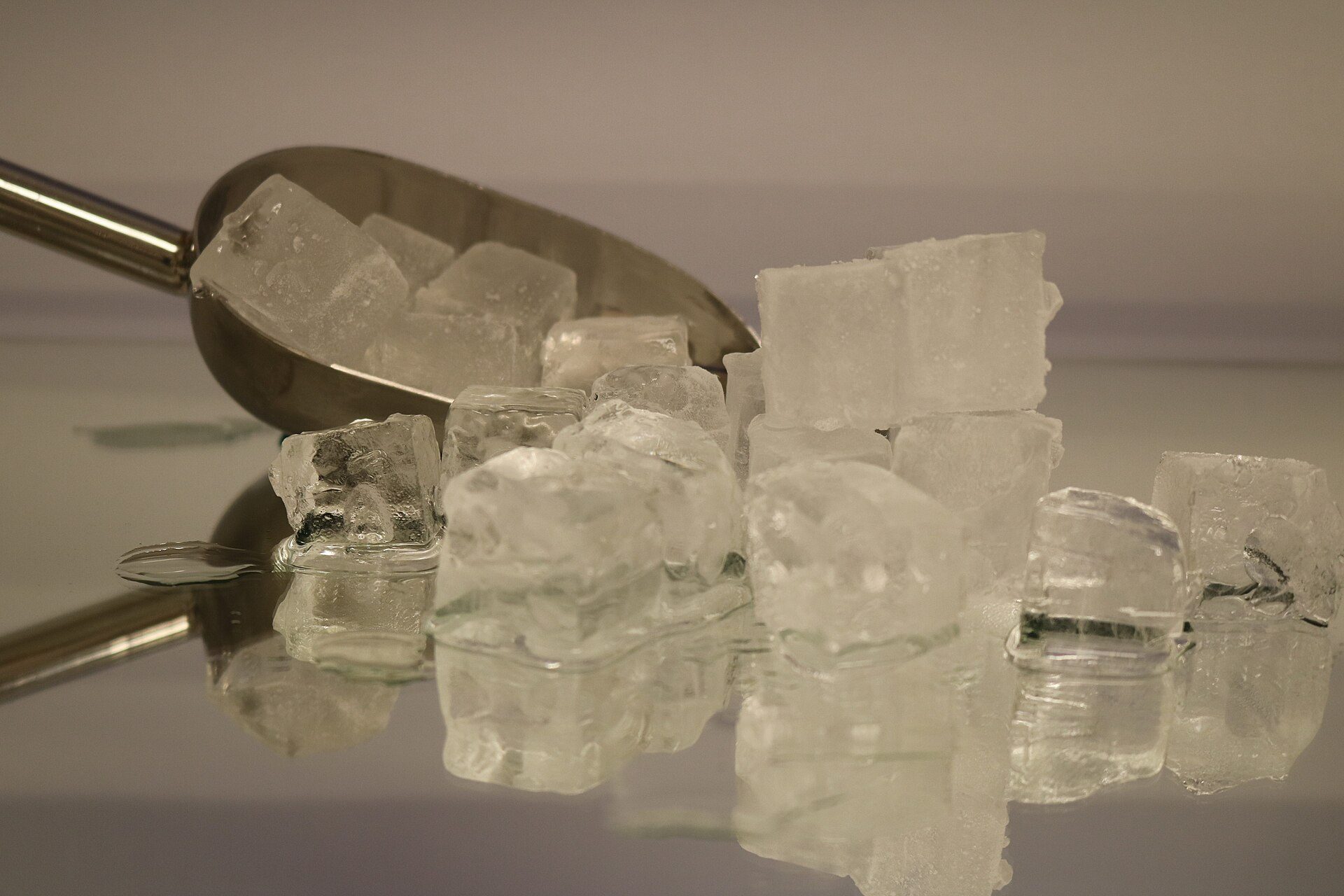
Photo: Achim Schleuning / Wikimedia Commons, CC BY-SA 4.0
Hand and tool hygiene
Wash your hands with soap before your shift, after the toilet, and after touching money, phones or rubbish. Wear gloves when cutting fruit or handling toppings by hand, and change them when torn or when you switch tasks. Shakers, measuring jugs, spoons, tea brewers, knives and boards are washed at the end of the shift and left to dry on a rack. Keep the fruit knife and board separate from the knife used to open packaging.
Sealing machine, blender and end-of-shift cleaning
The cup sealer mould gets sticky with sugar and the blender jug gets coated with milk; both must be cleaned as the manufacturer instructs, unplugged first. Counters, fridge handles and syrup pumps are wiped with a clean cloth and a product suitable for food-contact surfaces. For kitchen rules on hands, cloths and boards, see the cook's article Food hygiene in the kitchen: 10 rules every new cook must follow.
Safety warning: The boiling pot for pearls, the tea brewer and the sealer head are all hot and can burn; use heat-resistant gloves and keep children out of the drink-making area. Unplug before taking apart or washing the blender jug and sealer mould, and keep water away from sockets. Fruit knives must be sharp, used on a non-slip board, and handed over handle first. When customers ask about allergies (milk, peanuts, tree nuts, gluten), answer with the real ingredients and never guess. If a customer has difficulty breathing, swollen lips or hives after a drink, call emergency services (115 in Vietnam). If several customers get stomach pain or vomit after drinking at the shop, tell the owner, keep the suspect ingredients and report to the local health authority.
Food safety documents for drink makers and stalls
Food safety requirements in Vietnam vary by business type (small stall, household business, chain) and change over time. This lesson only covers the general points; when applying for a job or opening a stall, ask the health office or food safety authority of your district and check the current regulations.
For drink makers
- Food safety knowledge: people who prepare food and drink directly usually need training and a confirmation of food safety knowledge; ask the shop you apply to how they handle it.
- Health: food handlers usually need to meet health requirements and have periodic check-ups as required; if you have diarrhoea, fever or an open wound on your hands, tell your manager so you can switch tasks.
For stalls and shops
Depending on size and type, a business may need a food safety eligibility certificate or a signed commitment. Requirements, paperwork and fees are set by the competent authority, so do not assume based on what another shop did. You will cover this in more depth in the last step of the roadmap, when you look at opening your own stall.
Worked example: pearl batches and safety costs for a 120-cup-a-day stall
A bubble tea stall opens 10:00–22:00 and sells an average of 120 cups a day, about 70% of them with pearls. Each serving uses about 50 g of cooked pearls. Cooked pearls should be used within about 4 hours and never refrigerated (how to cook them is covered in How to cook black tapioca pearls: chewy, no hard centres).
Part 1: splitting pearl batches
- Pearl servings per day: 120 × 70% = 84 servings.
- Cooked pearls needed: 84 × 50 g = 4,200 g, or 4.2 kg.
- The stall is open 12 hours and each batch lasts at most 4 hours, so cook 3 batches: 10:00 (used until 14:00), 14:00 (until 18:00), 18:00 (until 22:00).
- Split evenly, each batch is 4.2 ÷ 3 = 1.4 kg cooked. In practice, a stall that is busier in the late afternoon and evening can make batches 2 and 3 larger, as long as the total stays about 4.2 kg.
With batches, no pearls sit longer than 4 hours and little is thrown away at the end of each batch. The same method works for cheese foam, brewed tea and cut fruit.
Part 2: monthly safety supply costs (2026 reference prices in Vietnam, varying by area)
| Item | Quantity × unit price | Cost |
|---|---|---|
| Fridge thermometers | 2 × 60,000 VND | 120,000 VND |
| Opening-date labels | 2 rolls × 50,000 VND | 100,000 VND |
| Disposable gloves | 4 boxes × 80,000 VND | 320,000 VND |
| Lidded ice bin and ice scoop | 1 set × 450,000 VND | 450,000 VND |
| Colour-coded cleaning cloths | 1 set × 150,000 VND | 150,000 VND |
| Dish detergent, surface cleaner | 2 cans × 120,000 VND | 240,000 VND |
| Total | 1,380,000 VND | |
Check: 120,000 + 100,000 + 320,000 + 450,000 + 150,000 + 240,000 = 1,380,000 VND (about 53 USD). Thermometers, the ice bin and scoop last many months, so from the second month the cost falls to about 100,000 + 320,000 + 150,000 + 240,000 = 810,000 VND, less than 230 VND per cup at 120 × 30 = 3,600 cups a month (810,000 ÷ 3,600 = 225 VND).
Common food safety mistakes at a bubble tea counter
Leaving fresh milk and cream on the counter all session
Sign: a milk carton standing next to the sealer from morning to afternoon. Cause: not wanting to open the fridge, wanting speed. Fix: take out only what you will use soon, keep it on ice or in the counter fridge, and put it back right after the rush.
Not dating opened packs
Sign: three half-used bottles of the same syrup and nobody knows which was opened first. Cause: no labels at the counter. Fix: keep a roll of labels and a pen where stock is opened; open it, label it.
Scooping ice with a cup
Sign: plastic or glass cups sitting in the ice bin. Cause: convenience. Fix: use only the ice scoop, kept in a holder outside the bin; broken glass in ice is a serious accident.
Buying cheap loose ingredients
Sign: milk powder in a tied plastic bag, unlabelled pearls. Cause: wanting to cut costs. Fix: price your drinks on traceable ingredients; saving a few hundred dong per cup is not worth the risk of food poisoning.
Frequently asked questions
Is milk tea safe to drink the next day?
Better not. Milk tea contains milk, cream and pearls, and bacteria grow if it sits at room temperature for long; the pearls also harden. At the counter, pre-made drinks are never sold the next day, and takeaway customers should be told to drink within a few hours.
How long do opened creamer and syrups last?
Follow the instructions on each product's packaging, since every product is different. The shop should date every opened pack and set its own rule, stricter if the counter is hot and humid.
What papers does a bubble tea maker need in Vietnam?
Usually a confirmation of food safety knowledge and a health certificate, as the shop and current regulations require. Ask at your interview, and ask the local health office if you are opening your own stall.
How can I spot pearls or creamer of unknown origin?
No label, or a label missing the manufacturer's name, address or expiry date; sold loose in hand-tied bags; unusually cheap; the seller cannot issue an invoice. If you see these signs, do not buy.
Practice tasks and self-assessment
- Pick 5 ingredients at a counter (or at home), read the labels and write down all the mandatory information; mark anything missing.
- Put a thermometer in the chiller and record the temperature 3 times a day for 3 days.
- Draw up a pearl and cheese foam batch plan for your stall based on cups sold and opening hours, following the worked example.
- Write an opening and closing cleaning checklist for the ice bin, sealer, blender, knives and boards.
Self-assessment criteria
- Pass: you correctly identify ingredients with incomplete labels and refuse them.
- Pass: chiller temperatures are fully recorded and stay within 0–5°C; if not, you know to report and act.
- Pass: every opened carton and bottle at the counter carries a date label, and nothing is used past its time.
- Not yet: scooping ice with a cup, leaving milk on the counter all session, or using unlabelled ingredients.
Once food safety and ingredient selection are second nature, move on to the next roadmap step: Brewing base teas: black, green, oolong, where you learn tea-to-water ratios, temperatures, steeping times and how to keep base tea fragrant and not bitter through a whole shift.
Keep learning bubble tea making: after food safety come base teas, pearls, jellies and cheese foam, milk tea, fruit tea, yogurt and blended drink recipes, standard portions and costing. See the 8-step bubble tea and beverage roadmap.