To brew base tea for milk tea properly, weigh the tea in grams per litre of water, use the right water temperature for each type and time every batch: black tea at about 20–30 g per litre, 95–100°C water, 10–15 minutes; green tea at about 15–25 g per litre, 75–85°C water, 6–10 minutes; oolong at about 20–25 g per litre, 85–95°C water, 8–12 minutes. When the timer goes off, strain out the leaves at once without squeezing, write the time on the container and use the base tea within 4 hours at most. Milk tea that tastes harsh and bitter, or turns weak over ice, is usually a brewing mistake, not bad tea.
By the end of this lesson, you will be able to:
- Tell black, green and oolong tea apart and explain why each needs a different water temperature.
- Brew a batch of base tea in 8 steps with a scale, thermometer and timer, getting the right colour and taste.
- Cold brew green tea or oolong in the fridge and know how long cold brewed tea keeps.
- Split brewing into batches by sales hours so no drink uses tea older than 4 hours, and work out tea quantities and tea cost per cup.
- Spot and fix 4 common faults: astringent and bitter, weak over ice, cloudy, and stale-smelling tea.
Learning to make bubble tea properly? Brewing base tea is step 2 of the roadmap, right after food safety and traceable ingredients. See the 8-step bubble tea and beverage maker roadmap to learn in the right order.
What is base tea and why does it decide how milk tea tastes?
Base tea (Vietnamese shops call it "cot tra", tea concentrate) is tea brewed ahead in batches and used as the foundation for milk tea, fruit tea and cheese foam tea. In a 500 ml cup of milk tea, base tea is usually about 120–200 ml, more than any other ingredient except ice. If the base is harsh or watery, no amount of good milk or pearls will save the drink.
The three common base teas
All three come from leaves of the same tea plant and differ in how much they are oxidised during processing. Oxidation happens when rolled tea leaves meet the air and slowly turn from green to reddish brown, like a cut apple going brown.
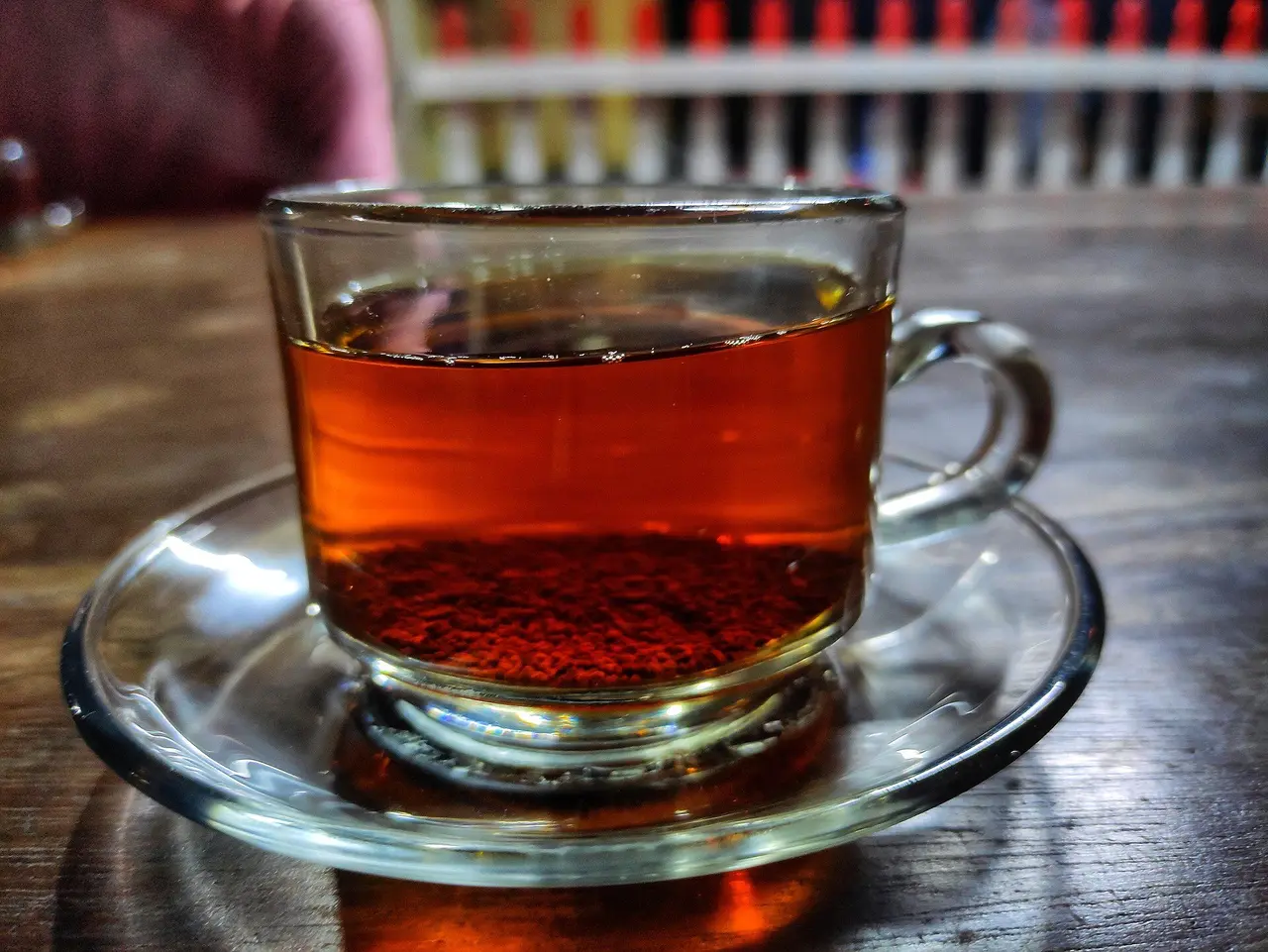
- Black tea (called "hong tra", red tea, in Vietnamese): almost fully oxidised, dark brown-black dry leaves, red amber liquor, strong flavour that pairs well with milk. This is the base of classic milk tea (see Figure 1).
- Green tea ("luc tra"): almost unoxidised, olive green dry leaves (see Figure 2), yellow-green liquor, clean taste. Shops often use jasmine-scented green tea for fruit teas and jasmine milk tea.
- Oolong: partly oxidised, between the other two. There are light, floral styles and roasted styles (darker, with a toasty aroma) used for roasted oolong milk tea.
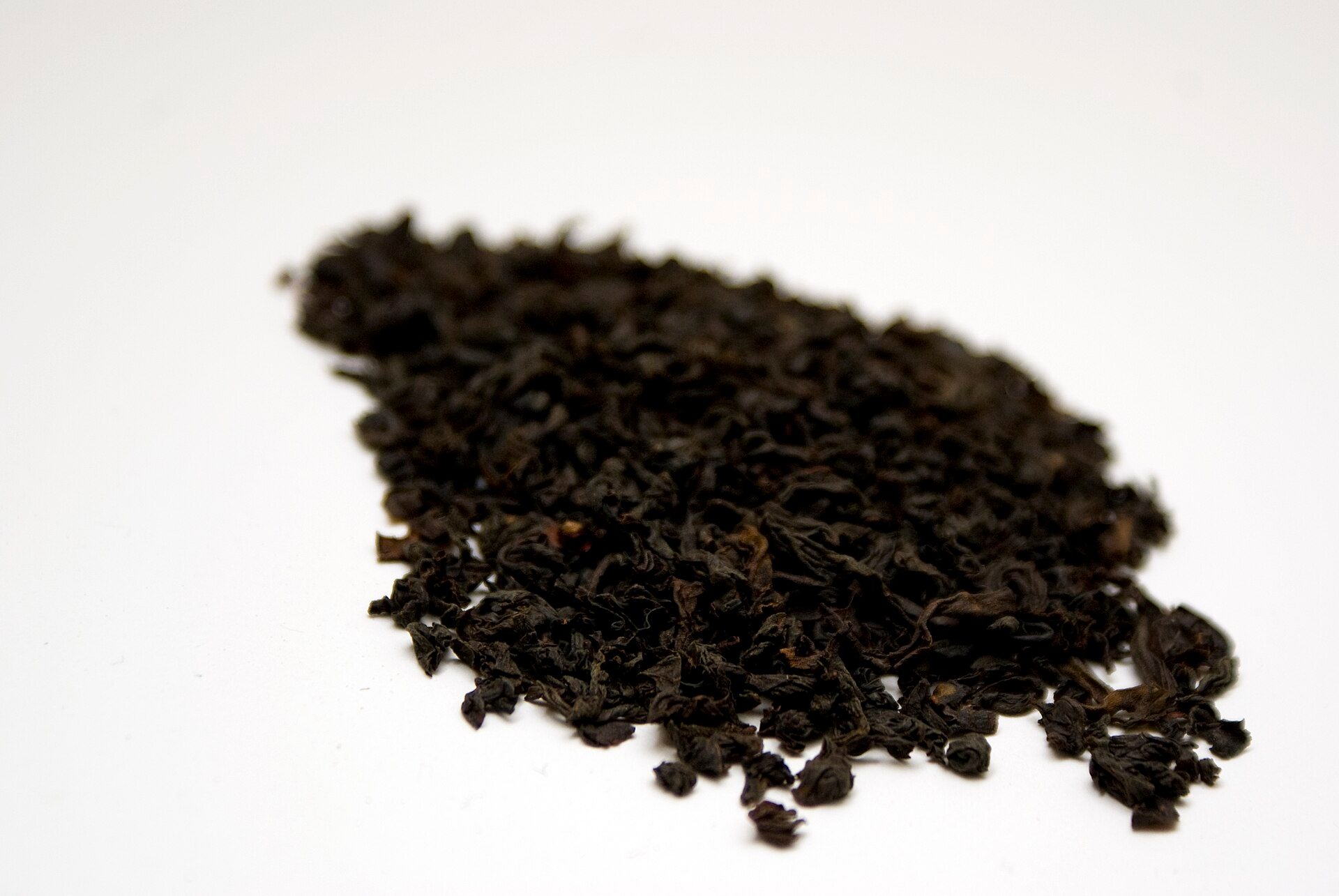
Photo: Patrick Kolencherry / Wikimedia Commons, CC BY-SA 3.0
What good base tea looks and tastes like
Good black tea is a clear reddish brown, fragrant, strong, with a light astringency at the back of the tongue that does not dry out your mouth. Good green tea is a clear yellow-green, smelling of fresh grass or jasmine, with a sweet aftertaste. Cloudy, unusually dark, harshly bitter or sour-smelling tea has been brewed wrongly or kept too long.
Why tea turns astringent and bitter
Tea leaves contain tannins (the catechin group), which cause astringency, that dry, puckering feeling, and caffeine, which adds bitterness. The hotter the water and the longer the steep, the more of these come out. Aroma comes out earlier, so good brewing means stopping before astringency and bitterness take over. Green tea is barely oxidised and keeps more catechins, which is why boiling water makes it bitter so easily.
Reference table: temperature, steep time and tea-to-water ratio
The table below is a common starting point in bubble tea shops for a strong base that will be mixed with milk, sugar and ice. Every tea brand and supplier prints its own instructions on the pack; read them first, then adjust by tasting and record your shop's standard settings.
| Tea | Water temperature | Steep time | Ratio (strong base) | Used for |
|---|---|---|---|---|
| Black tea | 95–100°C | 10–15 minutes | 20–30 g / 1 litre | Classic milk tea, pearl milk tea, black tea with cheese foam |
| Green tea, jasmine green tea | 75–85°C | 6–10 minutes | 15–25 g / 1 litre | Fruit teas, jasmine milk tea, lemon green tea |
| Light oolong | 85–90°C | 8–12 minutes | 20–25 g / 1 litre | Oolong milk tea, peach oolong |
| Roasted oolong | 90–95°C | 10–12 minutes | 20–25 g / 1 litre | Roasted oolong milk tea |
| Cold brew (any type) | Cool filtered water, in the fridge | 6–12 hours | 12–20 g / 1 litre | Fruit teas, lighter milk teas |
How to read the table
Temperature and time work together: with water at the top of the range, steep at the short end of the time range, and the other way round. The ratio is grams of tea per litre of brewing water, not per litre of finished tea. The leaves soak up and hold some water, roughly 2.5 ml per gram of dry tea, so 1 litre of water brewed with 25 g of tea gives only about 940 ml of base tea. Measure temperature with a food probe thermometer or a temperature-controlled kettle rather than guessing "boiled and left to cool a bit".
Base tea for milk tea versus fruit tea
Milk tea needs a strong base because milk and ice dilute it and mute the tea flavour, so use the top of the ratio range. Fruit tea needs a light base that does not cover the fruit, so use green tea or oolong at the low end, or cold brew.
Choosing tea and preparing your brewing kit
Before brewing, recheck the rules from step 1: tea must be labelled, within its expiry date, dated when opened, and stored somewhere cool and dry, away from strong smells (see Bubble tea shop food safety: ingredients, storage and clean ice). Tea leaves absorb odours very easily.
Whole leaf, broken leaf and tea bags
Shops usually buy whole or broken leaf tea in large packs, which is cheaper per cup. Broken leaf releases flavour faster than whole leaf, so it needs a shorter steep. With tea bags, recalculate the ratio from the grams printed on the pack. Every time you change tea brand, brew a test batch and taste again.
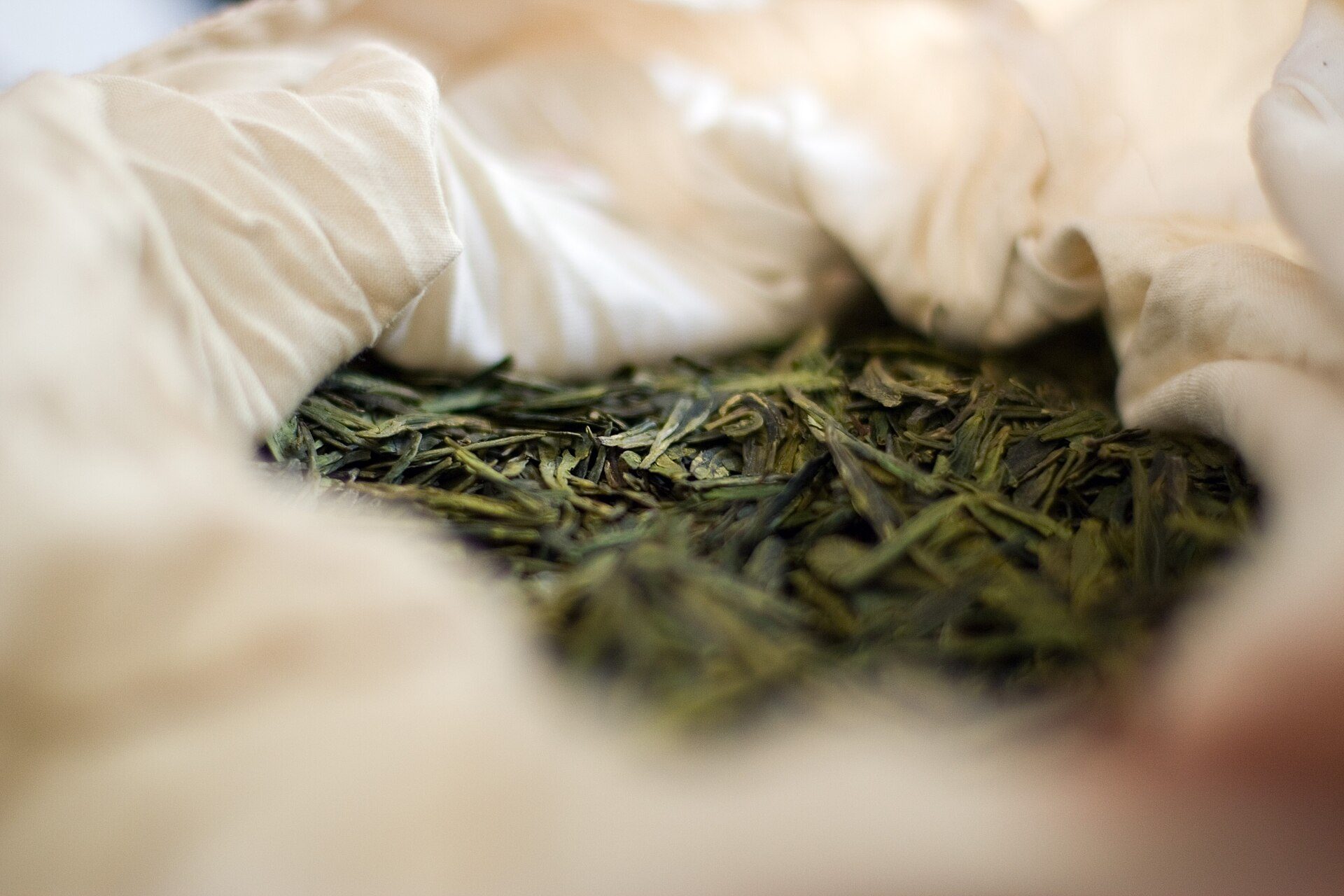
Photo: Romain Guy from Lyon, France / Wikimedia Commons, CC BY-SA 2.0
Equipment and brewing water
You need: a digital scale reading to 1 g, a measuring jug marked in ml, a kettle, a food probe thermometer, a stainless steel brewing container with a lid, a cloth filter bag or fine mesh sieve, a timer, labelling tape, a lidded holding container or insulated dispenser with a tap, an ice bath for quick cooling, and heat-resistant gloves.
Use clean filtered water with no chlorine or other smell; if the water smells, the tea will too. Change water filter cartridges on schedule.
The 8-step hot brewing process
Weigh and time every batch even when you feel experienced: every shift and every staff member should produce the same taste.
Preparation (steps 1–3)
- Weigh the tea and measure the water to your shop's recipe.
- Heat the water to the right temperature. Black tea takes just-boiled water. For green tea and oolong, boil and then let the water drop to the level in the table, checking with the thermometer.
- Rinse the brewing container with hot water and pour it away, so the container does not steal heat from the brewing water.
Steeping (steps 4–6)
- Add the tea and pour in the water, stirring gently 3–5 times so all the leaves are submerged.
- Cover and start the timer according to the table.
- Stir gently once halfway through. Constant hard stirring makes the tea cloudy and astringent.
Straining and labelling (steps 7–8)
- When time is up, strain immediately through the filter bag or sieve into a clean container. Let it drain on its own, do not squeeze or press the leaves: the liquid you press out is the most astringent and bitter part.
- Label and taste. Write the tea type, the time straining finished, the expiry time (straining time plus 4 hours at most) and the name of whoever brewed it. Taste and compare the colour with your shop's standard before selling.
If the base tea is for cold drinks, many shops cool it quickly by standing the container in an ice bath and then covering it; tea cooled fast keeps a clearer colour and fresher aroma.
Safety warning: Water at 95–100°C causes serious burns in an instant. Wear heat-resistant gloves when pouring boiling water, when lifting the brewer lid (steam rises straight onto your hand and face) and when straining. Place kettles and brewers on a stable surface, away from the edge of the counter and from walkways. Dry your hands before plugging in or unplugging an electric kettle, and never run the cord through wet areas. For a burn: cool it under clean, cool running water for about 20 minutes, and do not apply toothpaste or ice directly; for large burns, big blisters, burns to the face or burns on young children, go to emergency care or call 115, Vietnam's ambulance number.
Brewing each type: black, green and oolong
The 8 steps are the same for every tea; only the settings and a few details change.
Black tea for classic milk tea
Black tea tolerates just-boiled water and long steeping, so it is the easiest type for beginners; brew it strong enough that milk does not wipe out the tea flavour. Broken leaf black tea releases flavour quickly, so start at 10 minutes; larger whole leaves may need 12–15 minutes.
Green and jasmine green tea for fruit teas
Green tea is the easiest to ruin: boiling water poured straight on gives a dark yellow liquor, a "boiled vegetable" smell and a harsh bitter taste. Use water at 75–85°C and steep 6–10 minutes. Steep too long and the astringency covers the jasmine aroma.
Light oolong and roasted oolong
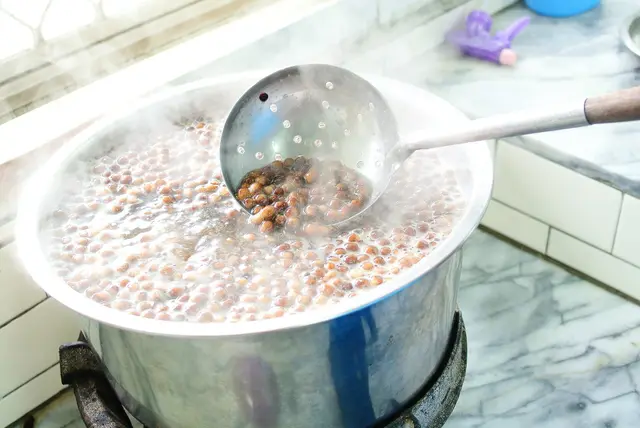
Light, floral oolong is brewed at 85–90°C to protect its aroma. Roasted oolong (dark leaves like Figure 3) tolerates hotter water, about 90–95°C, and gives a toasty aroma that suits milk. After brewing, look at the spent leaves: fully opened leaves are fine; leaves still tightly rolled mean the water was not hot enough or the steep was too short.
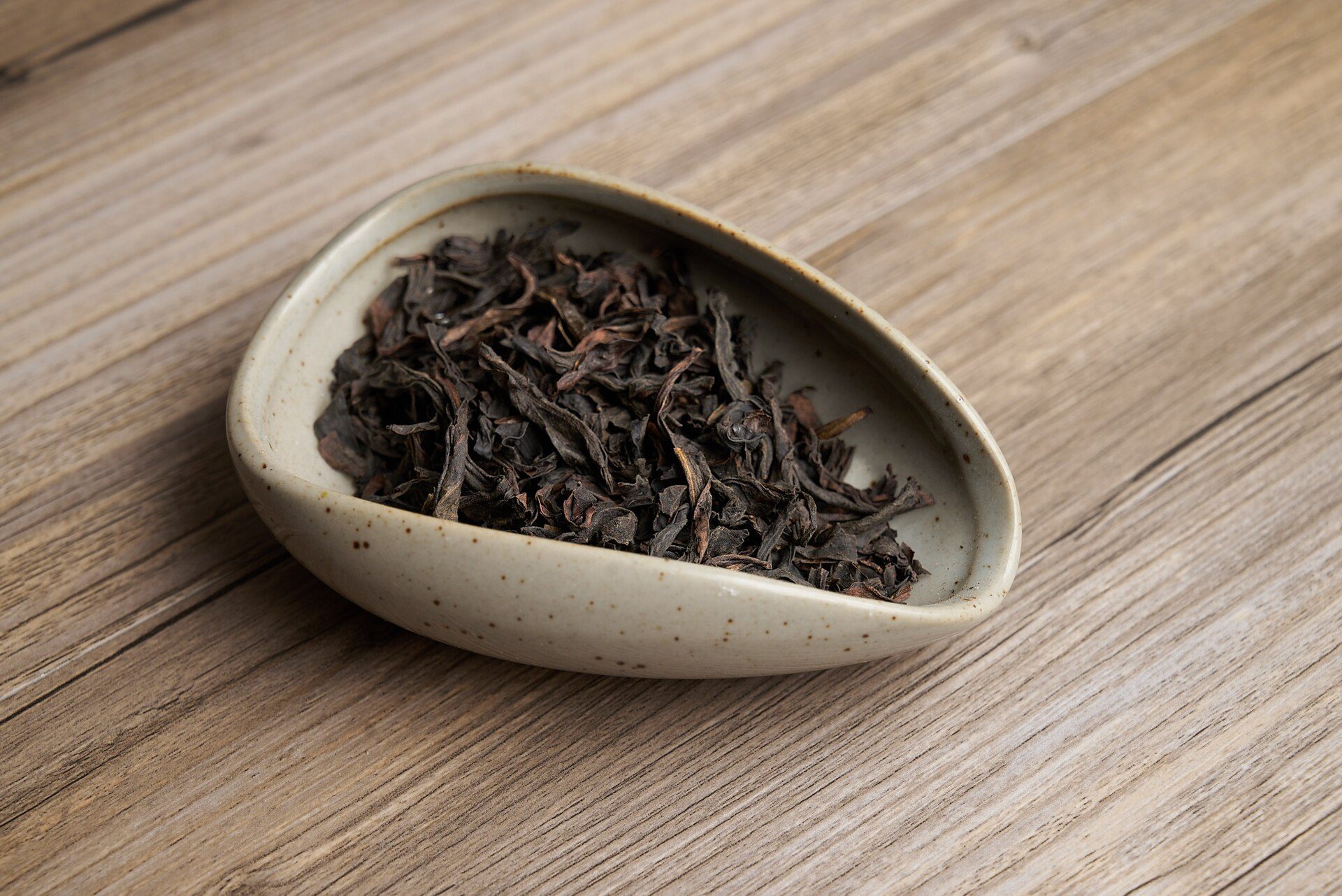
Photo: Nadav Spiegelman / Wikimedia Commons, CC BY-SA 4.0
Cold brewing tea: when and how
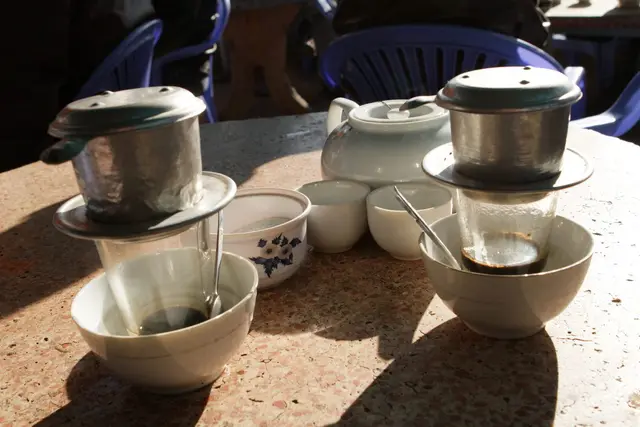
Cold brewing means steeping tea in cool filtered water in the fridge for many hours instead of in hot water for a few minutes. Cold water extracts fewer tannins, so the tea tastes mellow and less astringent, which suits fruit teas (see Figure 4).
Cold brew process for a shop
- Weigh the tea at about 12–20 g per litre; use the top of the range for a milk tea base.
- Put the tea in a clean lidded container or a large filter bag, add cool filtered water and stir until the leaves are submerged.
- Seal, label with the start time and put it straight into the fridge. Green tea usually steeps about 6–8 hours; black tea and oolong about 8–12 hours.
- When time is up, strain out the leaves, pour into a clean container, label with the straining time and keep refrigerated.
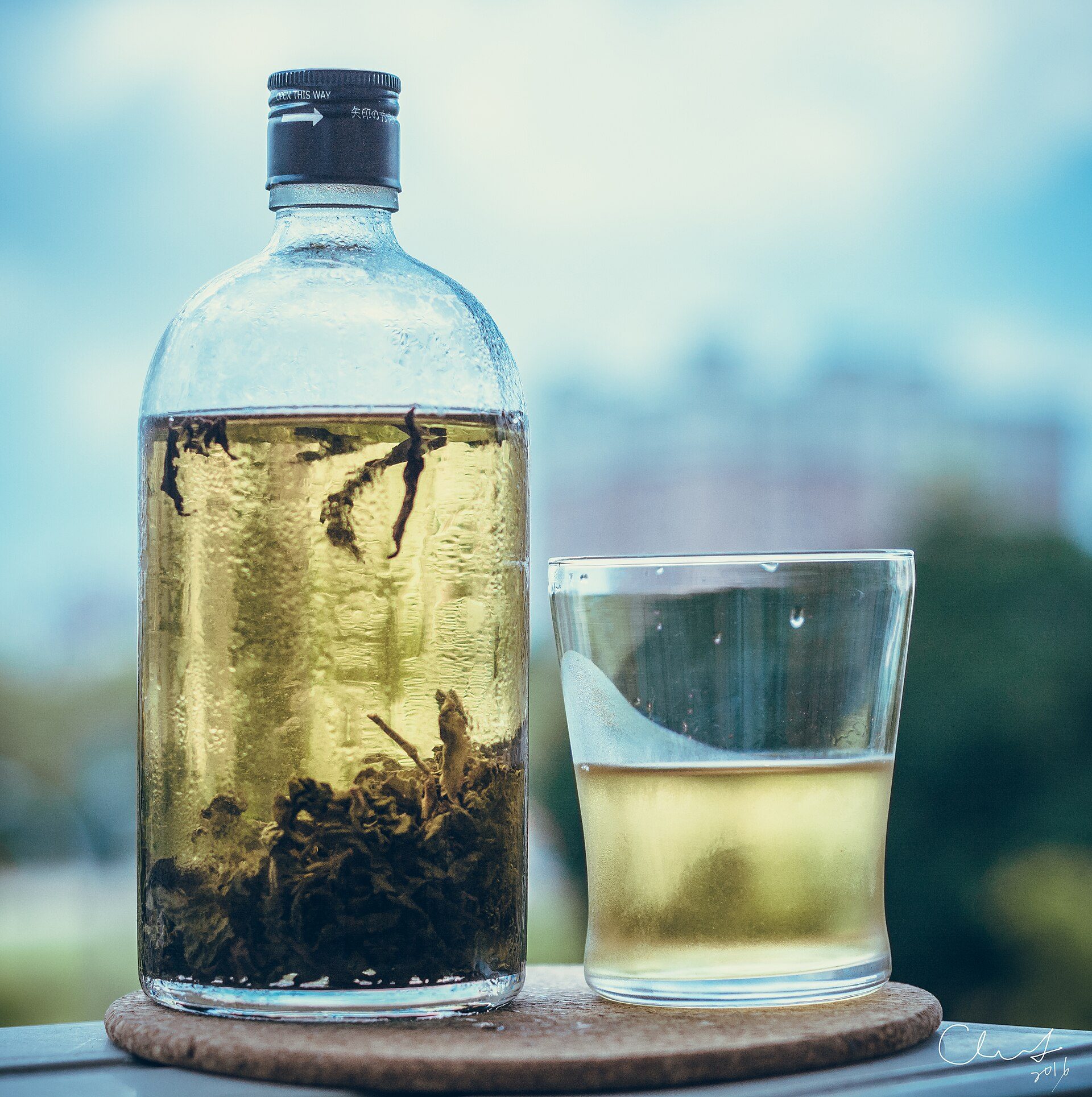
Photo: ありわかだ... from Taichung,Taiwan, Taiwan,R.O.C / Wikimedia Commons, CC BY-SA 2.0
Food safety for cold brew
Cold brewing has no hot water stage, so containers, tools and water must be very clean. Do not cold brew at room temperature: a counter at 28–35°C in a Vietnamese summer for many hours gives microbes ideal conditions. The same principle applies to cold brew coffee (see How to make cold brew: ratio, steeping time, storage and cup price). Strained cold brew tea stays in the fridge and is used within your shop's internal time limit, usually the same day; once poured into a dispenser on the counter, count its time like hot-brewed tea, 4 hours at most.
Holding base tea during a shift: why no longer than 4 hours
The rule in this roadmap is that brewed base tea is used within 4 hours at most, then any leftover is poured away and a new batch is brewed. It is a quality and hygiene standard that many shops follow; some chains set a shorter limit. Follow your workplace's standard if it is stricter.
How tea changes when it sits
After a few hours the aroma fades, the tea keeps oxidising so the colour darkens, and the taste goes flat, slightly sour or "stale". Cooled tea left on a hot counter, in a container opened constantly and scooped with an unclean jug, is easily contaminated. Never sell tea kept overnight.
Rules for holding tea at the counter
- One batch per container, clearly labelled with brewing time and expiry time.
- Never top up an old container with new tea: the old tea gets extra time, and nobody knows how old that container really is.
- At the end of a batch or when time is up: pour away, wash the container with hot water and detergent, rinse well and let it dry before the next batch.
- Keep containers lidded and pour through the tap or with a clean jug used only for tea; never dip customer cups into the container.
Batching by sales hours
Divide the trading day into 4-hour blocks, brew just enough for each block and record leftover tea at the end of each batch to adjust the next one.
Worked example: a brewing schedule for a kiosk selling 120 cups a day
The kiosk is open 10:00–22:00 and sells an average of 120 tea drinks a day: 90 milk teas made with black tea, 150 ml of base tea each, and 30 fruit teas made with jasmine green tea, 120 ml of base tea each. The kiosk keeps the 4-hour rule, so it brews 3 batches of each tea, assuming sales are spread evenly across the day.
Base tea needed
- Black tea: 90 cups × 150 ml = 13,500 ml = 13.5 litres a day, in 3 batches of 4.5 litres.
- Green tea: 30 cups × 120 ml = 3,600 ml = 3.6 litres a day, in 3 batches of 1.2 litres.
Dry tea and water per batch
Black tea uses 25 g per litre of water. Each batch uses 120 g of tea with 4.8 litres of water (120 ÷ 4.8 = 25 g/litre). The leaves hold about 120 × 2.5 = 300 ml, so the yield is 4,800 − 300 = 4,500 ml, exactly the 4.5 litres needed per batch.
Jasmine green tea uses 24 g of tea with 1.26 litres of water, about 19 g/litre, within the 15–25 g range in the table. The leaves hold 24 × 2.5 = 60 ml, giving 1,260 − 60 = 1,200 ml, exactly 1.2 litres per batch.
| Batch | Start brewing | Strained – use until | Black tea | Jasmine green tea |
|---|---|---|---|---|
| 1 | 9:45 | 10:00 – 14:00 | 120 g + 4.8 litres water → 4.5 litres | 24 g + 1.26 litres water → 1.2 litres |
| 2 | 13:45 | 14:00 – 18:00 | 120 g + 4.8 litres water → 4.5 litres | 24 g + 1.26 litres water → 1.2 litres |
| 3 | 17:45 | 18:00 – 22:00 | 120 g + 4.8 litres water → 4.5 litres | 24 g + 1.26 litres water → 1.2 litres |
| Whole day | 360 g + 14.4 litres → 13.5 litres | 72 g + 3.78 litres → 3.6 litres |
Each batch starts at :45: 12 minutes of steeping and 3 minutes of straining, finishing right at the changeover, so no batch is used more than 4 hours after straining. Check: 13.5 litres ÷ 150 ml = 90 cups; 3.6 litres ÷ 120 ml = 30 cups.
Tea cost per cup (2026 reference, varies by region and supplier)
Assume the kiosk pays 250,000 VND/kg for black tea (about US$10) and 300,000 VND/kg for jasmine green tea; on the Vietnamese market, beverage-grade tea ranges widely, about 150,000–500,000 VND/kg depending on type and brand. Black tea: 360 g × 250,000 VND/kg = 90,000 VND a day, divided by 90 cups = 1,000 VND per cup. Green tea: 72 g × 300,000 VND/kg = 21,600 VND a day, divided by 30 cups = 720 VND per cup. Total tea spend per day: 90,000 + 21,600 = 111,600 VND. Tea is a cheap part of the cup cost; brewing it weak to save money loses more customers than it saves. Replace these figures with your shop's real invoices.
Common base tea mistakes and how to fix them
Astringent, bitter tea that dries the mouth
Signs: a puckering tongue, a harsh bitter finish, milk tea that needs lots of sugar to be drinkable. Causes: water too hot for green tea or light oolong; steeping too long; constant hard stirring; squeezing the leaves when straining; keeping tea hot for too long. Fix: measure temperature with a thermometer, time the steep and strain as soon as the timer rings, letting the liquid drain on its own. If the settings are right and it is still astringent, cut the steep by 1–2 minutes rather than cutting the amount of tea.
Tea that goes weak over ice
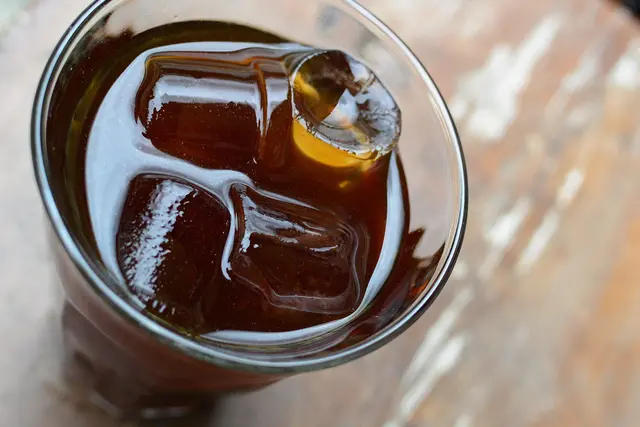
Signs: the drink tastes right when made, but after 10–15 minutes of delivery it is watery. Causes: base tea brewed too weak; hot tea poured straight onto ice so the ice melts fast; too much ice for the recipe. Fix: brew a stronger base, at the top of the table range, because ice will always dilute it; cool the base before making cold drinks; portion ice with a scoop or by the cup line. Figure 5 shows a deep-coloured iced tea with the ice cubes still whole: that is what you want the customer to receive.
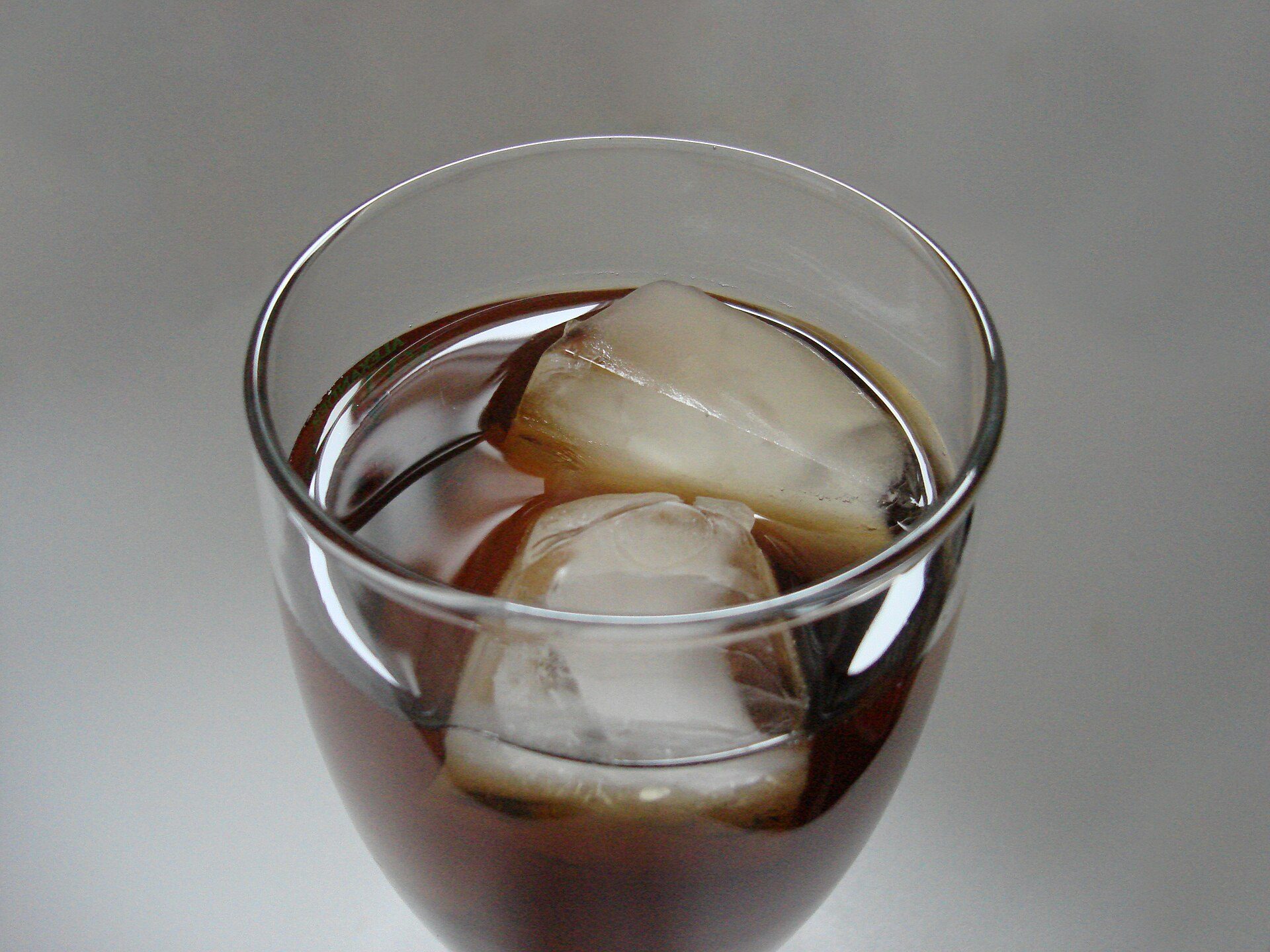
Photo: Editor at Large / Wikimedia Commons, CC BY-SA 2.5
Cloudy tea
Causes: poor straining that leaves fine particles, hard stirring, strong black tea cooled slowly (some compounds in tea clump together as it cools), or a problem with the water. Fix: strain through a cloth bag or fine sieve, cool quickly in an ice bath, and check the filtered water. Cloudy tea that also smells sour goes down the drain.
Stale, sour or odd-smelling tea
Causes: using tea older than 4 hours; topping up old containers with new tea; containers not cleaned of residue; dry leaves that got damp or picked up smells in storage. Fix: keep the 4-hour rule and one batch per container; wash the container at every changeover; store tea in airtight containers somewhere cool and dry, away from chemicals.
Frequently asked questions
How long should I steep black tea for milk tea?
Usually 10–15 minutes with 95–100°C water, at about 20–30 g of tea per litre. Broken leaf releases flavour faster, so start at 10 minutes; larger leaves may need up to 15. Read the pack instructions, brew a test batch, taste, then fix one number for your shop.
What is the tea-to-water ratio for milk tea?
A starting point for a strong base: black tea 20–30 g per litre, oolong 20–25 g, green tea 15–25 g. Milk tea uses the top of the range because milk and ice dilute it; fruit tea uses the low end so the fruit still comes through.
How long does brewed tea keep? Can I keep it overnight?
Under this roadmap's standard, hot-brewed base tea is used within 4 hours at most, then poured away. Strained cold brew tea stays in the fridge and is used within your shop's internal limit, usually the same day. Never sell tea that has been left out overnight.
Practice and self-assessment
- Brew black tea at 25 g per litre with 95–100°C water for 8, 12 and 16 minutes; compare colour, taste and pick the best time for milk tea.
- Brew green tea for 8 minutes with 80°C water and with just-boiled water, and compare the bitterness.
- Draw up a brewing schedule for a kiosk selling 60 milk teas a day (150 ml of base tea each), open 8 hours, with calculations for grams of tea, litres of water and base tea yield per batch.
Self-assessment criteria
- Pass: you weighed, measured temperature and timed; the base tea is clear and not harshly bitter; you can taste that the 16-minute sample is more astringent than the 12-minute one.
- Pass: every container is labelled with brewing time and expiry time, none is over 4 hours, and no new tea was added to an old container.
- Pass: the schedule adds up: grams of tea, litres of water, the water held by the leaves, and enough base tea for the number of cups.
- Not yet: brewing "by eye" without weighing, squeezing the leaves, pouring boiling water on green tea, or keeping tea overnight.
Once you can brew a consistent base tea that tastes right across a whole shift, move on to the next roadmap step: Tapioca pearls, jellies & cheese foam, where you cook chewy pearls without hard centres, make jellies and pudding, and whip cheese foam to combine with your base tea into a finished drink. To read ahead, see How to cook black tapioca pearls: chewy, no hard centres.
Keep learning bubble tea making: after base tea come pearls, jellies and cheese foam, milk tea recipes, fruit teas, yogurt drinks and blended ice, portioning and costing, and the 10-item menu project. See the 8-step bubble tea and beverage maker roadmap.