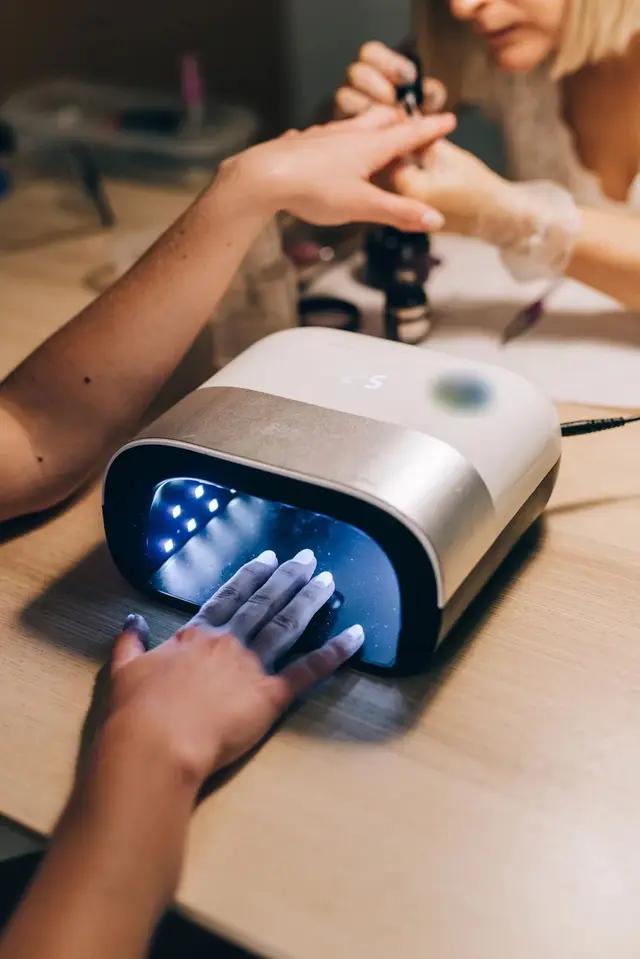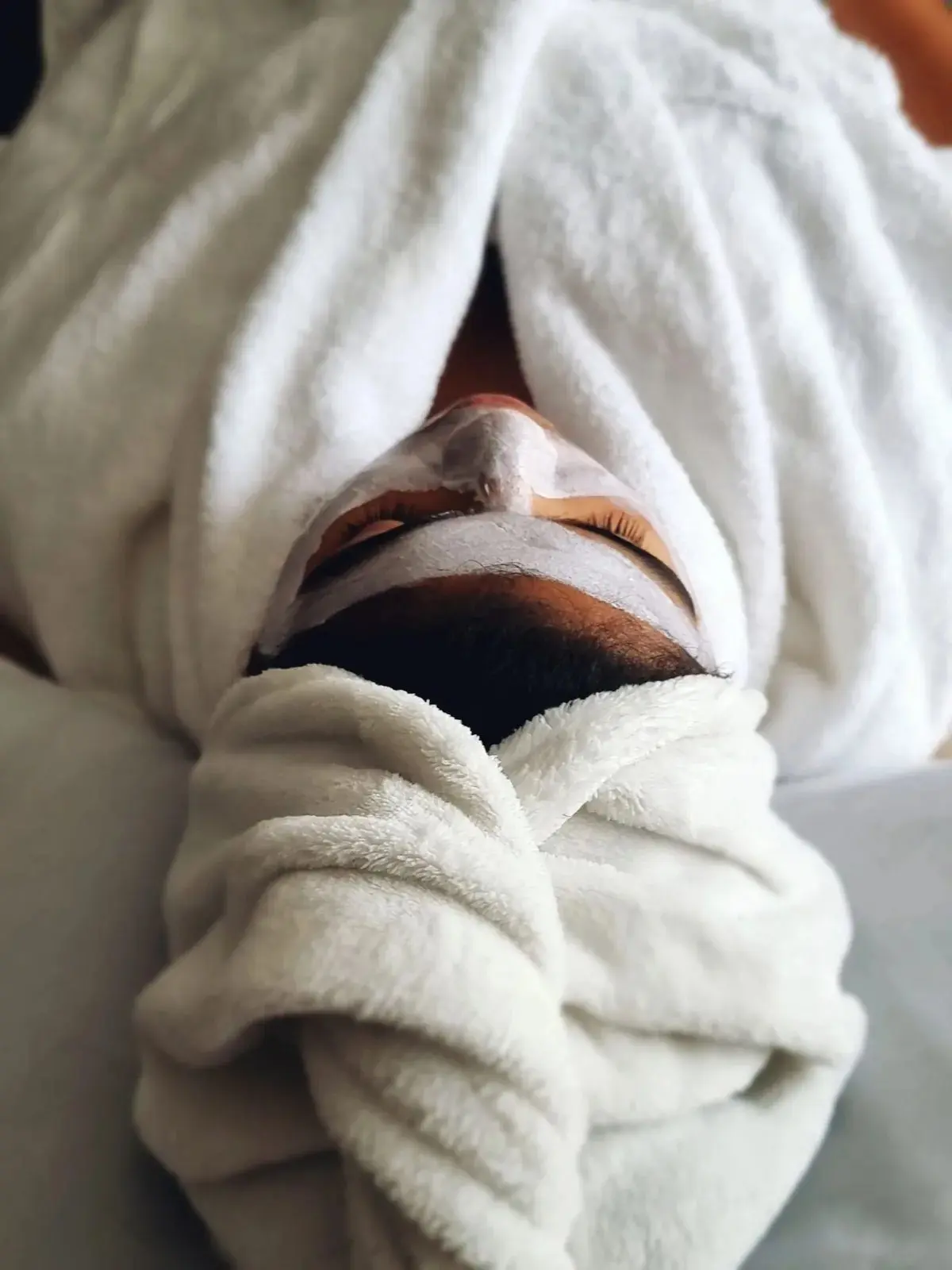
A new client is lying on your couch for her first facial. You have just removed her cleanser, and the protocol says "hot towel". You open the towel cabinet, grab the top towel with your fingers, and it is so hot you nearly drop it. If it feels like that in your hand, think what it would feel like on the thin skin around her eyes.
Hot towels look simple, but they are one of the easiest ways to burn a client or pass dirt from one person to the next. Done well, a warm towel helps lift cleanser and mask residue, feels comforting, and signals that the client can relax. Done carelessly, it can leave red marks, and a towel that was not laundered or stored correctly can smell sour and carry germs.
This guide shows trainee spa therapists how to choose, heat, store, test and apply hot towels on the face, hands, feet and body, how to keep the towel warmer clean, who needs extra care, and what to do if a towel is too hot.
Scope of this guide. This article covers warm, damp towels used during cosmetic spa treatments. It is not about medical heat treatment, and a spa therapist does not diagnose skin conditions. Times and other figures here are for reference only. Your equipment manufacturer's instructions, your spa's written protocol and local hygiene rules always come first. Practise towel handling and temperature testing under supervision before using hot towels on paying clients.
What hot towels are used for in a spa
Spas use warm, damp towels at several points in a treatment:
Facials: to remove cleanser, exfoliant or a mask, and as a short warm compress before the next step if your protocol includes one.
Hands and feet: to wipe off scrubs or masks during a manicure or pedicure, or to wrap hands and feet for a few minutes after a hand or foot mask.
Body and back treatments: to remove excess oil after a massage, or scrub residue from an area of the body that cannot be rinsed in a shower.
Welcome and finishing touches: some spas offer a small warm towel to clean the hands when the client arrives, or at the end of the treatment.
Warmth makes a towel feel comforting and helps soften oily residue so it wipes away more easily. Be careful how you describe this to clients: avoid promises such as "the heat opens your pores" or "it detoxes your skin". Pores do not open and close like doors, and a hot towel is a comfort and cleansing step, not a treatment for any condition.
Choosing and preparing the right towels
Size and material
Most spas keep two or three sizes:
Small face towels (sometimes called washcloths or face cloths) for the face, neck and hands.
Hand towels for feet, arms and the back.
Large bath towels and sheets for draping, which are not heated as compresses.
Cotton terry towels are the usual choice because they hold water and heat evenly. White or light towels are practical because stains, make-up and leftover product are easy to see, so you notice when a towel needs extra washing or should be replaced. Keep hot-towel stock separate from towels used for floors, feet in the foot bath or cleaning equipment. Many spas use a different colour for those jobs so they never get mixed up.
How many towels you need
Plan at least one fresh towel for each time a towel touches the skin, plus a spare. For a facial with two towel steps you might lay out three small towels for that client (for reference; your protocol decides). A towel that has touched one client goes into the laundry, even if it was only used for a few seconds and looks clean.
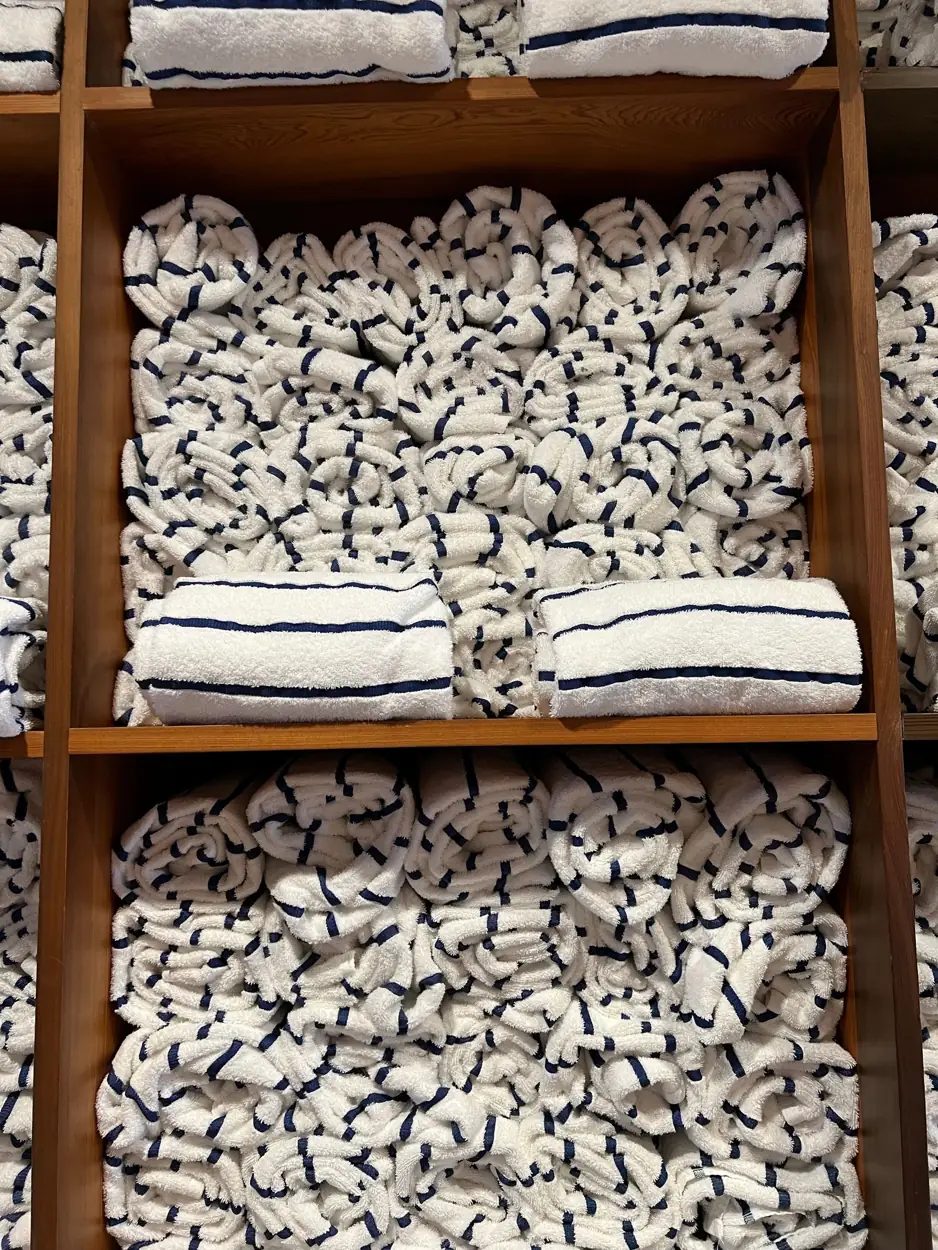
Figure 1. Rolled white towels with navy stripes stacked on open wooden shelves. Clean towels should be stored fully dry, in a clean area away from the used-linen basket, and you take only what you need for each client. (Photo: Lauren Cuddy, Pexels)
Before heating
Wash your hands before you touch clean towels.
Check each towel: no stains, no loose threads, no hard or rough patches, no smell of old oil or damp. Put any doubtful towel aside for re-washing.
Dampen with clean water only. Wring it out well: it should be damp, not dripping. Water that drips can run into the client's eyes, ears or hair, and a soaking towel holds more heat than a damp one.
Fold or roll the towel the way your spa does. Rolling tightly keeps the heat in until you use it. Some spas add a drop of a fragrance or essential oil to the water. Only do this if your protocol allows it, check the client's allergies first, and never use it on clients who have asked for fragrance-free treatments.
Ways to heat towels
Hot towel cabinet (towel warmer)
The towel cabinet is the standard spa method. It is a small heated box with a rack, a door and usually a drip tray, and some models also have a UV lamp. You load damp, rolled towels and the cabinet keeps them hot until needed.
How to use one correctly:
Read the manual. Find out how hot it gets, how long it needs to warm up, how many towels it holds, and how to clean it. The inside and the rack can be hot enough to burn your fingers.
Do not overload it. Towels packed too tightly heat unevenly, so one towel may be lukewarm and the next too hot.
Use only clean towels that came straight from the laundry, not towels you have already used.
Keep the door closed between uses so the temperature stays stable.
Empty and clean it every day. At the end of the day, take out all towels (even unused ones go to the laundry), switch off and unplug the cabinet, let it cool, empty the drip tray, wipe the inside and rack with a cleaner and disinfectant your spa approves for that surface, and leave the door open so it dries. Warm, damp, closed boxes are ideal for mould and bacteria to grow.
Do not rely on the UV lamp to make towels clean. UV light only reaches surfaces it shines on directly. The towels must already be clean when they go in.
Towel steamer and hot water
Some spas use a towel steamer (a container that heats water and passes steam through the towels) or soak towels in hot water and wring them out. These work, but they need extra care:
Never wring a towel out of very hot water with bare hands. Use tongs and let it cool a little, or wear heat-resistant gloves if your spa supplies them.
Water left standing in a steamer or bowl should be emptied and the container cleaned as the manufacturer and your spa require. Do not top up old water day after day.
Microwave
Some people heat damp towels in a microwave at home. In a spa it is risky: microwaves heat unevenly, so a towel can feel warm on the outside and have very hot spots inside. Many spas do not allow it. If your workplace does, follow its written method exactly, and always unroll, shake and test the towel before it goes near the client.
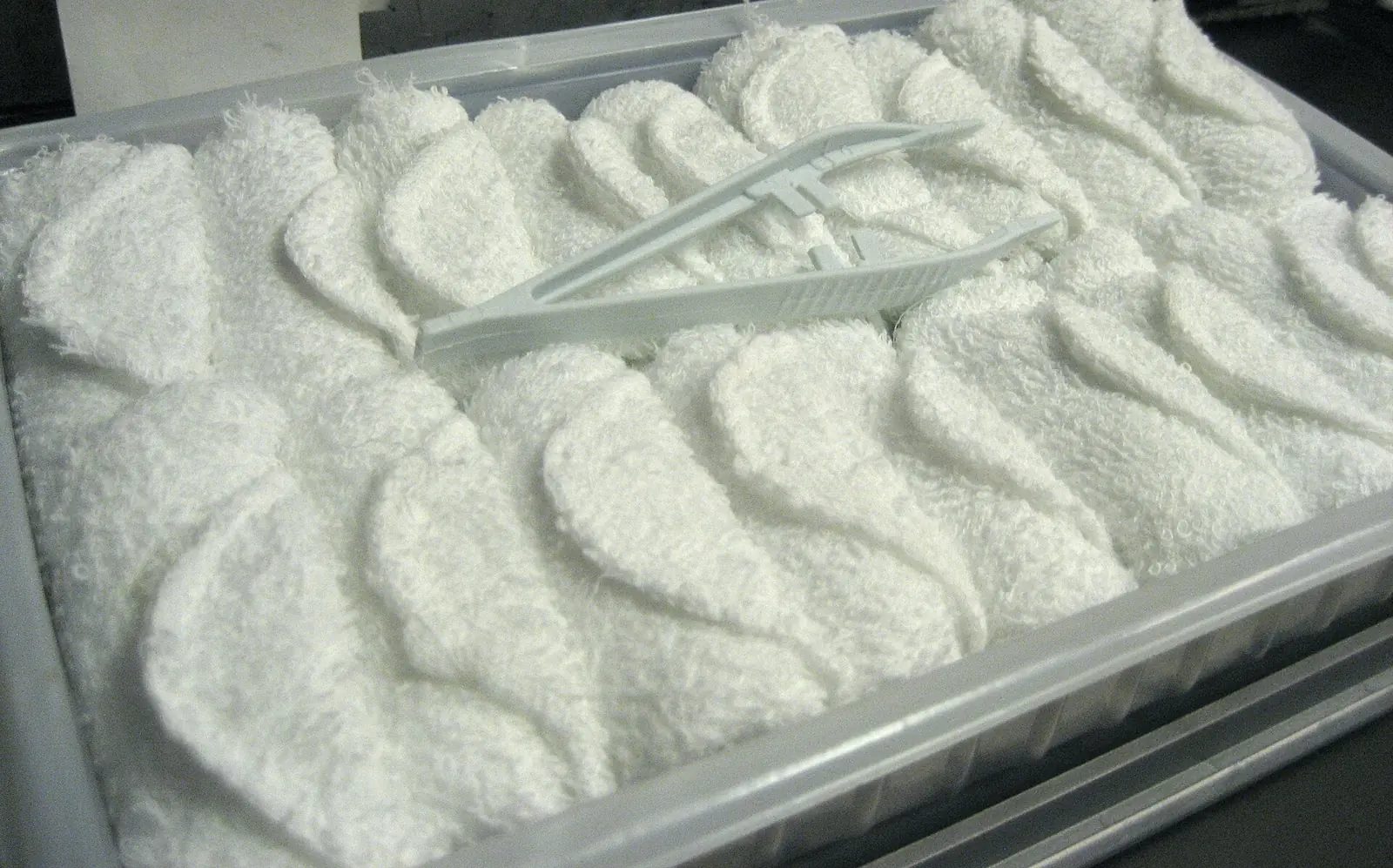
Figure 2. Folded white terry towels packed in a plastic tray with a pair of plastic tongs resting on top. Tongs let you lift a hot, damp towel without touching it with your fingers, which protects your hands and keeps the other clean towels untouched. (Photo: Christopher Doyle, Wikimedia Commons, CC BY-SA 2.0; cropped)
Reference table: heating methods compared
Method | Advantages | Main risks | Hygiene notes (for reference; follow your spa's protocol) |
|---|---|---|---|
Hot towel cabinet | Towels ready at a steady heat; easy during busy shifts | Towels and inside surfaces can be far too hot for skin; uneven heat if overloaded | Load only clean towels; empty, clean and dry the cabinet daily; UV lamp does not replace laundering |
Towel steamer | Heats towels quickly; holds a few towels at a time | Hot steam and water can scald your hands; towels may be wetter than needed | Empty and clean the water container as the manufacturer instructs |
Hot water bowl | No special equipment | Scalding when wringing; water cools fast, so temperature changes from towel to towel | Fresh water for each client; clean bowl between clients |
Microwave | Fast | Hot spots inside the towel; fire risk if a towel is dry or has oil on it | Often not allowed in spas; use only if your workplace has a written method |
Room temperature or cool towel | No burn risk | May feel less comforting in a cool room | Same laundering rules as hot towels |
How to test the temperature, step by step
There is no single "correct" towel temperature, because each client feels heat differently and the face is more sensitive than the back. Testing is a habit, not a one-off check. Do it every time, even if the last towel from the same cabinet was fine.
Lift the towel with tongs, not your fingers, and carry it on a clean tray or bowl.
Unroll it and shake it out once or twice away from the client, so trapped steam escapes. The middle of a rolled towel is usually hotter than the outside.
Test on the inside of your wrist or forearm. The palm of your hand is less sensitive and will fool you. Hold the towel against your skin for a few seconds. It should feel pleasantly warm, never "hot enough to make you pull away".
Refold the towel so the side you will place on the client is the one you tested.
Check with the client before covering a sensitive area. Touch the towel lightly to a less sensitive spot such as the neck, upper chest or forearm and ask: "How does this temperature feel? Too hot, or comfortable?"
Adjust: if the client says it is warm but fine, continue. If they hesitate or say "a bit hot", wave it in the air or let it cool for a few more seconds and test again. Never argue a client into accepting a towel.
Some spas use a non-contact (infrared) thermometer to check towels or cabinet surfaces. If yours does, follow the maximum temperature set in your spa's protocol. A thermometer helps, but it does not replace your own wrist test and the client's answer.
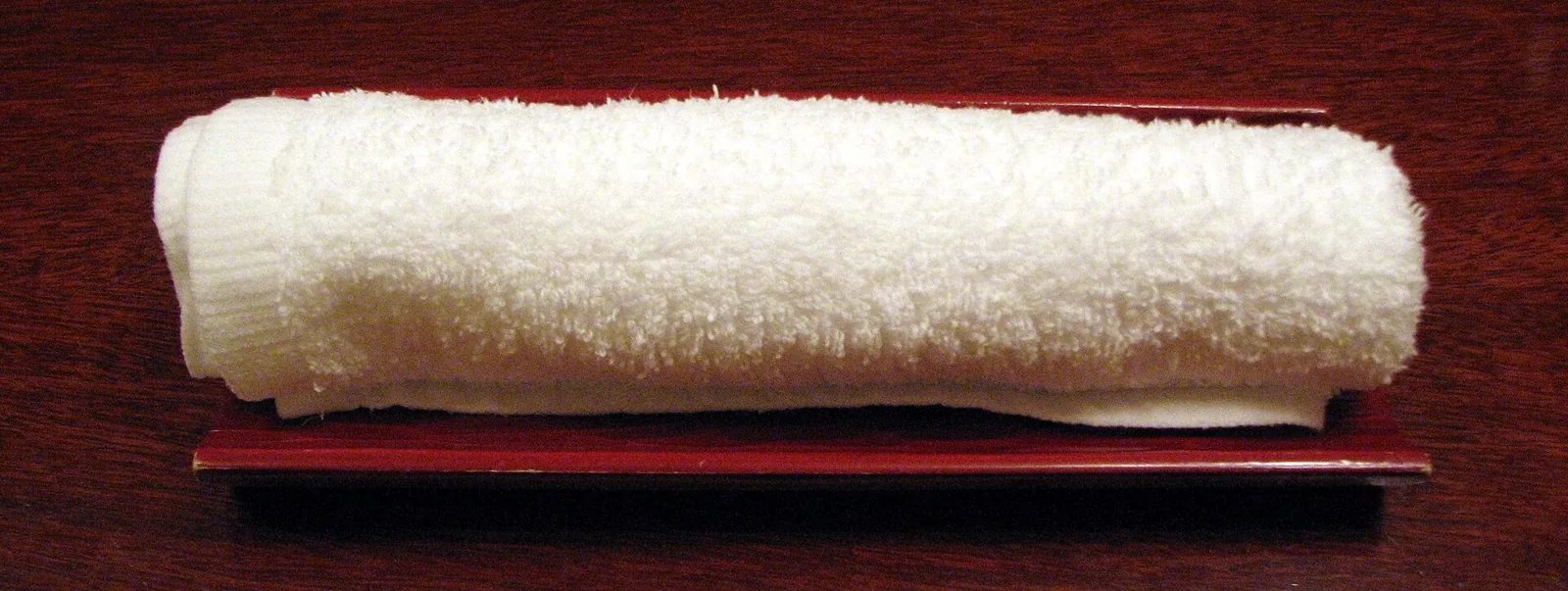
Figure 3. A single white towel rolled tightly and laid on a small tray. Rolling keeps the heat in until you are ready, so always unroll it, let the steam out and test it on your wrist before it touches the client. (Photo: Chris 73, Wikimedia Commons, CC BY-SA 3.0)
Applying a hot towel during a facial
Step 1: prepare the client
Explain what you are going to do: "I'm going to place a warm towel over your face for a few seconds, leaving your nose free. Tell me straight away if it's too warm." Make sure the client's hair is protected by a headband or wrap, that contact lenses, if worn, have been taken out if your protocol requires it, and that the client is comfortable lying flat.
Step 2: prepare the towel
Test the towel as described above. Fold a small towel lengthways so it is long enough to cover from chin to forehead.
Step 3: place it, leaving the nose free
A common technique is to place the middle of the towel on the chin, then bring each side up over the cheeks, and the ends over the forehead, so the nose and nostrils stay uncovered. Some clients feel anxious with their face covered. In that case, cover only the lower face, or the cheeks and forehead, or skip the compress.
Step 4: press gently
Rest your palms lightly over the towel on the cheeks and forehead, without pushing on the eyes. Leave it in place for a short time, often well under a minute (for reference; your protocol decides). Watch the client's breathing and body language.
Step 5: remove and wipe
Lift the towel or use it to wipe the product away: start at the centre and work outwards, using gentle strokes with a fresh part of the towel for each area. Do not scrub, especially around the eyes. Wipe the eye area last with a clean part of the towel or with damp cotton pads.
Step 6: check the skin
Look for redness that is more than a light, even pink flush, or that does not fade within a few minutes, and ask the client how her skin feels. Note anything unusual on the record card.
Step 7: put the used towel straight into the laundry basket
Do not lay it on the trolley, the couch or the client's clothes. Used towels go into a lidded laundry container right away.
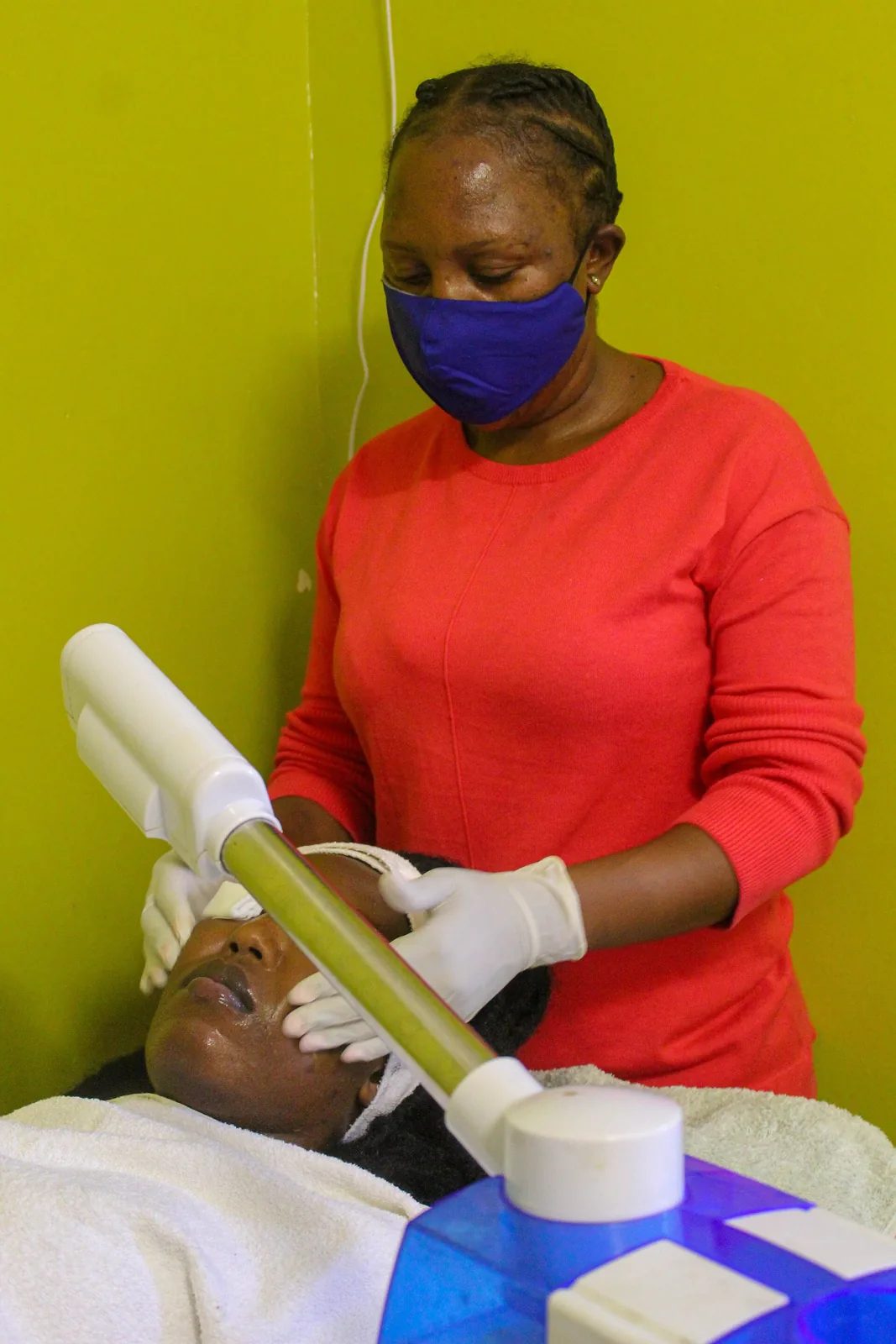
Figure 4. A therapist in a face mask and disposable gloves works on a client whose eyes are covered with pads, while a facial steamer points towards her face. A steamer is a separate heat source from hot towels: keep it at the distance its manufacturer specifies, and do not pile one heat step on top of another without checking the client's skin. (Photo: Kolobetsoo, Wikimedia Commons, CC BY-SA 4.0)
Hot towels for hands, feet and the body
Hands and feet
After a hand or foot mask or scrub, you can wipe the area clean with a warm towel, or wrap the hand or foot in a warm towel and then in a dry towel or mitt to hold the heat for a few minutes. Before you wrap:
Check the skin for cuts, cracks or areas the client cannot feel well. Clients with reduced feeling may not notice when a towel is too hot.
Test the towel as usual. Hands and feet feel heat less quickly than the face, but they can still burn.
Keep wrapping loose enough that it does not press on the fingers or toes.
Back and body
After a back massage or body scrub, a hand towel can remove oil or scrub residue from areas that cannot easily be rinsed. Work one area at a time, keep the client covered with a dry towel everywhere else so they do not get cold, and use a fresh towel when the first is no longer warm or is full of product. Do not lay a hot towel over a large area, such as the whole back, and leave it there, unless your protocol includes that step and you have tested the heat carefully.
Who needs extra care, or no hot towel at all
You are not diagnosing anything here. You are noticing situations where heat could harm the skin, and you are following your spa's rules. When in doubt, use a lukewarm or cool towel, or skip the step.
Reduced feeling in the skin (for example, some clients with diabetes, nerve conditions or poor circulation). They may not feel a towel that is too hot. Use only lukewarm towels and check the skin often.
Broken, sunburnt or very irritated skin, open spots or rashes. Do not apply heat to these areas.
Recent waxing, strong exfoliation, peels, laser or other cosmetic procedures. Heat can make the skin feel worse. Follow the aftercare advice the client was given by the person who did the procedure, and your spa's waiting periods.
Clients who flush easily or who tell you that heat makes their face red and hot. Use a cooler towel and keep contact short.
Clients who feel uncomfortable with their face covered. Leave the face partly uncovered or skip the compress.
Clients who cannot easily tell you how it feels, or who are very sleepy. Keep the towel lukewarm and watch closely.
Any client who says no. A towel step is always optional.
If a towel is too hot or the client reports burning
Remove the towel immediately. Do not wait to "finish the step".
Cool the area with cool, clean water or a cool damp towel, following your spa's first-aid procedure. Do not use ice directly on the skin, and do not apply oils, creams or other products to the area.
Look at the skin and listen to the client. Light pinkness that fades quickly is different from strong redness, swelling, pain or blistering.
Get help. Tell your supervisor or the first aider. If the skin blisters, the pain does not settle, or the area is large, the client should get medical advice. Do not burst blisters.
Record it in the incident log and on the client's card: what happened, which towel method was used, what you did and what advice you gave.
Check the equipment: was the cabinet set too high, overloaded, or was a towel from the centre of the stack missed during testing? Fix the cause before the next client.
Hygiene: towels, tongs and the towel cabinet
One towel, one client. Never reuse a towel on another client, and never put a used towel back into the cabinet.
Clean hands, clean tongs. Wash your hands before handling clean towels. Clean and disinfect tongs according to your spa's procedure, and keep them on a clean tray, not on the trolley next to used items.
Laundry: used towels go into a lidded container and are washed as your spa or laundry service specifies, usually on a hot cycle with a detergent that removes oil. Towels must be completely dry before they are folded and stored.
Oily towels and dryers: fire services in several countries have warned that towels with oil residue can heat up by themselves after tumble drying. Follow your laundry's instructions, let the dryer finish its cool-down cycle, and do not leave hot, oily towels piled up in a basket.
Sour or musty smell means towels were stored damp, left too long in the cabinet, or still contain oil. Re-wash them; if the smell stays, they need replacing.
The cabinet is emptied, cleaned, dried and left open at the end of every working day.
Safety and hygiene checklist
Before the shift:
Towel cabinet clean, dry and switched on with enough time to warm up; drip tray empty.
Only freshly laundered, dry, unstained towels loaded; cabinet not overloaded.
Clean tongs and a clean tray or bowl ready.
Lidded laundry container in place in each room.
During each treatment:
Client's record checked for conditions or recent procedures that need extra care.
Hands washed before touching clean towels.
Towel lifted with tongs, unrolled, shaken and tested on your inner wrist.
Temperature checked with the client before covering the face.
Nose and mouth left uncovered; no pressure on the eyes.
Skin checked after removal; anything unusual recorded.
Used towel straight into the laundry container.
After the shift:
All towels removed from the cabinet, including unused ones.
Cabinet unplugged, cooled, cleaned, disinfected and left open to dry.
Tongs and trays cleaned; laundry sent; incidents recorded.
Common mistakes and how to fix them
Testing only the outside of a rolled towel, or testing with your palm. The centre is usually hotter and palms feel heat less. Unroll and shake the towel, then test on your inner wrist.
Covering the whole face straight away. Check the temperature on the neck or chest first, then the face.
Taking towels from the cabinet with your fingers. You risk burns and you touch the clean towels around it. Use tongs.
Leaving towels in the cabinet overnight. They start to smell and can grow mould and bacteria. Empty it every day.
Dripping towels. Water runs into the eyes, ears and hair. Wring towels well before heating.
Frequently Asked Questions
How hot should a hot towel be for a facial?
There is no universal number that suits every client. It should feel pleasantly warm on your inner wrist and comfortable to the client when tested on the neck or chest. If your spa uses a thermometer and sets a maximum temperature, follow that figure. If the client says it is too warm, it is too warm.
How long should a hot towel stay on the face?
Only briefly. Many protocols keep it on for well under a minute (for reference), and it should be removed earlier if the client feels too warm or uncomfortable. Follow your spa's protocol.
Can I reuse a hot towel if it only touched the client for a moment?
No. Any towel that has touched a client goes to the laundry. Even on the same client, a towel that has wiped the feet or body must never go back to the face.
Do hot towels open the pores?
Pores do not open and close like doors. Warmth and moisture can make skin feel softer and help loosen oily product so it wipes off more easily. Describe the towel as a comfort and cleansing step, and avoid medical or "detox" claims.
Should I wear gloves when using hot towels?
Follow your spa's protocol. Many spas ask therapists to wear gloves when touching broken skin, during extractions or when using certain products, and to wash their hands before handling clean towels. Gloves do not protect you from heat, so use tongs whatever you wear.
Why do my clean towels smell sour?
Usually because they were folded before they were completely dry, left damp in the cabinet, or still have oil in them. Re-wash, dry them fully and empty the cabinet every day.
Practice Exercises
Wrist test drill. With a supervisor, take five towels from the cabinet at different positions (top, middle, back). Unroll, shake and test each on your inner wrist, and describe the temperature. If your spa has a thermometer, compare your impression with the reading.
Face-wrap practice. On a colleague, practise placing a lukewarm towel on the face with the nose and mouth left free and no pressure on the eyes. Ask for feedback on comfort and how secure it felt.
Client script. Practise explaining the hot towel step in one or two sentences, including "tell me straight away if it's too warm". Then practise what you would say if the client said it was too hot.
Cabinet close-down. At the end of a training day, carry out the full cabinet close-down routine and have your supervisor check it against the checklist above.
Scenario quiz. For each client, decide whether to use a warm, lukewarm or cool towel, or none, and explain why: (a) a client who had a facial peel elsewhere two days ago; (b) a client with diabetes having a foot mask; (c) a client who feels panicky with her face covered; (d) a regular client with no concerns.