A client books a manicure and asks, "Can you add that warm wax thing for my hands? My skin is so dry." She means a paraffin wax treatment. Many spas in Vietnam and elsewhere offer it as an add-on to a manicure, pedicure or hand massage. It looks simple: melt the wax, dip the hand, wrap it up, peel it off. In practice it involves hot liquid, an electrical heater and a shared bath of wax, so it needs proper temperature checks, hygiene and client screening.
This guide walks trainee spa therapists through a paraffin treatment for hands and feet: screening, heater set-up, the dip and "no-dip" methods, timing, removal, cleaning and what to do if something goes wrong.
Scope of this guide. This article covers cosmetic paraffin wax treatments for the hands and feet in a spa or nail salon. It does not cover paraffin used in physiotherapy or medical treatment, and a spa therapist does not treat arthritis, joint pain or skin disease. Temperatures and times here are for reference only. The heater manufacturer's instructions, the paraffin product label, your spa's written protocol and local rules always come first. Practise under supervision before working on paying clients.
What a paraffin treatment is and what it does
Cosmetic paraffin is a soft, low-melting-point wax made for skin use. It is usually supplied as blocks, pellets or beads (Figure 1) and may contain added oils, vitamin E, or fragrance. It is melted and held at a steady warm temperature in an electric paraffin heater (often called a paraffin bath or wax bath).
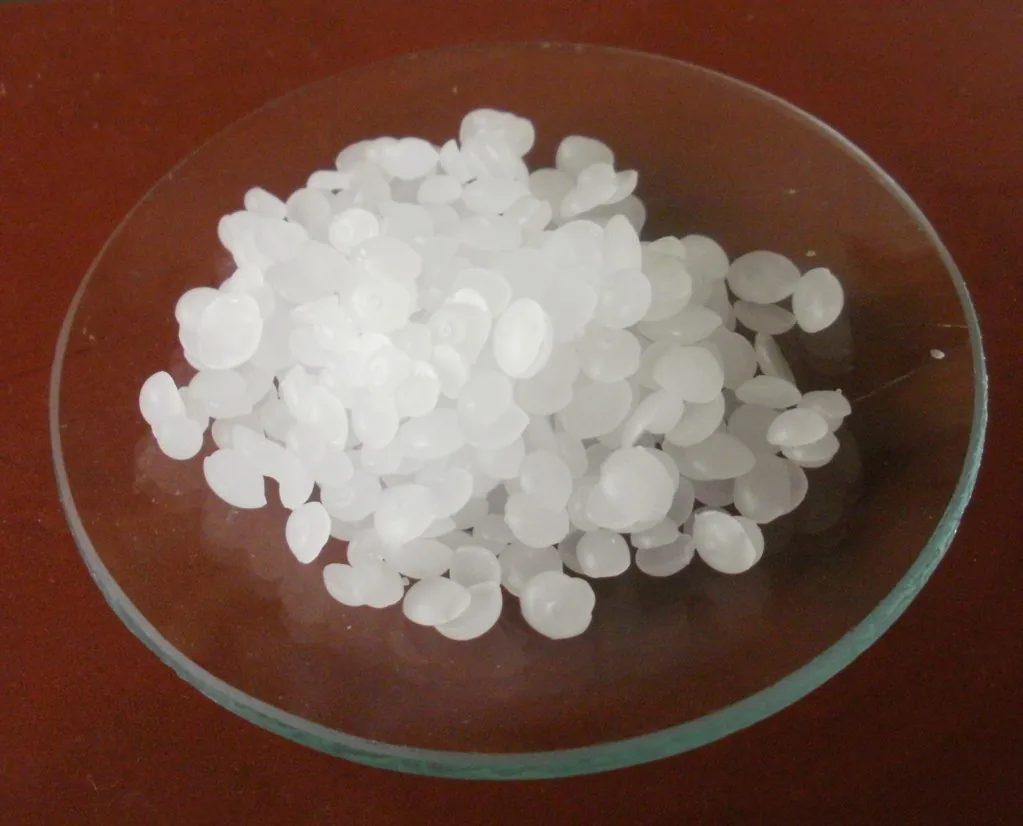
Figure 1. White paraffin wax pellets in a shallow glass dish. Cosmetic paraffin for spa use is sold in pellet, bead or block form and is melted in a thermostat-controlled heater, never on a stove. (Photo: Gmhofmann, Wikimedia Commons, CC BY-SA 3.0)
When the hand or foot is coated in several layers of warm wax and then wrapped, three things happen:
Warmth. The wax holds heat and releases it slowly, so the skin feels warm for several minutes. Most clients find this relaxing.
Occlusion. The wax forms a closed layer over the skin, which slows the loss of water from the surface. Any lotion or oil applied underneath stays on the skin for longer.
Softening. When the wax is peeled away, skin usually feels softer and smoother, and dry cuticles or heels are easier to work on.
Be honest with clients: paraffin is a comfort and skin-softening treatment. It does not cure cracked heels, eczema or joint problems. If a client wants heat for painful or swollen joints, suggest they ask their doctor or physiotherapist; in the spa you offer it only as a relaxing skin treatment.
Where it fits in a service
Paraffin is most often added to:
a manicure or spa manicure, after nail shaping and cuticle care and before nail polish (wax leaves oil on the nail plate, so polish goes on afterwards, once the nails have been cleansed);
a pedicure, after the foot soak, callus care and nail work;
a hand or foot massage, either before (to warm the skin) or after (to seal in the massage cream).
Follow your spa's menu. Some spas give it as a stand-alone 20–30 minute treatment (for reference).
Who should not have paraffin today
Ask these questions in the consultation every time, not only at the first visit, and record the answers. Look at the skin yourself as well; clients sometimes forget a small cut or a recent burn.
Do not do paraffin on that area
Open cuts, grazes, cracked skin that is bleeding, scabs, blisters or any broken skin.
Signs of skin infection, such as weeping areas, pus, spreading redness, or suspected fungal infection, warts or athlete's foot on the area to be treated. Do not diagnose; simply say the treatment is not suitable today and suggest they see a doctor or pharmacist if they are worried.
Sunburn, burns or a rash on the area. In Vietnam, clients who ride a motorbike every day may have sunburn on the backs of their hands and feet without noticing.
Freshly waxed, shaved or exfoliated skin that is red or stinging.
Known allergy or reaction to paraffin, the added fragrance, or any ingredient listed on your product.
Ask more and check with your supervisor before going ahead
Reduced feeling in the hands or feet (numbness or tingling), for example from diabetes or nerve problems. If the client cannot feel heat properly, they cannot tell you the wax is too hot. Many spas only offer paraffin to these clients with their doctor's agreement, or not at all.
Poor circulation or a circulatory condition, swelling of the hands, feet or ankles without a known cause, or varicose veins on the area for foot treatments.
Recent injury, surgery or swelling on the hand, wrist, foot or ankle.
Heat sensitivity, for example a client who has been told to avoid heat treatments, or who has a skin condition that flares with heat.
Pregnancy. A short warm hand treatment is usually considered low risk, but follow your spa's policy and the product label.
Children and teenagers. Follow your spa's minimum age rule and get a parent or guardian's consent.
If you are unsure, do not do the paraffin. Offer a hand or foot massage with cream instead, or a cool hydrating mask.
Equipment and products
For one hand or foot paraffin treatment you need:
A paraffin heater with a thermostat, a lid and, ideally, a temperature display. Hand units are small; foot treatments need a larger unit or the brush/pour method below.
Cosmetic paraffin made for skin, from a supplier that gives the ingredient list and recommended temperature. Do not use candle wax or industrial paraffin.
A separate thermometer to check the wax temperature. Built-in thermostats can drift.
Hand sanitiser suitable for skin, plus soap and water for the client to wash with.
Lotion, cream or oil to apply before the wax (check your product's instructions; some brands prefer clean, dry skin).
Plastic liners: single-use plastic bags or mitts for hands, and larger foot liners or booties.
Insulated mitts and booties (terry cloth or thermal), or warm towels, to keep the heat in. Use a clean set for every client, or a washable liner inside.
A clean brush, ladle or small disposable cup if you use the no-dip method.
Paper towels, a lined waste bin, a protective towel or sheet, and disposable gloves for cleaning the unit or where your protocol requires them.
Setting up and checking the heater
Placement and electrical safety
Place the heater on a stable, level, heat-resistant surface, away from the edge of the table and out of the client's walkway.
Keep it well away from sinks, foot baths and water bowls. Water and electrical heaters do not mix.
Plug it directly into a grounded wall socket in good condition. Avoid running extension leads across the floor or near a pedicure tub. Many older buildings in Vietnam have loose or ungrounded sockets; report any socket that is warm, loose or sparks.
Check the cord and plug before switching on. Do not use a unit with a damaged cord, cracked casing or faulty thermostat.
Melting time and working temperature
Paraffin takes time to melt. Depending on the unit and how much wax is in it, full melting may take from about one to several hours (for reference). Many spas switch the heater on at opening time or use a timer function if the unit has one. Keep the lid on while it heats and between clients; this keeps dust out and heat in.
Cosmetic paraffin baths are commonly held at roughly 50–55 °C (for reference). Paraffin products differ, so use the temperature on your product label and heater manual. Check with your separate thermometer at the start of the day and record it in the equipment log.
Good signs that the wax is ready:
it is fully melted and clear, with no large unmelted lumps;
a thin skin of solid wax may form on the surface or around the edges; this is normal for many units;
your thermometer reads within the product's recommended range.
Warning signs:
smoke, a burning smell, or wax that looks very thin and watery and is much hotter than usual: switch off and report it;
wax that is cloudy, grey or has hair, skin flakes or debris floating in it: it needs cleaning or changing before use.
Never melt paraffin on a gas stove, hot plate or in a microwave in the spa. Paraffin is combustible. Overheated wax can catch fire, and a pot of hot wax can easily spill. If wax in a heater ever catches fire, turn off the power if safe, cover the unit with its lid or a fire blanket, and evacuate if it spreads. Do not throw water on burning wax.
The patch test and temperature test
Skin reaction test
Paraffin itself rarely causes allergic reactions, but scented and enriched products may contain ingredients that some clients react to. For a new client, a new product, or a client with sensitive skin or known allergies, follow your spa's patch-test rule for the product, for example applying a small amount to the inner forearm and checking the skin later. Record the result.
Temperature test before every client
Do this every time, even if the heater has been on all day:
Check the thermometer reading.
Take a little wax on a clean wooden spatula (never your finger) and put a small drop on the inside of your own wrist. It should feel warm and comfortable, not hot. Throw the spatula away; do not put it back in the heater.
Apply a small amount to the inside of the client's wrist or the back of their hand and ask, "How does that feel? It should be warm, not hot."
If the client says it feels hot, stop. Let the wax cool a little or lower the setting, then test again.
Tell the client: "If at any point it feels too hot, tell me straight away and I will remove it."
How to give a paraffin hand treatment step by step
Step 1: Confirm the consultation
Check the consultation notes and the contraindication questions. Explain what will happen and how long it takes, and get the client's agreement.
Step 2: Remove jewellery and protect clothing
Ask the client to remove rings, watches and bracelets and keep them where they can see them. Wax around jewellery is hard to remove. Roll up sleeves and protect clothing with a towel.
Step 3: Clean the hands
Ask the client to wash their hands with soap and water, then dry them well. Apply skin-safe hand sanitiser and let it dry completely. This is especially important if you use the dip method, because the client's hands go into a bath of wax that other clients will also use. Wash or sanitise your own hands too.
Step 4: Inspect the skin
Look at both hands, between the fingers and around the nails. If you find a small cut you missed earlier, do not dip that hand. You may use the brush method on the other hand if your spa allows, or skip paraffin today.
Step 5: Prepare the skin
Do any exfoliation or cuticle work first, gently, without breaking the skin. Then apply a thin layer of the lotion, cream or oil your spa uses, if the product instructions recommend it. Do not apply a thick, greasy layer; the wax may not stick well.
Step 6: Test the temperature
Carry out the temperature test described above, on your wrist and then on the client's.
Step 7: Apply the wax
Dip method. Ask the client to spread their fingers slightly, keep them relaxed and still, and dip the hand into the wax up to just above the wrist. Lift it out after a second or two. Wait a few seconds until the wax turns from shiny to dull, then dip again. Repeat for several layers, often about 3 to 5 (for reference; follow your product's instructions). Each dip should be slightly lower than the one before, so the top edge of the first layer is the thickest and the wax is easier to peel later. Ask the client not to wiggle their fingers or touch the bottom or sides of the heater.
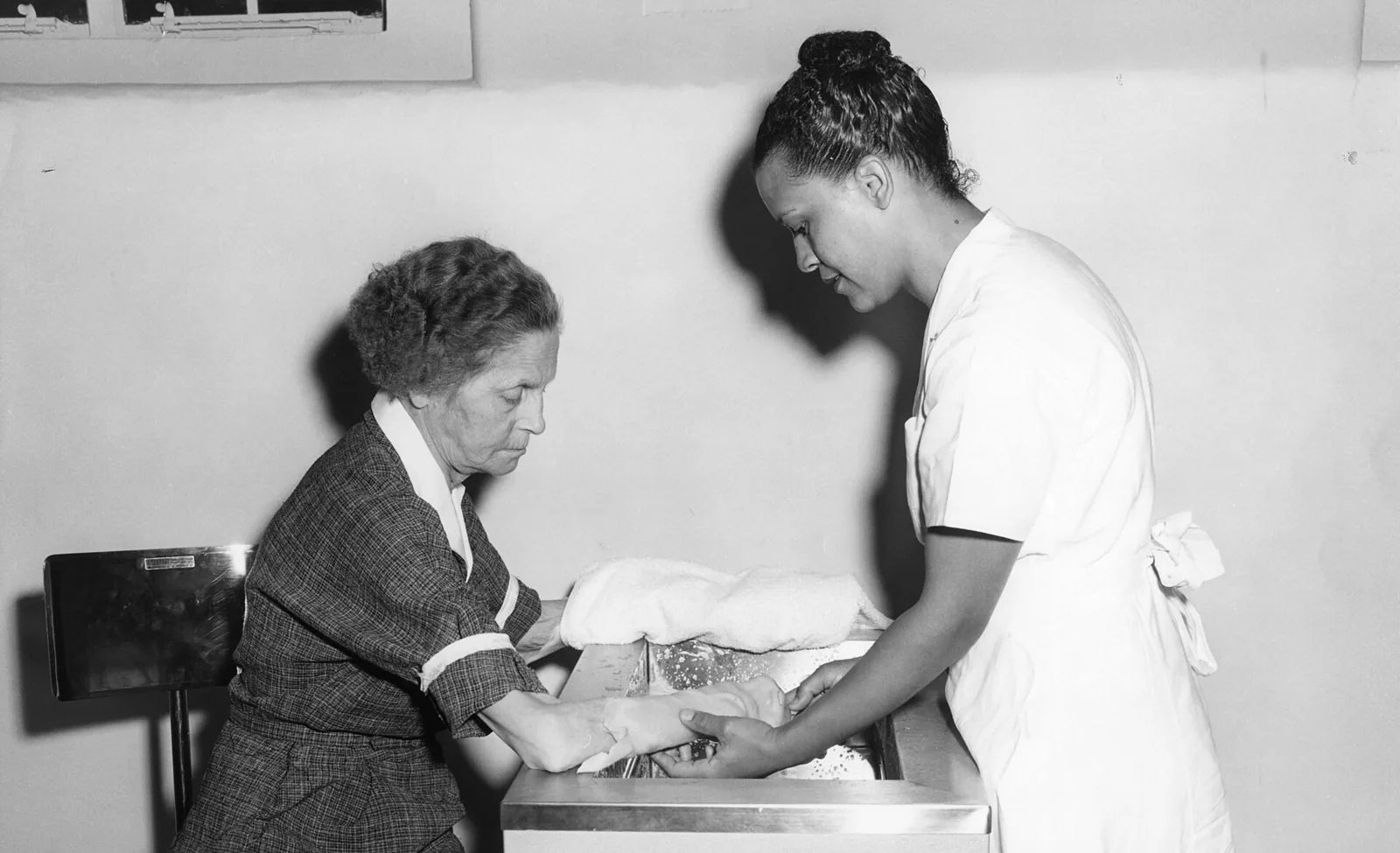
Figure 2. An archive photo of a paraffin wax hand treatment at the Quapaw Bathhouse, Hot Springs, Arkansas (USA): an attendant supports a client's wax-coated hand above a metal paraffin bath. The basic dip method has not changed much, but modern spas add hand washing, sanitising and a temperature test before every client. (Photo: NPS Photo, via Wikimedia Commons, public domain)
No-dip method (brush or pour). Many spas prefer this method because the client's skin never touches the shared wax. Use a clean brush, ladle or disposable cup to take wax from the heater, and either brush it evenly over the hand in layers, or place the hand inside a plastic liner and pour or spoon the wax into the liner around it. Never put a used brush back into the heater; use a fresh brush or a separate small container of wax for each client, and throw away what is left.
Step 8: Wrap and wait
Slide the waxed hand into a plastic liner or bag, then into an insulated mitt or a warm towel. Leave it for around 10 to 20 minutes (for reference). Check in with the client every few minutes. This is a good time to work on the other hand, or to offer a scalp, neck or foot massage if it is part of the package.
Step 9: Remove the wax
Take off the mitt. Peel the liner from the wrist towards the fingertips; most of the wax usually comes away inside it. Peel any remaining wax gently from the fingers. Put all used wax and liners straight into the lined waste bin. Never return used wax to the heater.
Step 10: Massage and finish
Massage any remaining lotion into the skin, working from the fingertips towards the wrist with light to medium pressure. If the service continues with nail polish, cleanse the nail plates with the product your spa uses to remove oil before applying base coat. Check the skin: it should look slightly pink at most, and the client should feel comfortable.
Step 11: Record and advise
Note in the client record the date, product, method (dip or no-dip), temperature reading, any reactions and what you advised.
Paraffin treatment for feet
The steps are the same as for hands, with some extra care:
Clean the feet first. Paraffin for feet usually follows a pedicure foot soak and drying. Dry well between the toes.
Inspect closely. Look for cracks in the heels, cuts from shaving, blisters, signs of athlete's foot and fungal nails. Cracked heels that are bleeding or deep should not be waxed.
Choose the method. Dipping feet needs a foot-sized unit. Many spas use the no-dip method instead: place the foot in a foot liner, ladle or pour wax around it, or brush it on in layers.
Seat the client securely. The client should stay seated with their feet supported on a towel or footrest. Never let a client stand or walk with wax or plastic booties on their feet; plastic liners on a tiled floor are very slippery.
Protect the floor. Put a towel or disposable sheet under the work area so drips of wax do not make the floor slippery.
Wrap and wait in a liner and insulated bootie for around 10 to 20 minutes (for reference), then peel from the ankle towards the toes and discard.
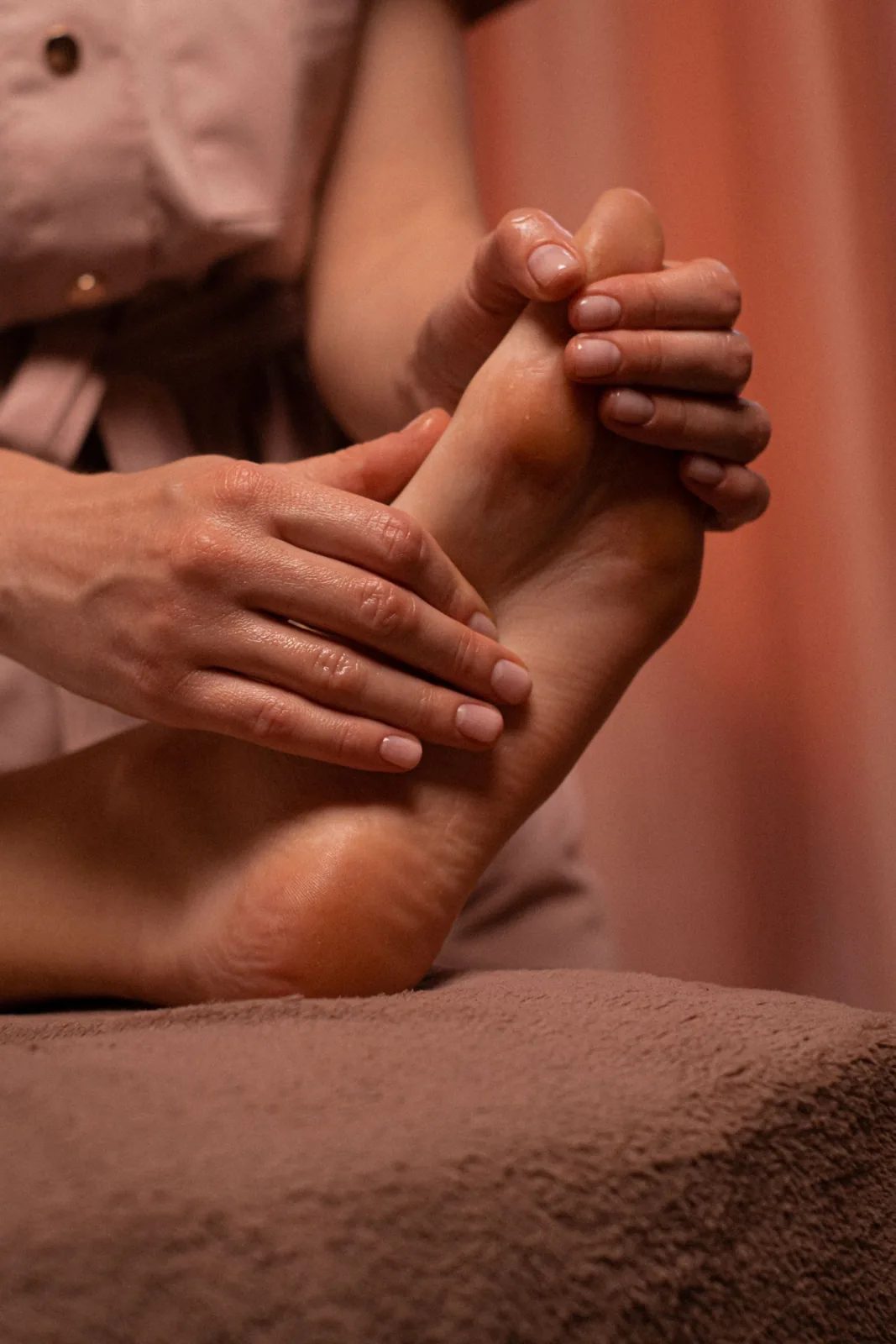
Figure 3. A therapist supports a client's foot on a soft towel and massages the sole. After the paraffin is peeled away, a short foot massage works the remaining cream into the skin; check the foot first for anything you missed at the start. (Photo: Dasha, Pexels)
Hygiene: keeping the paraffin bath clean
A paraffin bath is shared by every client who uses it. Wax is held warm but not hot enough to be relied on as a disinfection method, so hygiene depends on what goes into the bath.
Only clean, washed and sanitised, unbroken skin goes into the wax.
Used wax is always thrown away, never returned to the heater.
Brushes, ladles and cups that touch a client's skin are single-use or are kept out of the heater.
Keep the lid closed when not in use.
Remove visible debris with a clean spoon and throw it away.
Top up with fresh wax as needed, and empty, clean and refill the unit as often as the manufacturer and your spa require, and at once if the wax is visibly dirty or a client with broken skin was dipped by mistake.
Clean the outside of the unit, the lid and the handles with a suitable surface cleaner at the end of the day (unit switched off and unplugged, wearing gloves).
Wash insulated mitts and booties after each client, or use a clean washable inner liner each time.
The NAMBIN guide to cleaning and disinfecting spa tools and treatment rooms explains how to choose and use disinfectants for surfaces and tools.
Aftercare advice for the client
Give simple, clear advice:
Skin may look a little pink and feel warm for a short time. This should settle quickly.
Apply hand or foot cream regularly at home, especially after washing, to keep the skin soft (Figure 4).
Protect hands from strong cleaning products by wearing household gloves.
For feet, wear clean socks and breathable shoes, and dry well between the toes after washing.
Contact the spa if there is redness, itching, blisters or soreness that does not settle, and see a doctor if it gets worse.
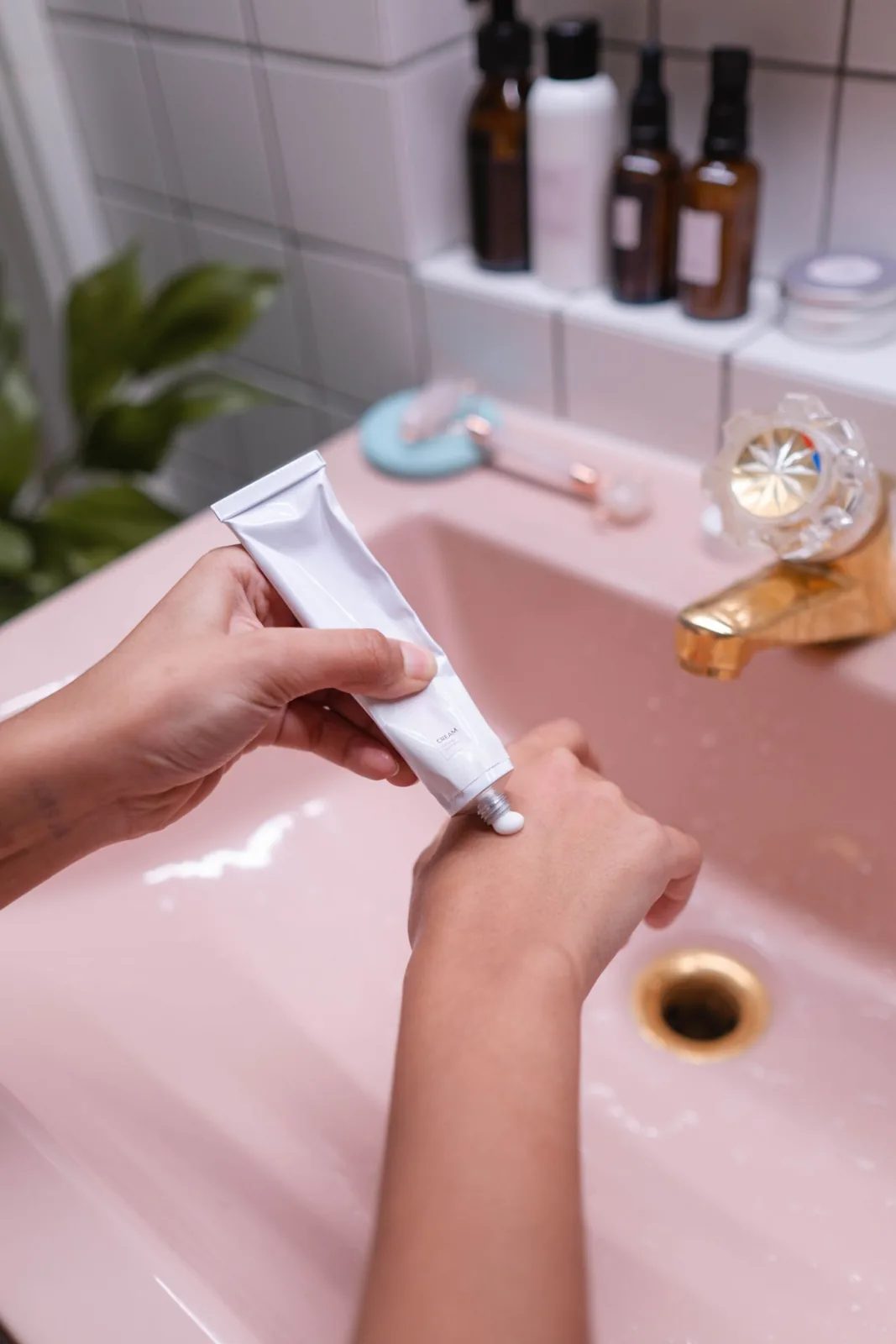
Figure 4. A person squeezes hand cream from a plain tube onto the back of their hand at a bathroom basin. Regular hand cream after washing is the simplest home care to keep skin soft between paraffin treatments. (Photo: Ron Lach, Pexels)
If something goes wrong
The client says the wax feels too hot
Stop immediately. Remove the wax by peeling it off, or if it is still liquid, let the client lift the hand out and wipe away what you can. Check the skin. Re-check the heater temperature with your thermometer before using it again.
A burn
If the skin is red, painful or blistering after contact with hot wax:
Remove any wax that comes away easily. Do not pull off wax that is stuck to blistered skin.
Cool the area under cool (not ice-cold) running water. Standard first-aid advice is to cool a burn for about 20 minutes.
Do not apply ice, butter, toothpaste, oil or other home remedies.
Cover loosely with clean cling film or a clean non-fluffy dressing.
Tell your supervisor. Large burns, deep burns, burns with blisters on the hands or feet, or any burn you are unsure about need medical attention.
Switch the heater off, record the incident and the temperature reading, and have the unit checked.
Itching, rash or swelling
Remove the wax at once, wash the area gently with water and stop the treatment. Record the product and ingredients. If there is swelling of the face, lips or tongue, or difficulty breathing, call emergency services (115 in Vietnam) immediately.
Reference table: common paraffin problems
Problem | Likely cause | What to do |
|---|---|---|
Wax feels too hot to the client | Thermostat set too high or faulty; test skipped | Stop, remove wax, check with a thermometer, lower the setting, retest; report a faulty unit |
Wax does not stick or slides off | Too much oil or lotion on the skin; wax too hot and thin | Use a thinner layer of lotion; check temperature |
Wax cracks and falls off during wrapping | Fingers moved; too few layers; not wrapped | Ask the client to keep still; apply more even layers; wrap at once |
Difficult to peel off | Very thin or uneven layers; jewellery left on | Build layers evenly with a thicker top edge; remove jewellery first |
Debris or hair floating in the bath | Hands not washed; used wax returned; lid left open | Remove debris; clean or change wax; review hygiene rules with the team |
Client's skin red and itchy afterwards | Possible reaction to an ingredient or fragrance; heat sensitivity | Wash gently, stop, record product, advise client; see "If something goes wrong" |
Safety checklist before, during and after every paraffin treatment
Before the treatment
Heater on a stable surface, away from water, plugged into a grounded wall socket, cord in good condition
Wax fully melted, clean, temperature checked with a thermometer and recorded
Consultation done and recorded; no contraindications; skin inspected
Jewellery removed; sleeves rolled up; clothing and floor protected
Client's hands or feet washed, dried and sanitised; therapist's hands clean
Temperature tested on your wrist and then on the client's skin
During the treatment
Client told to say at once if it feels too hot
Even layers applied; no brush or used wax returned to the heater
Hands or feet wrapped; client checked every few minutes
Client with paraffin on feet stays seated
After the treatment
Wax peeled off and thrown away in a lined bin
Skin checked; aftercare advice given
Mitts and booties sent for washing; work area cleaned
Lid closed; heater switched off at the end of the day
Client record and equipment log completed
Frequently Asked Questions
How often can a client have a paraffin treatment?
There is no single rule. Many clients have it with their regular manicure or pedicure, for example every few weeks. If the client's skin is healthy and the treatment is comfortable, follow your spa's menu and the product guidance. If the skin becomes irritated, stop and reassess.
Is the dip method hygienic?
It can be, if every client washes and sanitises their hands, has no broken skin, and used wax is never returned to the bath. Many spas still prefer the brush or pour method for feet and for clients they are not sure about, because the skin never touches the shared wax.
Should paraffin go before or after nail polish?
Before. The wax and lotion leave oil on the nails. Do the paraffin, then cleanse the nail plates and apply base coat, colour and top coat. Paraffin over fresh polish can also smudge it.
Can a client with diabetes have paraffin?
Do not decide this alone. Clients with diabetes may have reduced feeling or circulation in their hands and feet and may not notice if wax is too hot. Follow your spa's policy; many spas ask for the client's doctor's agreement first or offer a different treatment.
Practice Exercises
Consultation role-play. With a colleague playing the client, run through the contraindication questions. Then repeat with your supervisor playing a client who has numb toes and wants a paraffin pedicure. Decide what you would say and what you would offer instead.
Heater check. At the start of a shift, check the heater placement, socket and cord, read the temperature with a separate thermometer and fill in the equipment log. Compare the thermometer reading with the heater display.
Temperature test practice. Under supervision, practise the wrist test on yourself, then on a colleague, using the exact words you would use with a client.
Dip and no-dip drill. On a colleague, carry out one hand with the dip method and the other with the brush or pour method. Time each step, count the layers and practise peeling from wrist to fingertips. Discuss which method felt more hygienic and why.
Troubleshooting quiz. Write what you would do in each case: (a) the client says "ouch" on the first dip; (b) you notice a small cut on the client's finger after the first layer; (c) there are hairs floating in the wax at 3 p.m.; (d) a client phones the next day with itchy red skin on the backs of both hands.