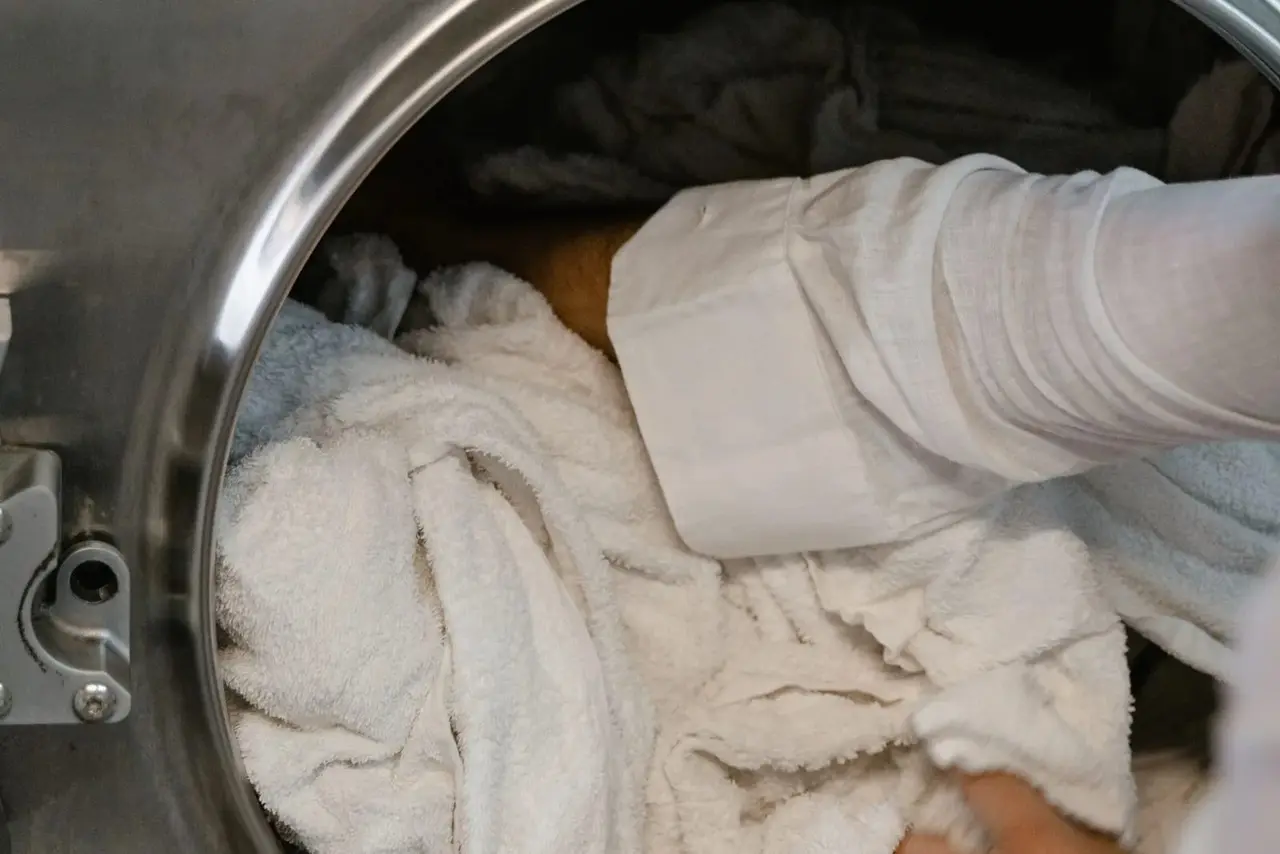
It is the end of a busy Saturday. A spa has done eleven body massages, four facials and a pedicure, and the laundry basket is full of towels and sheets shiny with massage oil. Someone runs a quick 40-degree wash, tumble-dries the load and leaves the warm towels piled in a basket for the morning. On Monday a client lifts a "clean" face towel to her nose and pulls back: it smells stale and slightly sour, like old cooking oil. Worse, the warm pile in the basket was a real fire risk all night.
Spa linen is not ordinary household laundry. It carries massage oil, body butter, wax, clay, scrub granules, skin cells and sometimes small amounts of blood or other body fluids. Badly handled linen can spread germs between clients, irritate sensitive skin and, in the case of oily towels and tumble dryers, start a fire.
This guide is for spa therapists and assistants who handle towels, sheets, face cradle covers, robes and headbands, whether you wash them on site or send them to a commercial laundry. It covers collecting and sorting used linen, removing oil, choosing wash settings, drying safely, fixing smelly, grey or stiff towels, and storing clean linen.
Scope of this guide. All temperatures, times and quantities here are for reference only. Always follow the care label on the linen, the instructions of your washing machine, dryer and laundry products, your spa's written procedure and local health and safety rules. If your spa uses a commercial laundry service, follow the handling instructions they give you.
Why spa linen needs its own laundry routine
Three things make spa laundry harder than washing towels at home:
Oil. Massage oils, balms and many body products are designed to stay on the skin, so they also stay in cotton. A normal household wash often does not remove all of it. The oil left behind slowly goes rancid, which causes the typical stale, "crayon" or sour smell, makes white towels look grey or yellow and makes fabric feel stiff or sticky.
Volume. One body treatment can use several sheets, towels and a robe, so there is a temptation to overload the machine or shorten cycles.
Contact with skin and faces. Every item touches a client, often the face. Residue from detergent, softener or fragrance can bother clients with sensitive skin, and a damp, badly stored towel can grow mould.
Oily linen and tumble dryers also need special care. Fire services in several countries have warned that towels and cloths with oil residue can heat up by themselves after drying and catch fire, sometimes hours later, in a pile or a basket. This is covered in detail below.
Step 1: Collect used linen safely in the treatment room
Good laundry starts the moment the client leaves the couch.
Roll, do not shake. Strip the couch by rolling sheets and towels inwards, with the side that touched the client on the inside. Shaking linen spreads lint, skin flakes and product into the air and onto clean surfaces.
Straight into a lidded container or bag. Used linen goes directly into the room's laundry container. Never put it on the floor, the trolley, a chair or the client's clothes, and never leave it next to clean towels.
Check for objects. Feel the bundle quickly for hair clips, earrings, cotton pads, wax strips or wooden spatulas. These damage machines and fabric. Return client jewellery to reception straight away.
Gloves for body fluids. If linen is visibly soiled with blood (for example a small spot after extraction or waxing) or other body fluids, wear disposable gloves, keep that item separate and handle it as your spa's procedure for contaminated linen says. Wash your hands after removing the gloves.
Wash your hands after handling any used linen and before touching clean towels or the next client.
Never mix clean and used linen
Never keep clean and used towels on the same trolley or shelf. Keep a clear one-way flow: used linen leaves the room in a closed container and goes to the laundry area; clean linen comes from a closed cabinet and enters the room only when needed.
Step 2: Sort linen before washing
Sorting lets you choose the right treatment for each load instead of washing everything the same way. A simple sorting system for a small spa:
Heavy oil: body massage sheets, draping towels and towels from hot stone, body wrap or aromatherapy treatments.
Light soil: face towels, headbands, face cradle covers and hand towels used only briefly.
Product stains: towels with wax, paraffin, clay, coloured masks, self-tan, tint or henna.
Foot towels: towels from pedicures and foot baths. Many spas use a different colour for feet so they never end up on a face.
Contaminated: anything with blood or body fluids, bagged separately as your procedure requires.
Not client linen: cleaning cloths, mop heads and rags are never washed with client towels.
Sort white and coloured items too, and check the care labels. Microfibre sheets, robes with trims and printed items often cannot take the same high temperatures as plain white cotton towels.
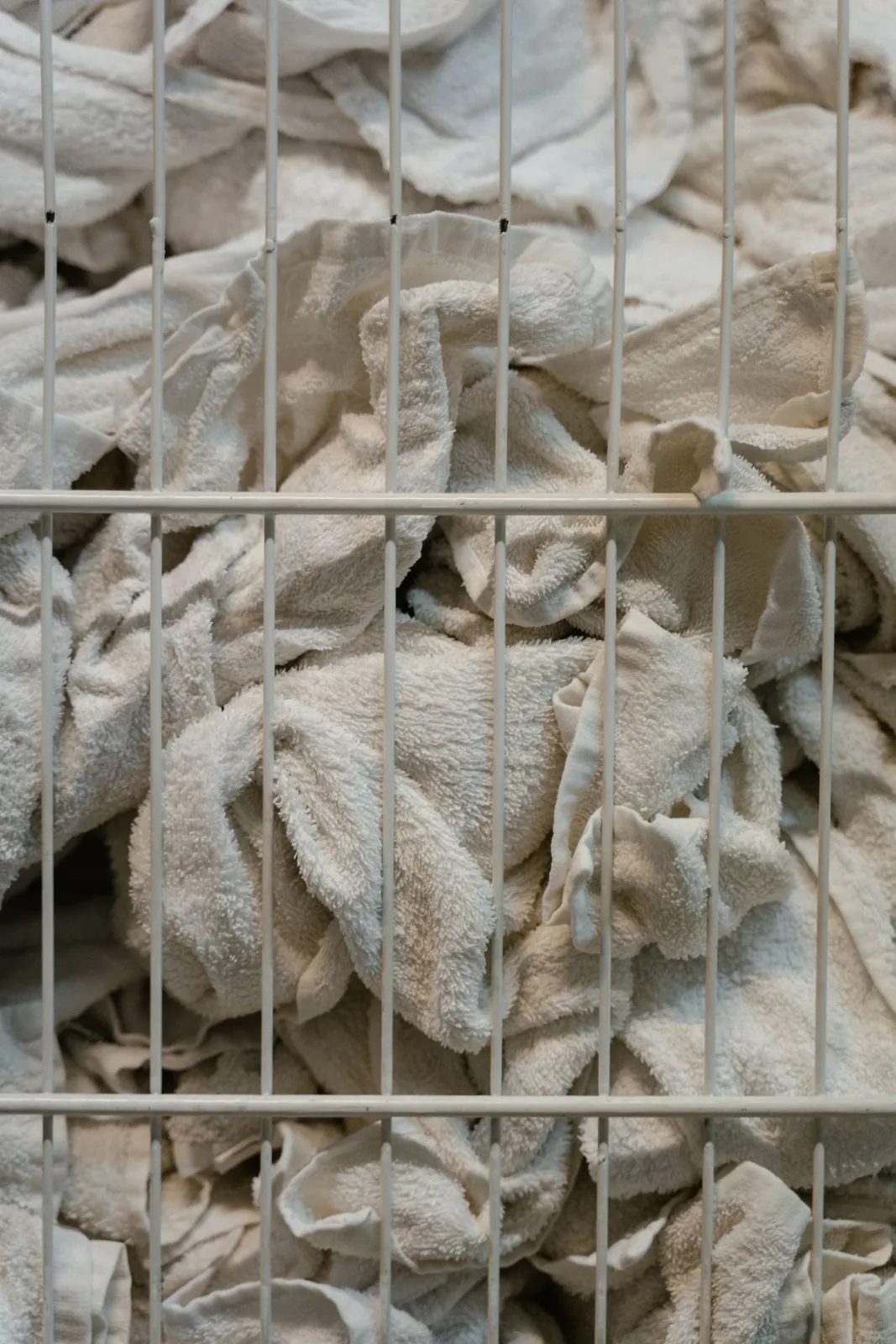
Figure 1. Close-up of crumpled white towels heaped behind the white wire bars of a laundry cart. Towels piled loosely like this look clean at a glance, but oily and lightly soiled linen should be sorted into separate loads before washing so each load gets the right treatment. (Photo: Tima Miroshnichenko, Pexels, Pexels License)
Step 3: Pre-treat oil and product stains
Pre-treatment is what really removes massage oil. Without it, oil builds up layer by layer, and after a few weeks the towels smell even straight out of the machine.
For oily linen
Choose a laundry product made for oil and grease. Many suppliers sell detergents, boosters or pre-wash treatments specifically for spa and massage linen. Read the label for the dose, temperature and fabric type.
Apply or soak according to the product instructions before the main wash. Some spas do a pre-wash cycle for heavily oiled loads.
Do not let oily linen sit for days before washing. The longer the oil sits, the more it oxidises and the harder it is to remove. Many spas aim to wash oily linen the same day (for reference).
For common spa product stains
Wax and paraffin: let the wax harden, then scrape off as much as you can with a blunt spatula before washing. Use a wax-removal product suitable for fabric if needed. A towel heavily caked with wax should be cleaned properly or thrown away, not put through a dryer.
Clay and coloured masks: rinse in cold water first to remove the bulk; hot water can set some pigments.
Self-tan, tint and henna: treat quickly with a stain remover suitable for the fabric. Some stains are permanent, which is why many spas keep dark-coloured towels for these services.
Blood: rinse in cold water first, never hot, then follow your spa's procedure for contaminated linen.
Never mix cleaning chemicals to make a "stronger" stain remover. Chlorine bleach mixed with ammonia or acid-based products can release dangerous gases. Use one product at a time and follow its label.
Step 4: Wash with the right settings
Load size
Overloading is one of the main reasons oily towels stay oily. Water and detergent need room to move through the fabric. As a rough guide, leave a hand's width of space at the top of a front-loading drum when the dry towels are loaded (for reference; your machine's manual gives the real capacity). Heavy cotton towels reach the weight limit sooner than you might think.
Temperature
Hot water helps loosen oil. Many spas and commercial laundries wash white cotton towels and sheets at 60 °C or above (for reference). Lower temperatures may be needed for microfibre, coloured or delicate items, and some disinfection steps depend on the temperature and time a load is held hot. Check:
the care label on each item;
your detergent's instructions;
any local health rules or your spa's procedure on linen temperature and disinfection.
A short "quick wash" or "eco" programme often does not stay hot for long enough to deal with heavy oil. If you must use a lower temperature, a product designed for oil removal at that temperature is especially important.
Detergent and softener
Measure the detergent. Too little leaves oil; too much leaves residue that makes towels stiff and can irritate skin. Use the dose on the label for the load size, soil level and water hardness.
Be careful with fabric softener. Softener coats the fibres. It can make towels less absorbent and may trap oil and odour. Many spas use little or none on towels. Follow your linen supplier's advice.
Fragrance: some clients are sensitive to strong perfume. Lightly fragranced or fragrance-free products are a safer default for linen that touches faces.
Bleach: chlorine bleach can whiten cotton but does not remove oil, and it weakens fibres over time. Use it only if the care label and your procedure allow it, and never on coloured or microfibre linen unless the label says so.
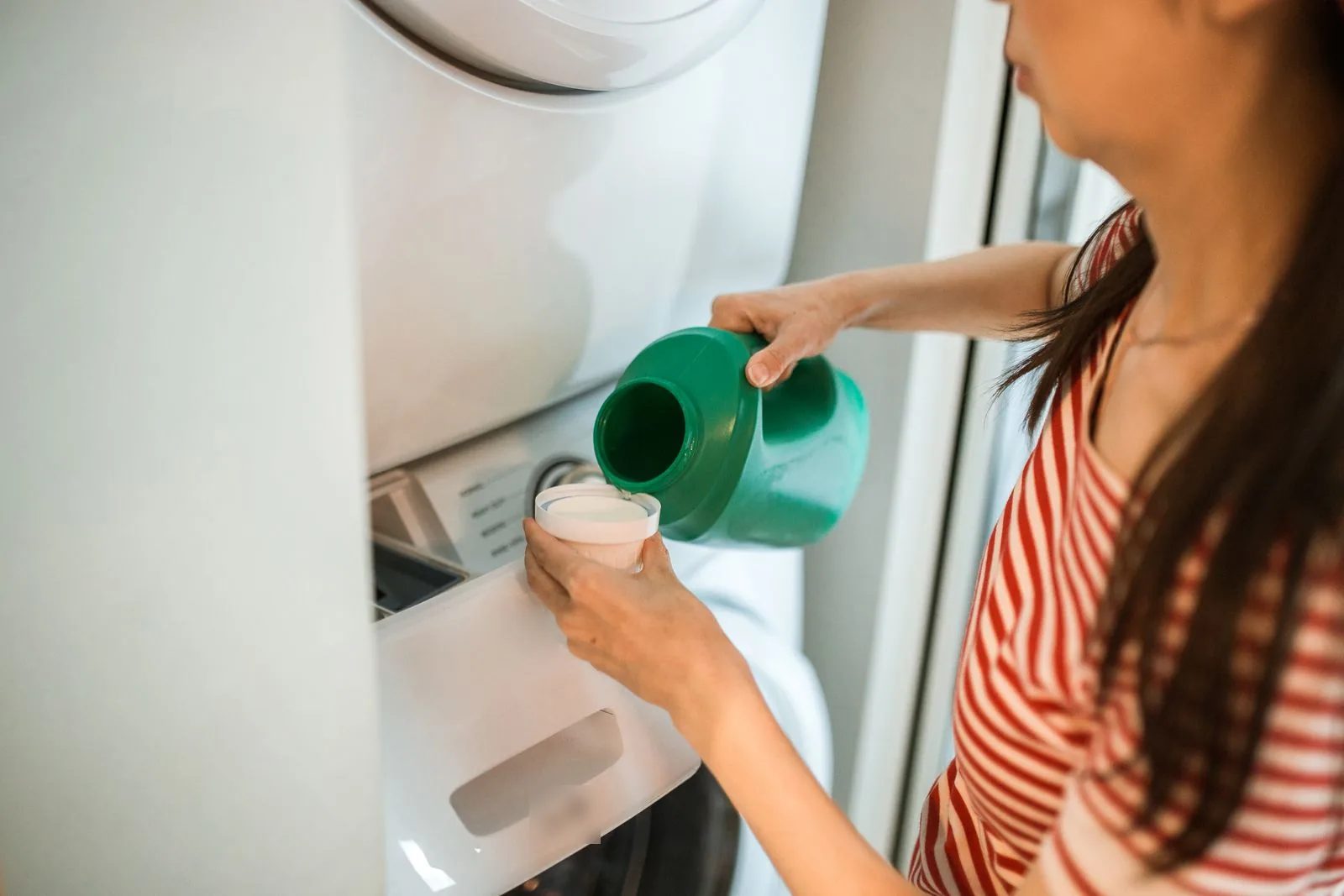
Figure 2. A woman in a red-and-white striped top pours liquid detergent from a green bottle into a small white measuring cap in front of a stacked washer and dryer. Measuring each dose, rather than pouring straight into the drawer, helps avoid both leftover oil and detergent residue on towels. (Photo: RDNE Stock project, Pexels, Pexels License)
Reference table: washing spa linen by type
Linen type | Typical soil | Before washing | Wash notes (for reference) |
|---|---|---|---|
Body massage sheets and draping towels | Heavy oil, balm, skin flakes | Sort as "heavy oil"; pre-treat with an oil-removing product; wash the same day if possible | Hottest temperature the label allows; do not overload; consider a pre-wash or extra rinse |
Face towels, headbands, face cradle covers | Cleanser, light oil, makeup | Shake out cotton pads or debris carefully over the bin, not in the room | Light fragrance or fragrance-free detergent; little or no softener |
Towels from wax, paraffin or clay treatments | Wax, clay, pigment | Scrape hardened wax; cold rinse clay; treat stains | Wash separately; never tumble-dry towels still caked with wax |
Pedicure and foot towels | Foot soak water, scrub, skin flakes | Keep in a separate colour or bag | Wash separately from face linen |
Robes and microfibre items | Light body contact | Check the label; close fastenings | Often need lower temperatures; follow the label |
Linen with blood or body fluids | Contaminated | Gloves; separate bag; cold rinse if your procedure says so | Follow your spa's contaminated linen procedure exactly |
This table is a practical guide, not an official standard. When the care label, the product label or your spa's procedure says something different, follow them.
Step 5: Dry safely and prevent laundry fires
This is the step that is most often ignored and the most dangerous.
Why oily towels can catch fire after drying
When oils oxidise they give off heat. Normally that heat escapes into the air. But a load of towels that still contains some oil, taken hot from a tumble dryer and left in a tight pile or a basket, can hold the heat in. The temperature inside the pile can keep rising until the fabric smoulders and catches fire, sometimes long after the dryer has stopped and everyone has gone home. Fire services in several countries have issued warnings about exactly this happening with towels from massage businesses, beauty salons, gyms and kitchens. Washing reduces the oil, but it does not always remove all of it.
Safe drying habits
Wash well first. Pre-treating and washing at the right temperature removes as much oil as possible before the linen goes near heat.
Do not overfill the dryer. Follow the dryer's capacity.
Let the cool-down phase finish. Most dryers end with a cooling period. Do not stop the cycle early to take out hot towels.
Remove and spread out straight away. As soon as the cycle ends, take the towels out and spread them loosely, or fold them in small stacks so heat can escape. Never leave a warm load in the drum or in a basket.
Never run the dryer when nobody is there. Do not start a dryer just before closing or leave it running overnight.
Clean the lint filter after every load and keep the area around the dryer clear of boxes, paper and spare linen.
Check that towels feel cool before stacking them in a cupboard or bag.
Make sure staff know where the fire extinguisher is, how to call the emergency services in your country, and that people come before property. If a pile of linen smells of burning or feels hot, do not open a closed dryer or cupboard full of smoke; get everyone out and call for help.
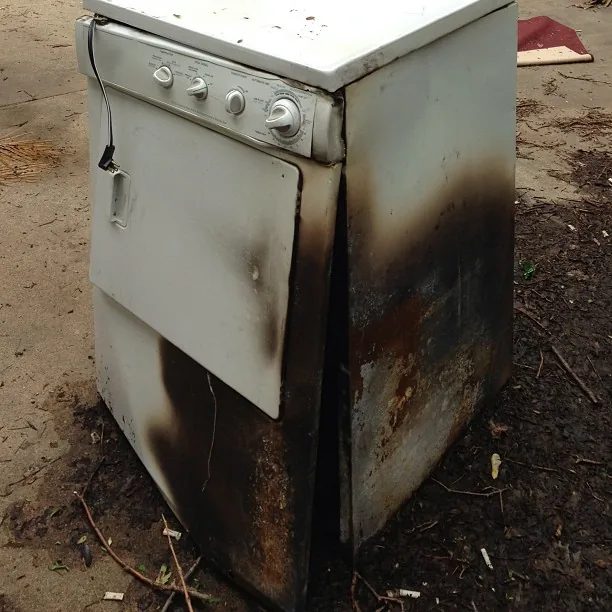
Figure 3. An old white clothes dryer standing outdoors on bare ground, its side panel and lower front blackened and rusted by fire. Towels with leftover oil can heat up after tumble drying, so let the cool-down cycle finish, spread the load out at once and never leave a dryer running unattended. (Photo: Jerry on Flickr, modified by Gazebo, Wikimedia Commons, CC BY-SA 2.0)
Step 6: Check the result before it goes back to the shelf
Before you fold, do a quick quality check on a few items from each load:
Smell: hold a towel close to your nose. It should smell of nothing or of a faint clean detergent. A stale, sour or oily smell means oil is still there.
Feel: towels should feel dry right through, including thick hems and folded corners. Stiff, sticky or slippery spots suggest oil or detergent residue.
Look: check for stains, grey patches, holes, frayed edges and loose threads.
Anything that fails goes back for re-washing or is taken out of client use.
Troubleshooting: smelly, grey, stiff or yellow linen
Most linen problems in spas come down to oil, too much or too little detergent, or damp storage.
Reference table: common problems
Problem | Likely causes | What to try |
|---|---|---|
Stale, sour or "old oil" smell after washing | Oil build-up going rancid; washing too cool or too short; overloading; oily linen left for days | Strip-wash with an oil-removing product at the hottest temperature the label allows; wash oily linen sooner; smaller loads |
Musty, mouldy smell | Towels left damp in the machine or stored before fully dry | Re-wash and dry completely; empty the washer promptly; store only cool, fully dry linen |
White towels turning grey or dingy | Oil and dirt redepositing; too little detergent; mixing with coloured items | Correct the dose; sort colours; pre-treat oil; check water hardness advice on the detergent |
Yellow or orange patches | Oxidised oil, self-tan or product stains set by heat | Treat with a suitable stain remover before washing; some old stains will not come out, retire the towel |
Stiff, scratchy towels | Detergent residue; hard water; over-drying | Use the correct dose; add an extra rinse; avoid over-drying |
Towels not absorbing water well | Fabric softener or oil coating the fibres | Reduce or stop softener; strip-wash |
Client says her skin feels itchy after a towel | Detergent or fragrance residue; possible sensitivity to a product | Stop using that towel on her; use rinsed, fragrance-free linen; record it; if the reaction is strong or does not settle, suggest she sees a doctor |
Machine smells or towels come out with dark marks | Dirty drum, door seal or detergent drawer | Clean the machine as the manual says; leave the door and drawer open to dry between loads |
What a strip-wash is
A "strip-wash" is a stronger cleaning cycle used occasionally to remove build-up from towels that smell or have lost absorbency. In general it means a product designed to remove oil and residue, the hottest temperature the care label allows, a smaller load and an extra rinse. The exact method depends on the products available to you, so follow the product instructions. If strip-washing does not fix a towel, it is time to replace it.
Step 7: Fold and store clean linen hygienically
Clean hands and a clean surface. Wash your hands and wipe the folding table before you start. Do not fold on the floor or on a couch that has not been cleaned.
Fold or roll consistently. A standard fold makes it easy to see how many towels you have and to pick one up without touching the others.
Store in a closed cabinet or covered shelving in a clean, dry area, away from used linen, the toilet, the pedicure area and chemical storage.
First in, first out. Put newly washed linen at the back or bottom so older stock is used first.
Take only what you need into the treatment room. Many spas treat unused towels that were in the room during a treatment as used, so check your procedure.
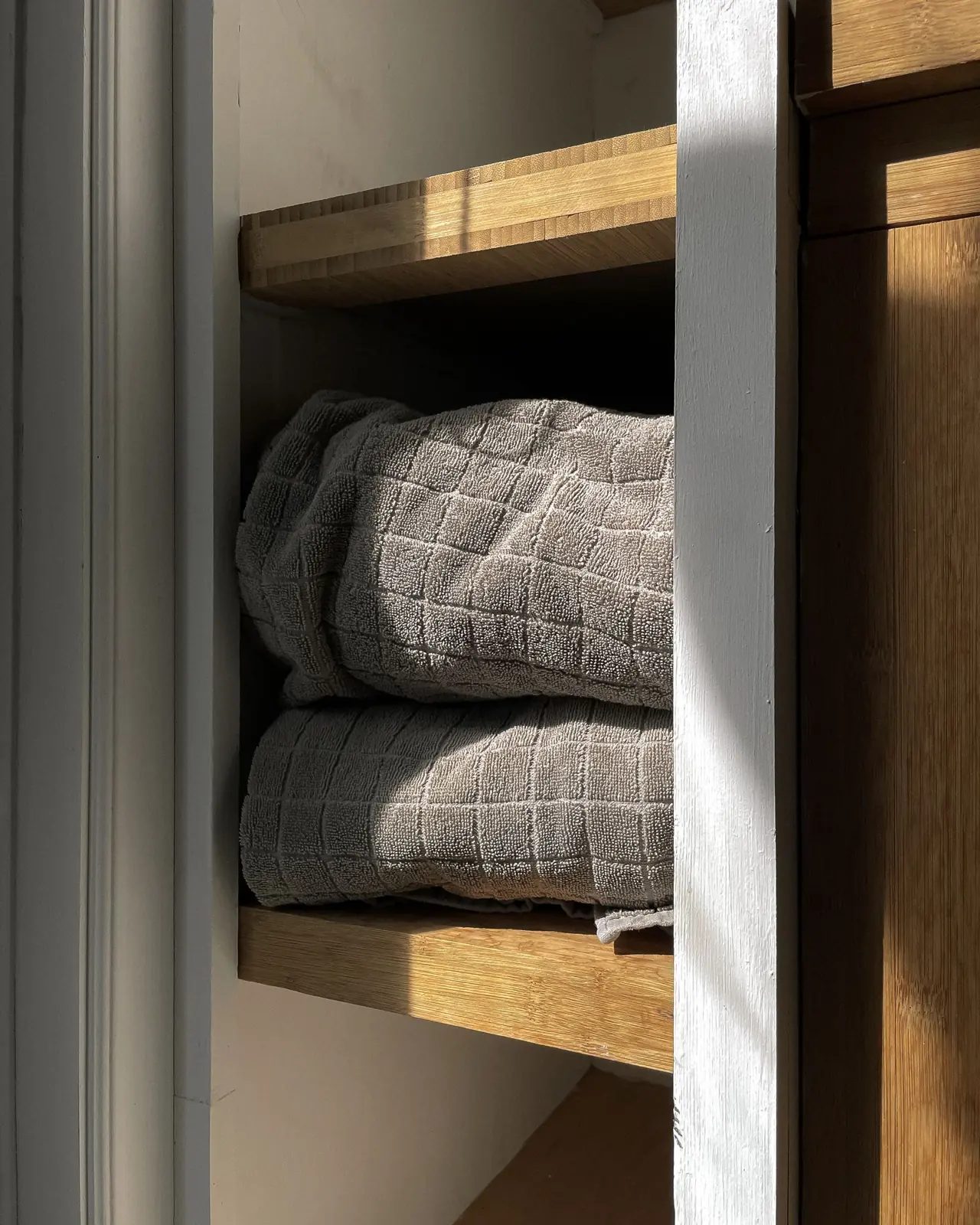
Figure 4. Two folded grey waffle-textured towels sit on a light wooden shelf inside a built-in cabinet, lit by sunlight from the side. Clean linen should be stored only when it is cool and completely dry, in a closed cupboard away from used laundry. (Photo: Phil Desforges, Pexels, Pexels License)
If your spa uses a commercial laundry
Many spas send linen out. That saves space and time, but the spa is still responsible for what touches its clients. Useful points to agree with the laundry:
Tell them clearly that the linen is oily massage linen, so they can use suitable products and drying practices.
Agree how contaminated linen should be bagged and labelled.
Ask how clean linen will be packed and delivered (for example wrapped or in covered carts) so it stays clean in transport.
Count and check deliveries. Report smelly, stained or damp items and do not use them.
Store delivered linen in the same clean, closed storage as linen washed on site.
Example: fixing a spa's "smelly towel" problem
A small day spa kept getting comments about towels smelling "off". The manager watched the laundry routine and found four problems: oily sheets were collected in an open basket and washed only every second day; the machine was packed full; the staff used a short 40-degree cycle with a lot of fabric softener; and towels were folded while still warm and stacked tightly in a cupboard.
The spa changed its routine. Oily linen now goes into a separate lidded bin and is washed the same evening with an oil-removing product, at the hottest temperature the labels allow, in smaller loads. Softener was stopped for towels. Dryer loads now finish the full cool-down cycle and are spread out on a clean table before folding, and the dryer is never left running at closing time. The comments stopped, and the spa also removed a fire risk that nobody had noticed.
Safety and hygiene checklist
☐ Used linen rolled, not shaken, and placed straight into a lidded container.
☐ Pockets and bundles checked for jewellery, clips, spatulas and wax strips.
☐ Gloves used for linen with blood or body fluids; that linen bagged separately.
☐ Hands washed after handling used linen and before touching clean linen.
☐ Linen sorted: heavy oil, light soil, product stains, foot towels, contaminated; cleaning cloths never washed with client linen.
☐ Oily linen pre-treated and washed promptly, ideally the same day.
☐ Machine not overloaded; detergent measured; care labels followed.
☐ Chemicals never mixed; products used as their labels say.
☐ Dryer cool-down cycle completed; load removed and spread out immediately.
☐ Dryer never left running unattended or after closing; lint filter cleaned after each load.
☐ Clean linen checked for smell, dryness and stains before folding.
☐ Clean linen stored cool, fully dry and in a closed cabinet away from used laundry and chemicals.
☐ Worn, stained or permanently smelly linen removed from client use.
Frequently Asked Questions
How do you get massage oil out of towels and sheets?
Wash oily linen as soon as possible, pre-treat it with a laundry product designed for oil and grease, use the hottest temperature the care label allows, and do not overload the machine. Regular household detergent on a short, cool cycle usually leaves some oil behind, which builds up over time.
Why do my spa towels smell bad even after washing?
The most common reason is old massage oil that has built up in the fibres and gone rancid. Other causes are towels left damp in the machine, towels stored before they were completely dry, or a dirty washing machine. Try a strip-wash, wash oily linen sooner, use smaller loads and make sure linen is fully dry before storage.
Can towels with massage oil really catch fire?
Yes. Fire services in several countries have warned that towels with oil residue can heat up by themselves after tumble drying and catch fire, especially when left warm in a pile or basket. Wash well, let the dryer finish its cool-down phase, take the towels out and spread them out straight away, and never leave a dryer running unattended.
What temperature should spa towels be washed at?
Many spas wash white cotton towels at 60 °C or above (for reference), because hot water helps remove oil. The right temperature depends on the care label, the product you use and any local rules or spa procedures on disinfection, so check all three. Microfibre and coloured items often need lower temperatures.
Should I use fabric softener on spa towels?
Many spas use little or none. Softener coats the fibres, which can reduce absorbency and hold on to oil and odour. If you want softer towels, getting the detergent dose right and avoiding over-drying often helps more.
Practice Exercises
Label check: Find five different linen items in your spa (a towel, a sheet, a face cradle cover, a robe and a headband). Write down the maximum wash temperature, whether they can be tumble-dried and whether bleach is allowed for each.
Sorting drill: After a shift, sort the used linen into heavy oil, light soil, product stains, foot towels and contaminated. Explain to a senior therapist why each item went where it did.
Dryer safety walk-through: With your supervisor, find your dryer's cool-down setting and lint filter, the nearest fire extinguisher and the emergency number. Explain in under one minute why warm oily towels must never be left in a pile.
Smell test: Take three "clean" towels from storage and check them for smell, dryness and stains. For any towel that fails, use the troubleshooting table to suggest the most likely cause and a fix.