A customer insight is a hidden truth about the wish, worry or barrier that makes a customer buy or not buy: something people rarely say outright, but when they hear it they nod and think "that's exactly me". Copywriters find insights by interviewing customers, reading comments and reviews and asking sales staff, then turn them into concrete benefits and check advertising law before writing a single line. This is step 1 of the copywriter roadmap: by the end you will have a routine you can apply to your first product today, even if you have never written an ad.
By the end of this lesson, you will be able to:
- Tell data, observation and insight apart, and write an insight as one sentence using the "wants – but – because" frame.
- Prepare and run a 20–30 minute customer interview with 6 open questions and no leading questions.
- Read 100+ comments and reviews, group them and count how often each issue comes up to pick the strongest insight.
- Turn product features into functional and emotional benefits with the "so what?" question.
- Check a draft against the most common advertising-law prohibitions and keep an evidence file for every claim.
Want to become a copywriter properly? Customer insight and advertising law are step 1 of the roadmap, before the AIDA and PAS formulas and writing Facebook and TikTok ads. See the 8-step copywriter roadmap to learn in the right order.
What is a customer insight, and why do copywriters learn it first?
Beginners usually open the laptop and start typing the product name, features and price. Copy like that says what the seller wants to say, not what the buyer is thinking. The insight is that "thinking" part.
Data, observation and insight are three different layers
- Data: a number you can measure. Example: 60% of a bakery's sandwich orders come in after 8 pm.
- Observation: what you see customers do. Example: most evening orders are from working mothers, who add milk for their children.
- Insight: the deeper reason underneath. Example: working mothers worry they won't have time to cook in the morning, so they buy the night before to make sure their child still gets a proper breakfast, and feel less guilty about it.
From the data you can only write "Order before 8 pm, delivered at 6 am". From the insight you can write "However busy tomorrow morning gets, your child still has a warm breakfast", and that is the line that sells.
The one-sentence frame: wants – but – because
Write the insight as one sentence: [specific customer] wants [desire], but [barrier], because [deeper reason]. Example: "Final-year students want Excel skills on their CV, but avoid long courses, because they fear they still won't pass an employer's Excel test afterwards." A good insight sentence has a specific person, a tension and an emotion. If your sentence is true for everyone ("customers want good quality at a low price"), it is not an insight yet.
4 free sources of customer insight
The four sources below are enough for a small shop or a freelance project; use at least two so you can cross-check.
One-to-one customer interviews
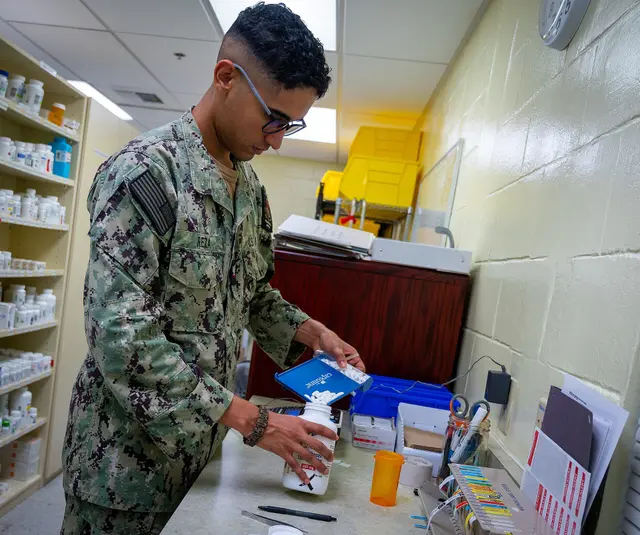
Talk for 20–30 minutes with 5–8 people who bought or nearly bought (Figure 1). Always ask permission before recording. Ask about things that actually happened, not opinions about the future. These 6 open questions work for most products:
- When did you last buy this product, and what was the situation?
- Before buying, what was going on that made you look for a solution?
- What did you try before? What was wrong with it?
- What made you hesitate the longest before clicking "buy"?
- After using it, what changed compared with before?
- Is there anything you wish the product did that it doesn't?

Photo: ZMcCune (WMF) / Wikimedia Commons, CC BY-SA 4.0
Comments, reviews and pre-purchase messages
Reviews on e-commerce marketplaces, comments under your ads and your competitors' ads, questions in Facebook groups and the messages customers send before buying are a gold mine, because customers write in their own words. Prioritise 3-star reviews: those customers say clearly what worked and what didn't. Pre-purchase messages show you the barriers before buying, which post-purchase reviews cannot.
Sales staff, call centres and customer service
Sales advisers hear customers every day. Ask them: "What are the three questions customers ask most? What reasons do they give for not buying?"
Use the product and read the product file
Try the product, read the label and ask the business that hired you for the product file: specifications, test results, and the registration or notification documents if it is a food or cosmetic. This is your source of features and also the evidence for the legal section below.
| Source | What you get | Suggested time |
|---|---|---|
| One-to-one interviews | Deeper reasons, emotions, buying situation | 5–8 people × 20–30 minutes |
| Comments, reviews | Customers' real language, how often issues come up | 100–200 entries, 2–3 hours |
| Pre-purchase messages | Barriers before buying | 50 conversations, 1 hour |
| Sales and customer service staff | Common questions and reasons for saying no | 15–30 minutes per person |
| Trying the product, product file | Features, specifications, evidence | 1–2 hours |
How to record and filter customer insights
Without a system you will only remember the few most extreme comments. The method below lets you choose an insight by frequency, not by gut feeling.
Write down customers' exact words
Copy the exact words customers use, including slang and regional expressions: "came home in the rain, opened my backpack, the laptop felt damp and my heart nearly stopped" beats anything you could invent. Marketers call this the voice of the customer. Note the source (interview 3, a marketplace review on a given date) but remove real names and personal details.
Group with sticky notes or a spreadsheet
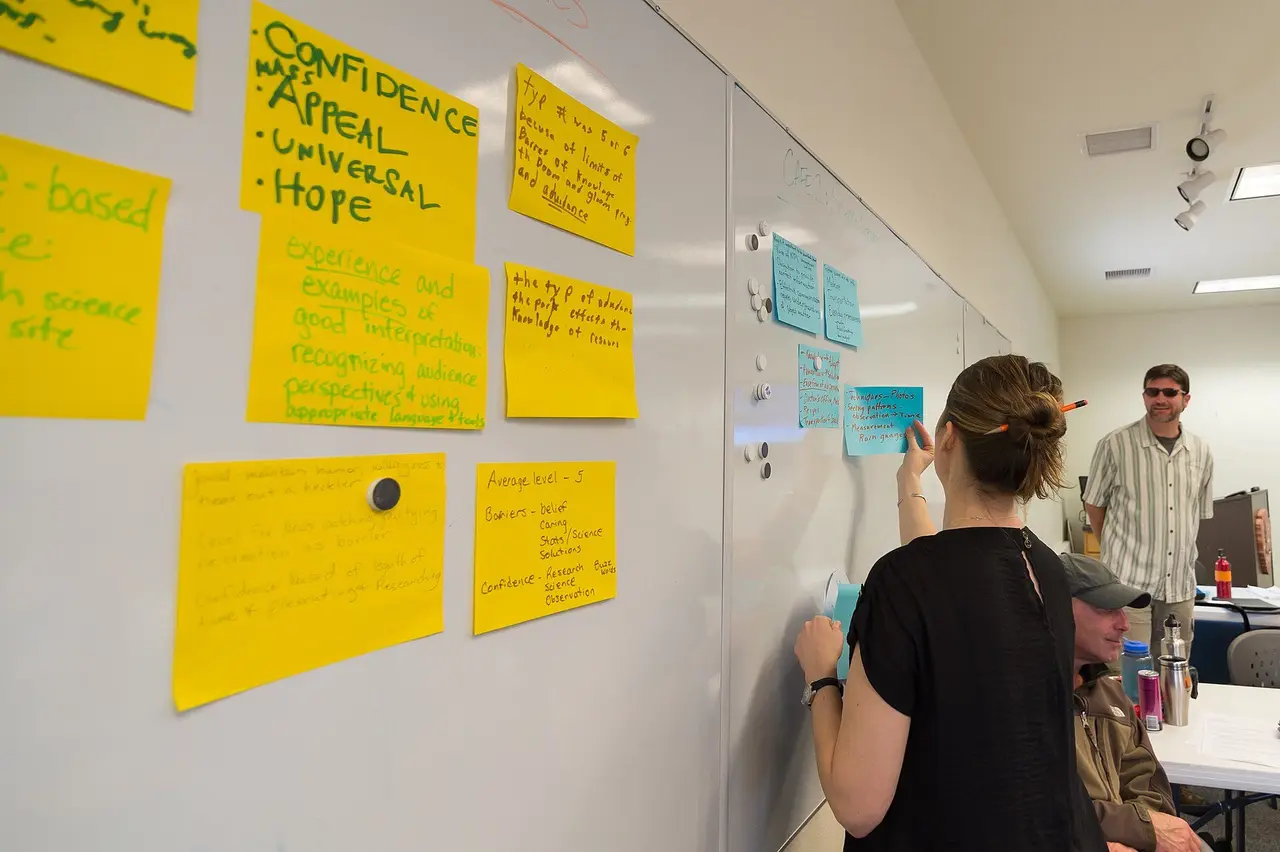
Put one idea per sticky note or spreadsheet row and sort them into 4 columns: pain points, desires, barriers to buying and reasons for choosing (Figure 2). Similar ideas go on top of each other; the tallest stack is the issue customers mention most.
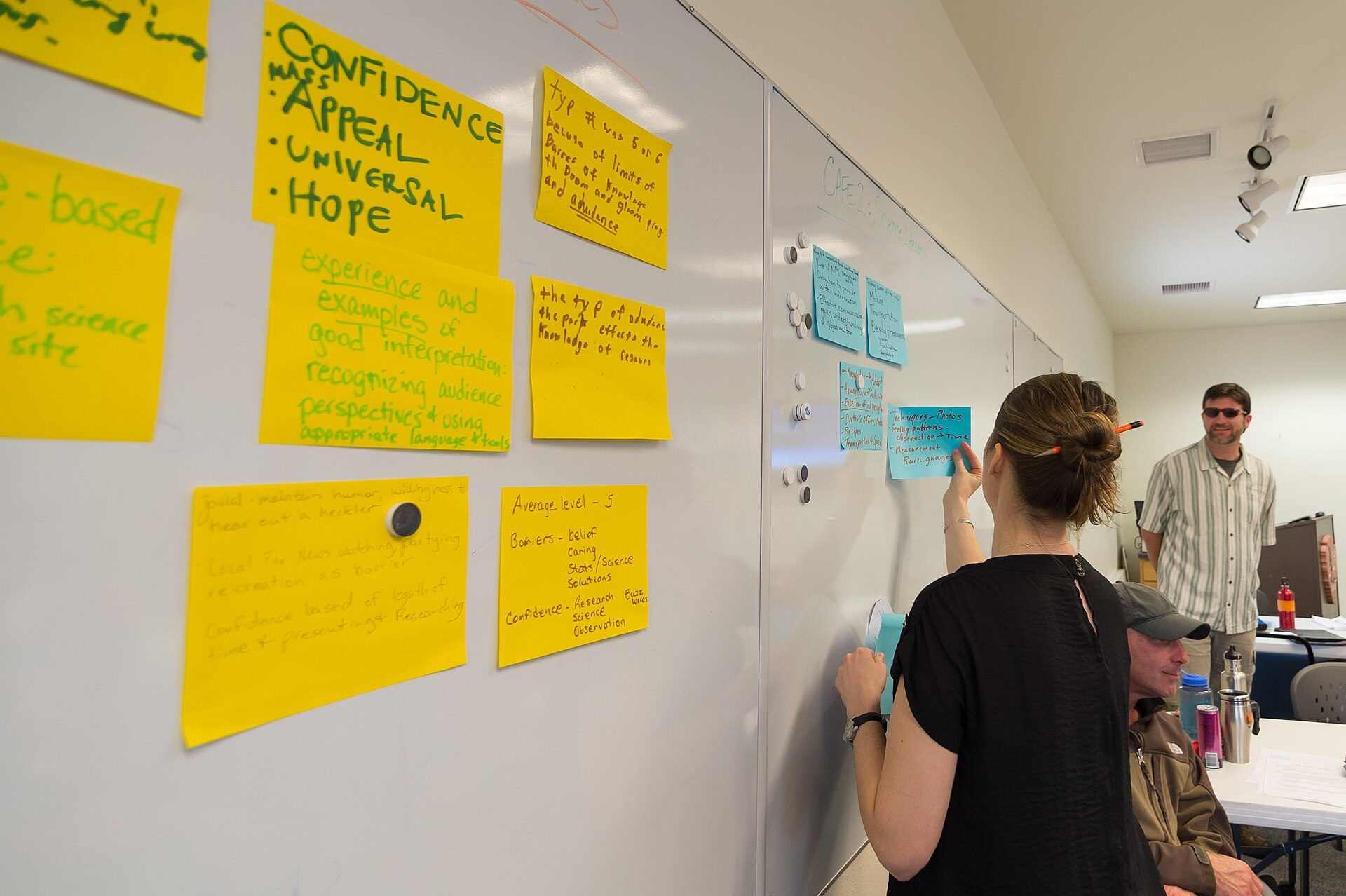
Photo: Joshua Tree National Park / Wikimedia Commons, Public domain
Score the groups to choose an insight
Score each group 1–3 on three criteria: frequency (how many customers mention it), emotion (strong words or neutral ones) and whether the product really solves it. The third criterion matters most: a great insight the product cannot deliver only disappoints customers and easily turns into misleading advertising.
How are features different from benefits?
A feature is what the product has; a benefit is what the customer gets. Customers don't buy "600D polyester with PU coating"; they buy peace of mind when it starts pouring halfway through the ride.
The "so what?" question
Read each feature and ask "so what?" until you reach something the customer cares about. Example: "Zip with a rain flap" → so what? → water doesn't get in along the zip → so what? → the laptop and papers stay dry → so what? → no repair bill, and tomorrow morning's report file isn't lost. Stop at the last level you can still prove.
Functional and emotional benefits
Functional benefits are measurable (dry, lighter). Emotional benefits are the feeling that comes with them (peace of mind, confidence when meeting a client). Emotion makes the customer stop; function makes them believe. Fill in a feature–benefit table like the one below, by hand if you like (Figure 3), before writing any copy.

Photo: Shixart1985 / Wikimedia Commons, CC BY 2.0
| Feature (what the product has) | Functional benefit | Emotional benefit |
|---|---|---|
| 6-litre air fryer | Cooks enough in one batch for a family of 4 | Dinner is ready early and everyone eats together |
| Excel course with 12 lessons of 15 minutes | Finish in 2 weeks at one lesson a day | Confidence in an employer's Excel test |
Advertising law: what copywriters must not write
In Vietnam, advertising content is governed by the Law on Advertising and its implementing documents, rules on competition and consumer protection, and sector-specific rules for food, cosmetics, medicines, medical services and education. These documents change over time, so this lesson only states principles; read the current texts or ask the client's legal team. If you run ads on Facebook, the platform has its own policies too; see Facebook ad policies: prohibited content and sensitive industries.
Comparisons that disparage competitors
Do not name or clearly hint at a competitor in order to run them down, and do not put two products side by side and claim the other is worse without objective test results. Instead of "far more durable than brand X's backpack", talk about your own product: "zip tested for 5,000 open-close cycles in the workshop", if there really is a test record.
"Best", "number 1" and "the only" without proof
Words such as "best", "the best", "number 1", "the only", "leading" and their equivalents may only be used with valid supporting documents as the rules require. The safe approach is to replace absolute claims with a concrete fact, for example "1,200 customers bought in 6 months", if that figure comes from real order data.
Supplements and cosmetics: do not overstate effects
Foods, including health-supplement foods (Figure 4), must not be advertised as medicines and must not claim to prevent or cure disease. Health supplements in Vietnam must also carry a mandatory warning along the lines of "this product is not a medicine and does not replace medicines for treating disease"; read the current rules for the exact wording. Cosmetics may only claim beautifying, cleansing or skin-protecting effects as stated in their notification file, never "cures acne for good" or "melasma gone in 7 days". Before-and-after photos, doctors' quotes and research figures all need a source and permission.
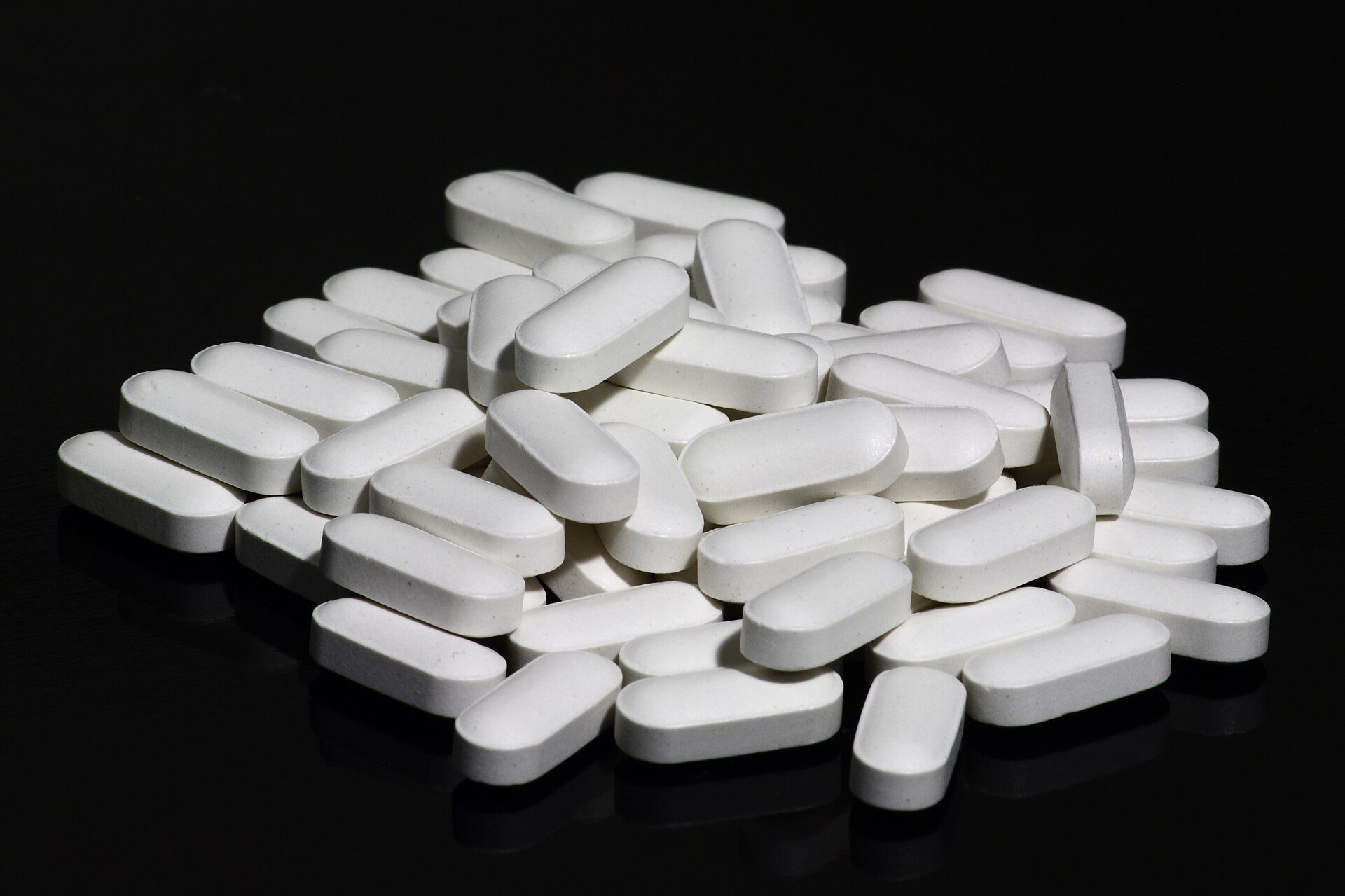
Photo: Ragesoss / Wikimedia Commons, CC BY-SA 4.0
Prices, discounts and stock must be true
"50% off" when the original price was inflated beforehand, or "only 3 left" when the warehouse is full, both mislead consumers. The lesson on the AIDA formula has a table of common violations and how to fix them.
Legal warning: A copywriter is not a lawyer. When you write for health supplements, cosmetics, medicines, medical services, nutrition products for young children, real estate, finance or degree-granting education, ask the client for the product registration or notification file, licences and approved content (if that sector requires advertising content to be confirmed before publication). Do not write any claim you cannot prove. Do not use a real customer's name, photo or words without consent in writing or in a message you can keep.
6 steps from insight to a draft that stays within the law
The steps
- Get the brief and product file: the goal of the piece, the target customer, price, specifications, registration documents, test results.
- Collect the voice of the customer: 5–8 interviews, 100+ comments, reviews and messages.
- Group and score: 4 columns of pain points, desires, barriers and reasons for choosing; pick the 1–2 highest-scoring insights.
- Write the insight sentence with the wants – but – because frame, and read it to 2–3 customers to see if they nod.
- Build the feature–benefit table for the chosen insight, dropping features that don't relate to it.
- Check the law and build the evidence file: every claim in the draft has a line of evidence; any claim without evidence is rewritten or deleted.
An evidence file for every claim
An evidence file is a 3-column table: the claim, the evidence (document, test video, order data), and who supplied it and when. It lets you answer when the client or a platform asks, and politely turn down requests like "just write that it's the best".
Quick checklist before sending a draft
- Does any sentence criticise or directly compare with a specific competitor?
- Is there any "best", "number 1", "the only" or "100%" without supporting documents?
- For food or cosmetics, does any sentence say prevent, treat, cure or heal?
- Do the original price, discount and remaining stock match real data?
- Do you have consent for testimonials and customer photos?
- Does this sector need a mandatory warning or content approval before publishing?
Worked example: finding the insight for a water-resistant laptop backpack
A small sewing workshop in Hanoi hires you to write ads for a water-resistant laptop backpack priced at 690,000 VND (~US$27). The brief: target customers are office workers aged 24–35 who commute by motorbike. Product file: water-resistant coated fabric, a zip with a rain flap, a padded 15.6-inch laptop sleeve, and a video of the workshop's own test spraying water for 10 minutes on the backpack with tissue paper inside; the tissue stayed dry.
Collecting and counting
You interview 6 customers who bought, and read 120 reviews of the old model and of 2 similarly priced models on a marketplace. Each review goes into one main group:
| Issue group customers mention | Reviews | Share |
|---|---|---|
| Laptop or papers wet or damp after riding in the rain | 34 | 28% |
| Shoulder straps hurt on long rides | 22 | 18% |
| Looks unprofessional for client meetings | 19 | 16% |
| Zip breaks after a few months | 15 | 13% |
| No pocket for a charger or raincoat | 12 | 10% |
| Other (colour, delivery, price) | 18 | 15% |
| Total | 120 | 100% |
Check: 34 + 22 + 19 + 15 + 12 + 18 = 120 reviews; rounded shares 28 + 18 + 16 + 13 + 10 + 15 = 100%. In the 6 interviews, 4 people described sudden rain mid-ride, stopping to pull a raincoat over the backpack and still getting a wet back; 3 said they felt awkward carrying a sporty backpack to meet partners.
Insight sentence and benefits
The "wet in the rain" group is both the largest and the most emotional ("my heart nearly stopped"), and the product has test evidence for it. Insight: "Office workers who ride motorbikes want to arrive at meetings looking neat, but fear a sudden downpour will ruin their laptop, because a broken laptop means both a repair bill and lost work files." Functional benefits: rain-flap zip, water-resistant coated fabric, a separate laptop sleeve. Emotional benefits: calm when it rains halfway, still tidy on arrival.
Checking the draft against the law
| Line in the first draft | Problem | Rewritten line |
|---|---|---|
| "The best waterproof backpack in Vietnam" | "Best" without supporting documents | "Zip with a rain flap, water-resistant coated fabric" |
| "100% waterproof, even if you dunk it" | Only a 10-minute spray test, never submerged | "Workshop spray test for 10 minutes, contents stayed dry (video)" |
| "Unlike brand X's backpack that soaks through in a drizzle" | Disparaging comparison with a named competitor | Delete; talk only about your own product |
Time spent: interviews 6 × 25 minutes = 150 minutes, reading 120 reviews about 120 minutes, grouping and scoring 60 minutes, writing the insight and benefit table 60 minutes. Total 150 + 120 + 60 + 60 = 390 minutes, about 6.5 hours. When quoting freelance work, include this time.
Common mistakes when looking for insights, and how to fix them
Asking leading questions
Sign: every answer is "yes" or "that's right". Cause: you asked "Don't you find a waterproof backpack really handy?". Fix: ask about what happened: "The last time you rode in the rain with your laptop, what happened?".
Treating your own opinion as an insight
Sign: the insight sounds great but no customer quote stands behind it. Cause: it came from imagination or from what the shop owner wants. Fix: every insight must be backed by at least 3 verbatim quotes from at least 2 different sources.
Posting customer comments in ads without permission
Sign: screenshots of reviews showing a customer's name and profile photo are reposted. Cause: thinking public comments are free to use. Fix: use the customer's idea in your own words; quoting word for word with a name requires permission, and you should keep a record of that consent.
Frequently asked questions
What is a customer insight, with a simple example?
It is the deeper reason a customer buys or doesn't buy. Example: a working mother buys sandwiches the night before because she fears her child won't get a proper breakfast tomorrow morning.
What is a pain point, and is it the same as an insight?
A pain point is a problem the customer has, such as "my laptop gets wet". The insight explains why that problem matters to this particular person.
How many customers do I need to interview?
For a small shop, 5–8 interviews are usually enough to see ideas repeating. When 2–3 interviews in a row bring nothing new, you can stop. Add 100+ comments to count frequency.
Can an ad use words like "the best" or "number 1"?
Only with valid supporting documents under the current rules. If you are not sure, replace them with a concrete, verifiable fact. Check the current regulations or ask a legal adviser before using them.
Practice exercises and self-assessment
- Choose a real product (your family's, a friend's, or a shop you buy from). Read 100 reviews or comments, sort them into the 4 columns and count frequency using the table above as a template.
- Write 2 insight sentences with the wants – but – because frame, and a 4-row feature–benefit table.
- Write an 80–120 word ad, then check it against the 6-question legal checklist and attach an evidence file.
Self-assessment criteria
- Pass: your frequency table adds up to the number of entries you read; each insight is backed by at least 3 verbatim customer quotes.
- Pass: the insight sentence has a specific person and a tension.
- Pass: the ad has no unsupported absolute words, no disparaging comparisons, and every claim has evidence.
- Not yet: no customer quote stands behind the insight, or the ad still says "the best" or "cures" without proof.
With an insight and a benefit table in hand, you are ready for the next step of the roadmap: Formulas: AIDA, PAS, 4U & headlines, where you arrange the insight into structured ad copy. Read the AIDA formula: write ads in 4 steps, with real examples first to see how insight feeds the "Attention" and "Desire" stages.
Keep learning copywriting: after insight come the AIDA and PAS formulas, Facebook and TikTok ads, landing pages, emails, video scripts and a portfolio to win work. See the 8-step copywriter roadmap.