Choosing products to sell on TikTok Shop comes down to three jobs in order: read trend data to see what is actually selling and at what price, pick a source of goods (wholesale or affiliate) that fits your budget, then add up the full unit cost, platform fees, shipping, commission and returns so you know the largest voucher you can offer without losing money. This lesson walks through each step, with a product scoring sheet and a worked example of a break-even price, a list price and a maximum voucher in which every number adds up. The examples are set in Vietnam and use Vietnamese dong (VND).
By the end of this lesson, you will be able to:
- Read 5 trend indicators in tools such as Kalodata and FastMoss, and cross-check them before trusting them.
- Score 3 candidate products against 6 criteria and pick 1 to test.
- Compare wholesale buying, factory orders, supplier drop-shipping and affiliate selling to choose a model that fits your capital.
- Work out the full unit cost, the break-even price and the list price with a formula you can check.
- Calculate the maximum voucher for each order type (own orders and affiliate orders) so promotions never sell at a loss.
Want to learn TikTok Shop selling and live streaming properly? Choosing products and pricing is step 2 on the roadmap, right after opening a shop and learning platform policy. See the 8-step TikTok Shop and live selling roadmap to learn in the right order.
Why product choice decides most of your profit
On TikTok Shop, viewers buy on impulse. A good product is one people "get" within seconds, priced for an instant decision, and still profitable after the platform, the courier, affiliate creators and vouchers have taken their share.
Three questions before you buy any stock
- Is anyone actually buying it? Look at sales data, not video views.
- Can you get good, consistent stock at a competitive price? An unreliable source means cancelled orders, and cancellations cost your shop points (covered in how to open a TikTok Shop).
- After every fee and voucher, how much does each order earn? If you cannot answer with a number, do not sell it yet.
Reading trends on Kalodata and FastMoss, then cross-checking
Kalodata and FastMoss are third-party TikTok Shop analytics tools. They estimate sales, video counts and the number of creators selling each product and shop. These are estimates built from public data, not official TikTok figures. Plans, supported markets and features change over time, so check each tool's official site before you pay. TikTok also has its own Creative Center for rising hashtags, sounds and videos.

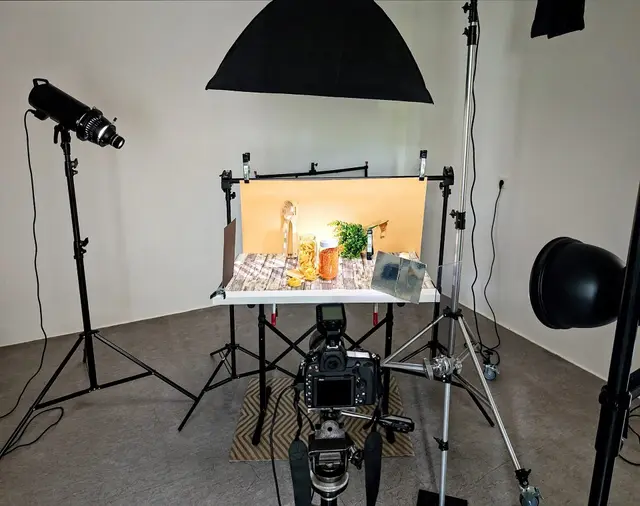
Photo: rawpixel / Wikimedia Commons, CC0
Five indicators to record for each product
| Indicator | What it tells you | Good sign | Warning sign |
|---|---|---|---|
| Estimated sales, 7 and 30 days | Still rising or past its peak | Steady growth for 2-4 weeks | A spike for a few days, then a drop |
| Number of creators selling it | Whether sales depend on one person | Many small creators all making sales | Almost all orders from one big KOL |
| Typical selling price | The price range buyers accept | You can still profit at that price | Competitors sell below your purchase cost |
| Order source: video or live | Which channel suits the product | Matches the channel you can run | Sells only through long lives and you have no host |
| Number of shops selling it | Level of competition | A few dozen shops, not saturated | Hundreds of identical listings in a price war |
Cross-check before you trust the numbers
Estimates can be far off. Cross-check in three ways: see whether videos selling the product have real "how do I buy" comments; read 1-2 star reviews of shops already selling it to learn the common faults (wrong colour, dents, leaks); and check Google Trends to see whether demand is seasonal.
Example of reading the data
Assumed figures: product A has grown steadily for 4 weeks, about 40 creators sell it and the typical price is 130,000-170,000 VND; product B spiked for 5 days with most orders from one big KOL. A is the safer start because demand is steady and does not depend on one person.
Scoring candidate products against 6 criteria
After filtering the data you will usually have 3-5 candidates. Score each criterion from 1 (poor) to 5 (good) and add them up, for a maximum of 30 points.
The six criteria
- Margin: the typical selling price should be at least 2-2.5 times your cost to leave room for fees, commission and vouchers.
- Easy to demonstrate: the benefit is visible on video or live straight away.
- Compact, light, hard to break: low shipping cost, few damaged orders.
- Low return rate: no sizing issues, colours show accurately on screen.
- Simple paperwork: no complex category documents, or you already have them.
- Trend: steady or rising demand, not a fad lasting a few days.
A worked scoring sheet
| Criterion | 500 ml insulated bottle | Windbreaker jacket | Face serum |
|---|---|---|---|
| Margin | 4 | 4 | 5 |
| Easy to demonstrate | 5 | 4 | 3 |
| Compact, light, hard to break | 4 | 5 | 4 |
| Low return rate | 4 | 2 | 3 |
| Simple paperwork | 5 | 5 | 1 |
| Trend | 4 | 3 | 4 |
| Total (max 30) | 26 | 23 | 20 |
Check the sums: bottle 4 + 5 + 4 + 4 + 5 + 4 = 26; jacket 4 + 4 + 5 + 2 + 5 + 3 = 23; serum 5 + 3 + 4 + 3 + 1 + 4 = 20. The serum has the best margin but scores low on paperwork, because cosmetics need a product notification file and are prone to exaggerated claims; the jacket suffers from size-related returns. A beginner should test the bottle first.
One hero product, two or three add-ons
Do not list 30 items at once. Pick 1 hero product to focus your videos on, and add 2-3 related items (a bottle sleeve, a bottle brush) to raise the order value.
Choosing a source: wholesale, factory or affiliate
Your source decides your unit cost, your quality and whether you can ship on time. No source is best for everyone; choose by capital, time and how much unsold stock you can carry.
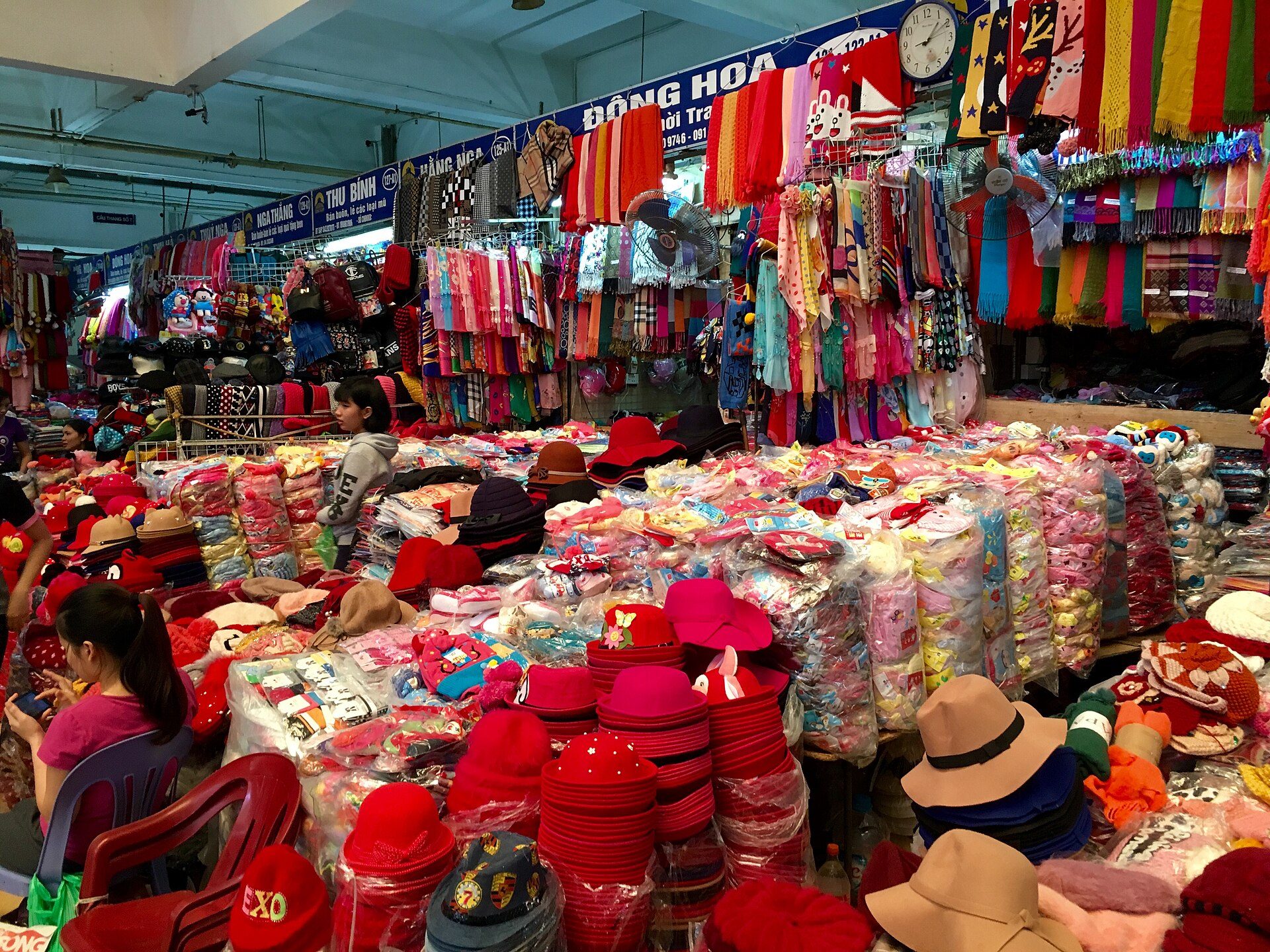
Photo: Sandra Cohen-Rose and Colin Rose from Montreal, Canada / Wikimedia Commons, CC BY-SA 2.0
Comparing sourcing models
| Model | Starting capital | Strengths | Main risk | Suits whom |
|---|---|---|---|---|
| Wholesale markets, distributors' agents | A few million to a few tens of millions of VND | See goods in person, fast restocking | Quality varies between batches; many shops sell the same item | Beginners, everyday goods |
| Factories, craft villages | Usually higher because of a minimum order quantity (MOQ) | Good price, custom designs, your own label | Large unsold stock if sales are slow; samples need careful checks | Shops with steady sales |
| Official distributors | Medium | Full paperwork, low risk of fakes | Thin margin, controlled prices | Branded goods, cosmetics, electrical items |
| Supplier ships each order for you | Low | No stock to hold | You cannot check each order; late supplier shipping costs your shop points | Short tests with a supplier you already trust |
| Affiliate (selling for commission) | Close to zero | No stock, packing or returns to handle | Income is commission only; depends on the original shop's policy | People with a TikTok channel who want to focus on content |
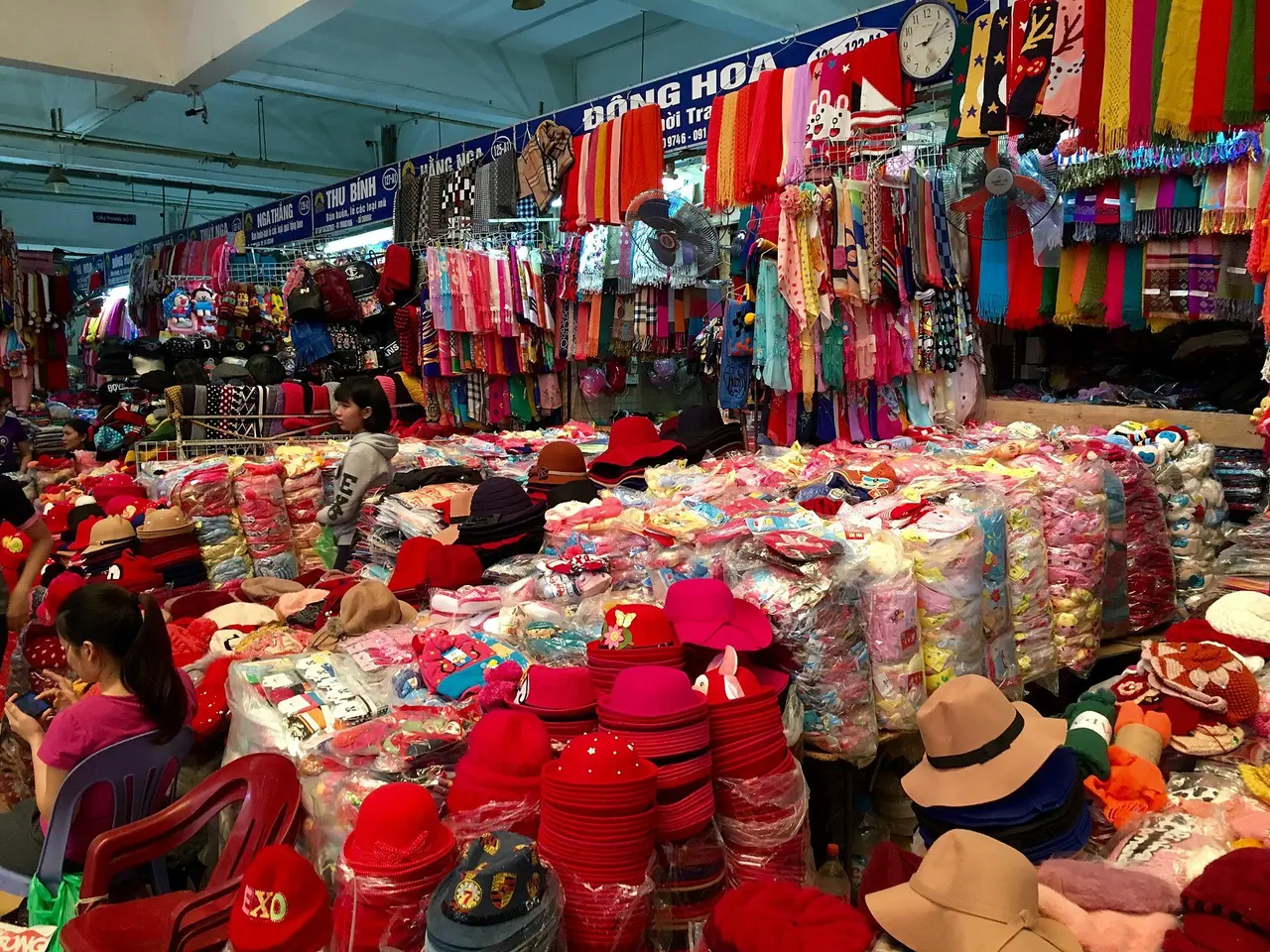
In Hanoi, sellers often look for stock at Dong Xuan Market (Figure 2) and Ninh Hiep Market; in Ho Chi Minh City, at Binh Tay, Tan Binh and An Dong markets. Ask at least 3 stalls for prices before you commit.
Try affiliate before buying stock
As an affiliate, you attach another shop's products to your videos and lives and earn commission on the orders you bring. The seller sets the commission, and it varies by product; eligibility (follower count, account age) is set by TikTok and can change, so check the affiliate section of the app. It is the cheapest way to test a product before you hold stock. Check the original shop's reviews and shipping speed before you agree to sell for it.
Vet a supplier before the first batch
- Order 2-3 samples and use them like a real customer (bottle: fill with hot water, leave overnight, turn upside down and shake to check for leaks).
- Ask clearly about the minimum order, delivery time, the policy for faulty goods, and whether they issue invoices or proof of origin.
- Buy a small batch (for example 50-100 units) and spot-check about 10% on arrival.
- Record the real defect rate of the first batch so you can build it into your cost.
Warning on origin and paperwork: do not buy counterfeit goods, knock-offs of brands or goods of unknown origin, however cheap; the platform can remove listings, deduct points or close the shop, and sellers can face legal action. Imported goods in Vietnam generally need a Vietnamese sub-label and import documents; cosmetics, food, electrical goods and children's toys need category documents. Goods with lithium batteries (power banks, mini fans) may be restricted by couriers. Rules change over time: read the category policy in Seller Center and the current legal texts on official government portals before you buy stock.
Full unit cost and what is deducted from each order
How to open a TikTok Shop gave the basic formula: price = (cost + profit) / (1 - total fee rate). At this step you go further: separate fixed amounts per order from percentage deductions, and add shipping support and returns.
Fixed amounts per order (in VND)
- Purchase price of one unit.
- Inbound freight: the transport bill divided by the units in the batch.
- Defect allowance: based on the real defect rate of your last batch.
- Packaging: box, bubble wrap, tape, labels.
- Shipping support if you join a free-shipping programme or subsidise shipping yourself.
- Return allowance = return rate x the cost lost on each returned order.
The first four lines together are your full unit cost.
Deductions as a percentage of what the buyer pays
- Platform fees: usually a commission fee, a payment fee and service fees for programmes you join. Rates differ by category and change over time; take the figures from the current fee schedule in Seller Center.
- Withheld tax: for household businesses and individual sellers, the platform may withhold and pay part of the tax on their behalf under current rules. These rules are being revised; ask your local tax office or an accountant.
- Affiliate commission: applies only to orders brought in by affiliate creators.
Shipping fees and volumetric weight
Couriers usually charge by actual weight or by volumetric weight calculated from the box size, whichever is higher. Pack snugly (Figure 3), weigh and measure a sample box before pricing, and check your courier's rate card.
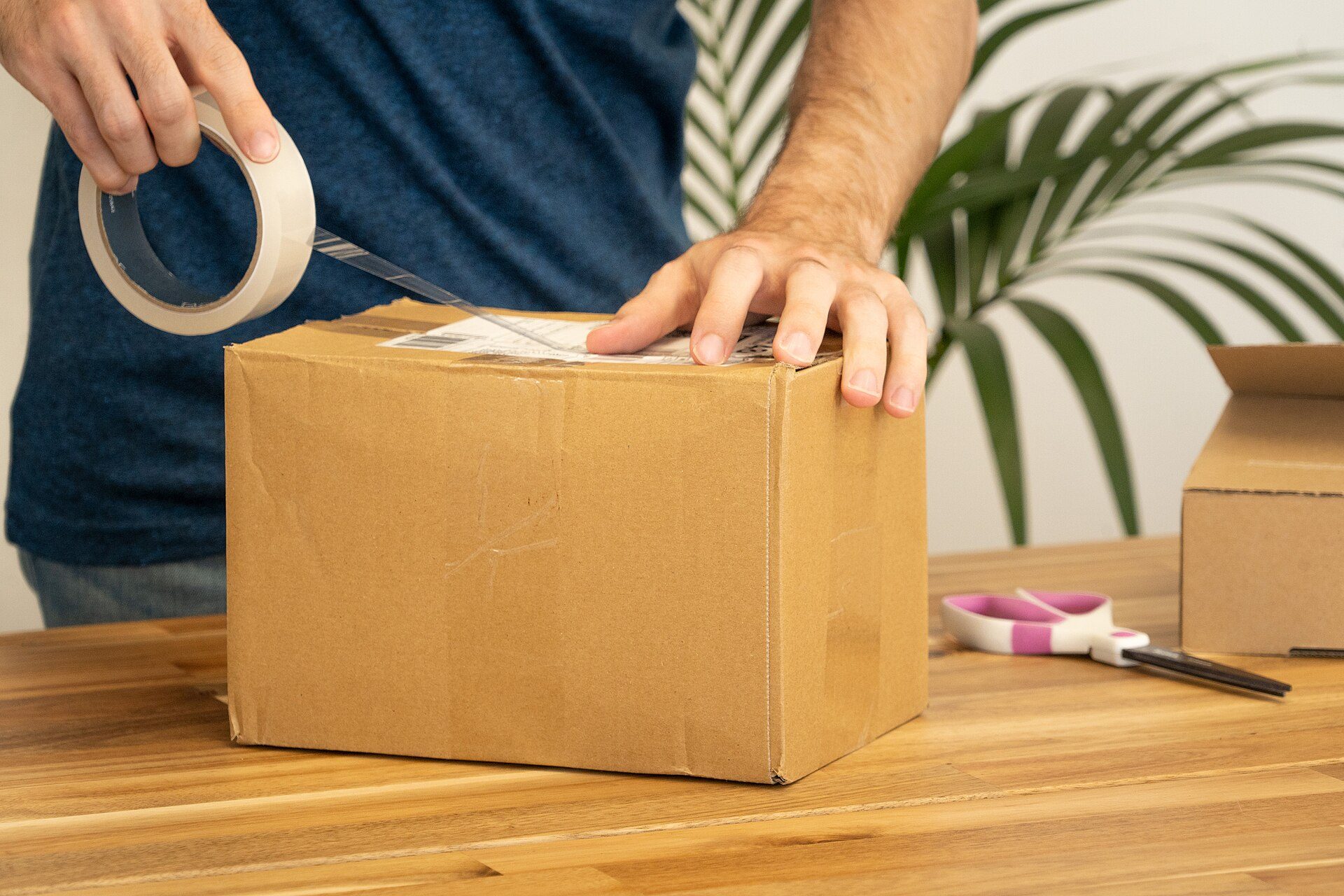
Photo: Meanwell Packaging / Wikimedia Commons, CC BY 2.0
Worked example: break-even price, list price and maximum voucher
Ha, a seller in Hanoi, picks the 500 ml insulated bottle (the top score on the sheet). Every fee, tax and commission rate below is an assumption for practising the method, not TikTok Shop's real rate; when you do it for real, check the current fee schedule in Seller Center and put the numbers into the same formula (Figure 4).
Step 1: full unit cost and fixed amount per order
| Item | How it is calculated | Amount (VND) |
|---|---|---|
| Purchase price | Wholesale price, batch of 100 | 58,000 |
| Inbound freight | 300,000 / 100 units | 3,000 |
| Defect allowance | Based on the last batch | 2,000 |
| Packaging | Box, bubble wrap, tape | 4,000 |
| Full unit cost | 58,000 + 3,000 + 2,000 + 4,000 | 67,000 |
| Shipping support (assumed) | Shop subsidy per order | 10,000 |
| Return allowance (assumed) | 5% x 40,000 | 2,000 |
| Total fixed amount per order | 67,000 + 10,000 + 2,000 | 79,000 |
40,000 VND is the assumed cost of each returned order: two-way shipping, wasted packaging and a dented unit that must be sold at a discount.
Step 2: deduction rate by order type (assumed)
Assume total platform fees of 14%, withheld tax of 1.5% and affiliate commission of 10%. Own orders (buyers from the shop's own videos and lives): 14 + 1.5 = 15.5%. Affiliate orders: 14 + 1.5 + 10 = 25.5%. The example also assumes fees are charged on what the buyer pays after the shop's voucher; the real fee base (before or after vouchers, shop-funded or platform-funded vouchers) is set by the current policy.
Step 3: break-even price
The break-even price is the lowest amount a buyer can pay without you losing money: break-even = total fixed amount / (1 - deduction rate).
- Affiliate order: 79,000 / (1 - 0.255) = 79,000 / 0.745 ≈ 106,040 VND.
- Own order: 79,000 / (1 - 0.155) = 79,000 / 0.845 ≈ 93,491 VND.
Take the higher figure as your "red line": if a buyer pays less than about 106,000 VND, an affiliate order loses money.
Step 4: list price and maximum voucher
Ha wants at least 20,000 VND profit per order, including affiliate orders. The minimum the buyer must pay = (79,000 + 20,000) / 0.745 = 99,000 / 0.745 ≈ 132,886 VND. Trend data shows a typical price of 130,000-170,000 VND, so she lists the bottle at 159,000 VND (about US$6). The largest voucher that keeps 20,000 VND profit: 159,000 - 132,886 = 26,114 VND; she chooses a 25,000 VND voucher.
| Item (affiliate order, 25,000 VND voucher) | How it is calculated | Amount (VND) |
|---|---|---|
| Buyer pays | 159,000 - 25,000 | 134,000 |
| Platform fees (assumed 14%) | 134,000 x 14% | - 18,760 |
| Withheld tax (assumed 1.5%) | 134,000 x 1.5% | - 2,010 |
| Affiliate commission (assumed 10%) | 134,000 x 10% | - 13,400 |
| Received after deductions | 134,000 - 34,170 | 99,830 |
| Total fixed amount | Step 1 | - 79,000 |
| Profit per order | 99,830 - 79,000 | 20,830 |
Check: 18,760 + 2,010 + 13,400 = 34,170 VND, exactly 134,000 x 25.5%. With the same voucher, an own order has only 134,000 x 15.5% = 20,770 VND deducted, receives 113,230 VND and earns 113,230 - 79,000 = 34,230 VND.

Photo: Smorgasbord / Wikimedia Commons, CC BY-SA 3.0
Step 5: test deeper vouchers
| Voucher (affiliate order) | Buyer pays | 25.5% deducted | Received | Profit after 79,000 |
|---|---|---|---|---|
| 25,000 | 134,000 | 34,170 | 99,830 | 20,830 |
| 40,000 | 119,000 | 30,345 | 88,655 | 9,655 |
| 55,000 | 104,000 | 26,520 | 77,480 | - 1,520 (loss) |
A 55,000 VND voucher pushes the buyer's price down to 104,000 VND, below the 106,040 VND break-even, so every affiliate order loses 1,520 VND. That is why you calculate before joining a promotion.
A price ladder: list, everyday, live and flash sale
Once you know the break-even price, arrange your prices as a ladder: channels that cost less can get deeper discounts, but never below break-even.
Price ladder for the bottle (from the example)
| Price level | Buyer pays (VND) | When to use it |
|---|---|---|
| List price | 159,000 | Everyday displayed price |
| With everyday voucher | 134,000 | 25,000 voucher on every channel, including affiliate |
| Live and flash sale price (own orders only) | 119,000 | Limited-quantity deal in the shop's own live |
| Break-even for own orders | about 93,500 | Never sell below this |
At 119,000 VND, an own order has 119,000 x 15.5% = 18,445 VND deducted, receives 100,555 VND and earns 100,555 - 79,000 = 21,555 VND. So a deeper live deal is still profitable, as long as it is not open to the affiliate channel.
The original price must be real
Do not inflate the list price and then write "70% off": the comparison price must be one you have actually sold at, otherwise you may break platform policy and consumer protection rules.
Common mistakes in choosing products and pricing
Choosing by video views instead of sales
Sign: a video with a million views but few shop orders. Cause: entertaining content attracts viewers, not buyers. Fix: look at estimated sales and the number of creators actually selling, and cross-check with buying questions in the comments.
Treating the purchase price as the cost
Sign: profitable on paper, but the account balance does not grow by month end. Cause: forgetting inbound freight, packaging, defects and returns. Fix: always use the full unit cost and return allowance from Step 1.
One voucher level for every channel
Sign: affiliate orders rise sharply but profit falls. Cause: affiliate orders carry commission yet get the same deep voucher as own orders. Fix: calculate a separate break-even price for each order type and keep deep deals for the shop's own lives.
Frequently asked questions
What should a beginner sell on TikTok Shop?
Start with compact, light items that are easy to demonstrate, need no complex category paperwork and do not depend on sizing, such as small household goods and accessories. Use the 6-criteria scoring sheet to compare 3 candidates instead of choosing on gut feeling.
Where can I find stock to sell on TikTok Shop?
Beginners usually start at wholesale markets, first-tier agents or distributors with proper documents; factory orders make sense once the shop has steady sales. Always order samples, buy a small batch and keep invoices and proof of origin.
Are Kalodata and FastMoss accurate?
They are third-party estimates, useful for comparing trends but possibly far from real sales. Use them to shortlist candidates, then cross-check on TikTok, in buyer reviews and on Google Trends before you buy stock.
How do I price on TikTok Shop so vouchers do not cause losses?
Add up the fixed amount per order (full unit cost, shipping support, return allowance) and divide by (1 - total deduction rate for that order type) to get the break-even price; the maximum voucher is the list price minus the minimum the buyer must pay for you to keep your target profit.
Practice exercise and self-assessment
- Use a trend tool (or search TikTok by hand) to record the 5 indicators for 3 candidate products.
- Score the 3 products on the 6 criteria, add up the totals and write 2 sentences explaining your choice.
- Get prices from at least 3 suppliers or 3 affiliate shops for the chosen product, noting price, minimum order and delivery time.
- Build a sheet with the full unit cost, break-even prices for own and affiliate orders, the list price and the maximum voucher, following the example; mark which rates are assumed and which come from Seller Center.
Self-assessment criteria
- Pass: figures for all 5 indicators and at least 1 cross-check for each product.
- Pass: the scoring sheet adds up correctly and the chosen product scores 4 or more on paperwork.
- Pass: the pricing sheet adds up; the proposed voucher never pushes the buyer's price below the break-even of any order type.
- Not yet: the cost is only the purchase price, or one break-even price is used for both affiliate and own orders.
With a product, a source and a solid price sheet in hand, move to the next step on the roadmap: Shooting & editing short sales videos on a phone, where you turn the product's "easy to demonstrate" strength into videos with a 3-second hook and a product link. Once you are comfortable with video, how to sell on TikTok LIVE shows how to use the price ladder above for live deals.
Want to sell on TikTok Shop and live stream professionally? See the 8-step TikTok Shop and live selling roadmap: from opening a shop, choosing products and pricing to shooting videos, live closing scripts and reading the numbers.